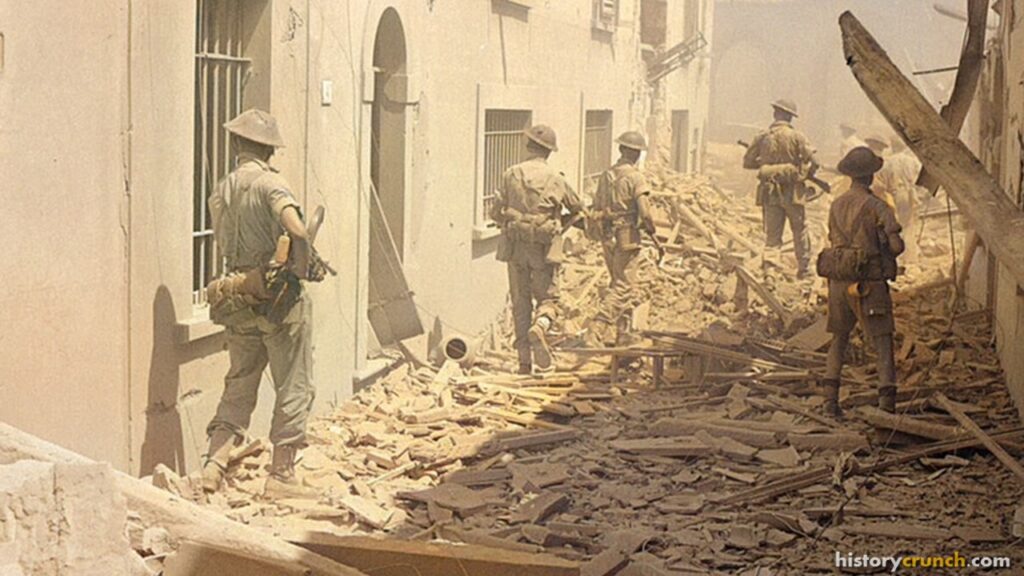
The Italian Campaign of World War II was one of the longest and most difficult Allied military operations of the entire war. Lasting from July of 1943 to May of 1945, the campaign saw Allied forces invade the Italian peninsula and fight their way northward against Nazi German resistance. The campaign was fought by the Allied Powers, which included forces from the United States, Britain, Canada, and a range of other nations, against the Axis Powers of Nazi Germany and fascist Italy. In general, historians consider the Italian Campaign to have been important for several reasons, including: the removal of Italy from the war as an Axis Power, the significant military resources it drew away from other fronts, and its overall contribution to the Allied victory in Europe.
 FactsthatCrunch
The Italian Campaign forced Nazi Germany to fight on multiple fronts at once, and historians debate whether the drain on German resources was large enough to justify the high Allied casualties the campaign produced.
What Was World War II?
World War II lasted from 1939 to 1945 and became the largest and deadliest war in all of human history. The war began on September 1st, 1939, when Nazi Germany, under the leadership of Adolf Hitler, invaded the country of Poland. The war unfolded across two main theatersA large geographic area where a major part of a war is fought. of conflict: the European Theater and the Pacific Theater. The European Theater was dominated by the struggle between the Allied Powers and the Axis PowersThe alliance of nations fighting against the Allies, mainly Nazi Germany, fascist Italy, and Imperial Japan. of Nazi Germany and fascist Italy, while the Pacific Theater was dominated by the conflict between the Allied Powers and Imperial Japan. As such, the Italian Campaign was one of the major Allied operations of the European Theater of World War II.
Italian Campaign – Background
To fully understand the Italian Campaign, it is first important to understand the events that led to it. By 1943, the balance of power in World War II was beginning to turn against the Axis Powers. For instance, Nazi Germany had suffered a major defeat at the Battle of Stalingrad, which lasted from July of 1942 to February of 1943 and resulted in the destruction of the entire German Sixth Army on the Eastern Front. At the same time, Allied forces had succeeded in driving the Axis out of North Africa by May of 1943, following the defeat of the German-Italian forces under Field Marshal Erwin Rommel at the Second Battle of El Alamein in November of 1942.
With North Africa secured, Allied commanders began planning the next stage of the war in Europe. The Allied leadership, including American President Franklin D. Roosevelt and British Prime Minister Winston Churchill, agreed that an invasion of Sicily and then mainland Italy offered several strategic advantages. For instance, an invasion of Italy would knock fascist Italy out of the war, open up the Mediterranean Sea for Allied shipping, and force Nazi Germany to divert troops from other fronts, including the critical Eastern Front where Soviet forces were engaged in a massive struggle against Nazi German forces.
Italian Campaign – Invasion of Sicily
The Italian Campaign began with the Allied invasion of Sicily, an island located off the southern tip of the Italian peninsula. The Allied invasion of Sicily was also referred to as ‘Operation Husky’. The invasion began on July 9th, 1943, and involved a large combined airborne and amphibiousA military assault launched from the sea onto land, combining naval and ground forces. assault by American, British and Canadian forces. It was one of the largest amphibious operations of the entire war, with approximately 150,000 Allied troops landing on the island in the opening stages.
Allied forces faced resistance from both Italian and Nazi German troops defending the island. However, the Allied advance was generally successful, and within weeks the Axis forces were pushed toward the northeastern corner of the island near the city of Messina, Sicily. For instance, American forces under General George S. Patton swept rapidly through western Sicily, while British and Canadian forces under General Bernard Montgomery advanced along the eastern coast. Nazi German forces carried out a defensive withdrawal and managed to evacuate much of their strength across the Strait of Messina to the Italian mainland before the island fell. Allied forces captured Sicily on August 17th, 1943, bringing Operation Husky to a successful end.
The invasion of Sicily had an immediate political impact on fascist Italy. On July 25th, 1943, Italian King Victor Emmanuel III had Benito Mussolini, the fascist dictator of Italy, arrested and removed from power. This was an important development because it showed that the Italian government was no longer willing to continue the war under Mussolini’s leadership. Italy subsequently surrendered to the Allied Powers on September 8th, 1943, effectively removing Italy from the war as an Axis Power.
FactsthatCrunchWhy did the fall of Sicily lead to Mussolini being arrested and removed from power on July 25th, 1943?
Italian Campaign – Invasion of Mainland Italy
Following the fall of Sicily, Allied forces crossed the Strait of Messina and landed on the southern tip of the Italian mainland on September 3rd, 1943. This was known as ‘Operation Baytown’ and was led by British and Canadian forces under General Bernard Montgomery. A second and larger landing followed on September 9th, 1943, near the city of Salerno, Italy, and was known as ‘Operation Avalanche’. This landing involved American and British forces and was intended to secure a larger foothold on the Italian peninsula and allow the Allies to advance northward more rapidly.
It should also be noted that despite Italy’s surrender on September 8th, 1943, Nazi Germany responded quickly and decisively. For instance, Nazi German forces took up key positions throughout Italy and established a series of strong defensive lines across the Italian peninsula to slow the Allied advance. Furthermore, Nazi German forces freed Mussolini from captivity on September 12th, 1943, and installed him as the leader of a new Nazi German-backed puppet stateA country that appears independent but is actually controlled by a foreign power. in northern Italy, known as the ‘Italian Social Republic’. As a result, the Italian Campaign did not become an easy advance northward after Italy’s surrender. Instead, Allied forces found themselves fighting a difficult and costly campaign against well-organized Nazi German defenses.
The Allied advance northward through Italy was slow and costly throughout 1943 and 1944. As mentioned above, Nazi German forces established a series of strong defensive positions across the Italian peninsula that took advantage of the country’s rugged mountainous terrain. The most formidable of these was the ‘Gustav LineA heavily fortified Nazi German defensive barrier stretching across the Italian peninsula about 85 miles south of Rome.‘, a heavily fortified defensive line that stretched across the Italian peninsula approximately 85 miles (137 kilometers) south of Rome. Regardless, after intense fighting the Gustav Line was finally broken in May of 1944 during a major Allied offensive known as ‘Operation Diadem’. In this offensive, Allied forces including American, British, Canadian, Polish, French, and other troops attacked the German defenses simultaneously along the full width of the front.
With the Gustav Line broken, Allied forces advanced rapidly northward and entered Rome on June 4th, 1944, marking the first liberation of a major Axis capital city during World War II.
Following the fall of Rome in June of 1944, the Italian Campaign continued northward but received less strategic priority after the Allied landings in Normandy, France, on June 6th, 1944. Regardless, in April of 1945, Allied forces launched a final major offensive in northern Italy. Nazi German resistance collapsed rapidly as the overall situation in Nazi Germany itself deteriorated.
Benito Mussolini was captured by Italian partisansCivilians or irregular fighters who secretly resist an occupying enemy force. while attempting to flee to Switzerland and was executed on April 28th, 1945. Nazi German forces in Italy formally surrendered on May 2nd, 1945, several days before the general Nazi German surrender on May 8th, 1945.
FactsthatCrunchItalian Campaign – Significance
The Italian Campaign of World War II was significant for several reasons. First, it removed Italy from the war as an Axis Power and was directly responsible for the downfall and death of Benito Mussolini. This was an important step in the overall Allied victory in Europe, as it eliminated one of the three main Axis nations from the conflict.
Second, the Italian Campaign forced Nazi Germany to commit large numbers of troops and resources to defending the Italian peninsula throughout 1943, 1944 and into 1945. This placed additional strain on the overall German war effort at a time when Nazi Germany was also under enormous pressure on the Eastern Front from Soviet forces and, after June of 1944, from Allied forces advancing through France. As such, the Italian Campaign played an important role in stretching Nazi German military resources to their breaking point.
Third, the Italian Campaign demonstrated the cost and difficulty of fighting a major land campaign against well-organized defenses in difficult terrain. The fighting in Italy was among the most grueling of the entire European Theater, and the campaign resulted in heavy casualtiesSoldiers killed, wounded, captured, or missing as a result of military action. on both sides. For instance, Allied forces suffered approximately 320,000 casualties during the course of the Italian Campaign, while some historians have suggested that Nazi German and Italian forces suffered over 430,000 casualties.
FactsthatCrunchAllied forces suffered about 320,000 casualties fighting their way up the Italian peninsula from July 1943 to May 1945.
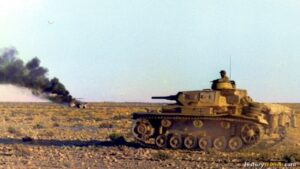
German defensive lines such as the Gustav Line used Italy’s rugged mountains to slow every advance. Some historians suggest German and Italian forces suffered over 430,000 casualties, making the campaign one of the most grueling in Europe.
Explore World War II · 1939 – 1945
Keep exploring World War II with these History Crunch resources.
Key Vocabulary
Amphibious
Axis Powers
Puppet state
Partisans
Gustav Line
Theater
Casualties
Frequently Asked Questions
When did the Italian Campaign of World War II take place?
The Italian Campaign lasted from July of 1943 to May of 1945. It began with the invasion of Sicily and ended when Nazi German forces in Italy surrendered on May 2nd, 1945. This made it one of the longest Allied operations of the entire war.
What was Operation Husky?
Operation Husky was the Allied invasion of Sicily, which started on July 9th, 1943. It was one of the largest amphibious operations of the war, with about 150,000 Allied troops landing in the opening stages. American, British, and Canadian forces captured the island by August 17th, 1943.
Why did the Allies invade Italy?
The Allies invaded Italy to knock fascist Italy out of the war and open the Mediterranean Sea for shipping. The invasion also forced Nazi Germany to move troops away from other fronts, including the Eastern Front. Allied leaders agreed on this plan after securing North Africa in May of 1943.
What was the Gustav Line?
The Gustav Line was a heavily fortified Nazi German defensive line about 85 miles (137 km) south of Rome. It used Italy’s rugged mountains to slow the Allied advance and made the fighting slow and costly. The line was finally broken in May of 1944 during Operation Diadem.
What happened to Benito Mussolini during the campaign?
Mussolini was arrested and removed from power on July 25th, 1943, by order of King Victor Emmanuel III. Nazi German forces later freed him and made him leader of a puppet state in northern Italy. Italian partisans captured and executed him on April 28th, 1945.
How many casualties resulted from the Italian Campaign?
Allied forces suffered about 320,000 casualties during the Italian Campaign. Some historians suggest Nazi German and Italian forces lost over 430,000. The fighting was among the most grueling of the entire European Theater, largely due to the difficult terrain and strong defenses.
Cite This Article
To cite this article as a source, use one of the formats below.
MLA: Millar, B. “Italian Campaign of World War II: A Detailed Summary.” HistoryCrunch, 2 October 2026, https://historycrunch.com/italian-campaign-of-world-war-ii/.
APA: Millar, B. (2026). Italian Campaign of World War II: A Detailed Summary. HistoryCrunch. https://historycrunch.com/italian-campaign-of-world-war-ii/
Chicago: Millar, B. “Italian Campaign of World War II: A Detailed Summary.” HistoryCrunch. October 2, 2026. https://historycrunch.com/italian-campaign-of-world-war-ii/
Sources
- Imperial War Museum
- Gerhard L. Weinberg, A World at Arms.