Canada in World War II played an important and wide-ranging role alongside the Allied Powers. World War II was an important event in the history of many different countries, including Canada. While the war involved the major European powers as its central combatants, it ultimately became a global conflict due to the involvement of countries from around the world. Canada entered World War II in September of 1939 and went on to make major contributions across several theaters of the conflict, including: the Battle of the Atlantic, the Italian Campaign, the D-Day landings in Normandy, and the liberation of the Netherlands. In total, over one million Canadians served in the armed forces during World War II, and the conflict had a lasting impact on Canadian national identity.

Canada Enters World War II
World War II began on September 1st, 1939, when Nazi Germany, under the leadership of Adolf Hitler, invaded the country of Poland. Britain and France declared war on Nazi Germany on September 3rd, 1939. Unlike World War I, in which Canada had automatically entered the war as a DominionA self-governing country that was still officially part of the British Empire and once entered wars automatically alongside Britain. of the British Empire, Canada in 1939 had significantly more autonomy over its own foreign policy. This was a result of the Statute of WestminsterA 1931 law that gave Canada independence in foreign affairs, ending automatic entry into Britain’s wars., which had been passed in 1931 and granted Canada independence in foreign affairs. As such, Canada made its own decision to enter the war and declared war on Nazi Germany on September 10th, 1939, one week after Britain and France. This one-week delay was a deliberate and symbolic gesture of Canadian independence, demonstrating that Canada was entering the war as a sovereign nation making its own choice rather than simply following Britain.
The decision to enter the war was led by Prime Minister William Lyon Mackenzie King, who had held power since 1935. At the outbreak of the conflict, King pledged that Canada would support the Allied war effort but stated that conscriptionMandatory military service in which the government forces citizens to join the armed forces., meaning mandatory military service, would not be imposed. This was an important promise, as the issue of conscription had been a controversial issue in Canada during World War I, particularly between English-speaking Canadians and French-speaking Canadians in Quebec who were generally less supportive of fighting on behalf of Britain. As such, King’s commitment to an all-volunteer overseas force was intended to maintain national unity as Canada entered the war.
Support for entering the war was widespread across much of English-speaking Canada, driven by strong ties to Britain. King pledged Canadian support and the government moved quickly to mobilize. The first Canadian troops arrived in Scotland on December 17th, 1939, and Canada also launched one of its most important contributions to the overall Allied war effort in that same month with the establishment of the British Commonwealth Air Training Plan, which will be discussed in more detail below.
Canada in World War II – Army
Canada’s decision to participate in World War II meant that it needed to quickly build up and equip its armed forces. At the start of the war, the Canadian Army was very small. More specifically, Canada had only approximately 4,500 permanent soldiers at the time. Regardless, thousands of Canadians volunteered for service and the Canadian Army expanded rapidly throughout the war. The main overseas land force was organized as the First Canadian Army, which eventually numbered approximately 500,000 soldiers. In total, over one million Canadians served in the armed forces during World War II, including approximately 50,000 women who served in the three services.
FactsthatCrunchWhen World War II began in 1939, Canada's full-time army had only about 4,500 soldiers.
Canada grew its forces quickly through volunteers, and about 730,000 Canadians served in the army alone by 1945. Many more joined the navy and the air force.
Canada in World War II – Major Campaigns and Battles
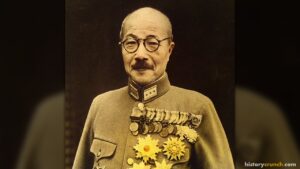
Canada in World War II participated as part of the Allied Powers alongside Britain, the United States, the Soviet Union, and other nations. On the opposing side were the Axis Powers of Nazi Germany, fascist Italy, and Imperial Japan. Canadian forces participated in several of the most significant campaigns and battles of World War II, across multiple theaters of the conflict. The major campaigns and battles that Canadian forces participated in included: the Battle of Hong Kong, the Dieppe Raid, the Battle of the Atlantic, the Italian Campaign, the D-Day landings and the Northwest Europe Campaign, and the Liberation of the Netherlands.
In World War II, did each of these countries fight on the Allied Powers side or the Axis Powers side?
Canada in the Battle of Hong Kong
The first major engagement of Canadian forces in World War II occurred not in Europe but in the Pacific. In the autumn of 1941, the British government requested that Canada send forces to help defend Hong Kong, which was then a British colony. In response, Canada sent approximately 1,975 soldiers organized as ‘C Force’, which arrived in Hong Kong in mid-November of 1941. On December 8th, 1941, the day after Japan’s attack on Pearl Harbor, Japanese forces launched a major attack on Hong Kong with a force approximately four times the size of the Allied garrison. Despite determined resistance, Allied forces were overwhelmed and Hong Kong fell on December 25th, 1941. For instance, Canadian forces suffered 290 killed during the battle itself. A further 267 Canadian soldiers died in Japanese prisoner of war camps in the years that followed, where conditions were extremely harsh. As such, the Battle of Hong Kong was a costly and difficult introduction to the war for Canadian forces and resulted in approximately 1,685 Canadian soldiers being taken prisoner.
FactsthatCrunchOf the approximately 1,975 Canadian soldiers sent to defend Hong Kong in 1941, 267 died in Japanese prisoner of war camps in the years after the battle ended on December 25th, 1941.
Japanese forces launched their attack on Hong Kong on December 8th, 1941, the day after the attack on Pearl Harbor. Canadian forces suffered 290 killed during the battle itself before Hong Kong fell on December 25th, 1941, and approximately 1,685 Canadian soldiers were taken prisoner. Conditions in Japanese prisoner of war camps were extremely harsh, and these additional deaths added greatly to Canada's total losses at Hong Kong.
Canada in the Dieppe Raid
The next major engagement of Canadian forces in World War II was the Dieppe Raid, which took place on August 19th, 1942. The Dieppe Raid was an Allied amphibious assaultA military attack launched from the sea, with soldiers landing directly onto a defended shore. against the German-occupied port of Dieppe on the northern coast of France. The operation, which was codenamed ‘Operation Jubilee’, involved a force of more than 6,000 Allied soldiers, of whom approximately 5,000 were Canadian. The goal of the raid was to test Allied amphibious assault tactics, gather intelligence about German coastal defenses, and demonstrate to the Soviet Union that the western Allies were taking aggressive action against Germany.
The Dieppe Raid was a disaster. German defenses were strong and well-prepared, and the attacking Canadian forces faced withering fire as they attempted to land on the beaches. The raid lasted only about nine hours before the Allied forces withdrew. In total, of the approximately 5,000 Canadians who participated, 916 were killed, 1,946 were taken prisoner, and many more were wounded. The scale of the losses shocked Canada and raised serious questions about the planning of the operation. With that said, the lessons learned at Dieppe about the difficulties of assaulting fortified beaches played an important role in the planning of the far more successful D-Day landings in June of 1944. As such, despite its terrible cost, the Dieppe Raid is generally considered to have contributed to the eventual success of the Allied invasion of northwest Europe.
FactsthatCrunchThe Allied planners of the Dieppe Raid chose to attack a heavily fortified port with a frontal assault and shared operational details too widely, allowing German forces to be well-prepared when approximately 5,000 Canadian troops landed on August 19th, 1942.
Operation Jubilee aimed to test amphibious assault tactics and show the Soviet Union that western Allies were acting against Germany. The scale of the losses shocked Canada and led to major changes in how the Allies planned beach landings, including those at Normandy in 1944.
Canada in the Battle of the Atlantic
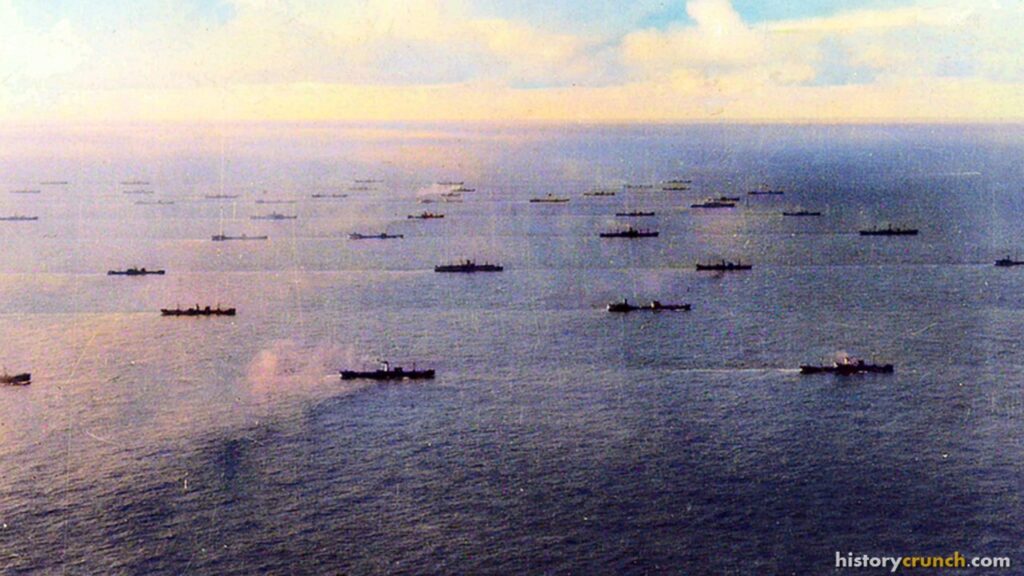
It should also be noted that one of Canada’s most important contributions to World War II was its role in the Battle of the Atlantic, which was the prolonged naval campaign to protect Allied shipping in the North Atlantic from German submarine attacks. The Battle of the Atlantic lasted from 1939 until 1945 and was one of the longest campaigns of the entire war. The Royal Canadian Navy played a central role in the Allied effort to protect the convoysA group of merchant ships traveling together, protected by warships, to reduce the risk of enemy attack. of merchant ships that carried vital supplies, food, and war materials from North America to Britain.
By the end of the war, the Royal Canadian Navy had grown from a small peacetime force to one of the largest navies in the world, with over 400 ships and approximately 95,000 personnel. For instance, Canadian warships and aircraft were responsible for sinking or helping to sink approximately 50 German submarines during the course of the war. As well, more than 1,200 Canadian and Newfoundland merchant sailors were killed at sea during the Battle of the Atlantic. As such, Canada’s contribution to the Battle of the Atlantic was one of the most significant and sustained aspects of its overall war effort.
Canada in the Italian Campaign
Canadian forces also played an important role in the Italian Campaign, which began in July of 1943 and continued until the end of the war in Europe in May of 1945. The 1st Canadian Infantry Division and a tank brigade participated in the Allied invasion of Sicily on July 10th, 1943. Following the fall of Sicily in August of 1943, Canadian forces crossed to the Italian mainland on September 3rd, 1943, as part of the wider Allied effort to drive Nazi Germany and fascist Italy out of the Italian peninsula.
Canadian forces fought in several of the most intense battles of the Italian Campaign. For instance, the Battle of Ortona in December of 1943 was one of the most brutal engagements of the entire campaign, involving intense street-by-street fighting in the coastal town of Ortona on Italy’s east coast. Canadian soldiers fought German paratroopers through the rubble of the town for nearly a month before finally capturing it on December 28th, 1943. The fighting at Ortona became known as ‘Little Stalingrad’ due to its ferocity and the scale of the destruction involved. As well, Canadian forces played an important role in breaking through the German defensive lines of the Gustav Line and the Hitler Line during the Allied offensive in the Liri Valley in May of 1944, which opened the way for the Allied liberation of Rome on June 4th, 1944. In total, approximately 93,000 Canadians served in the Italian Campaign, suffering approximately 26,000 casualties including nearly 6,000 killed in action.
FactsthatCrunchWhat were the main phases of the Battle of Ortona that made the fighting so brutal in December 1943?
Canada in the D-Day Landings and Northwest Europe
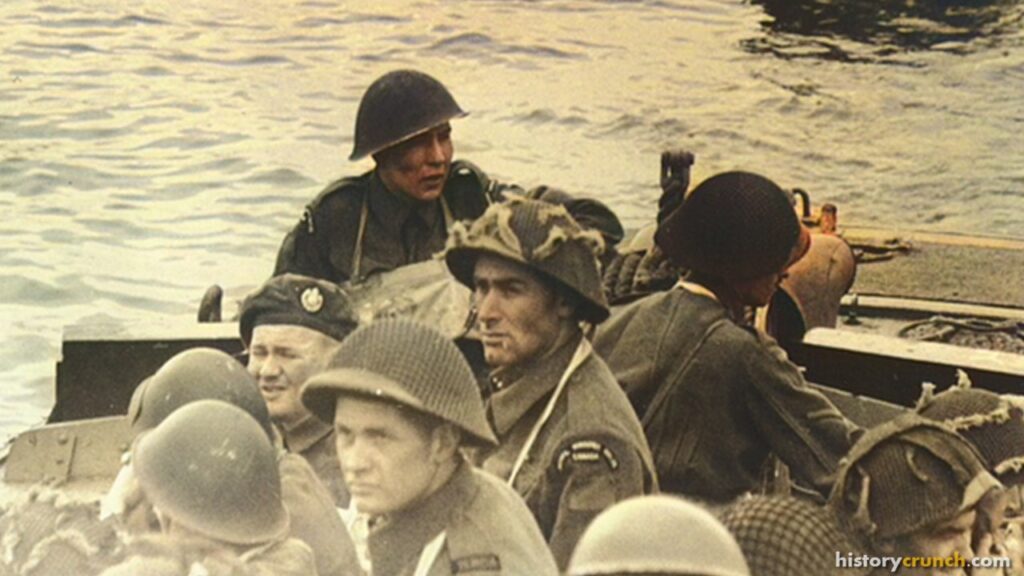
The most famous Canadian contribution to World War II was the role of Canadian forces in the D-Day landings in Normandy, France, on June 6th, 1944. As part of the massive Allied invasion force, Canadian forces were assigned one of the five landing beaches, which was codenamed ‘Juno Beach’. Approximately 15,000 members of the Canadian Army, along with hundreds of members of the Royal Canadian Air Force and the crews of 60 vessels of the Royal Canadian Navy, participated in the D-Day landings. Canadian forces faced fierce resistance at Juno Beach but managed to advance further inland than any other Allied force on D-Day. Canadian casualties on D-Day totaled 1,074, including 359 killed. As such, June 6th, 1944 stands as one of the most significant and costly days in Canadian military history.
Following the D-Day landings, Canadian forces fought through France, Belgium, and into the Netherlands as part of the Allied advance against Nazi Germany. For instance, the First Canadian Army played a central role in the Battle of the Scheldt in the autumn of 1944, which was a major operation to clear the approaches to the port of Antwerp, Belgium, and open vital supply lines for the overall Allied advance into Germany. The operation involved weeks of fighting through flooded poldersLow-lying land reclaimed from the sea and protected by dikes, making military movement extremely difficult. and fortified German positions at a cost of approximately 13,000 Canadian casualties. As well, in February of 1945, the First Canadian Army launched the Rhineland Campaign, in which General Harry Crerar commanded the largest force ever led by a Canadian general, including both Canadian and Allied formations.
What made Canadian forces stand out among all Allied units during the D-Day landings at Juno Beach on June 6th, 1944?
Canada in the Liberation of the Netherlands
One of the most significant and celebrated contributions of Canadian forces in World War II was their role in the liberation of the Netherlands from Nazi German occupation. From the spring of 1944 through to May of 1945, Canadian forces fought to free the Dutch people from German control. For instance, the First Canadian Army began its campaign to clear the Netherlands in April of 1945, advancing through the country and liberating city after city as Nazi German resistance collapsed. On May 5th, 1945, German forces in the Netherlands formally surrendered to Canadian General Charles Foulkes in Wageningen, Netherlands.
The liberation of the Netherlands by Canadian forces created a bond between Canada and the Dutch people that has endured to the present day. For instance, at the end of the war, the Dutch Royal Family sent 100,000 tulip bulbs to Canada as a gesture of gratitude, and the annual Canadian Tulip Festival held in Ottawa, Ontario was established in commemoration of this bond. As such, the liberation of the Netherlands remains one of the most enduring symbols of Canada’s contribution to World War II.
FactsthatCrunchWhy Does Canada Hold a Tulip Festival Each Year?
Each spring, Ottawa hosts the Canadian Tulip Festival to honor the liberation of the Netherlands by Canadian forces in 1945. At the end of the war, the Dutch royal family sent 100,000 tulip bulbs to Canada as a gift of gratitude for the role Canadian soldiers played in freeing the Netherlands. The festival has been held annually since 1953 and remains a direct living tribute to the wartime bond between Canada and the Dutch people.
Canada in World War II – Home Front
World War II had a profound impact on the home front in Canada, affecting the economy, the role of women, industrial production, and the issue of conscription. In terms of industrial production, Canada rapidly transformed its economy to support the war effort. For instance, Canadian factories produced a wide range of war materials, including aircraft, ships, tanks, and artillery. As well, Canada hosted and paid much of the cost of the British Commonwealth Air Training Plan, which trained more than 131,000 Commonwealth airmen from Canada, Britain, Australia, and New Zealand at training facilities across the country. As such, Canada’s industrial and logistical contribution to the Allied war effort was enormous and extended far beyond the battlefield.
The war also brought important changes to the role of women in Canada. With large numbers of men serving overseas, women took on a wide range of roles in industry, agriculture, and the armed services that had previously been unavailable to them. For instance, approximately 50,000 Canadian women served in the three armed services during World War II, performing roles in administration, communications, healthcare, and logistics. As well, many more women entered the civilian workforce to fill positions vacated by men who had gone to war, contributing to a lasting shift in attitudes about the role of women in Canadian society.
The most controversial issue on the Canadian home front during World War II was conscription. As stated above, Prime Minister King had promised at the start of the war that conscription for overseas service would not be imposed. However, as casualty rates rose and the demand for reinforcements increased, pressure to introduce conscription grew. On April 27th, 1942, King held a national plebisciteA direct national vote in which all eligible citizens are asked to decide a specific question. asking Canadians to release the government from its no-conscription pledge. Approximately two-thirds of Canadian voters supported conscription, but in Quebec approximately three-quarters opposed it, reflecting the deep cultural and political divide on the issue between French and English Canada. King subsequently introduced conscription for home defense but initially continued to resist sending conscripts overseas. It was not until November of 1944, under intense pressure from military leaders, that King finally agreed to send conscripts overseas as reinforcements. The conscription crisis reinforced the ongoing tensions between English-speaking and French-speaking Canada and remained a significant political issue for years after the war ended.
FactsthatCrunchThe British Commonwealth Air Training Plan turned Canada into an air training center, producing crews that shaped the Allied air war.
Canada in World War II – Significance
World War II was one of the most important events in the history of Canada. First, the scale of Canada’s contribution to the war effort was remarkable for a country with a population of approximately 11 to 12 million people. In total, over one million Canadians served in the armed forces, and approximately 45,000 were killed or died in service, with a further 55,000 wounded. This level of sacrifice and contribution cemented Canada’s reputation as a significant military power on the world stage.
Second, World War II accelerated Canada’s development as an independent nation. Canada’s decision to declare war one week after Britain in 1939, its role in major Allied decisions and conferences, and its enormous contribution to the overall war effort all reinforced the country’s growing sense of itself as an independent actor in world affairs. For instance, Canada played an active role in the formation of the United Nations following the war, and its commitment to multilateralism and international cooperation became a defining feature of its foreign policy in the postwar era.
Third, World War II had lasting social consequences for Canada. The large-scale entry of women into the workforce, the contributions of Indigenous Canadians and other minority communities to the war effort, and the bond forged with the Netherlands and other liberated nations all left a lasting mark on Canadian society. As such, World War II was a defining moment in Canada’s history and played an important role in shaping the country’s sense of national identity and its place in the world in the decades that followed.
Key Vocabulary
Dominion
Statute of Westminster
Conscription
Plebiscite
Amphibious assault
Convoy
Polders
Frequently Asked Questions
When did Canada enter World War II?
Canada declared war on Nazi Germany on September 10th, 1939, one week after Britain and France. This one-week delay was a deliberate and symbolic choice. It showed that Canada was entering the war as a sovereign nation making its own decision. This independence came from the Statute of Westminster, passed in 1931.
What was Canada’s role on D-Day?
Canadian forces were assigned one of the five landing beaches, codenamed Juno Beach, on June 6th, 1944. About 15,000 Canadian soldiers took part, along with airmen and 60 navy vessels. Canadian troops advanced further inland than any other Allied force that day. Casualties totaled 1,074, including 359 killed.
Why was the Dieppe Raid considered a disaster?
The Dieppe Raid on August 19th, 1942 cost about 5,000 Canadians 916 killed and 1,946 taken prisoner in only nine hours. German defenses were strong and well-prepared, and the attackers faced heavy fire on the beaches. The losses shocked Canada and raised serious questions about the planning. Still, the lessons learned helped shape the later success of D-Day.
How did Canada help liberate the Netherlands?
The First Canadian Army fought to free the Dutch people from German control, with its final push beginning in April of 1945. German forces in the Netherlands formally surrendered to Canadian General Charles Foulkes on May 5th, 1945. The liberation created a lasting bond between Canada and the Dutch people. In thanks, the Dutch Royal Family sent 100,000 tulip bulbs to Canada.
Why was conscription so controversial in Canada?
Conscription split English-speaking and French-speaking Canada, much as it had during World War I. Prime Minister King had promised no forced overseas service, but rising casualties increased pressure to change course. In an April 27th, 1942 plebiscite, about two-thirds of voters backed conscription, while roughly three-quarters in Quebec opposed it. King did not send conscripts overseas until November of 1944.
How many Canadians served in World War II?
Over one million Canadians served in the armed forces during World War II. This included about 50,000 women who served in the three armed services. Roughly 45,000 Canadians were killed or died in service, with a further 55,000 wounded. This scale of sacrifice was remarkable for a country of only 11 to 12 million people.
Cite This Article
To cite this article as a source, use one of the formats below.
MLA: Millar, B. “Canada in World War II: A Detailed Summary.” HistoryCrunch, 1 October 2026, https://historycrunch.com/canada-in-world-war-ii/.
APA: Millar, B. (2026). Canada in World War II: A Detailed Summary. HistoryCrunch. https://historycrunch.com/canada-in-world-war-ii/
Chicago: Millar, B. “Canada in World War II: A Detailed Summary.” HistoryCrunch. October 1, 2026. https://historycrunch.com/canada-in-world-war-ii/
Sources
- Antony Beevor, The Second World War.
- Max Hastings, Inferno / All Hell Let Loose.
- The National WWII Museum
- Gerhard L. Weinberg, A World at Arms.