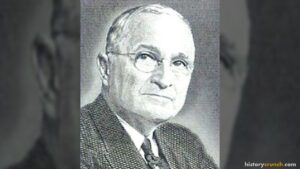
The Space Race was a Cold War-era competition between the United States and the Soviet Union to achieve the first major achievements in space exploration. In terms of the Cold War, the superpowers used the Space Race to symbolize their technological and ideological superiority.
What Was the Cold War?
The Cold War was a major world event that took place from approximately 1945 until 1991. In general, the Cold War was a period of increased tensions and hostility between the superpowers of the United States and the Soviet Union (USSR). It was characterized by a global struggle between capitalism and communism, with both sides competing for influence around the world. Although it never escalated into direct war between the superpowers, it involved proxy wars, nuclear arms races, and ideological confrontations. Many of the major events of the Cold War increased the tensions between the two nations, including: Cuban Missile Crisis, Vietnam War, Korean War and the nuclear arms race.
While the Cold War saw the two superpowers compete with each other for military, political and economic superiority, it also involved the two countries participating in a competition for prestige. This ‘prestige race’ saw the two nations try to outdo each other in all aspects of society, including scientific and technological advancements. The most obvious example of this ‘prestige race’ in relation to technology was the Space Race, in which the two countries competed in the field of space exploration.
Space Race – Background
The Space Race between the United States and the Soviet Union occurred from the 1950s until the 1970s. During this time, each nation spent millions of dollars developing their own space programs, including: rockets, satellites, astronauts and carrying out space missions. As each nation carried out their space achievements, they would utilize them as propaganda in order to project their own ideologyA set of beliefs and ideas that shapes how a government or society is organized and run.. Ideological conflict was a central component of the Cold War, and the Space Race gave the two nations the opportunity to compete over superiority. As such, the Space Race caused each nation to push each other as they competed to dominate the other in terms of their achievements. In all, the Space Race unfolded as a series of major events.
 FactsthatCrunch
Why Did the Launch of Sputnik 1 Alarm the United States in 1957?
Space Race – Sputnik
The first major event of the Space Race was on October 4th, 1957, when the Soviet Union launched the first satellite into space, called Sputnik 1. The satellite was a polished metal sphere with four antennas and provided scientists with information about the density of the upper atmosphere. The launch of Sputnik 1 was shocking to the United States as it showed the Soviet Union was more advanced in its space program. Many historians now look at the launch of the satellite as the event that sparked the Space Race between the two superpowers, as the United States attempted to catch up to the Soviet Union.
The next major event of the space race was the launch of Sputnik 2 on November 3rd, 1957 by the Soviet Union. It was only the second craft launched into space and is notable for carrying the first living thing into space: a dog named Laika. The satellite was a cone shaped capsule that measured solar radiation and transmitted the data back to earth for scientists to analyze. Again, the Soviet Union displayed that it was ahead of the United States.
FactsthatCrunchOn November 3rd, 1957, the Soviet Union launched Sputnik 2 carrying Laika, a stray dog from Moscow, making her the first living creature to orbit Earth. Her flight was only possible because Soviet scientists had already spent years running a program to train and test dogs for spaceflight conditions, including pressure suits, confined capsules, and launch stress.
Soviet researchers chose dogs, especially small mixed-breed females, because they were calm under stress and easy to fit with biosensors that tracked heart rate and breathing during flight. The program tested dogs in pressure suits, confined capsules, and conditions that mimicked the stress of launch before any animal flew in space.
Space Race – Explorer 1 and the Creation of NASA
The United States responded on January 31st, 1958, when it launched its first satellite called Explorer 1. The satellite was significant because it showed the United States’ place in the space race, and it also provided new scientific data. For example, Explorer 1 was able to detect the Van Allen radiation belt which surrounds the earth. The United States attempted to follow up the success of Explorer 1 with the launch of a second satellite, Explorer 2, on March 5th, 1958. However, the launch was a failure when the rocket failed to fully ignite and the satellite failed to reach orbit.
The United States returned to space on March 17th, 1958, when it launched the Vanguard 1 satellite. It was the fourth satellite launched into space and the second American satellite. The Vanguard 1 was significant for several reasons, including: it was a successful launch after the failure of the Explorer 2 rocket, it was the first solar powered satellite, and it remains the oldest man-made satellite still in space.
After the successful launch of the Vanguard 1, the United States next created its government run space program called the National Aeronautics and Space Administration (NASA) on October 1st, 1958. NASA would be responsible for carrying out all of the elements of the American space program, including: developing rockets, training astronauts and carrying out space missions. NASA would play an important role in the Space Race and today remains the world leader in space exploration.
Space Race – First Man in Space
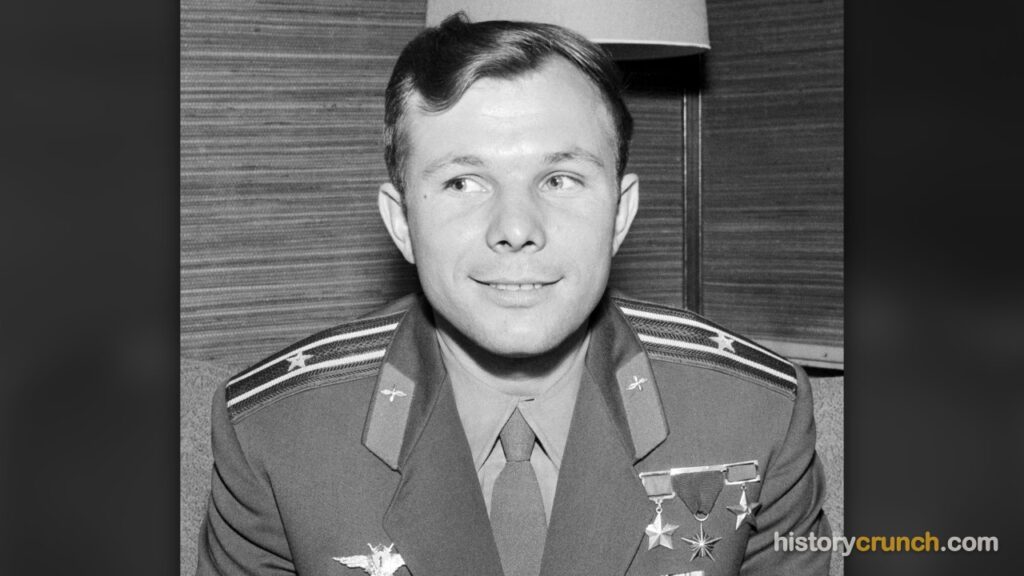
Next, the Soviet Union took a leap forward when it launched the first man into space on April 12th, 1961. Soviet cosmonautThe Soviet Union’s term for a person trained to travel and work in space. Yuri Gagarin was launched into space and orbited the earth for a short time. Once his craft descended far enough he ejected and parachuted back to earth. Gagarin’s flight into space showed that the Soviet Union was still leading the space race ahead of the United States.
The United States responded to the achievement of Gagarin and the Soviet Union by launching its own man into space on May 5th, 1961. American astronaut Alan Shepard was the first American in space and spent just over 15 minutes in flight aboard the Freedom 7. Next, on February 20th of 1962, American John Glenn became the first American to orbit the earth. He circled the earth 3 times in nearly 5 hours.
FactsthatCrunchYuri Gagarin became the first person to travel to space when he launched aboard Vostok 1 on April 12th, 1961, orbiting Earth before ejecting from his craft and parachuting back to the ground. His flight was a major victory for the Soviet Union in the Space Race, showing that the USSR was ahead of the United States in space technology.
Space Race – President John F. Kennedy
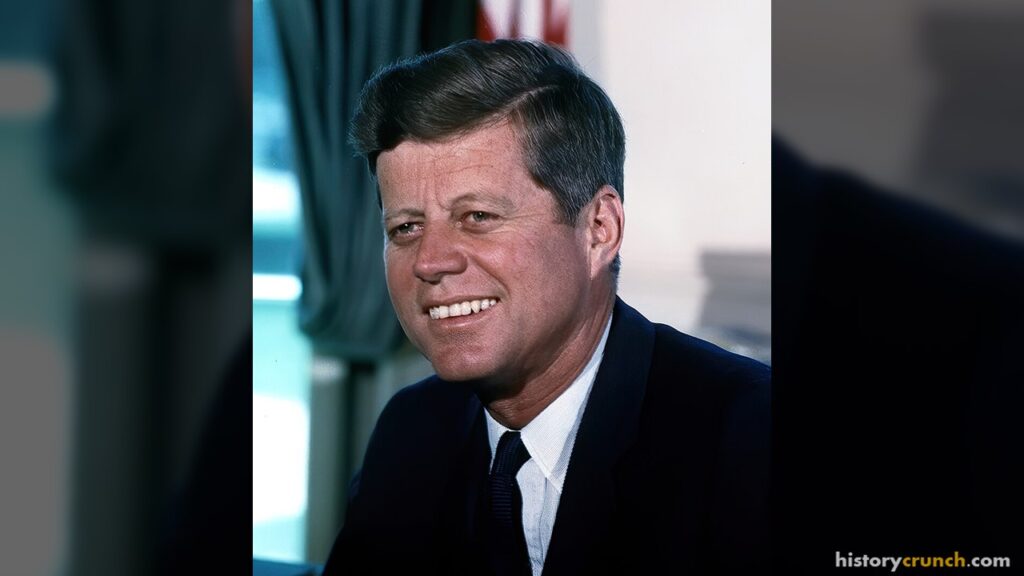
As well, the American space program began to continue its advancements in space exploration when President John F. Kennedy challenged the nation to go to the moon before the end of the 1960s. In his famous speech, Kennedy stated:
“We choose to go to the moon. We choose to go to the moon in this decade, and do the other things – not because they are easy, but because they are hard. Because that goal will serve to organize and measure the best of our energies and skills. Because that challenge is one that we are willing to accept, one we are unwilling to postpone, and one which we intend to win”.
The achievements of Shepard and Glenn and the call to action by Kennedy, showed that the United States was committed to winning the space race against the Soviet Union. The victory of the Space Race had also been set; the rest of the 1960s would see the United States and the Soviet Union race to be the first nation to the moon.
Space Race – Moon Landing
Throughout the mid-1960s the Soviet Union achieved another string of firsts in space exploration. First, on June 16th, 1963, the Soviet Union launched the first woman into space. Soviet cosmonaut, Valentina Tereshkova went into space aboard Vostok 6 and spent 3 days alone in orbit. Next, on March 18th, 1965, the Soviet Union achieved the first space walk. Cosmonaut Alexei Leonov was outside of the Voskhod 2 spacecraft just over 12 minutes and was connected by a 5 meter tetherA rope or cord that keeps a spacewalking astronaut physically connected to the spacecraft.. However, these Soviet accomplishments were no match for the American achievement on July 20th, 1969.
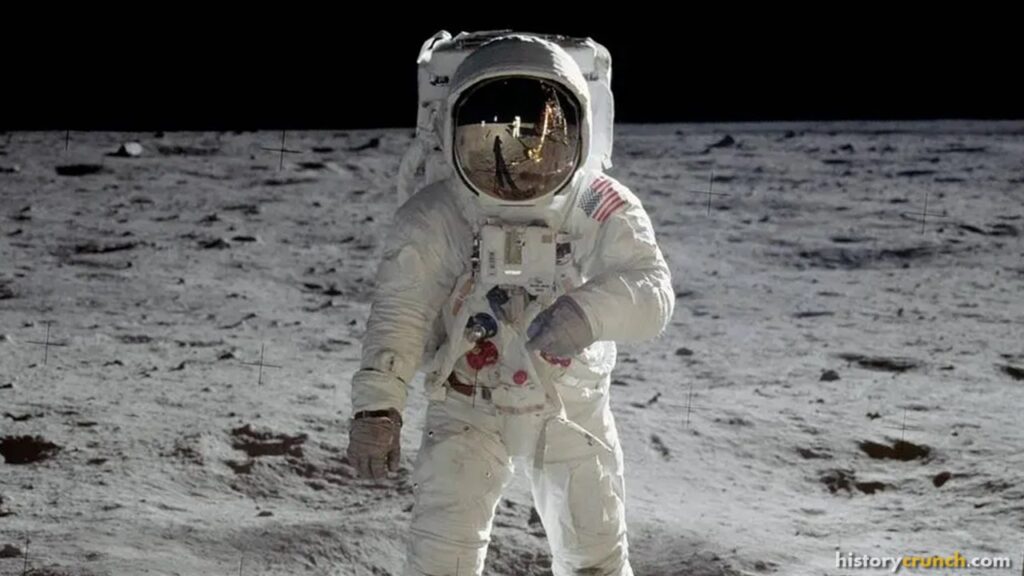
American astronauts Neil Armstrong and Buzz Aldrin made history when they landed on the surface of the moon on July 20th, 1969, as part of the Apollo 11 mission. Neil Armstrong was the first man to walk on the moon and famously stated “one small step for man, one giant leap for mankind” just after taking his first steps. He and Aldrin spent approximately 2 and a half hours on the surface collecting samples of lunarRelating to the moon. material. The American moon landing was an incredibly significant event when it occurred. It captured the attention of the world when it took place with millions watching the landing live on television. As well, the landing fulfilled the challenge by John F. Kennedy earlier in the decade, that the United States should land astronauts on the moon before the end of the decade, even though he was not alive to see the accomplishment. Finally, and most importantly, the American moon landing is viewed as the symbolic end of the space race. The United States would return to the moon several times on later missions while the Soviet Union would never reach the lunar surface. The space race was over.
FactsthatCrunchOn July 20th, 1969, astronauts Neil Armstrong and Buzz Aldrin landed on the lunar surface during the Apollo 11 mission. Armstrong became the first person to walk on the moon, and the two astronauts spent approximately 2 and a half hours collecting samples of lunar material before returning safely.
The United States and the Soviet Union had raced for a decade to be first to the moon, with the Soviet Union holding early leads in space firsts.
The United States claimed the ultimate prize of the Space Race. The Soviet Union never reached the lunar surface, and the competition was widely considered over.
Space Race – Significance
The Space Race was significant for several key reasons. First, it showcased the technological and scientific capabilities of the United States and the Soviet Union during the Cold War. Further to this, the Space Race served as a sort of ‘prestige race’ between the two superpowers for ideological superiority. As such, it contributed to heightened tensions between the two nations, as they competed for technological superiority. For instance, the launch of Sputnik caused fear among many in the United States due to the unknown capabilities of the Soviet space program. Second, the Space Race led to key advancements in aerospaceThe science and industry involved in building aircraft and spacecraft., computing, and communications technologies that benefit society still today. The competition of the Space race caused the nations to pour vast sums of money into emerging technologies and science. This was a benefit to the science community and led to many significant advancements. Finally, the American Moon Landing in 1969 was seen as a major political and symbolic victory for the United States. In fact, many consider it to be the end of the Space Race, since the race to the moon was seen as the ultimate victory.
FactsthatCrunchExplore Cold War · 1947 – 1991
Keep exploring Cold War with these History Crunch resources.
Key Vocabulary
Proxy wars
Propaganda
Ideology
Cosmonaut
Tether
Lunar
Aerospace
Frequently Asked Questions
What was the Space Race?
The Space Race was a Cold War competition between the United States and the Soviet Union to lead in space exploration. It ran from the 1950s until the 1970s. Each nation spent millions of dollars on rockets, satellites, and space missions to prove its ideology was superior.
What was Sputnik 1 and why did it matter?
Sputnik 1 was the first satellite launched into space, sent up by the Soviet Union on October 4th, 1957. The metal sphere shocked the United States because it showed the Soviets were ahead in space technology. Many historians view this launch as the event that started the Space Race.
Who was the first person in space?
Soviet cosmonaut Yuri Gagarin became the first person in space on April 12th, 1961. He orbited the Earth, then ejected from his craft and parachuted back down. His flight proved the Soviet Union was still leading the race ahead of the United States.
When did the United States land on the moon?
American astronauts Neil Armstrong and Buzz Aldrin landed on the moon on July 20th, 1969, during the Apollo 11 mission. Armstrong was the first person to walk on the lunar surface. Millions of people watched the event live on television around the world.
Who won the Space Race?
The United States is generally seen as the winner because it reached the moon first in 1969. The moon landing is viewed as the symbolic end of the Space Race. The Soviet Union never landed a person on the lunar surface, while the United States returned several more times.
How did the Space Race connect to the Cold War?
The Space Race was part of a larger Cold War struggle between capitalism and communism. Both superpowers used space achievements as propaganda to show their ideology was stronger. The competition pushed each nation to pour money into new science and technology.
Cite This Article
To cite this article as a source, use one of the formats below.
MLA: Beck, Elias. “Space Race: A Detailed Summary.” HistoryCrunch, 9 October 2026, https://historycrunch.com/space-race/.
APA: Beck, E. (2026). Space Race: A Detailed Summary. HistoryCrunch. https://historycrunch.com/space-race/
Chicago: Beck, Elias. “Space Race: A Detailed Summary.” HistoryCrunch. October 9, 2026. https://historycrunch.com/space-race/
Sources
- John Lewis Gaddis, The Cold War: A New History.
- Odd Arne Westad, The Global Cold War.