The Cuban Missile Crisis was an important event that occurred over the course of 13 days in October of 1962. In fact, it was a confrontation between the United States and the Soviet Union over the placement of Soviet nuclear missiles placed in Cuba. In all, the Cuban Missile Crisis was significant because it was the closest the world ever came to nuclear war. As such, historians consider the Cuban Missile Crisis to be one of the most significant events of the Cold War, and a clear example of ‘brinkmanship‘, which was a Cold War strategy where opposing countries pushed dangerous situations to the edge of conflict in order to force the opponent to back down.
 FactsthatCrunch
What Was the Cold War?
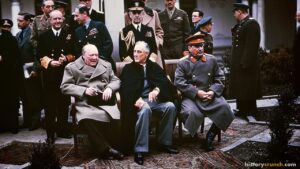
The Cold War was a major world event that took place from approximately 1945 until 1991. In general, the Cold War was a period of increased tensions and hostility between the superpowers of the United States and the Soviet Union (USSR). It was characterized by a global struggle between capitalism and communism, with both sides competing for influence around the world. Although it never escalatedGrew more intense or serious over time. into direct war between the superpowers, it involved proxy wars, nuclear arms races, and ideological confrontations. The Cuban Missile Crisis was likely the highest point of tensions in the entire Cold War and the closest that the world ever came to nuclear war.
Cuban Missile Crisis – Causes
Historians have identified a few of the main causes of the Cuban Missile Crisis in the Cold War. First, was the backdrop of the heightened tensions of the Cold War. At its heart, the Cold War was about ideologicalRelating to a system of beliefs or values, such as capitalism versus communism. tensions between the main superpowers of the United States and the Soviet Union. As such, any actions carried out by one of the superpowers were viewed with suspicion or fear by the other. So, when the Soviet Union attempted to construct missile sites on Cuba in 1962, it caused a wave of fear and uncertainty in the United States and among its allies. From the perspective of the United States, the presence of Soviet missile sites in the west was cause for fear. In fact, the crisis caused the Cold War tensions of the time to increase to all-time highs and set the stage for a major confrontation between the United States and Soviet Union.
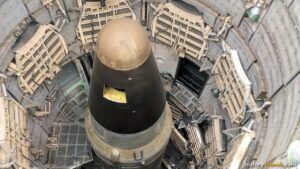
Another significant cause of the Cuban Missile Crisis was the presence of American missile sites in Turkey and Italy. In 1961, the United States and its allies in the North Atlantic Treaty Organization (NATO) placed strategic missile sites in both Turkey and Italy as a means of defense against the Soviet Union. Soviet leaders argued that they should be allowed to place missile sites in Cuba in order to counter the presence of American missiles near the Soviet Union. As such, historians consider the development of these missile sites in Turkey and Italy as significant towards the outbreak of the Cuban Missile Crisis.
Next, the United States carried out a failed attempt to overthrow the Cuban government in 1961. This is now known as the Bay of Pigs Invasion and was an embarrassing event for the United States and American President John F. Kennedy. The Bay of Pigs Invasion saw American-backed Cuban exiles try to overthrow Fidel Castro’s communist government in Cuba. The exiles landed at the Bay of Pigs on Cuba’s southern coast but were quickly defeated by Cuban forces. In response to the failed invasion, Soviet Premier Nikita Khrushchev introduced the idea of placing nuclear missiles in Cuba to deterTo discourage an action by making the consequences seem too dangerous or costly. any future invasion of Cuba. Khrushchev also used it as an opportunity to send a message that the Soviet Union was not happy with the United States’ missiles aimed at them from Turkey and Italy. From Cuba’s perspective, it sought military protection from another American-backed invasion and turned to the Soviet Union for assistance. In fact, Khrushchev and Fidel Castro reached a secret agreement in July of 1962 and construction soon followed on several missile sites in Cuba.
Cuban Missile Crisis – Summary
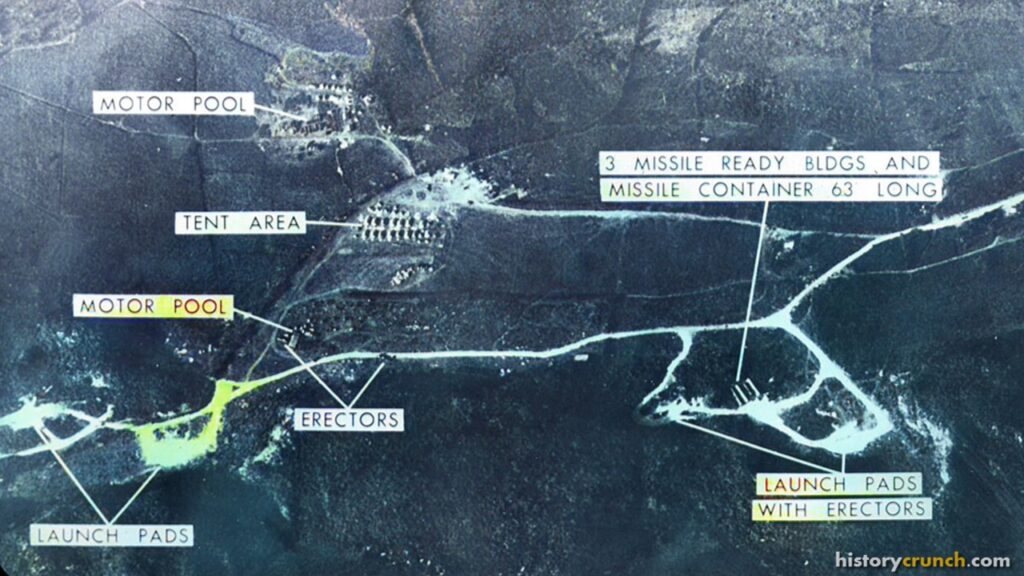
The Cuban Missile Crisis escalated when a United States Air Force U-2 aircraft flew over Cuba and saw the missile construction sites on October 14th, 1962. More specifically, the American U-2 spy plane obtained photographic evidence that Soviet-built nuclear missile sites were present in Cuba. In response to the discovery, American President John F. Kennedy considered his country’s options, including the possibility of attacking Cuba by sea and air. Another option was to prevent supplies from reaching Cuba by using the United States’ navy and air force in order to blockadeA military action using naval and air forces to prevent supplies or ships from reaching a country. the small island nation.
The United States decided to proceed with a naval and air blockade for the purposes of blocking the delivery of any further missiles from the Soviet Union to Cuba. Furthermore, the United States demanded that Cuba and the Soviet Union remove any current missiles already in place and to return all missiles and their support systems to the Soviet Union.
The United States government, under the leadership of President John F. Kennedy, believed that the government of the Soviet Union would not agree to the demands of the United States and expected a military confrontation of some sort over the issue. For instance, on October 24th, 1962 a letter from Premier Khrushchev to President Kennedy indicated that the United States blockade constituted an act of aggression which would go down a path of a nuclear missile war between the United States and the Soviet Union. However, unknown to the world at the time, President Kennedy and Premier Khrushchev had also begun a series of secret communications in relation to the Cuban Missile Crisis.
As stated previously, the Cuban Missile Crisis was one of the highest points of tension in the entire Cold War. This was due to several factors, including the threat of nuclear war between the two superpowers. As such, any perceived confrontation between the United States and the Soviet Union in relation to the crisis was viewed with uncertainty and fear. The American naval blockade of Cuba resulted in an incredibly intense situation that pushed the world to the edge of disaster. For instance, when Soviet ships attempted to avoid the American blockade of Cuba it led to an escalation of the tensions. In fact, the United States Navy was given orders to fire warning shots at the approaching Soviet ships and, if they did not stop, to then fire directly at them.
Then, on October 27th, 1962, an American U-2 spy plane was shot down by a Soviet missile crew stationed in Cuba. This was a shocking development and could have resulted in immediate military retaliationA military or political strike back against an enemy after being attacked. from the United States. However, President Kennedy decided to continue with negotiations in an effort to come to a peaceful conclusion.
Finally, on October 28th, 1962, the Cuban Missile Crisis ended when Soviet leader Nikita Khrushchev agreed to remove Soviet nuclear missiles from Cuba in exchange for a public promise from the United States not to invade Cuba. Also, there was a secret agreement to remove American missiles from Turkey. Finally, the United States ended its naval blockade of Cuba on November 20th, 1962.
FactsthatCrunchCuban Missile Crisis – Significance
The tense negotiations between the United States and the Soviet Union pointed out the need for a quick, clear and direct communication link between the leaders of each country. For instance, most political commentators and historians agree that the Cuban Missile Crisis was made worse due to the fear and uncertainty that it created among the general public. Therefore, many saw a need for a method of communication between the superpowers that would not escalate global tensions. As a result, the ‘hotline’ (direct contact), between Moscow and Washington was established. This resulted in better communication between the two countries and has been viewed as a positive development of the Cuban Missile Crisis.
For its part, Cuba believed that the Soviet Union had betrayed them. Cubans were particularly disappointed since Fidel Castro, the Cuban leader, was not involved in any of the negotiations and that the American naval base in Guantanamo, Cuba was allowed to remain in place.
The resolution is also considered to be an embarrassment for Soviet Premier Khrushchev and the Soviet Union’s government. In fact, some viewed the Soviet Union as caving to American pressure and criticized Khrushchev’s handling of the crisis. In fact, Khrushchev lost control of the Communist Party government two years later, partly because of the embarrassment brought on by him beginning this crisis and his eventual agreement with the United States.
Regardless, the Cuban Missile Crisis was a highly significant event in the overall Cold War. It was likely the closest that the world ever came to nuclear warfare, and is considered to be an example of ‘brinkmanship‘, which was a Cold War strategy where countries pushed dangerous situations to the edge of conflict in order to force the opponent to back down.
Explore Cold War · 1947 – 1991
Keep exploring Cold War with these History Crunch resources.
Key Vocabulary
Brinkmanship
Proxy wars
Blockade
Ideological
Escalated
Deter
Retaliation
Frequently Asked Questions
When did the Cuban Missile Crisis happen?
The Cuban Missile Crisis lasted 13 days in October of 1962. It began when an American spy plane photographed Soviet missile sites in Cuba on October 14th, 1962. The standoff ended on October 28th, 1962, when the Soviet Union agreed to remove the missiles.
What caused the Cuban Missile Crisis?
The main cause was the Soviet Union placing nuclear missiles in Cuba in 1962. The United States had earlier placed its own missiles in Turkey and Italy, which worried Soviet leaders. The failed Bay of Pigs Invasion in 1961 also pushed Cuba to seek Soviet protection.
How was the Cuban Missile Crisis resolved?
The crisis ended when Nikita Khrushchev agreed to remove the Soviet missiles from Cuba. In return, the United States publicly promised not to invade Cuba. A secret deal also called for the United States to remove its missiles from Turkey.
Why was the Cuban Missile Crisis so dangerous?
It was the closest the world ever came to nuclear war between the two superpowers. Soviet ships tried to pass the American blockade, and the U.S. Navy was ready to fire. On October 27th, 1962, a Soviet crew in Cuba shot down an American spy plane.
What is brinkmanship?
Brinkmanship was a Cold War strategy of pushing a dangerous situation to the edge of conflict. The goal was to force the other side to back down first. The Cuban Missile Crisis is often used as a clear example of this risky approach.
What happened after the Cuban Missile Crisis?
The two sides set up a direct “hotline” between Moscow and Washington to improve communication. Cuba felt betrayed because Fidel Castro was left out of the talks. Khrushchev was also criticized at home and lost power about two years later.
Cite This Article
To cite this article as a source, use one of the formats below.
MLA: Beck, Elias. “Cuban Missile Crisis: A Detailed Summary.” HistoryCrunch, 9 October 2026, https://historycrunch.com/cuban-missile-crisis/.
APA: Beck, E. (2026). Cuban Missile Crisis: A Detailed Summary. HistoryCrunch. https://historycrunch.com/cuban-missile-crisis/
Chicago: Beck, Elias. “Cuban Missile Crisis: A Detailed Summary.” HistoryCrunch. October 9, 2026. https://historycrunch.com/cuban-missile-crisis/
Sources
- Wilson Center Digital Archive
- Odd Arne Westad, The Global Cold War.