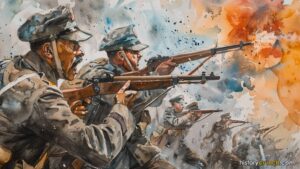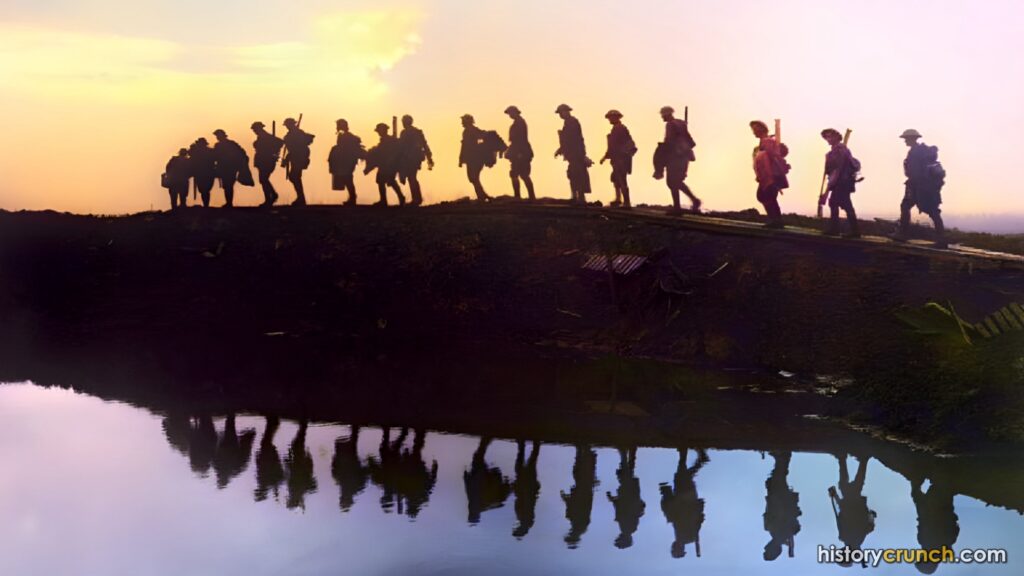
Australia in World War I played an important role and fought alongside the Allied Powers of the war. World War I was an important event in history for many different countries, including Australia. While the war was primarily a European conflict, it ultimately became a global war due to the involvement of countries from around the world. For example, Australia joined World War I in 1914 due to its status as a DominionA partially independent nation under the wider control of the vast British Empire. of the British Empire. As such, Australian soldiers were present in many of the major battles in both Europe and the Middle East.
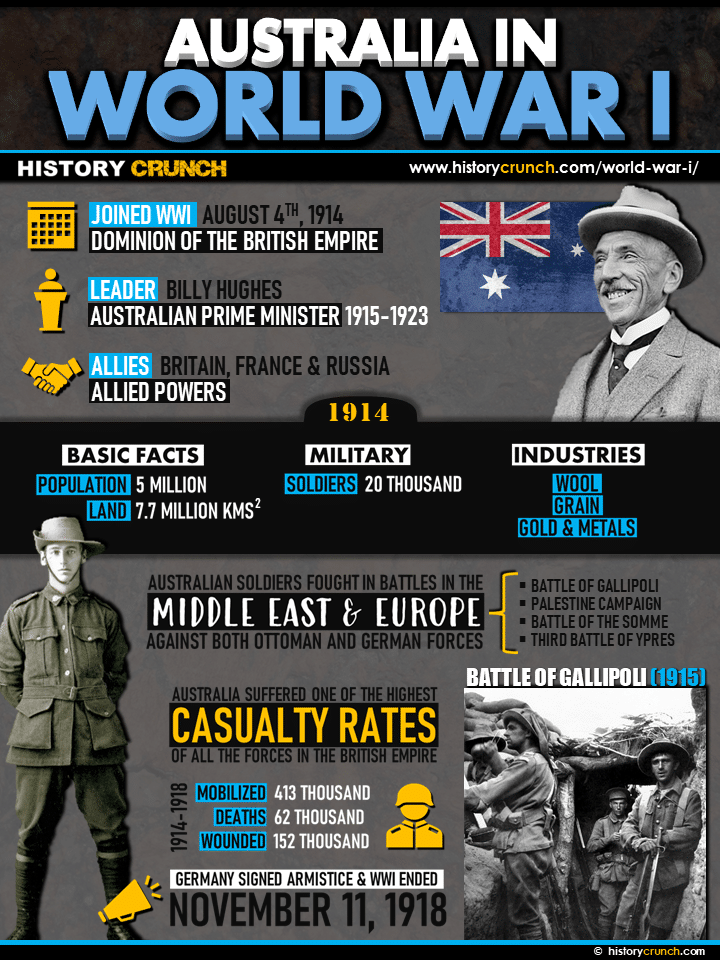
Australia Enters World War I
World War I erupted during the summer of 1914 in an event that historians refer to as the July Crisis. In short, this crisis was caused by the assassination of Austrian Archduke Franz Ferdinand, which led to the major European powers engaging in a conflict. For example, Britain was pulled into the crisis when Germany invaded Belgium, whose neutrality Britain had promised to protect. Britain was also linked by agreement to France and Russia in the Triple Entente. As stated above, Australia was considered to be a Dominion of the British Empire at the time. A ‘dominion’ is considered to be a partially independent nation under the wider control of the vast British Empire. At the time, the status of ‘dominion’ was given to several nations or regions within the British Empire, including: Australia, Canada, New Zealand, Newfoundland, and South Africa. Due to being a Dominion of the British Empire, when Britain declared war on August 4th, 1914, Australia was also automatically pulled into the fighting of World War I.
With that said, support for the war was widespread across Australia due to much of the population feeling a sense of national identity to England and the rest of the British Empire. In fact, although Australia was in the midst of an election at the time, support for the British in World War I was not a controversial issue. Both Prime Minister Joseph Cook and Opposition leader, Andrew Fisher, supported Australia’s involvement in the war. For example, Joseph Cook stated, “when the Empire is at war, so is Australia at war” to a meeting of advisors on July 30th in 1914.
He then argued that Australia would pledge its full support to Britain and the war effort. More specifically, Cook notified Britain a day before it officially declared war against Germany that Australia would supply and fund an expeditionary forceA military force sent to fight in a foreign country. of 20,000 men to anywhere that Britain required.
For his part, Opposition leader Andrew Fisher gave a famous election speech on July 31st of 1914 where he announced that “should the worst happen, after everything has been done that honour will permit, Australians will stand beside the mother country to help and defend her to our last man and our last shilling”. As such, this displays the commitment from the Australian government and its people towards the overall war effort.

Australia in World War I – Army
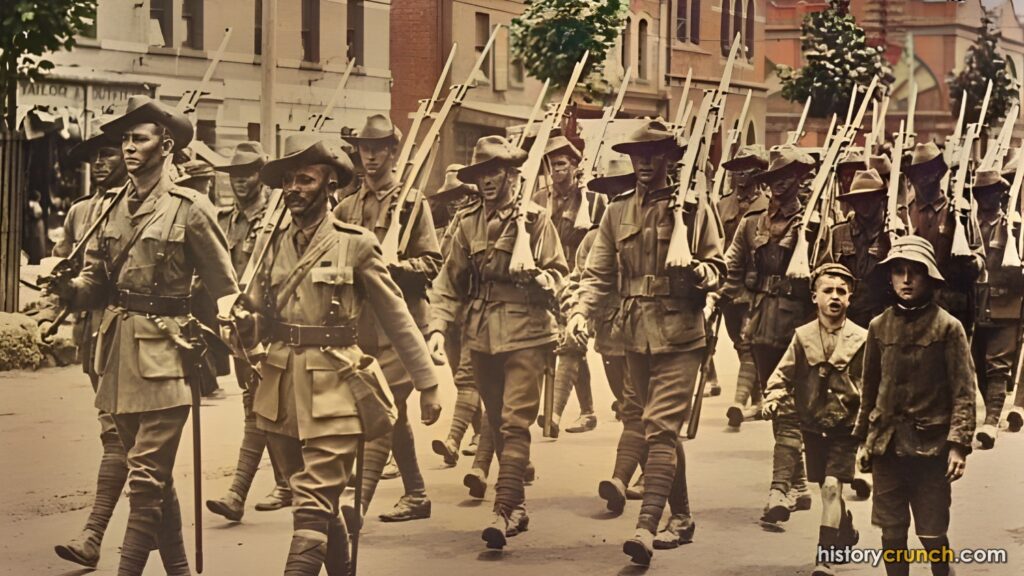
Australia’s enthusiasm to participate alongside Britain in World War I meant that it needed to quickly gather supplies and build up its army. As such, Prime Minister Joseph Cook created the Australian Imperial Force and the Australian Naval and Military Expeditionary Force. The Australian Imperial Force was created on August 15th, 1914, and was the main armed forces that Australia deployed in the timeframe of World War I. These forces served in battles across Europe and the Middle East. The Australian Naval and Military Expeditionary Force formed shortly after Australia’s entry into World War I and focused on military operations in Germany-controlled New Guinea. It consisted of a force of about 2,000 Australian men and carried out missions in New Guinea to prevent Germany from using wireless stations in the region, which were important to German naval forces. While the forces of both the Australian Imperial Force and the Australian Naval and Military Expeditionary Force were initially quite small, over 413,000 Australians eventually participated in the war effort.
Australia in World War I played a significant role in the fighting. The war was primarily a European conflict, as it involved the major European powers of the time including: Austria-Hungary, Britain, Bulgaria, France, Germany, Ottoman Empire and Russia. When war broke out in 1914, there were two sets of alliances. First was the Allied Powers, which included Britain, France and Russia. Due to its status as a Dominion of the British Empire, Australia participated alongside these other powers. On the other side was the alliance of the Central Powers, which included Austria-Hungary, Bulgaria, Germany and the Ottoman Empire. These nations were the major enemies that Australia and the other Allied Powers faced off against in the battles of World War I.
 FactsthatCrunch
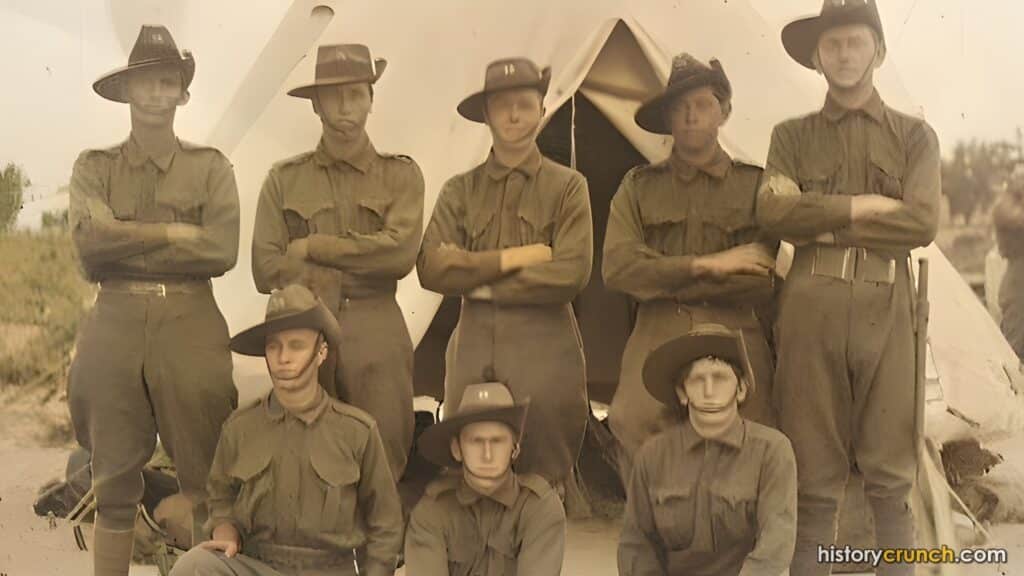
Prime Minister Joseph Cook created two separate forces when Australia entered World War I in 1914, each with a different job and theater of operations.
Australia in World War I – Major Battles
The Australian Imperial Force (AIF) participated in several of the main battles in Europe and the Middle East. In general, the landscape of Europe in World War I was divided into a few different ‘fronts’. For instance, the Western Front was located on the western-half of Europe and included a line of trenches that stretched throughout much of northern France and Belgium. The Eastern Front of World War I was on the eastern-half of Europe and between Germany and Russia. Australia’s participation in World War I focused on the Western Front and campaigns in the Middle East and southeastern Europe. They also carried out missions on German-controlled New Guinea in the South Pacific Ocean.
The major battles and campaigns of World War I that Australia participated in included:
- Missions in German New Guinea
- Gallipoli Campaign
- Sinai and Palestinian Campaign
- Western Front in Europe
Can you put Australia's major World War I campaigns in the order they began?
Australia in German New Guinea of World War I
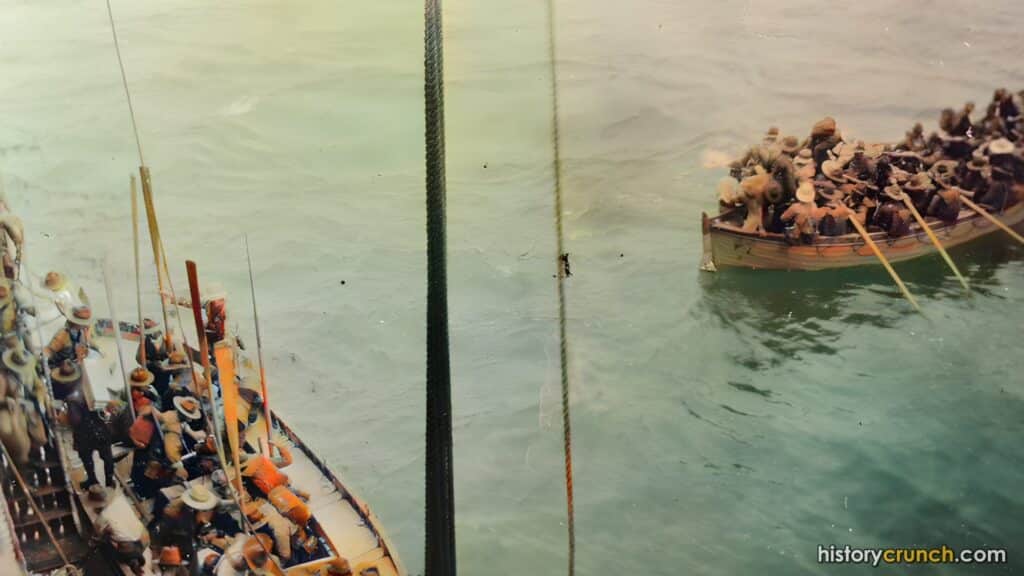
The first major conflict that the Australian forces participated in was a series of missions in German-controlled New Guinea, which was located in the South Pacific Ocean near Australia. Germany colonized New Guinea in the late 19th century during the Age of Imperialism. At the time of the outbreak of World War I in 1914, Germany was using it as a base for wireless radio stations for the German Navy. As such, when World War I began, Australia attacked New Guinea as a means of destroying German communications in the region and protecting their own merchant shipping routes that existed nearby.
More specifically, Australia formed the Australian Naval and Military Expeditionary Force (AN&MEF) and used it as its force to carry out attacks in New Guinea. The Australian Naval and Military Expeditionary Force was made up of a force of about 2000 Australian men and led by Colonel William Holmes. They carried out a series of raids against German-held islands and destroyed the necessary radio stations. For example, the Australians carried out the Battle of Bita Paka and the Siege of Toma in September of 1914. Following the capture of the islands, the Australian Naval and Military Expeditionary Force occupied the islands for the remainder of World War I and prevented Germany from regaining control in the region.
 FactsthatCrunch
Australia Attacks the German Wireless Station at Bita Paka, New Britain
The Australian Naval and Military Expeditionary Force landed at Kabakaul on the island of New Britain and fought its way toward a German wireless station at Bita Paka, near Rabaul. The station was one of several used by the German East Asia Squadron, and destroying it was a key goal of Australia's early war operations in the South Pacific. After a day of fighting against German reservists and Melanesian police troops, Australian forces captured the station. This battle was Australia's first significant military engagement of World War I.
Australia in the Gallipoli Campaign of World War I
The next major conflict for Australia in World War I was the Gallipoli Campaign. Also known as the ‘Dardanelles Campaign’, the Gallipoli Campaign took place from February 17th, 1915 until January 9th, 1916. It was a major conflict of World War I and occurred on the Gallipoli Peninsula in southeastern Europe, in modern-day Turkey. The Gallipoli Campaign was fought between the Allied Powers (Britain and France, with troops from across the British Empire) and the Central Powers (Austria-Hungary, Germany and the Ottoman Empire). Australia played a significant role due to its involvement in the British Empire.
The goal of the Gallipoli Campaign was for the Allied Powers to weaken the Ottoman Empire, which exerted a great deal of influence in the southeastern areas of Europe. For instance, the Allied nations wanted to secure waterways in the area in order to ensure that the Ottoman Empire did not prevent necessary shipping routes, especially to Russia.
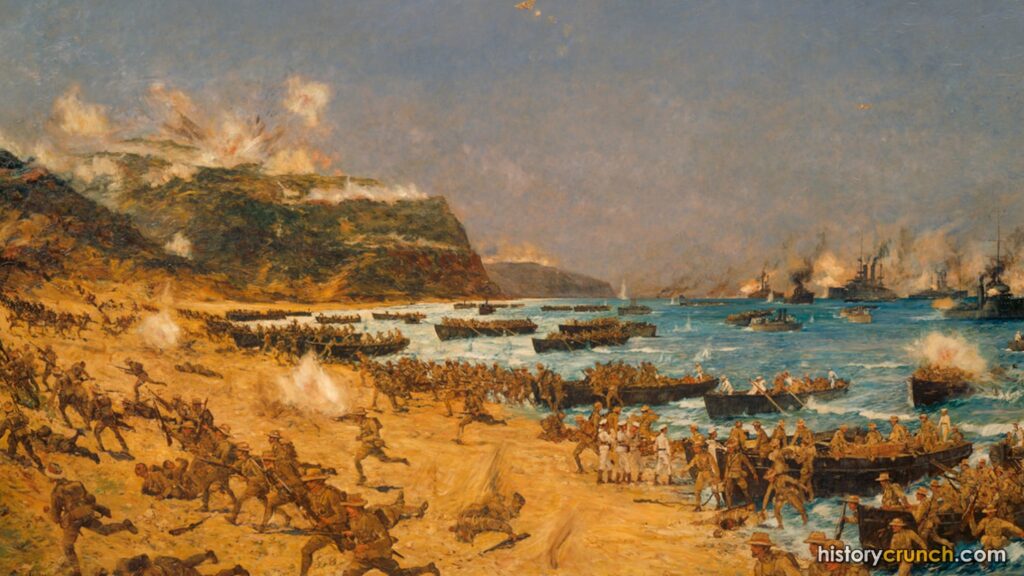
Australian forces first arrived in Egypt in December of 1914 by ship. While there, they defended the Suez Canal against Ottoman attack. The Suez Canal was a vitally important trade route that the British controlled as part of their British Empire. At the same time, Australian forces trained and readied themselves for battle on the Western Front of Europe. In fact, during this period, the Australian Army and the New Zealand Army combined to form the Australian and New Zealand Army Corps (ANZAC) under the command of Lieutenant General William Birdwood. The ANZAC forces became a significant fighting force in World War I. It was believed that ANZAC would participate alongside other British forces in northern Europe. However, the threat of the Ottoman Empire in southeastern Europe caused ANZAC to first deploy there instead. For instance, Winston Churchill argued for an Allied naval attack against the Dardanelles. At the time, Churchill was the First Lord of the Admiralty, for the British Royal Navy.
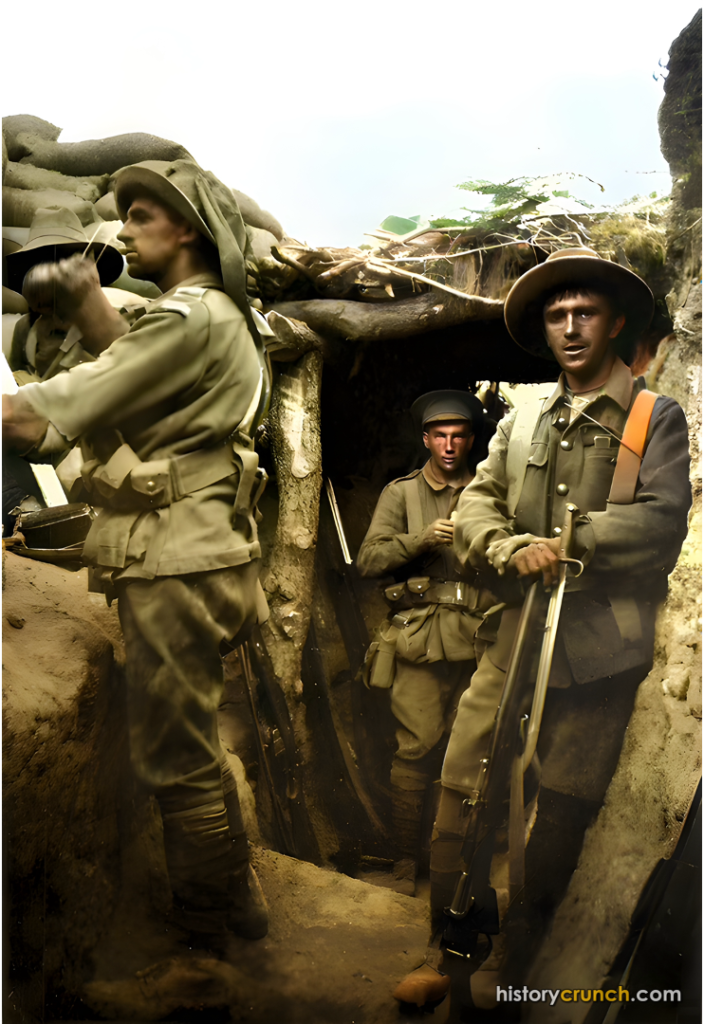
The Allied nations (Britain, France, India, Australia and New Zealand) began their attack against the Ottomans in February of 1915 at the Dardanelles, which was a key entrance to the Ottoman capital of Constantinople (modern-day Istanbul). This Allied attack failed and led to another Allied advance at the Gallipoli Peninsula in April of 1915. The Gallipoli Peninsula is located near the Dardanelles. The goal of the attack was to gain control over Constantinople (Istanbul). The entire campaign was a massive failure for the British and their allies as their troops struggled against the Turkish forces of the Ottoman Empire. The Allied forces had fully withdrawn from the region by January of 1916. Today it is viewed as a major loss for the Allies. In total, the Allied forces suffered over 300,000 casualtiesSoldiers lost in war through death, wounds, or capture. in the battle, including 46,000 deaths. Australian losses included over 26,000 casualties and 8,100 deaths.
The Gallipoli Campaign has remained a significant event in the histories of both Australia and New Zealand. In fact, the Gallipoli Campaign has become an important symbol of Australia’s national identity and is viewed as significant to the promotion of Australian nationalism. In fact, the event is honored every April 25th with ‘Anzac Day’ in both Australia and New Zealand. Anzac Day is a national day of remembrance in which they remember those that have fought and died in conflict. The significance of April 25th is that it marks the initial landings made by the ANZAC forces in the Gallipoli Campaign. As such, the Gallipoli Campaign is an important moment in the history of both Australia and New Zealand. The growth of nationalism that both countries experienced due to events like the Gallipoli Campaign arguably led to the independence movement from the British Empire.
 FactsthatCrunch
Australia in the Sinai and Palestinian Campaign of World War I
The next major campaign from World War I that Australia participated in was the Sinai and Palestinian Campaign. This was a major event in the Middle Eastern Front of World War I, and saw the Allied Powers face off against the Central Powers for control in Egypt and Palestine. The Allied Powers related to the Sinai and Palestinian Campaign included Britain and the British Empire (including Australia, India, New Zealand, South Africa, etc.), France, Italy and support from some local Arab nations and groups. The Central Powers that participated in the conflict included the Ottoman Empire, Germany and Austria-Hungary.
At the time, the Suez Canal in British-controlled Egypt was a strategic point of interest for the Central Powers. In fact, they hoped to capture it and prevent the Allied Powers from using it to transport soldiers and supplies for the war effort. As such, the British hoped to reinforce the region with forces from its empire, including Australian forces. For example, following the disastrous Gallipoli Campaign, the Australian Imperial Force (AIF) relocated to Egypt where it reorganized and resupplied with three additional divisions of soldiers. Many of these Australian soldiers headed north towards Europe and the battlefields of the Western Front in March of 1916, while mounted forces stayed in Egypt. For instance, at the same time, the Australian and New Zealand Mounted Division (ANZAC Mounted Division) was created with Australian and New Zealand soldiers on horseback or camel. The ANZAC Mounted Division played a significant role in the Sinai and Palestinian Campaign of World War I, as they were mobile and a fierce fighting force.
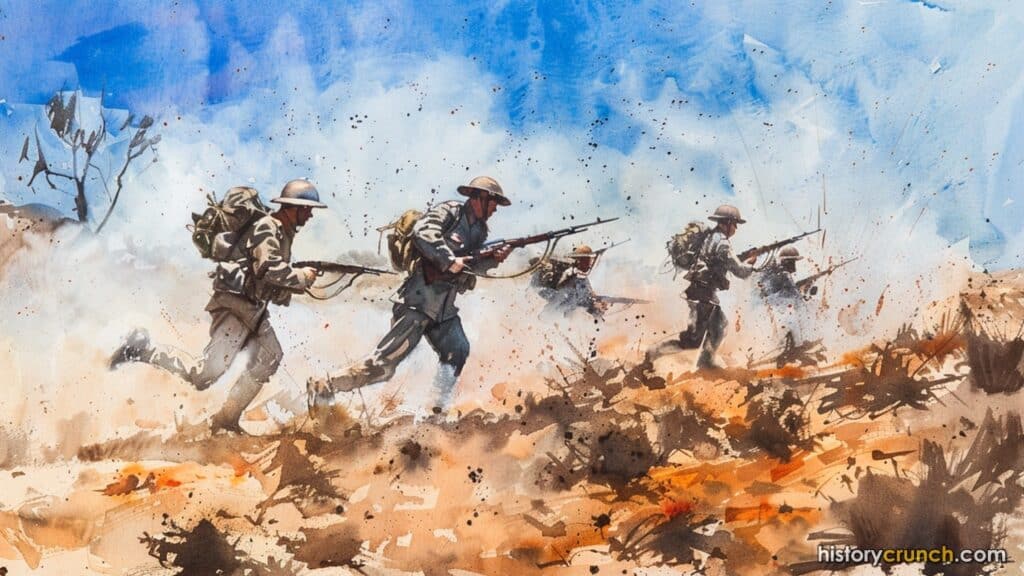
The ANZAC Mounted Division was involved in all of the major battles of the Sinai and Palestinian Campaign, against the Ottoman Empire. More specifically, they were important in helping prevent the Ottomans from gaining control over the Suez Canal and British-controlled Egypt. The major battles that the ANZAC forces participated in, included: Senussi Campaign, Battle of Romani, Battle of Rafa, Three Battles of Gaza, Battle of Beersheba, Battle of Mughar Ridge, Battle of Jerusalem and Battle of Megiddo. These battles occurred from 1915 until 1918 and were important in helping ensure Allied control over important trade routes and economic centers of the Middle East. The Sinai and Palestinian Campaign ended on October 30th, 1918 when the Ottoman government surrendered. In total, the Australians suffered 4,851 casualties with 1,374 dead.
 FactsthatCrunch
What were the key Suez Canal roles and threats in World War I?
Australia in the Western Front of World War I
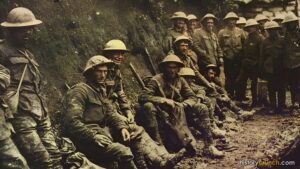
The next major World War I campaign that Australian forces participated in was the Western Front in Europe. As stated previously, the Western Front was located on the western-half of Europe and included a line of trenches that stretched throughout much of northern France and Belgium. Many major battles occurred along the Western Front between the Allied Powers and the Central Powers. Australia participated in several of these battles, as a Dominion of the British Empire, including: Battle of the Somme, Battle of Fromelles, Battle of Bullecourt, Battle of Messines, Third Battle of Ypres and the Hundred Days Offensive.
As stated above, following the failure of the Gallipoli Campaign, the infantry forces of the Australian Imperial Force (AIF) transferred to the Western Front in Europe. In fact, four divisions of the Australian forces were eventually involved in the fighting at the Battle of the Somme, while the Fifth Division fought at the Battle of Fromelles. The Battle of the Somme, which took place from July 1st, 1916 to November 18th, 1916, is remembered as one of the bloodiest battles in human history. It was a devastating battle that took place along the River Somme in northern France. It was fought between Allied Powers of France and Britain (along with Australian forces) and the Central Power of Germany. Today, the Battle of the Somme is remembered as one of the deadliest battles in history. This is due to the terrible losses experienced by all sides in the battle. For example, it is estimated that the battle resulted in more than 1.2 million casualties with both the Allies suffering 600,000 and the Germans suffering 600,000. For their part, the Australian forces were important in protecting strategic defenses while also spearheading several significant assaults against the Germans. For example, several times throughout the battle, Australian divisions were called upon to assault German defenses. This resulted in losses for the Australians throughout the Battle of the Somme, including nearly 23,000 casualties. These casualties were suffered in just 45 days of fighting. Eventually, the Australian Imperial Force (AIF) was withdrawn from the fighting in Somme to reorganize. In fact, the first four divisions were reunited with the 5th Division, which had suffered terribly in the Battle of Fromelles.
The next significant battle for Australian forces on the Western Front was the Battle of Bullecourt. It was part of a British offensive against Germany and took place in the spring of 1917. In reality, Australian forces participated in two attacks at Bullecourt. The First Battle of Bullecourt occurred in April of that year and saw the 4th Division of the Australian Imperial Force (AIF) attack the German defensive lines near the village of Bullecourt in northern France. The Australian attack was a disaster and resulted in over 3,000 casualties. As well, the Germans also captured over 1,100 of the attacking Australians in the failed mission. The Second Battle of Bullecourt occurred just a few weeks later in May of 1917 and saw the 2nd Australian Division again attack the German defensive lines in the region. This time, the Australian assault was much more successful, as the 2nd Division was able to successfully break through the German line and hold strategic sectors. The 1st and 5th Divisions of the AIF also participated by assisting in holding the territory that the 2nd Division had gained. In total, the Second Battle of Bullecourt led to over 7,400 combined casualties for the different Australian Divisions.
Following the Battle of Bullecourt, the Australian forces next participated in the Battle of Messines along the Western Front of World War I. The Battle of Messines took place from June 7th to the 14th in 1917 near the town of Messines in Belgium. Germany controlled a key section of the region, which allowed it an excellent vantage point from which they could oversee the battlefield. The Allied Powers wanted to remove Germany from this sector in anticipation of a future Allied attack in the area. The Australian 3rd and 4th Divisions participated in the battle alongside British and New Zealand forces. The Allies began by detonating over a million pounds of explosives that were strategically placed in tunnels under the German trenches. This essentially destroyed the German defenses and allowed the advancing Allies to capture the sector easily. The Germans counterattacked the next day, but the Allies were able to protect their gains. In total, the Australians suffered approximately 6,800 casualties during the Battle of Messines.
Another significant battle for World War I that relates to Australia was the Third Battle of Ypres, which was fought between the Allied Powers and Germany from July 31st to November 10th in 1917. The battle took place close to the Belgian city of Ypres and was a major battle on the Western Front. The goal of the battle was for Allied forces (including: Australian, British, Canadian, New Zealand, South Africa, Indian, French and Belgium) to push German forces out of the area. The Germans had a strong hold of a ridge that overlooked the city of Ypres. British commander, General Douglas Haig, wanted to carry out an attack of the area in the hopes of pushing back German forces and hopefully capturing coastal ports north of the region.
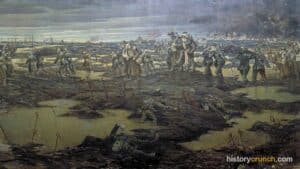
Australian forces participated in the Third Battle of Ypres between September and November of 1917 in a series of engagements in Menin Road, Polygon Wood, Broodseinde, Poelcappelle and Passchendaele. These conflicts were generally a success for the Australian Divisions of the Australian Imperial Force (AIF) but they also led to approximately 38,000 casualties over the course of 8 weeks of fighting. The fighting was fierce and difficult due to the muddy conditions of the battlefields and trenches. In fact, the Third Battle of Ypres is often associated with rainy and muddy conditions that are characteristic of northern France and Belgium.
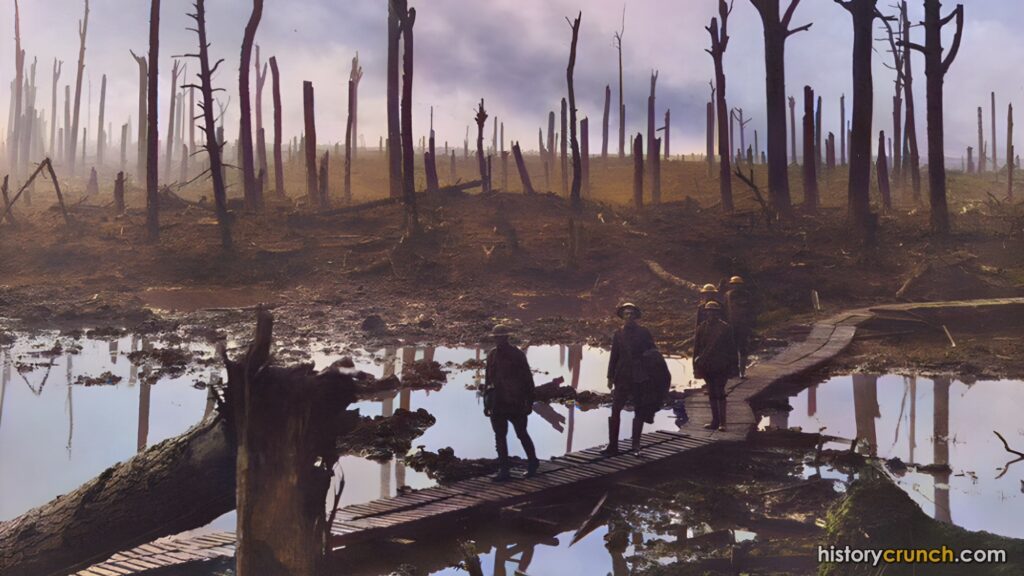
The last major Australian-related battle from World War I was the Hundred Days Offensive, which was a major push by Allied forces, near the end of World War I, against the German forces in northern France. It took place from August 8th to November 11th in 1918. The Allied victories of the Hundred Days Offensive eventually led to the end of World War I, when Germany agreed to the November 11th armisticeA formal agreement between enemies to stop fighting..
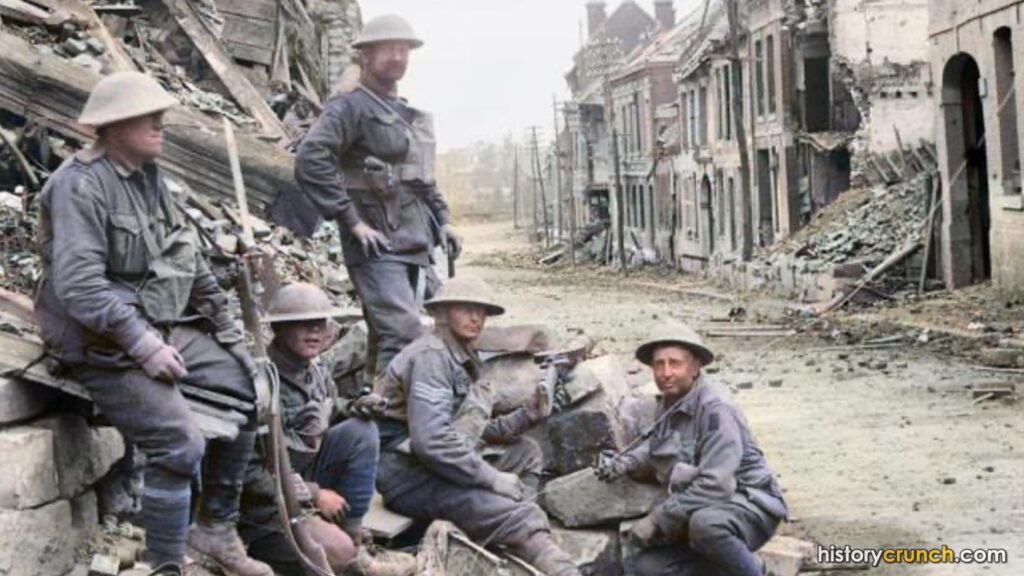
In terms of Australia, the Hundred Days Offensive was a major undertaking and saw the Australian Divisions play an important role in the military advances for the Allies near the end of World War I. In fact, Australian forces spearheaded several significant operations on the Western Front, such as the Battle of Amiens. For instance, the 2nd and 3rd Australian Divisions, along with other Allied forces, led the attack at Amiens against the Germans, while the 4th and 5th Australian Divisions then passed through them and helped push the Allies well into German-held territory. The attack was so successful that the frontline of the war shifted dramatically for the first time in years. In fact, the Germans referred to the August 8th, 1918 attack at Amiens as a ‘black day’ in reference to their losses.
Australian forces participated in a series of other battles during the ‘Hundred Days Offensive’, including: Second Battle of the Somme, Battle of Mont Saint Quentin and several other conflicts. The last battle that the Australian forces participated in was the Battle of Montbrehain on October 5th in 1918. The Australian casualties along the Western Front, in all of the battles that they participated in, totaled 181,000. This number included approximately 46,000 who died in the fighting. In all, Australia suffered some of the worst losses (by percentage of total serving forces) in all of World War I.
Australia in World War I – Home Front
As in other countries, World War I had a profound impact on the home front nations involved, including Australia. More specifically, Australia saw tremendous impacts on the life of those people that stayed in Australia during the duration of World War I.
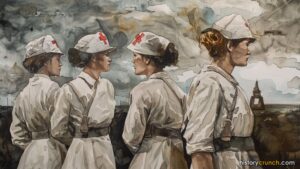
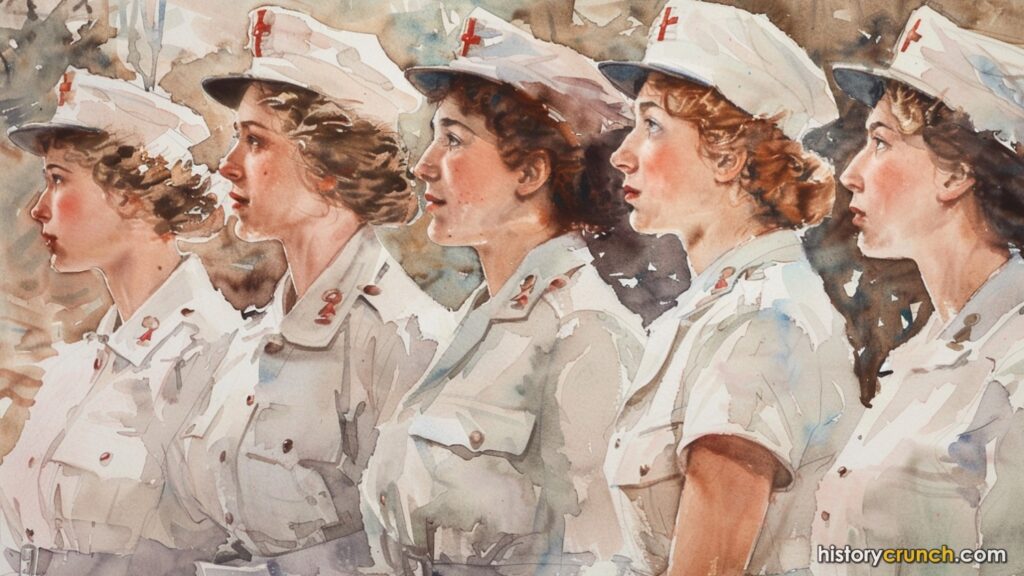
The first main aspect of World War I on the Australian home front was the impact on Australian women. With many of the men gone to serve in the Australian Army during the war, women were tasked with maintaining life for families on the home front. As such, Australian women took an increased role in the affairs of their families and the everyday life of Australians at home. For example, many Australian women volunteered for service in hospitals. They also helped support the war effort in other ways, such as supplying the troops overseas with goods from home. For instance, several women’s organizations played an important role in assisting the Australian war effort. Examples of these groups included: Australian Women’s National League, Australian Red Cross, Voluntary Aid Detachment, Australian Women’s Service Corps, and Women’s Peace Army. For example, these groups led different types of campaigns in which they sent different types of goods to the Australian troops on the front lines of World War I.
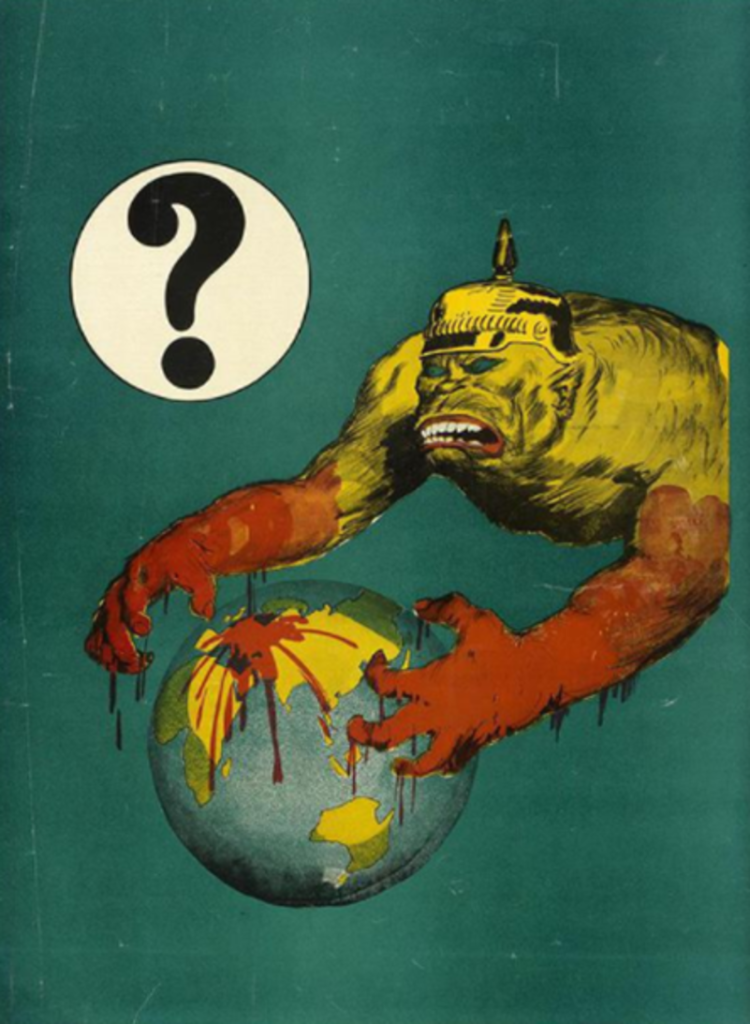
In order to promote recruitment for World War I and other initiatives, the Australian government of the time used propaganda to convince citizens of certain messages. For example, the government issued propaganda that worked to recruit soldiers for the war, ration certain items and to demonize the enemy. Australian citizens on the home front were subjected to constant messaging to ensure they supported the war effort and to maintain the push towards victory. The propaganda from World War I included different types of posters, newspaper advertisements, public speeches and leaflets.
Another major impact on the Australian home front was the government. The Australian government experienced several significant changes throughout the timeframe of World War I. For instance, Australia experienced a great deal of political change during this time and saw power shift from one political party to another. More specifically, at the outbreak of the war in 1914, Prime Minister Joseph Cook of the Commonwealth Liberal Party led Australia. However, he was defeated in an election in 1914 by Andrew Fisher of the Australian Labor Party. Fisher served as Prime Minister for just over a year, until he was replaced by William ‘Billy’ Hughes. Hughes was also a member of the Australian Labor Party and served as the 7th Prime Minister of Australia throughout the remainder of World War I.
An issue that the Australian government dealt with during World War I was conscriptionMandatory military service required by a government. (mandatory military service). While the other major powers of World War I used conscription as a means of raising the armies necessary to fight, Australia never did. As such, all of the Australian soldiers who fought in World War I were volunteers. With that said, the issue of conscription was still significant in Australia during World War I and impacted the home front of Australia. This was due to the recruitment struggles that Australia faced in the second half of World War I. As the war waged on through 1916 and 1917, the Australian Imperial Force (AIF) needed reinforcements, but recruitment was not keeping pace. As such, Prime Minister William ‘Billy’ Hughes carried out two separate referendumsA public vote in which citizens decide a specific government question. on the issue of conscription. The first was held on October 28th in 1916 and asked the Australian public to consider the following:
‘Are you in favour of the Government having, in this grave emergency, the same compulsory powers over citizens in regard to requiring their military service, for the term of this War, outside the Commonwealth, as it now has in regard to military service within the Commonwealth?’
The first referendum failed by a slim margin of 49% to 51%. As such, conscription was not adopted in Australia. Furthermore, the results of the first referendum, caused a political upheaval in Australian politics. For instance, it caused the Australian Labor Party to split and Prime Minister Hughes formed a new party called the Nationalist Party of Australia. In the 1917 election, the new Nationalist Party won and Hughes retained his role as the Prime Minister of Australia. This eventually led to another referendum over the issue of conscription. The second referendum was held on December 20th in 1917 and asked Australians to consider the following question:
‘Are you in favour of the proposal of the Commonwealth government for reinforcing the Australian Imperial Force oversea?’
This referendum failed as well, with a result of 46% to 54%. As a result, the issue of conscription in Australia during World War I was ended. Regardless, the close results of the two referendums highlighted the controversial nature of the conscription as an issue and the impact it had on the home front of Australia during World War I.
FactsthatCrunch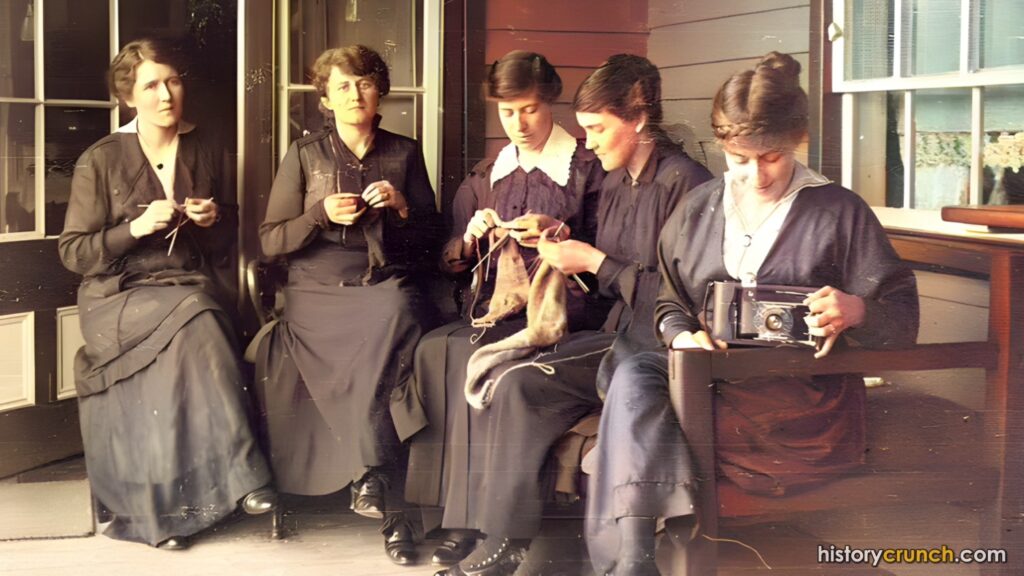 Australian Women's Organizations in World War I
Australia in World War I – Significance
World War I was an important moment in the history of Australia. First, and foremost, over 413,000 Australians served during World War I, and represented their country bravely on the battlefields in New Guinea, the Middle East and Europe. As well, approximately 62,000 Australians died as a result of military action during the war.
Second, World War I is now viewed as a time when Australia ‘matured’ as a nation and began to view itself differently in terms of foreign affairs. As stated previously, in World War I, Australia was still considered to be a Dominion of the British Empire, which limited its ability to self-determination and control over its own affairs. However, at the conclusion of World War I, the Australian Prime Minister, Hughes, argued for increased Australian sovereignty. For example, Australia sent its own delegation to the Paris Peace Conference in 1919 and argued for reparations and concessions due to its role in the war.
While this fight for sovereignty was relatively short-lived (Australia remained in the British Empire after World War I), Australia experienced a larger sense of national identity from its role in the war. For instance, the war and the number of dead had a profound impact on how Australians viewed themselves. After the war ended, numerous monuments were built across Australia to honor the soldiers who served and died in World War I. This was important to Australia’s sense of self at the time and helped establish an identity for the maturing nation. As such, World War I was a defining moment in Australia’s history and led to an increase in Australia’s sense of national identity.
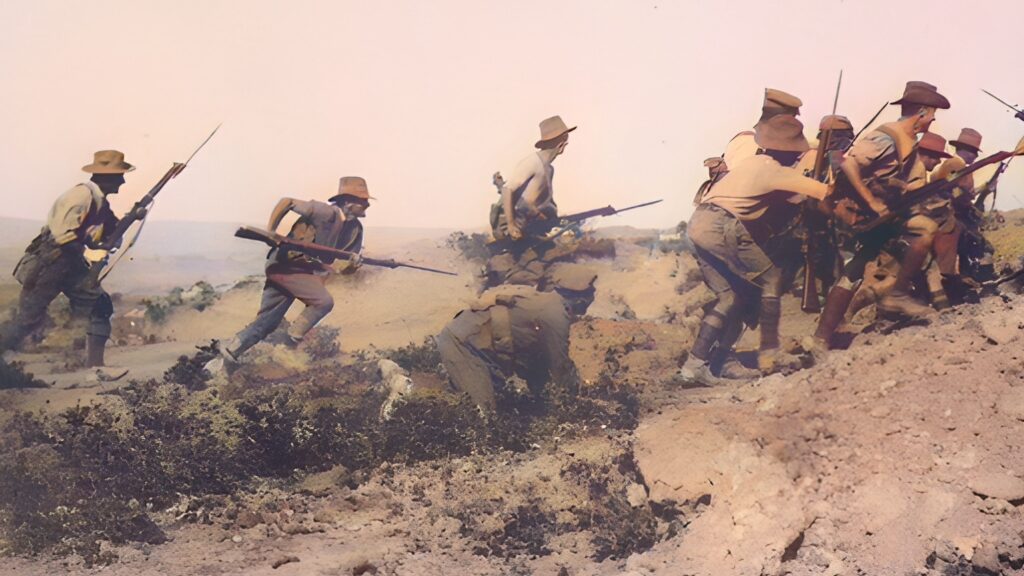 FactsthatCrunch
Every one of the more than 413,000 Australians who served in World War I was a volunteer. Australian voters twice rejected conscription, in 1916 and 1917.
Australia had a population of fewer than 5 million people at the time. About 62,000 Australians died as a result of the war, one of the heaviest losses of any Allied nation for its size.
Explore World War I
Keep exploring World War I with these History Crunch resources.
Key Vocabulary
Dominion
Triple Entente
Expeditionary force
Conscription
Referendum
Casualties
Armistice
Frequently Asked Questions
Why did Australia join World War I in 1914?
Australia entered World War I because it was a Dominion of the British Empire. When Britain declared war on Germany on August 4th, 1914, Australia was automatically pulled into the fighting. Support for the war was widespread, since many Australians felt a strong tie to England. Both the Prime Minister and the Opposition leader backed the war effort.
How many Australians served and died in World War I?
Over 413,000 Australians served during World War I, and about 62,000 died from military action. These soldiers fought in New Guinea, the Middle East, and Europe. By percentage of serving forces, Australia suffered some of the worst losses of the entire war. All Australian soldiers were volunteers, since the country never used conscription.
What was the Gallipoli Campaign?
The Gallipoli Campaign was an Allied attempt to weaken the Ottoman Empire and secure key waterways. It took place on the Gallipoli Peninsula in southeastern Europe from 1915 into early 1916. The campaign failed badly, and Australia suffered over 26,000 casualties, including 8,100 deaths. Despite the loss, it became a lasting symbol of Australian national identity.
What is Anzac Day and why is it important?
Anzac Day is a national day of remembrance held every April 25th in Australia and New Zealand. The date marks the first landings by ANZAC forces during the Gallipoli Campaign in 1915. On this day, both nations remember those who fought and died in war. It remains one of the most meaningful days on their calendars.
Did Australia use conscription during World War I?
No, Australia never adopted conscription during World War I, so all its soldiers were volunteers. Prime Minister William “Billy” Hughes held two referendums on the issue, in 1916 and 1917. Both votes failed by narrow margins, and the debate deeply divided the country. The first referendum even caused the Australian Labor Party to split apart.
Which Western Front battles did Australian forces fight in?
Australian forces fought in several major Western Front battles in France and Belgium. These included the Battle of the Somme, Battle of Fromelles, Battle of Bullecourt, and Battle of Messines. They also fought at the Third Battle of Ypres and the Hundred Days Offensive. In total, Australia suffered about 181,000 casualties on the Western Front alone.
Cite This Article
To cite this article as a source, use one of the formats below.
MLA: Beck, Elias. “Australia in World War I: A Detailed Summary.” HistoryCrunch, 30 September 2026, https://historycrunch.com/australia-in-world-war-i/.
APA: Beck, E. (2026). Australia in World War I: A Detailed Summary. HistoryCrunch. https://historycrunch.com/australia-in-world-war-i/
Chicago: Beck, Elias. “Australia in World War I: A Detailed Summary.” HistoryCrunch. September 30, 2026. https://historycrunch.com/australia-in-world-war-i/
Sources
- Fordham Modern History Sourcebook
- Imperial War Museum
- Hew Strachan, The First World War.
- Margaret MacMillan, The War That Ended Peace.