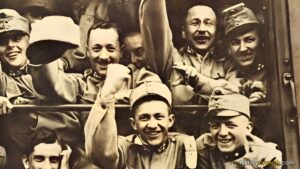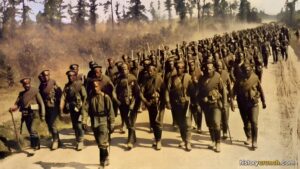
The significance of World War I is enormous, because the conflict reshaped the map of the world, ended long-standing empires, and set in motion many of the most important events of the 20th century. World War I was fought from 1914 until 1918 and was the first truly global war, drawing in countries and colonies from nearly every continent. When it ended, the political, social, and economic order of Europe had been broken apart, and the effects would be felt for decades afterward.
Put simply, the significance of a historical event refers to the lasting importance it had on the people and societies that came after it. For World War I, that importance can be measured in the staggering loss of life, the collapse of powerful monarchies, the birth of new nations, and the way the war planted the seeds of even greater conflicts to come.

What Was the Modern Era in Europe?
World War I belongs to a period historians call the modern era, a stretch of history that followed the Industrial Revolution and reached into the 20th century. During this time, European nations grew powerful through industry, technology, and the control of overseas empires. These same forces, however, also created intense rivalries between countries that were racing to build bigger armies and gain more territory.
By the early 1900s, Europe was divided into competing alliances and filled with tension. Long-term causes of World War I, often remembered by the acronym M.A.I.N. for militarism, alliances, imperialism, and nationalism, had been building for decades. In fact, the modern era is the backdrop that helps explain why a single event in 1914 could pull nearly the entire world into war.
How Did World War I Begin and End?
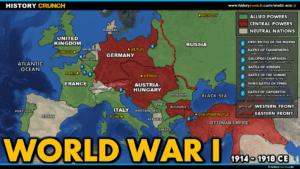
World War I began in the summer of 1914 after the assassination of Archduke Franz Ferdinand, the heir to the throne of Austria-Hungary. His murder in Sarajevo set off a chain reaction among the alliances of Europe, and within weeks the major powers had declared war on one another. On one side stood the Allied Powers, which included Britain, France, and Russia, while on the other stood the Central Powers of Germany, Austria-Hungary, and the Ottoman Empire.
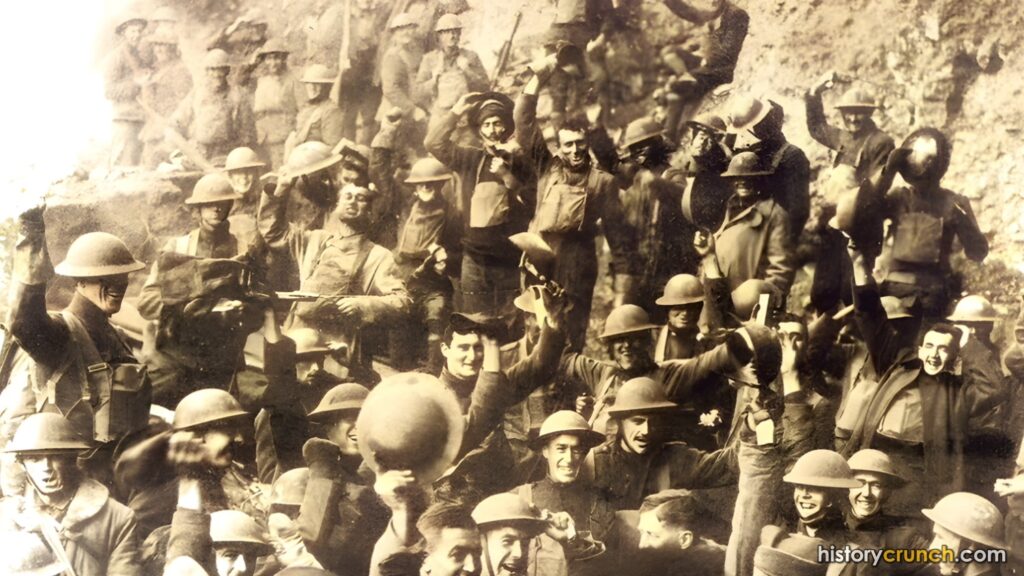
The fighting quickly became a long and deadly stalemateA situation in which neither side can win or make progress, leaving the war stuck in place., especially along the Western Front, where soldiers dug into trenches that stretched across Belgium and northeastern France. The war dragged on for more than four years and only ended on November 11th, 1918, when Germany agreed to an armisticeAn agreement by both sides to stop fighting, ending the active combat of a war., or ceasefire. By then, the world had witnessed a level of destruction that no earlier war had ever produced.
FactsthatCrunchWorld War I Ends: Germany Signs the Armistice of Compiegne
At 5:00 a.m. on November 11th, 1918, German civilian politician Matthias Erzberger signed the armistice inside a railway carriage in the Forest of Compiegne, about 50 miles (80 kilometers) northeast of Paris. French Marshal Ferdinand Foch and British Admiral Rosslyn Wemyss signed for the Allied side. The ceasefire took effect six hours later, at 11:00 a.m., ending four years of fighting on the Western Front.
Why Was World War I So Deadly?
One of the most important reasons World War I stands out is the sheer scale of death it caused. Historians estimate that over 21 million deaths resulted from the war, including roughly 8.5 million soldiers and around 13 million civilians. These numbers were far higher than in any conflict before it, which is why people at the time called it the “Great War.”
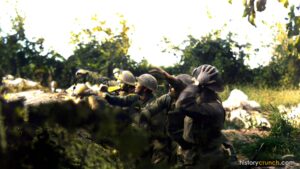
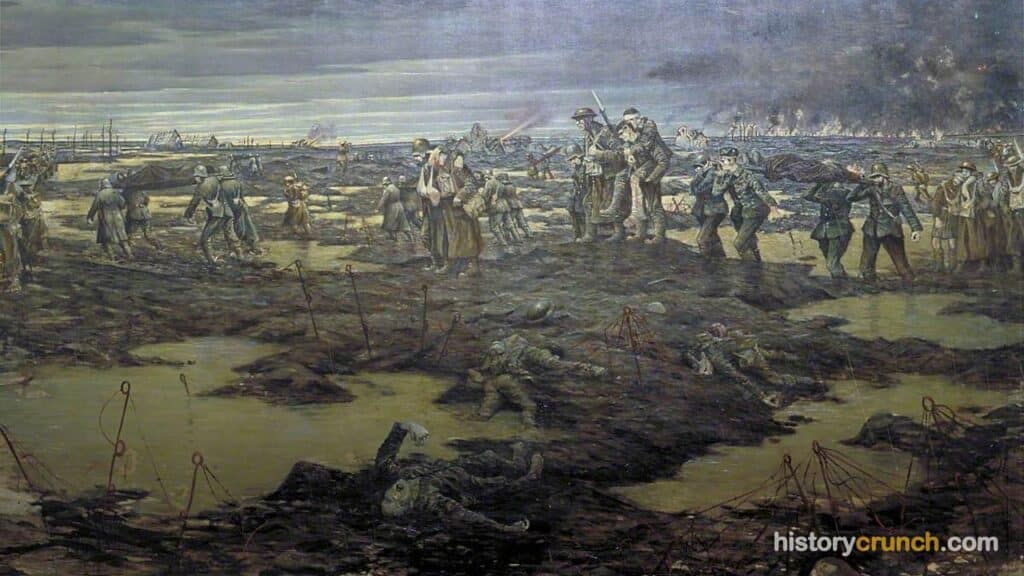
A major reason for this destruction was the arrival of new industrial weapons. For instance, machine guns, poison gas, tanks, airplanes, and long-range artillery were all used on a large scale for the first time. More specifically, these weapons were far more powerful than the old-style tactics that generals still used, which meant huge numbers of men were killed attacking heavily defended trenches.
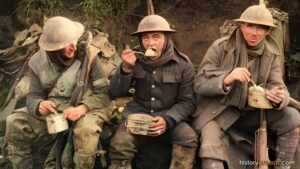
Trench warfare itself made the fighting especially horrific. Soldiers lived for long stretches in muddy, disease-filled ditches while facing constant shelling and the threat of gas attacks. In reality, the combination of modern technology and outdated strategy turned World War I into one of the deadliest conflicts in human history.
FactsthatCrunchHow Did World War I Change the Map of the World?
Another key part of the significance of World War I is the way it destroyed old empires and created new nations. By the time the war ended, four major empires had collapsed: the German Empire, the Austro-Hungarian Empire, the Russian Empire, and the Ottoman Empire. The fall of these powers completely redrew the political map of Europe and the Middle East.
Out of this collapse came a set of new and reshaped countries. For example, nations such as Poland, Czechoslovakia, Yugoslavia, and others emerged in Eastern Europe where large empires had once ruled. In the Middle East, territory that had belonged to the Ottoman Empire was divided up and placed under the control of Britain and France.
These sudden changes created lasting tensions. As stated above, many of the new borders grouped together people of different backgrounds or split communities apart, which led to disputes that would continue long after the war. In fact, some of the conflicts of the 20th century and beyond can be traced back to the borders drawn in the years right after World War I.
FactsthatCrunchWhich four empires collapsed by the end of World War I?
What Was the Treaty of Versailles?
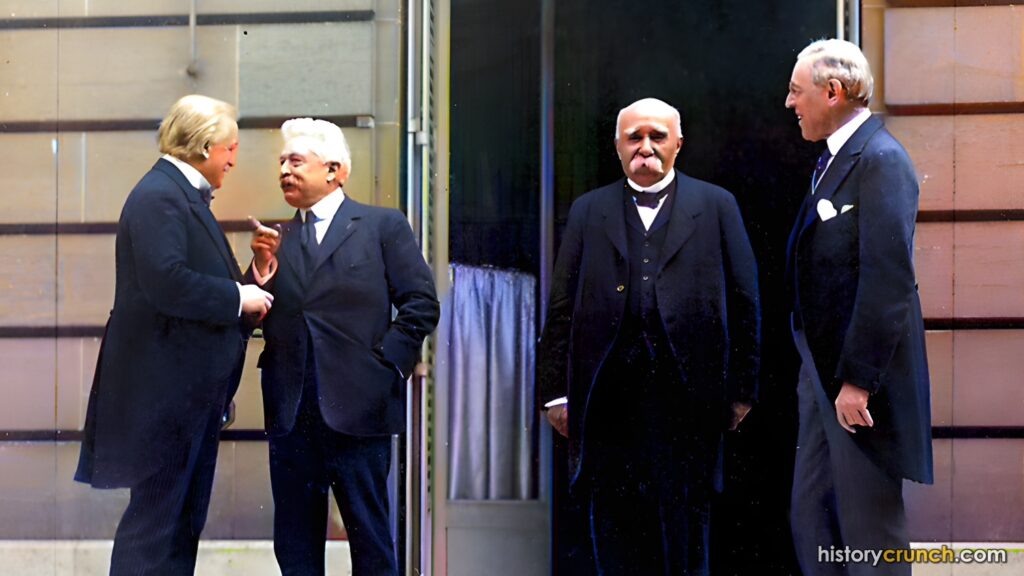
The most important peace agreement to come out of World War I was the Treaty of Versailles, signed on June 28th, 1919. This treaty was created by the victorious Allied Powers to set the terms of peace with a defeated Germany. It placed the blame for the war squarely on Germany and forced the country to accept harsh punishments.
Under the treaty, Germany lost about 13 percent of its territory, gave up its overseas colonies, and had to strictly limit the size of its military. On top of this, Germany was required to pay huge sums of money, known as reparationsLarge sums of money a defeated country is forced to pay to the nations it fought against., to the Allied nations. Many Germans viewed these terms as a national humiliation and deeply resented being forced to accept them.
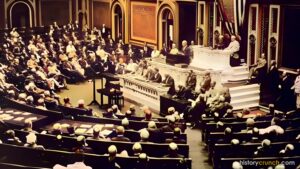
The treaty also created the League of Nations, an international organization founded in 1920 with the goal of preventing future wars through cooperation and diplomacy. While the idea was hopeful, the League proved weak, in part because powerful countries like the United States never joined it. For instance, the United States Senate refused to approve the treaty, which left the new organization without one of the world’s strongest nations.
How Did World War I Lead to Other Major Events?
Beyond the peace treaty, World War I created the conditions for several other world-changing events. For example, the strain of the war on Russia helped spark the Russian Revolution, which brought a communist government to power and eventually created the Soviet Union. This change would shape global politics for the rest of the 20th century.
The war also played a role in the Spanish Flu of 1918, a deadly pandemicA disease that spreads rapidly across many countries and affects huge numbers of people worldwide. that spread rapidly as soldiers and civilians moved around the world. The exhaustion and disruption caused by years of fighting made it harder for nations to cope with the illness, which killed tens of millions of people worldwide.
Most importantly, the anger created by the Treaty of Versailles helped set the stage for World War II. In fact, the bitterness felt in Germany over the treaty allowed Adolf Hitler to rise to power with a promise to restore national pride. In this way, the end of one war helped create the beginnings of an even larger and deadlier one.
FactsthatCrunchTap each impact to read what it led to.
Significance of World War I
The significance of World War I is that it marked a turning point in modern history, ending an old order and giving birth to a new and often dangerous one. It was the first war fought on a truly global scale, and it introduced industrial weapons that made warfare deadlier than ever before. The staggering loss of over 21 million lives changed how people around the world thought about war and its cost.
Just as importantly, the war destroyed four great empires, redrew the map of Europe and the Middle East, and produced the harsh Treaty of Versailles. These outcomes directly fed into the Russian Revolution, the rise of dictators, and eventually World War II. Today, World War I is remembered not only for the sacrifice of millions of soldiers but also for the way it set the course of the entire 20th century.
Key Vocabulary
Stalemate
Armistice
Reparations
Pandemic
League of Nations
Frequently Asked Questions
Why is World War I called the Great War?
World War I was called the “Great War” because it was the largest and most destructive conflict the world had seen at that time. People also referred to it as the “War to End All Wars,” since many believed such devastation could never happen again. The name World War I only became common after a second world war broke out in 1939.
How many countries fought in World War I?
Dozens of countries took part in World War I, which is part of why it is considered the first truly global war. Because the major European powers controlled large empires, soldiers from Africa, Asia, Australia, and the Americas were pulled into the fighting. This worldwide involvement is a major reason the war had such far-reaching effects.
What new weapons were used in World War I?
World War I saw the first large-scale use of machine guns, poison gas, tanks, and airplanes in combat. Submarines were also used to attack ships far out at sea, which was a new kind of naval warfare. These technologies made the war far deadlier and permanently changed how future wars would be fought.
Who won World War I?
The Allied Powers won World War I, defeating the Central Powers by late 1918. The entry of the United States into the war in 1917 helped tip the balance in favor of the Allies. Germany finally agreed to an armistice on November 11th, 1918, bringing the fighting to an end.
How did World War I cause World War II?
World War I helped cause World War II mainly through the harsh terms of the Treaty of Versailles. The anger and economic hardship these terms created in Germany made it easier for extreme leaders like Adolf Hitler to gain support. Within about 20 years, that resentment had grown into another world war.
Cite This Article
To cite this article as a source, use one of the formats below.
MLA: Millar, B. “Significance of World War I: A Detailed Summary.” HistoryCrunch, 14 August 2026, https://historycrunch.com/significance-of-world-war-i/.
APA: Millar, B. (2026). Significance of World War I: A Detailed Summary. HistoryCrunch. https://historycrunch.com/significance-of-world-war-i/
Chicago: Millar, B. “Significance of World War I: A Detailed Summary.” HistoryCrunch. August 14, 2026. https://historycrunch.com/significance-of-world-war-i/
Sources
- Fordham Modern History Sourcebook
- John Keegan, The First World War.
- Margaret MacMillan, The War That Ended Peace.
- Hew Strachan, The First World War.