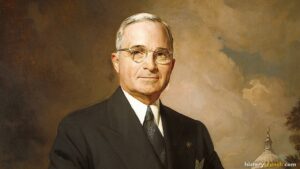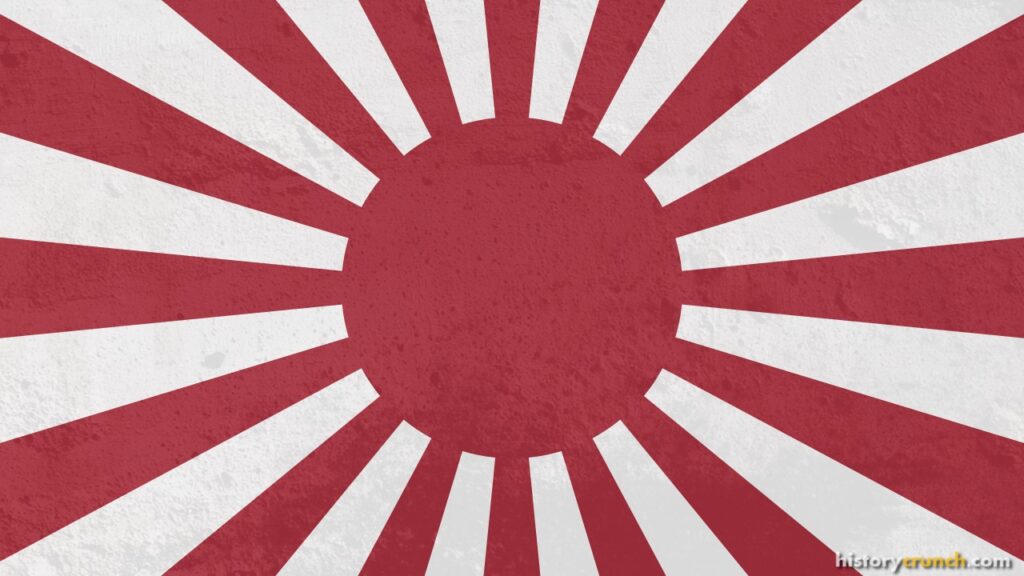
Imperial Japan in World War II played a central role in the conflict as one of the three main Axis Powers alongside Nazi Germany and fascist Italy. Japan’s involvement in the war grew out of decades of imperial expansionA powerful nation’s strategy of conquering and controlling other countries and territories to build a larger empire. across Asia that had begun well before the formal start of World War II in Europe in 1939. Japan’s attack on the American naval base at Pearl Harbor on December 7th, 1941 brought the United States directly into the conflict and transformed a primarily European war into a truly global one. In total, Japanese military deaths during the war are estimated at approximately 2.3 million, while Japanese civilian deaths from bombing and other causes are estimated at approximately 800,000. In addition, the war resulted in tens of millions of deaths across Asia as a result of Japanese military actions, occupation, and war crimes. Japan formally surrendered on September 2nd, 1945, following the atomic bombings of Hiroshima and Nagasaki and the Soviet declaration of war against Japan.
Imperial Japan Enters World War II
To fully understand Japan’s role in World War II, it is important to understand the long period of expansion that preceded it. Japan had been pursuing an aggressive policy of territorial expansion across Asia since the late 19th century. For instance, Japan invaded the Chinese province of Manchuria in September of 1931.
In July of 1937, full-scale war broke out between Japan and China. The conflict, known as the Second Sino-Japanese War, became one of the most destructive wars in modern Asian history and involved some of the worst atrocities of the entire conflict. For instance, the Nanking Massacre in December of 1937 saw Japanese forces kill an estimated 200,000 to 300,000 Chinese civilians and prisoners of war in the city of Nanjing, China. The war in China continued for the entire duration of World War II and tied down a large portion of the Japanese army.
Japan signed the Tripartite Pact with Nazi Germany and fascist Italy on September 27th, 1940, formally aligning itself as one of the Axis Powers. In September of 1940, Japan also occupied French Indochina, which provided access to raw materials and a strategic position in Southeast Asia. The United States responded by imposing an oil embargoA government’s decision to stop selling or shipping oil to another country, cutting off its fuel supply. on Japan in 1941, cutting off approximately 80 percent of Japan’s oil supply. This was a critical blow, as Japan lacked the natural resources needed to sustain its military operations. Faced with a choice between withdrawing from China and finding a way to secure the oil and raw materials it needed, Japanese military leaders chose expansion.
 FactsthatCrunch
The Nanking Massacre of December 1937 left behind deeply contested death toll figures that historians, tribunals, and governments still debate today.
Imperial Japan in World War II – Army
Imperial Japan’s military forces in World War II were divided between the Imperial Japanese Army and the Imperial Japanese Navy, both of which operated with a considerable degree of independence from the government. The formal head of state was Emperor Hirohito, who was regarded as a divine figure by the Japanese people. In practice, military and political decisions were heavily influenced by the military leadership, including General Hideki Tojo, who served as Prime Minister from October of 1941 until July of 1944.
The Japanese military was characterized by a strict code of conduct known as ‘bushidoA strict Japanese military code demanding honor, loyalty, and fighting to the death rather than surrendering.‘, which emphasized honor, loyalty, and sacrifice to the point of death. This code meant that Japanese soldiers were expected to fight to the last rather than surrender, a factor that made the Pacific War exceptionally brutal and costly for both sides. For instance, at the Battle of Iwo Jima in February and March of 1945, of the approximately 22,000 Japanese soldiers defending the island, only around 216 were taken prisoner.
In total, Japan mobilized approximately 9 million men in its armed forces during the war.
Imperial Japan in World War II – Major Campaigns and Battles
Japan in World War II participated as one of the main Axis Powers alongside Nazi Germany and fascist Italy. On the opposing side were the Allied Powers, primarily the United States, Britain, China, Australia, and other nations. The major campaigns and battles of Imperial Japan in World War II included: the attack on Pearl Harbor, the early Pacific expansion, the Battle of Midway, the island-hoppingThe Allied strategy of capturing only key Japanese-held islands and bypassing others to advance toward Japan. campaign, and the atomic bombing of Japan.
FactsthatCrunchIn what order did Japan carry out its Pacific conquests during 1941 and 1942?
Attack on Pearl Harbor and Early Expansion
On December 7th, 1941, Imperial Japan launched a surprise attack on the American naval base at Pearl Harbor, Hawaii. The attack was carried out by a Japanese naval strike force of six aircraft carriers and approximately 353 airplanes. The attack destroyed or damaged eight American battleships, sank or damaged three cruisers and three destroyers, and destroyed 180 American airplanes. In total, 2,403 American servicemen were killed. The goal of the attack was to cripple the American Pacific Fleet and prevent the United States from interfering with Japanese expansion into Southeast Asia and the Pacific.
In the weeks and months that followed Pearl Harbor, Japan achieved a rapid series of military victories across the Pacific and Southeast Asia. Japanese forces captured Hong Kong on December 25th, 1941, and Malaya and Singapore fell on February 15th, 1942. The fall of Singapore resulted in the largest single surrender of British-led forces in history. Japan also captured the Philippines, the Dutch East Indies, Burma, and large portions of New Guinea, establishing a vast empire across the Pacific and Southeast Asia in a matter of months. At the peak of its expansion in mid-1942, Japan controlled a territory stretching from the borders of India in the west to the central Pacific in the east.
FactsthatCrunchOf the 2,403 Americans killed at Pearl Harbor, 68 were civilians, most of them struck by improperly fused U.S. Navy anti-aircraft shells that fell on Honolulu.
Japanese aircraft targeted warships and airfields, not residential areas. Navy gunners fired back quickly, but some shells were not properly fused to detonate at altitude and came down on the city instead. The 68 civilian deaths were a small share of the total toll, yet they show that the attack's damage reached well beyond the harbor's military targets.
Battle of Midway
The turning point of the Pacific War came at the Battle of Midway, fought from June 3rd to June 7th, 1942. Japan planned to ambush and destroy the remaining American aircraft carriers by launching an attack against Midway Atoll in the central Pacific. However, American codebreakers had deciphered the Japanese plan and Admiral Chester Nimitz positioned the American carrier fleet to ambush the Japanese attack force instead. The battle resulted in the sinking of four Japanese aircraft carriers, the loss of approximately 250 airplanes, and the deaths of over 3,000 Japanese sailors. The United States lost one aircraft carrier, the USS Yorktown, and approximately 300 sailors. The loss of four carriers and their experienced aircrews was a blow from which the Japanese navy never fully recovered. As such, the Battle of Midway halted Japanese expansion in the Pacific and shifted the balance of power firmly in favor of the United States.
FactsthatCrunchBetween June 4th and June 7th, 1942, American dive bombers caught four Japanese fleet carriers with fuel lines open and aircraft on their decks. In a matter of minutes on the morning of June 4th, three Japanese fleet carriers, Akagi, Kaga, and Soryu, were set ablaze and sunk, with a fourth, Hiryu, destroyed later that same day.
Japan held the initiative across the Pacific after Pearl Harbor and had suffered no major naval defeat
Japan lost its four-carrier strike force and never recovered offensive naval power in the Pacific
Pacific Island Campaigns
Following the Battle of Midway, Japan was pushed progressively back toward its home islands through a series of Allied amphibious operations across the Pacific. The United States adopted a strategy of ‘island-hopping‘, which involved capturing strategically important Japanese-held islands while bypassing and isolating others. For instance, major battles were fought at: Guadalcanal from August of 1942 to February of 1943, Tarawa in November of 1943, Saipan in June and July of 1944, Leyte Gulf in October of 1944, Iwo Jima in February and March of 1945, and Okinawa from April to June of 1945.
Each of these battles was fought at great cost to both sides, as Japanese forces typically resisted to the last rather than surrender. The Battle of Okinawa, fought from April 1st to June 22nd, 1945, was one of the largest and most costly of the entire Pacific War. Japanese forces suffered over 75,000 casualties while American forces suffered over 65,000 casualties including approximately 14,000 killed. During this period Japan also made extensive use of ‘kamikaze‘ tactics, in which pilots deliberately flew their airplanes into Allied warships in suicide attacks intended to compensate for Japan’s declining conventional military strength. For instance, kamikazeJapanese suicide pilots who deliberately crashed their planes into Allied warships to cause damage. attacks sank or damaged hundreds of Allied ships during the final stages of the Pacific War.
Atomic Bombing and Surrender
By the summer of 1945, Japan had been pushed back to its home islands and was under sustained Allied air and naval attack. American airplanes had been carrying out large-scale bombing raids against Japanese cities since early 1945, causing widespread destruction. The capital city of Tokyo was devastated by a firebombing raid on the night of March 9th and 10th, 1945, which killed an estimated 80,000 to 100,000 people in a single night.
On August 6th, 1945, the United States dropped an atomic bomb on the Japanese city of Hiroshima, killing approximately 70,000 people immediately. Three days later, on August 9th, 1945, a second atomic bomb was dropped on the city of Nagasaki, killing approximately 40,000 people immediately. On the same day, the Soviet Union declared war on Japan and launched a rapid invasion of Japanese-controlled Manchuria. Faced with these catastrophic events, Emperor Hirohito announced Japan’s surrender on August 15th, 1945. The formal surrender ceremony took place on September 2nd, 1945, aboard the American battleship USS Missouri in Tokyo Bay, Japan.
FactsthatCrunchThe firebombing of Tokyo used large numbers of conventional incendiary weapons delivered by a large bomber fleet, while the atomic bombings achieved mass destruction with just one bomb per city. Both campaigns targeted Japanese cities and caused enormous civilian casualties, but they relied on completely different technologies and force sizes.
Imperial Japan in World War II – Home Front
The Japanese home front during World War II was shaped by the demands of total war and, in the later stages of the conflict, by the direct impact of Allied bombing on Japanese cities. From the beginning of the war, the Japanese government mobilized the population entirely in support of the military effort. Food and consumer goods were rationed, industrial production was directed toward military output, and civilians were subject to strict government controls over all aspects of daily life.
Women played an important role in the Japanese war effort on the home front. As men were conscripted into military service, women took on a wide range of roles in factories, agriculture, and civil defense organizations. By the later stages of the war, women and older men were being trained in the use of basic weapons in preparation for the expected Allied invasion of the Japanese home islands.
The Japanese government also used propaganda extensively to maintain public support for the war and to encourage resistance to the last. Emperor Hirohito was presented to the Japanese public as a divine and sacred figure, and the concept of dying for the Emperor was promoted as the highest possible honor. This propaganda contributed to the willingness of Japanese soldiers and civilians to resist Allied forces to extraordinary lengths, including civilians on islands such as Saipan and Okinawa choosing to die rather than surrender.
By 1945, Allied bombing had devastated Japanese cities on a large scale. In addition to the atomic bombings of Hiroshima and Nagasaki, conventional bombing raids had destroyed large portions of Tokyo, Osaka, Nagoya, and many other major cities. Japanese industrial production had fallen sharply, and the population was suffering from food shortages. As such, by the time of the surrender in August of 1945, Japan’s military and civilian capacity to continue the war had been effectively destroyed.
FactsthatCrunchWhat were the main roles of women on the Japanese home front during World War II?
Imperial Japan in World War II – Significance
World War II was the defining and most destructive event in the modern history of Japan. First, the scale of Japan’s military campaigns across Asia and the Pacific produced some of the worst atrocities of the entire conflict, including the Nanjing Massacre, the Bataan Death March, the widespread use of forced labor, and the deaths of millions of Chinese, Filipino, Korean, and other Asian civilians under Japanese occupation. As such, the legacy of Japanese wartime conduct continued to shape relations between Japan and its Asian neighbors for decades after the end of the conflict.
Second, Japan’s defeat in World War II produced a fundamental transformation of Japanese society. Following the surrender, the United States occupied Japan and oversaw the introduction of a new democratic constitution that took effect on May 3rd, 1947. The new constitution renounced war as a sovereign right and permanently limited Japanese military forces to purely defensive purposes. Emperor Hirohito publicly renounced his divine status in January of 1946. As such, the defeat in World War II transformed Japan from a military empire into a pacifistOpposed to war and military force as a way of solving conflicts between nations. democracy in a remarkably short period of time.
Third, the atomic bombings of Hiroshima and Nagasaki gave Japan a unique and lasting experience of the destructive power of nuclear weapons. Japan became the only nation in history to suffer atomic attacks in wartime, and this experience shaped Japanese culture, politics, and foreign policy in the decades that followed. Japan became a strong and consistent advocate for nuclear disarmament on the world stage, and the memory of Hiroshima and Nagasaki remains central to Japanese national identity to the present day.
FactsthatCrunch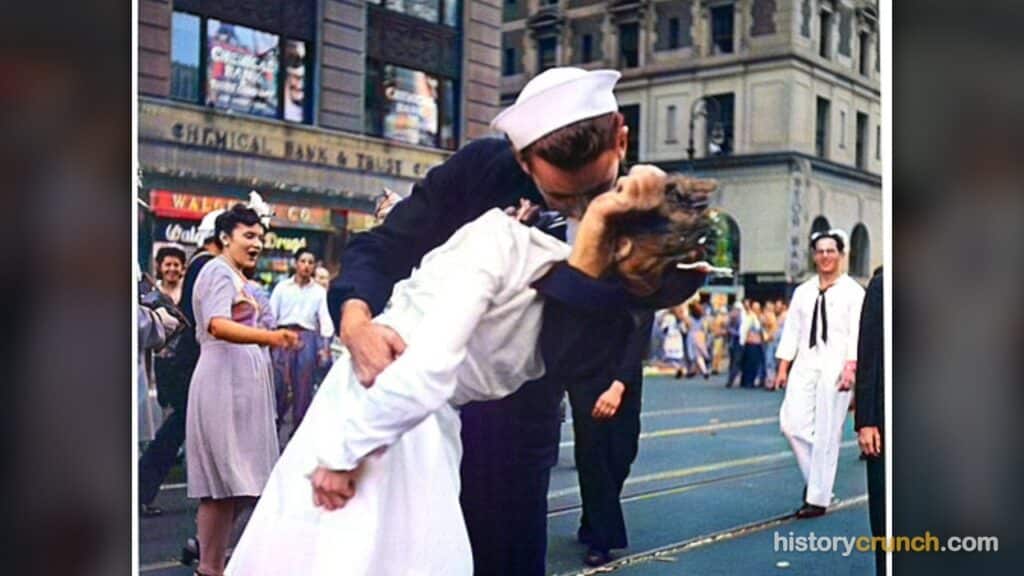 Black & whiteColor
Key Vocabulary
Imperial expansion
Tripartite Pact
Oil embargo
Bushido
Island-hopping
Kamikaze
Pacifist
Frequently Asked Questions
Why did Japan attack Pearl Harbor?
Japan attacked Pearl Harbor on December 7th, 1941 to cripple the American Pacific Fleet. The goal was to stop the United States from blocking Japanese expansion into Southeast Asia and the Pacific. The attack came after the United States cut off about 80 percent of Japan’s oil supply in 1941. Japanese leaders chose war rather than giving up their conquests in China.
When did Japan surrender in World War II?
Emperor Hirohito announced Japan’s surrender on August 15th, 1945, and the formal ceremony took place on September 2nd, 1945. The surrender was signed aboard the American battleship USS Missouri in Tokyo Bay. It followed the atomic bombings of Hiroshima and Nagasaki and the Soviet declaration of war. These events together convinced Japanese leaders that fighting on was hopeless.
What was the turning point of the Pacific War?
The Battle of Midway, fought from June 3rd to June 7th, 1942, was the turning point of the Pacific War. American codebreakers learned the Japanese plan, which let the United States ambush the attacking fleet. Japan lost four aircraft carriers and many experienced pilots in the battle. The Japanese navy never fully recovered from this blow.
What was the island-hopping strategy?
Island-hopping was the American plan to capture key Japanese-held islands while bypassing and isolating others. This approach let Allied forces move toward Japan without taking every defended island along the way. Major battles included Guadalcanal, Saipan, Iwo Jima, and Okinawa. Each one was costly because Japanese soldiers usually fought to the last rather than surrender.
What was bushido and how did it affect Japanese soldiers?
Bushido was a strict code of conduct that stressed honor, loyalty, and sacrifice to the point of death. It meant Japanese soldiers were expected to fight to the end instead of surrendering. This made battles in the Pacific exceptionally brutal for both sides. At Iwo Jima in 1945, only about 216 of roughly 22,000 defenders were taken prisoner.
How did World War II change Japan?
World War II transformed Japan from a military empire into a pacifist democracy in a short time. After the surrender, the United States occupied Japan and oversaw a new democratic constitution that took effect on May 3rd, 1947. This constitution gave up war as a right and limited the military to defense only. Emperor Hirohito also gave up his claim to divine status in January of 1946.
Cite This Article
To cite this article as a source, use one of the formats below.
MLA: Millar, B. “Imperial Japan in World War II: A Detailed Summary.” HistoryCrunch, 1 October 2026, https://historycrunch.com/imperial-japan-in-world-war-ii/.
APA: Millar, B. (2026). Imperial Japan in World War II: A Detailed Summary. HistoryCrunch. https://historycrunch.com/imperial-japan-in-world-war-ii/
Chicago: Millar, B. “Imperial Japan in World War II: A Detailed Summary.” HistoryCrunch. October 1, 2026. https://historycrunch.com/imperial-japan-in-world-war-ii/
Sources
- Antony Beevor, The Second World War.
- Imperial War Museum