
Ancient Rome is the story of how a town on a river in central Italy came to govern the whole Mediterranean, and then how it stopped. It runs for more than twelve hundred years: kings, then a republic built to make sure no one man could rule, then the slow destruction of that republic by its own generals, then four centuries of emperors, and an ending so gradual that historians still argue about which year to put on it.
From a town founded on seven hills in 753 BCE to the last Roman state falling in 1453 CE.
Ancient Rome is the story of how a town on a river in central Italy came to govern the whole Mediterranean, and then how it stopped. It runs for more than twelve hundred years: kings, then a republic built to make sure no one man could rule, then the slow destruction of that republic by its own generals, then four centuries of emperors, and an ending so gradual that historians still argue about which year to put on it.
Rome told its story as if it invented itself. What did it take from the civilization next door?
The arch, the drains, the toga and the religion, and where each of them came from.
Most peoples pick a founding story that flatters them. Rome picked one in which the founder kills his brother.
What a founding myth is for, and what this one was doing.
Rome had kings for 244 years and then never again, and calling a man a king was still an accusation in Caesar's day.
One expulsion in 509 BCE, and an allergy that outlasts the Republic itself.
The Republic threw out the monarchy but kept a surprising amount of what the kings had built.
Institutions that survive a revolution, and why.
The plebeians could not vote in any way that counted, could not hold office and could not read the law. They won anyway. How?
Two centuries of pressure, and the one lever that actually worked.
Before 449 BCE Roman law was remembered by priests. After it, it was on bronze in the Forum. Why did that matter so much?
From custom you are told about to rules you can read.
By 287 BCE the plebeians had legal equality. A small number of families went on holding the consulship anyway. Why?
The gap between winning the rule and holding the power.
Two consuls, a Senate, several assemblies and ten tribunes. What was each for, and how did they hold each other in check?
The design, its purpose, and the assumption it rested on.
They traded with each other for centuries and had treaties. Then they fought for 118 years until one of them no longer existed.
Sicily, grain, fear, and a decision that was not inevitable.
For fifteen years Hannibal beat Roman armies in Italy almost at will, and still lost.
Winning battles and winning wars are different problems.
Rome had almost no fleet in 264 BCE. By 241 BCE it controlled the sea. How?
Copying, building, losing, and building again.
Rome won the Mediterranean and then tore itself apart. Are the two connected?
Land, the enslaved, and the small farmer who disappears.
The usual answer is Caesar. Look at the fifty years before him and the answer gets harder.
Five men, and the question of who did the damage.
An army loyal to the state is a defense. An army loyal to its general is a weapon pointed at the state.
Land, pensions, and the man who promises them.
Caesar went to Gaul in debt and politically stuck. He came back able to take the state.
An army, a fortune, a reputation, and a book.
Tens of thousands of enslaved people beat Roman armies for two years. Then Rome won, and nothing changed.
A revolt, a crucifixion road, and a system that carried on.
Cicero executed Roman citizens without trial to stop a conspiracy, and defended it for the rest of his life.
A consul, an emergency, and a question with no comfortable answer.
Sixty senators killed Caesar to save the Republic. Thirteen years later Rome had an emperor.
What the assassins expected, and what they had not thought about.
He handed his powers back to the Senate and walked away with more than he started with. How?
Forms kept, substance taken, and a title nobody had used before.
The empire had no rule for who should rule next, and it nearly destroyed the state twice.
Adoption, murder, the guard, and fifty years of chaos.
Two hundred years of peace, according to the name. It depends a great deal on where you were standing.
The interior, the frontier, and the provinces that revolted.
Roman history was written by rich men about rich men. A volcano preserved everybody else.
Bread, graffiti, election notices and shop counters.
Fifty thousand seats, free entry, and a strict order of seating. That is not just entertainment.
A building read as a piece of government.
In 64 CE Christians were a group small enough to blame for a fire. In 380 CE theirs was the state religion.
Three centuries, several persecutions, and one emperor's decision.
He backed Christianity, funded it, and was baptized only on his deathbed. Historians still argue about why.
The evidence on both sides, and why it cannot be settled.
The empire absorbed gods from everywhere. Christians were a rare exception. Why?
Sacrifice, loyalty, and a religion that would not share.
Within a century the persecuted became the establishment. What changed for both sides?
Money, law, councils, and disputes with consequences.
The most argued-over question in ancient history, and the honest answer is that no single cause survives examination.
Six explanations, and what each one gets right and wrong.
The groups that brought down the west had often been admitted legally, and many of them worked for Rome.
The Danube crossing, Adrianople, and an army of Goths defending Gaul.
In 476 CE nothing was destroyed. An office was left empty. Is that a fall?
The case for collapse, the case for transformation, and what the evidence shows.
Not the empire. The law, the language, the concrete and the calendar.
Five things that outlasted the state that made them.
Concrete, arches, water and organization, and the fact that none of it was invented in Rome.
The engineering, and the state that could afford it.
It began as the people of one city. It ended as fifty million people from Britain to Syria.
Citizenship as a tool, and what it bought Rome.
Most of what survives was written by wealthy men. What does that leave out, and how do you get at it?
The gaps in the record, and the evidence that fills some of them.
Before Rome was a republic it was a small town on a group of hills, ruled by kings, with a far older and richer civilization immediately to the north. The Etruscans had cities, writing, drainage and the arch while Rome was still villages, and much of what looks most Roman came south from them. The period ends in 509 BCE with a rape, a suicide and an expulsion, and with a hatred of the word king that lasted five hundred years.
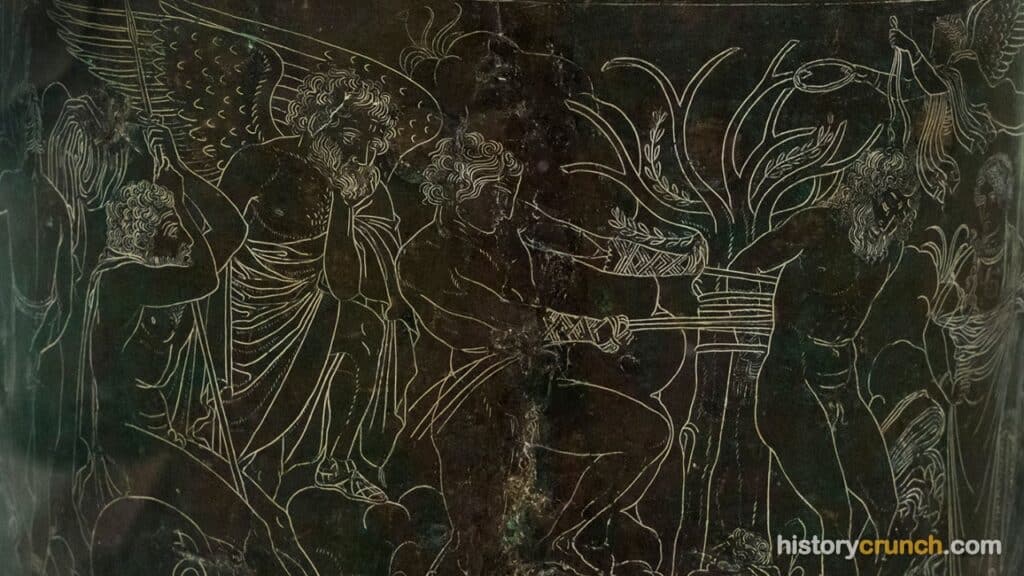
The earliest clear signs of a distinctly Etruscan way of life date to around 900 BCE, in the region of Italy north of the Tiber. These were the Villanovan communities, farming, mining metal and burying their dead with goods.
LEARN MORESHOW LESSwhy it matters · key numbersSOCIALRome likes to tell its story as if it started from nothing. It did not. There was an older, richer, better organized civilization next door, and almost everything Rome did first, the Etruscans had already done.
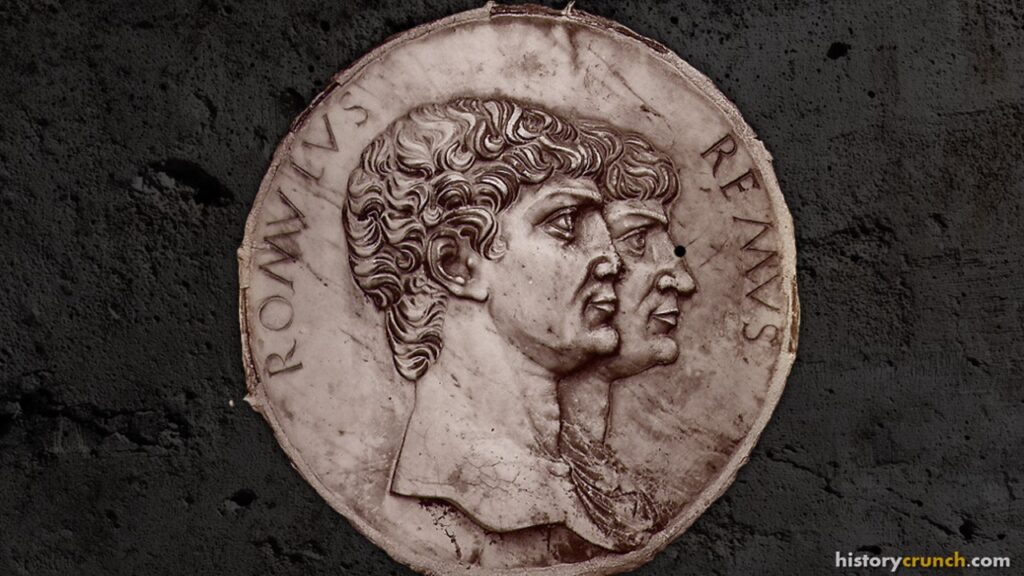
Roman tradition puts the founding of the city on 21 April 753 BCE, with Romulus as its first king. The Romans kept the date as a festival and counted their years from it. The archaeology shows villages on the hills before this, growing together into a town.
LEARN MORESHOW LESSwhy it matters · key numbers · 1 key figurePOLITICALThis is the date the Romans themselves used, which matters more than whether it is exactly right. A people who date their calendar from the founding of their own city are telling you something about how they see themselves.
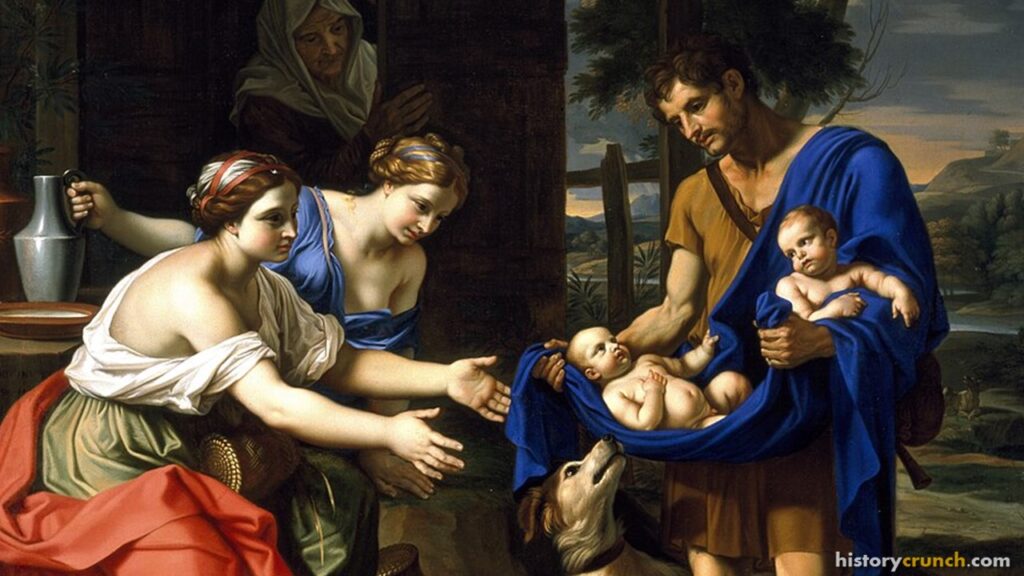
In the story the Romans told, twin brothers were left to die, raised by a she-wolf and then a shepherd, and grew up to argue over where to build a city. Romulus killed Remus and named the place after himself.
LEARN MORESHOW LESSwhy it matters · 2 key figuresSOCIALEvery people chooses a founding story. Rome chose one in which the founder kills his brother over a boundary line. It is worth asking a class what that choice says about how Romans understood their own city.
By about 750 BCE the scattered Villanovan communities had grown into the Etruscan civilization proper, with cities, writing borrowed from the Greek alphabet, metalwork traded across the Mediterranean and engineering the Romans would later copy.
LEARN MORESHOW LESSwhy it mattersTECHNOLOGYThe arch, the drainage of the Forum, the toga, the fasces carried in front of a magistrate and much of Roman religion came north to south from Etruria. Rome's genius was rarely invention. It was absorbing what worked.
Servius Tullius, remembered as a reformer who organized citizens by wealth for taxation and military service, was assassinated in 535 BCE by his daughter Tullia and her husband, who took the throne as Tarquin the Proud.
LEARN MORESHOW LESSwhy it matters · 2 key figuresPOLITICALIt is the last act before the monarchy ends, and it shows what the Romans came to think was wrong with kings: not one bad ruler, but a system where the throne could be taken by whoever was willing to kill for it.
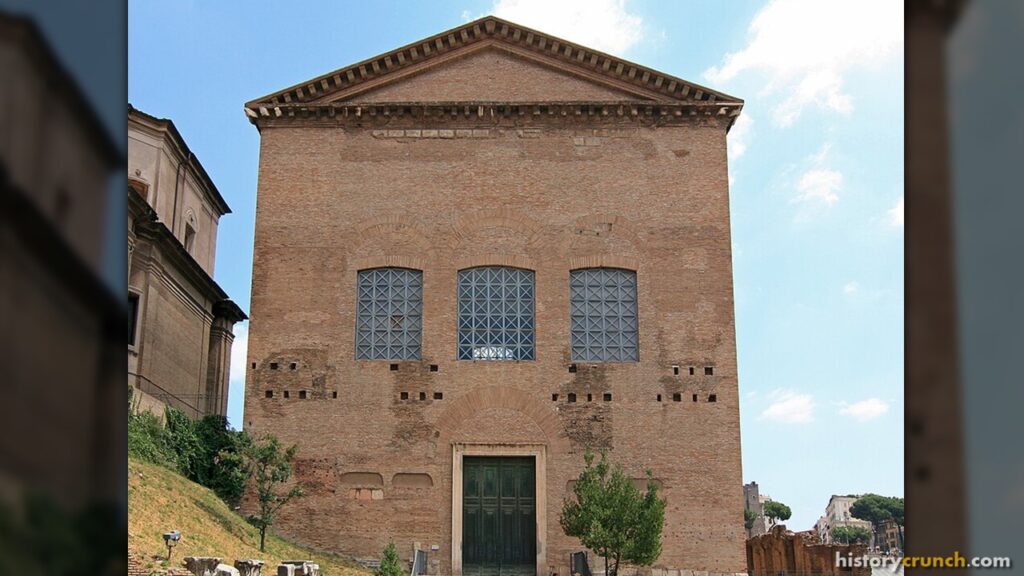
In 509 BCE the king's son raped Lucretia, a noblewoman, who told her family what had happened and then killed herself. The outrage that followed drove out Tarquin the Proud and ended the Roman monarchy for good.
LEARN MORESHOW LESSwhy it matters · key numbers · 2 key figuresSOCIALRome had kings for nearly 250 years and then never again. For the next five centuries the worst accusation a Roman could make about another Roman was that he wanted to be king, and this is the story behind that horror.
The Republic was designed to stop any one man holding power: two consuls instead of a king, one year each, each able to block the other. It was also designed by and for a small group of families, and the next two centuries are the story of everybody else forcing their way in. The plebeians had no vote worth having and no written law, so they withdrew their labor and their military service until they got both.
The Roman Republic was founded in 509 BCE, immediately after the expulsion of the last king. Instead of one ruler for life, two consuls were elected for a single year, each able to block the other, advised by a Senate of former magistrates.
LEARN MORESHOW LESSwhy it matters · key numbersPOLITICALThis is the arrangement that lasted almost five hundred years and that the American founders studied closely. The whole design answers one question: how do you stop any single person getting permanent power?
Etruscan power reached its height around 500 BCE, controlling much of central and northern Italy and trading across the western Mediterranean, at almost exactly the moment Rome stopped being ruled by Etruscan kings.
LEARN MORESHOW LESSwhy it mattersSOCIALThe two curves cross here. From this point Etruria declines and Rome rises, and within two centuries the Etruscan cities are Roman. Their language died out so completely that it is still only partly understood.
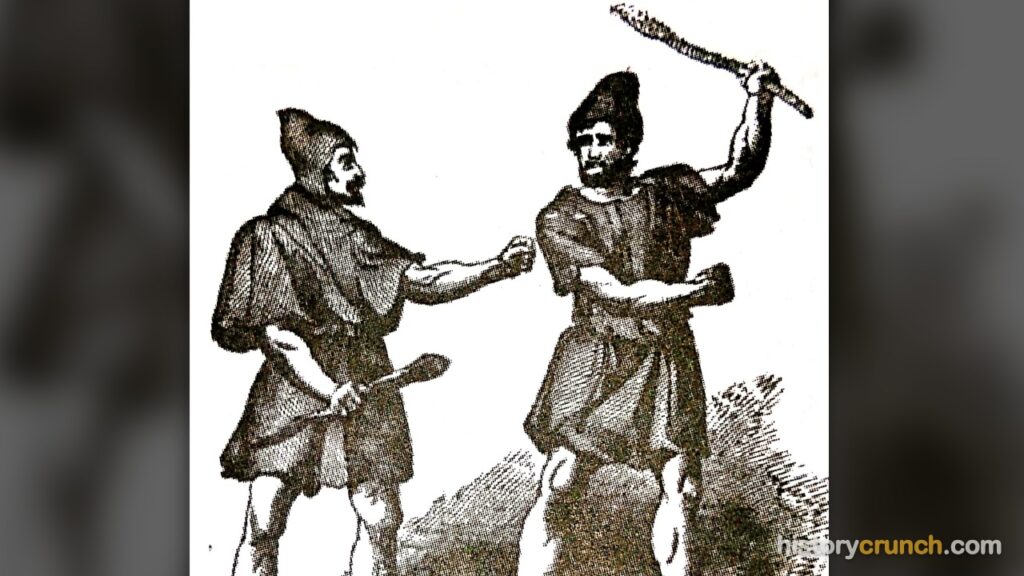
Around 494 BCE the plebeians, the ordinary citizens who did the fighting and the farming, simply left the city and refused to come back. Rome could not function without them. The settlement created the tribune of the plebs, an office whose whole job was to protect plebeians from the patricians and whose holder could block any magistrate with a single word.
LEARN MORESHOW LESSwhy it matters · key numbersSOCIALIt is one of the earliest recorded general strikes, and it worked. The plebeians had no vote worth having and no legal standing, but they had their labor and their military service, and withdrawing both was enough.
In 451 BCE the Senate appointed ten men, the decemvirs, with the single task of writing down the laws Rome had been using. Until then the law was custom, remembered and interpreted by patrician priests, which meant a plebeian could be judged by a rule he had never been told.
LEARN MORESHOW LESSwhy it mattersLAWThis is the practical demand underneath the whole long struggle between the orders. Not new rights at first, just the right to read the rules you are being judged by.
Rome's first written law code was produced in 449 BCE and set up in the Forum where anyone could see it. It covered debt, property, family, inheritance and court procedure, and Roman schoolboys were still learning it by heart four hundred years later.
LEARN MORESHOW LESSwhy it matters · key numbersLAWWritten, public law is the idea that outlasts Rome itself. It runs through the emperor Justinian's code a thousand years later and into the legal systems of most of Europe and Latin America today.
In 445 BCE the ban on marriage between patricians and plebeians was lifted. It had been written into the Twelve Tables only four years earlier, and removing it broke one of the hardest barriers between the two orders.
LEARN MORESHOW LESSwhy it mattersSOCIALA closed ruling class stays closed largely by controlling who marries whom. Once wealthy plebeian families could marry into patrician ones, the line between the orders started to blur, and within 150 years it stopped mattering much.
A Gallic army under a chieftain called Brennus defeated the Romans and sacked and burned the city in 390 BCE. Most of Rome's early written records were destroyed, which is one reason the history of the kingdom is so uncertain.
LEARN MORESHOW LESSwhy it matters · key numbersMILITARYTwo things follow. Rome built the walls and the army that meant it would not happen again for eight hundred years, and Roman historians writing about the early city were working from memory and legend because the documents had burned.
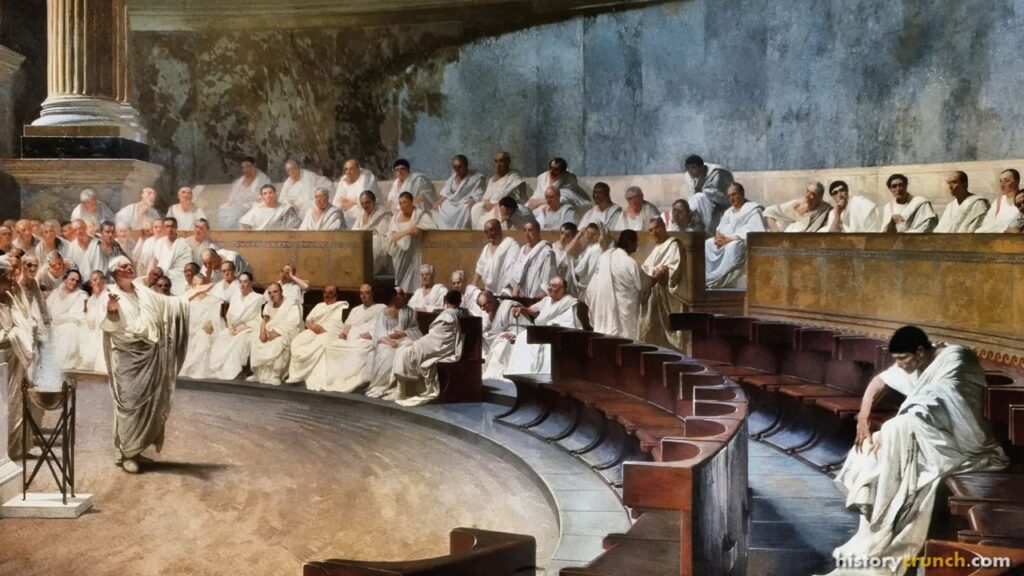
From around 318 BCE any man elected to a qualifying magistracy became a senator as a matter of course, rather than being chosen by a censor's judgement. The Senate went from a body of appointed advisers to a chamber of everyone who had held office.
LEARN MORESHOW LESSwhy it matters · key numbersPOLITICALIt is the quiet mechanism that turned the Senate into the real government of Rome. It never formally ruled and its decrees were technically advice, but it held every experienced politician in the state for life.
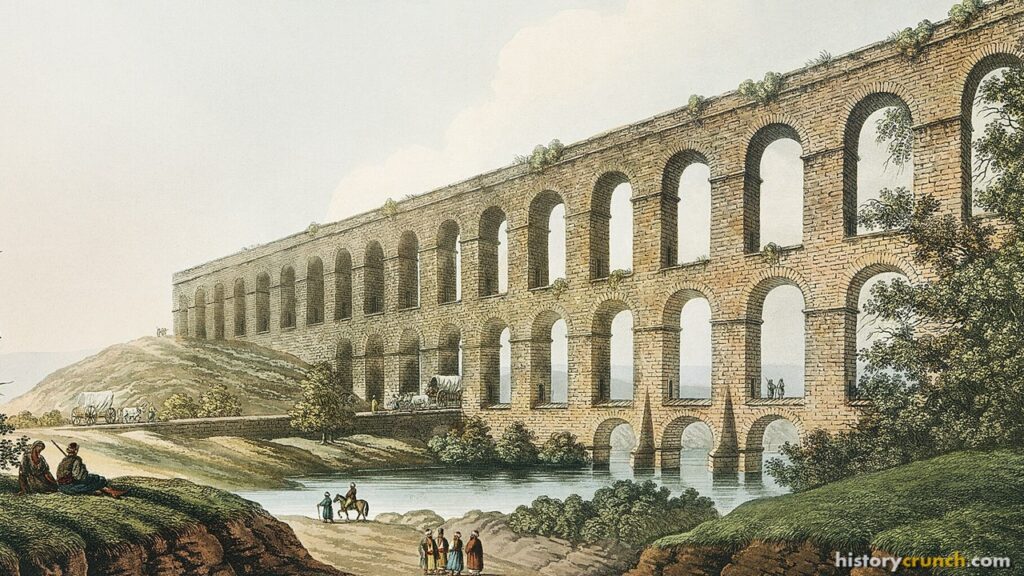
The Aqua Appia, built in 312 BCE, carried water from springs about ten miles east of Rome, almost all of it underground. It was the first of eleven aqueducts, and it worked entirely on gravity and a carefully calculated slope.
LEARN MORESHOW LESSwhy it matters · key numbersTECHNOLOGYRome grew to a million people, which no European city managed again for well over a thousand years. Water is the reason it could. Everything else about the imperial city rests on being able to supply it.
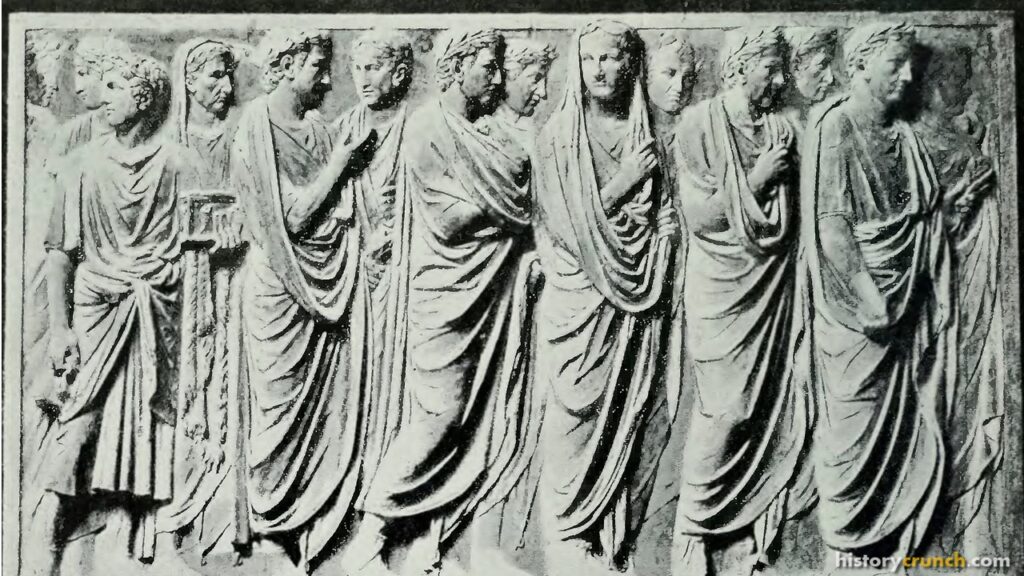
The Lex Hortensia of 287 BCE made the decisions of the plebeian assembly binding on the whole Roman state, patricians included, without needing Senate approval. It is the formal end of a struggle that had run for more than two centuries.
LEARN MORESHOW LESSwhy it matters · key numbersLAWThe plebeians won, on paper. In practice a small group of rich families, plebeian as well as patrician, went on running Rome. It is a useful case for students: legal equality and actual power are not the same thing.
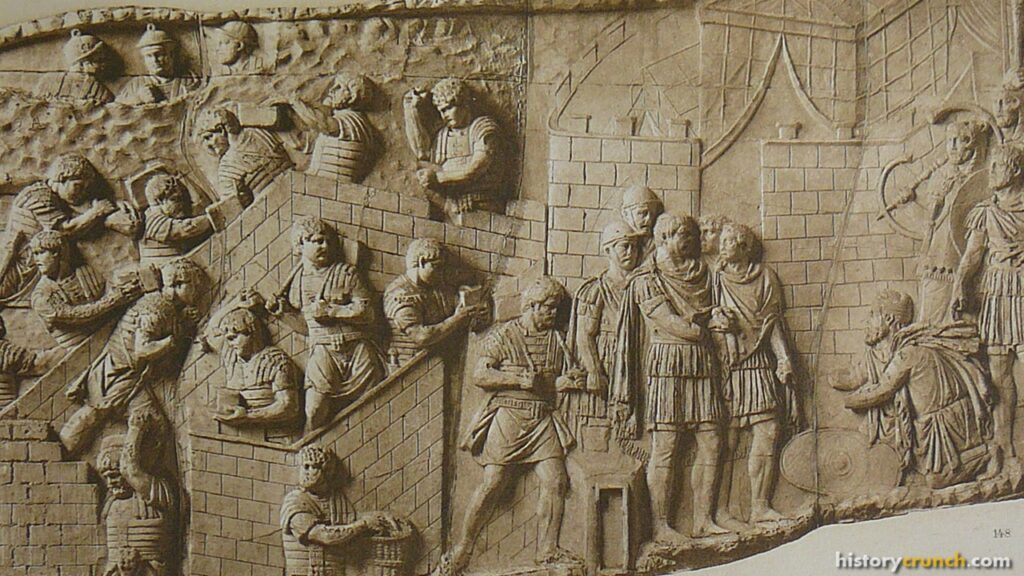
By 270 BCE Rome controlled most of the Italian peninsula, through a mixture of conquest and treaty. Defeated peoples were usually not destroyed or enslaved wholesale but bound into alliance, required to supply soldiers, and in many cases eventually offered Roman citizenship.
LEARN MORESHOW LESSwhy it matters · key numbersMILITARYThis is the real Roman invention, more than any weapon. An enemy beaten by Rome often ended up fighting for Rome, which is how a single city out-manned every rival it met for the next four hundred years.
Three wars against Carthage, spread over 118 years, turned an Italian power into a Mediterranean one. Rome built a navy from a captured enemy ship, lost fleets to storms and kept building, survived fifteen years of Hannibal inside Italy, and finally destroyed a city that had already been beaten and disarmed. The money and the enslaved that came back from these wars paid for everything in the next era, including the destruction of the Republic.
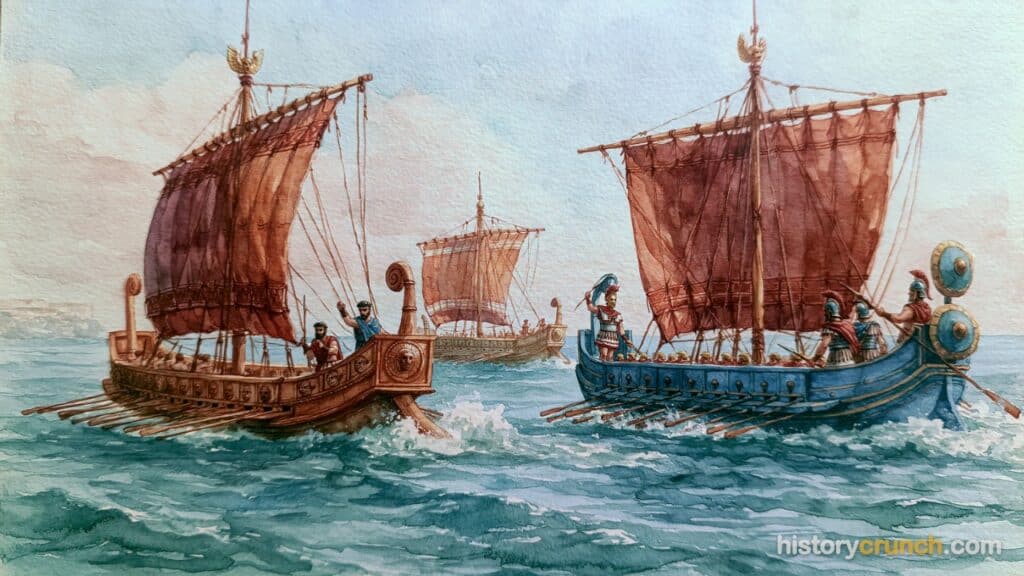
The First Punic War opened in 264 BCE when a Roman force crossed the strait to Sicily and seized Messana. Carthage, a Phoenician city on the North African coast, had the largest navy in the western Mediterranean. Rome had almost no fleet at all.
LEARN MORESHOW LESSwhy it matters · key numbersMILITARYEverything that makes Rome an empire rather than an Italian power starts here. It is also the first time Rome fights outside Italy, which changes what the army is and who it answers to.
In 256 BCE a Roman army under Marcus Atilius Regulus landed near Carthage and won early victories, then overreached, demanded terms Carthage would not accept, and was destroyed by a Carthaginian army trained by a Spartan mercenary.
LEARN MORESHOW LESSwhy it mattersMILITARYIt is the pattern of the whole war in miniature. Rome could absorb disasters that would have finished any other state, raise another army and another fleet, and simply keep coming.
The First Punic War ran from 264 to 241 BCE, the longest continuous war in Roman history to that point. Carthage gave up Sicily and paid an indemnity of 3,200 talents of silver. Rome, which had begun with no navy, ended it as the leading sea power in the western Mediterranean.
LEARN MORESHOW LESSwhy it matters · key numbersMILITARYSicily became Rome's first province, governed from outside rather than absorbed as an ally. The whole machinery of empire, governors and tribute and provincial taxation, begins with this settlement.
In 219 BCE Hannibal Barca besieged the Spanish city of Saguntum, an ally of Rome, and took it after about eight months. Rome demanded he be handed over. Carthage refused, and the Second Punic War began.
LEARN MORESHOW LESSwhy it matters · 1 key figureMILITARYHannibal had been raised to finish what the first war left undone. His father took him to an altar as a boy and made him swear never to be a friend to Rome, and the story was still being told in Rome centuries later.
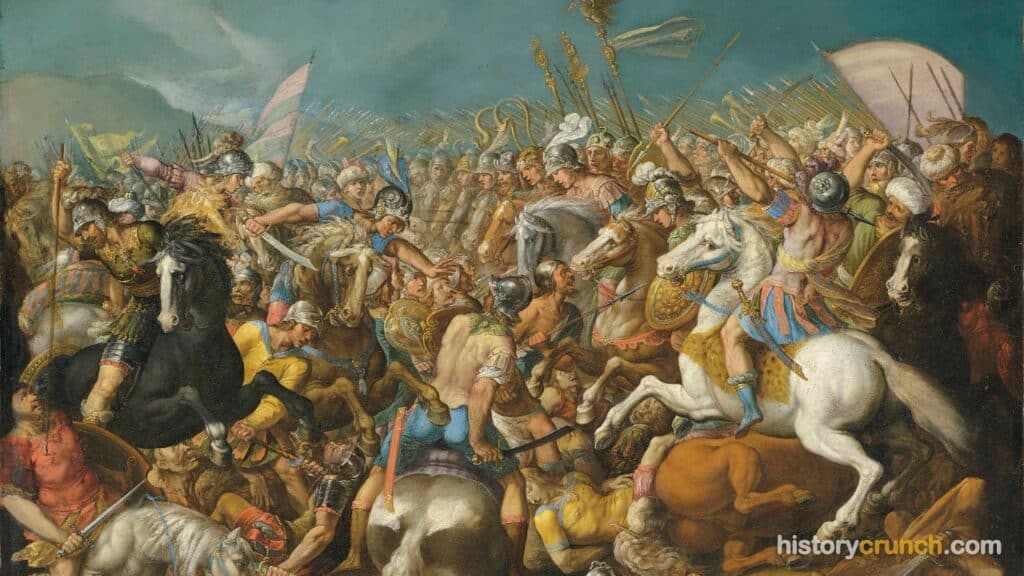
In late 218 BCE Hannibal marched from Spain through southern Gaul and over the Alps into Italy, with cavalry, infantry and war elephants, in the wrong season and through hostile mountain tribes. He lost about half his army getting there and then beat the Romans repeatedly for fifteen years.
LEARN MORESHOW LESSwhy it matters · key numbers · 1 key figureMILITARYRome expected the war to be fought in Spain or Africa. Instead it was fought in Italy, on Roman farmland, for a generation. The damage to the Italian countryside and to small farming families runs directly into the political crisis a century later.
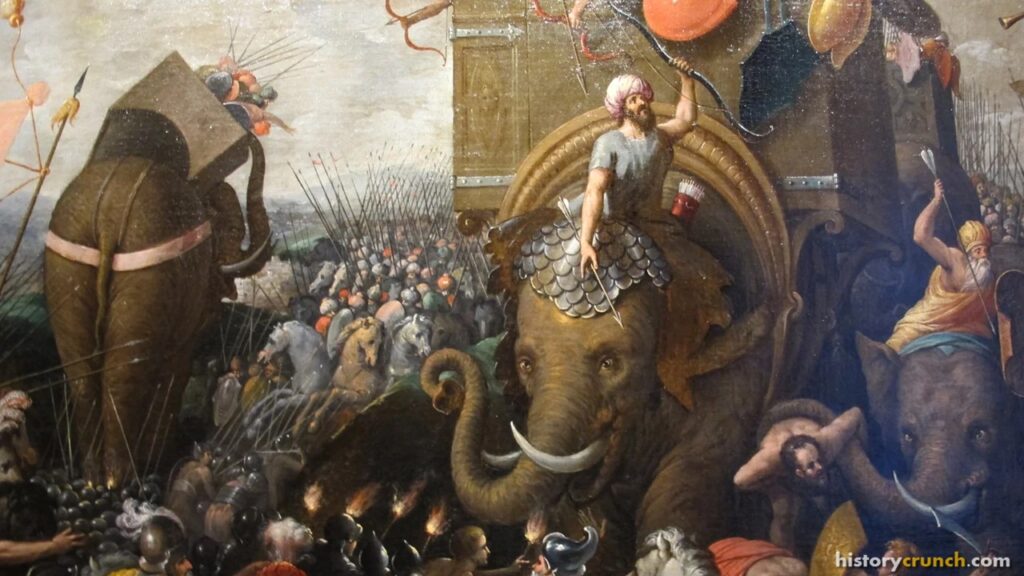
Rome finally defeated Carthage at Zama in 202 BCE. Scipio, who had studied Hannibal's tactics for years, invaded Africa to force Hannibal home, then beat him on his own ground. Carthage lost its fleet, its empire and its right to make war without Roman permission.
LEARN MORESHOW LESSwhy it matters · key numbers · 2 key figuresMILITARYRome is now the only great power left in the western Mediterranean. Within fifty years it has beaten the Greek kingdoms in the east as well, and the question stops being who rules the sea and becomes what Rome will do with it.
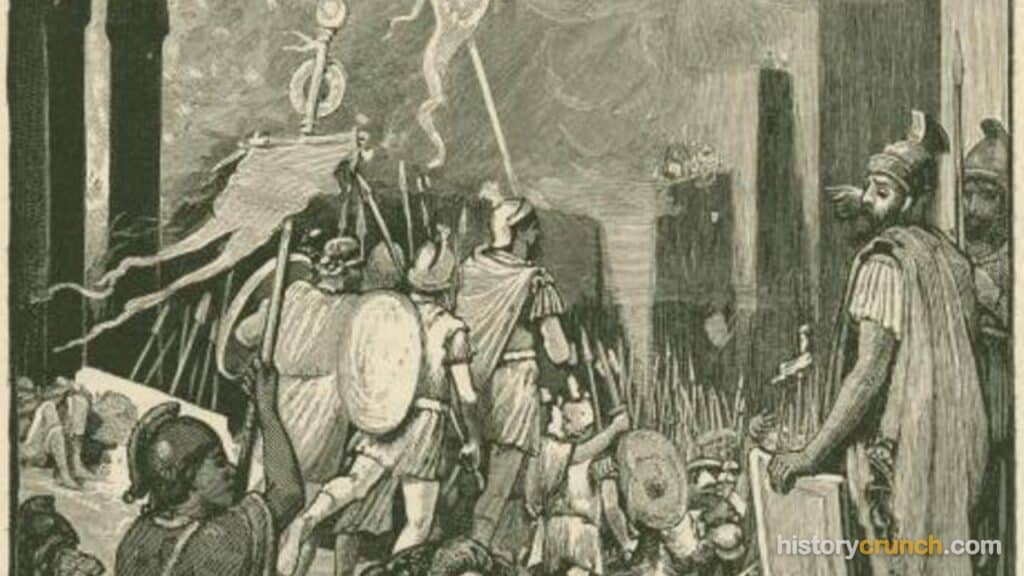
The Third Punic War ran from 149 to 146 BCE and ended with the complete destruction of Carthage. The city was burned, the survivors sold into slavery, and the territory became the Roman province of Africa. Carthage was no longer a threat to anyone when Rome decided to finish it.
LEARN MORESHOW LESSwhy it matters · key numbersMILITARYThis is the hardest question on the whole timeline. Rome destroyed a city that had already been beaten, disarmed and made harmless. Students should be asked what that tells them about how Rome dealt with a rival it had once feared.
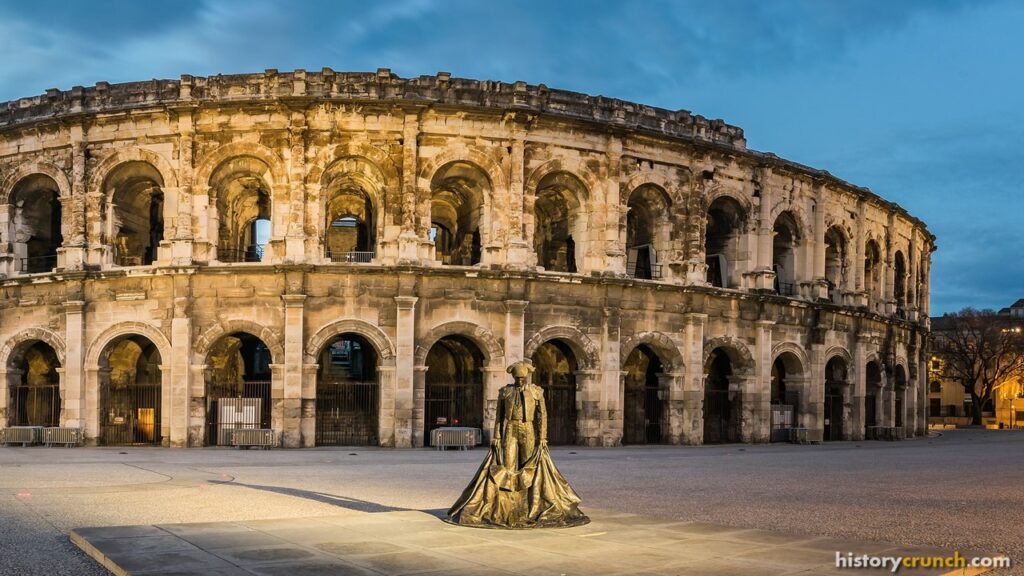
The Aqua Marcia, built in 144 BCE, carried water roughly 57 miles into Rome and was famous for how cold and clean it arrived. Wealthy Romans paid for a private connection to it.
LEARN MORESHOW LESSwhy it matters · key numbersTECHNOLOGYIt is a good measure of what the conquests bought. The money from Sicily, Spain and Africa came back to Rome as public works, and a city that had been a large town now looked like a capital.
For a hundred years the machinery held and the men stopped believing in it. Generals raised private armies, emergency commands became routine, and three men made a private arrangement to run the state. Caesar crossed a river he was forbidden to cross, made himself dictator for life, and was killed for it by men who thought that would bring the Republic back. It brought thirteen more years of civil war and then an emperor.
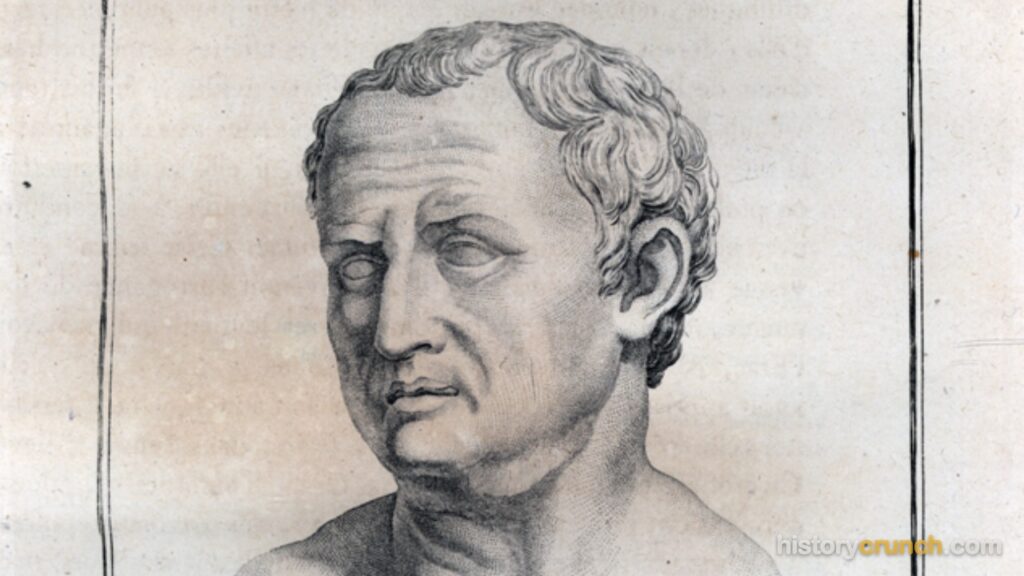
Cicero was born on 3 January 106 BCE into a family with no history of high office, in a generation that would end with political murder by proscription on both sides. Pompey was born on 29 September of the same year, into wealth and a father with an army. One would rise by speaking, the other by commanding.
LEARN MORESHOW LESSwhy it matters · 2 key figuresPOLITICALBetween them they show the two ways to power in the late Republic, and which one was winning. Cicero reached the consulship on talent. Pompey reached it on legions, and Pompey mattered more.
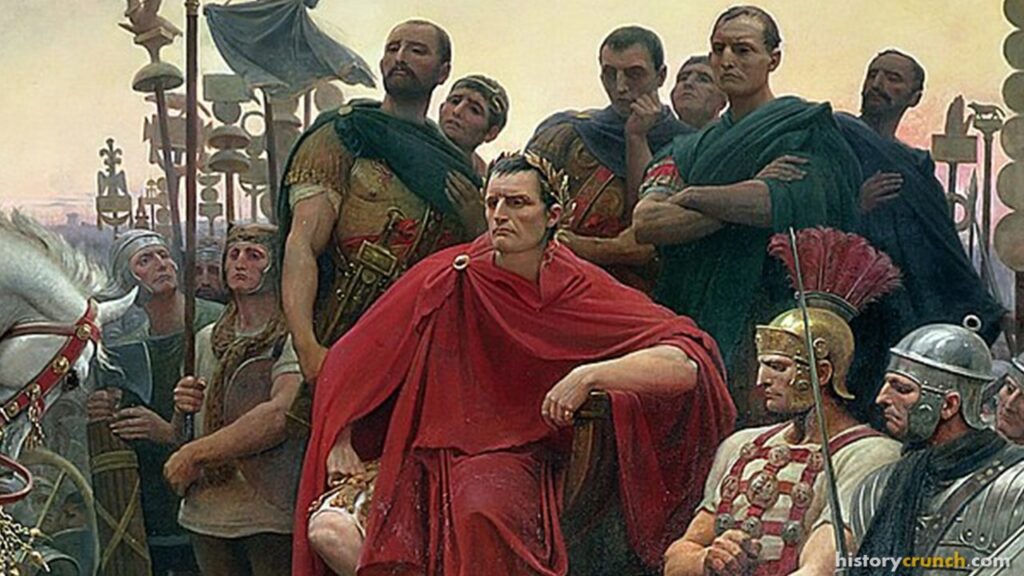
Gaius Julius Caesar was born on 13 July 100 BCE in Rome, into an old patrician family that had held little real power for generations. He was a gifted speaker, a heavy borrower and a careful builder of alliances long before he was a soldier.
LEARN MORESHOW LESSwhy it matters · key numbers · 1 key figurePOLITICALThe last century of the Republic is usually told as Caesar's story. It is worth noticing that he was born into a system already breaking, and that most of what he did had been done first, on a smaller scale, by others.
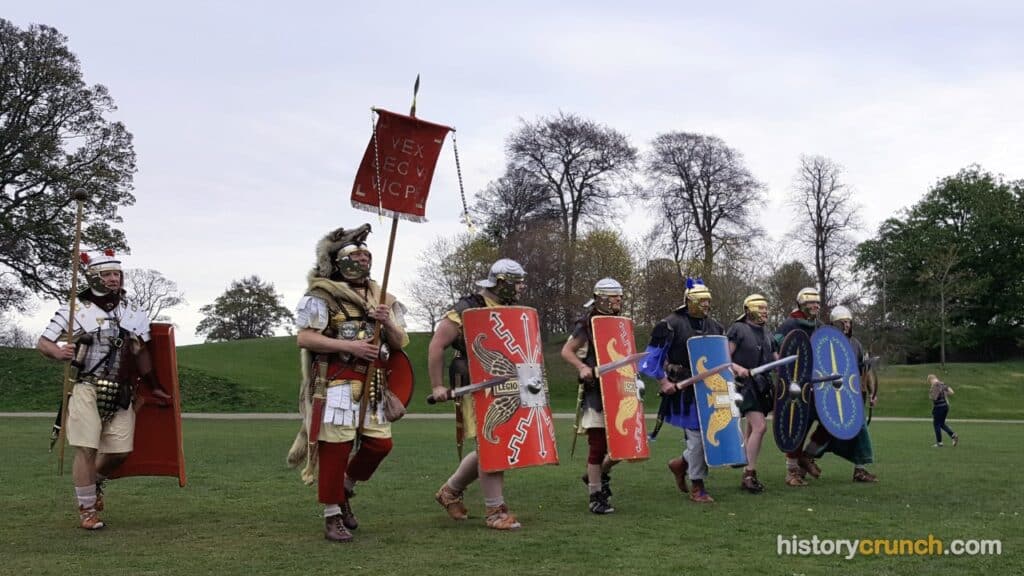
From 91 to 88 BCE Rome fought the Social War against its own Italian allies, who had supplied soldiers for generations and wanted the citizenship in return. Rome won the war and then granted the demand anyway. A teenage Pompey served on his father's staff.
LEARN MORESHOW LESSwhy it matters · key numbersMILITARYIt is the alliance system of 270 BCE finally breaking down. Rome gave the citizenship to all Italy, which made the state far stronger, but it did it with an army in the field rather than by choice.
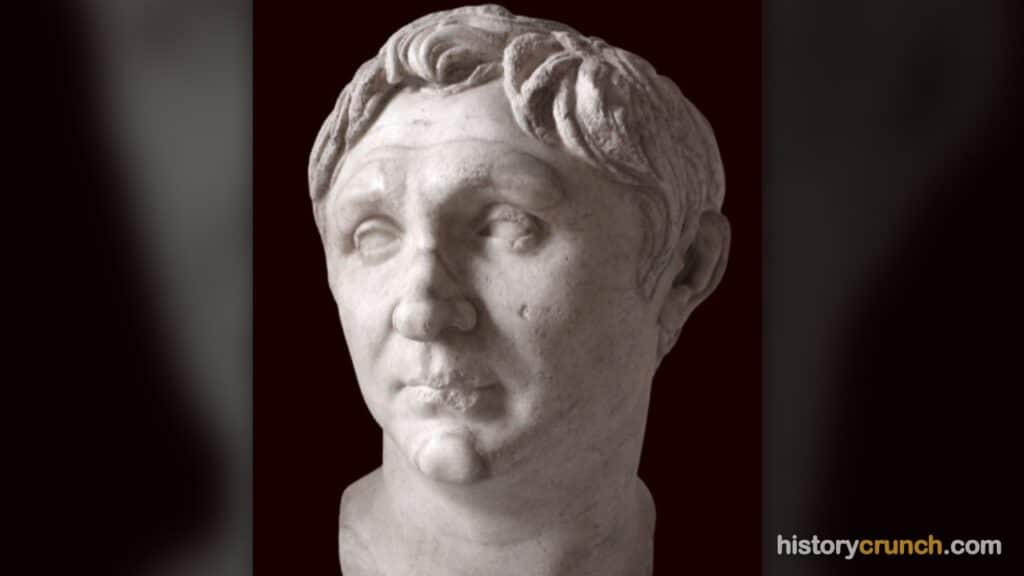
When Sulla returned to Italy in 83 BCE, the 23-year-old Pompey raised three legions from his family's estates and tenants and marched to join him. He held no office. The soldiers were loyal to him, not to the state, and Sulla rewarded him rather than prosecuting him.
LEARN MORESHOW LESSwhy it matters · key numbers · 2 key figuresMILITARYThis is the disease that kills the Republic, visible in one episode. Once armies belong to the men who pay and lead them, every political argument can be settled by marching, and eventually every one is.
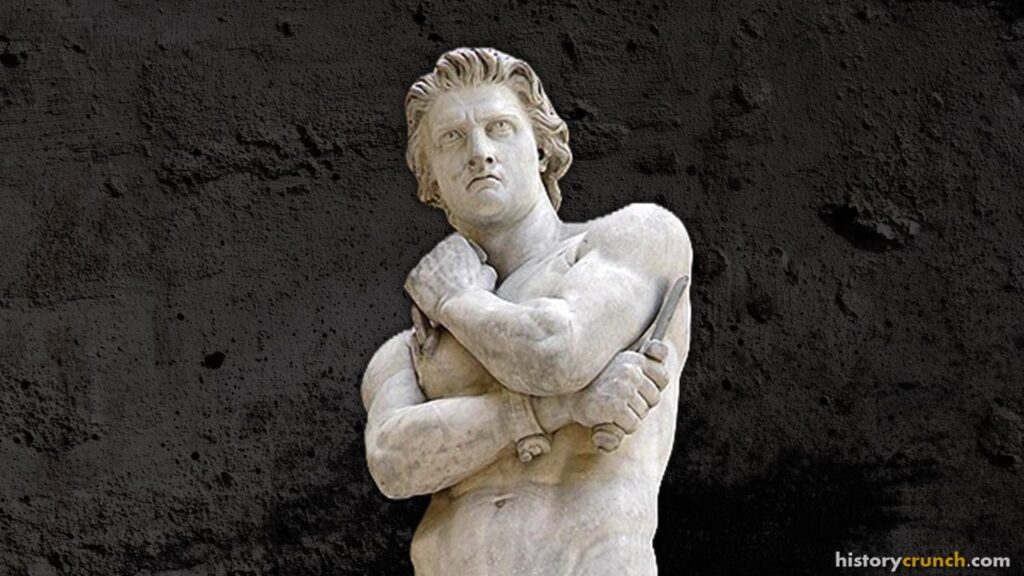
In 73 BCE Spartacus and about seventy other gladiators escaped from the training school at Capua, armed at first with kitchen tools. Enslaved people joined them as they moved through the countryside until the force numbered in the tens of thousands, and it beat several Roman armies.
LEARN MORESHOW LESSwhy it matters · key numbers · 1 key figureSOCIALRome ran on slavery, and this is the largest revolt against it in Roman history. It is also a reminder of who was actually in the Italian countryside by this date: the small farms had been swallowed by great estates worked by the enslaved.
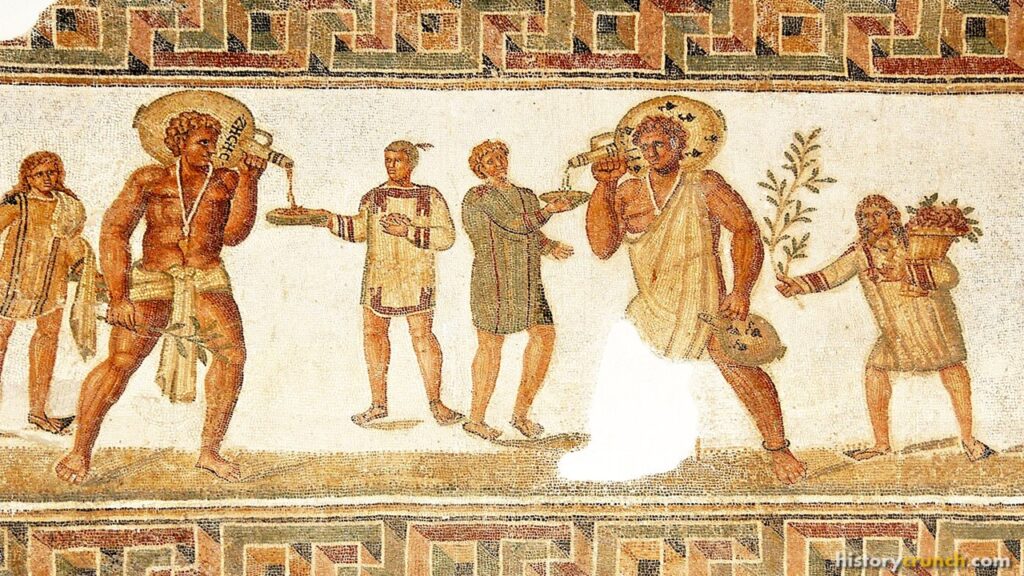
In 71 BCE the Senate gave Marcus Licinius Crassus command against Spartacus. The rebel army was destroyed and Spartacus is believed to have died in the final battle, though his body was never identified. Six thousand prisoners were crucified along the Appian Way.
LEARN MORESHOW LESSwhy it matters · key numbers · 1 key figureSOCIALThe crosses were a message meant to be read for a hundred miles. Rome did not try to fix the conditions that caused the revolt. It made an example instead, and the system of slavery ran on unchanged for centuries.
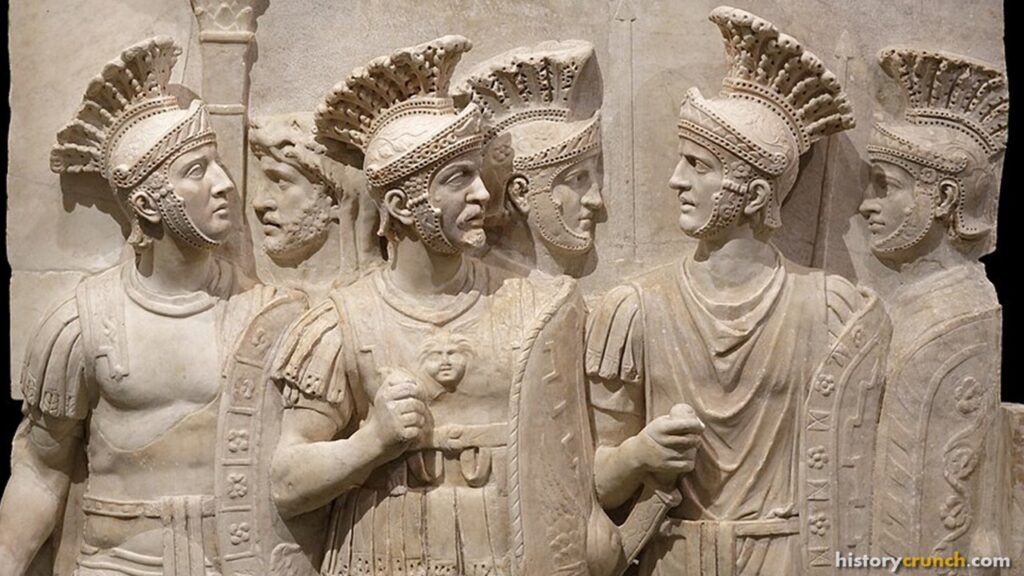
In 67 BCE Pompey was given an extraordinary command against the pirates who were strangling the grain supply: authority over the entire Mediterranean and the coasts fifty miles inland. He swept the sea clear in a matter of months.
LEARN MORESHOW LESSwhy it matters · key numbersMILITARYThe Senate gave Pompey authority over the whole Mediterranean and its coasts fifty miles inland, far beyond anything the Republic's rules allowed, because it could not solve the problem any other way. Each emergency command made the next one easier to justify.
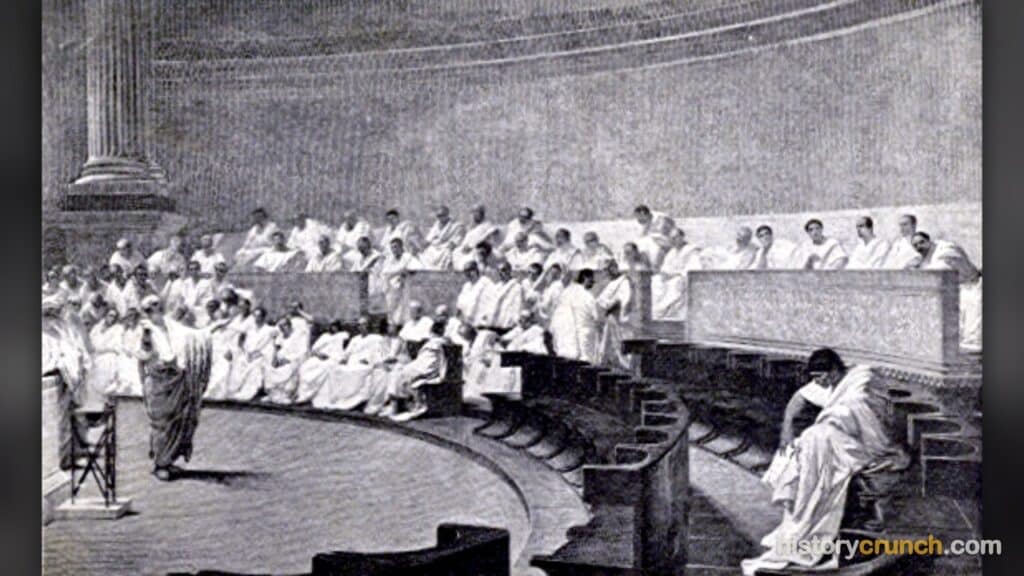
In 63 BCE Cicero was elected consul, the top of the ladder of offices, as a new man with no consul among his ancestors. In the same year he exposed the Catiline conspiracy and had the plotters executed without trial, which he defended and which was later used to exile him.
LEARN MORESHOW LESSwhy it matters · key numbers · 2 key figuresPOLITICALCicero is the best evidence both for and against the Republic. He rose on merit, which the system allowed. He also killed citizens without trial to save it, which is the sort of thing the system was designed to prevent.
In 60 BCE Caesar, Pompey and Crassus made a private arrangement to back each other's aims and block anyone who opposed them. It had no legal standing at all. It simply pooled Caesar's political skill, Pompey's soldiers and Crassus's money.
LEARN MORESHOW LESSwhy it matters · key numbers · 3 key figuresPOLITICALThe Republic still had its consuls, its Senate and its assemblies, and none of them mattered much for the next decade. Students should notice that no law was broken and the constitution was hollowed out anyway.
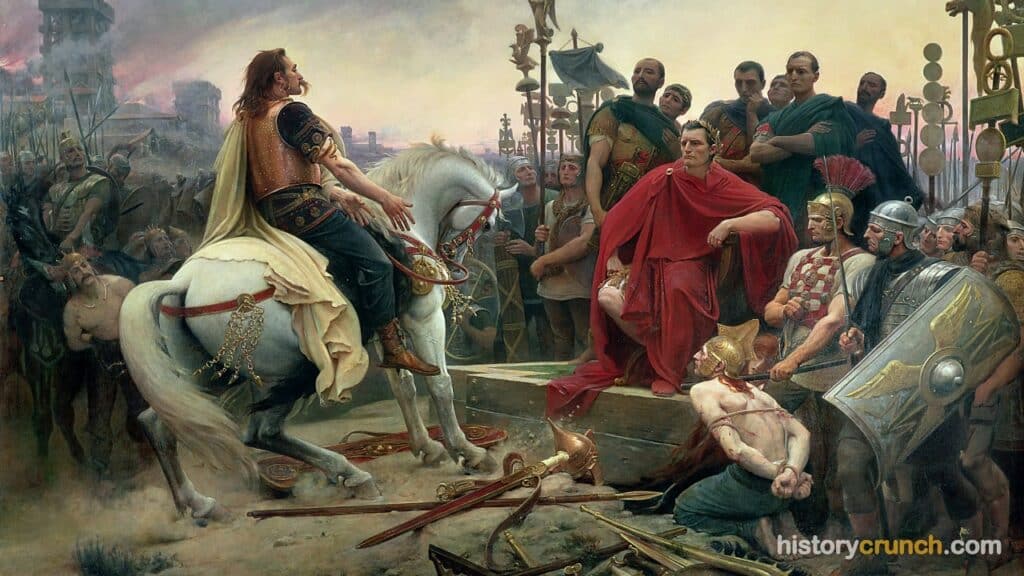
The Gallic Wars began in 58 BCE when the Helvetii decided to migrate west and Caesar decided to stop them. Eight years of campaigning followed, ending with all of Gaul under Roman control and Vercingetorix surrendering at Alesia in 52 BCE.
LEARN MORESHOW LESSwhy it matters · key numbers · 2 key figuresMILITARYGaul made Caesar. It gave him a veteran army that had marched with him for eight years, enough plunder to pay off his debts and buy support in Rome, and a reputation no rival could match. He also wrote the account we still read.
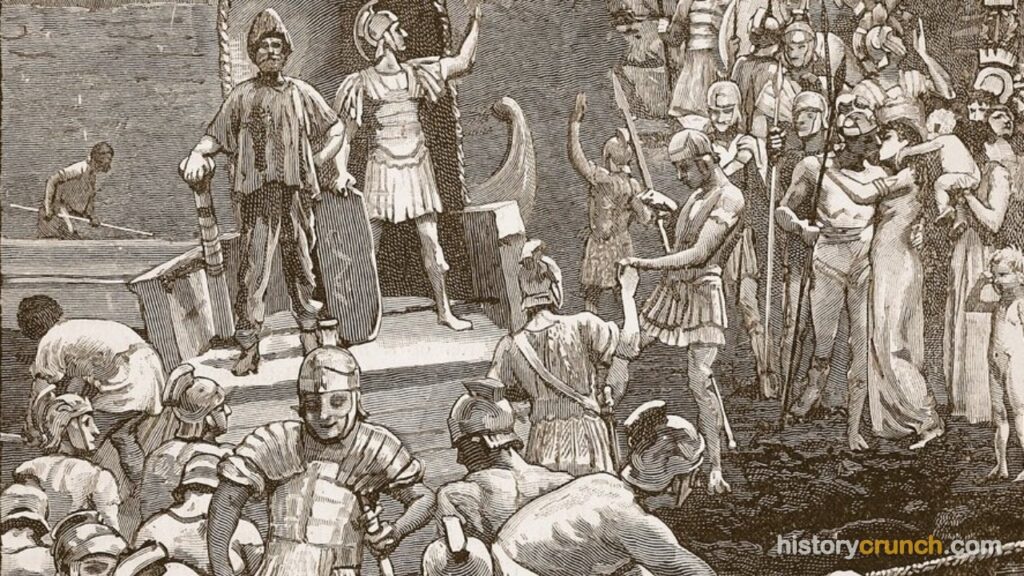
Caesar led two expeditions across the Channel in 55 and 54 BCE. Neither conquered anything lasting. Both were reported in Rome as extraordinary achievements, because Britain was at the edge of the known world.
LEARN MORESHOW LESSwhy it mattersMILITARYIt shows how much of Roman warfare was aimed at a Roman audience. Nothing was held, but crossing the Ocean was the kind of thing that got a man talked about, and being talked about was the currency Caesar needed.
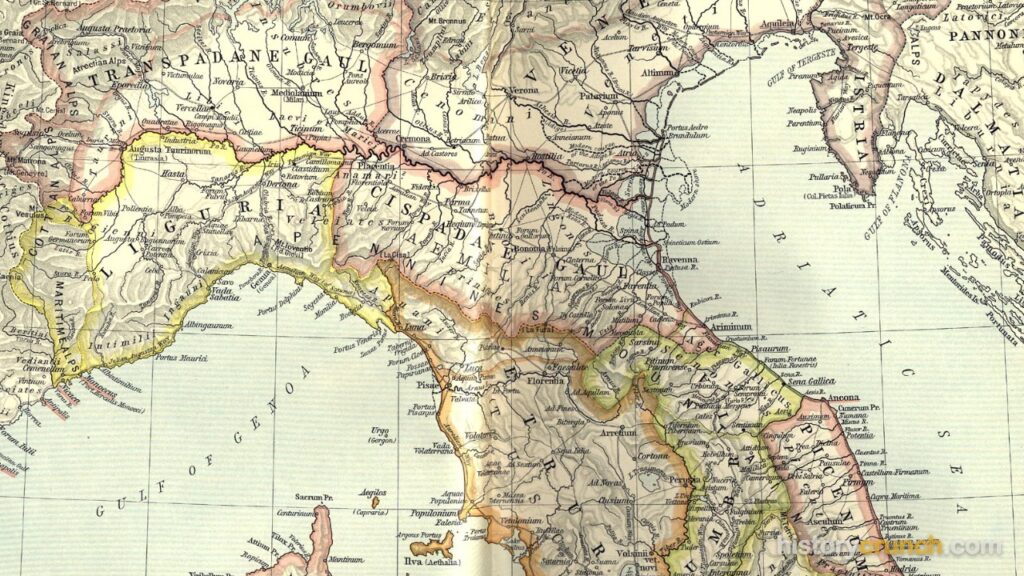
Ordered by the Senate to give up his command and return to Rome as a private citizen, Caesar instead crossed the Rubicon into Italy with his army on January 10th, 49 BCE. Bringing an army across that river was treason, and there was no way to take the step back.
LEARN MORESHOW LESSwhy it matters · key numbers · 2 key figuresMILITARYIt is the most famous point of no return in ancient history, and the phrase is still used for a decision that cannot be undone. Caesar's real choice was between civil war and near-certain prosecution and ruin.
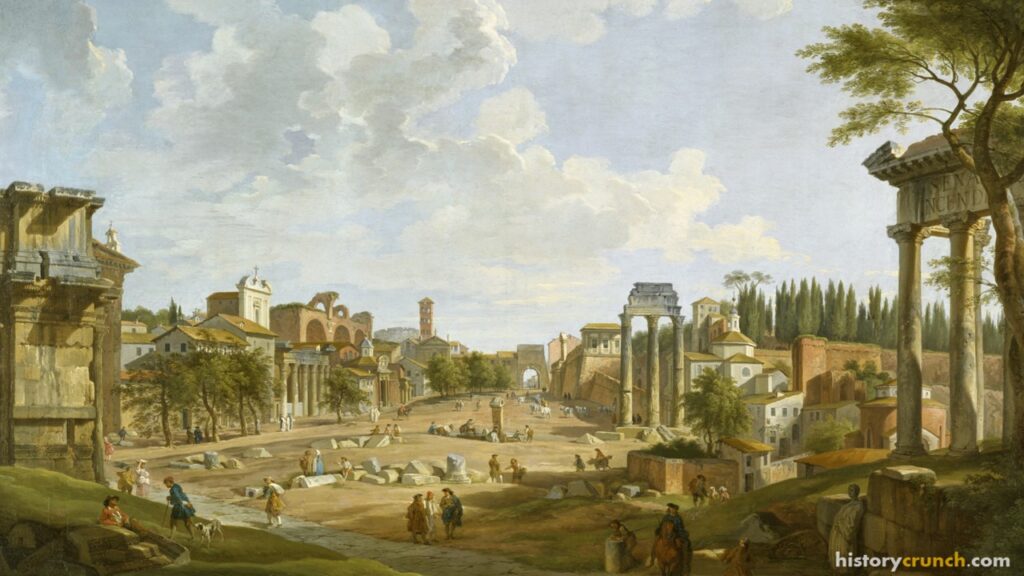
By 45 BCE Caesar had beaten every rival and taken the title dictator perpetuo, dictator for life. Dictator had been a legal Roman office for emergencies, strictly limited to six months. Making it permanent turned an emergency measure into one-man rule.
LEARN MORESHOW LESSwhy it matters · key numbersPOLITICALThis is what a Roman meant by wanting to be king, and it had been the unforgivable accusation since 509 BCE. Caesar refused the crown in public and took the power anyway, and it cost him his life within months.
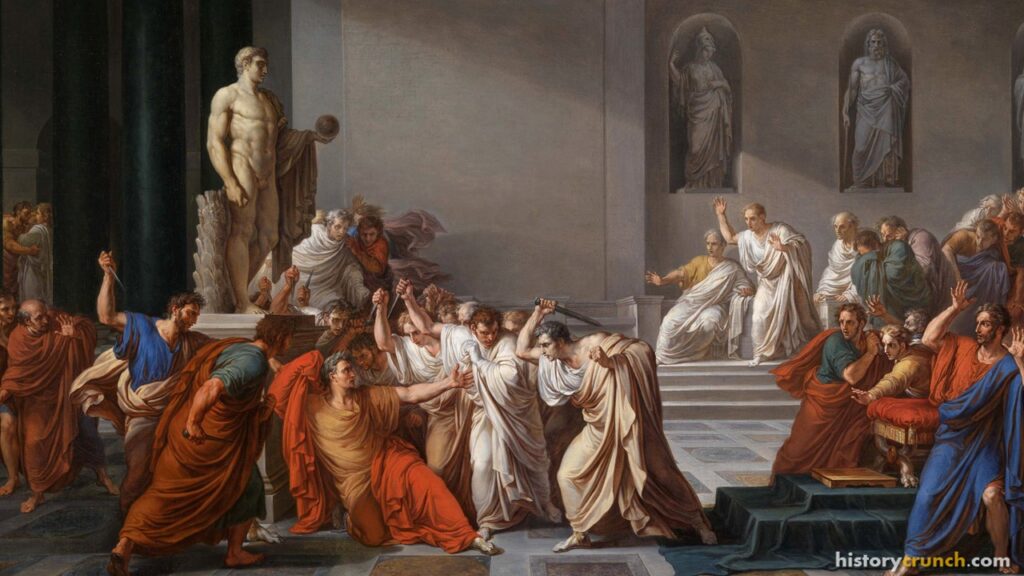
On March 15th, 44 BCE a group of about sixty senators, including men Caesar had pardoned, killed him in a meeting of the Senate. They believed they were restoring the Republic. What followed was thirteen more years of civil war.
LEARN MORESHOW LESSwhy it matters · key numbers · 2 key figuresPOLITICALThe assassination is the clearest case on the timeline of an action producing the opposite of its intention. The killers wanted the Republic back and instead delivered Rome to Caesar's heir.
At Philippi in 42 BCE the armies of Antony and Octavian destroyed the forces of Brutus and Cassius, both of whom killed themselves. With the assassins gone, the alliance between the victors began to come apart almost at once.
LEARN MORESHOW LESSwhy it matters · key numbersMILITARYIt is the same shape as the First Triumvirate. A private deal between powerful men holds only while they have a shared enemy, and the moment that enemy is beaten the deal is what they fight about next.
On September 2nd, 31 BCE Octavian's fleet defeated the combined forces of Mark Antony and Cleopatra of Egypt off the west coast of Greece. Both killed themselves the following year, and Egypt became Roman territory.
LEARN MORESHOW LESSwhy it matters · key numbers · 3 key figuresMILITARYThe last rival is gone. From here there is nobody left with an army to challenge Octavian, and the question is not who wins but what he will call what he has won.
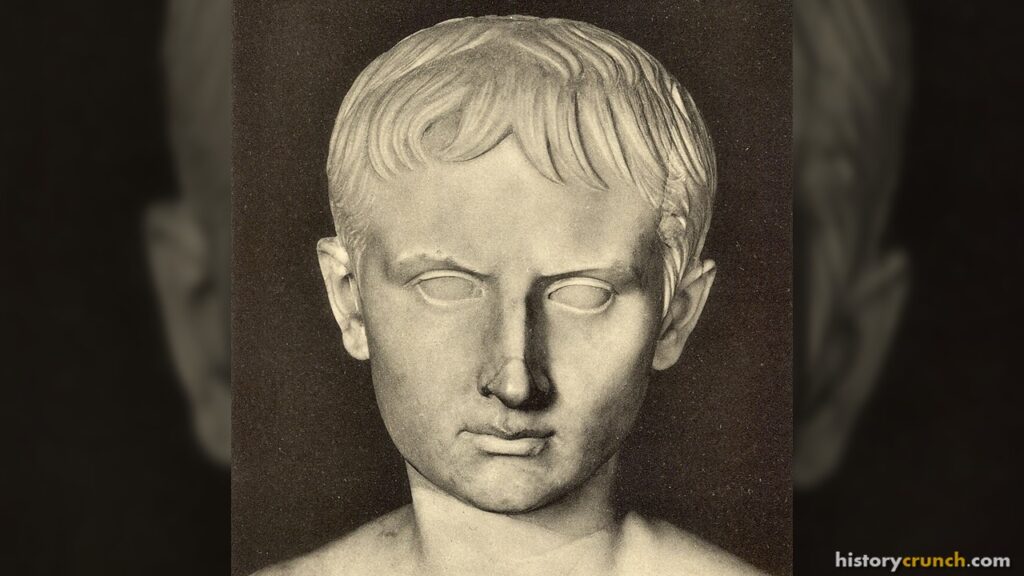
In 27 BCE Octavian formally handed his powers back to the Senate, which promptly returned them and gave him the title Augustus. He kept the forms of the Republic, calling himself first citizen, while holding the army, the treasury and the power to veto anything.
LEARN MORESHOW LESSwhy it matters · key numbers · 1 key figurePOLITICALThis is the most carefully managed change of government in ancient history. Nothing was abolished. The Senate still met, consuls were still elected, and one man decided everything, which is exactly how he wanted it to look and not look.
Augustus took absolute power while insisting he had given it back, and the arrangement worked so well it ran for four hundred years. The two centuries that followed were the most peaceful the Mediterranean has ever had inside its borders, and were held there by thirty legions and provincial taxation. The empire reached its greatest size in 117 CE and then stopped growing, which changed it from a state that expands into one that defends.
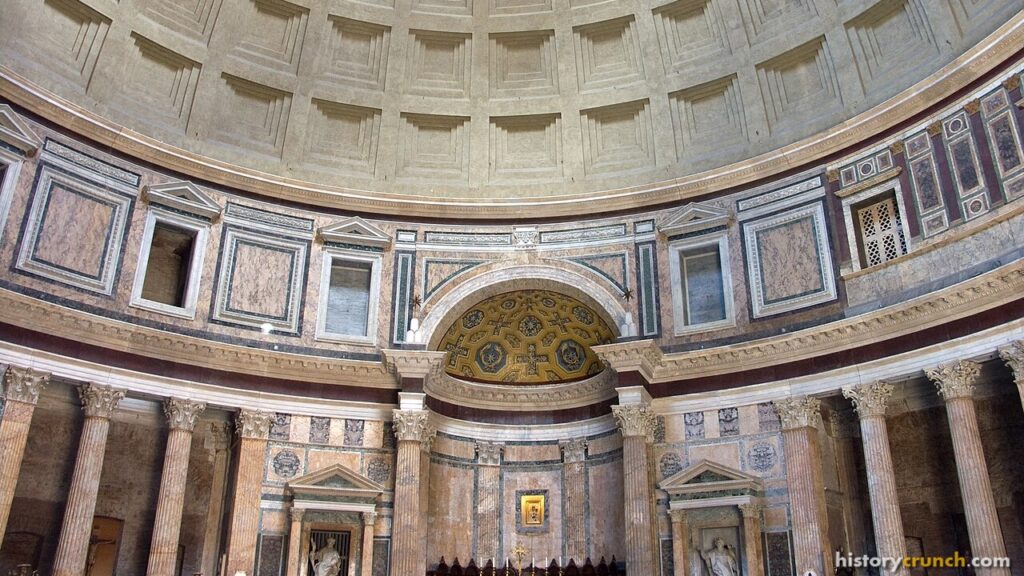
The Aqua Virgo was built by Marcus Agrippa in 19 BCE to supply his new public baths. It is the only one of Rome's ancient aqueducts still in use, and it feeds the Trevi Fountain.
LEARN MORESHOW LESSwhy it matters · key numbersTECHNOLOGYTwo thousand years is a useful number to give a class. Roman concrete and Roman surveying were not just impressive for their time; some of it is still doing the job it was built for.
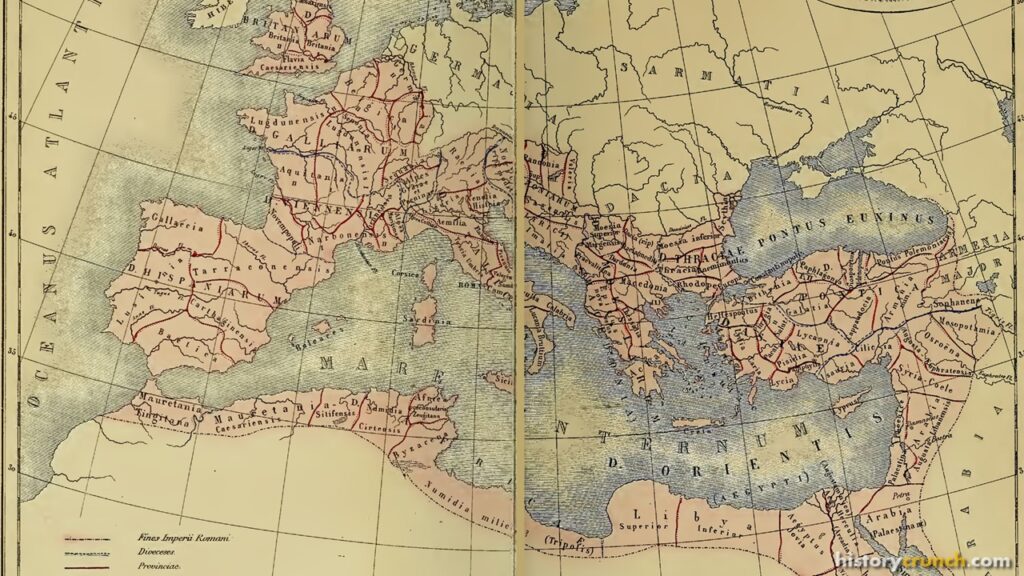
Augustus ruled from 27 BCE to 14 CE and died in his bed. His stepson Tiberius took over with no civil war, which had not happened in Rome for a century. The system Augustus built ran for another four hundred years in the west.
LEARN MORESHOW LESSwhy it matters · key numbers · 2 key figuresPOLITICALThe real test of a new form of government is the second handover, not the first. This one worked, and that is why the empire is a system rather than one man's career.
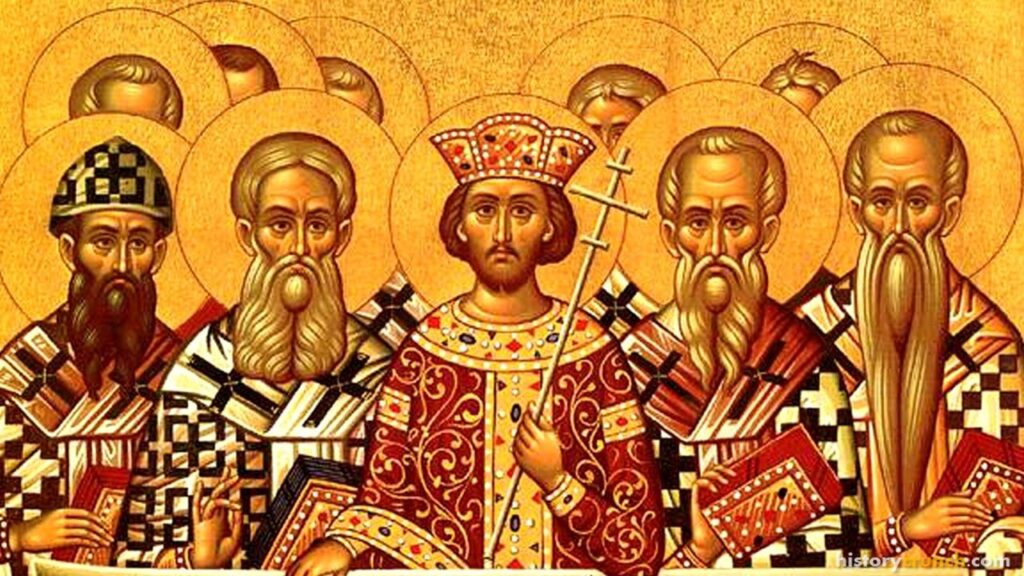
Around 30 CE Roman authorities in the province of Judea arrested and crucified a Jewish preacher named Jesus. Crucifixion was the standard Roman punishment for rebellion and for the enslaved. At the time it was an entirely unremarkable provincial execution.
LEARN MORESHOW LESSwhy it matters · key numbersRELIGIONThree hundred years later the religion that grew from it was the official faith of the state that carried it out. Nothing else on this timeline turns around so completely, and the turn is the subject of the next era.
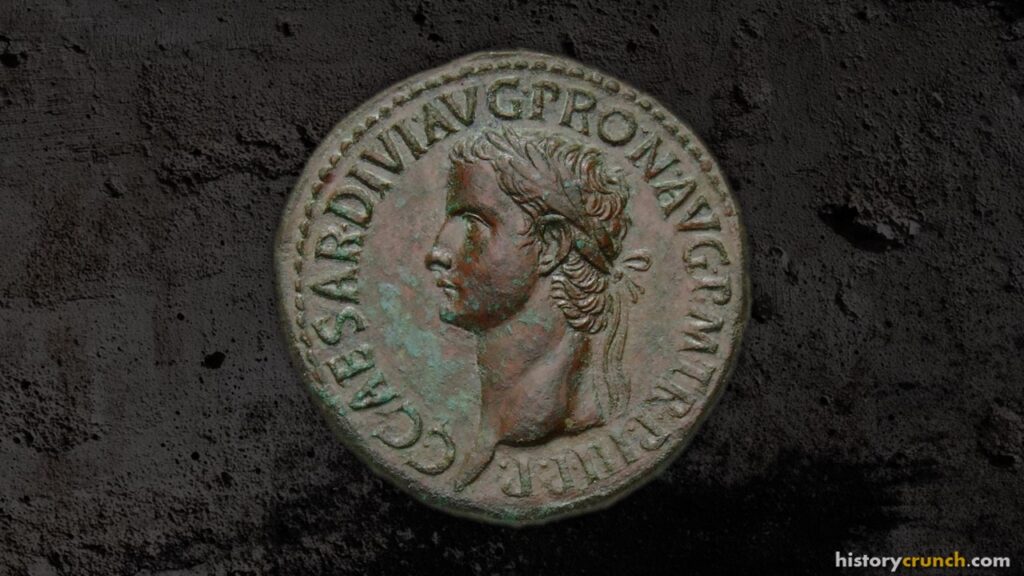
Caligula succeeded Tiberius in 37 CE. The early months were well received: he ended treason trials and paid out bonuses. Then, by most ancient accounts, something changed, and the rest of the reign is a list of cruelties and humiliations aimed at the Senate.
LEARN MORESHOW LESSwhy it matters · 1 key figurePOLITICALAlmost everything known about Caligula comes from writers connected to the senators he tormented. That does not make it false, but a class should be asked how they would check it, and what evidence would look like.
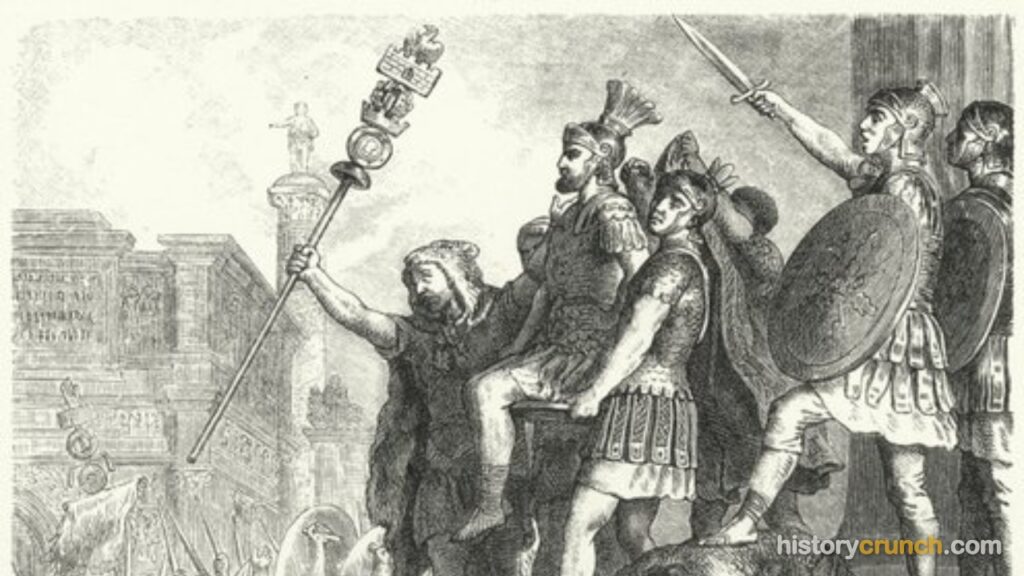
Caligula's reign ended in 41 CE when officers of the Praetorian Guard, the emperor's own household troops, killed him in a corridor. The same guard then found his uncle Claudius and made him emperor.
LEARN MORESHOW LESSwhy it matters · key numbersPOLITICALThe men paid to protect the emperor could remove him and choose the next one. That is a structural fault in the whole system, and it gets steadily worse until the third century, when it nearly ends the empire.
The real Roman conquest of Britain began in 43 CE under Claudius, almost a century after Caesar's two short expeditions. Britain remained a Roman province until about 410 CE.
LEARN MORESHOW LESSwhy it matters · key numbersMILITARYClaudius was an unlikely emperor with no military record, installed by the guard. A conquest was the fastest way to make himself look like a proper Roman ruler, which tells you what the job actually required.
Begun under Caligula and completed under Claudius in 52 CE, the Aqua Claudia ran about 45 miles, the last stretch of it on arches tall enough to supply the hills of Rome. Long sections of those arches still stand outside the city.
LEARN MORESHOW LESSwhy it mattersTECHNOLOGYAn aqueduct is a long, boring, extremely expensive public work that nobody names a battle after. Rome built eleven of them, which is a better measure of what the state could do than any victory.
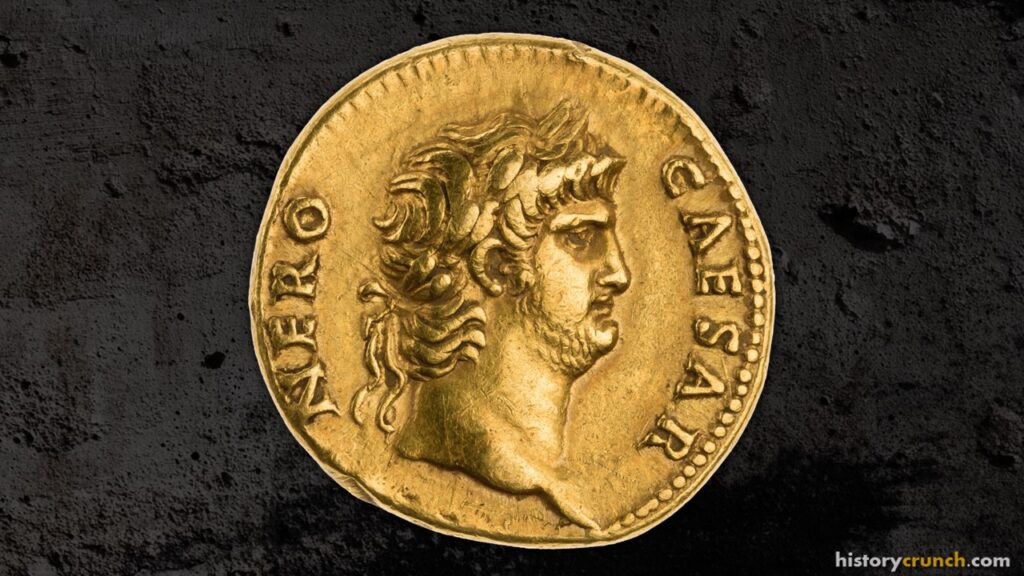
Nero became emperor in 54 CE at the age of sixteen, after his mother Agrippina arranged the succession. The first years were well governed by his advisers. He later had his mother killed, and by the end was executing senators in numbers.
LEARN MORESHOW LESSwhy it matters · key numbers · 2 key figuresPOLITICALThe empire had no rule for who should rule. It went by adoption, marriage, murder and the guard's preference, and a teenager could inherit absolute power over fifty million people because his mother was persuasive.
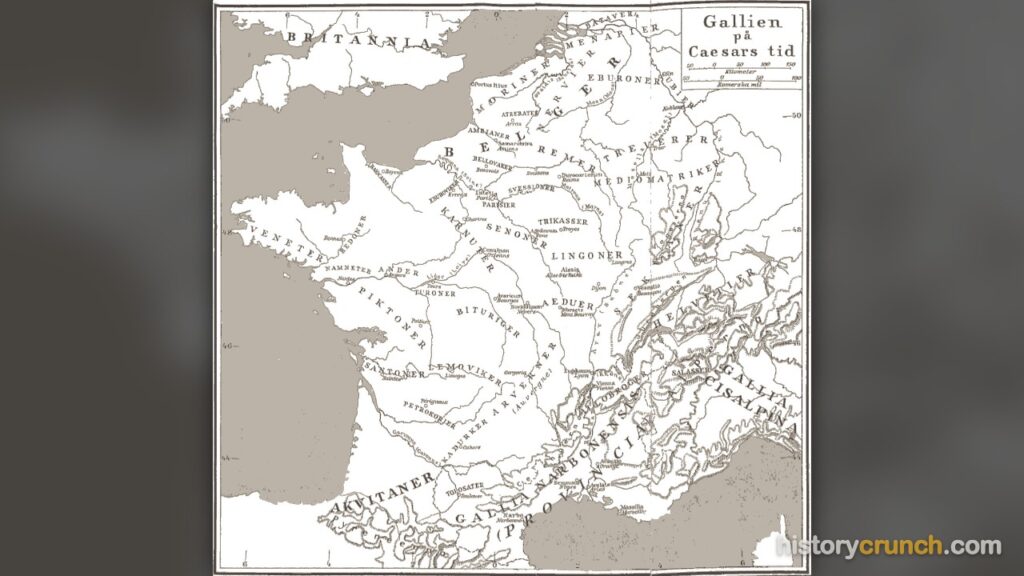
Around 60 or 61 CE a queen of the Iceni named Boudica led a rising against Roman rule in Britain after she was flogged and her daughters assaulted by Roman officials. Her forces destroyed Camulodunum, Londinium and Verulamium before the revolt was crushed.
LEARN MORESHOW LESSwhy it matters · 1 key figureMILITARYIt is the sharpest reminder that Roman peace was imposed. The provinces on the maps were places where people lived, and some of them fought, and the reasons they gave were usually specific and recent.
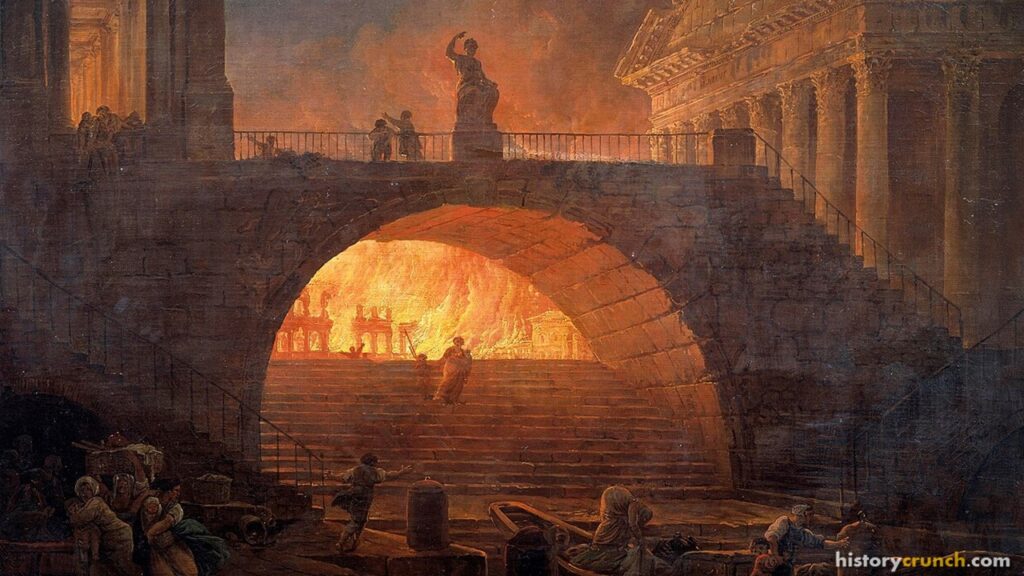
The Great Fire of Rome broke out in July of 64 CE and burned much of the city. Rumours blamed Nero himself, who had plans for the ground it cleared. He blamed a small religious group instead, and the first major persecution of Christians followed.
LEARN MORESHOW LESSwhy it matters · key numbers · 1 key figureRELIGIONThis is where the empire and Christianity first collide, and it sets a pattern that runs for 250 years: when something goes badly wrong, a small unpopular group is available to be blamed.
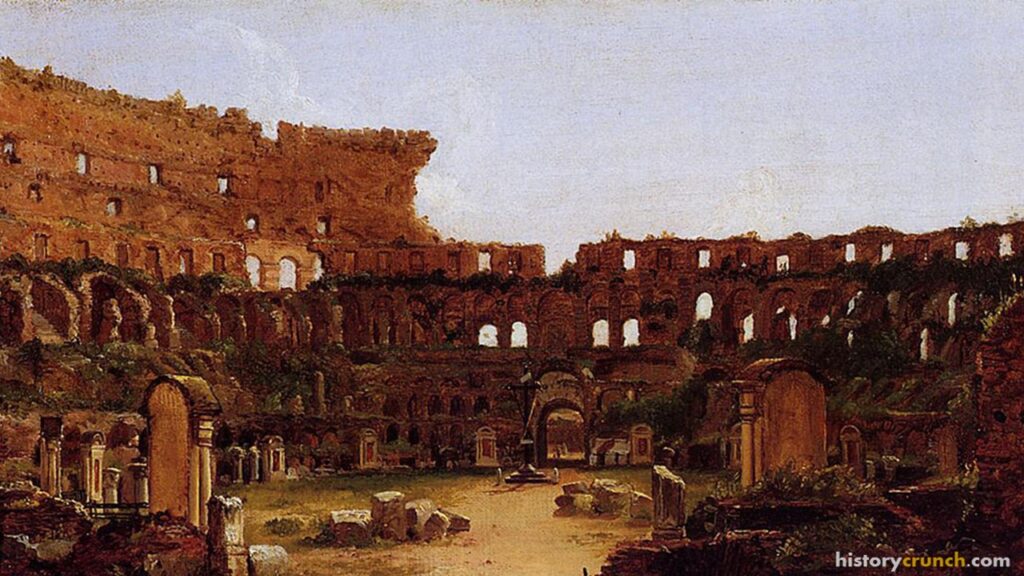
Vespasian ordered the amphitheater built between 70 and 80 CE, on ground Nero had taken for his own palace grounds. It held around fifty thousand people, had eighty entrances, and could be emptied in minutes.
LEARN MORESHOW LESSwhy it matters · key numbers · 1 key figureTECHNOLOGYThe choice of site is the whole political message. Vespasian gave back to the Roman people the land the last emperor had taken for himself, and put the largest public building in the world on it.
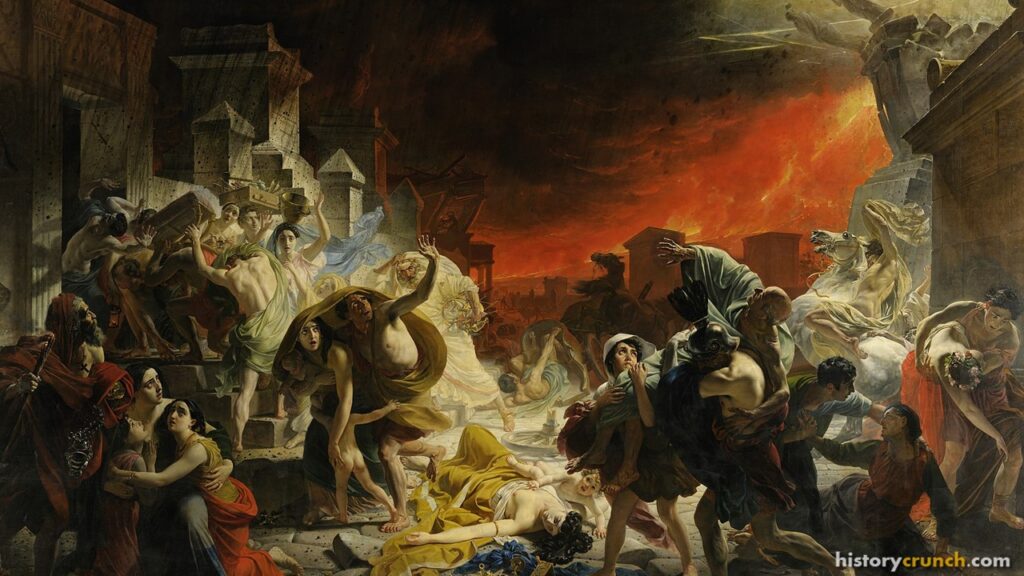
Vesuvius erupted on August 24th, 79 CE and buried Pompeii and Herculaneum under ash and rock. The towns were sealed rather than destroyed, and what was left underneath was ordinary life: bread in ovens, election notices painted on walls, graffiti.
LEARN MORESHOW LESSwhy it matters · key numbersSOCIALAlmost all Roman history was written by wealthy men about wealthy men. Pompeii is the exception, because a disaster preserved the parts of Roman life that nobody thought worth writing down.
Titus opened the amphitheater in 80 CE with games that ran for a hundred days, including gladiator fights, staged animal hunts and executions. Attendance was free, and seating was arranged strictly by rank.
LEARN MORESHOW LESSwhy it matters · key numbers · 1 key figureSOCIALFree entertainment paid for by the state, with everyone seated according to their place in the order of things. The building is a piece of political machinery as much as a piece of architecture.
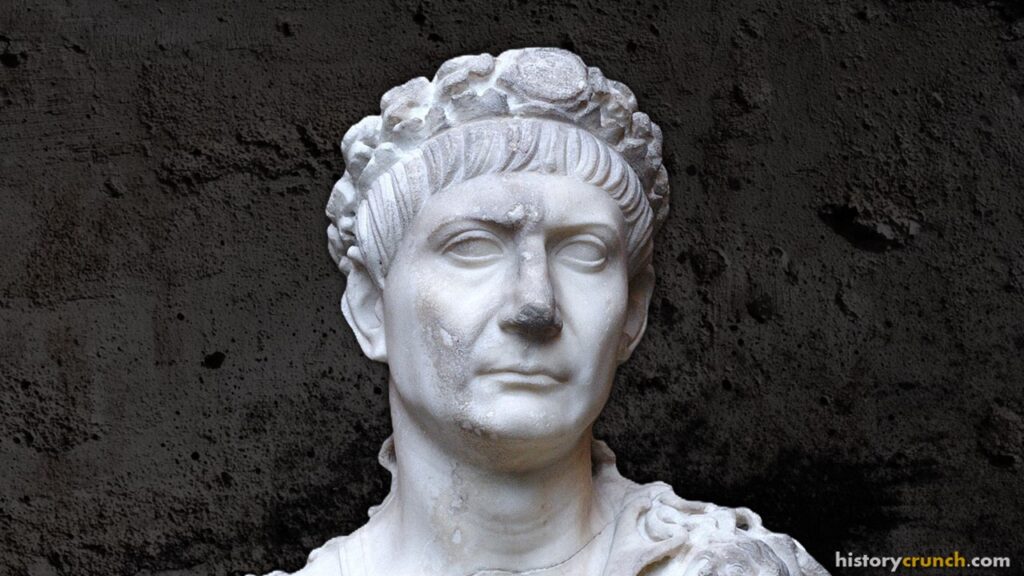
Trajan ruled from 98 to 117 CE. He was born in Spain, the first emperor from outside Italy, and is remembered for conquests in Dacia and the east, for a building programme that included the largest forum in Rome, and for being chosen by adoption rather than birth.
LEARN MORESHOW LESSwhy it matters · key numbers · 1 key figurePOLITICALA Spaniard ruling Rome is the citizenship policy of 270 BCE arriving at its conclusion. The empire had stopped being a city that owned provinces and become something the provinces could run.
At its height under Trajan in 117 CE the Roman Empire covered roughly two million square miles, from northern Britain to the Persian Gulf, with perhaps fifty to sixty million people. His successor Hadrian gave up the eastern conquests almost immediately as too expensive to hold.
LEARN MORESHOW LESSwhy it matters · key numbersMILITARYHadrian's decision is the moment Rome changes from a state that expands to one that defends. Every frontier from here is a line to be held rather than a place to push past, and holding lines costs money for ever.
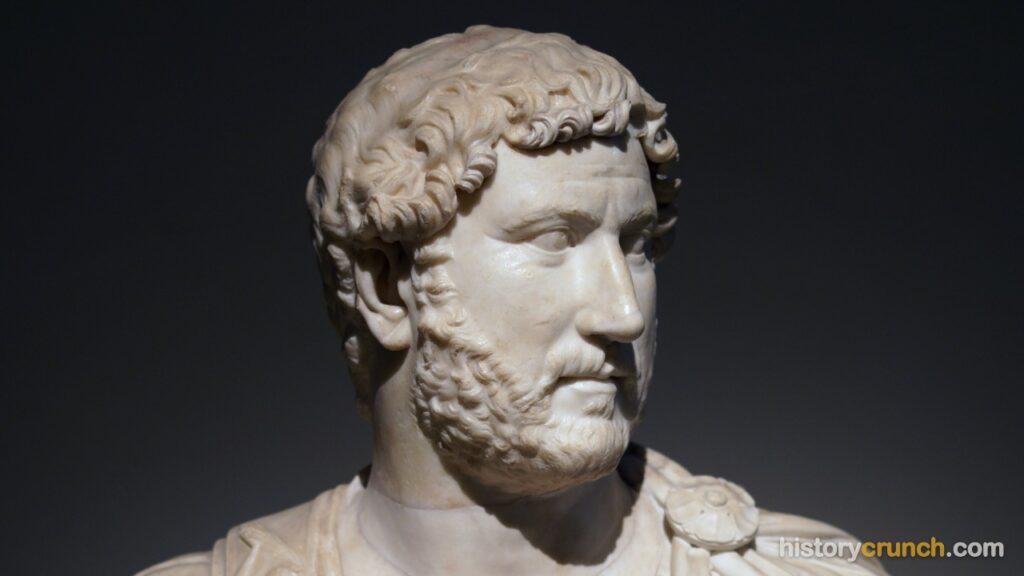
Building began on Hadrian's orders in 122 CE: a stone wall roughly 73 miles from coast to coast, with forts, gates and a ditch. It marked the northern edge of the province and controlled who crossed it and what they carried.
LEARN MORESHOW LESSwhy it matters · key numbers · 1 key figureTECHNOLOGYA wall is a statement that the expansion is over. It is also the most visible thing the Romans left in Britain, and large stretches of it are still there to be walked along.
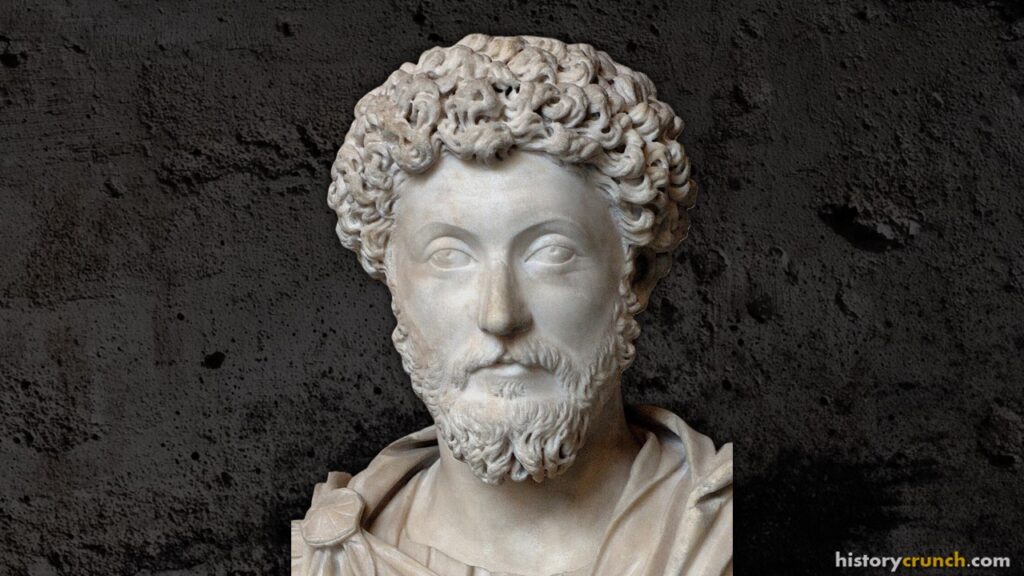
Marcus Aurelius reigned from 161 to 180 CE, sharing power with Lucius Verus until 169. He faced plague, floods and constant war on the Danube frontier, and wrote a private notebook of Stoic reflections that is still read as the Meditations.
LEARN MORESHOW LESSwhy it matters · key numbers · 2 key figuresPOLITICALHe is the last of the emperors chosen for ability rather than birth. He then named his own son Commodus as heir, and Commodus was a disaster, which is a hard fact to set beside the reputation.
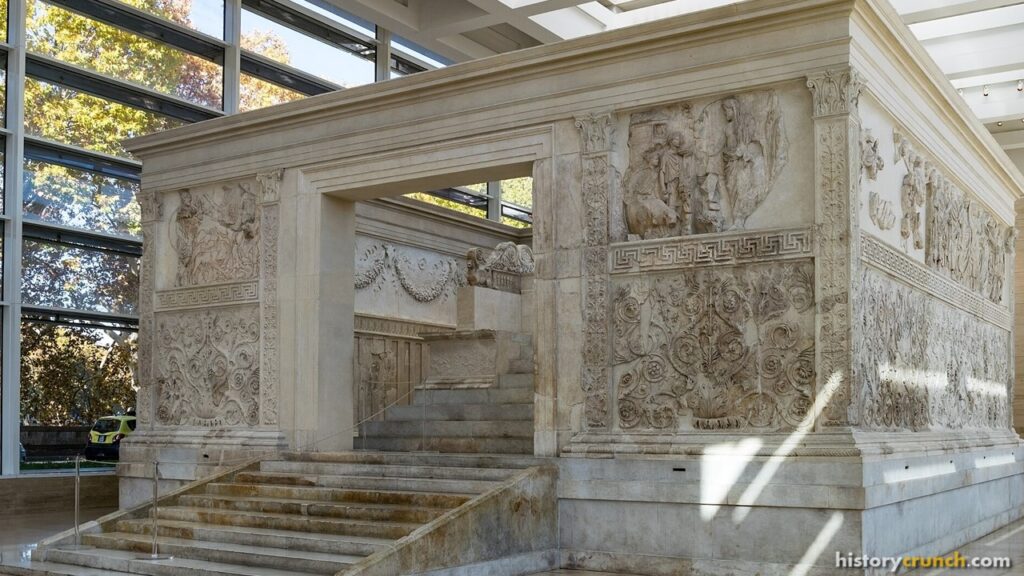
The Pax Romana, the roughly two hundred years of relative peace and stable government, ran from 27 BCE to 180 CE. It was not peace everywhere, and the frontiers were never quiet, but the interior of the empire went generations without civil war.
LEARN MORESHOW LESSwhy it matters · key numbersPOLITICALTwo centuries without a fight over who rules is the empire's real achievement and the hardest thing for it to repeat. What comes next is fifty years in which the answer is settled by the army, over and over.
Fifty years of near collapse, in which emperors were made and killed by their own armies at roughly one a year and the currency fell apart. Diocletian saved the empire by rebuilding it into something Augustus would not have recognized. Meanwhile a religion the state had spent three centuries trying to suppress was about to be adopted by it, the capital moved east, and in 395 CE the empire divided for the last time.
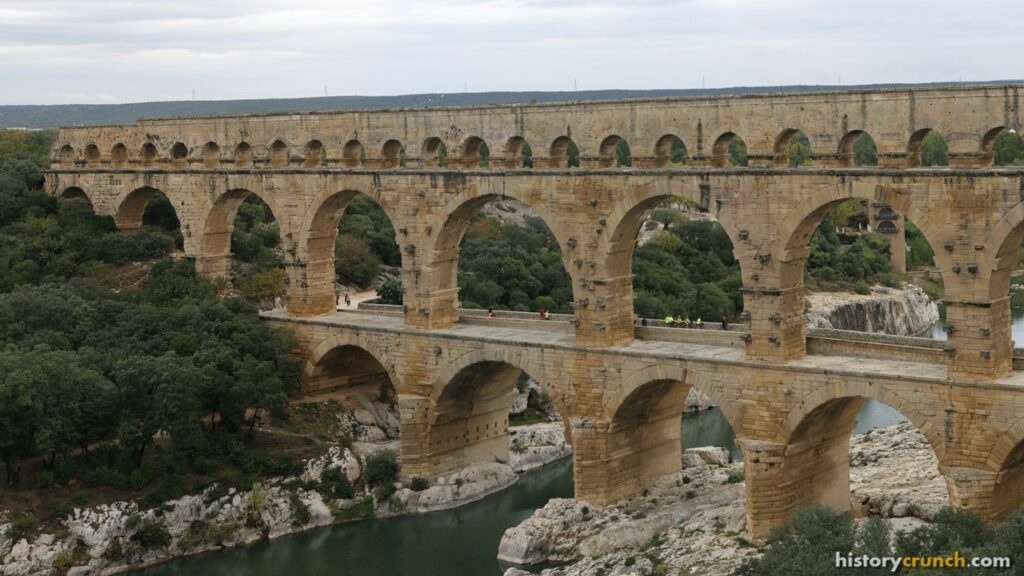
Rome was served by eleven major aqueducts built over roughly five hundred years, from the Aqua Appia in 312 BCE to the Aqua Alexandrina in 226 CE. Together they delivered enough water for public baths, fountains and latrines across the city.
LEARN MORESHOW LESSwhy it matters · key numbersTECHNOLOGYNo more were built, because the money and the security to build them were about to disappear. The end of the aqueduct programme is a quiet marker of where the empire's confidence stops.
The period from 235 to 284 CE is known as the Crisis of the Third Century. Emperors were made and killed by their armies at a rate of roughly one a year, the currency collapsed, plague spread, frontiers gave way, and for a time the empire split into three separate states.
LEARN MORESHOW LESSwhy it matters · key numbersPOLITICALIt is the fault line from Caligula's murder widened into a chasm. With no agreed rule for succession, whoever had the nearest army decided, and the cost of that was fifty years of chaos.
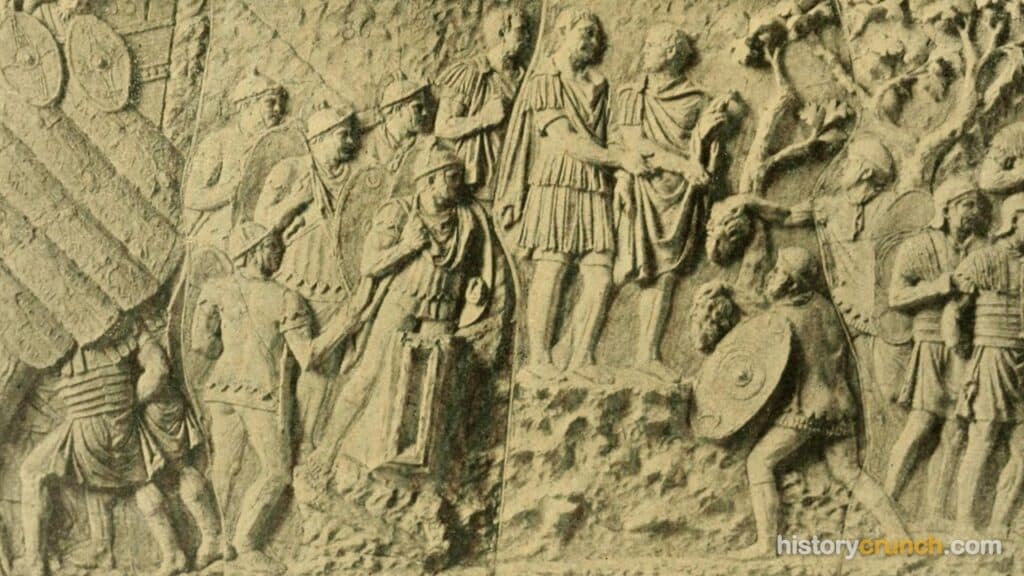
In 250 CE the emperor Decius ordered every inhabitant of the empire to sacrifice to the Roman gods and obtain a signed certificate confirming it. Some of those certificates survive. Christians who refused were imprisoned, tortured or killed.
LEARN MORESHOW LESSwhy it matters · key numbersRELIGIONBefore this, persecution was local and occasional. Decius turned it into imperial policy applied to everybody, which is what made refusing a public act rather than a private one, and made martyrs into a movement.
Diocletian ruled from 284 to 305 CE and ended the crisis by reorganizing almost everything: more and smaller provinces, a separated civil and military command, a bigger army, a reformed currency and a court that treated the emperor as a remote sacred figure rather than a first citizen.
LEARN MORESHOW LESSwhy it matters · key numbers · 1 key figurePOLITICALHe saved the empire by changing what it was. The friendly fiction of the first citizen is gone, and what replaces it looks much more like a medieval monarchy than anything Augustus would have recognized.
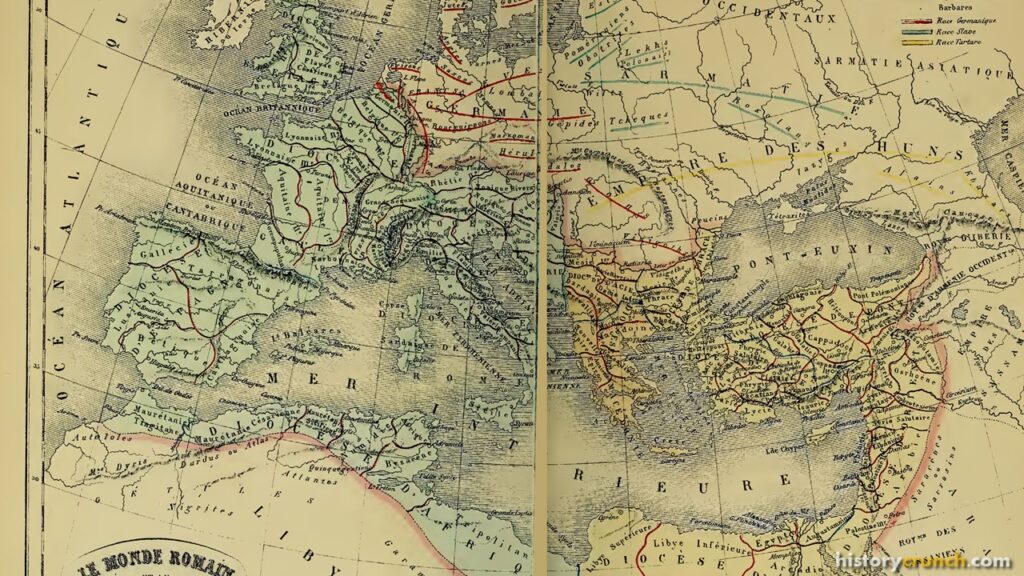
In 293 CE Diocletian established the Tetrarchy, rule by four. Two senior emperors, each with a junior colleague and heir, divided responsibility for different regions. It was meant to put a commander near every frontier and to settle the succession in advance.
LEARN MORESHOW LESSwhy it matters · key numbersPOLITICALIt was a real attempt to fix the problem that had caused the crisis, and it worked exactly once, while Diocletian was alive to enforce it. The moment he retired, the four started fighting.
In 301 CE Diocletian issued the Edict on Maximum Prices, fixing ceilings for hundreds of goods and services from wheat to a lion, with death as the penalty for breaking them. Goods disappeared from the market instead, and the edict was quietly abandoned.
LEARN MORESHOW LESSwhy it matters · key numbersECONOMICIt is a rare piece of ancient evidence about ordinary wages and prices, and it is also a clean example of a government trying to order an economy to behave and being ignored.
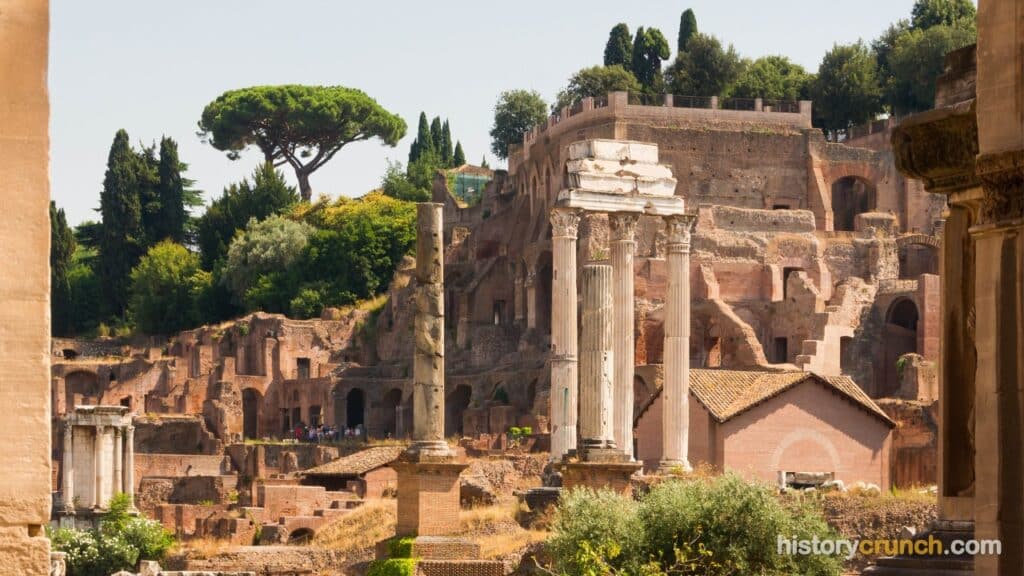
The Great Persecution began under Diocletian in 303 CE. Churches were pulled down, scriptures burned, clergy arrested and Christians barred from office. It was the most systematic attempt the empire ever made to destroy the religion, and it lasted about a decade.
LEARN MORESHOW LESSwhy it matters · key numbersRELIGIONIt failed completely, and it failed within living memory of its own end. Eight years after this the state legalized Christianity, and twenty-two years after it the emperor was chairing a church council.
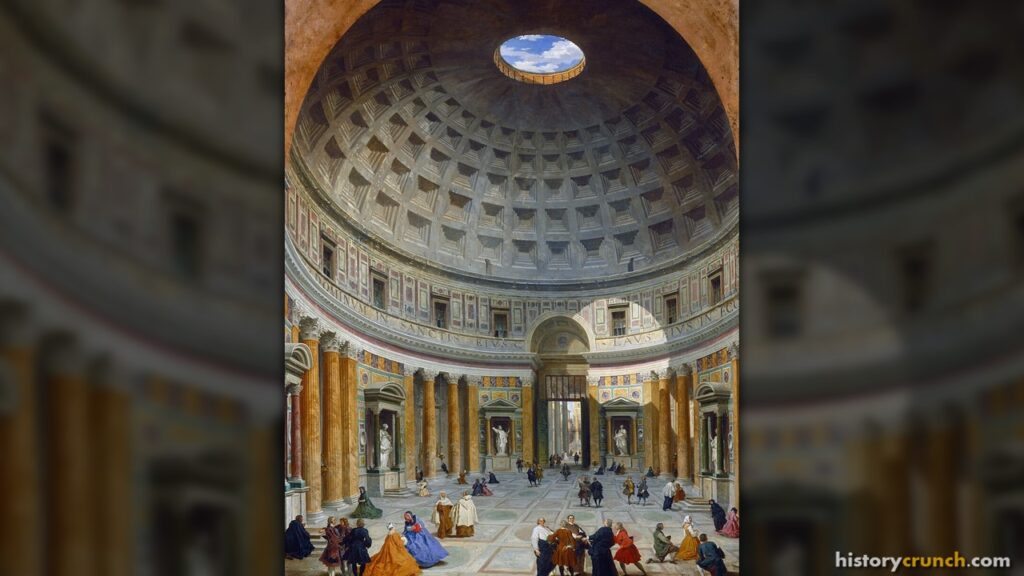
In 311 CE the emperor Galerius, seriously ill, issued an edict of toleration allowing Christians to worship openly and rebuild their churches. He had been one of the drivers of the Great Persecution.
LEARN MORESHOW LESSwhy it matters · key numbersRELIGIONThe reversal is the point. The persecution had not reduced the number of Christians, it had cost the state effort and unrest, and even the men who ordered it worked out that it was not going to succeed.
Constantine summoned bishops from across the empire to Nicaea in 325 CE to settle a dispute about the nature of Christ. The council produced the Nicene Creed, a statement of belief still recited in churches today.
LEARN MORESHOW LESSwhy it matters · key numbers · 1 key figureRELIGIONA Roman emperor, not a churchman, called the council and pushed it to a result. From this point the church and the state are entangled, and disputes about doctrine become disputes with political consequences.
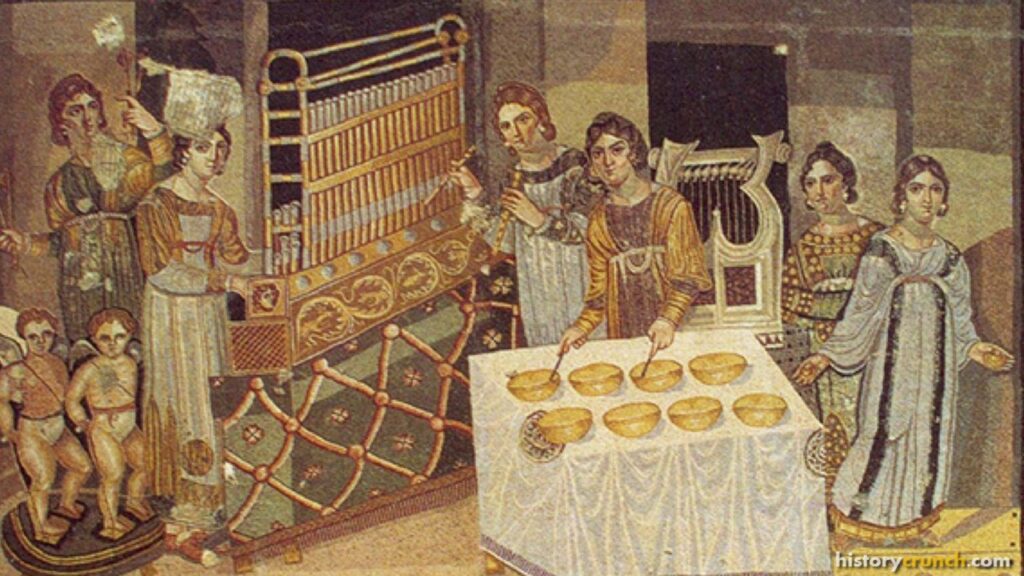
In 330 CE Constantine moved the capital from Rome to the old Greek town of Byzantium, rebuilt it with walls, a senate and a hippodrome, and renamed it Constantinople. It sat on the crossing between Europe and Asia, was defensible on three sides by water, and was close to the wealthy eastern provinces.
LEARN MORESHOW LESSwhy it matters · key numbers · 1 key figurePOLITICALThis single decision is why half the empire survives the fall of the other half by a thousand years. The money, the trade and the population were in the east, and now the government was too.
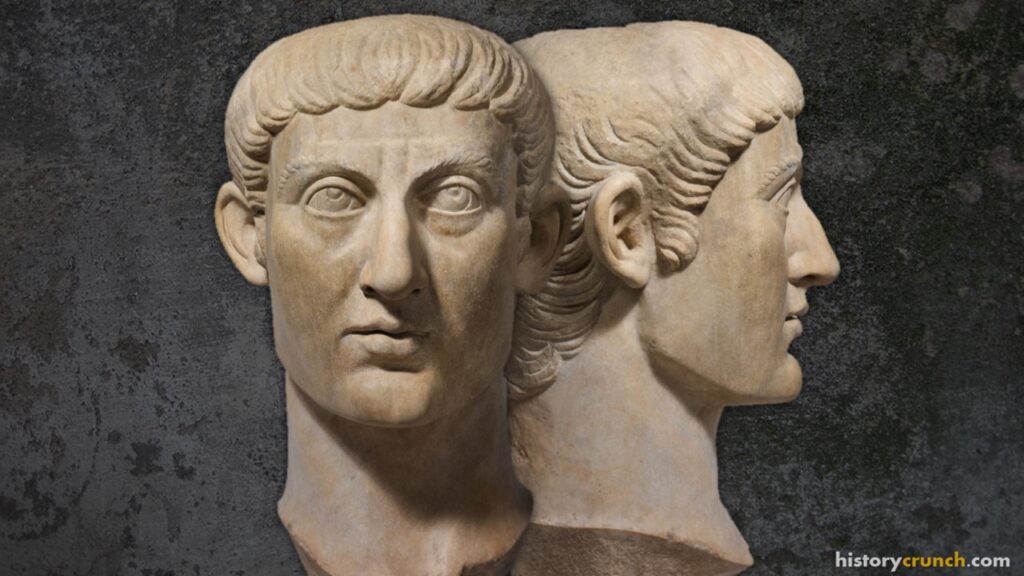
Constantine reigned from 306 to 337 CE. He ended the persecutions, favoured the church with money and legal privileges, called the Council of Nicaea and founded Constantinople. He was baptized only as he was dying.
LEARN MORESHOW LESSwhy it matters · key numbers · 1 key figureRELIGIONHistorians still argue about whether he was a convinced believer or a ruler who backed the winning side. The evidence supports both readings, which makes it one of the better arguments to put in front of a class.
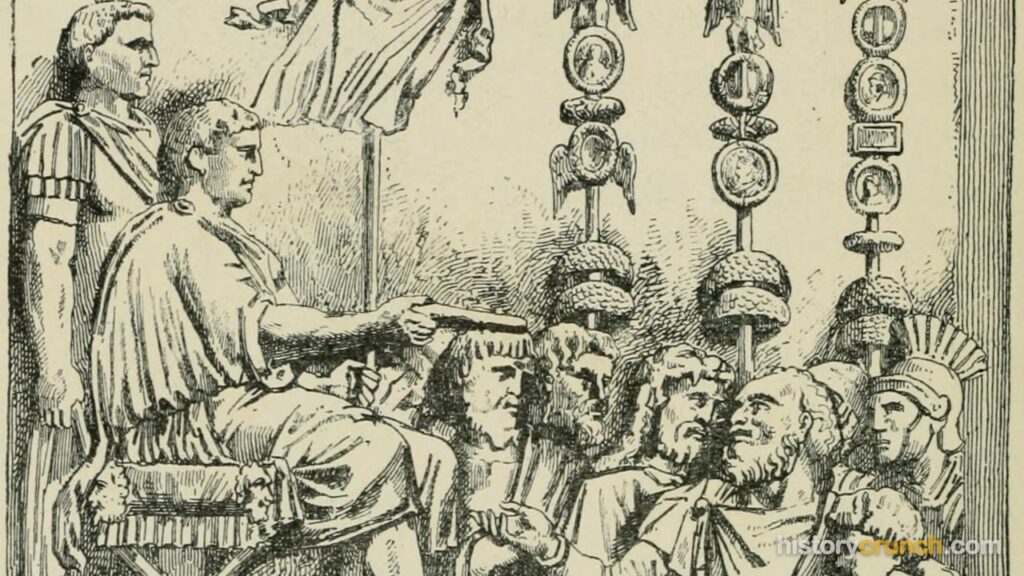
In 376 CE a large group of Goths, fleeing the Huns, asked the emperor Valens for permission to settle inside the empire. He agreed. Roman officials then starved and exploited them so badly that within two years they were in open revolt.
LEARN MORESHOW LESSwhy it matters · key numbersMILITARYThe barbarian invasions did not begin with an invasion. They began with refugees who were admitted legally and then treated so badly that they took up arms. That is a very different story from the one usually told.
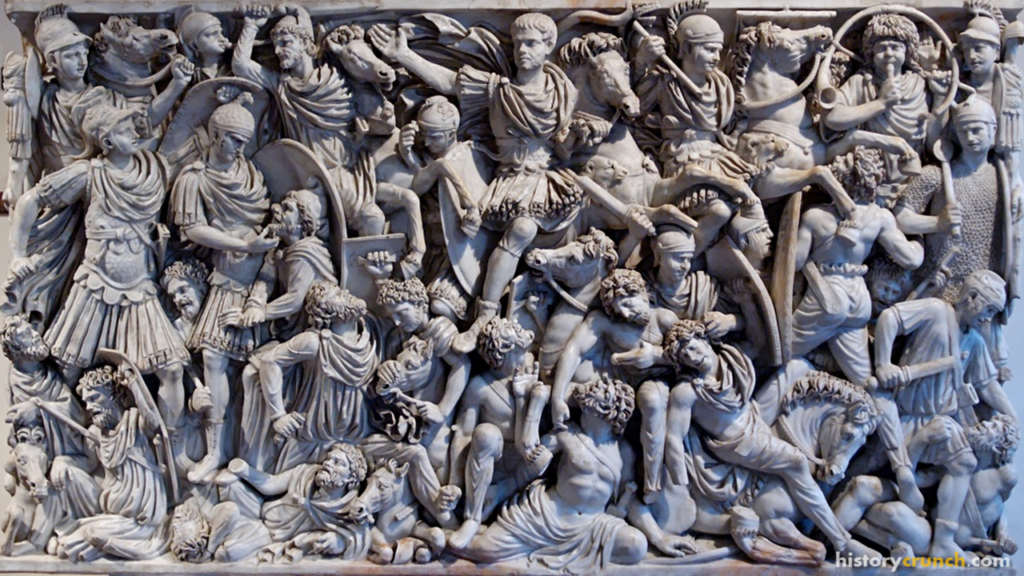
At Adrianople in 378 CE the Gothic forces destroyed the eastern Roman field army and killed the emperor Valens. It was the worst Roman defeat in centuries, and afterwards the empire increasingly had to bargain with Gothic groups rather than command them.
LEARN MORESHOW LESSwhy it matters · key numbersMILITARYRoman military superiority was the assumption everything rested on. After Adrianople it was no longer safe to assume, and the empire started hiring the people it could not beat.
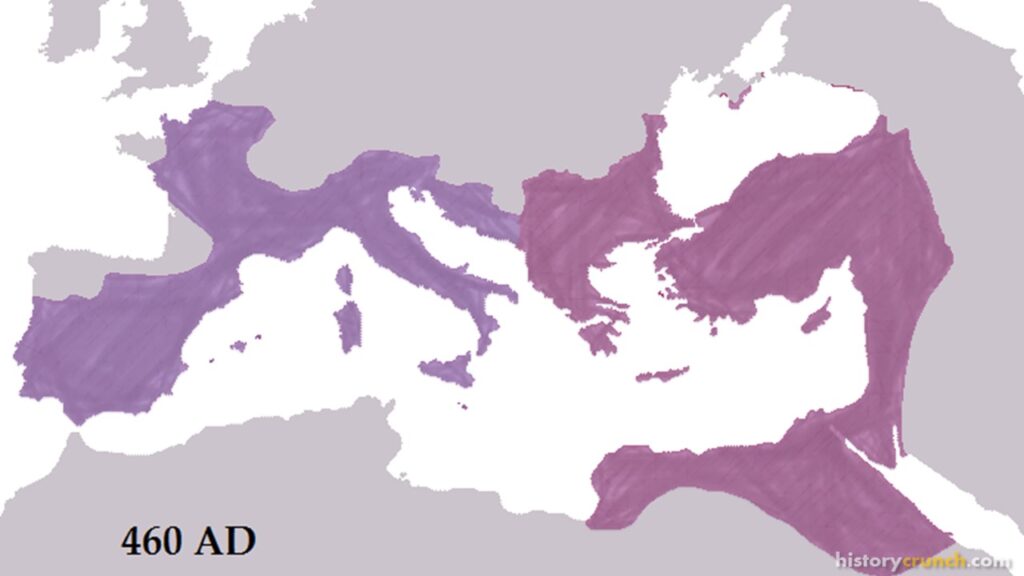
On the death of Theodosius I in 395 CE the empire was formally divided between his two sons, west and east. It had been split for administration before and put back together. This time it never was.
LEARN MORESHOW LESSwhy it matters · key numbersPOLITICALEverything after this happens to two different states with two different futures. The west has eighty-one years left. The east has a thousand and fifty-eight.
The western half had eighty-one years left. A frozen river, two sacks of Rome, and finally a commander who removed a teenage emperor and did not bother replacing him. Almost nothing was destroyed on that day in 476 CE, which is why historians still argue about whether it was a fall at all. The eastern half went on calling itself Roman, and governing from Constantinople, until 1453.
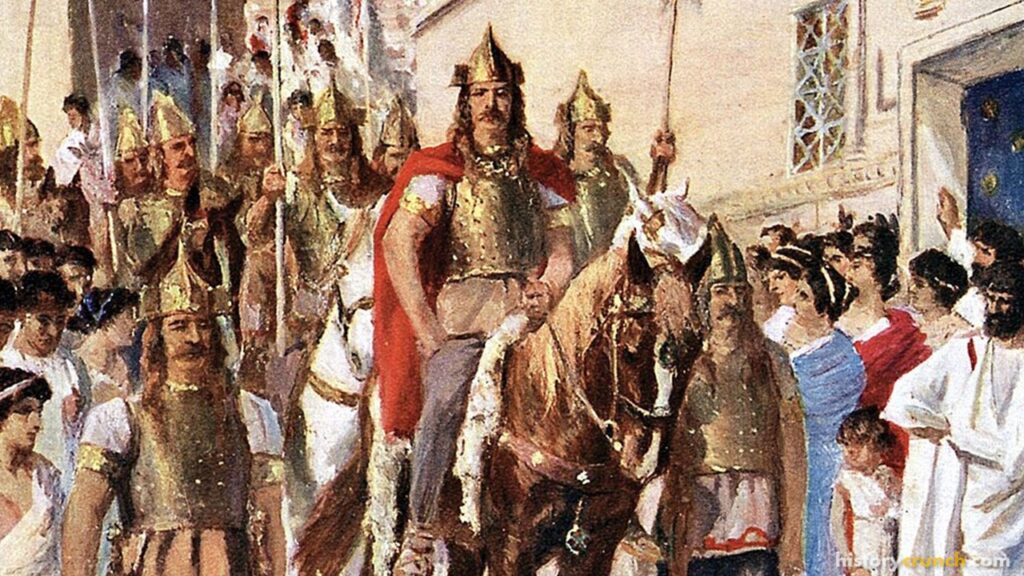
In the winter of 406 CE Vandals, Alans and Suebi crossed the frozen Rhine into Gaul in large numbers. The frontier was thinly held because troops had been pulled south and east, and the crossing was never reversed.
LEARN MORESHOW LESSwhy it matters · key numbersMILITARYThe line that had held for four hundred years stopped holding. Within a few years the western government was negotiating with armed groups inside its own provinces as though they were foreign powers, because they were.
In 451 CE a combined force under the Roman general Aetius, made up largely of Visigothic and other allied troops, stopped Attila's advance into Gaul at the Catalaunian Plains. Attila turned into Italy the following year and died in 453.
LEARN MORESHOW LESSwhy it matters · 2 key figuresMILITARYRome's last great victory in the west was won by an army of the peoples Rome called barbarians, commanded by a Roman. By this date the distinction that the whole story rests on has largely stopped being real.
The Vandals, by then established in North Africa, sailed to Italy and sacked Rome in 455 CE. It was the second sack in forty-five years, after Alaric's Goths took the city in 410. The Vandals spent fourteen days stripping it.
LEARN MORESHOW LESSwhy it matters · key numbersMILITARYNorth Africa was the western empire's grain supply and its richest remaining tax base. Losing it to the Vandals is arguably a heavier blow than the sack itself, because it removed the money to pay an army.
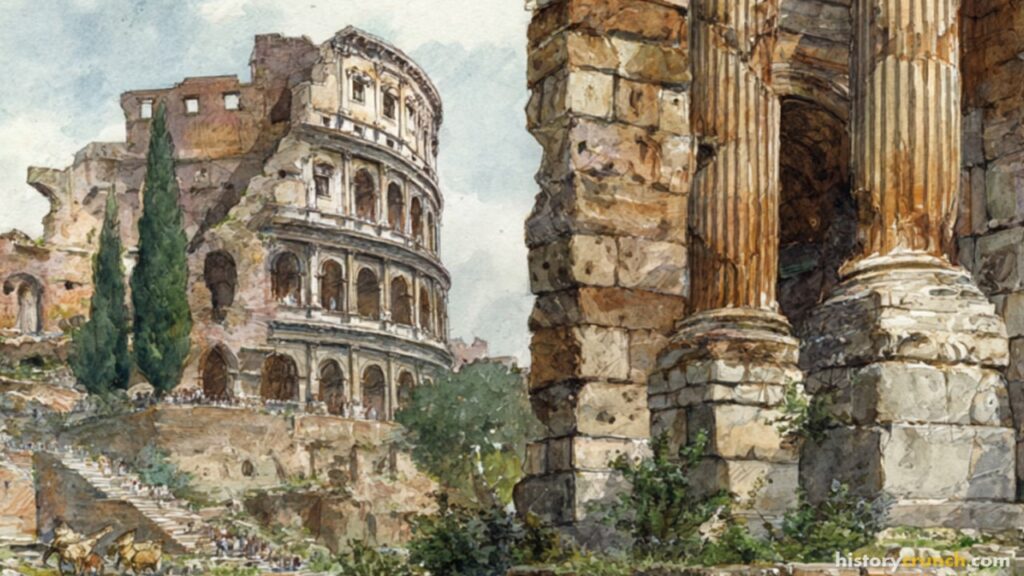
In 476 CE a commander named Odoacer deposed Romulus Augustulus, a teenage emperor in name only, and did not appoint a successor. He sent the imperial regalia to Constantinople and ruled Italy as king. No Roman emperor ruled again from Italy.
LEARN MORESHOW LESSwhy it matters · key numbers · 2 key figuresPOLITICALThe traditional date for the fall of Rome, and it is worth showing a class how undramatic it was. Nothing was destroyed that day. An office that had already stopped meaning anything was simply left empty.
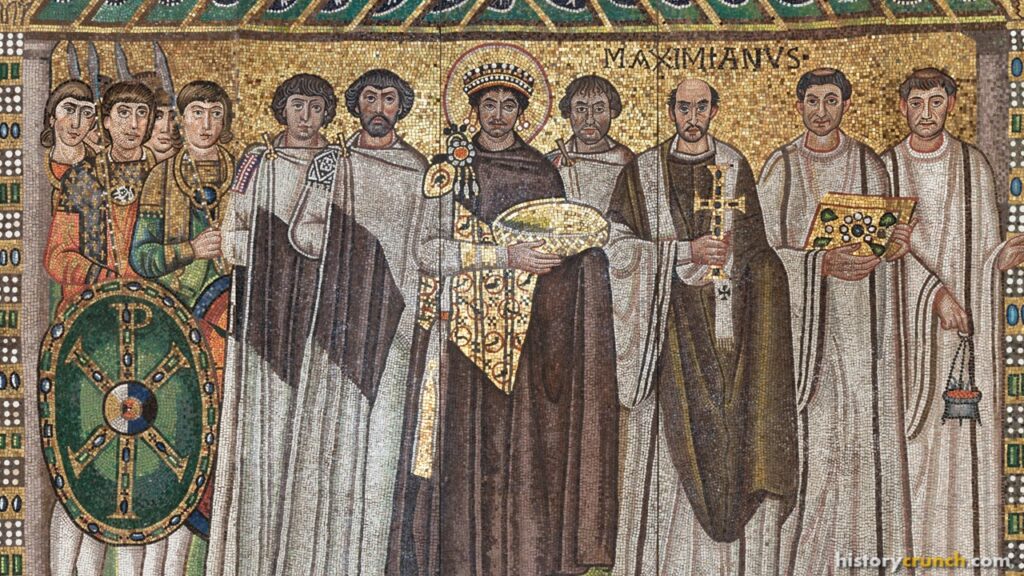
Justinian I ruled the eastern empire from 527 to 565 CE. He reconquered North Africa, Italy and part of Spain, built the church of Hagia Sophia, and ordered the whole of Roman law collected and made consistent.
LEARN MORESHOW LESSwhy it matters · key numbers · 1 key figurePOLITICALThe reconquest did not last, and the wars and the plague that followed exhausted the east. The law did last, which is a good illustration of which kind of achievement survives.
The Codex, part of what is now called the Corpus Juris Civilis, was completed in its final form in 534 CE on Justinian's orders. It gathered, sorted and reconciled centuries of Roman law and legal opinion into a single usable body.
LEARN MORESHOW LESSwhy it matters · key numbersLAWThis book is how Roman law reached the modern world. European universities rediscovered it in the eleventh century, and the legal systems of most of continental Europe and Latin America are built on what it contains.
The Senate of Rome is last recorded around 580 CE, more than a century after the western empire ended and nearly 1,100 years after it began advising the kings. It simply stops appearing in the records.
LEARN MORESHOW LESSwhy it matters · key numbersPOLITICALInstitutions rarely end on a date. The Senate outlived the Republic it governed, the empire that sidelined it and the western state itself, and then faded out without anyone noting the day.
The eastern empire, which its own people called Roman throughout, lasted from 330 CE until 29 May 1453, when Constantinople was taken by the Ottoman Turks after a siege. The last emperor died in the fighting.
LEARN MORESHOW LESSwhy it matters · key numbersMILITARYAlmost a thousand years after the usual date for the fall of Rome, a state calling itself Roman was still being governed from a city Constantine built. Where a story ends depends entirely on who is telling it.

I'm the founder of History Crunch, which I first began in 2015 with a small team of like-minded professionals. I have an Education Degree with a focus in Social Studies education. I spent nearly 15 years teaching history, geography and economics in secondary classrooms to thousands of students. Now I use my time and passion researching, writing and thinking about history education for today's students and teachers.

K.L. is a content writer for History Crunch. She is a fantastic history and geography teacher that has been helping students learn about the past in new and meaningful ways since the mid-2000s. Her primary interest is Ancient History, but she is also driven by other topics, such as economics and political systems.

I'm a passionate history and geography teacher with over 15 years of experience working with students in the middle and high school years. I have an Education Degree with a focus in World History. I have been writing articles for History Crunch since 2015 and love the challenge of creating historical content for young learners!
To cite this timeline as a source, use one of the formats below.
MLA: Millar, B., et al. “Ancient Rome Timeline.” HistoryCrunch, 13 September 2026, https://historycrunch.com/ancient-rome-timeline/.
APA: Millar, B., Woida, K.L., & Beck, E. (2026). Ancient Rome Timeline. HistoryCrunch. https://historycrunch.com/ancient-rome-timeline/
Chicago: Millar, B., K.L Woida, and Elias Beck. “Ancient Rome Timeline.” HistoryCrunch. September 13, 2026. https://historycrunch.com/ancient-rome-timeline/
© History Crunch
Rome told its story as if it invented itself. What did it take from the civilization next door?
Most peoples pick a founding story that flatters them. Rome picked one in which the founder kills his brother.
Rome had kings for 244 years and then never again, and calling a man a king was still an accusation in Caesar's day.
The Republic threw out the monarchy but kept a surprising amount of what the kings had built.
The plebeians could not vote in any way that counted, could not hold office and could not read the law. They won anyway. How?
Before 449 BCE Roman law was remembered by priests. After it, it was on bronze in the Forum. Why did that matter so much?
By 287 BCE the plebeians had legal equality. A small number of families went on holding the consulship anyway. Why?
Two consuls, a Senate, several assemblies and ten tribunes. What was each for, and how did they hold each other in check?
They traded with each other for centuries and had treaties. Then they fought for 118 years until one of them no longer existed.
Historians disagree sharply about why Rome destroyed a Carthage that could no longer threaten it. One case is fear: Roman writers describe a genuine dread of Carthaginian recovery, and Rome had been nearly destroyed once. A second is economics: Carthaginian farmland was extremely productive and Roman senators acquired estates there afterwards. A third is politics: hard-line senators used the threat to win arguments at home. The evidence is thin and comes almost entirely from Roman sources written afterwards, which is the central difficulty.
For fifteen years Hannibal beat Roman armies in Italy almost at will, and still lost.
Rome had almost no fleet in 264 BCE. By 241 BCE it controlled the sea. How?
Rome won the Mediterranean and then tore itself apart. Are the two connected?
The usual answer is Caesar. Look at the fifty years before him and the answer gets harder.
Historians divide over whether the Republic was doomed by structural problems or destroyed by particular men. The structural case points to a city-state constitution trying to govern a Mediterranean empire, armies loyal to generals, and a ruling class that would not reform. The individual case points out that the same structures survived earlier crises, and that specific choices by Sulla, Pompey, Caesar and the assassins each made the next collapse more likely. Most historians now argue for some mixture, and the argument is about the proportions.
An army loyal to the state is a defense. An army loyal to its general is a weapon pointed at the state.
Caesar went to Gaul in debt and politically stuck. He came back able to take the state.
Tens of thousands of enslaved people beat Roman armies for two years. Then Rome won, and nothing changed.
Cicero executed Roman citizens without trial to stop a conspiracy, and defended it for the rest of his life.
Sixty senators killed Caesar to save the Republic. Thirteen years later Rome had an emperor.
He handed his powers back to the Senate and walked away with more than he started with. How?
The empire had no rule for who should rule next, and it nearly destroyed the state twice.
Two hundred years of peace, according to the name. It depends a great deal on where you were standing.
Roman history was written by rich men about rich men. A volcano preserved everybody else.
Fifty thousand seats, free entry, and a strict order of seating. That is not just entertainment.
In 64 CE Christians were a group small enough to blame for a fire. In 380 CE theirs was the state religion.
He backed Christianity, funded it, and was baptized only on his deathbed. Historians still argue about why.
The argument over Constantine's motives has run for centuries. One reading takes his actions at face value as the conduct of a convert, pointing to the scale of his funding, his personal involvement at Nicaea and the risk of backing a minority faith. The other reads him as a ruler recognizing a well-organized and growing network worth having on his side, noting that he kept pagan titles, used traditional imagery on coins and delayed baptism for decades. The sources closest to him were written by churchmen with a stake in the answer, which is why the question stays open.
The empire absorbed gods from everywhere. Christians were a rare exception. Why?
Within a century the persecuted became the establishment. What changed for both sides?
The most argued-over question in ancient history, and the honest answer is that no single cause survives examination.
There is no settled answer and there has not been for two hundred years. Explanations have included barbarian pressure, economic exhaustion, political instability, plague, lead poisoning, climate change and Christianity itself. The strongest test of any of them is the eastern empire, which shared the religion, much of the administration and many of the same pressures, and lasted another thousand years. Any cause that cannot explain that difference is at best incomplete.
The groups that brought down the west had often been admitted legally, and many of them worked for Rome.
In 476 CE nothing was destroyed. An office was left empty. Is that a fall?
Not the empire. The law, the language, the concrete and the calendar.
Concrete, arches, water and organization, and the fact that none of it was invented in Rome.
It began as the people of one city. It ended as fifty million people from Britain to Syria.
Most of what survives was written by wealthy men. What does that leave out, and how do you get at it?
No question matches that word.
Research question 1Rome told its story as if it invented itself. What did it take from the civilization next door?
Research question 2Most peoples pick a founding story that flatters them. Rome picked one in which the founder kills his brother.
Research question 3Rome had kings for 244 years and then never again, and calling a man a king was still an accusation in Caesar's day.
Research question 4The Republic threw out the monarchy but kept a surprising amount of what the kings had built.
Research question 5The plebeians could not vote in any way that counted, could not hold office and could not read the law. They won anyway. How?
Research question 6Before 449 BCE Roman law was remembered by priests. After it, it was on bronze in the Forum. Why did that matter so much?
Research question 7By 287 BCE the plebeians had legal equality. A small number of families went on holding the consulship anyway. Why?
Research question 8Two consuls, a Senate, several assemblies and ten tribunes. What was each for, and how did they hold each other in check?
Research question 9They traded with each other for centuries and had treaties. Then they fought for 118 years until one of them no longer existed.
Research question 10For fifteen years Hannibal beat Roman armies in Italy almost at will, and still lost.
Research question 11Rome had almost no fleet in 264 BCE. By 241 BCE it controlled the sea. How?
Research question 12Rome won the Mediterranean and then tore itself apart. Are the two connected?
Research question 13The usual answer is Caesar. Look at the fifty years before him and the answer gets harder.
Research question 14An army loyal to the state is a defense. An army loyal to its general is a weapon pointed at the state.
Research question 15Caesar went to Gaul in debt and politically stuck. He came back able to take the state.
Research question 16Tens of thousands of enslaved people beat Roman armies for two years. Then Rome won, and nothing changed.
Research question 17Cicero executed Roman citizens without trial to stop a conspiracy, and defended it for the rest of his life.
Research question 18Sixty senators killed Caesar to save the Republic. Thirteen years later Rome had an emperor.
Research question 19He handed his powers back to the Senate and walked away with more than he started with. How?
Research question 20The empire had no rule for who should rule next, and it nearly destroyed the state twice.
Research question 21Two hundred years of peace, according to the name. It depends a great deal on where you were standing.
Research question 22Roman history was written by rich men about rich men. A volcano preserved everybody else.
Research question 23Fifty thousand seats, free entry, and a strict order of seating. That is not just entertainment.
Research question 24In 64 CE Christians were a group small enough to blame for a fire. In 380 CE theirs was the state religion.
Research question 25He backed Christianity, funded it, and was baptized only on his deathbed. Historians still argue about why.
Research question 26The empire absorbed gods from everywhere. Christians were a rare exception. Why?
Research question 27Within a century the persecuted became the establishment. What changed for both sides?
Research question 28The most argued-over question in ancient history, and the honest answer is that no single cause survives examination.
Research question 29The groups that brought down the west had often been admitted legally, and many of them worked for Rome.
Research question 30In 476 CE nothing was destroyed. An office was left empty. Is that a fall?
Research question 31Not the empire. The law, the language, the concrete and the calendar.
Research question 32Concrete, arches, water and organization, and the fact that none of it was invented in Rome.
Research question 33It began as the people of one city. It ended as fifty million people from Britain to Syria.
Research question 34Most of what survives was written by wealthy men. What does that leave out, and how do you get at it?