The Second Punic War was one of the most important conflicts of the ancient world and helped decide who would control the western Mediterranean Sea. Fought from 218 to 201 BCE between the powerful city-states of Rome and Carthage, it is remembered above all for the daring campaign of the Carthaginian general Hannibal Barca. As stated above, the war belonged to a larger series of three conflicts known as the Punic Wars, and it was the second and most famous of those clashes. In fact, Hannibal became so respected as a commander that military schools still study his tactics today.
The Punic Wars were a series of three wars fought between Rome and Carthage from 264 BCE to 146 BCE. The word “Punic” comes from the Latin name for the Carthaginians, who were descended from the Phoenicians, a trading people from the eastern Mediterranean. The Second Punic War refers specifically to the middle conflict, when Hannibal invaded Italy and threatened the very heart of Roman power.
Background of the Second Punic War (Hannibal)
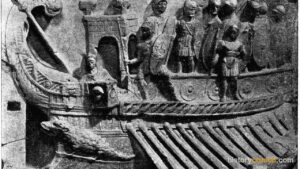
To understand the Second Punic War, it helps to look back at the First Punic War, which took place from 264 to 241 BCE. That first conflict ended in a Roman victory, and Carthage was forced to give up the island of Sicily and pay a large sum of money to Rome. More specifically, Carthage lost its position as the leading naval power of the region and later lost the islands of Corsica and Sardinia as well. As a result, many Carthaginians felt angry and humiliated by the peace terms.
One of those angry leaders was the Carthaginian general Hamilcar Barca, who had fought in the First Punic War. To rebuild Carthaginian strength, he turned his attention to Spain, which was rich in silver mines and manpower. In fact, Hamilcar and his family carved out a powerful new base of operations on the Iberian Peninsula. His son Hannibal grew up in this environment and was raised to see Rome as an enemy.
After Hamilcar died and his son-in-law was later assassinated, command of the Carthaginian army in Spain passed to Hannibal. Earlier, Carthage had agreed to a treaty that recognized the Ebro River as a boundary between Roman and Carthaginian areas of influence. To the south of that line lay the city of Saguntum, which had become an ally of Rome. In 219 BCE, Hannibal laid siege to Saguntum and captured it after about eight months of fighting.
The attack on Saguntum outraged the Romans, who demanded that Carthage hand Hannibal over for punishment. When Carthage refused, Rome declared war in the spring of 218 BCE, and the Second Punic War had begun. As stated above, both sides had different strengths. Rome controlled the seas and expected to invade Carthaginian territory, while Hannibal commanded one of the best-trained land armies in the ancient world.
The two main powers were far from evenly matched in every way. Rome could draw on a huge population of citizens and loyal Italian allies to raise new armies, even after suffering heavy losses. Carthage, by contrast, relied heavily on hired soldiers, known as mercenaries, gathered from many different regions. For instance, Hannibal’s army included troops from North Africa, Spain, and Gaul, along with a famous force of war elephants.
How the Second Punic War (Hannibal) Unfolded
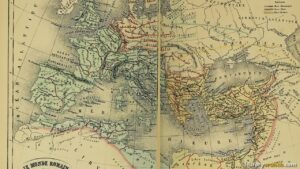
Instead of waiting for Rome to attack him in Spain, Hannibal chose to strike first by invading Italy itself. Because Carthage no longer had a strong navy, he could not risk moving his army by sea. As a result, he decided to march overland, crossing the Pyrenees, the Rhône River, and finally the towering Alps Mountains. This bold plan aimed to bring the war onto Roman soil and to encourage Rome’s Italian allies to switch sides.
The crossing of the Alps in late 218 BCE became one of the most famous feats in military history. Hannibal set out with tens of thousands of infantry, thousands of cavalry, and dozens of war elephants. The brutal march through snow and mountain passes cost him a large part of his army and most of his elephants. Even so, he succeeded in bringing an intact fighting force down into northern Italy, catching the Romans by surprise.
Once in Italy, Hannibal won a string of stunning victories. First came a cavalry clash at the Ticinus River, followed by a major win at the Battle of Trebia in 218 BCE, where he lured a Roman army into a trap in the cold. In 217 BCE, he ambushed and destroyed another Roman army at the Battle of Lake Trasimene. In reality, these defeats shocked the Roman people and showed that Hannibal could not be beaten easily in open battle.
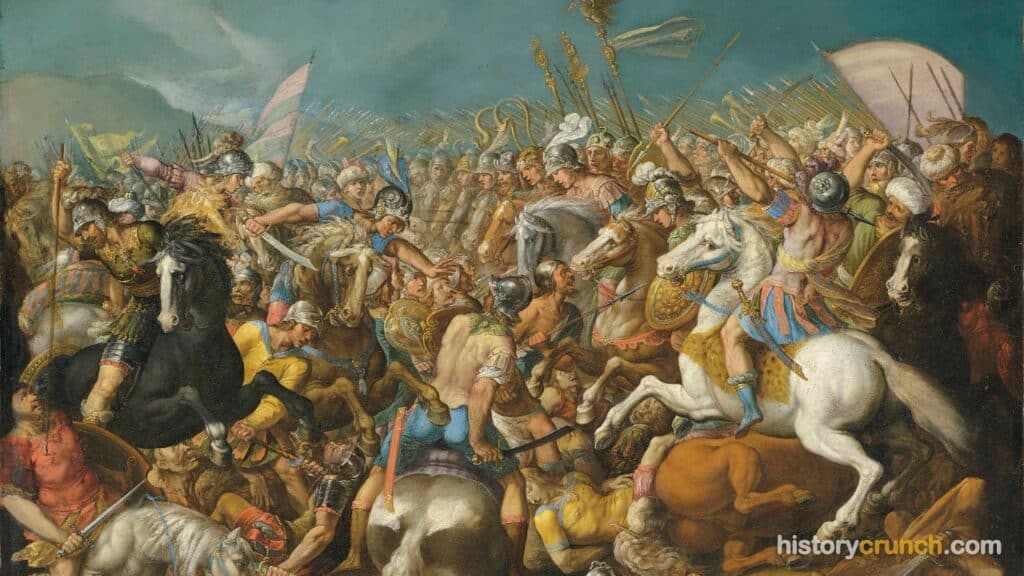
The greatest of Hannibal’s victories came at the Battle of Cannae in 216 BCE, fought on a plain in southeastern Italy. Rome assembled one of the largest armies it had ever fielded, numbering roughly 80,000 soldiers, to crush the invader once and for all. Hannibal, with a smaller force, used a clever plan known as a double envelopment. His center gave way on purpose, drawing the Romans forward, while his stronger wings and cavalry swung around and surrounded them completely.
The result at Cannae was a slaughter, with tens of thousands of Roman soldiers killed in a single day. For instance, ancient writers recorded Roman losses ranging from about 55,000 to as high as 70,000 men. After such a disaster, several of Rome’s southern Italian allies, including the important city of Capua, abandoned Rome and joined Hannibal. Despite this catastrophe, Rome refused to surrender or to negotiate a peace on Hannibal’s terms.
Rome then changed its approach to the war. A Roman leader named Quintus Fabius Maximus adopted a cautious strategy of avoiding large battles with Hannibal, instead shadowing his army and cutting off his supplies. This slow, patient method came to be called the Fabian strategy. In fact, it wore Hannibal down over time, since he could not capture Rome itself and could not easily replace his losses.
Meanwhile, the war spread far beyond Italy into Spain, Sicily, and North Africa. In Spain, Roman armies gradually pushed back the Carthaginians, and Hannibal’s brother Hasdrubal was defeated and killed while trying to bring reinforcements into Italy. A talented young Roman general named Publius Cornelius Scipio, later called Scipio Africanus, won important victories in Spain and then carried the war into Africa itself. As part of this plan, Rome allied with the Numidian king Masinissa, whose skilled cavalry would prove very valuable.
With a Roman army now threatening Carthage directly, the Carthaginians recalled Hannibal from Italy after more than a decade of campaigning there. The two great commanders finally met at the Battle of Zama in 202 BCE. Unlike most earlier battles of the war, the Romans held the advantage in cavalry, thanks to their Numidian allies. During the fighting, the Roman cavalry drove off the Carthaginian horsemen and then attacked Hannibal’s forces from behind, causing his lines to collapse.
The defeat at Zama ended Hannibal’s long career of victories and forced Carthage to seek peace. In 201 BCE, Carthage accepted harsh terms set by Rome. More specifically, Carthage gave up its overseas empire, surrendered nearly all of its warships, agreed to pay a large sum of silver over many years, and promised not to wage war without Roman permission. In this way, the Second Punic War came to a close with a clear Roman victory.
Significance of Second Punic War (Hannibal)
The Second Punic War was significant because it made Rome the dominant power in the western Mediterranean. After the war, Carthage was no longer a serious military rival, and Rome gained control of Spain along with its rich resources. In fact, the victory set Rome on the path to building one of the largest empires in history.
The war also demonstrated Rome’s remarkable ability to endure enormous losses without giving up. Even after the catastrophe at Cannae, the Republic refused to negotiate and kept raising new armies until it turned the tide. This determination, along with its huge population of citizens and allies, proved to be one of Rome’s greatest strengths.
Beyond politics, the conflict left a lasting mark on military history through the genius of Hannibal. His crossing of the Alps and his double envelopment at Cannae are still studied in military academies around the world. As stated above, many people consider him one of the greatest generals of all time, even though he ultimately lost the war.
Finally, the Second Punic War helped set the stage for the Third Punic War, fought from 149 to 146 BCE. Some Roman leaders continued to view Carthage as a threat, even in its weakened state. In the end, Rome destroyed the city of Carthage completely, bringing the long rivalry between the two powers to a violent close.
Frequently Asked Questions
When was the Second Punic War fought?
The Second Punic War was fought from 218 to 201 BCE, lasting about seventeen years. It came after the First Punic War, which ended in 241 BCE, and before the Third Punic War, which ended in 146 BCE. The long gap between the wars gave Carthage time to rebuild its strength in Spain.
Why did Hannibal cross the Alps with elephants?
Hannibal crossed the Alps to invade Italy by land because Carthage no longer had a strong navy to move his army by sea. By marching over the mountains, he hoped to surprise the Romans and fight them on their own territory. The war elephants were meant to frighten enemy troops and horses, though most of them did not survive the harsh mountain crossing.
Who won the Battle of Cannae?
Hannibal and the Carthaginians won the Battle of Cannae in 216 BCE, even though they were outnumbered. The battle took place near the village of Cannae in southeastern Italy on a hot summer day. It is remembered as one of the worst defeats in Roman history and as a masterpiece of battlefield tactics.
How did Rome finally defeat Hannibal?
Rome finally defeated Hannibal by carrying the war into North Africa and forcing Carthage to call him home. The Roman general Scipio Africanus landed in Africa and threatened the city of Carthage directly. Hannibal was then beaten at the Battle of Zama in 202 BCE, which brought the war to an end.
What did Carthage lose in the Second Punic War?
Carthage lost its overseas empire, most of its navy, and its position as a great power. Under the peace treaty of 201 BCE, it had to pay a heavy sum of silver to Rome over many years and could no longer go to war without Roman approval. As a result, Carthage became politically weak and dependent on Rome.
Cite This Article
To cite this article as a source, use one of the formats below.
MLA: Millar, B. “Second Punic War (Hannibal): A Detailed Summary.” HistoryCrunch, 7 July 2026, https://historycrunch.com/second-punic-war-hannibal/.
APA: Millar, B. (2026). Second Punic War (Hannibal): A Detailed Summary. HistoryCrunch. https://historycrunch.com/second-punic-war-hannibal/
Chicago: Millar, B. “Second Punic War (Hannibal): A Detailed Summary.” HistoryCrunch. July 7, 2026. https://historycrunch.com/second-punic-war-hannibal/
Sources
- J.M. Roberts & Odd Arne Westad, The Penguin History of the World.
- Jerry Bentley & Herbert Ziegler, Traditions & Encounters: A Global Perspective on the Past.