The Third Punic War is often remembered as the conflict that wiped one of the great cities of the ancient world completely off the map. Fought from 149 to 146 BCE, it was the last of the three Punic Wars between Rome and Carthage, and it ended with the total destruction of Carthage. Unlike the two earlier wars, which had raged across many parts of the Mediterranean, this final struggle was fought almost entirely on Carthaginian soil in North Africa, and it centered on a long and brutal siege of the city itself. The war belongs to the wider history of Ancient Rome, and it marked the moment when Rome removed its oldest and most feared rival for good.
The Punic Wars were a series of three conflicts fought between Rome and Carthage between 264 BCE and 146 BCE. The name “Punic” comes from the Latin word for the people of Carthage, who were descended from the Phoenicians, a trading people from the eastern Mediterranean. Carthage was a wealthy city-state on the coast of North Africa, in what is now Tunisia, and for a long time it was one of the leading naval and trading powers in the region. Rome, meanwhile, grew from a city on the Italian Peninsula into the dominant power of the western Mediterranean, and the rivalry between the two states led to war three separate times.
Background of the Third Punic War
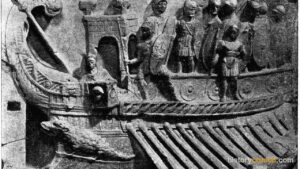
To understand the Third Punic War, it helps to look at what came before it. The First Punic War lasted from 264 to 241 BCE and began when Rome interfered in a dispute on the island of Sicily, which Carthage controlled at the time. In order to fight a leading naval power, Rome built up its own fleet and eventually won the war, forcing Carthage to give up Sicily and pay a large sum of money known as an indemnity.
The Second Punic War followed from 218 to 201 BCE and was one of the most famous conflicts of the ancient world. The Carthaginian general Hannibal Barca famously led an army, which included war elephants, across the Alps Mountains and into Italy, where he won several major battles. In the end, however, Rome defeated Carthage at the Battle of Zama in 202 BCE. The peace treaty that followed stripped Carthage of its overseas territories, forced it to give up its fleet, made it pay a huge indemnity, and required Carthage to get Rome’s permission before going to war.
Even after two crushing defeats, Carthage recovered quickly. By the middle of the 2nd century BCE, the city had rebuilt its economy and become a rich exporter of grain and barley, some of it going to feed the growing population of Rome. This recovery alarmed many Romans, who still viewed Carthage as a possible threat despite the fact that it was militarily weak. One Roman senator, Marcus Porcius Cato, who is often called Cato the Elder, became a fierce opponent of Carthage after visiting the city and seeing its wealth. He is remembered for ending his speeches in the Roman Senate with the phrase Carthago delenda est, meaning “Carthage must be destroyed.”
The spark for war came from Numidia, a neighboring North African kingdom that was an ally of Rome. Numidia’s king, Masinissa, repeatedly raided and seized Carthaginian land, and because of the peace treaty, Carthage kept having to ask Rome to settle the disputes. Time after time, Rome sided with Numidia. Finally, in 150 BCE, after Numidia attacked once again, Carthage raised an army and struck back on its own, without Rome’s permission. That army was destroyed, but the point was that Carthage had broken the treaty. In reality, this gave the pro-war members of the Roman Senate exactly the excuse they had been looking for.
How the Third Punic War Unfolded
In 149 BCE, Rome declared war and sent a large army across the Mediterranean to North Africa. The force was enormous, numbering roughly 80,000 infantry and several thousand cavalry, and it landed near the city of Utica, which had already gone over to the Roman side. From the start, the Romans expected an easy and quick victory over a weakened enemy.
The Carthaginians tried desperately to avoid a war they could not win. In an effort to appease Rome, they handed over hundreds of hostages and then surrendered their weapons and armor. Once those had been given up, however, the Roman consuls made a final, shocking demand. They ordered the people of Carthage to abandon their city and move at least 10 miles (16 km) inland, while Carthage itself was to be destroyed. For a proud trading people whose wealth and identity were tied to the sea, this demand was impossible to accept.
As a result, the Carthaginians broke off negotiations and prepared to fight for survival. In fact, the people threw themselves into the war effort with remarkable energy. With their weapons already surrendered, they melted down metal and worked day and night to forge new arms, and even used cut hair to make ropes for their war machines. The city itself was strongly protected by massive walls and by its position on the coast, which made it very difficult to attack.
When the Roman army launched its first attacks on Carthage, it was pushed back. The Carthaginian generals defended the city and the surrounding countryside with skill, and the Romans found that their easy victory was not coming. More specifically, Carthaginian forces destroyed Roman siege engines and held out far longer than expected. For nearly two years, the siege dragged on without success, and it began to look as though this war might grow as long and costly as the first two Punic Wars.
Faced with this stalemate, Rome turned to a new commander. In 147 BCE, a young and talented officer named Publius Cornelius Scipio Aemilianus was given command of the war. He was actually too young to hold the office of consul under Roman law, but his popularity and political connections allowed the rules to be set aside. His adoptive family also carried great prestige, since his adoptive grandfather, Scipio Africanus, had defeated Hannibal at the end of the Second Punic War.
Scipio Aemilianus took firm control of the siege and tightened the noose around Carthage. He built a strong wall to cut the city off by land and constructed a great stone barrier, called a mole, to block the harbor. Since Carthage depended on the sea for supplies, this move slowly starved the city. As the blockade held through the winter, food ran out and disease spread, and many Carthaginians died of starvation before the final assault even began.
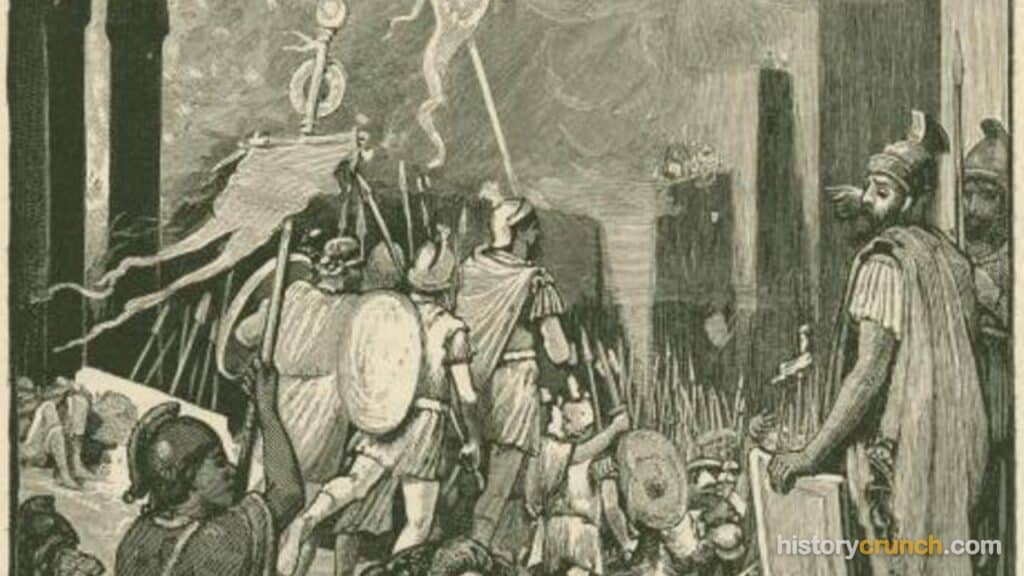
In the spring of 146 BCE, the Romans broke into the city. What followed was about six or seven days of savage house-to-house fighting as Roman soldiers battled their way from the harbor toward the central stronghold. The Carthaginians fought street by street and building by building, but they could not stop the advance. Thousands were killed in the brutal fighting, and the once great city was overwhelmed.
When the fighting finally ended, Carthage had fallen completely. The roughly 50,000 survivors, only a small fraction of the pre-war population, were sold into slavery. The city was then systematically burned and torn down, its walls and buildings destroyed so that little remained. With that, the independent existence of Carthage came to an end, and its territory was taken over by Rome as the new province of Africa.
Significance of Third Punic War
The Third Punic War was significant because it permanently removed Carthage as a power and confirmed Rome as the master of the western Mediterranean. For over a century, the two states had competed for control of trade, land, and the sea. With the destruction of Carthage in 146 BCE, that long rivalry was finally over, and no serious challenger to Rome remained in the region.
The war also changed Rome itself. The conquest brought in huge amounts of wealth, land, and slaves, and the fertile farmland around Carthage became a valuable source of grain for the growing Roman population. In the same year, Roman armies also crushed a revolt in the east and destroyed the Greek city of Corinth. As stated above, 146 BCE therefore marked a turning point when Rome stood supreme across the entire Mediterranean world.
Finally, the Third Punic War is often remembered as a warning about the cost of total war. Carthage had been militarily weak and had tried again and again to avoid the conflict, yet it was still wiped out. Its complete destruction has been studied ever since as one of the harshest examples of how an ancient power dealt with a defeated rival. Although Rome later built a new city on the same site, the original Carthaginian civilization was gone forever.
Frequently Asked Questions
When was the Third Punic War fought?
The Third Punic War was fought from 149 to 146 BCE, making it the shortest of the three Punic Wars at just under three years. It came more than fifty years after the Second Punic War ended in 201 BCE. During that long gap, Carthage had rebuilt much of its wealth, which is part of what led Rome to attack.
Why did Rome want to destroy Carthage?
Rome wanted to destroy Carthage because a group of senators feared its renewed wealth and saw it as a lasting threat, even though Carthage was militarily weak. The city’s success as a trading center made some Romans uneasy, and figures like Cato the Elder pushed hard for war. Rome also stood to gain valuable farmland and treasure by conquering its old rival.
Who was the Roman general who destroyed Carthage?
The Roman general who destroyed Carthage was Publius Cornelius Scipio Aemilianus, who took command of the siege in 147 BCE. After the victory he was given the honorary title “Africanus” and celebrated with a triumph, a grand parade held in Rome. He was the adopted grandson of Scipio Africanus, the general who had defeated Hannibal at the Battle of Zama.
What happened to the people of Carthage after the war?
The surviving people of Carthage, around 50,000 in number, were sold into slavery after the city fell in 146 BCE. Many others had already died from starvation during the siege or were killed in the final days of fighting. The survivors represented only a small share of the population that had lived in the city before the war began.
Where was Carthage located?
Carthage was located on the coast of North Africa in what is now the country of Tunisia, near the modern city of Tunis. Its position on the Mediterranean Sea helped it become a major trading and naval power. That same coastal location shaped the Third Punic War, since the Romans had to blockade the city’s harbor to cut off its supplies.
Cite This Article
To cite this article as a source, use one of the formats below.
MLA: Millar, B. “Third Punic War: A Detailed Summary.” HistoryCrunch, 7 July 2026, https://historycrunch.com/third-punic-war/.
APA: Millar, B. (2026). Third Punic War: A Detailed Summary. HistoryCrunch. https://historycrunch.com/third-punic-war/
Chicago: Millar, B. “Third Punic War: A Detailed Summary.” HistoryCrunch. July 7, 2026. https://historycrunch.com/third-punic-war/
Sources
- J.M. Roberts & Odd Arne Westad, The Penguin History of the World.
- Jerry Bentley & Herbert Ziegler, Traditions & Encounters: A Global Perspective on the Past.