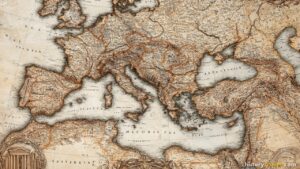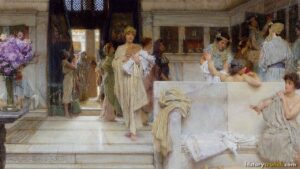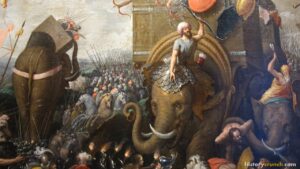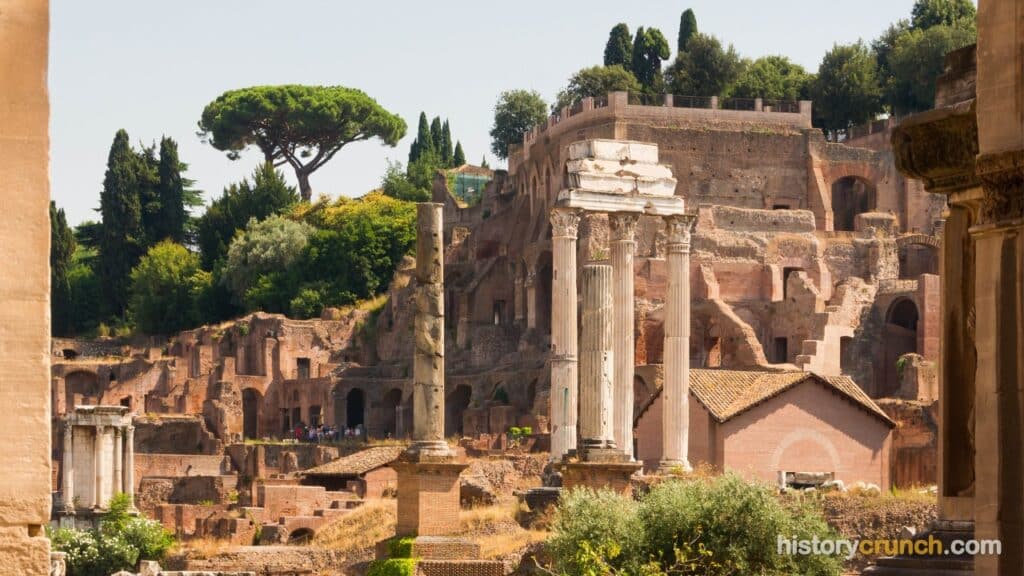
The Roman Forum was the beating heart of one of the most powerful civilizations in world history. For more than a thousand years, this rectangular public square in the center of Rome served as the meeting place where politics, religion, law, and business all came together. Kings, senators, emperors, and ordinary citizens crossed its stones, and many of the most famous events in Roman history took place there. The Forum belongs to the long story of Ancient Rome, the civilization that began as a small city-state on the Italian peninsula and grew into an empire stretching from Britain in the northwest to Egypt in the southeast.
A forum, in the Roman world, was an open public square surrounded by important buildings, where people gathered to do the business of the city. The word comes from the Latin term forum, which originally meant an open space or marketplace. Over time it came to mean the civic and political center of a Roman town. The most famous of them all was the Forum in Rome itself, known in Latin as the Forum Romanum, which is why it is remembered simply as the Roman Forum.
What Was Ancient Rome?
Ancient Rome was one of the most powerful civilizations in world history. It began as a small city-state on the Italian peninsula and grew over many centuries into a vast empire that ruled much of Europe, North Africa, and parts of the Middle East. Roman civilization is remembered for its lasting contributions to law, government, architecture, language, and culture.
Historians usually divide the history of Ancient Rome into three periods. First came the Roman Kingdom, which lasted from the traditional founding of the city in 753 BCE until 509 BCE. Next came the Roman Republic, which lasted from 509 BCE to 27 BCE and built the elected offices and Senate that later governments would copy. Finally came the Roman Empire, which lasted from 27 BCE until the western half fell in 476 CE. The Roman Forum was central to all three periods, growing and changing along with the city itself.
Where Was the Roman Forum Located?
The Roman Forum sat in a low valley between two of the famous hills of Rome, the Capitoline Hill and the Palatine Hill. This location was no accident. The valley lay in the middle of the early settlements that would later join together to form the city, which made it a natural meeting ground for different groups of people.
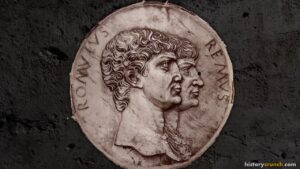
According to Roman tradition, the site was linked to a legend about the very beginning of Rome. The story tells of an alliance between Romulus, the legendary first king, who controlled the Palatine Hill, and his rival Titus Tatius, a leader of the Sabine people, who held the Capitoline Hill. Because the valley lay between the two settlements, it became the place where the two peoples met and bargained. In this way, legend connected the Forum to the founding of the city itself.
In reality, the valley was not an easy place to build. The ground was low, marshy, and often flooded by the nearby Tiber River. Before the Forum could develop, this swampy land had to be drained and made usable.
How Did the Roman Forum Begin?
The earliest history of the Forum reaches back into the period of the Roman Kingdom. Before it became a civic center, the area was used as a burial ground, and archaeologists have found early cemeteries there. The transformation from a cemetery into a public space began in the 8th century BCE, when the site was filled in with earth to raise it above the level of the river’s yearly floods and was then paved.
A major turning point came under the Etruscan kings who ruled early Rome. One of them, Tarquin the Elder, began construction of a great sewer known as the Cloaca Maxima, which was one of the earliest sewage systems in the world. More specifically, this drainage project pulled water out of the marshy valley and carried it to the Tiber, making it possible to build on the land. That single piece of engineering turned a swamp into the future center of the city.
The earliest important structures in the Forum grew up in two areas. One was the Comitium, an open-air space used for public assemblies, religious rituals, and social gatherings. The other included early religious sites such as the Regia, believed to be the house of the kings, and the Temple of Vesta, home of the sacred fire tended by the priestesses known as the Vestal Virgins.
How Did the Forum Grow During the Republic?
When the Roman Republic was established in 509 BCE, the Forum became the true center of political and legal life. The Senate met nearby, and government business, trials, and popular assemblies gathered there. As the city grew, the government even began buying up private property around the square in order to enlarge the public space.
The first temples in the Forum date from this early Republican period. For instance, the Temple of Saturn, which also held the state treasury, and the Temple of Castor and Pollux, built to honor a legendary battle, both rose in these centuries. These buildings gave the square its religious importance alongside its political role.
A new phase began in the early 2nd century BCE, when large aisled halls called basilicas were introduced. A basilica was a covered public building used for law courts and business, and its arrival started the process of turning the Forum into a grand and monumental space. The Basilica Fulvia was dedicated on the north side of the square in 179 BCE, and the Basilica Sempronia followed on the south side nine years later. Around the same time, rows of covered shops were pushed to the edges of the square, and merchants slowly gave way to government and ceremony.
Running through the Forum was its main street, the Via Sacra, or Sacred Way. This paved road connected the Forum to the Palatine Hill and served as the route for triumphal processions, in which victorious generals paraded through the city to celebrate their conquests.
What Famous Events Happened in the Forum?
By the 1st century BCE, the Forum had become the stage for some of the most dramatic events in Roman history. The Roman dictator Sulla carried out major building work there, including repaving the square. In 63 BCE, the famous orator and politician Cicero delivered powerful speeches in the Forum against a conspirator named Catiline, who had plotted to seize power.
Perhaps the most famous moment of all came after the assassination of Julius Caesar in 44 BCE. His body was burned in the Forum, and a stirring funeral speech given from the speaker’s platform helped turn the public against his murderers. In fact, the site of his cremation was later marked by a temple dedicated to Caesar after he was declared a god.
Caesar himself had begun a major remodeling of the Forum because the old space had grown too crowded for a city as large as Rome. After his death and the civil war that followed, his adopted heir Augustus became the first Roman emperor and finished much of that work. As stated above, Augustus gave the Forum much of its final form, repaving it in gleaming marble, adding new temples and monuments, and cleaning out the sewers beneath it.
What Was the Forum Like During the Empire?
Under the emperors, the Roman Forum became a monument in stone and marble to the power and glory of Rome. Emperors added prestige buildings such as temples dedicated to rulers who had been declared gods, along with towering columns and massive triumphal arches. For instance, the Arch of Septimius Severus was built at the west end of the square in 203 CE to celebrate military victories, and the Arch of Titus honored the Roman capture of Jerusalem.
As Rome grew even larger, the old Forum could no longer hold all of the city’s business. Emperors built newer, grander squares nearby, known as the Imperial Fora. The largest of these was the Forum of Trajan, completed in the early 2nd century CE, which drew much of the commercial and legal activity away from the old Forum. Even so, the Roman Forum remained a symbol of the city’s heart. One of the last great buildings added to it was the enormous Basilica of Maxentius, completed in the early 4th century CE.
After the fall of the Western Roman Empire in 476 CE, the Forum slowly declined. Some of its temples were turned into Christian churches, which helped a few of the buildings survive. Over the following centuries, however, much of the area fell into ruin. Builders tore down old structures to reuse the stone and marble, dirt and debris piled up, and the ground level rose so high that the once famous square became a field where cattle grazed. It was not until modern archaeological excavations, mainly from the 18th century onward, that the buried Forum was uncovered again.
Significance of Roman Forum
The Roman Forum was one of the most important public spaces in the history of the ancient world. For over a thousand years it was the center of political, religious, legal, and commercial life in Rome, the capital of a vast empire. The great decisions, speeches, trials, and ceremonies that took place there shaped the direction of Roman civilization and, through it, the history of the western world.
The Forum also stands as a lasting example of Roman engineering and architecture. From the draining of a swamp to the building of towering temples, basilicas, and arches, it showed how the Romans could reshape their environment on a grand scale. Many of these building types, especially the basilica, went on to influence architecture in Europe for centuries.
Today the ruins of the Roman Forum are among the most visited and studied archaeological sites in the world. Even though only a fraction of the original buildings survive, the crumbling columns, arches, and foundations offer a rare window into daily life and government in Ancient Rome. In this way, the Forum continues to teach the world about the civilization that once ruled the Mediterranean.
Frequently Asked Questions
What was the Roman Forum used for?
The Roman Forum was used as the main public square of Rome, where political, religious, legal, and commercial activities all took place. Citizens gathered there to vote and hear speeches, priests performed religious ceremonies at its temples, judges held trials in its basilicas, and merchants once sold goods in its shops. It was, in short, the center of daily life in the ancient city.
Where is the Roman Forum located today?
The Roman Forum is located in the center of the modern city of Rome, Italy, in the valley between the Capitoline and Palatine Hills. It sits very close to two other famous ancient sites, the Colosseum and the Palatine Hill. Visitors can walk among its ruins as part of one large archaeological area.
How old is the Roman Forum?
The Roman Forum dates back more than 2,700 years, with its earliest development as a public space beginning in the 8th and 7th centuries BCE. Before that, the site had been used as a burial ground, and it was only after the marshy valley was drained that building could begin. It then remained in use for over a thousand years, into the late Roman Empire.
Why was the Roman Forum built on a swamp?
The Forum was built in a low valley because that spot lay between the early hilltop settlements of Rome and made a natural common meeting ground. The land there happened to be marshy and flood-prone, so the Romans first had to drain it. They did this by building the Cloaca Maxima, a great sewer that carried the water away to the Tiber River.
What can you still see at the Roman Forum?
Visitors today can still see impressive ruins of temples, basilicas, arches, and columns spread across the site. Well-known remains include the columns of the Temple of Saturn, the Arch of Septimius Severus, the Arch of Titus, and the large brick arches of the Basilica of Maxentius. The main road called the Via Sacra can also still be walked, tracing the path that ancient triumphal processions once followed.
Cite This Article
To cite this article as a source, use one of the formats below.
MLA: Millar, B. “Roman Forum: A Detailed Summary.” HistoryCrunch, 7 July 2026, https://historycrunch.com/roman-forum/.
APA: Millar, B. (2026). Roman Forum: A Detailed Summary. HistoryCrunch. https://historycrunch.com/roman-forum/
Chicago: Millar, B. “Roman Forum: A Detailed Summary.” HistoryCrunch. July 7, 2026. https://historycrunch.com/roman-forum/
Sources
- Fordham Ancient History Sourcebook
- Mary Beard, SPQR: A History of Ancient Rome.
- Adrian Goldsworthy, How Rome Fell / Caesar (military and political).