Work in Ancient Rome: A Detailed Summary

Work in Ancient Rome
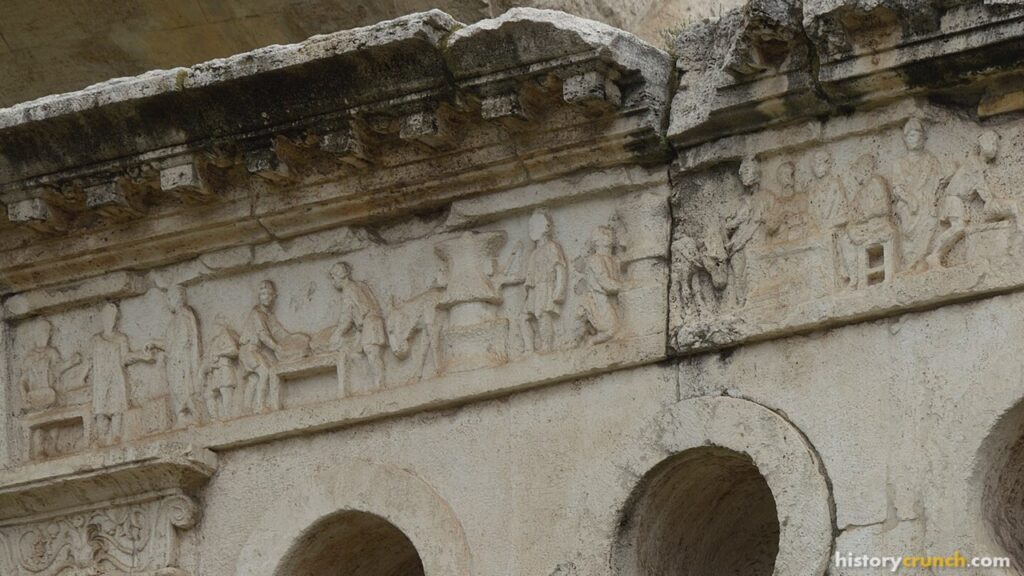
Relief carving on the Tomb of Eurysaces the Baker in Rome, depicting workers grinding grain and baking bread, offering a rare glimpse into the everyday working lives of ordinary people in ancient Rome. (Creative Commons 4.0)

Table of Contents

Work in Ancient Rome created many different jobs, such as: merchants, craftsmen, farmers, soldiers, entertainers and the government officials. This article details the differents types of work in Ancient Rome.

Work in Ancient Rome was an important part of the daily life for the people of the time. In fact, it was essential to maintaining one of the most powerful civilizations in history. The Roman Empire’s economy depended on a wide variety of jobs, which included: merchants, craftsmen, farmers, soldiers, entertainers and the government officials. Furthermore, work in Ancient Rome was closely linked to a person’s social class. This means that what someone did for a living often reflected their place in the hierarchy of the Ancient Roman class system. As such, the majority of people carried out difficult work in farm fields, workshops, or markets.

WORK IN ANCIENT ROME – TYPES OF JOBS

The people of Ancient Rome had many different jobs or careers.  Each of the following were work options to the people of Rome:

  • Merchant: Merchant ships commonly sailed the waters surrounding the Roman Empire in search of other lands with goods to trade for. Merchants transported goods such as grain from Egypt, spices from the East, olive oil from Spain, and wine from Italy across the Mediterranean Sea.
  • Craftsman:  Rome was known for its fine goods, which were made by its many craftsmen.  These craftsmen made goods, such as: clothing, dishes, mosaics, metal goods, weapons, decorative items, etc. They worked as blacksmiths, potters, carpenters, shoemakers, weavers, and sculptors. Many artisans were former slaves who had gained their freedom but continued to work for wages.
  • Farmer: Since Rome’s economy was primarily agricultural, most people lived and worked in the countryside.  As such, most ancient Romans were farmers. Popular crops were olives, grapes for wine, honey, and cereal crops.  Livestock such as beef and pork were common as well.  Wealthy people owned the farms while the poor worked the land to harvest the crops and raise the livestock.
  • Soldier: Soldiers were very important in the overall Roman Empire.  As the empire spread throughout the surrounding territories, the soldiers were needed to conquer and control the territory.
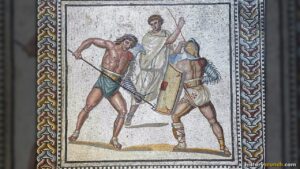
  • Entertainers: The Romans loved public spectacles such as gladiatorial games, chariot races, and theater performances. Entertainers were important within Rome as Roman citizens enjoyed attending the theater and “games” in the amphitheatres, such as the Colosseum.  These people were actors, musicians, chariot racers and gladiators.
  • Government: There were many different types of government positions, but in general, the high ranking positions in society were controlled by the wealthy.  For example, members of the noble families were only represented in the Senate. The Roman Empire required a vast bureaucracy to manage taxes, laws, and provinces.

WORK IN ANCIENT ROME – SLAVERY

Slavery was a major part of the Roman workforce and played a significant role in the daily life for people in Ancient Rome. Enslaved people performed many types of work depending on their skills and education. For instance, some worked in fields or mines under difficult and harsh conditions, while others served as domestic servants, teachers, secretaries or accountants in wealthy households. In addition, educated Greek slaves were often prized as tutors for Roman children. As well, in cities, slaves worked in workshops, bakeries and public baths.

Facebook
X
Reddit
Pinterest
LinkedIn

We strive to produce educational content that is accurate, engaging and appropriate for all learners. If you notice any issues with our content, please contact us and let us know!

AUTHOR INFORMATION
Picture of K.L Woida

K.L Woida

K.L. is a content writer for History Crunch. She is a fantastic history and geography teacher that has been helping students learn about the past in new and meaningful ways since the mid-2000s. Her primary interest is Ancient History, but she is also driven by other topics, such as economics and political systems.
Roman Expansion and Conquest
Ancient Rome

Roman Expansion and Conquest: A Detailed Summary

Roman expansion and conquest transformed Rome from a small city-state on the Tiber River into an empire controlling most of the known Western world, through centuries of military campaigns, strategic alliances, and skilled provincial administration. This article details the history and significance of Roman expansion and conquest.

Roman Judea.
Ancient Rome

Roman Judea: A Detailed Summary

Roman Judea was one of the most important provinces in the eastern Roman Empire, and its history shaped the ancient world. It was here that Christianity began, and it was here that Rome destroyed the Temple in Jerusalem after a series of Jewish revolts.

Legacy of Ancient Rome
Ancient Rome

Legacy of Ancient Rome: A Detailed Summary

The legacy of Ancient Rome shaped the modern world through its lasting influence on language, law, government, architecture, religion, and culture, making it one of the most influential civilizations in human history. This article details the legacy and significance of Ancient Rome.

Gods of Ancient Rome
Ancient Rome

Gods of Ancient Rome: A Detailed Summary

The gods of Ancient Rome were important to Roman religion and daily life, with the Romans worshiping a large number of deities who represented different areas of life, nature, and the state. This article details the history and significance of the gods of Ancient Rome.

Daily Life in Ancient Rome
Ancient Rome

Daily Life in Ancient Rome: A Detailed Summary

Daily life in Ancient Rome was shaped by social class, with wealthy Romans enjoying large homes, elaborate dinners, and enslaved servants while most ordinary people lived in cramped apartments and worked long hours. This article details the history and significance of daily life in Ancient Rome.

Pantheon in Ancient Rome
Ancient Rome

Pantheon in Ancient Rome: A Detailed Summary

The Pantheon is one of the most famous buildings from Ancient Rome, built under Emperor Hadrian around 125 CE and featuring the largest unreinforced concrete dome ever constructed, which still stands intact today. This article details the history and significance of the Pantheon in Ancient Rome.