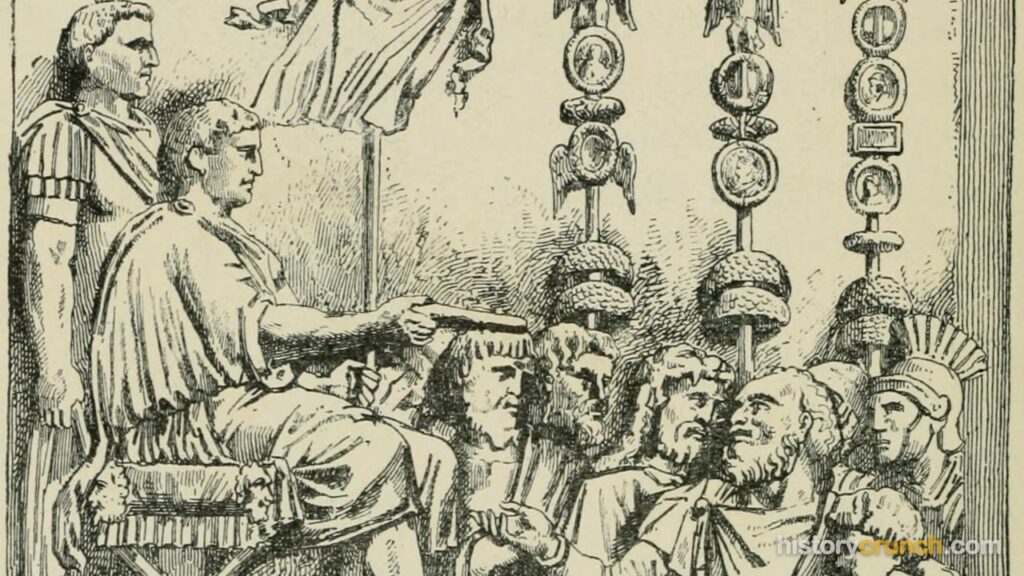
The barbarian invasions of Ancient Rome rank among the most important developments in all of Western history, because they helped bring an end to the Western Roman Empire and set the stage for the Middle Ages. Over several centuries, groups of people that the Romans called “barbarians” pushed against the empire’s borders, crossed into its territory, and eventually carved out kingdoms of their own on land that had once been Roman. These movements were not a single event but a long series of migrations, raids, and wars that reshaped the map of Europe.
The word “barbarian” was a label the Romans used for almost any people who lived beyond their frontiers and did not share Roman language or customs. In ancient times, Roman citizens referred to non-Roman peoples as barbarians, and these were diverse groups who lived beyond the boundaries of the Roman Empire. Most of these groups were Germanic tribes, such as the Goths, Vandals, and Franks, though the fearsome Huns from Central Asia also played a major role. The term was not a compliment. It suggested that these peoples were wild or uncivilized, even though many of them farmed the land, traded with Rome, and served in its armies.
What Was the Late Roman Empire?
By the time the invasions reached their height, the Roman Empire had changed a great deal from the mighty state it had once been. In the year 285 CE the empire was so large that it was formally divided into an eastern half and a western half, each with its own government. The Eastern Roman Empire, ruled from the city of Constantinople, was wealthier, better defended, and easier to protect. The Western Roman Empire, which included Italy, Gaul, Spain, Britain, and North Africa, was poorer and far more exposed to attack.
The Western Empire faced deep problems long before the final invasions. In the third century a period of civil war and political chaos, sometimes called the crisis of the third century, weakened the state. In fact, in one stretch of about fifty years, Rome cycled through a long string of emperors, many of whom were placed on the throne by the army and then quickly overthrown. These constant power struggles drained the treasury and made it harder to defend the frontiers.
Economic troubles made matters worse. Warfare disrupted trade, farms were ruined, and taxes went unpaid. In response, the government produced more and more coins, but this only made the money worth less and drove prices higher. As stated above, a weak economy meant Rome could no longer easily pay and supply the large army it needed to guard its borders.
Who Were the Barbarian Peoples?
The peoples who pressed against Rome were not a single nation but many separate groups, each with its own leaders and goals. The most important were Germanic tribes who lived north and east of the Roman frontiers, especially along the Rhine and Danube rivers. Among them were the Goths, who would later split into the Visigoths, meaning the western Goths, and the Ostrogoths, meaning the eastern Goths.
Other major groups included the Vandals, who eventually reached North Africa, and the Franks, who settled in what is now France. There were also the Burgundians, the Alemanni, the Suebi, and the Angles, Saxons, and Jutes, who crossed the sea into Britain. Many of these peoples were farmers who wanted better land, and some had lived peacefully near Roman territory for generations, trading goods and even serving as soldiers in Roman armies.
The Huns were different from the Germanic tribes. They were skilled horsemen and warriors from the grasslands of Central Asia, and their sudden arrival in Europe terrified everyone in their path. More specifically, the main reason for the Germanic invasions of the empire was the movement into Europe of the Huns, who were fierce nomads from central Asia and began invading the frontier regions of the Rhine and Danube rivers around 370 CE, destroying all in their path.
What Caused the Barbarian Invasions?
Several forces pushed the barbarian peoples toward Roman land. One was simple population growth combined with a search for better farmland, especially as the climate in northern Europe became colder and harder for farming. These migrations were often gradual movements of land-hungry people looking for a safer, richer place to live, rather than sudden nomadic raids.
The single greatest trigger, however, was the arrival of the Huns. As the Huns swept westward, they overran the Goths and other tribes, forcing them to flee. This set off a chain reaction, sometimes described as a domino effect, in which one frightened people crashed into the next and pushed them toward the Roman frontier. In reality, many of the tribes that crossed into the empire were not seeking to destroy Rome at all. They were running away from the Huns and hoping Rome would give them safety and a place to settle.
Rome’s own weakness was the final ingredient. A divided empire, a shaky economy, and unstable leadership meant the Western government often could not field an army strong enough to turn the newcomers away. When Rome did make deals with the tribes, it frequently broke its promises, which turned would-be settlers into angry enemies.
How Did the Goths Enter the Empire?
One of the most important moments came in 376 CE, when a large group of Goths, fleeing the Huns, arrived at the Danube River and begged the Eastern emperor Valens for permission to cross into Roman territory. The Romans agreed and allowed them to settle inside the empire. Almost immediately the arrangement broke down, as Roman officials treated the Goths harshly and a famine left them starving.
The mistreatment drove the Goths to rebel. Their leader came to an agreement with the Emperor Valens that they would be given lands, however there was a famine, the emperor reneged on his promise and the Goths attacked, killing the emperor at the Battle of Adrianople in 378 and decimating the Roman field army. This defeat in 378 CE was a disaster for Rome. It showed that the empire’s soldiers could be beaten in open battle, and it left the Goths living inside Roman borders permanently. The Goths were inside the empire to stay, soon becoming known as the Visigoths.
What Happened During the Sack of Rome in 410?
For years the Visigoths, now led by a king named Alaric, moved through the empire while trying to win land and recognition from Rome. When those negotiations repeatedly failed, Alaric turned on the city itself. The sack of Rome on August 24th, 410, was undertaken by the Visigoths led by their king, Alaric.
By this time Rome was not even the capital of the Western Empire anymore. Rome was no longer the administrative capital of the Western Roman Empire, having been replaced first by Milan and then by Ravenna in 402, yet the city retained a paramount position as the eternal city and a spiritual center of the empire. For this reason, the attack was a tremendous shock. This was the first time in almost 800 years that Rome had fallen to a foreign enemy, and the sack was a major shock to contemporaries, friends and foes of the empire alike.
The sack lasted three days. The Visigoths looted homes, temples, and public buildings, and carried off treasure and captives. Even so, the destruction was more limited than many later accounts claimed. Alaric and his forces, Christians all, were respectful of ordinary Roman citizens and confined destruction to a handful of public buildings. Soon after, Alaric marched south, planning to conquer Roman North Africa, but died of illness, and his army marched on for Spain, where the Visigoths would settle.
How Did the Vandals and Huns Threaten Rome?
The invasions did not end with the Goths. In the winter of 406 CE, a mix of peoples including the Vandals, Alans, and Suebi crossed the frozen Rhine River and poured into Gaul, then pushed south into Spain. The Vandals did not stop there. In 429 Gaiseric, king of the Vandals, crossed from Spain to Roman Africa and created the first independent German kingdom on Roman soil.
North Africa was vital because it supplied Rome with much of its grain, so losing it struck at the heart of the Western Empire. From their new base, the Vandals later sailed to Italy and sacked Rome a second time in 455 CE. This later attack is why the word “vandal” came to mean someone who destroys property, even though the Vandals spared most of the city’s people.
Meanwhile the Huns, united under the famous leader Attila, became a direct danger. In 451 CE a combined Roman and Visigothic army led by the general Flavius Aetius fought Attila at the Battle of the Catalaunian Plains and stopped his advance. Attila then invaded Italy the next year but withdrew, and after his death in 453 CE the Hunnic empire quickly fell apart.
How Did the Western Empire Finally Fall?
By the middle of the fifth century, the Western Roman Empire controlled little more than Italy itself. Barbarian generals held most of the real power, and the last emperors were weak figures who ruled in name only. In 476 CE the final blow came from within the army. A Germanic commander named Odoacer removed the last Western emperor, a boy named Romulus Augustulus, and declared himself king of Italy.
Most historians treat the year 476 CE as the end of the Western Roman Empire, though the change was really the last step in a long decline. The Eastern Roman Empire, later known as the Byzantine Empire, survived and continued for another thousand years. In the West, the old Roman provinces were now divided among barbarian kingdoms, such as the Visigoths in Spain, the Vandals in North Africa, the Franks in Gaul, and the Ostrogoths in Italy.
Significance of Barbarian Invasions of Ancient Rome
The barbarian invasions were one of the most important turning points in world history, because they ended Roman rule in the West and opened the door to the medieval period. For centuries Rome had seemed unbeatable, and the fall of the city and then the empire shattered that belief across Europe.
The invasions also reshaped the map of Europe in ways that still matter today. The kingdoms founded by the Franks, Visigoths, and other peoples grew into some of the earliest forms of nations such as France and Spain. In this way, the mixing of Roman and Germanic traditions helped create the languages, laws, and cultures of medieval and modern Europe.
Finally, the invasions remind readers that great powers can collapse when they face too many problems at once. It was not one cause alone but a combination of outside pressure and inside weakness, including political chaos, a failing economy, and a weakened army, that brought the Western Roman Empire to its end.
Frequently Asked Questions
Who were the barbarians that invaded Rome?
The barbarians were mostly Germanic tribes who lived beyond Rome’s borders, along with the Huns from Central Asia. The main Germanic groups included the Visigoths, Ostrogoths, Vandals, Franks, Burgundians, and Saxons. The Romans used the word “barbarian” for any people who did not share Roman language or customs, even though many of these groups were skilled farmers, traders, and soldiers.
When did the barbarian invasions of Rome happen?
The most intense wave of invasions took place between about 376 CE and 476 CE. Pressure on Rome’s frontiers had built up for centuries before that, but the arrival of the Huns in the late 300s CE set off the migrations that hit the Western Empire hardest. The period ended when the last Western Roman emperor was removed in 476 CE.
Why did the barbarians attack the Roman Empire?
Many barbarian peoples moved into Roman land because they were fleeing the Huns and hoping to find safety and better farmland. Others were drawn by the wealth of the empire or angered by broken Roman promises. In most cases the goal was to settle and survive, not to destroy Rome, though repeated conflicts turned many of them into enemies of the state.
What was the Battle of Adrianople?
The Battle of Adrianople was a major defeat for Rome in 378 CE, when rebelling Goths crushed a Roman army and killed the Eastern emperor Valens. The battle proved that Rome’s legions could be beaten in open combat by the very peoples they had allowed inside their borders. It marked an early sign that the empire was losing control of its frontiers.
Did the barbarian invasions cause the fall of Rome?
The invasions were a major cause of the fall of the Western Roman Empire, but they were not the only one. Rome was already weakened by political instability, economic trouble, and a struggling army before the invasions reached their peak. Most historians see the fall as the result of outside pressure combining with these inside weaknesses over a long period of time.
Cite This Article
To cite this article as a source, use one of the formats below.
MLA: Millar, B. “Barbarian Invasions of Ancient Rome.” HistoryCrunch, 7 July 2026, https://historycrunch.com/barbarian-invasions-of-ancient-rome/.
APA: Millar, B. (2026). Barbarian Invasions of Ancient Rome. HistoryCrunch. https://historycrunch.com/barbarian-invasions-of-ancient-rome/
Chicago: Millar, B. “Barbarian Invasions of Ancient Rome.” HistoryCrunch. July 7, 2026. https://historycrunch.com/barbarian-invasions-of-ancient-rome/
Sources
- H.H. Scullard, From the Gracchi to Nero.
- The Met (Heilbrunn Timeline) — Roman art
- Adrian Goldsworthy, How Rome Fell / Caesar (military and political).