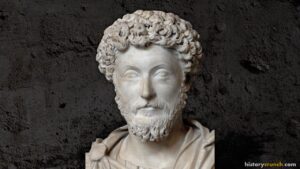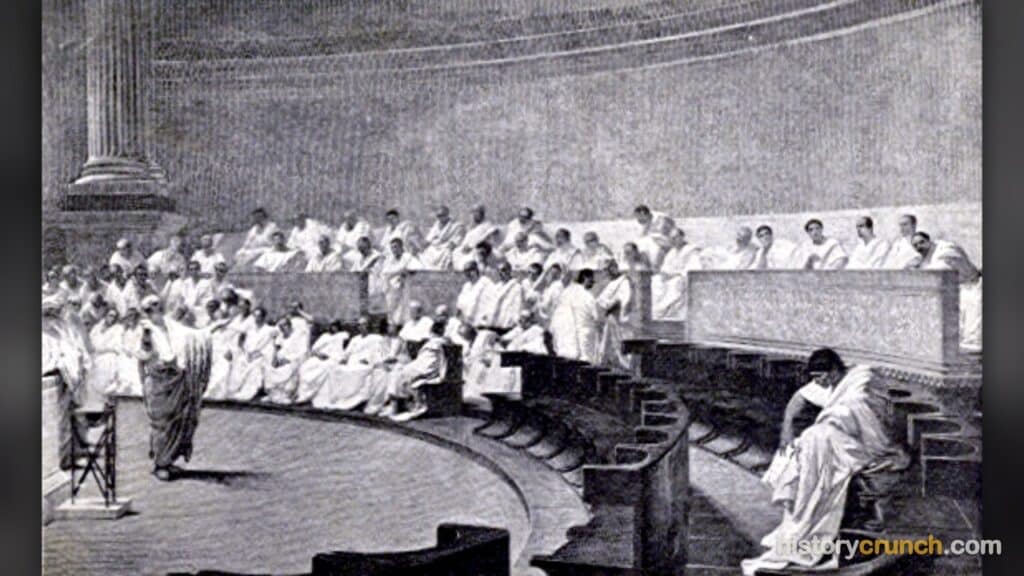
The Roman Senate under the empire was one of the most important institutions of the ancient world, even though its role changed dramatically after Rome moved from a republic to rule by a single emperor. During the Roman Republic, the Senate had controlled public finances, directed foreign policy, and guided the actions of elected officials with enormous authority. When Augustus became the first Roman emperor in 27 BCE, he kept the Senate in place and treated it with great respect, but real power now rested with him. For the next several centuries, the Senate remained a symbol of Rome’s traditions and a training ground for its leading families, yet it slowly lost the ability to make the most important decisions on its own.
The Roman Senate was a council of Rome’s most powerful and experienced men that advised the government and helped run the state. Under the empire, it was no longer the true ruling body it had once been. Instead, it became a partner to the emperor, sharing some duties with him while accepting that he held the final say on matters of war, law, and government.
What Was the Roman Empire?
Ancient Rome was one of the most powerful civilizations in world history. It began as a small city-state on the Italian peninsula and grew over many centuries into a vast empire that stretched from Britain in the northwest to Egypt in the southeast. Roman civilization is remembered for its lasting contributions to law, government, architecture, language, and culture.
The Roman Empire was the final great chapter of that story, lasting from 27 BCE until 476 CE in the west. It followed the Roman Republic, which had governed Rome for nearly 500 years using elected officials and a powerful Senate. The Republic collapsed after a long period of civil wars and the rise of ambitious generals such as Julius Caesar. In 27 BCE, Caesar’s adopted heir Octavian became the first emperor, taking the name Augustus, and the age of one-man rule began.
The empire was governed as an autocracy, which means that supreme power was held by a single person. In Rome, that person was the emperor. The Senate, which had been the dominant political force in the Republic, was kept in place, but it now lacked real political power and made few truly independent decisions.
How Did Augustus Change the Senate?
When Augustus took power, he was careful never to call himself a king or a dictator, because Romans hated both titles after centuries of republican government. Instead, he accepted the title princeps, meaning “first citizen,” and presented himself as simply the leading member of the Senate. In fact, he took the honored position of princeps senatus, or leader of the Senate, in 28 BCE. This clever approach let Augustus hold enormous power while appearing to respect Rome’s old traditions.
Augustus also reduced and reorganized the Senate itself. Julius Caesar had increased its membership to 900, but Augustus brought the number back down to about 600, where it stayed for most of the imperial period. To keep the body dignified, he set a wealth requirement, and senators had to own property worth at least one million sesterces. He personally reviewed the membership lists and removed men he thought unworthy, which strengthened his control while making the Senate seem more respectable.
More specifically, Augustus made the Senate a partner in governing while keeping the real decisions in his own hands. On the surface, its dignity and authority seemed unchanged. Its members still filled the highest offices, and its decrees, though not formally called laws, were treated as fully binding. In reality, everyone understood that the emperor’s wishes came first.
Who Could Become a Senator Under the Empire?
Membership in the Senate was not gained by a direct vote of the Roman people. Instead, a man entered the Senate after being elected to a qualifying public office, the most junior of which was the quaestorship, a financial post. To qualify, a man had to be a free-born male Roman citizen of good character who met the wealth requirement. Once a senator, a man normally served for life unless he was removed for corruption or immoral conduct.
Senators were not paid for their service and were expected to spend their own money on public activities. They were also forbidden from taking part directly in trade or commerce, which meant that most senators were large landowners who lived off their estates. Because of these rules, the Senate remained a body of wealthy elites throughout the imperial period.
One important change was who those elites were. In the Republic, senators came almost entirely from a small group of powerful Italian families. Under the empire, the western provinces began supplying senators as early as the reign of Augustus. Over time, men from Spain, Gaul, North Africa, and the eastern provinces joined the Senate, giving it a growing non-Italian membership and helping tie the far corners of the empire to Rome.
What Did the Senate Actually Do Under the Emperors?
Even without its old independence, the Senate under the empire still performed real duties. It supervised the older, more peaceful provinces, while the emperor personally controlled the frontier provinces where the armies were stationed. This division meant that the emperor commanded the legions, which was the true source of power, while the Senate managed the calmer parts of the empire.
The Senate also became a high court whose verdicts could not be appealed, and it heard important legal cases, especially those involving its own members. It nominally oversaw the state treasury, and it formally elected the yearly magistrates who ran the city of Rome. In addition, the Senate held the power to declare an emperor a god after his death, a religious act that gave it a lasting role in the imperial cult. Emperors such as Augustus were honored in this way, which strengthened loyalty to the empire across the provinces.
Perhaps the most striking fact is that, at least in form, the emperor’s own powers were said to come from the Senate. When a new emperor took power, the Senate formally granted him his titles and authority. This ceremony was mostly a formality, since real power came from the army’s support, but it kept alive the idea that Rome was still a shared republic rather than a monarchy.
How Did the Senate Decline Over Time?
As the empire went on, the Senate lost more and more of its influence. Many of the government’s most useful jobs were handed not to senators but to members of the equestrian order, a lower rank of wealthy citizens, and even to the emperor’s freed slaves. Augustus began using equestrians in responsible posts, and over time this created a large imperial civil service that answered directly to the emperor rather than to the Senate.
The relationship between emperor and Senate could also be dangerous. Some emperors treated the Senate with respect, while others viewed powerful senators as threats and had them put to death. Because so much depended on the personality of each ruler, the Senate’s fortunes rose and fell from reign to reign, and it could never be sure of its safety.
By the late empire, the Senate had become largely ceremonial. When later emperors reorganized the government and moved the seat of power away from the city of Rome, the Senate was reduced to little more than a town council for the city itself. A second senate was even created in the new eastern capital. The Roman Senate finally faded from the historical record centuries after the empire began, ending a story that had lasted more than a thousand years.
Significance of Roman Senate Under the Empire
The Senate under the empire matters because it shows how Rome held on to the outward forms of its republic even after real power had shifted to one man. Augustus understood that Romans deeply valued their traditions, so he preserved the Senate as a way to make his rule feel legitimate and familiar. This blending of old institutions with new one-man rule became the model for how the empire would be governed for centuries.
The imperial Senate also served as the training ground and social home of Rome’s leading families, and it helped bring talented men from across the provinces into the heart of Roman government. By opening its membership to people from Spain, Gaul, and other regions, the Senate helped unite a huge and diverse empire under a shared Roman identity. In this way, it remained an important thread connecting Rome to the many lands it ruled.
Finally, the history of the Senate under the empire has shaped how later societies think about government and power. Even as it lost real authority, the Senate stood as a reminder that rulers might still be expected to share power and respect tradition. The idea of a senate as a governing council of experienced leaders influenced the design of many modern legislative bodies, including those that still carry the name today.
Frequently Asked Questions
Did the Roman Senate still have power under the emperors?
The Senate kept some duties but lost its real power to the emperor. It still managed peaceful provinces, acted as a high court, elected city magistrates, and formally granted new emperors their titles. However, because the emperor controlled the armies, he held the final say on the most important decisions of war, law, and government.
Why did Augustus keep the Senate instead of getting rid of it?
Augustus kept the Senate to make his rule appear legitimate and traditional. Romans hated the idea of kings and dictators, so by preserving the Senate and calling himself only “first citizen,” Augustus could hold enormous power while seeming to respect the old republic. This careful strategy helped him avoid the anger that had gotten his adoptive father, Julius Caesar, assassinated.
How many senators were there in the Roman Empire?
Under the empire, the Senate had about 600 members. Julius Caesar had raised the number to 900, but Augustus reduced it back to roughly 600, where it stayed for most of the imperial period. He also set a wealth requirement, forcing senators to own property worth at least one million sesterces.
Could people from the provinces become Roman senators?
Yes, men from outside Italy could and did become senators under the empire. The western provinces began supplying senators as early as the reign of Augustus, and over time men from regions such as Spain, Gaul, and North Africa joined the body. This slowly gave the Senate a non-Italian membership and helped connect the wider empire to Rome.
What happened to the Roman Senate at the end of the empire?
The Senate slowly declined until it became mostly ceremonial. As later emperors reorganized the government and moved the capital away from the city of Rome, the Senate shrank into little more than a town council for the city itself, and a second senate was created in the eastern capital. The Roman Senate eventually disappeared from the historical record centuries later, ending an institution that had lasted more than a thousand years.
Cite This Article
To cite this article as a source, use one of the formats below.
MLA: Millar, B. “Roman Senate Under the Empire: A Detailed Summary.” HistoryCrunch, 7 July 2026, https://historycrunch.com/roman-senate-under-the-empire/.
APA: Millar, B. (2026). Roman Senate Under the Empire: A Detailed Summary. HistoryCrunch. https://historycrunch.com/roman-senate-under-the-empire/
Chicago: Millar, B. “Roman Senate Under the Empire: A Detailed Summary.” HistoryCrunch. July 7, 2026. https://historycrunch.com/roman-senate-under-the-empire/
Sources
- Fordham Ancient History Sourcebook
- H.H. Scullard, From the Gracchi to Nero.
- The Met (Heilbrunn Timeline) — Roman art
- Mary Beard, SPQR: A History of Ancient Rome.