The persecution of Christians in Ancient Rome is one of the most important stories in the history of the Roman Empire, because it shaped how a small religious movement grew into the dominant faith of the western world. For nearly three centuries, followers of Christianity faced periods of arrest, torture, and execution at the hands of Roman authorities. These campaigns were not constant, and they were not always ordered by the emperor. Instead, persecution came in waves, sometimes local and sometimes empire-wide, and it ended only when the Roman state changed its policy toward the new religion in the early fourth century CE.
Persecution, in this sense, means the mistreatment or punishment of a group of people because of their beliefs. In Ancient Rome, Christians were persecuted because their refusal to worship the Roman gods and the emperor was seen as a threat to the safety and unity of the state. Roman officials did not usually target Christians for what they believed in private, but rather for what they refused to do in public, which was to take part in the official religious rituals that Romans thought kept the empire strong.
What Was the Roman Empire?
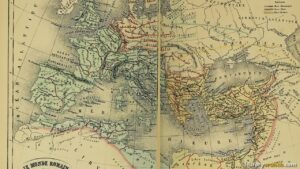
Ancient Rome was one of the most powerful civilizations in world history. It began as a small city-state on the Italian peninsula and grew over many centuries into a vast empire that stretched from Britain in the northwest to Egypt in the southeast. Roman civilization is remembered for its lasting contributions to law, government, architecture, language, and culture.
The Roman Empire was the final major period of this story. It began in 27 BCE, when Augustus became the first Roman emperor, and lasted in the west until 476 CE. During the empire, a single ruler called the emperor held supreme power, supported by a large army and a network of provincial governors who managed the territories Rome controlled. It was during this imperial period, and especially in its first three centuries, that the persecution of Christians took place.
Religion sat at the very center of Roman public life. Romans worshipped many gods, and they believed that honoring these gods through sacrifices, festivals, and processions protected the empire from disaster. In addition, many emperors were treated as divine after death, and loyal citizens were expected to take part in the imperial cult, which was the worship of the emperor. Because religion and loyalty to the state were tied so closely together, a person who refused to worship the gods could be seen as an enemy of Rome itself.
Why Did the Romans Persecute Christians?
The main reason Christians were persecuted was their belief in one God, which clashed with the many gods of Roman religion. Romans were usually tolerant of foreign religions and often welcomed new gods into their own collection of deities. Christianity, however, was different. Christians insisted that there was only one true God and refused to honor any other, which set them apart from almost every other group in the empire.
More specifically, Christians would not offer sacrifices to the Roman gods or to the emperor. To most Romans, this refusal looked like disloyalty and even treason, since taking part in these rituals was seen as a public duty. In reality, many Romans came to view Christians with suspicion and blamed them for angering the gods and bringing misfortune on the community. Rumors also spread that Christians took part in strange and shameful practices, which made them even more unpopular.
For these reasons, persecution was often driven by ordinary people and local officials rather than by the emperor in Rome. Neighbors sometimes accused Christians before governors, who then had to decide what to do. As a result, the treatment of Christians could vary widely from one province to another and from one year to the next.
How Did Persecution Begin Under Nero?
The first major persecution of Christians took place under the emperor Nero in 64 CE. In that year, a huge fire, later known as the Great Fire of Rome, swept through the city and destroyed large portions of it. Rumors spread that Nero himself had ordered the fire, and to protect his own reputation he needed someone else to blame.
Nero pointed the finger at the small Christian community in Rome, accusing them of setting the fire. Many Christians were arrested and put to death in brutal ways, including being burned alive and thrown to wild animals for public entertainment. According to Christian tradition, the apostles Peter and Paul were both killed in Rome around this time.
Nero’s actions set a dangerous example for the future. By treating Christians as scapegoats during a crisis, he made it acceptable to single them out and punish them whenever trouble struck the empire. Even so, this early persecution was mostly limited to the city of Rome and did not spread across the whole empire.
How Were Christians Treated in the Second Century?
For much of the second century CE, persecution remained local and irregular rather than organized from the top. A key piece of evidence comes from the early years of that century, when a Roman governor in a province in modern-day Turkey wrote to the emperor Trajan asking how to handle people accused of being Christians. The emperor’s reply became an unofficial guide for how the Roman state dealt with Christians for the next century and a half.
Trajan’s guidance was surprisingly cautious. He said that Christians should not be hunted down or sought out, and that anonymous accusations should be ignored. However, if a person was properly accused and refused to worship the Roman gods, they could be punished. In fact, anyone who agreed to make a sacrifice to the gods would be pardoned, no matter what they had believed before.
This policy meant that persecution flared up in some places and remained quiet in others. During the reign of Marcus Aurelius later in the second century, several local persecutions took place, and some famous Christians were put to death. Still, there was no empire-wide campaign to destroy Christianity during this period, and the religion continued to spread quietly through Roman towns and cities.
What Were the Great Persecutions of the Third Century?
The pattern of scattered, local persecution changed dramatically in 250 CE, when the emperor Decius issued a sweeping order. He commanded that everyone in the empire make a sacrifice to the Roman gods and obtain a certificate to prove they had done so. This edict was partly a response to invasions and troubles facing the empire, and Decius believed that uniting the people in worship would win the favor of the gods and protect Rome.
The Decian persecution was the first time the Roman state tried to force religious conformity across the entire empire at once. Christians who refused to sacrifice faced imprisonment, torture, and death. Many Christians gave in and made the required offerings, while others held firm and became martyrs, meaning people who die for their faith. This crisis caused deep divisions within Christian communities over how to treat those who had given in.
A short time later, the emperor Valerian launched another wave of persecution in the 250s CE, targeting Christian leaders and confiscating church property. This campaign ended suddenly when Valerian was captured by the Persians during a war in the east. His successor then issued the first official order of toleration, which allowed Christians to worship and gave back some of their places of worship, though it did not make Christianity fully legal.
What Was the Great Persecution Under Diocletian?
The last and most severe persecution of Christians is known as the Great Persecution, and it began under the emperor Diocletian in 303 CE. On February 24th of that year, Diocletian issued the first of several harsh edicts against Christians. Churches were to be torn down, Christian sacred writings were to be burned, and Christians were to lose their legal rights and public positions unless they gave up their faith.
Later edicts went even further. They ordered Christian clergy to be arrested and pressured to sacrifice to the gods, and a final edict in 304 CE demanded that all people in the empire gather in public to offer sacrifices. Those who refused faced imprisonment, torture, and execution, and many Christians across the empire died during these years.
The intensity of the Great Persecution varied by region. It was harshest in the eastern parts of the empire, where Diocletian and his co-ruler Galerius were determined to stamp out the faith. In the west, the persecution was much milder, in part because the ruler there, the father of the future emperor Constantine, was not eager to enforce it. Despite all this effort, the persecution failed to destroy Christianity, and the number of believers continued to grow.
How Did the Persecution of Christians End?
The turning point came in 311 CE, when the dying emperor Galerius issued an edict of toleration that finally allowed Christians to practice their religion in peace. Two years later, in 313 CE, the emperors Constantine and Licinius agreed to the famous Edict of Milan. This proclamation established religious toleration for Christianity throughout the Roman Empire and directed that property taken from Christians during the persecutions be returned.
The Edict of Milan did not make Christianity the official religion of Rome, and it did not ban the traditional Roman gods. Instead, it granted all people the freedom to worship however they chose. For Christians, this was a remarkable change, since the same state that had persecuted them for centuries now protected their right to worship openly.
Constantine himself became a strong supporter of Christianity and sponsored the building of major churches across the empire. Later in the fourth century CE, under the emperor Theodosius, Christianity became the official religion of the Roman Empire. In this way, the faith that had once been hunted and outlawed became the dominant religion of the Roman world.
Significance of Persecution of Christians in Ancient Rome
The persecution of Christians in Ancient Rome is significant because of how it shaped the growth and identity of Christianity. Rather than crushing the religion, the waves of persecution helped Christians define who they were and strengthened the resolve of many believers. The stories of the martyrs, who chose death over giving up their faith, became powerful examples that inspired later generations of Christians.
The persecutions also reveal a great deal about how the Roman Empire worked and what Romans valued. Because religion and loyalty to the state were so tightly linked, the refusal of Christians to worship the gods struck at the heart of Roman ideas about duty and unity. The changing treatment of Christians, from local suspicion to empire-wide campaigns, shows how much power emperors held over the daily lives and beliefs of their subjects.
Finally, the end of the persecutions marked a turning point in world history. Once Christianity gained legal protection and then official status, it spread rapidly and became the foundation of religious life in Europe for more than a thousand years. In this way, the struggle between the Roman state and the early Christians helped set the course for the culture and religion of the western world that followed.
Frequently Asked Questions
Why did the Romans hate Christians so much?
Romans distrusted Christians mainly because Christians refused to worship the Roman gods and the emperor, which looked like disloyalty to the state. Many Romans also believed that this refusal angered the gods and put the whole community in danger. On top of this, false rumors about secret Christian practices made ordinary Romans view them with fear and suspicion.
Which Roman emperor first persecuted Christians?
The emperor Nero was the first to launch a major persecution of Christians, in 64 CE. After a great fire destroyed much of Rome, he blamed the Christians and had many of them executed in cruel ways. This was the earliest recorded persecution ordered by the Roman government, though it was limited mostly to the city of Rome.
Were Christians really thrown to the lions?
Yes, some Christians were condemned to face wild animals in Roman arenas, though this punishment was not unique to them. Being sent to fight or be killed by beasts was a common punishment for many kinds of criminals in Rome, meant to be both a spectacle and a warning. It became closely linked to Christians because of the many martyr stories that were written and remembered afterward.
How long did the persecution of Christians last?
The persecution of Christians took place on and off for nearly 250 years, from Nero in 64 CE to the Edict of Milan in 313 CE. During most of that time, the treatment of Christians was local and occasional rather than constant across the whole empire. Only in the third century did emperors attempt to enforce empire-wide persecutions.
What was the Edict of Milan?
The Edict of Milan was an agreement made in 313 CE by the emperors Constantine and Licinius that granted religious toleration to Christians throughout the Roman Empire. It gave Christians the legal right to worship and ordered the return of property that had been taken from them during earlier persecutions. It did not make Christianity the official religion, but it allowed all people to worship freely and effectively ended the era of persecution.
Cite This Article
To cite this article as a source, use one of the formats below.
MLA: Millar, B. “Persecution of Christians in Ancient Rome: A Detailed Summary.” HistoryCrunch, 7 July 2026, https://historycrunch.com/persecution-of-christians-in-ancient-rome/.
APA: Millar, B. (2026). Persecution of Christians in Ancient Rome: A Detailed Summary. HistoryCrunch. https://historycrunch.com/persecution-of-christians-in-ancient-rome/
Chicago: Millar, B. “Persecution of Christians in Ancient Rome: A Detailed Summary.” HistoryCrunch. July 7, 2026. https://historycrunch.com/persecution-of-christians-in-ancient-rome/
Sources
- H.H. Scullard, From the Gracchi to Nero.
- Adrian Goldsworthy, How Rome Fell / Caesar (military and political).
- The Met (Heilbrunn Timeline) — Roman art