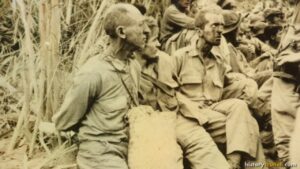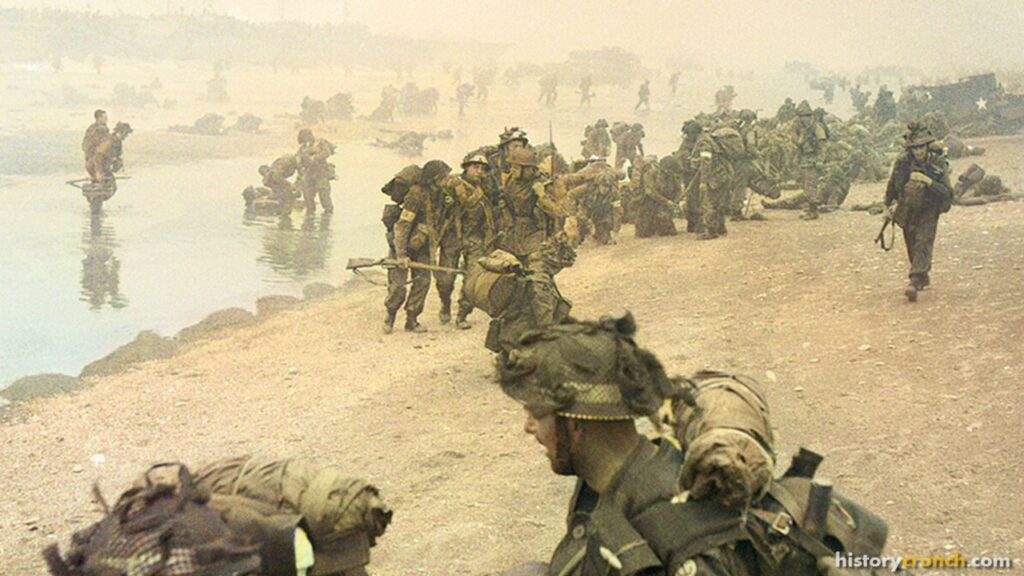
Britain in World War II was one of the most important participants in the Allied Powers and played a defining role in the eventual Allied victory. Britain entered the war on September 3rd, 1939, and for a period in 1940 and 1941 stood as the last major democratic power still fighting Nazi Germany in the Western world, following the fall of France and before the entry of the United States and the Soviet Union. Under the leadership of Prime Minister Winston Churchill, Britain refused to consider a negotiated peace with Nazi Germany and committed entirely to fighting the war through to victory. In total, approximately 383,000 British military personnel were killed during World War II, and Britain’s armed forces fought in campaigns stretching from Western Europe and North Africa to the Atlantic Ocean and the Far East.

Britain Enters World War II
World War II began on September 1st, 1939, when Nazi Germany, under the leadership of Adolf Hitler, invaded the country of Poland. Britain and France had both provided guarantees of Polish independence earlier that year, and when Germany refused to withdraw its forces from Poland, Britain formally declared war on Nazi Germany on September 3rd, 1939. Prime Minister Neville Chamberlain announced the declaration of war in a radio broadcast to the British nation that morning. France declared war on the same day.
In the months that followed, however, no major fighting took place between British and Nazi German forces. This opening period of the war, known as the ‘Phoney War‘, lasted from September of 1939 until May of 1940. Britain used this time to expand its armed forces and deploy the British Expeditionary Force, known as the BEF, to France in preparation for the expected Nazi German offensive. As well, the British government implemented conscriptionA law that forces people to join the military or war industries whether they choose to or not. and began expanding industrial production for war. Furthermore, they introduced preparations for the defense of the civilian population at home, including: the distribution of gas masks and the construction of air raid shelters.
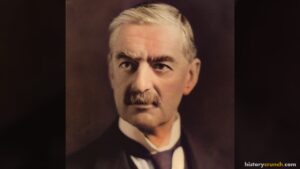
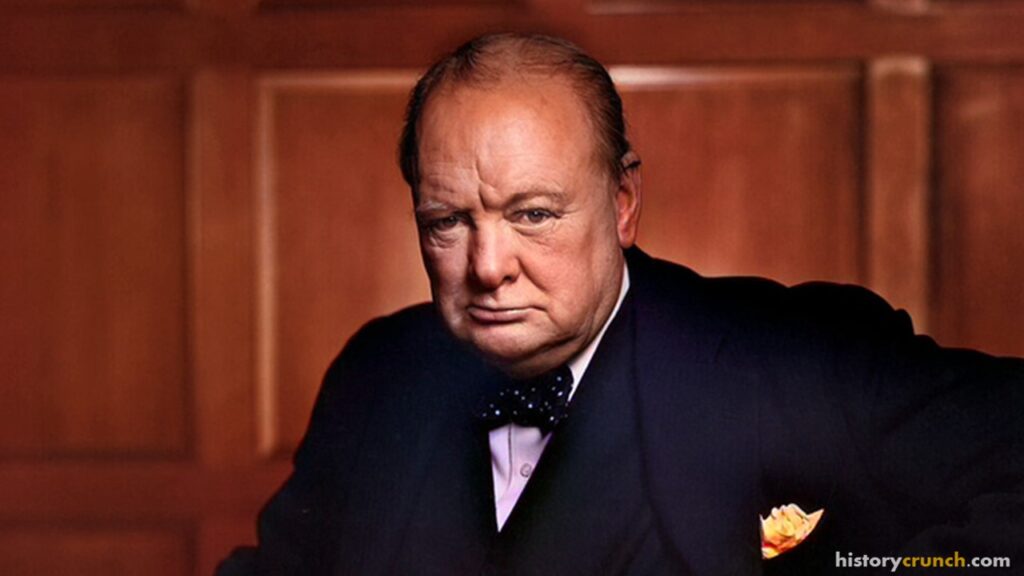
It should also be noted that the political situation in Britain changed dramatically on May 10th, 1940, the same day that Nazi Germany launched its invasion of France in the Battle of France. Neville Chamberlain, whose policy of appeasement toward Nazi Germany had been widely criticized, resigned as Prime Minister and was replaced by Winston Churchill. Churchill, who had long warned against the dangers of Nazi Germany, took office with a commitment to fight the war without compromise and delivered some of the most famous speeches in British history in the weeks and months that followed.
FactsthatCrunchYou can imagine what a bitter blow it is to me that all my long struggle to win peace has failed. Yet I cannot believe that there is anything more or anything different that I could have done and that would have been more successful.
Neville Chamberlain · Cabinet Room, 10 Downing Street, London · September 3rd, 1939
British Prime Minister Neville Chamberlain spoke these words in a radio broadcast at 11:15 a.m. on the 3rd of September, 1939, two days after Germany invaded Poland. Earlier that morning, Britain had demanded that Germany pull its troops out of Poland, and Germany gave no answer, so Britain was now at war. In this passage Chamberlain admits that his years of work to keep the peace, including his policy of appeasement, had failed.
Britain in World War II – Army
Britain’s armed forces in World War II consisted of the British Army, the Royal Navy, and the Royal Air Force, known as the RAF. Over the course of the war, approximately 4.7 million men and women served in British military forces, drawn from Britain itself as well as from across the British Commonwealth and Empire. For instance, soldiers from India, Australia, Canada, New Zealand, South Africa, and many other nations fought alongside British troops in campaigns across the multiple theaters of the war. Conscription was introduced for men between the ages of 18 and 41, and from December of 1941, women between the ages of 20 and 30 could also be conscripted into the auxiliary services or war industries. This means that they were forced to participate in the war effort by law.
As mentioned previously, Britain participated as one of the main members of the Allied Powers of World War II alongside the United States, the Soviet Union, China, and other nations. The opposing Axis Powers included Nazi Germany, fascist Italy, and Imperial Japan.
FactsthatCrunchBritain in World War II – Major Campaigns and Battles
British forces participated in several of the most significant campaigns and battles of World War II. The major campaigns and battles that British forces participated in included: the Dunkirk evacuation, the Battle of Britain, the Blitz, the North African campaign, the Italian Campaign, the D-Day landings in Normandy and the Northwest Europe campaign, and the war against Japan in the Far East.
The Dunkirk Evacuation
The first major crisis Britain faced in World War II came in May and June of 1940 during the Battle of France. When German forces launched their invasion of France on May 10th, 1940, they rapidly cut off the British Expeditionary Force and large numbers of French and Belgian troops by advancing through the Ardennes Forest and driving to the English Channel coast. By late May of 1940, the BEF had been pushed back to the beaches around the French port of Dunkirk and faced destruction or capture.
In response, Britain launched a massive naval and civilian evacuation operation, codenamed ‘Operation Dynamo’, between May 26th and June 4th, 1940. The operation involved Royal Navy vessels, merchant ships, and hundreds of small private boats crossing the English Channel to evacuate troops from the beaches of Dunkirk. In total, approximately 338,000 British and French soldiers were rescued from Dunkirk, though they were forced to leave behind vast quantities of weapons, vehicles, and equipment. Churchill was careful to remind the British public that evacuations do not win wars, but the successful rescue of so many soldiers was a major boost to British morale at a desperate moment.
FactsthatCrunchBetween May 26th and June 4th, 1940, about 338,000 British, French and other Allied soldiers were rescued from Dunkirk.
Navy ships and hundreds of small civilian boats carried them across the English Channel to Britain. The army had to leave most of its tanks, guns and trucks behind in France.
The Battle of Britain
Following the fall of France in June of 1940, Britain stood alone as the last major Allied nation still fighting Nazi Germany in Western Europe. Adolf Hitler hoped that Britain could be forced into a negotiated peace, but Churchill firmly rejected any such possibility. As a result, Nazi Germany began planning an invasion of Britain, codenamed ‘Operation Sea Lion’, which required first gaining control of the skies over southern England.
As a result, the Battle of Britain was fought between the Royal Air Force and the German LuftwaffeThe German air force that fought against Britain’s Royal Air Force during the Battle of Britain. from July 10th to October 31st, 1940. The Luftwaffe launched a series of major air campaigns against British airfields, radar stations, and cities, with the goal of destroying the RAF and clearing the way for a German invasion. RAF Fighter Command, under Air Marshal Sir Hugh Dowding, defended Britain’s skies with Spitfire and Hurricane fighter airplanes, making effective use of radar and a coordinated ground control system that gave British pilots a significant tactical advantage. The RAF successfully held off the Luftwaffe, and in September of 1940 Hitler postponed Operation Sea Lion indefinitely. The Battle of Britain was the first major defeat of the war for Nazi Germany and demonstrated that Britain could not be easily knocked out of the conflict. Churchill famously paid tribute to the RAF pilots who fought the battle, stating that “never in the field of human conflict was so much owed by so many to so few”.
Britain and the Blitz
Following their failure in the Battle of Britain, Nazi German forces shifted their strategy to a sustained bombing campaign against British cities, known as the ‘Blitz‘. The Blitz began on September 7th, 1940, with a major attack on London, England, and continued until May of 1941. Over the course of the campaign, Nazi German bombers attacked London every night for 57 consecutive nights, and other major British cities including Coventry, Birmingham, Liverpool, Plymouth and Southampton were also heavily bombed. In total, over 43,000 British civilians were killed during the Blitz and hundreds of thousands of homes were destroyed or damaged.
Despite the enormous destruction and loss of life, the Blitz failed to break British morale or force Britain out of the war. The British government and civilian population showed remarkable resilienceThe ability of a person or group to keep going and recover despite severe hardship or destruction. throughout the campaign, and essential services and industrial production continued to function. The King and Queen chose to remain in London throughout the Blitz, visiting bombed areas and maintaining public morale. As such, the Blitz became one of the defining experiences of Britain in World War II and a powerful symbol of British endurance.
Britain in the North African Campaign
British forces also played a central role in the North African campaign, which lasted from 1940 to 1943. Italy had entered the war on the side of Germany on June 10th, 1940, and Italian forces in Libya launched an invasion of British-controlled Egypt in September of 1940. British forces initially pushed the Italians back, but the arrival of the German Afrika Korps under General Erwin Rommel in February of 1941 transformed the situation. A series of advances and retreats followed as British and Axis forces fought across the deserts of Libya and Egypt over the following two years.
The decisive turning point in the North African campaign came at the Second Battle of El Alamein, fought from October 23rd to November 11th, 1942. The British Eighth Army, under General Bernard Montgomery, defeated Rommel’s forces and drove them into retreat across North Africa. The victory at El Alamein was one of the first major Allied land victories of the war and was a turning point in British fortunes. Following the Allied landings in North Africa in November of 1942, Axis forces were gradually squeezed from both directions and surrendered on May 13th, 1943, bringing the North African campaign to an end.
FactsthatCrunchFrom October 23rd to November 11th, 1942, the British Eighth Army under General Bernard Montgomery fought Rommel's forces in the deserts of Egypt and delivered a decisive defeat that drove the Afrika Korps into full retreat across North Africa.
Two years of back-and-forth fighting across Libya and Egypt, with no clear Allied advantage on land
Axis forces retreated steadily, were squeezed from both directions, and surrendered in North Africa on May 13th, 1943
Britain in the Italian Campaign and D-Day
Following the end of the North African campaign, British forces participated in the Allied invasion of Sicily on July 10th, 1943, and subsequently in the Italian Campaign that lasted until the end of the war in Europe in May of 1945. British forces under General Bernard Montgomery advanced up the eastern coast of Italy, fighting through a series of German defensive lines in some of the most difficult terrain of the entire war.
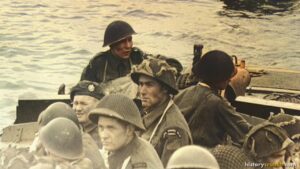
The most significant British contribution to the final defeat of Nazi Germany was the role played by British forces in the D-Day landings in Normandy, France, on June 6th, 1944. As part of the largest amphibiousA military operation that attacks from the sea onto land, using both naval and ground forces together. operation in history, British and Commonwealth forces landed on two of the five invasion beaches, codenamed ‘Gold’ and ‘Sword’, while Canadian forces landed on ‘Juno’. British airborne forces also landed by parachute and glider during the night before the invasion to secure key objectives. The overall land force commander for the D-Day operation was British General Bernard Montgomery. Following the successful landings, British forces fought through Normandy and then advanced through Belgium and into the Netherlands and Germany as part of the overall Allied advance that led to the German surrender on May 8th, 1945.
FactsthatCrunchIn what order did these British campaigns from North Africa to Germany unfold between 1943 and 1945?
Britain in the Far East
It should also be noted that Britain suffered major defeats in the Far East following Japan’s entry into the war in December of 1941. The fall of Singapore on February 15th, 1942, in which approximately 80,000 British and Commonwealth troops were taken prisoner by Japanese forces, was the largest surrender in British military history and a profound shock to British prestige. British forces also fought a long and difficult campaign in Burma from 1942 onward, where General William Slim commanded the Fourteenth Army in operations against Japanese forces. British and Commonwealth forces eventually drove Japanese forces out of Burma, and the Japanese surrender in August of 1945 brought the war in the Far East to an end.
Britain in World War II – Home Front
The British home front during World War II was shaped by the experience of total war, with the entire population mobilized to support the war effort. Food rationingA government system that limits how much food or other goods each person can buy to ensure fair sharing. was introduced in January of 1940 and extended progressively over the following months to cover a wide range of goods including: meat, butter, sugar, cheese, tea, and clothing. Rationing was intended to ensure fair distribution of essential goods and reduce waste, and it remained in force long after the end of the war.
The evacuation of children from major cities was another major feature of the home front experience. In the days before and after the outbreak of war, approximately 1.5 million children were evacuated from London and other major cities to the countryside to protect them from expected German bombing. This was one of the largest movements of people in British history and had lasting social consequences, bringing together children from very different social backgrounds in ways that were often surprising and at times difficult.
Women played an essential role in the British war effort. The National Service Act of 1941 made women between the ages of 20 and 30 eligible for conscription into the auxiliary services, munitions factories, or civil defense. As a result, large numbers of British women worked in aircraft factories, shipyards, and other war industries throughout the conflict. As well, women served in the Women’s Auxiliary Air Force, the Auxiliary Territorial Service, and the Women’s Royal Naval Service in roles ranging from radar operation and aircraft maintenance to logistics and administration.
The Home Guard was another important feature of British home front life during the war. Established in May of 1940 as the Local Defence Volunteers, the Home Guard recruited men who were either too old or too young for regular military service, or who worked in reserved occupations. At its peak, the Home Guard numbered approximately 1.5 million volunteers and provided local defense against the threat of German invasion and parachute landings.
FactsthatCrunchBritain began food rationing on January 8th, 1940, starting with bacon, butter and sugar.
Each person received a ration book, and meat, tea, cheese and eggs were later added to the list. Some foods stayed rationed until 1954, nine years after the war ended.
Britain in World War II – Significance
World War II was one of the most important and defining events in British history. First, Britain’s decision to fight on after the fall of France in June of 1940, at a time when Germany controlled most of Western Europe and no other major power had yet joined the fight, was one of the most important decisions of the entire war. Had Britain negotiated a peace with Nazi Germany at that point, the course of the war and the history of the 20th century would have been profoundly different.
Second, the experience of World War II transformed British society in important ways. The shared sacrifice of the war years created a strong sense of national unity and a widespread expectation that the postwar world should be more equal and more just than the prewar one. This sentiment contributed directly to the election of a Labour government in July of 1945, which went on to create the National Health Service and the foundations of the modern British welfare state.
Third, World War II accelerated the decline of the British Empire and Britain’s position as a global power. The enormous financial cost of the war left Britain deeply indebted, and the mobilization of nationalist movements in India and other colonial territories during the war years made it increasingly difficult for Britain to maintain its empire after 1945. As such, World War II was not only the conflict in which Britain played a central role in defeating Nazi Germany, but also the event that began the transformation of Britain from a global imperial power to a modern nation state.
FactsthatCrunch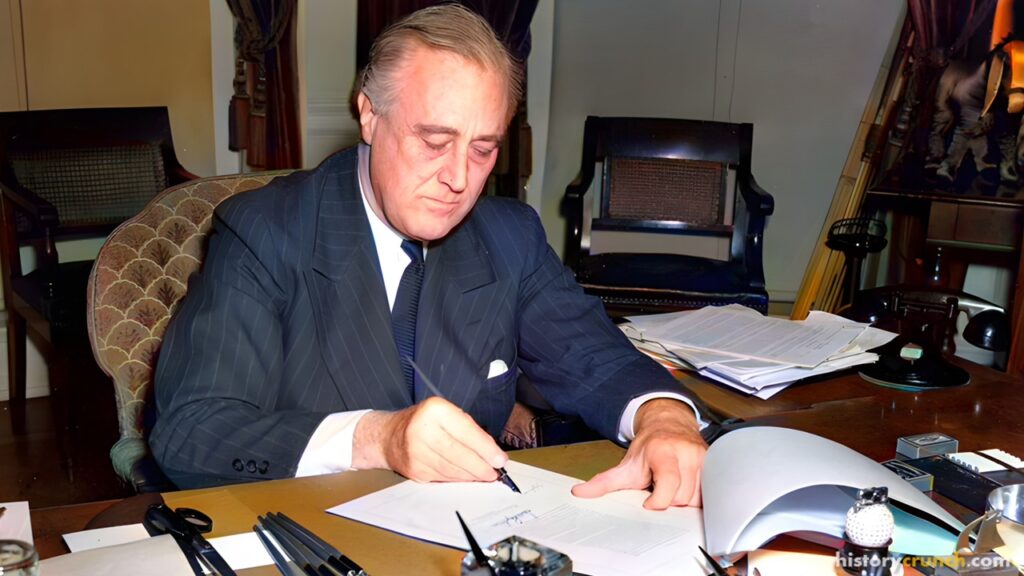 Black & whiteColor
Key Vocabulary
Appeasement
Conscription
Phoney War
Luftwaffe
Amphibious
Rationing
Resilience
Frequently Asked Questions
When did Britain enter World War II?
Britain declared war on Nazi Germany on September 3rd, 1939, two days after Germany invaded Poland. Britain and France had promised to protect Polish independence earlier that year. Prime Minister Neville Chamberlain announced the declaration in a radio broadcast that morning.
Why was the Battle of Britain important?
The Battle of Britain was the first major defeat of the war for Nazi Germany. The Royal Air Force held off the German Luftwaffe from July to October of 1940, which stopped a planned invasion. This showed that Britain could not be easily knocked out of the war.
How many soldiers were rescued at Dunkirk?
About 338,000 British and French soldiers were rescued from Dunkirk between May 26th and June 4th, 1940. The operation, called Operation Dynamo, used navy ships, merchant vessels, and hundreds of small private boats. The troops had to leave behind most of their weapons and equipment.
What was the Blitz?
The Blitz was a sustained German bombing campaign against British cities from September of 1940 to May of 1941. Over 43,000 British civilians were killed and many homes were destroyed. Despite the damage, the bombing failed to break British morale or force Britain out of the war.
How did World War II change Britain?
World War II transformed British society and sped up the decline of the British Empire. The shared sacrifice led to a Labour election win in July of 1945 and the creation of the National Health Service. The huge cost of the war left Britain deeply in debt and weakened its hold on its colonies.
What role did women play on the British home front?
Women were essential to the British war effort and could be conscripted from 1941 under the National Service Act. Many worked in aircraft factories, shipyards, and other war industries. Others served in the auxiliary forces in roles such as radar operation, aircraft maintenance, and logistics.
Cite This Article
To cite this article as a source, use one of the formats below.
MLA: Millar, B. “Britain in World War II: A Detailed Summary.” HistoryCrunch, 1 October 2026, https://historycrunch.com/britain-in-world-war-ii/.
APA: Millar, B. (2026). Britain in World War II: A Detailed Summary. HistoryCrunch. https://historycrunch.com/britain-in-world-war-ii/
Chicago: Millar, B. “Britain in World War II: A Detailed Summary.” HistoryCrunch. October 1, 2026. https://historycrunch.com/britain-in-world-war-ii/
Sources
- Antony Beevor, The Second World War.
- Gerhard L. Weinberg, A World at Arms.
- Imperial War Museum