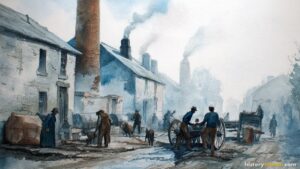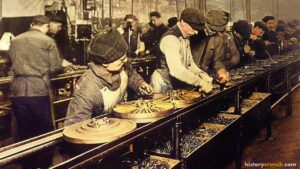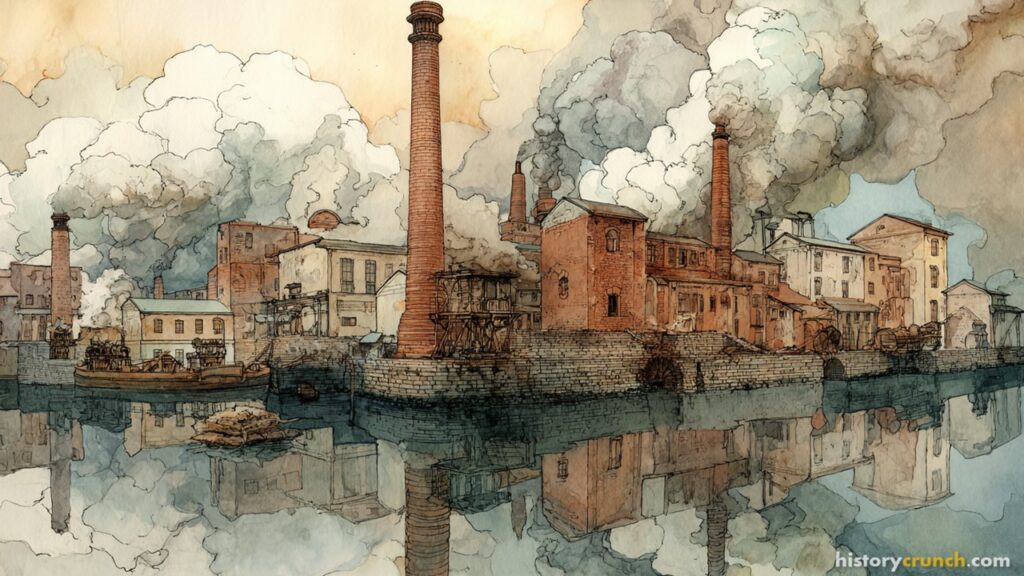
Before the innovations of the Industrial Revolution most production depended on water, wind or human energy. The businesses that existed at this time were called cottage industriesHome-based businesses where workers produced a limited amount of goods before large factories existed.. Cottage industries were an early stage of economic development in society in which workers produce a limited amount of goods in home-based businesses.
 FactsthatCrunch
Inventions of the Industrial Revolution – Agriculture
By the mid-1700s, new methods of production were being developed across Europe, especially in Great Britain. One key to the beginning of the Industrial Revolution in Britain was the revolution in agriculture that greatly increased the amount and variety of food produced. The change was referred to as the British Agricultural Revolution and led to several innovations, including:
- Charles Townshend’s discovery that fields did not have to be left fallowLand left unplanted for a season so the soil can recover its nutrients. if farmers would rotate the crops they planted in a field, allowed more food production.
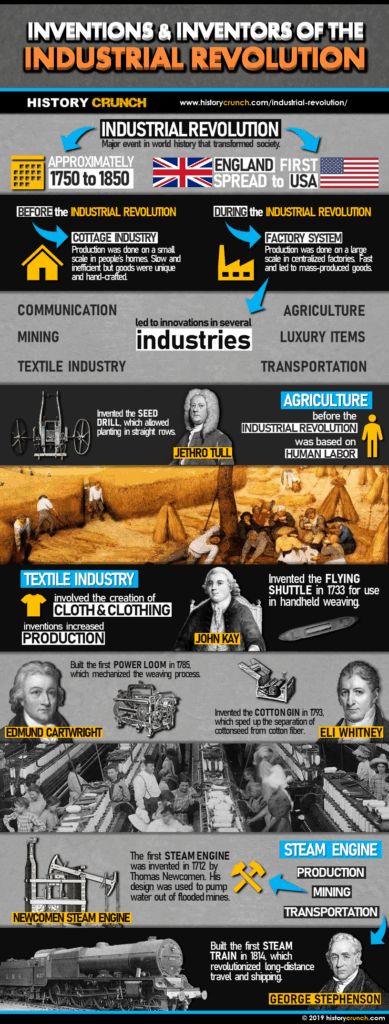
- Jethro Tull found a method of planting seeds that was better than the random scattering which made a tangle of crops and weeds. Tull developed a seed drillA machine that plants seeds in straight rows instead of scattering them randomly across a field. which planted the seeds in straight rows.
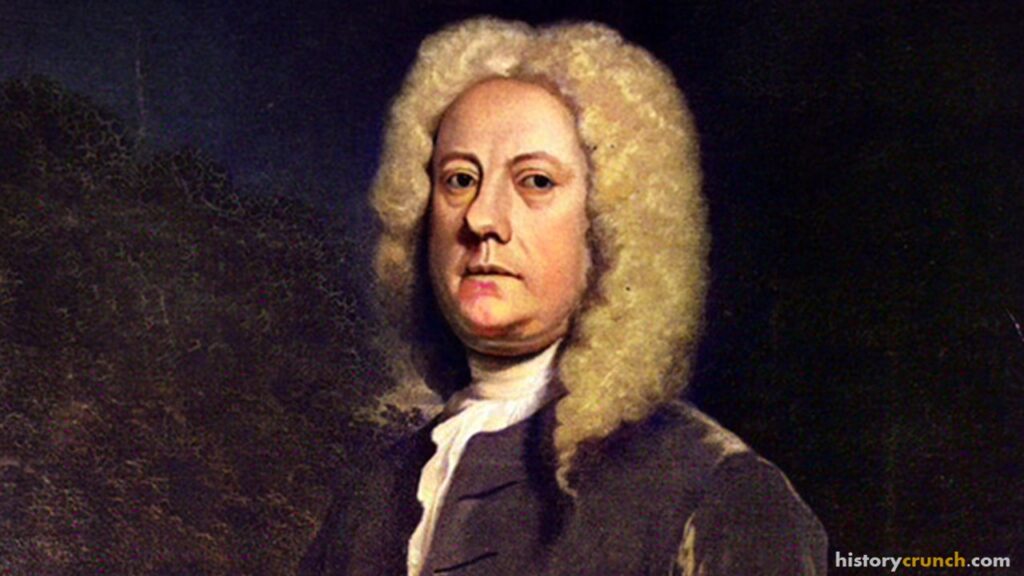
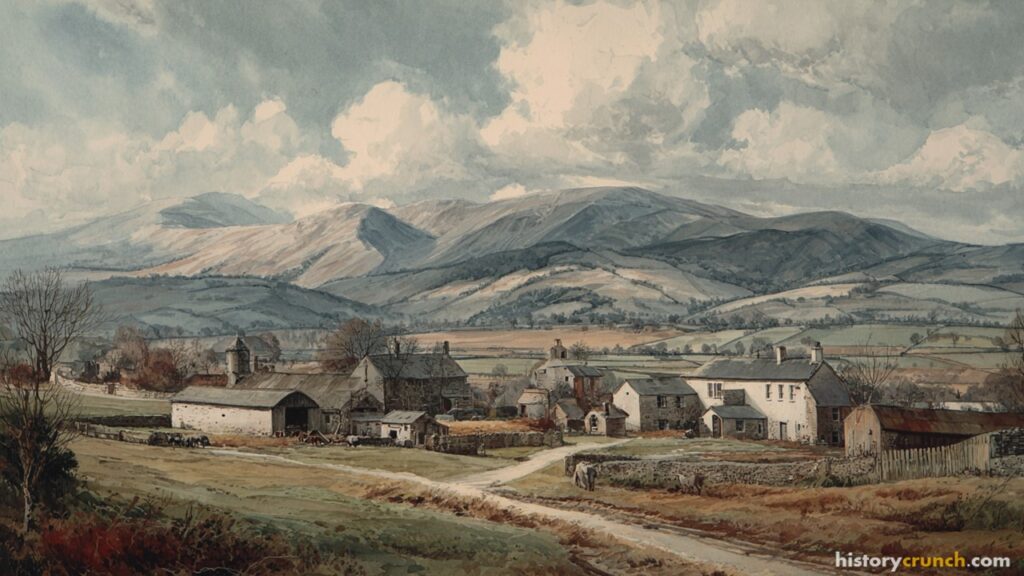
The British Agricultural Revolution set the stage for the Industrial Revolution. It led to increased food production and improved people’s diet and health and led to a rapid increase in population growth. With an increased population and lessened need for workers in the fields due to the increased production, it freed up many to leave the farms and move to the cities looking for work. The advances of the British Agricultural Revolution and the impacts it had on society would ultimately lead to many of the other innovations of the Industrial Revolution.
 FactsthatCrunch
How did Jethro Tull's seed drill change farming during the Industrial Revolution?
Before Tull's invention, farmers planted seeds by scattering them by hand across a field, which created a tangled mix of crops and weeds. Tull developed the seed drill, a machine that planted seeds in straight, even rows instead of spreading them randomly. This made crops easier to tend, reduced weed competition, and helped raise the amount of food farmers could grow.
Inventions of the Industrial Revolution – Textiles
One such industry that benefitted greatly from the innovations of the Industrial Revolution was the textile industry which is concerned with the production of cloth or clothing. The following had a profound effect on life during the Industrial Revolution:
- In 1733, the clockmaker John Kay invented the flying shuttle, which replaced the handheld shuttle used in weaving. His invention sped up the weaving process and allowed for faster production such that weavers were outpacing spinners.
- In 1764, James Hargreaves, a carpenter, developed a way to speed up spinning. He did this by attaching several spindles to a single spinning wheel. Using this spinning jenny, as it was called, a person could spin several threads at once.
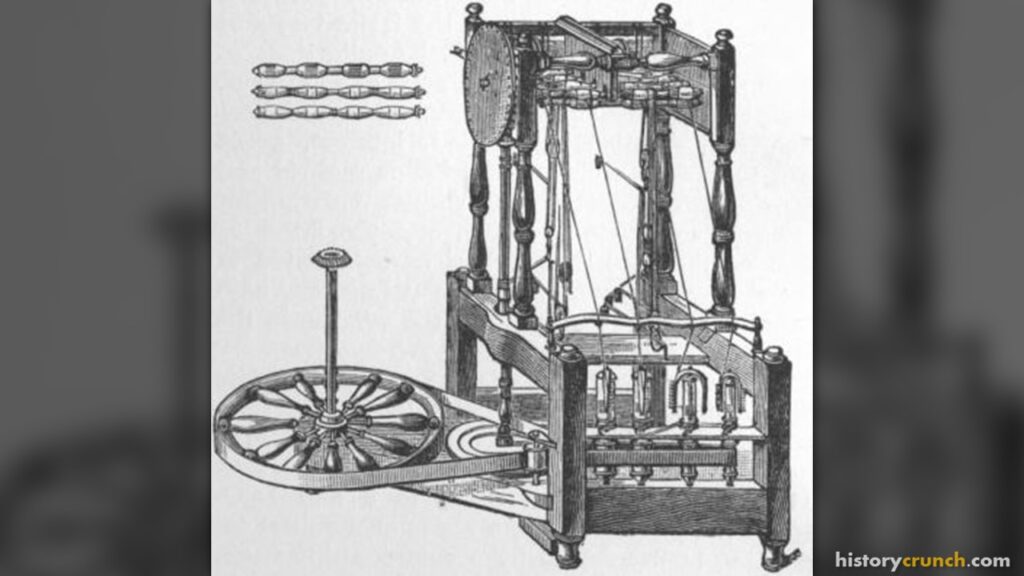
- In 1769, Richard Arkwright developed a spinning machine, called the water frame, that could hold many spindles and was capable of producing strong yarn. The machine replaced the need for manual labor and enabled the production of inexpensive spun cotton by the use of moving water from a creek or river. It was important at the time because cotton was used for clothing and other everyday items.
- In 1784, Edmund Cartwright designed the power loom, which he built for use in 1785. The device mechanized the loom and sped up the process of textile manufacturing.
- In 1793, the American Eli Whitney invented the cotton gin – a machine that automated and sped up the separation of cottonseed from the short-staple cotton fiber. The invention helped the British cotton industry because it increased the production of cotton and made it cheaper.
 FactsthatCrunch
In what order were these Industrial Revolution textile inventions developed?
Inventions of the Industrial Revolution – Steam Engine
The development of the steam engine would also have a profound effect on society and the overall Industrial Revolution. The following made dramatic advances in the development of the steam engine and putting it to other uses during the Industrial Revolution:
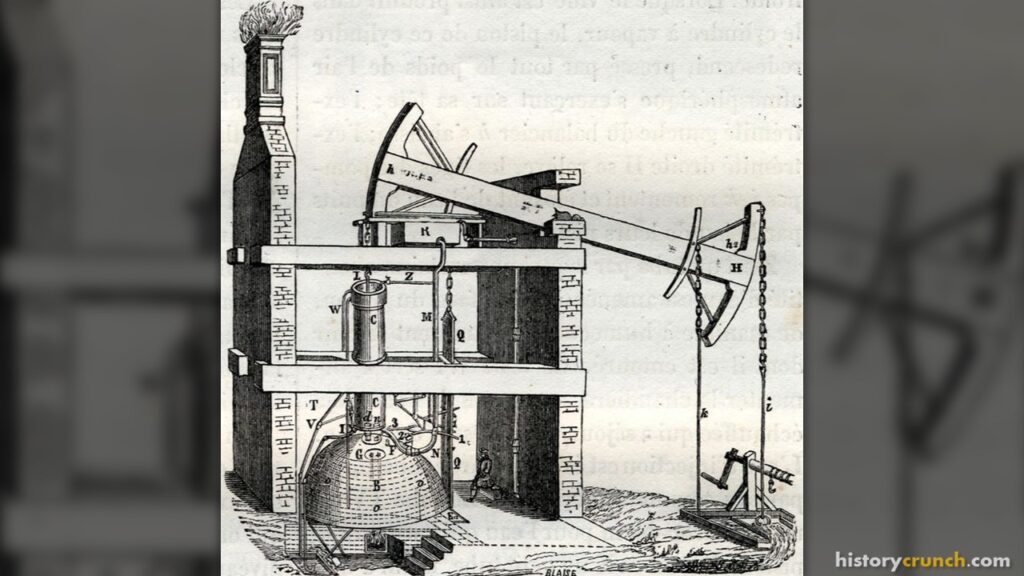
- The first steam engine was created by Thomas Newcomen in 1712. Newcomen produced items for tin mine owners who often complained that they were struggling to deal with flooding in their mines. Traditional methods of removing water from the mines were slow and hard work. Newcomen realized that he could help the tin mine owners. He developed a pump engine that used a piston in a cylinder; it was the first of its kind.
- In the 1760s, James Watt improved on and perfected the design first produced by Thomas Newcomen. In 1764, Watt was given a Newcomen steam engine to repair. He started working on it and soon realized that it was inefficient. As a result, Watt wanted to improve the design. He was successful, and found a way to prevent steam from escaping from the engine by adding a separate condensing chamberA separate compartment James Watt added to the steam engine to stop steam from escaping and wasting energy.. Watt patented his new steam engine design, and it paved the way for other mechanical design work.
- In 1807, Robert Fulton used steam power to create the first steamboat. His invention revolutionized travel and trade throughout Europe and in Britain in particular. The steam boat allowed more goods to be shipped by canal and waterways which furthered the impacts of industrialization.
- In 1814, George Stephenson utilized the steam engine to develop the first steam train. Similar to the steam boat, the steam train increased the ability of industrialized nations to transport people and goods long distances. This allowed industrialized nations, such as Britain, to move goods to market and to transport raw materials into factories.
 FactsthatCrunch
Inventions of the Industrial Revolution – Communication and Transportation
As the Industrial Revolution continued it led to many other inventions in other areas of society, including: communication technologies, transportation methods, and the overall methods of production.
- Discoveries in the field of electricity improved communication technologies. In 1866, the first underwater telegraph cable across the Atlantic Ocean was successfully installed, and ten years later, Alexander Graham Bell invented the telephone.
- In the late 1800s American Thomas Edison produced an amazing array of inventions. Among them were the phonograph and the incandescent light bulb.
- In 1886, German scientist Gottlieb Daimler devised an internal combustion engine that was fueled by gasoline and could power a small vehicle. His invention was one of the biggest advances in transportation technology since the development of the steam engine. Daimler would use his engine to create one of the first automobiles.
- An improvement in production was the introduction of the assembly line by Henry Ford in 1913. On an assembly lineA production method where building a product is broken into small tasks, each done by one worker at a fixed position., the complex job of assembling many parts into a finished product was broken down into a series of small tasks. It sped up production and reduced costs as each worker was only required to install one or two parts at their position on the assembly line. Ford would use the assembly line to speed up the production of automobiles in his factory in Highland Park, Michigan.
 FactsthatCrunch
In 1886, German engineer Gottlieb Daimler built a gasoline-powered internal combustion engine small and light enough to drive a vehicle. Unlike the large steam engines of the era, his engine burned liquid fuel directly inside its cylinders, producing power without a boiler or furnace. Daimler used this engine to build one of the first true automobiles.
Modern cars still run on the same basic principle Daimler introduced: fuel burns inside cylinders to push pistons and turn wheels. Today there are approximately 1.4 billion cars in use around the world. Electric vehicles are growing in number, but the internal combustion engine Daimler pioneered remains the dominant design in global transportation.
A single engine design developed in 1886 grew into the technology that now moves people and goods on every continent.
Inventions of the Industrial Revolution – Infographic
Industrial Revolution timeline · 1760 – 1840
Key Vocabulary
Cottage industries
Fallow
Seed drill
Spinning jenny
Water frame
Condensing chamber
Assembly line
Frequently Asked Questions
What were the most important inventions of the Industrial Revolution?
Key inventions included the steam engine, the spinning jenny, the water frame, the power loom, and the cotton gin. These machines sped up work in farming, textiles, and transportation. Later inventions like the telephone and the assembly line pushed industry even further. Together they changed how goods were made and moved.
Who invented the steam engine?
Thomas Newcomen built the first working steam engine in 1712. It used a piston in a cylinder to pump water out of flooded mines. In the 1760s, James Watt improved the design by adding a separate condensing chamber. His better engine used less fuel and powered many other machines.
How did the British Agricultural Revolution help start the Industrial Revolution?
The British Agricultural Revolution greatly increased how much food farmers could grow. New ideas like crop rotation and Jethro Tull’s seed drill raised production. Better diets led to a fast rise in population, and fewer farm workers were needed. Many people then moved to cities to look for factory jobs.
What inventions changed the textile industry?
The textile industry was transformed by machines that made cloth much faster. John Kay’s flying shuttle sped up weaving in 1733, and the spinning jenny let one worker spin many threads. Richard Arkwright’s water frame produced strong yarn using river power. The power loom and the cotton gin then made cloth cheaper and quicker to produce.
Who invented the assembly line?
Henry Ford introduced the moving assembly line in 1913 at his factory in Highland Park, Michigan. The job of building a product was split into small, simple tasks. Each worker added only one or two parts as items moved along the line. This method sped up production and lowered costs, especially for automobiles.
Cite This Article
To cite this article as a source, use one of the formats below.
MLA: Beck, Elias. “Inventions and Inventors of the Industrial Revolution: A Detailed Summary.” HistoryCrunch, 25 September 2026, https://historycrunch.com/inventions-and-inventors-of-the-industrial-revolution/.
APA: Beck, E. (2026). Inventions and Inventors of the Industrial Revolution: A Detailed Summary. HistoryCrunch. https://historycrunch.com/inventions-and-inventors-of-the-industrial-revolution/
Chicago: Beck, Elias. “Inventions and Inventors of the Industrial Revolution: A Detailed Summary.” HistoryCrunch. September 25, 2026. https://historycrunch.com/inventions-and-inventors-of-the-industrial-revolution/
Sources
- The Science Museum Group
- Joel Mokyr, The Enlightened Economy.
- Robert C. Allen, The Industrial Revolution: A Very Short Introduction.
- Emma Griffin, A Short History of the British Industrial Revolution.