The Industrial Revolution is one of the most significant events in all of world history and had a profound impact on the modern world. It began first in Britain in the 1700s but soon expanded to the rest of Europe and North America. When discussing the economics of the Industrial Revolution it’s first important to recognize that the early years of the Industrial Revolution were based on the principles of capitalism while the later years introduced more socialist beliefs.
 FactsthatCrunch
In 1771, Richard Arkwright opened a water-powered cotton mill at Cromford, Derbyshire, often called the first modern factory.
Before then, most cloth in Britain was spun and woven by hand in workers' own homes. Arkwright put workers and machines under one roof, powered by a local stream, and that pattern spread across Britain and later to Europe and North America.
New Innovations in the Industrial Revolution
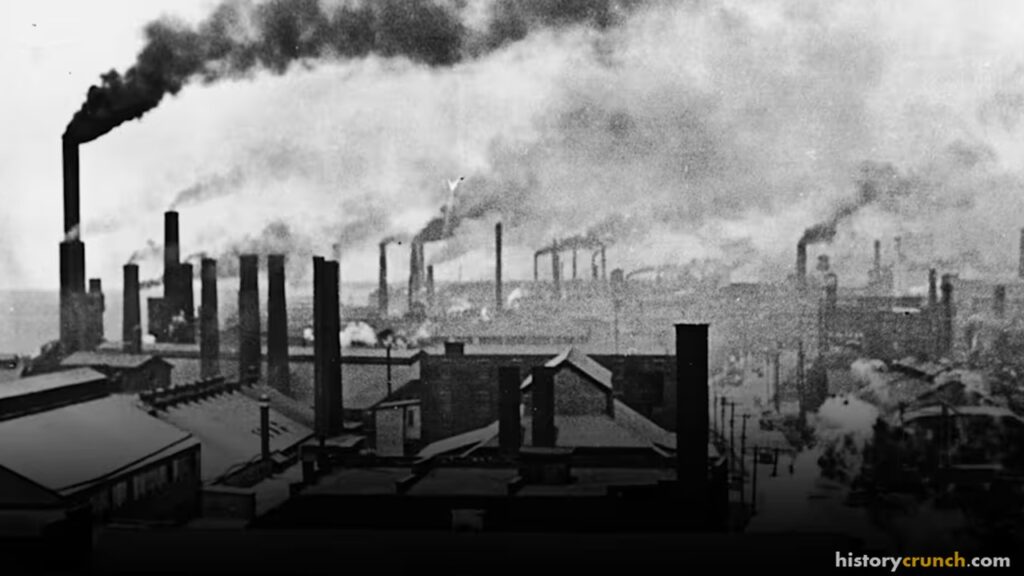
The Industrial Revolution is a significant event in world history because it transformed European and North American societies from being based on agriculture production to industrial production. This caused a mass migration of people from the rural countryside to the city-centers as people moved in search of work in the newly developed factories of the time.
Before the start of the Industrial Revolution, the production of goods was done on a very small scale. Historians refer to this method of production as the ‘cottage industry’. Simply put, the cottage industryA method of producing goods for sale on a small scale, usually inside a person’s home or on their own farm. refers to a period of time in which goods for sale were produced on a small scale, usually in a home. In this system, people produced goods, such as wool, in their homes or on their own farms and then sold them to local communities since long distance transportation was uncommon. This method of production was slow and inefficient and struggled to keep pace with the growing demand caused by the increased population. As a result, entrepreneurs and inventors sought ways to increase production, which ultimately led to the creation of the factory systemThe development of centralized factories or mills that produced goods on a large, mass scale..
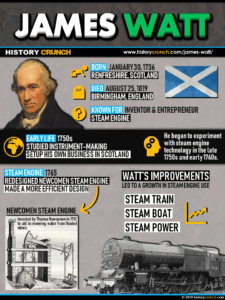
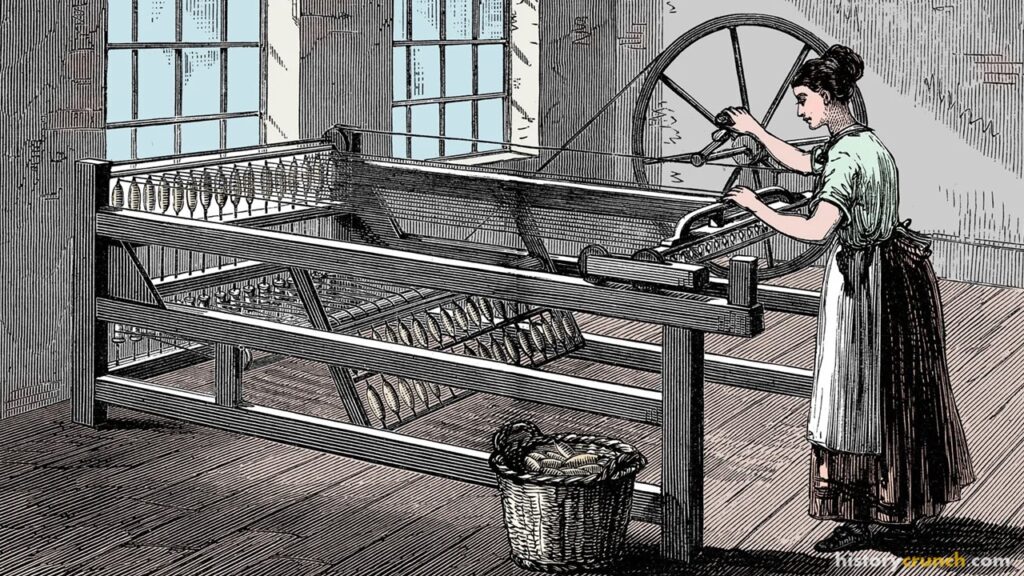
The factory system is a term that historians use to refer to the development of centralized factories or mills that produced goods on a mass scale. Throughout the 1700s, inventors such as Richard Arkwright, Eli Whitney, James Hargreaves, and Edmund Cartwright, developed machines and techniques that helped improve production, especially in terms of the textile industry. The textile industry was based on the development of cloth and clothing, and was the main industry that benefitted from the early developments of the Industrial Revolution. For example, some of the main textile related inventions of the Industrial Revolution included: power loom, spinning jenny, flying shuttle, water frame and cotton gin. Another important invention of the Industrial Revolution was the steam engine. The first practical steam engine was invented by Thomas Newcomen in 1712, to help in removing water from mines. However, James Watt later improved the design of the steam engine and made it a significant new addition to industrial production.
 FactsthatCrunch
Before and during the Industrial Revolution, two very different systems determined how everyday goods were made.
Economics in the Industrial Revolution – Capitalism
None of these technological and societal changes would have been possible without the emergence and development of capitalism. The European empires of the 16th through the 18th centuries were empires that existed primarily to increase trade and the wealth of the European nations. During this time, powerful European nations such as Spain, Portugal, England and France participated in intense economic and exploration based rivalries. The Age of Exploration shows this rivalry in the massive colonies that each European nation amassed, as they competed with each other for territories in the New World. At their height, these countries controlled large sections of the world as part of their vast empires.
At the foundation of these rivalries existed the economic system of mercantilism, which was the idea that colonies and trade should be strictly controlled to benefit the economy of the home (European) nation. MercantilismAn economic system in which colonies and trade were strictly controlled by the government to benefit the home European nation. was an economic system that was heavily regulated and controlled by the government and allowed very little freedom for individual people. This all changed with the introduction of capitalistic beliefs and values in the late 1700s.
As the 18th century went along, some people began to reject the principles of mercantilism. For example, in 1776 Scottish economist, Adam Smith, published his famous written work “An Inquiry into the Nature and Causes of the Wealth of Nations” which is just often shortened to “Wealth of Nations”. The book challenged the idea that the government should control the economy and instead proposed the idea of free trade and competition with a lesser role of the government. The ideas of this book would eventually lay the foundation for the principles of capitalismAn economic system that supports free trade and individual choice as a way of achieving prosperity., which is an economic system that supports the idea of free trade and choice as a way of achieving prosperity. The emergence of capitalism was vitally important to the start of industrialization and the Industrial Revolution.
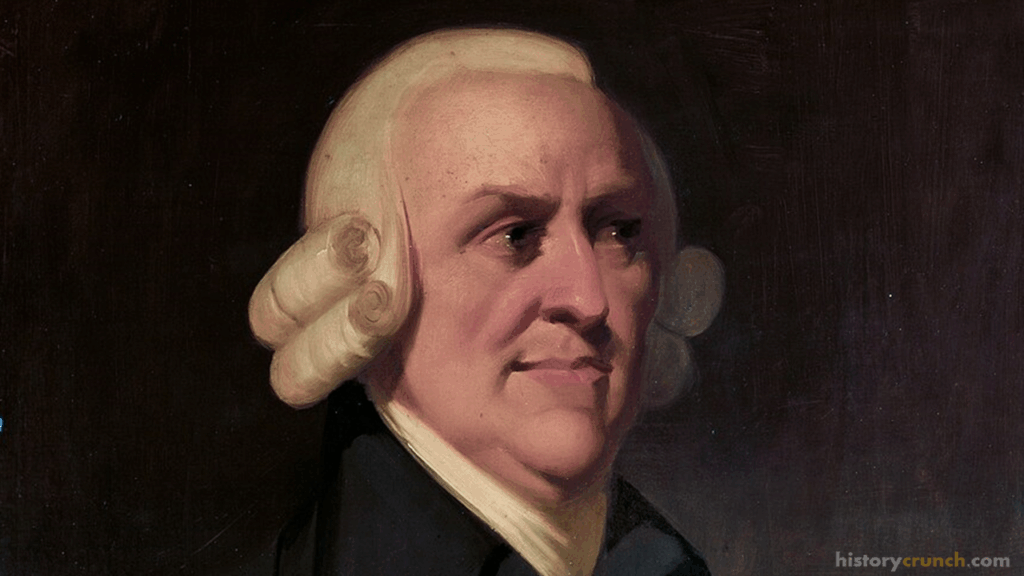
Capitalism caused the Industrial Revolution because industrialization required significant work and investment from individuals and not necessarily the government. For example, in Britain, where the Industrial Revolution began, wealthy entrepreneurs were important because they used their wealth to create factories and mines. This investment from individuals, whose actions were guided by the profit motive, would not have been possible without the emergence of capitalism. Furthermore, as the Industrial Revolution began the individualistic principles of capitalism helped create a climate wherein industrialization exploded, and eventually spread worldwide.
Capitalism was a central component of classical liberalism in the societies of the Industrial Revolution. Classical liberalismAn ideology based on economic individualism, including freedom, private ownership, competition, and self-reliance. was an ideology that was based on economic individualism and the principles of: economic freedom, private ownership, competition, self-interest and self-reliance. In general, all of these principles focused on little or no government intervention in the economy and as much economic liberty for individuals as possible. This contrasted with the previously mentioned mercantilism, which favored heavy government regulation and intervention. The economic ideals of classical liberalism first emerged in the 18th and 19th centuries and quickly shifted European society from mercantilism to capitalism.
Classical liberal societies were also based on the economic principles of laissez-faire capitalism. Often, laissez-faireA French phrase meaning ‘leave alone,’ describing a system where government stays out of the economy entirely. capitalism is also referred to as free market capitalism or market capitalism. Simply put, laissez-faire translates to ‘leave us alone’ meaning that the government should remain out of the economy and instead allow individuals to freely carry out their own economic affairs. Historically, laissez-faire capitalism was most common during the 18th and 19th centuries in the timeframe of the Industrial Revolution. As such, England during the Industrial Revolution is considered to be an example of a classical liberal society. At the time, it was a revolutionary idea, because in the previous centuries, mercantilism had been the dominant economic system which was discussed previously. However, prominent thinkers, including Adam Smith, began to argue against mercantilism in favor of an economic system with more freedom for individuals. The development of capitalism as an economic system, sought to reject the idea of government control of the economy and instead put the focus on individuals.
Adam Smith's The Wealth of Nations argued for a completely government-free economy.
Economics in the Industrial Revolution – Socialism
However, by the mid-1800s the economics of the Industrial Revolution began to shift with the emergence and development of socialism. During the early 19th century many people began to question whether or not laissez-faire capitalism was meeting the needs of all people in society. Laissez-faire capitalism was the dominant economic system in Europe at the time and, in general, was based upon little or no government intervention in the economy. In fact, some argued that laissez-faire capitalism was causing a wide income gap in society between business owners and the working class. Socialism developed as a response to how some felt about laissez-faire capitalism and its apparent failings. For example, early socialists argued that laissez-faire capitalism led to several issues of the Industrial Revolution, including: child labor, dangerous and dirty working conditions and a lack of basic workers’ rights. Therefore, socialism is a left-wing economic system that favors government intervention in the economy in order to try to decrease the imbalances created by laissez-faire capitalism. In general, socialism was favored by working class people, as it sought to create a more equitable distribution of income. With that said, historians acknowledge several different types of socialism that each formed over different periods of time. For instance, early socialist movements that developed in the timeframe of the Industrial Revolution included Utopian Socialism, Marxism, and Democratic Socialism. The central difference between these types of socialism is the degree to which they support government intervention and what types of political systems they are combined with.

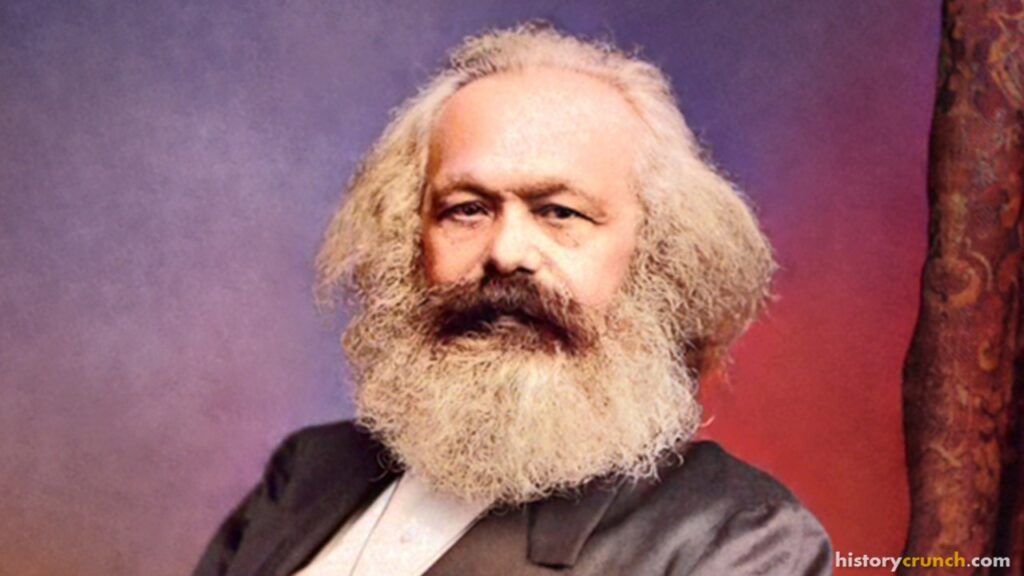
A central figure of the development of these socialist ideologies, which transformed the economies of the Industrial Revolution, was Karl Marx. Marx is perhaps one of the most influential philosophers of the last two centuries. His writings inspired revolutions in several countries and are still used today in support of worker’s rights and other socialist principles. His ideas are often associated with the timeframe of the Industrial Revolution since he witnessed and expressed concern for the horrible working conditions of the period. He is best known for writing (along with Friedrich Engels) The Communist Manifesto.
Written at the end of 1847, The Communist Manifesto was a political pamphlet first published in 1848 under the title ‘Manifesto of the Communist Party’. It was commissioned by the Communist League, an international communist organization that operated in Europe. Marx and Engels were associated with the Communist League and wrote The Communist Manifesto in order to clarify and articulate the ideas of the organization. In the pamphlet, Marx and Engels set forth the basic principles of Marxism that have gone on to influence many different thinkers and ideologies around the world.
The basic ideas of The Communist Manifesto were centered on the nature of society and the struggles between different classes. According to Marx and Engels, the only way to overthrow capitalism was by means of a class struggle between the proletariatThe industrial working class, as described by Marx and Engels in contrast to wealthy owners. (industrial workers) and the bourgeoisieThe wealthy owners of factories and property, whom Marx and Engels identified as the ruling class under capitalism. (wealthy owners). They argued that this workers’ revolution was necessary before any significant change could be made in society. In general, they discussed the failings of capitalism and sought to bring about a final revolution that would end the struggle between classes. For example, in The Communist Manifesto, Marx and Engels argued that a socialist society formed by workers should involve a move towards the following: a shift from private property to public property, factories controlled and owned by the proletariat, free public education for all children.
 FactsthatCrunch
In the writings of Karl Marx and Friedrich Engels, the proletariat is the industrial working class: people who earn wages by working in factories, mines, and mills but do not own the means of production. Marx and Engels argued that the proletariat was exploited by the bourgeoisie, the wealthy class that owned factories and property. In 'The Communist Manifesto,' published in 1848, they called on the proletariat to overthrow capitalism through class struggle.
Marx and Engels wrote that the proletariat, having no factories or land of their own, had no choice but to sell their labor to factory owners in order to survive.
Industrial Revolution timeline · 1760 – 1840
Key Vocabulary
Cottage industry
Factory system
Mercantilism
Capitalism
Laissez-faire
Classical liberalism
Proletariat
Bourgeoisie
Frequently Asked Questions
What economic systems shaped the Industrial Revolution?
Capitalism drove the early years of the Industrial Revolution, and socialism rose later in response. The early period rewarded private investment and free trade with little government control. By the mid-1800s, many workers pushed for change through socialist ideas. These two systems help explain the era’s economic story.
What was the cottage industry?
The cottage industry was a system where goods were made on a small scale, usually in people’s homes. Families produced items like wool and then sold them to nearby communities. This method was slow and could not keep up with rising demand from a growing population. That problem pushed inventors toward the factory system.
Why is Adam Smith important to the Industrial Revolution?
Adam Smith laid the foundation for capitalism with his 1776 book “The Wealth of Nations.” He argued against strict government control and supported free trade and competition instead. His ideas helped replace mercantilism, which had tightly regulated colonies and trade. These beliefs encouraged the private investment that fueled industrialization.
What is laissez-faire capitalism?
Laissez-faire capitalism is a system in which the government stays out of the economy and lets individuals handle their own affairs. The French phrase means “leave alone,” which sums up the idea. It was most common during the 18th and 19th centuries. England during the Industrial Revolution is often used as a key example.
Why did socialism develop during the Industrial Revolution?
Socialism grew as a response to the problems many people blamed on laissez-faire capitalism. Critics pointed to child labor, dangerous working conditions, and a wide gap between owners and workers. Socialism favored government action to create a fairer share of income. Karl Marx became one of its most influential voices during this time.
What did Karl Marx write about capitalism?
Karl Marx, with Friedrich Engels, wrote “The Communist Manifesto,” first published in 1848. It argued that capitalism could only be overthrown through a class struggle between workers and wealthy owners. The two men called for public property, worker-owned factories, and free public education for children. Marx’s ideas later inspired revolutions in several countries.
Cite This Article
To cite this article as a source, use one of the formats below.
MLA: Beck, Elias. “Economics in the Industrial Revolution: A Detailed Summary.” HistoryCrunch, 27 September 2026, https://historycrunch.com/economics-in-the-industrial-revolution/.
APA: Beck, E. (2026). Economics in the Industrial Revolution: A Detailed Summary. HistoryCrunch. https://historycrunch.com/economics-in-the-industrial-revolution/
Chicago: Beck, Elias. “Economics in the Industrial Revolution: A Detailed Summary.” HistoryCrunch. September 27, 2026. https://historycrunch.com/economics-in-the-industrial-revolution/
Sources
- Joel Mokyr, The Enlightened Economy.
- Robert C. Allen, The Industrial Revolution: A Very Short Introduction.
- Emma Griffin, A Short History of the British Industrial Revolution.
- The Science Museum Group