
The Age of Nationalism is the century in which the idea that a people should govern itself in its own state remade the map of Europe. This timeline runs from the fall of the Bastille in 1789 to the declarations of war in the summer of 1914: the French nation in arms, Napoleon's conquests and the peoples who rose against him, the Greek war, the revolutions of 1830 and 1848, Mazzini's Young Italy, Cavour and Garibaldi making Italy, Bismarck making Germany with blood and iron, the Habsburgs holding a dozen nations together, the Balkan wars, and the assassination at Sarajevo that turned nationalism into a world war. Every card sits on a real date and links to the article behind it.
From the Bastille to Sarajevo
The Age of Nationalism is the century in which the idea that a people should govern itself in its own state remade the map of Europe. This timeline runs from the fall of the Bastille in 1789 to the declarations of war in the summer of 1914: the French nation in arms, Napoleon's conquests and the peoples who rose against him, the Greek war, the revolutions of 1830 and 1848, Mazzini's Young Italy, Cavour and Garibaldi making Italy, Bismarck making Germany with blood and iron, the Habsburgs holding a dozen nations together, the Balkan wars, and the assassination at Sarajevo that turned nationalism into a world war. Every card sits on a real date and links to the article behind it.
From 1789: the people as the source of authority. Fichte added language and history, and the two definitions have argued ever since.
The Bastille turned loyalty to the king into loyalty to the nation.
It made every citizen a soldier. The levee en masse of 1793 was copied by Prussia in 1813 and by everyone by 1914.
A song for the army was written in a night.
By showing that a people could remake itself, and by giving them a foreigner to hate.
The Emperor of the French carried the Civil Code across Europe.
Because its makers had watched nationalism destroy the old Europe and drew borders to prevent it. Every rising for fifty years was against that map.
Poland, Italy and Germany were divided among kings.
They gave it songs, flags, legends and martyrs. Byron died for Greece and Delacroix painted Liberty on the barricade.
The Marseillaise was the first anthem for a people.
The French said a choice; Fichte said an inheritance. The Dreyfus affair and the Black Hand show where the second one leads.
Sovereignty in the nation, meaning the people who chose to be one.
By nine years of war, the sympathy of Europe and a naval battle the powers had not meant to fight.
The rising began in the Peloponnese in March of 1821.
France changed kings, Belgium became a country, Poland rose and lost. The Vienna map could be torn from below.
Three days of barricades brought down Charles X.
A united Italian republic won by the people. He got a united Italian kingdom won by diplomacy and died calling it a betrayal.
Young Italy was founded in exile in Marseille.
Because the Italian states could not beat Austria alone and a French republic destroyed the Roman one.
Milan threw the Austrians out in five days.
It made a Germany and had no one to give it to. The King of Prussia would not take a crown from a parliament.
The King of Prussia bowed to the dead of the barricades.
By using one nation against another: Croats against Hungarians, Russians against both.
Metternich fled in a laundry cart.
Railways, a modern army, the Crimean War, a deal in a spa and a war he provoked. Then Garibaldi did the rest.
He founded the newspaper that named the movement.
Speed, luck, a rotten Bourbon state and a leader whom Sicilian peasants thought was a saint.
He learned guerrilla war in South America.
Both, and neither could have done it without the other. Teano is where the two roads met.
Cavour's road ran through Paris.
Because the Zollverein of 1834 put Prussia at the head of German trade thirty-seven years before Bismarck put it at the head of Germany.
Eighteen states abolished the tariffs between them.
Three wars in seven years, each arranged so that Prussia's enemy appeared to start it.
He was hired to beat the Prussian parliament.
That Germany would be made by Prussian power, not by the speeches and votes that had failed in 1848.
Frankfurt's Germany had failed for want of an army.
It did not; Bismarck did. He needed France to attack so that the southern German states would fight beside Prussia.
The Ems telegram was cut to insult France.
Because Bismarck wanted France to understand what had happened. It did, and remembered until 1918.
Paris was starving ten miles away.
When the French garrison went home to fight Prussia, the Italian army walked in through a hole in the wall.
Mazzini's republic held Rome for a hundred days.
Because three empires had divided it and none would let it go. It rose in 1830 and 1863 and was reborn in 1918 from their ruins.
Vienna divided Poland among Russia, Prussia and Austria.
By playing them against each other and buying off the Hungarians. It lasted until 1918.
Every nation of the empire spoke at once in 1848.
New nations carved from the Ottoman Empire wanted more, and two great powers backed different ones.
Berlin made Serbia, Romania and Montenegro independent.
He built them to keep the peace and keep France alone. His successors let Russia go, and Europe split in two.
Germany and Austria promised to fight Russia together.
Bismarck had used it and then tried to keep it quiet. Wilhelm fed it, with a navy, colonies and speeches.
Three emperors reigned in one year.
It gave France a wound to nurse for forty-four years and a nationalism that turned, in the Dreyfus affair, on its own citizens.
Sedan ended the Second Empire in a day.
It did not start it alone. It wanted the Serbs of Bosnia, Austria would not give them up, and every great power had a treaty that said what it must do next.
Serbia was made independent at Berlin.
In August of 1914, with the nations it had made marching against each other.
Vienna had tried to draw a Europe without nations.
Greeks, Belgians, Italians, Germans, Serbs and Romanians did. Poles, Czechs, Croats and Irish waited until 1918 or later.
Greece was made by the great powers.
In 1789 a French peasant belonged to his village, his lord and his church. By 1815 he had been told that he belonged to France, that France belonged to him, and that he might have to die for it. The Revolution made the nation the source of all authority, gave it a flag, an anthem, a holiday and, in 1793, an army of every man in the country. Napoleon carried the idea across Europe on bayonets and the conquered learned two things from it: that a people could remake itself, and that they hated the French who had shown them. Fichte told the Germans they were a nation because of their language; Spain fought a guerrilla war in the name of a king it did not have; Prussia's king called his subjects 'My People' for the first time. At Leipzig in 1813 the nations beat Napoleon, and at Vienna in 1815 their kings drew a map of Europe as if none of it had happened.
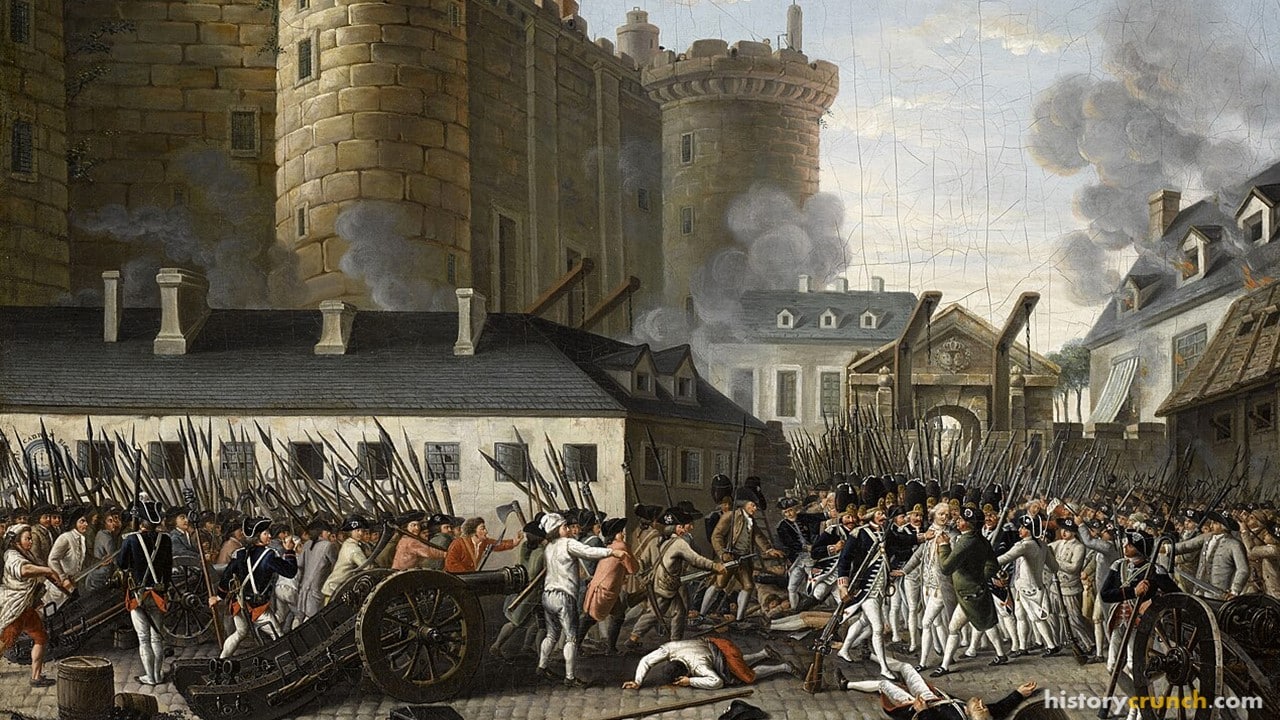
On July 14th, 1789 a Paris crowd stormed the Bastille, the royal fortress in the east of the city, looking for gunpowder and finding seven prisoners. Three weeks earlier the deputies of the Third Estate had declared themselves a National Assembly, the first body in French history to claim to speak for the nation rather than for the king. The word nation, which had meant a group of people born in the same place, began to mean the people as the source of all authority.
LEARN MORESHOW LESSwhy it matters · key numbersREVOLUTIONBefore 1789 a French peasant belonged to his village, his lord and his church. After it he was told he belonged to France, and that France belonged to him. That is the idea this whole timeline follows.
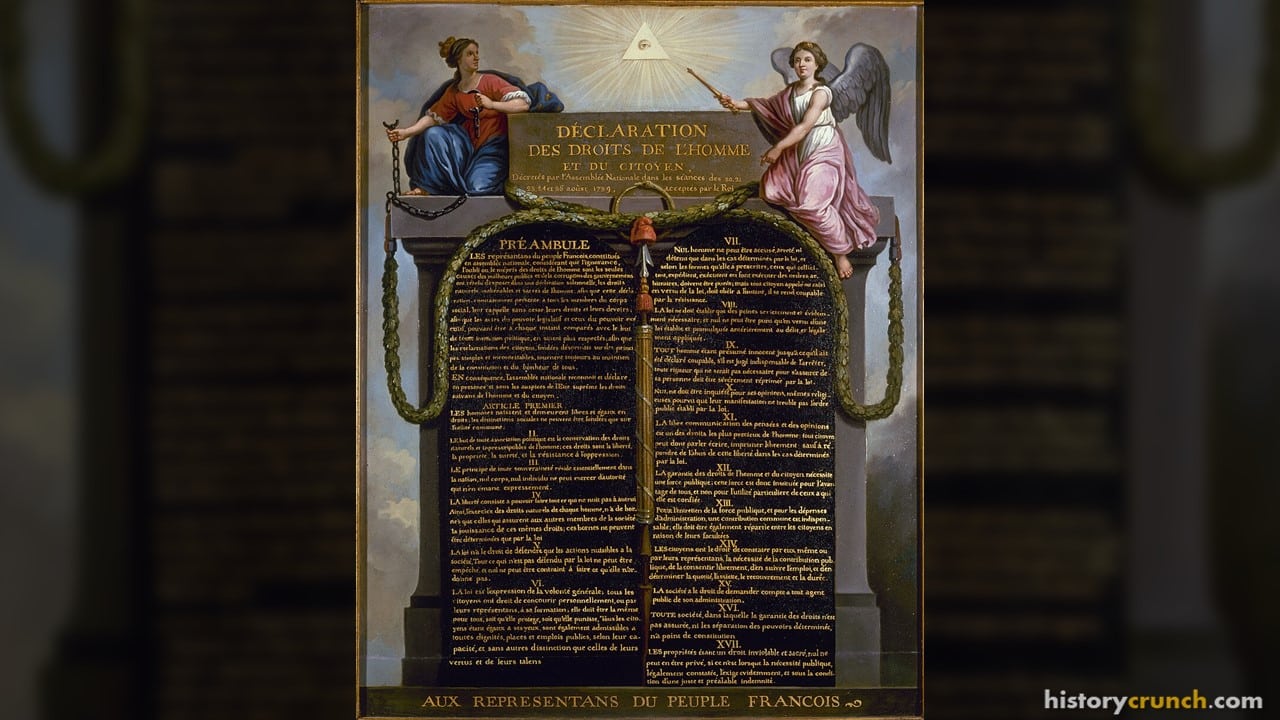
On August 26th, 1789 the National Assembly adopted the Declaration of the Rights of Man and of the Citizen. Its third article said that the source of all sovereignty lay essentially in the nation, and that no body and no individual could exercise authority that did not come from it. Kings had ruled by God's choice; now the nation chose. The document was printed, read from pulpits and translated across Europe within months.
LEARN MORESHOW LESSwhy it matters · a sourceLAWArticle 3 is the founding sentence of political nationalism. If the nation is sovereign, then every people that thinks of itself as a nation can claim the same, and by 1848 most of them had.
IN THEIR OWN WORDS“The principle of all sovereignty resides essentially in the nation.”
Declaration of the Rights of Man and of the Citizen, article 3, August 26th, 1789WHAT TO NOTICEfrom the official text
On July 14th, 1790, the first anniversary of the Bastille, about 300,000 people gathered on the Champ de Mars in Paris in the rain to watch delegations from every department of France, the king and the National Assembly swear an oath to the nation, the law and the king. Ordinary Parisians had spent weeks digging the earthworks for the arena by hand. Similar festivals were held in every town in France on the same day.
LEARN MORESHOW LESSwhy it matters · key numbersCEREMONYIt was the first national holiday in the modern sense: a whole country celebrating itself rather than a saint or a king. Every national day since, from July 4th to Bastille Day, descends from it.
France declared war on Austria on April 20th, 1792. Five days later, on the night of April 25th, an army engineer named Rouget de Lisle wrote words and music for a marching song for the Army of the Rhine at the request of the mayor of Strasbourg. Volunteers from Marseille sang it as they marched into Paris that summer, and it took their name. It was declared the national anthem in 1795.
LEARN MORESHOW LESSwhy it mattersSONGThe Marseillaise is the first national anthem written for a people rather than a monarch. Its call to arms was sung by revolutionaries across Europe for the next century, often in countries whose rulers had banned it.
On September 20th, 1792 a French army of about 50,000, half of them raw volunteers, faced a Prussian army advancing on Paris at Valmy in Champagne. After an artillery duel in the fog the French infantry, expected to run, stood and shouted 'Vive la nation'; the Prussians declined to attack and withdrew. The poet Goethe, who was with the Prussian army, wrote that a new epoch in world history had begun that day. The next morning the Convention in Paris abolished the monarchy.
LEARN MORESHOW LESSwhy it matters · a sourceBATTLEArmies had fought for kings and pay. At Valmy men fought for a nation, and the kings of Europe learned that a nation could fight back.
IN THEIR OWN WORDS“From this place and this day forth begins a new era in the history of the world.”
Johann Wolfgang von Goethe, at Valmy, September 20th, 1792WHAT TO NOTICEas he recorded it in his memoir of the campaign
On August 23rd, 1793, with France invaded on every frontier, the Convention decreed the levee en masse: until the enemy was driven from French soil, all Frenchmen were permanently requisitioned for the army. Young men would fight, married men forge weapons and carry food, women make tents and serve in hospitals, children turn old linen into lint, and old men preach hatred of kings in the public squares. By the next summer France had about 800,000 men under arms.
LEARN MORESHOW LESSwhy it matters · key numbersLAWThis is the birth of the nation in arms. Every state in Europe eventually copied it, and it is why the wars of the next century were fought by millions rather than tens of thousands.
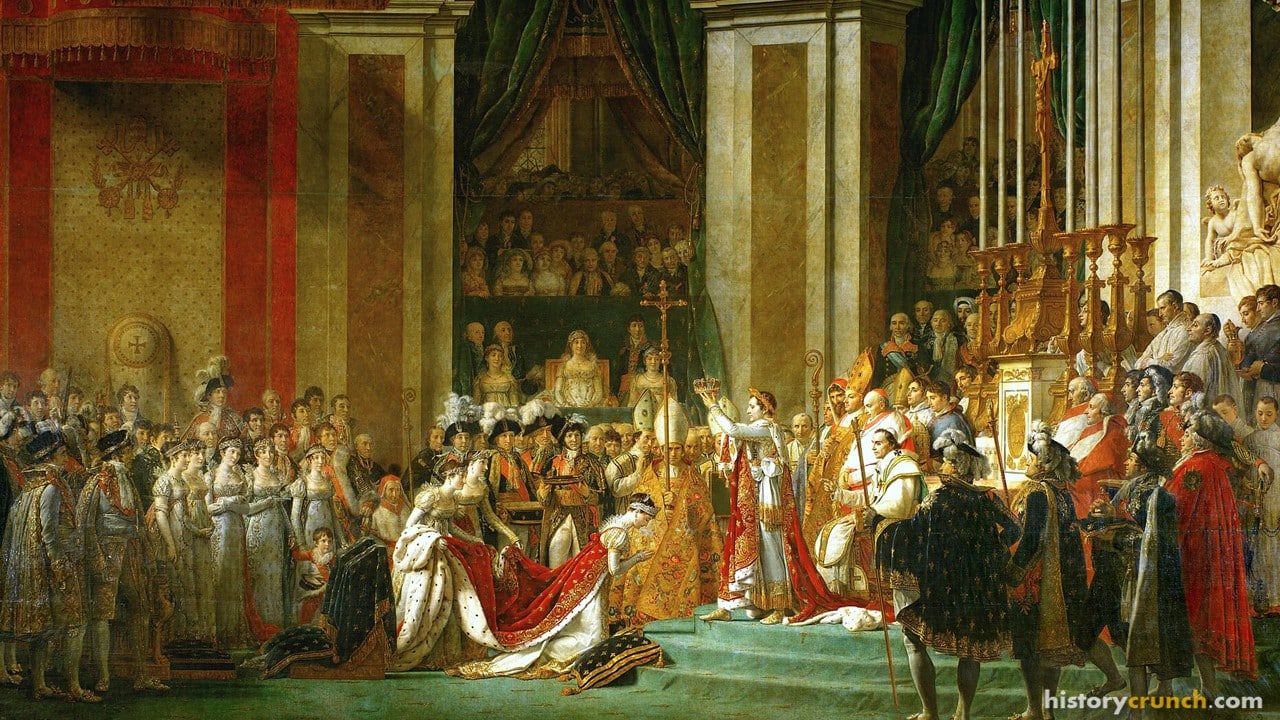
On December 2nd, 1804 Napoleon Bonaparte, who had seized power in 1799, crowned himself in Notre-Dame with the Pope looking on. His title was Emperor of the French, not of France: he ruled a people, and the people had approved him in a plebiscite by an official three and a half million votes. Over the next eight years his armies carried the Civil Code, equality before the law and French administration into Italy, Germany, Spain, Poland and the Netherlands.
LEARN MORESHOW LESSwhy it matters · 1 key figureCEREMONYNapoleon spread nationalism twice over. His armies taught the conquered that a people could remake itself, and his occupation taught them to hate the French who had done it.
On December 13th, 1807, in a Berlin occupied by French troops after Prussia's defeat at Jena, the philosopher Johann Gottlieb Fichte gave the first of fourteen Sunday lectures called Addresses to the German Nation. Germany, he said, did not exist as a state but did as a people, bound by a language older and purer than French, and the Germans could rise again only through a national education that taught them to love it. French officers sat in the audience and took no action.
LEARN MORESHOW LESSwhy it matters · a sourceIDEAFichte gave nationalism its second definition. The French had said a nation was people who chose to be one; Fichte said it was people who shared a language and a past, whether they chose or not.
IN THEIR OWN WORDS“The German alone can be a patriot; he alone can for the sake of his nation encompass the whole of mankind.”
Johann Gottlieb Fichte, Addresses to the German Nation, 1808WHAT TO NOTICEfrom the seventh address
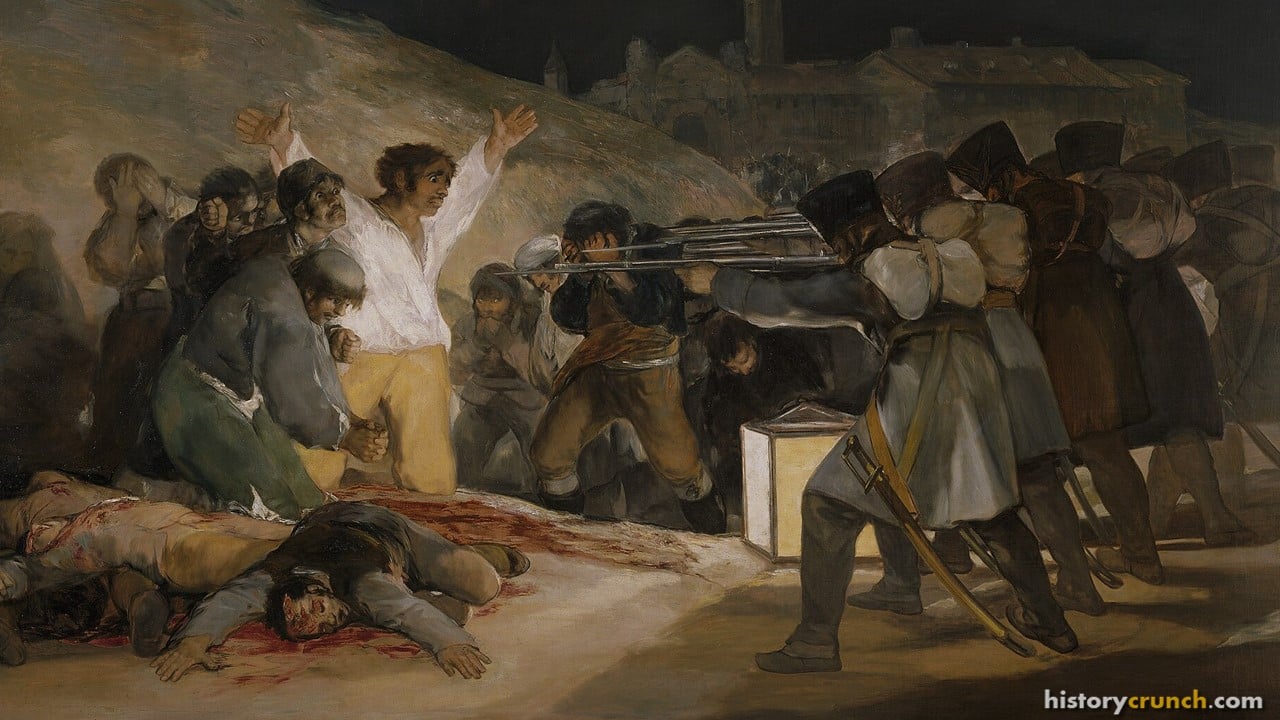
On May 2nd, 1808 the people of Madrid attacked the French garrison with knives and paving stones after Napoleon had taken the Spanish royal family to France. The rising was crushed and hundreds were shot the next morning, but within weeks provincial committees across Spain had declared war in the name of the absent king and the nation. For six years Spanish irregulars, the guerrillas, fought the French from every village, and the word entered every language in Europe.
LEARN MORESHOW LESSwhy it mattersUPRISINGSpain was the first country where a whole people, without an army or a government, fought a modern state to a standstill. Every nationalist rising of the next century looked back to it.
On March 17th, 1813 King Frederick William III of Prussia declared war on France and issued a proclamation addressed, for the first time by any Prussian king, 'To My People'. It called on Prussians, Brandenburgers, Silesians and Pomeranians as one people to fight for freedom from foreign rule. Universal conscription followed, volunteers poured into free corps, students wrote war poetry, and the army grew to about 280,000 by the autumn.
LEARN MORESHOW LESSwhy it matters · key numbersPROCLAMATIONA king who had ruled by divine right was asking his subjects for help as a nation. He got it, and neither he nor his successors could put the request back in the box.
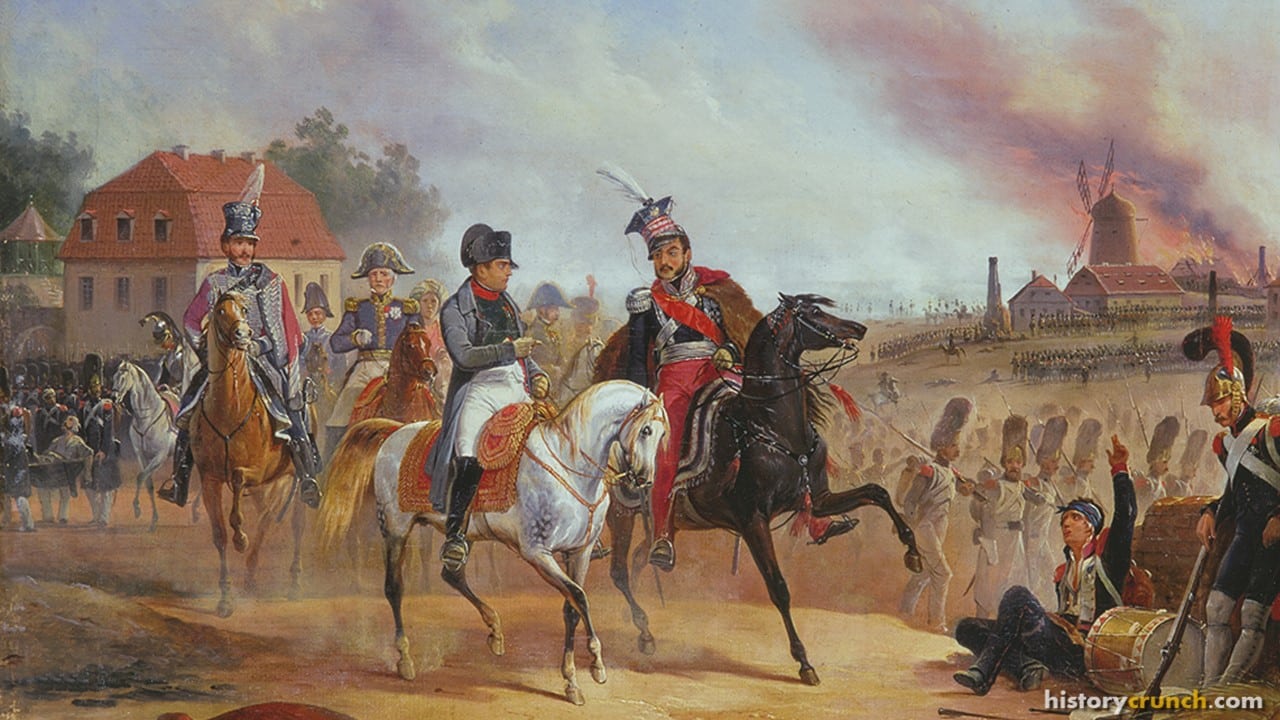
From October 16th to 19th, 1813 about 360,000 Russians, Prussians, Austrians and Swedes fought some 190,000 French and allied troops around Leipzig in Saxony, the largest battle in Europe before 1914. On the third day the Saxon troops in Napoleon's army changed sides in the middle of the fighting. The French retreated over a single bridge that was blown too early, and French rule east of the Rhine collapsed within weeks.
LEARN MORESHOW LESSwhy it matters · key numbersBATTLEThe name came later and said what Germans wanted it to mean: that the nations, not the kings, had beaten Napoleon. Every October 18th for a century Germans lit bonfires on the hills to remember it.
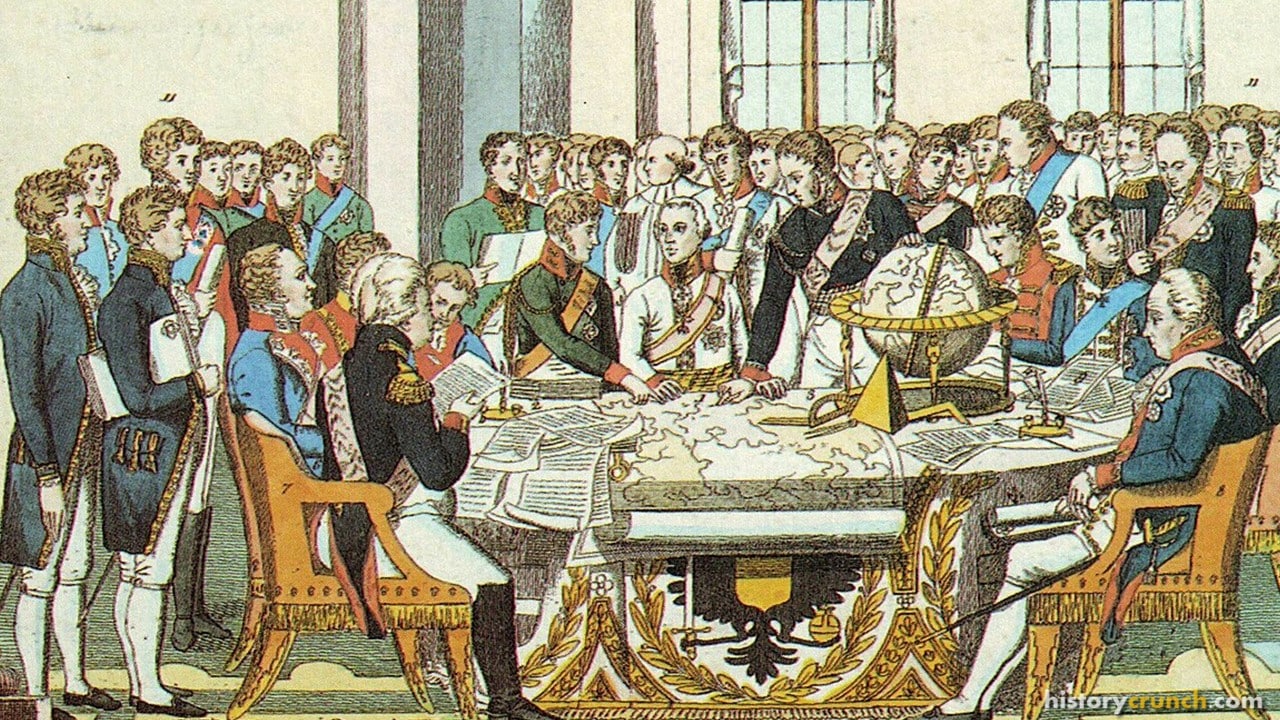
On June 9th, 1815 the powers that had beaten Napoleon signed the Final Act of the Congress of Vienna after nine months of negotiation. Poland was divided again among Russia, Prussia and Austria; Italy was cut into eight states with Austria holding Lombardy and Venice; the German lands were gathered into a loose Confederation of thirty-nine states under Austrian presidency; Belgium was handed to the Dutch king and Norway to the Swedish one. Nobody asked the people who lived in any of them.
LEARN MORESHOW LESSwhy it matters · key numbers · 1 key figureCONGRESSVienna was designed by men who had watched nationalism destroy the old Europe and meant to prevent it doing so again. Every nationalist rising of the next fifty years was a rising against this map.
For thirty years Metternich sat on the lid. German students met at the Wartburg in 1817 and burned reactionary books; the Carlsbad Decrees closed the universities' mouths two years later. The Carbonari rose in Naples and were put down by an Austrian army. But the pot kept boiling. The Greeks fought their way out of the Ottoman Empire, with Byron's death and a fleet the great powers had not meant to use, and in 1830 Europe recognized its first new nation since Vienna. That same year Paris rose in three days, Belgium broke from Holland, and Poland rose against Russia and lost. Mazzini founded Young Italy in 1831 and Young Europe in 1834 on the principle that every people deserved a state; the Zollverein united Germany's markets under Prussia the same year; and Cavour, who believed none of Mazzini's theology, started a newspaper in Turin in 1847 and called it The Resurgence.
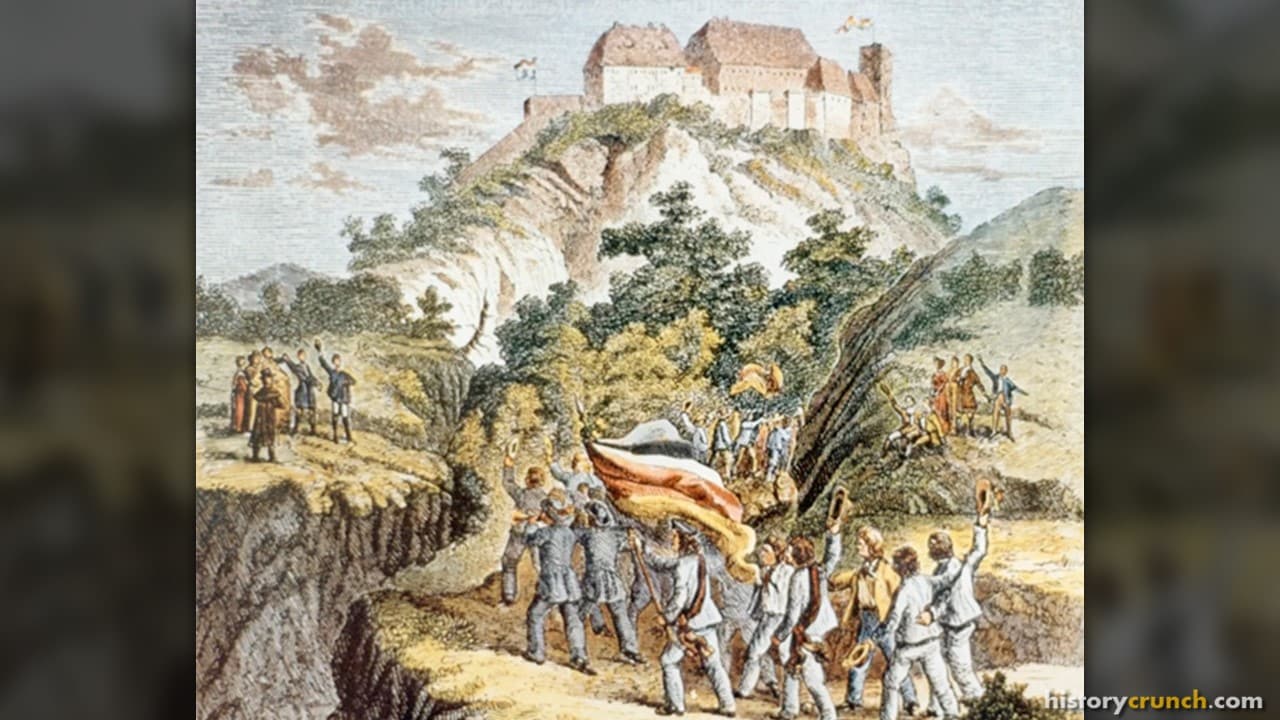
On October 18th, 1817, the fourth anniversary of Leipzig and the three-hundredth of Luther's theses, about 500 students from a dozen German universities met at the Wartburg castle in Thuringia, where Luther had hidden. They made speeches for a united and free Germany, sang, and in the evening burned books by conservative writers, a corporal's cane and a Prussian uniform. The student fraternities, the Burschenschaften, that organized it had been founded to keep the spirit of 1813 alive.
LEARN MORESHOW LESSwhy it matters · key numbersPROTESTThe Wartburg was the first public demand for a German nation-state, and its songs and speeches were steeped in the Romanticism of the day: old castles, old songs, the folk. Metternich saw where it led and two years later closed the universities' mouths.
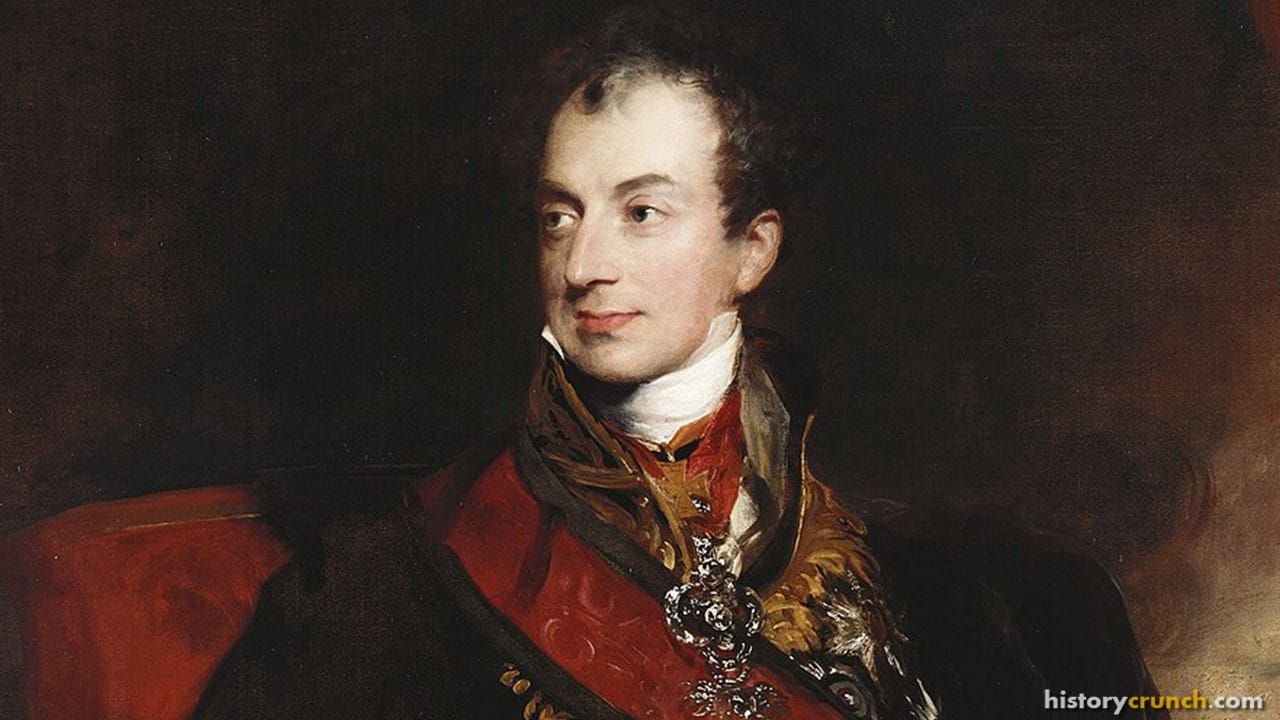
After a student named Karl Sand murdered the conservative playwright August von Kotzebue in March of 1819, Metternich called the ministers of the main German states to Carlsbad in Bohemia. The decrees they adopted on September 20th, 1819 and pushed through the German Confederation dissolved the student fraternities, put inspectors into every university, censored every book under 320 pages and set up a central commission to hunt what Metternich called demagogues. Professors who had spoken for a united Germany were dismissed.
LEARN MORESHOW LESSwhy it matters · 1 key figureLAWFor thirty years the Carlsbad system kept German nationalism to songs, gymnastics clubs and exiles. It did not kill the idea; it made it the property of the young.
On July 2nd, 1820 army officers belonging to the Carbonari, the charcoal burners, a secret society with lodges across Italy, mutinied at Nola near Naples and demanded a constitution. Within a week King Ferdinand of Naples had granted one, on the Spanish model of 1812. Piedmont rose the next March. Metternich called a congress at Laibach, and in March of 1821 an Austrian army marched south, dispersed the Neapolitan constitutional army and restored the king's full powers.
LEARN MORESHOW LESSwhy it mattersUPRISINGThe Carbonari were the first nationalist underground. They lost every rising they started, and the young Mazzini, watching their exiles pass through Genoa in 1821, decided to build something better.
In February of 1821 Alexander Ypsilantis, a Greek officer in the Russian army and leader of the secret Filiki Eteria, crossed into the Ottoman Danubian provinces with a small force and was crushed. In the Peloponnese the rising that Greeks date to March 25th, 1821, the feast of the Annunciation, spread from village to village, and within weeks the Ottoman garrisons were under siege. The Sultan answered by hanging the Greek Patriarch of Constantinople in his robes on Easter Sunday.
LEARN MORESHOW LESSwhy it mattersUPRISINGGreece was the first nation to fight its way out of an empire in the century of nationalism, and the first whose cause the rest of Europe took up.
On January 13th, 1822 a national assembly of Greek rebels meeting at Epidaurus declared the political existence and independence of the Greek nation and adopted a constitution. In the same months the Ottomans massacred the population of the island of Chios, about 25,000 killed and 45,000 sold into slavery, and Delacroix's painting of it made the Greek cause famous in Paris. Volunteers, money and poems poured in from Britain, France, Germany and the United States.
LEARN MORESHOW LESSwhy it matters · key numbersDECLARATIONPhilhellenism, the love of Greece, was the first international nationalist movement. Educated Europeans who had read Homer could not watch the descendants of Homer's Greeks be sold as slaves.
The poet Lord Byron, the most famous writer in Europe, arrived in Greece in 1823 with money for the rebels and plans to lead a brigade. He died of fever at Missolonghi on April 19th, 1824, aged thirty-six, before seeing a battle. Missolonghi itself held out through two sieges until April of 1826, when its starving garrison and civilians tried to break out through the Ottoman lines and most were killed.
LEARN MORESHOW LESSwhy it mattersPERSONByron did more for Greece dead than alive. His death made the war a cause in every drawing room in Europe, and the governments that had wanted to ignore it could no longer.
On February 3rd, 1830 Britain, France and Russia signed a protocol in London declaring Greece an independent state under their guarantee. The borders were drawn in 1832, when the same powers chose the seventeen-year-old Prince Otto of Bavaria as king; the Greeks were not consulted on either. Their own first head of state, Ioannis Kapodistrias, had been shot on the steps of a church in Nafplio in October of 1831.
LEARN MORESHOW LESSwhy it matters · key numbersTREATYGreece was the first crack in the Vienna settlement. The powers that had sworn to keep the map of 1815 had drawn a new country on it because a people had fought for one.
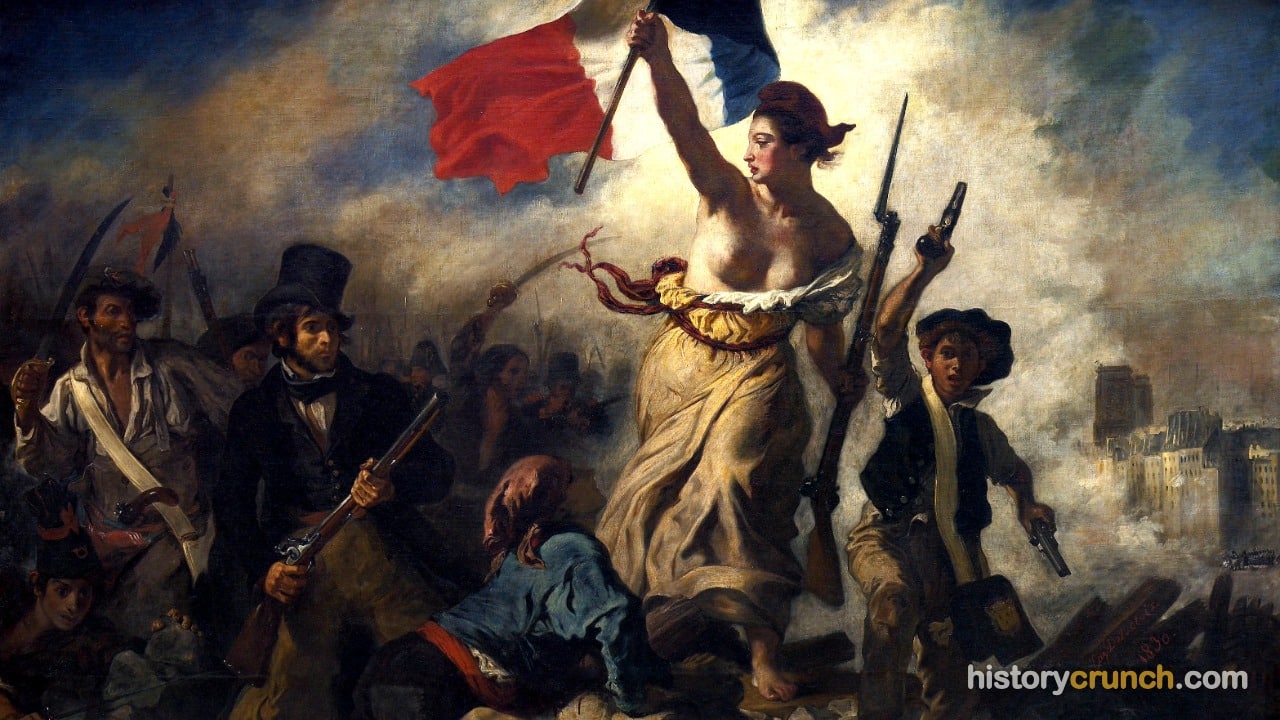
On July 26th, 1830 King Charles X, the brother of Louis XVI, issued decrees dissolving the Chamber, muzzling the press and cutting the electorate to a few thousand landowners. Paris rose on July 27th, and after three days of fighting at the barricades, the Three Glorious Days, Charles fled and his cousin Louis-Philippe was made King of the French, not of France, under a tricolor flag. Delacroix painted Liberty leading the crowd over the barricade the same year, the best-known image of the Romanticism of the age.
LEARN MORESHOW LESSwhy it matters · key numbersREVOLUTIONThree days in Paris removed a king the Congress of Vienna had restored. Within months Belgium, Poland and parts of Italy and Germany had risen too.
The Congress of Vienna had joined Catholic, French-speaking Belgium to the Protestant Dutch kingdom. On August 25th, 1830 a performance of an opera about a Naples revolt in Brussels ended with the audience pouring into the streets, and after a month of fighting a provisional government declared Belgian independence on October 4th, 1830. The powers, meeting in London, accepted it within months rather than see France intervene, and in 1839 they guaranteed Belgium's neutrality forever.
LEARN MORESHOW LESSwhy it mattersDECLARATIONBelgium was the first nation created by revolution against the Vienna map. The guarantee of 1839 was the scrap of paper Germany tore up in August of 1914.
On the night of November 29th, 1830 young Polish officers in Warsaw attacked the palace of the Russian viceroy and seized the city. The Polish parliament declared the Tsar deposed in January. A Polish army of about 80,000 fought the Russians for ten months and was beaten; Warsaw fell in September of 1831, the constitution of 1815 was abolished, thousands were deported to Siberia and about 10,000 of the educated class went into exile, most of them to Paris.
LEARN MORESHOW LESSwhy it matters · key numbersUPRISINGPoland had been erased in 1795 and rose in 1830, 1846, 1848 and 1863. The Great Emigration of 1831 made Paris the capital of every stateless nation in Europe.
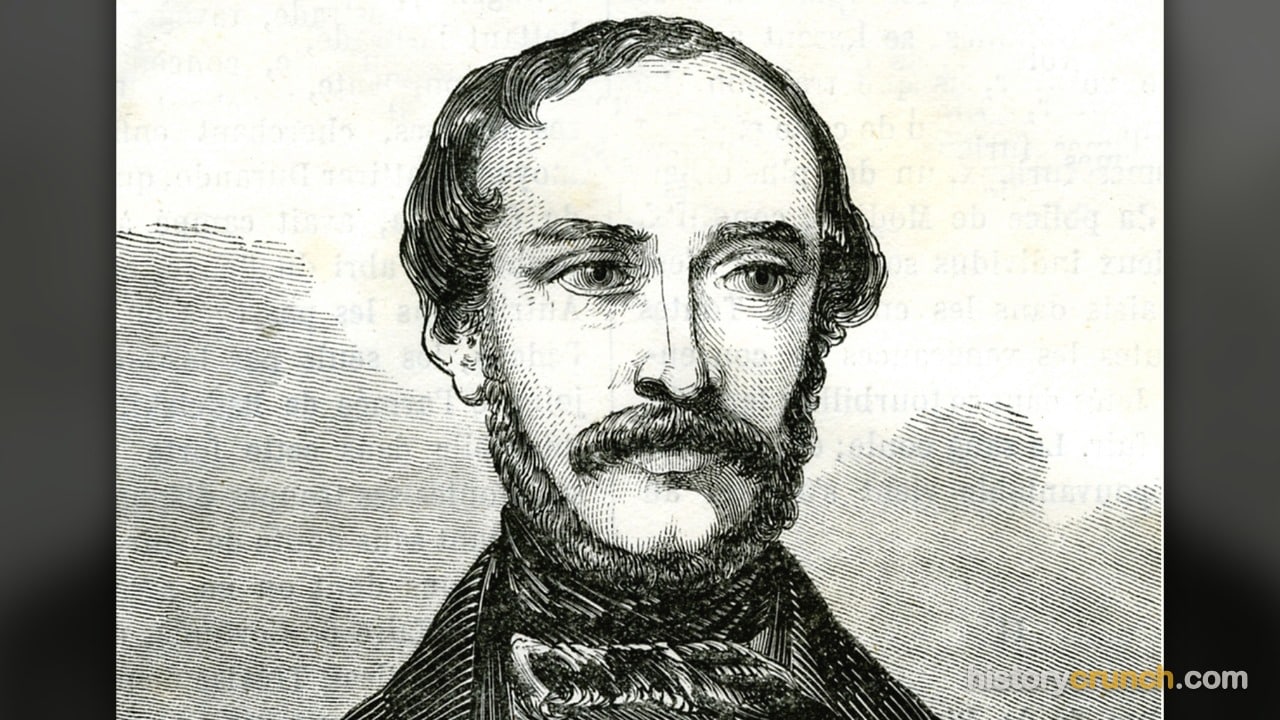
In July of 1831 Giuseppe Mazzini, a twenty-six-year-old lawyer from Genoa in exile in Marseille after six months in prison for belonging to the Carbonari, founded a secret society called Young Italy. Its members, who had to be under forty, swore to work for a united Italian republic by education and insurrection. It grew to tens of thousands within two years, though its risings in 1833 and 1834 were crushed and Mazzini was sentenced to death in his absence.
LEARN MORESHOW LESSwhy it matters · 1 key figureMOVEMENTMazzini made Italian unity a religion. He never won a battle and never held office, but Garibaldi read him at twenty-six and Cavour had to reckon with the movement he built.
On May 27th, 1832 about 30,000 people, students, craftsmen, farmers and Polish exiles, climbed to the ruined castle of Hambach in the Bavarian Palatinate for a festival that was really a political rally, the largest yet held in Germany. Speakers called for a united German republic, freedom of the press and a free Poland, and the crowd carried the black, red and gold flag that became Germany's. The German Confederation answered within weeks by banning political meetings and the flag.
LEARN MORESHOW LESSwhy it matters · key numbersPROTESTHambach was Wartburg fifteen years on and sixty times larger. The colors flown there were carried onto the barricades of 1848 and are Germany's flag today.
On January 1st, 1834 the German Customs Union, the Zollverein, came into force. Eighteen states with about 23 million people abolished the tariffs between them and adopted a common tariff against the outside world, with Prussia collecting the money and sharing it out. Austria was not a member. Within a decade the union had railways, a common coinage in progress and most of the German states outside Austria inside it.
LEARN MORESHOW LESSwhy it matters · key numbersECONOMYGermany was united economically thirty-seven years before it was united politically, and under Prussia rather than Austria. The Zollverein decided who would lead before a shot was fired.
On April 15th, 1834 in Bern, Switzerland, Mazzini and sixteen other exiles, Italians, Poles and Germans, founded Young Europe, a federation of Young Italy, Young Poland and Young Germany. Its pact declared that every people had a mission and a right to its own nation, the principle later called self-determination, and that free nations would live in peace as a family. Young Switzerland and Young France followed. Governments across Europe treated membership as a crime.
LEARN MORESHOW LESSwhy it matters · 1 key figureMOVEMENTMazzini believed that nationalism was the path to brotherhood: once every people had its state, there would be nothing to fight about. The next eighty years did not agree with him.
Giuseppe Garibaldi, a sailor from Nice who had joined Young Italy at twenty-six, took part in a failed republican plot in the Piedmontese navy in February of 1834. He escaped to France; on June 3rd, 1834 a court in Genoa sentenced him to death in his absence. He spent the next fourteen years in South America fighting for the republics of Rio Grande do Sul and Uruguay, where he learned guerrilla war and adopted the red shirt of the Montevideo slaughterhouse workers.
LEARN MORESHOW LESSwhy it matters · key numbers · 1 key figurePERSONThe man who would conquer a kingdom with a thousand volunteers learned how in the pampas of Brazil. He came back in 1848 already a legend.
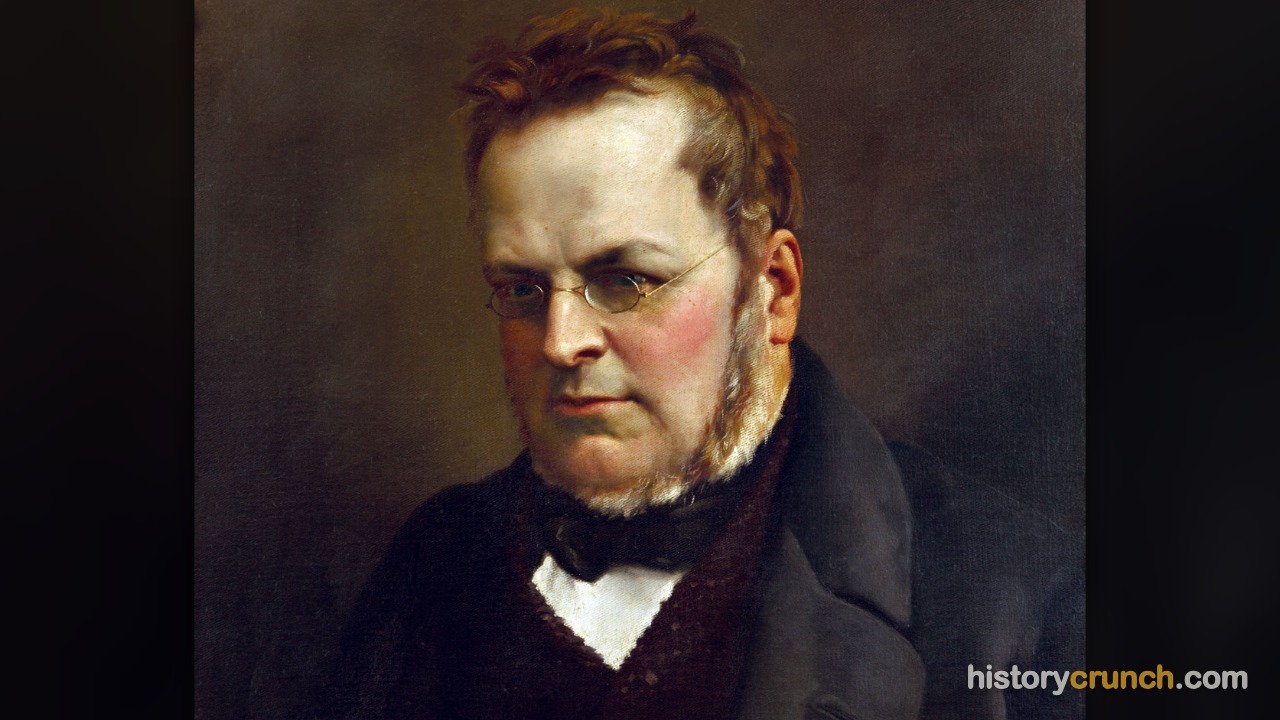
On December 15th, 1847 Count Camillo di Cavour, a thirty-seven-year-old Piedmontese landowner, railway promoter and liberal, published the first issue of a newspaper in Turin called Il Risorgimento, the resurgence. It argued for a constitution, a free press, railways and an Italy led by the House of Savoy. The name became the label for the whole movement to unite Italy.
LEARN MORESHOW LESSwhy it matters · 1 key figureMOVEMENTMazzini wanted a republic won by the people. Cavour wanted a kingdom won by diplomacy, railways and a modern army. The newspaper is where the second road begins.
In two years fifty cities rose and every one of them was put down. It started in Paris in February of 1848 and reached Vienna, Berlin, Milan and Budapest within a month; Metternich fled in a laundry cart, the King of Prussia bowed to the coffins of the dead, the Milanese threw out the Austrians in five days and a parliament of professors met in Frankfurt to make a German nation by debate. Then the armies came back. Radetzky beat Piedmont at Custoza and again at Novara, a French republic destroyed Mazzini's Roman Republic to restore a pope, the Habsburgs used Croats against Hungarians and Russians against both, and the King of Prussia refused a crown offered by a parliament as a thing picked up from the gutter. The lesson was learned in Turin and Berlin: nations would be made by states with armies, not by peoples with barricades.
On February 22nd, 1848 the government banned a political banquet in Paris; crowds gathered, troops fired, barricades went up, and on February 24th King Louis-Philippe abdicated and fled to England as a Mr. Smith. A provisional government declared the Second Republic with a vote for every adult man. The news reached Vienna, Berlin, Milan and Budapest within a week, and each of them rose in turn.
LEARN MORESHOW LESSwhy it mattersREVOLUTION1848 began in Paris, as the Revolution of 1789 and the July Revolution of 1830 had. This time the fire spread to fifty cities, and most of them were asking not for a republic but for a nation.
On March 13th, 1848 crowds of students and workers in Vienna demanded a constitution and the dismissal of Metternich, who had run Austria for thirty-nine years. Troops fired, barricades went up, and that evening the seventy-four-year-old chancellor resigned and left the city in a laundry cart, by one story, for exile in England. Within days Hungary, Bohemia, Croatia and the Italian provinces of the empire had all demanded self-rule.
LEARN MORESHOW LESSwhy it matters · 1 key figureREVOLUTIONThe Habsburg empire held a dozen peoples together by keeping all of them quiet. When the man who had kept them quiet fled, every one of them spoke at once, and in different languages.
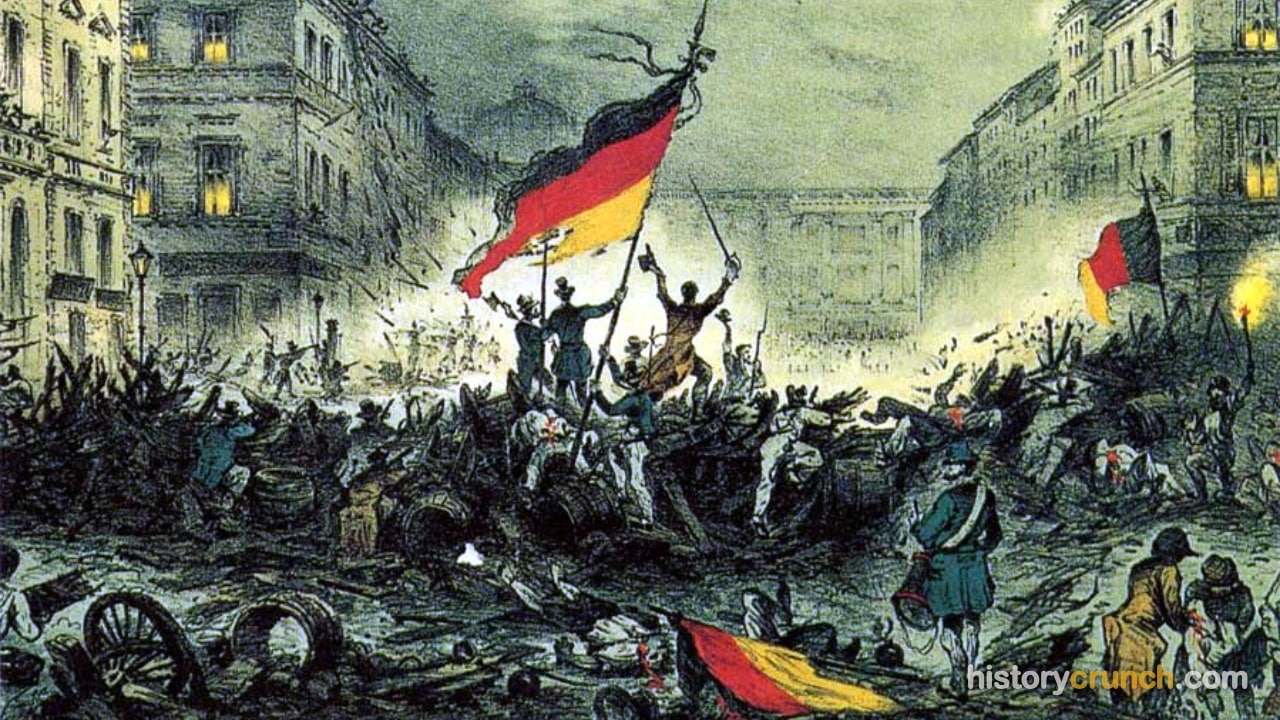
On March 18th, 1848 a crowd outside the royal palace in Berlin cheered the king's promises and was fired on by nervous troops; by nightfall the city was barricaded and about 300 people had been killed. The next day King Frederick William IV withdrew the army, rode through the city wearing the black, red and gold of German unity and stood bareheaded before the coffins of the dead. He promised a constitution and said that Prussia would merge into Germany.
LEARN MORESHOW LESSwhy it matters · key numbersREVOLUTIONFor a few weeks a king of Prussia was a German nationalist. The promise lasted until the army came back in November.
From March 18th to 22nd, 1848 the people of Milan fought the Austrian garrison of about 13,000 under Marshal Radetzky from behind barricades built of carriages, church pews and paving stones, and on the fifth day the Austrians withdrew from the city. Venice rose the same week and proclaimed a republic. On March 23rd King Charles Albert of Piedmont declared war on Austria, and the first war of Italian independence began.
LEARN MORESHOW LESSwhy it mattersUPRISINGA city without an army had thrown out the strongest power in Italy. It could not hold what it had won, but nobody who saw it forgot that it could be done.
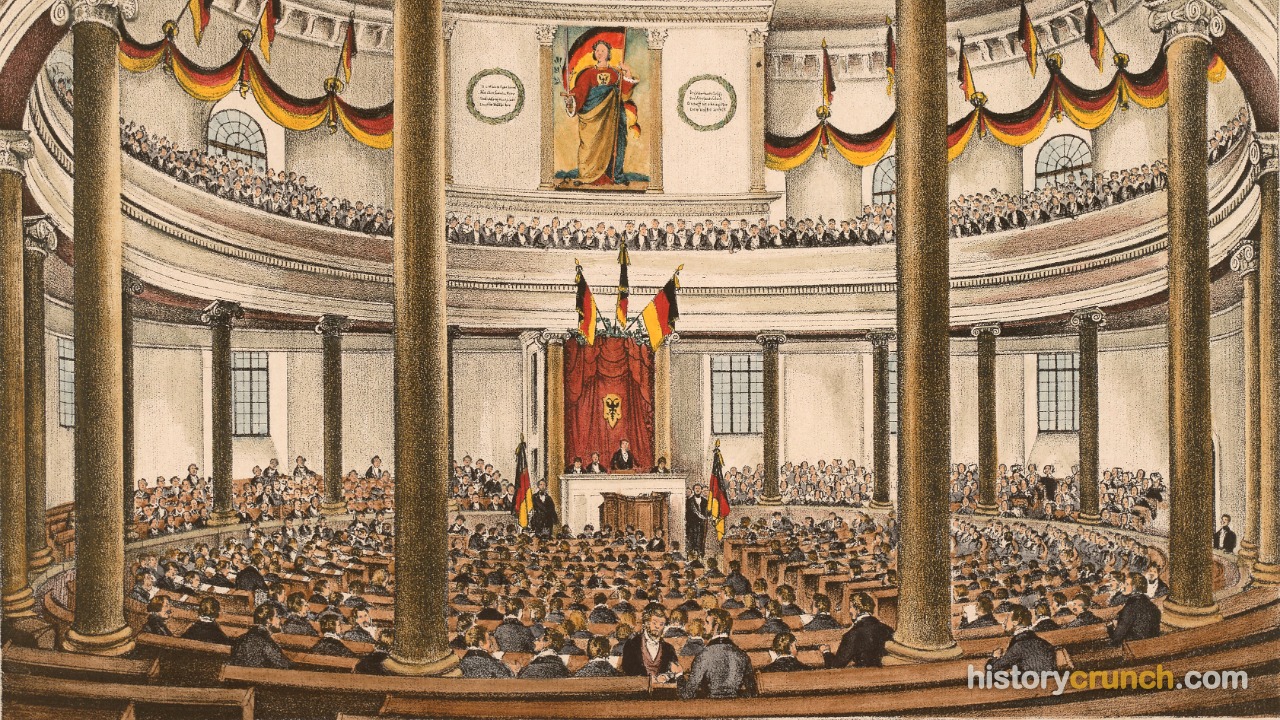
On May 18th, 1848 about 800 deputies elected across the German states met in St. Paul's Church in Frankfurt, the first parliament for all Germany. Most were lawyers, professors and officials; it was called the parliament of professors. It spent a year writing a constitution for a German empire with a bill of rights, and argued for months over whether Austria's Germans should be inside it. Above the speaker's desk hung a painting of Germania with a sword and a broken chain.
LEARN MORESHOW LESSwhy it matters · key numbersPARLIAMENTGermany was to be made by debate and a vote. It very nearly was, and the failure taught the next generation that it would be made by Prussia and war instead.
On July 24th and 25th, 1848 the eighty-one-year-old Austrian marshal Radetzky, who had retreated into the fortresses of the Quadrilateral in March and waited for reinforcements, attacked and beat the Piedmontese army at Custoza near Verona. Charles Albert retreated and signed an armistice; Radetzky re-entered Milan on August 6th. Venice held out under siege for another year.
LEARN MORESHOW LESSwhy it mattersBATTLEThe Italian states had failed to beat Austria together, and the Pope and the King of Naples had pulled their troops out halfway. The lesson Cavour drew was that Italy would need a foreign ally.
In March of 1848 the Hungarian Diet under Lajos Kossuth had won its own government, army and parliament, with Hungarian as the language of state. The Croats, Serbs and Romanians inside Hungary, who were not consulted, rose against it, and the court in Vienna backed them. On October 6th, 1848 a second rising in Vienna in support of Hungary was crushed by the army with about 2,000 dead. Hungary declared full independence in April of 1849 and fought on alone.
LEARN MORESHOW LESSwhy it mattersREVOLUTIONThe Hungarians wanted a nation and would not give one to the Croats. The Habsburgs used one nationalism to defeat another, and every empire with many peoples learned the trick.
After Pope Pius IX fled Rome in November of 1848, an elected assembly proclaimed the Roman Republic on February 9th, 1849 and abolished the Pope's temporal power. Mazzini arrived in March as one of three rulers, the triumvirs, and governed for four months with a constitution guaranteeing religious freedom and abolishing the death penalty. Garibaldi commanded the defense when a French army sent by Louis-Napoleon to restore the Pope attacked in April.
LEARN MORESHOW LESSwhy it matters · 2 key figuresREPUBLICFor a hundred days the prophet of Italian nationalism ruled its capital. It was the only time in his life Mazzini held power, and he lost it to a French republic defending a pope.
Charles Albert of Piedmont broke the armistice and attacked Austria again in March of 1849. On March 23rd Radetzky beat his army decisively at Novara, and that night the king abdicated in favor of his son Victor Emmanuel II and went into exile in Portugal, where he died in July. Victor Emmanuel signed a peace but kept the constitution his father had granted in 1848, the only Italian ruler to do so.
LEARN MORESHOW LESSwhy it mattersBATTLEEvery other Italian state took back its constitution after 1849. Piedmont kept its parliament, its tricolor and its king, and that is why the Risorgimento moved to Turin.
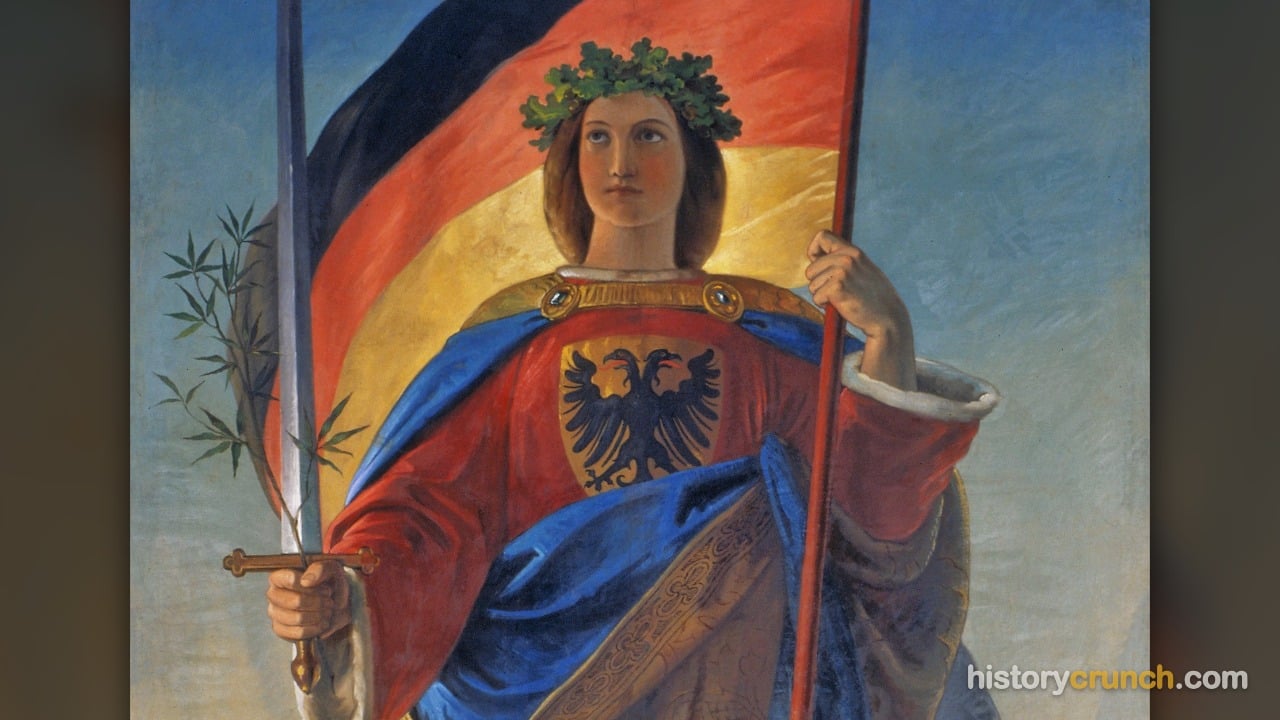
On March 28th, 1849 the Frankfurt Parliament finished its constitution and elected King Frederick William IV of Prussia hereditary Emperor of the Germans. On April 3rd he received its delegation in Berlin and refused. In private he said he would not pick up a crown from the gutter, a crown offered by a parliament and not by his fellow princes; in public he said he could not accept without their consent. Austria withdrew its deputies, Prussia followed, and the parliament dwindled into a rump that was dispersed by troops in June.
LEARN MORESHOW LESSwhy it matters · a sourcePOLITICSThe professors had built a Germany and had nobody to hand it to. Bismarck, who watched from the Prussian parliament, concluded that the question would be settled by blood and iron.
IN THEIR OWN WORDS“I will not pick up a crown from the gutter.”
Frederick William IV of Prussia, spring 1849WHAT TO NOTICEa private remark that was widely repeated
A French army of about 30,000 under General Oudinot had been beaten off from Rome by Garibaldi's volunteers on April 30th, 1849. It came back with siege guns in June, and after a month of bombardment and assaults on the Janiculum hill the assembly voted to stop fighting. French troops entered the city on July 3rd, 1849. Garibaldi led about 4,000 men out of the city past the French lines rather than surrender; his wife Anita died on the march, and he escaped to exile again.
LEARN MORESHOW LESSwhy it matters · 2 key figuresSIEGEThe Roman Republic lost, but its defense made Garibaldi the hero of Italy and its constitution became the program of the movement. Rome would be Italian in twenty-one years.
Unable to beat the Hungarians alone, the young Emperor Franz Joseph asked Tsar Nicholas I for help, and a Russian army of about 200,000 marched in from the north in June of 1849. On August 13th, 1849 the Hungarian commander Gorgei surrendered his army to the Russians at Vilagos rather than to the Austrians. Thirteen Hungarian generals were executed at Arad on October 6th and the prime minister was shot in Pest. Kossuth escaped to Turkey and spent forty-five years in exile.
LEARN MORESHOW LESSwhy it matters · key numbersSURRENDERVilagos closed the Springtime of Peoples. Every rising of 1848 had been beaten by the autumn of 1849, mostly by armies whose soldiers were of a different nation from the rebels.
Italy was made by two men who despised each other's methods. Cavour, prime minister of Piedmont from 1852, built railways, paid for the Crimean War to get a seat at the Congress of Paris, and made a secret deal with Napoleon III in a spa to have France drive Austria out of Lombardy. It worked at Solferino in 1859 and then the French made a separate peace; the people of central Italy voted to join Piedmont anyway. Then Garibaldi, the republican guerrilla whom Cavour had neither stopped nor helped, sailed for Sicily with a thousand volunteers in red shirts, took the island in three weeks and Naples by train, and on a road near Teano handed half of Italy to a king and went home to his farm. The Kingdom of Italy was proclaimed in March of 1861. Cavour was dead by June.
On November 4th, 1852 Victor Emmanuel II, who disliked him, appointed Count Camillo di Cavour prime minister of the Kingdom of Sardinia, usually called Piedmont after its mainland province. Over the next seven years Cavour built railways and banks, cut the power of the Church, doubled trade, modernized the army and made Turin the one place in Italy where a nationalist could publish a newspaper. Exiles from every other Italian state gathered there.
LEARN MORESHOW LESSwhy it matters · 1 key figureGOVERNMENTCavour's plan was to make Piedmont so modern and so respectable that the great powers would let it lead Italy. Mazzini called him a traitor to the republic; Mazzini's followers went to work for him anyway. Cavour's method had a new name, Realpolitik, the politics of results.
On January 26th, 1855 Cavour signed a treaty bringing Piedmont into the Crimean War on the side of Britain and France against Russia. Piedmont had no quarrel with Russia; it sent 15,000 men to fight in the Crimea, lost about 2,000 of them, mostly to cholera, and won a small action on the Chernaya River. The point was the peace conference that would follow.
LEARN MORESHOW LESSwhy it matters · key numbers · 1 key figureWARA small state cannot free a peninsula alone. Cavour paid in soldiers for the right to sit with the great powers and raise the Italian question in front of them.
The Congress of Paris met from February to April of 1856 to end the Crimean War. On April 8th, 1856, in the final session, Cavour, seated as an equal with the ministers of Britain, France, Austria and Russia, denounced Austria's occupation of central Italy and the misgovernment of the Papal States and Naples. Nothing was decided, but the Italian question was now on the agenda of Europe, and Napoleon III of France had listened.
LEARN MORESHOW LESSwhy it matters · 1 key figureDIPLOMACYPiedmont had spent 2,000 lives for one speech. It was the best investment Cavour ever made.
On July 21st, 1858 Cavour met Napoleon III in secret at the spa town of Plombieres in eastern France. They agreed that if Austria could be made to attack Piedmont, France would send 200,000 men to drive it out of Lombardy and Venice; Piedmont would take northern Italy, the Pope would keep Rome, and France would receive Nice and Savoy for its trouble. Napoleon's cousin would marry Victor Emmanuel's fifteen-year-old daughter to seal it.
LEARN MORESHOW LESSwhy it matters · 1 key figureDIPLOMACYThe Risorgimento was to be completed by a deal between two men in a spa. Mazzini's Italy of the people had become Cavour's Italy of the cabinets.
Cavour built up the Piedmontese army until Austria demanded it disarm, refused, and was attacked on April 29th, 1859. French armies came over the Alps and by rail. On June 4th they beat the Austrians at Magenta and entered Milan; on June 24th, 1859 about 300,000 men fought for fifteen hours at Solferino, south of Lake Garda, and the Austrians retreated with about 40,000 casualties on both sides. A Swiss traveler named Henri Dunant, who saw the wounded lying untended, founded the Red Cross because of it.
LEARN MORESHOW LESSwhy it matters · key numbersBATTLESolferino gave Piedmont Lombardy. It also sickened Napoleon III, who had commanded in person, and within three weeks he made peace without asking Cavour.
On July 11th, 1859 Napoleon III met the Austrian emperor Franz Joseph at Villafranca and agreed an armistice: Lombardy to Piedmont, Venice to stay Austrian, the rulers of Tuscany and Modena, who had fled, to be restored. Cavour, hearing the news, raged at his king and resigned. But the people of Tuscany, Parma, Modena and the papal Romagna refused to have their dukes back and voted in March of 1860 to join Piedmont instead.
LEARN MORESHOW LESSwhy it matters · 1 key figureTREATYThe powers had planned a bigger Piedmont. The people of central Italy, by voting, made it the beginning of Italy, and Cavour came back to office in January to collect.
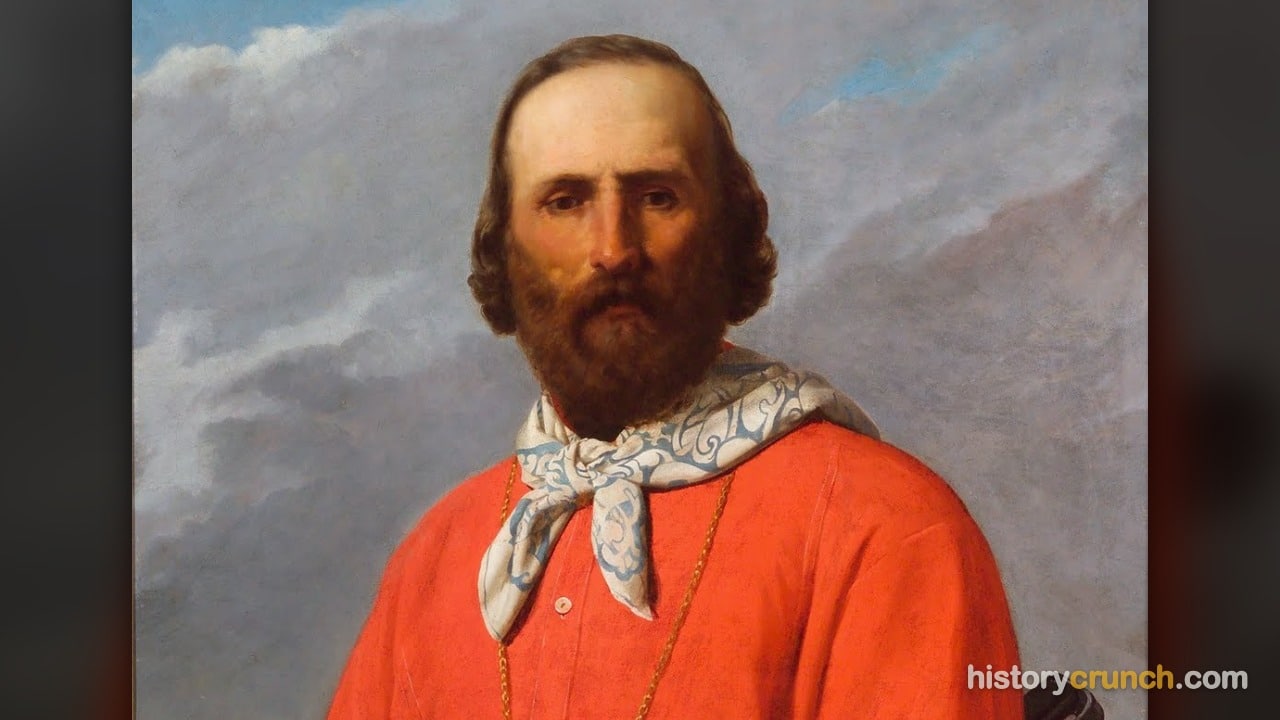
On May 5th, 1860 Garibaldi sailed from Quarto near Genoa in two stolen steamers with about 1,000 volunteers in red shirts, mostly students and craftsmen from the north, to support a rising in Sicily against the Bourbon King of Naples. The volunteers were the Redshirts, and the campaign is remembered as the Expedition of the Thousand. They landed at Marsala on May 11th, beat a Bourbon force at Calatafimi on May 15th, and took Palermo, a city of 200,000 held by 20,000 troops, at the end of the month. Cavour had neither stopped him nor helped him.
LEARN MORESHOW LESSwhy it matters · key numbers · 1 key figureEXPEDITIONA thousand men with old muskets took an island of two million people in three weeks. It is the most improbable campaign of the century, and it forced Cavour's hand.
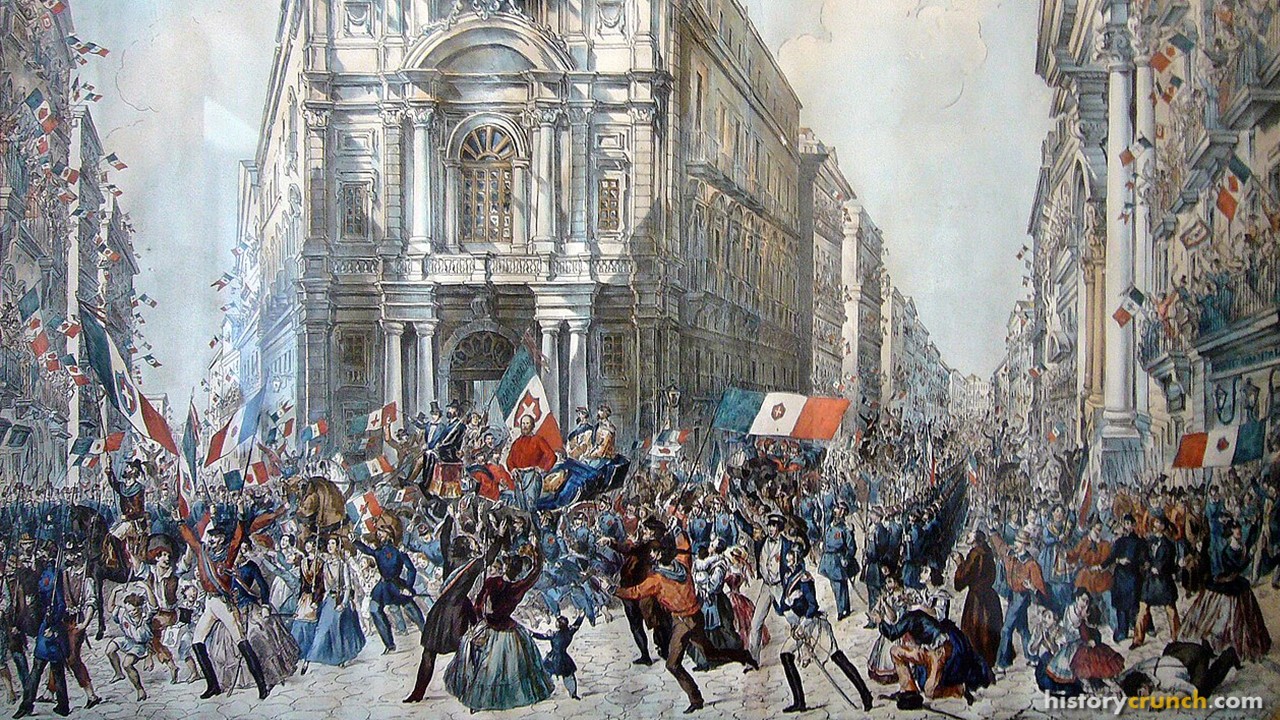
Garibaldi crossed the Strait of Messina in August of 1860 and marched up the mainland as the Bourbon army of 100,000 dissolved in front of him. On September 7th, 1860 he entered Naples, the largest city in Italy, by the ordinary train from Salerno, hours ahead of his troops, and drove through the streets in an open carriage while the young King Francis II retreated to the fortress of Gaeta. He ruled the south as dictator in the name of Victor Emmanuel.
LEARN MORESHOW LESSwhy it matters · 1 key figureCAMPAIGNGaribaldi held half of Italy and talked of marching on Rome. Cavour, terrified of a French war and a republican south, sent the Piedmontese army south to stop him.
On October 26th, 1860 Garibaldi met Victor Emmanuel II on the road near Teano, north of Naples, raised his hat and greeted him as King of Italy. Plebiscites in the south had voted for union with Piedmont a few days earlier, 1,302,064 to 10,312 in Naples. Garibaldi handed over his conquests, refused every reward, and went home to his farm on the island of Caprera with a bag of seed corn.
LEARN MORESHOW LESSwhy it matters · 1 key figureMEETINGThe republican gave a kingdom to a king and asked for nothing. Without Teano the Risorgimento would have ended in civil war between the two Italies.
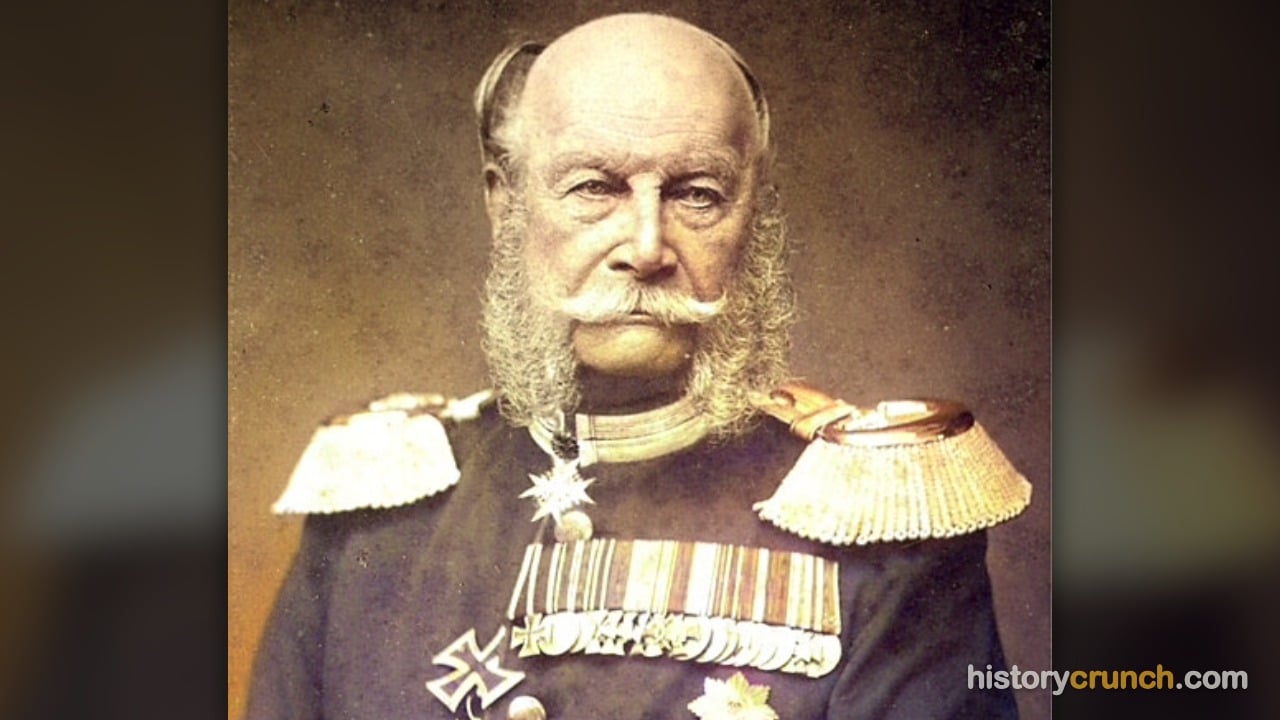
On January 2nd, 1861 King Frederick William IV of Prussia died after years of mental illness, and his brother Wilhelm, who had governed as regent since 1858, became king at sixty-three. A soldier all his life, he had fought against Napoleon as a teenager and against the Berlin barricades in 1848. His first project was to enlarge and modernize the army, and the Prussian parliament, which had to vote the money, refused.
LEARN MORESHOW LESSwhy it matters · 1 key figureACCESSIONThe quarrel over the army budget deadlocked Prussia for two years. The man Wilhelm hired to break it was Bismarck.
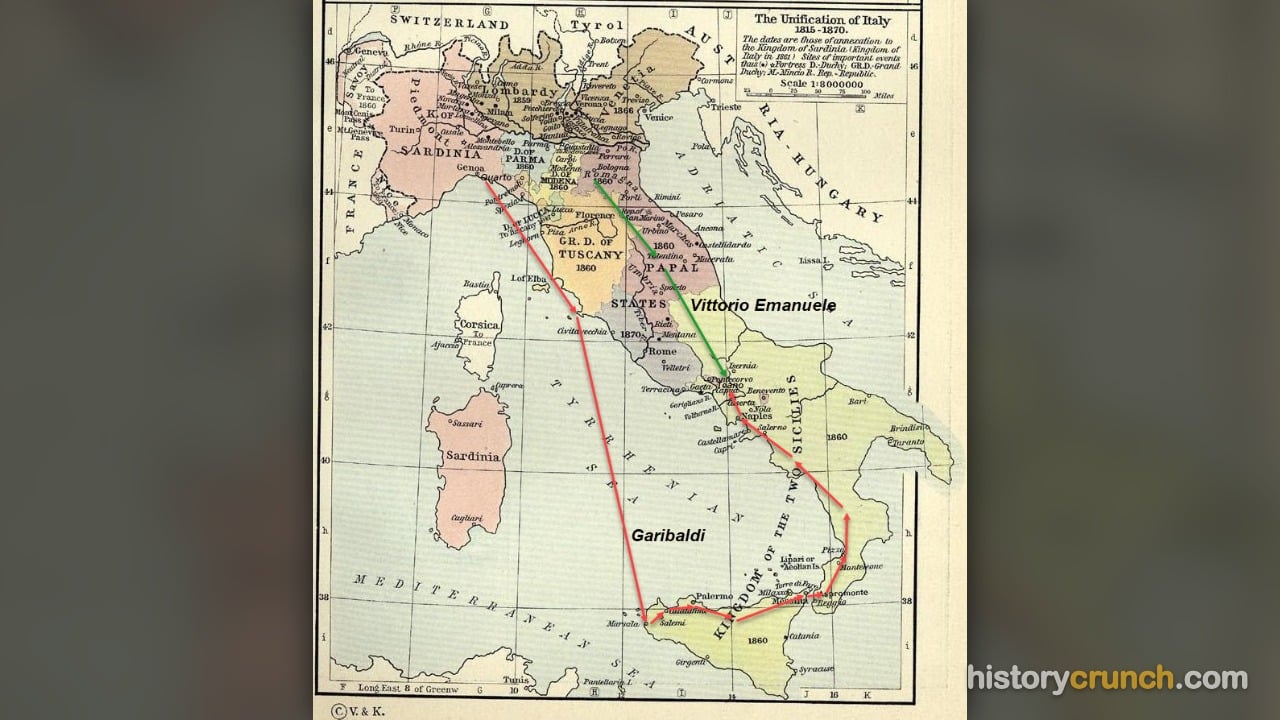
On March 17th, 1861 the first parliament of a united Italy, meeting in Turin, proclaimed Victor Emmanuel II King of Italy by the grace of God and the will of the nation. The new kingdom held about 22 million people. Venice was still Austrian and Rome still the Pope's, guarded by French troops, and Cavour told the chamber that Rome would be the capital. Three months later, on June 6th, he was dead of a fever at fifty.
LEARN MORESHOW LESSwhy it matters · key numbers · a sourcePROCLAMATIONItaly had been made in two years from a plan, a war, a thousand volunteers and a series of votes. Massimo d'Azeglio said the next task was to make Italians.
IN THEIR OWN WORDS“We have made Italy. Now we must make Italians.”
attributed to Massimo d'Azeglio, 1861WHAT TO NOTICEthe phrase is his though the exact wording is disputed
Bismarck came to power in 1862 to save the Prussian king from his parliament, told the deputies that the great questions would be settled by blood and iron, and settled them in three wars. Denmark in 1864 gave him a quarrel with Austria; Koniggratz in 1866 settled in seven weeks who would lead Germany, and gave Italy Venice on the side; and an edited telegram in 1870 made France declare a war that every German state fought together. Sedan took the French emperor prisoner, Paris starved through a winter siege, Italian troops walked through a hole in the wall of Rome the day the French garrison left, and on January 18th, 1871 the German Empire was proclaimed in the Hall of Mirrors of Louis XIV's palace. The Treaty of Frankfurt took Alsace and Lorraine, and Austria, thrown out of Germany, split itself in two to keep the Hungarians.
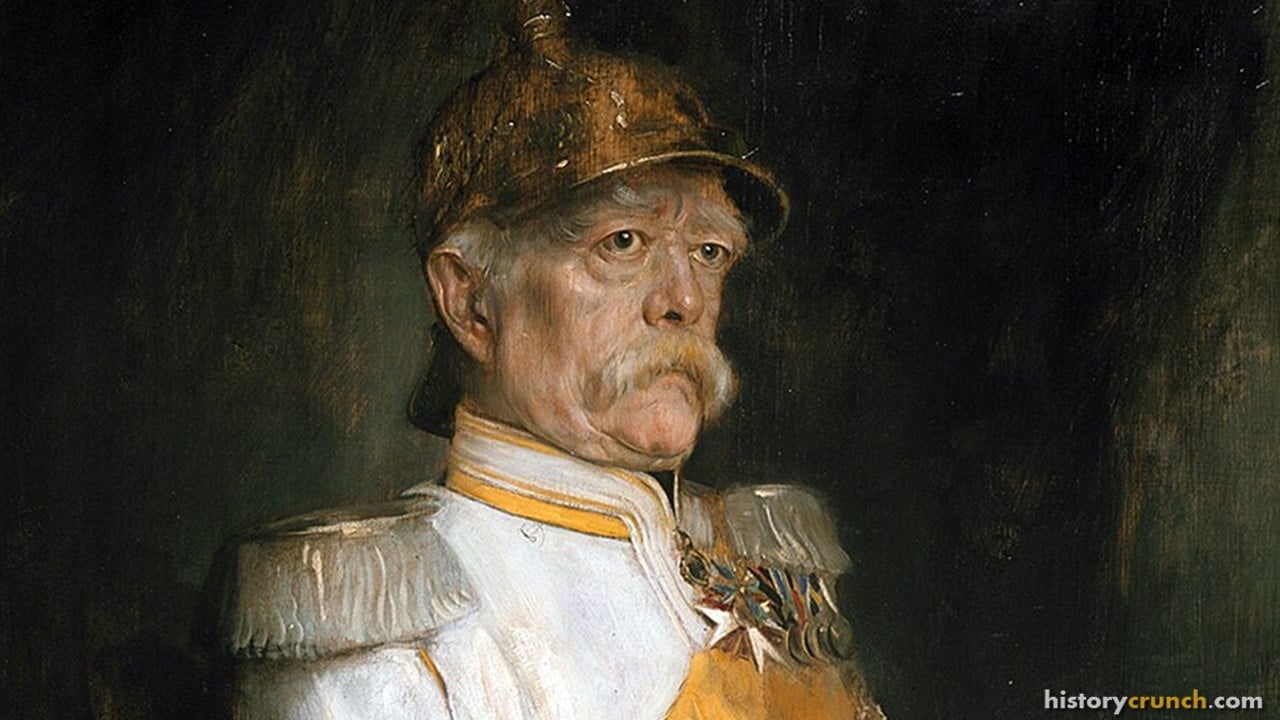
On September 23rd, 1862, with the Prussian parliament refusing to pay for the army and the king drafting his abdication, Wilhelm I appointed Otto von Bismarck, a forty-seven-year-old Junker landowner and diplomat with a reputation for reckless conservatism, as Minister-President. Bismarck collected the taxes without a budget for four years, arguing that when the constitution was silent the king could act, and dared the deputies to stop him.
LEARN MORESHOW LESSwhy it matters · 2 key figuresGOVERNMENTBismarck did not come to power to unite Germany. He came to save the Prussian monarchy from its parliament, and unifying Germany turned out to be the way to do it.
On September 30th, 1862, a week after taking office, Bismarck told the budget committee of the Prussian parliament that Germany looked not to Prussia's liberalism but to its power, and that the great questions of the day would be decided not by speeches and majority votes, which had been the mistake of 1848 and 1849, but by blood and iron. The liberal deputies were appalled. The phrase followed him for the rest of his life.
LEARN MORESHOW LESSwhy it matters · a source · 1 key figureSPEECHIt was a description of what had failed at Frankfurt as much as a program. Within nine years Bismarck had proved it three times.
IN THEIR OWN WORDS“The great questions of the day will not be decided by speeches and majority resolutions, that was the mistake of 1848 and 1849, but by iron and blood.”
Otto von Bismarck to the budget committee, September 30th, 1862WHAT TO NOTICEfrom the committee's record
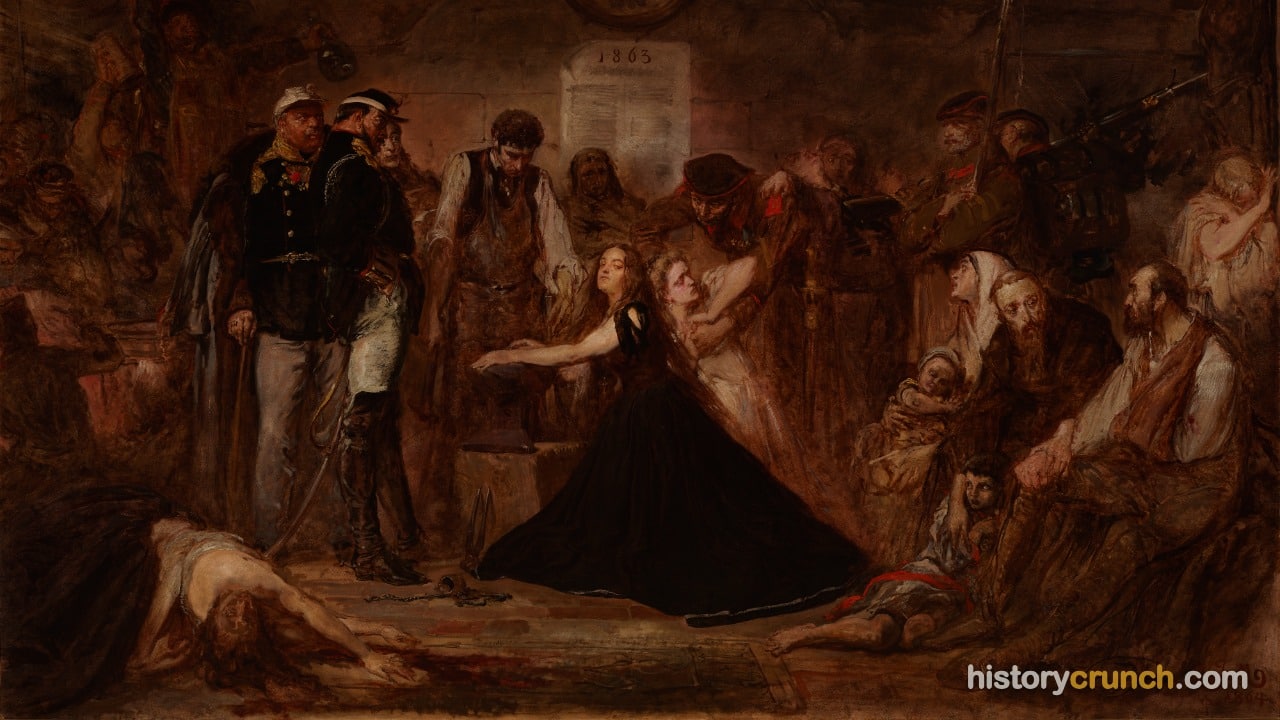
On January 22nd, 1863 Polish nationalists in Russian Poland rose after the Russian government tried to draft the young men of Warsaw into the army to break the movement. With no army and no cities, the rebels fought a guerrilla war of about 1,200 small actions across the countryside for sixteen months. Russia hanged the leaders, deported about 40,000 people to Siberia, confiscated estates and set out to make Poland Russian by law and language.
LEARN MORESHOW LESSwhy it matters · key numbersUPRISINGThe painter Matejko showed Poland as a woman in chains. After 1863 Polish nationalism went underground for fifty years, and Poland was reborn in 1918 out of the ruin of the empires that had partitioned it.
On February 1st, 1864 Prussian and Austrian troops crossed into Schleswig after Denmark had annexed the duchy, which had a large German population, in breach of an 1852 treaty. The Danes were beaten in ten weeks, and by the peace of October the two duchies were handed to Prussia and Austria jointly. Bismarck had fought the war in the name of German nationalism and arranged for the spoils to be shared in a way that would give him a quarrel with Austria whenever he wanted one.
LEARN MORESHOW LESSwhy it matters · 1 key figureWARThe first of Bismarck's three wars gave him the second. He said afterward that he had never been prouder of any piece of work.
Bismarck picked his quarrel over Holstein, allied with Italy, and Prussia and Austria went to war on June 14th, 1866. Three Prussian armies moved by railway into Bohemia, and on July 3rd, 1866 about 220,000 Prussians met 215,000 Austrians and Saxons at Koniggratz. The Prussian breech-loading needle gun fired five times as fast as the Austrian muzzle-loader; the Austrians lost about 44,000 men to 9,000. Bismarck, against the generals and the king, stopped the army short of Vienna and made a soft peace.
LEARN MORESHOW LESSwhy it matters · key numbersBATTLEKoniggratz settled the question the Frankfurt Parliament could not: Germany would be made by Prussia, without Austria. The Seven Weeks' War also gave Italy Venice.
Italy had allied with Prussia in April of 1866 and lost its own battles, at Custoza on land and Lissa at sea. It got Venice anyway: Austria ceded the province to France, which handed it to Italy under the Treaty of Vienna of October 3rd, and a plebiscite on October 21st and 22nd, 1866 voted for union by 647,246 to 69. Victor Emmanuel entered Venice on November 7th. Only Rome and the Trentino remained outside the kingdom, and the demand for them was called irredentism, the redeeming of unredeemed Italy.
LEARN MORESHOW LESSwhy it matters · key numbersANNEXATIONItaly got Venice because Prussia won at Koniggratz. The two unifications were tied together from beginning to end.
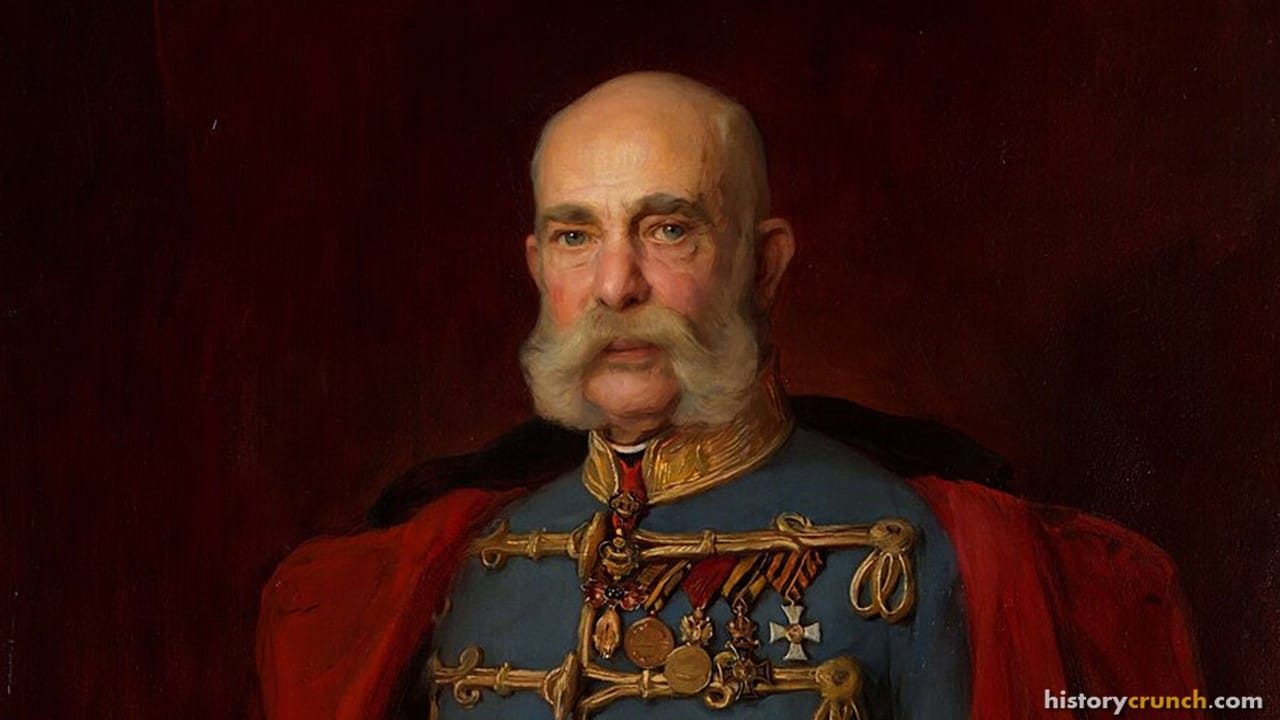
Beaten by Prussia, Franz Joseph settled with the Hungarians. On June 8th, 1867 he was crowned King of Hungary in Budapest under the Compromise, or Ausgleich, which split his empire in two: Austria and Hungary would each have its own parliament and government, sharing only the monarch, the army, foreign policy and a joint budget renegotiated every ten years. The Czechs, Croats, Poles, Romanians and Slovaks got nothing from either half.
LEARN MORESHOW LESSwhy it matters · key numbersCOMPROMISEThe Habsburgs bought the Hungarians by giving them the other nations to rule. The Dual Monarchy held for fifty-one years and broke apart along exactly those lines in 1918.
On July 1st, 1867 the constitution of the North German Confederation came into force. Prussia and twenty-one states north of the River Main formed a federal state under the King of Prussia as president, with a parliament elected by universal male suffrage, a federal council of the princes and Bismarck as chancellor. Austria was excluded and the German Confederation of 1815 was dead. Bavaria, Wurttemberg and Baden stayed outside, tied to Prussia by secret military treaties.
LEARN MORESHOW LESSwhy it matters · key numbers · 1 key figureGOVERNMENTTwo thirds of Germany was one state. Bismarck told the southern kingdoms that a French war would bring them in, and then arranged one.
Spain had offered its vacant throne to a Prussian prince, and France, alarmed, demanded that the offer be withdrawn and never renewed. On July 13th, 1870 Wilhelm I, taking the waters at Ems, politely refused to see the French ambassador a second time and telegraphed an account to Bismarck. Bismarck cut the telegram so that it read as a curt dismissal, released it to the press that evening and told his generals it would be a red rag to the Gallic bull. Paris crowds demanded war the next day.
LEARN MORESHOW LESSwhy it matters · 2 key figuresDIPLOMACYBismarck needed France to attack so that the southern German states would fight beside Prussia. A telegram edited over dinner did it.
On July 19th, 1870 France declared war on Prussia. Napoleon III expected the southern German kingdoms to stay neutral or join him; instead Bavaria, Wurttemberg and Baden honored their secret treaties and put their armies under Prussian command. About 500,000 German troops were on the French border by the beginning of August, moved by railway timetables the Prussian general staff had drawn up years before. The French had about 300,000 and no plan.
LEARN MORESHOW LESSwhy it matters · key numbersWARThe war Bismarck wanted was a German war from its first day. Every German state but Austria was fighting France together, and the empire was implied before a battle had been fought.
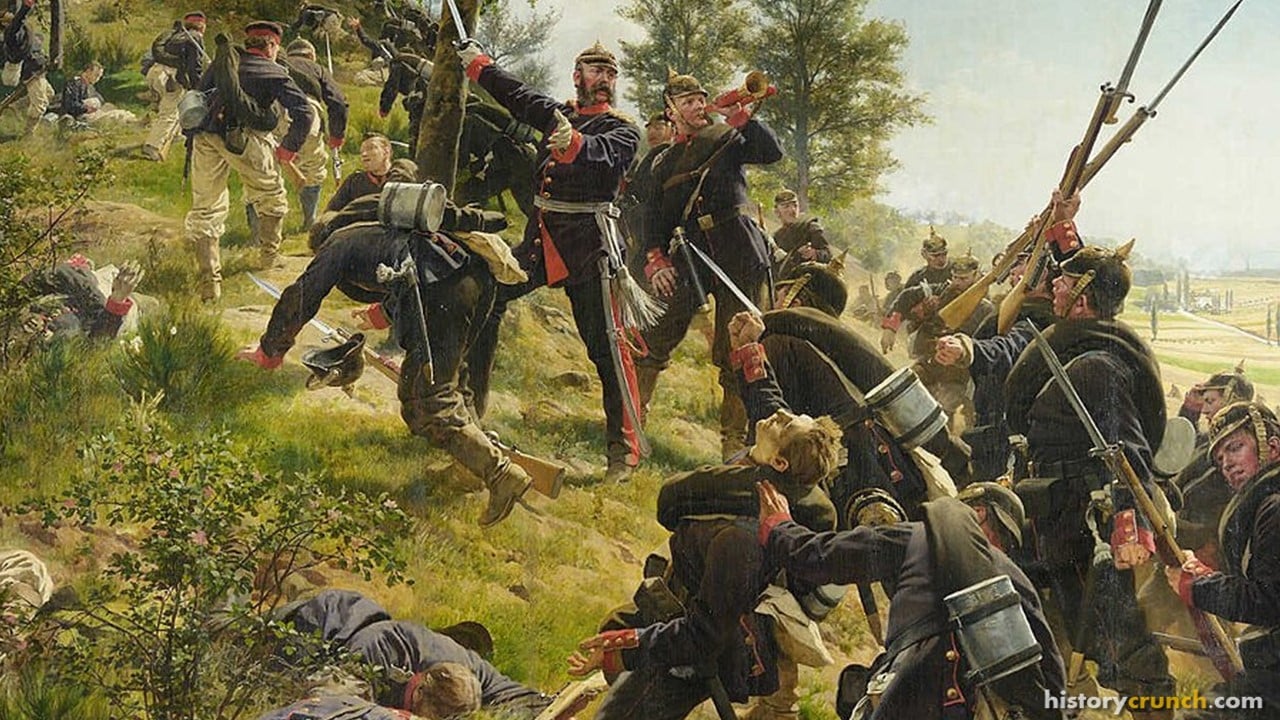
On August 6th, 1870 the German armies crossed the frontier and won two battles on the same day, at Spicheren near Saarbrucken and at Worth in Alsace. Both were fought by Prussian corps commanders who attacked without orders, at heavy cost; the French fought well and lost anyway, because more Germans kept arriving by rail. Within a fortnight one French army was shut up in the fortress of Metz and the other was falling back on Sedan.
LEARN MORESHOW LESSwhy it mattersBATTLEThe Franco-Prussian War was decided in its first month by railways and numbers. The German nation in arms that the levee en masse had invented in 1793 was now Germany's.
On September 1st, 1870 the German armies surrounded the French army of about 120,000 under Marshal MacMahon, with Napoleon III in attendance, in the fortress town of Sedan near the Belgian border and shelled it from the hills all day. On September 2nd the Emperor surrendered himself and 83,000 men. Bismarck met him at a weaver's cottage on the road; Napoleon was sent to a castle in Germany and never returned to France as its ruler.
LEARN MORESHOW LESSwhy it matters · key numbersBATTLESedan ended the Second Empire in one day. It did not end the war, because Paris declared a republic and fought on for five more months.
On September 4th, 1870, when the news of Sedan reached Paris, crowds invaded the Chamber and the republican deputies proclaimed a Government of National Defense at the city hall. The Empress fled to England. The new government refused to give up any territory and called the nation to arms; Leon Gambetta escaped from the besieged capital by balloon in October to raise new armies in the provinces.
LEARN MORESHOW LESSwhy it mattersREVOLUTIONFrance answered a national defeat with a national republic, as it had when the Convention abolished the monarchy in 1792. The Third Republic lasted seventy years, longer than any French regime since the Revolution.
On September 19th, 1870 the German armies closed a ring around Paris, a city of two million defended by about 400,000 regulars, militia and National Guards. For four months the city lived on rats, cats and the animals of the zoo, sent its mail out by balloon and pigeon, and made sorties that failed. Gambetta's new armies in the provinces were beaten one after another. German guns began shelling the city in January.
LEARN MORESHOW LESSwhy it matters · key numbersSIEGEThe nation in arms fought on after its army had surrendered. It lost, but the memory of the siege and the loss of Alsace fed a French nationalism of revenge for the next forty-four years.
Napoleon III had kept a garrison in Rome to protect the Pope since 1849. When the war with Prussia began he called it home, and on September 20th, 1870 the Italian army breached the walls of Rome near the Porta Pia after a bombardment of about three hours. Pius IX ordered his troops to stop firing once the wall was broken, to show the world he had yielded to force. A plebiscite in October voted 133,681 to 1,507 for union with Italy, and Rome became the capital the next year.
LEARN MORESHOW LESSwhy it matters · key numbersCAPTUREThe Risorgimento ended at a hole in a wall. The Pope shut himself in the Vatican, called himself a prisoner and forbade Catholics to vote in Italian elections for the next forty years.
On January 18th, 1871, in the Hall of Mirrors of Louis XIV's palace at Versailles, with Paris still under siege ten miles away, the German princes and generals proclaimed Wilhelm I German Emperor. Wilhelm had wanted to be Emperor of Germany and sulked at the wording; the Bavarian king, who had been paid from Bismarck's secret funds to propose the title, stayed away. Anton von Werner painted the scene with Bismarck in a white uniform at the center.
LEARN MORESHOW LESSwhy it matters · 2 key figuresPROCLAMATIONGermany was made in the palace of the French king who had taken Strasbourg. The choice of room was a message, and France read it.
On January 28th, 1871, after a hundred and thirty-two days of siege and three weeks of bombardment, the Government of National Defense signed an armistice and Paris surrendered. Elections in February returned a conservative assembly that made peace; in March the National Guard of Paris refused to give up its guns and set up the Commune, which the French army crushed in a week of street fighting in May with about 20,000 dead. German troops watched from the forts.
LEARN MORESHOW LESSwhy it matters · key numbersSURRENDERFrance lost a war, an emperor, two provinces and then a civil war, all inside a year. The republic that emerged was built on the determination that it would not happen again.
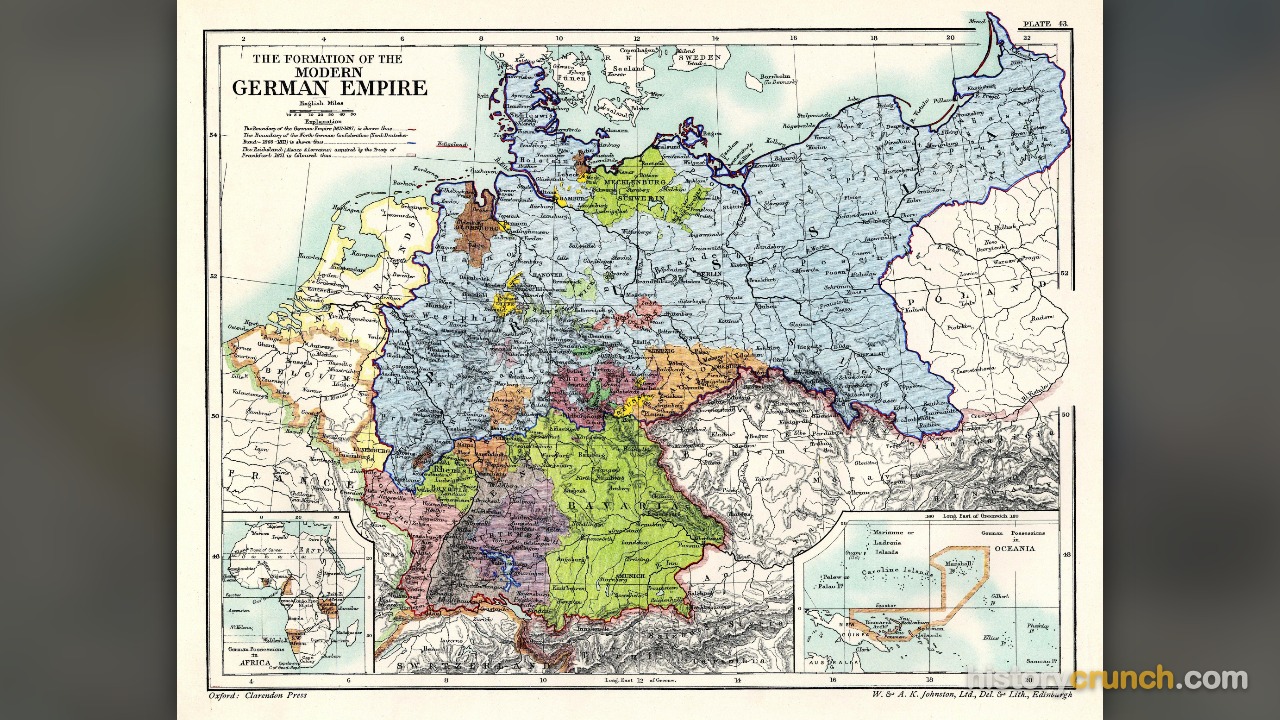
On May 10th, 1871 France and Germany signed the Treaty of Frankfurt. France gave up Alsace and the eastern part of Lorraine, including Strasbourg and Metz, with about 1.6 million people, most of whom spoke German dialects and most of whom wanted to stay French; paid an indemnity of five billion francs; and accepted a German occupation until it was paid. About 130,000 people from the two provinces chose to leave for France.
LEARN MORESHOW LESSwhy it matters · key numbers · 1 key figureTREATYBismarck took the provinces against his own better judgment because the generals wanted Metz. Every French schoolroom kept a map with the lost provinces in black until 1918.
On July 2nd, 1871 Victor Emmanuel II moved his court and government from Florence to Rome, which a law of February had declared the capital of the kingdom. The Pope, refusing to recognize the Italian state or the Law of Guarantees that offered him the Vatican and an income, stayed inside its walls; no pope left the Vatican again until 1929. Italy, which had not existed as a state in 1859, now had its ancient capital.
LEARN MORESHOW LESSwhy it matters · 1 key figureGOVERNMENTTen years after Cavour told parliament that Rome would be the capital, it was. Mazzini, dying in Pisa under a false name the next year, still called the kingdom a betrayal.
After 1871 nationalism stopped making nations and started arming them. Bismarck spent his last twenty years in office tying Germany, Austria and Italy together and keeping France alone; within four years of his dismissal by the young Kaiser Wilhelm II, France and Russia were allies and Europe stood in two camps. The Congress of Berlin created Serbia, Romania and Montenegro and gave Bosnia to Austria, and the bill for that arrived in 1914. The Balkan nations drove the Ottomans out of Europe in 1912 and fought each other over the spoils in 1913. In France the Dreyfus affair showed the nation turning on its own citizens; in Serbia army officers founded the Black Hand to unite all Serbs by murder. On June 28th, 1914 a nineteen-year-old with a pistol killed the heir to the Habsburg throne in Sarajevo in the name of his nation, and every treaty signed since 1879 did what it had promised.
Giuseppe Mazzini died in Pisa on March 10th, 1872, aged sixty-six, living as a Mr. Brown because the sentence of death passed on him in 1833 had never been formally lifted. He had refused a seat in the Italian parliament and called the kingdom a betrayal of the republic he had preached for forty years. About 100,000 people followed his coffin through Genoa.
LEARN MORESHOW LESSwhy it matters · 1 key figureDEATHMazzini lost every fight he was in and won the argument. The idea that every people is entitled to its own state, which he spent his life preaching, was the program of the twentieth century.
A rising of Christian peasants in Bosnia in 1875 had grown into a Russian war against the Ottoman Empire that ended with a big Bulgaria under Russian influence. Britain and Austria objected, and Bismarck, calling himself an honest broker, hosted a congress in Berlin in the old Congress System of the great powers from June 13th to July 13th, 1878. It cut Bulgaria in three, recognized Serbia, Romania and Montenegro as independent states, and let Austria-Hungary occupy Bosnia and Herzegovina while the Sultan kept the title.
LEARN MORESHOW LESSwhy it matters · 1 key figureCONGRESSBerlin created three Balkan nations and put Bosnia, full of Serbs, under Austrian rule. The assassination at Sarajevo thirty-six years later was the bill for that arrangement.
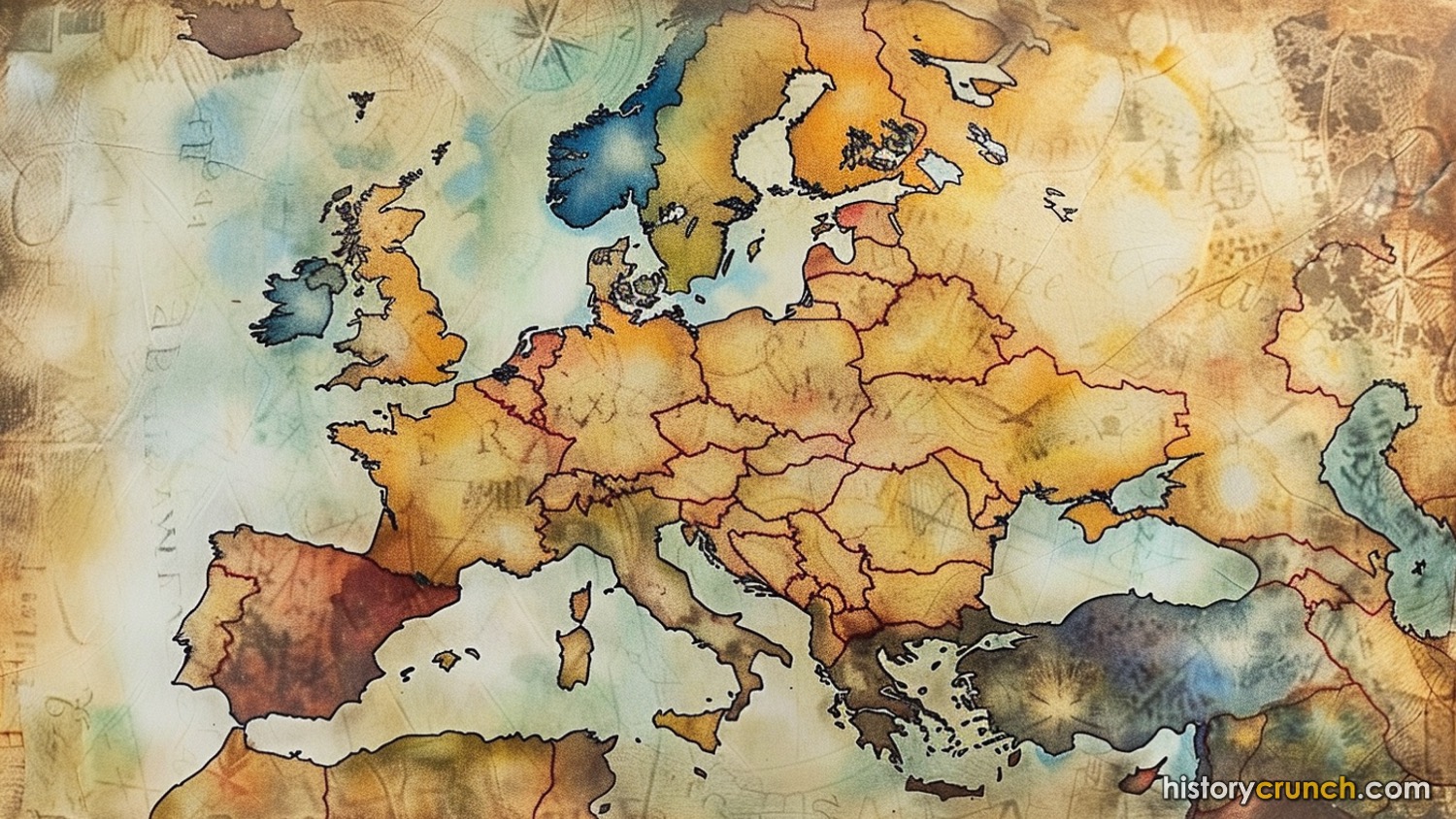
On October 7th, 1879 Bismarck signed a secret defensive alliance with Austria-Hungary: each would help the other if Russia attacked. He had spent the 1870s keeping France isolated by staying friends with both Russia and Austria, and the Congress of Berlin had cost him Russia's friendship. The alliance was renewed every five years until 1918 and was the cornerstone of German policy for forty years.
LEARN MORESHOW LESSwhy it matters · 1 key figureALLIANCEThe alliance systems that carried Europe into war in 1914 begin here. Bismarck meant it to keep the peace by keeping everyone else afraid; his successors used it to fight.
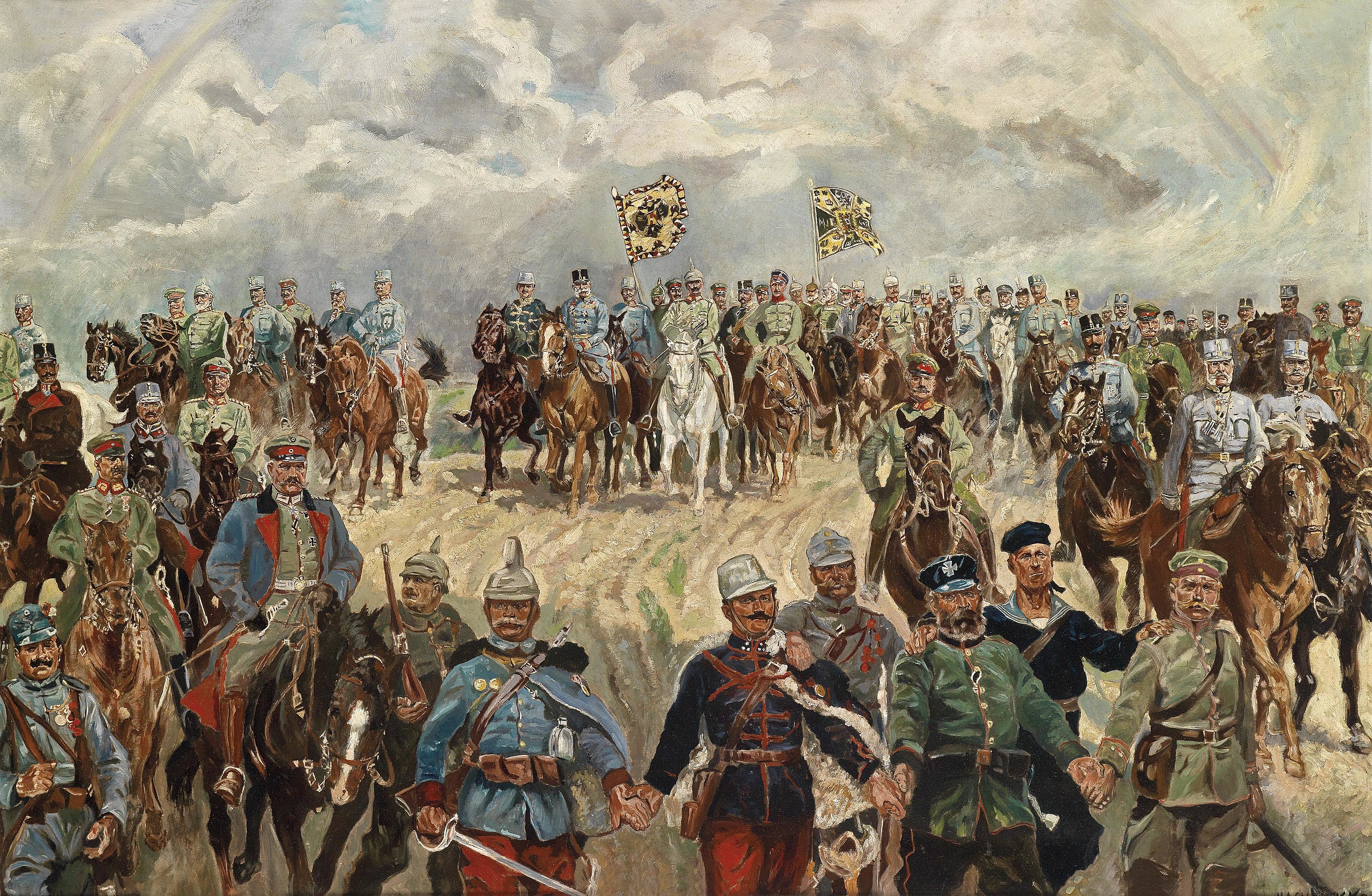
On May 20th, 1882 Italy, angry that France had taken Tunis, which Italians regarded as theirs, joined the Dual Alliance to make a Triple Alliance. Italy promised to help Germany if France attacked and to stay neutral in a war between Austria and Russia. The alliance was odd from the start: Italian nationalists still claimed Trieste and the Trentino from Austria, and in 1915 Italy went to war against its allies.
LEARN MORESHOW LESSwhy it mattersALLIANCEThe nation Garibaldi had made with a thousand volunteers now sat in a system of great-power alliances against the nation that had helped make it. Nationalism had become foreign policy.
Giuseppe Garibaldi died on his farm on the island of Caprera, off Sardinia, on June 2nd, 1882, aged seventy-four, having asked to be cremated on a pyre of wood in the open air like a hero of ancient Greece. The government buried him instead. He had fought in South America, Italy and, in 1870, for the French Republic, and had sat in the Italian parliament as a critic of everything it did. Italy went into mourning for a week.
LEARN MORESHOW LESSwhy it matters · 1 key figureDEATHGaribaldi was the one figure of the age who was loved in every country. He had given a kingdom away and lived on a rock growing vegetables, and that is why.
Wilhelm I died in Berlin on March 9th, 1888, aged ninety, after twenty-seven years as King of Prussia and seventeen as German Emperor, having survived two assassination attempts in 1878. His son Frederick III, already dying of throat cancer, reigned for ninety-nine days. On June 15th, 1888 Frederick's son became Kaiser Wilhelm II at twenty-nine, and within two years he had dismissed the chancellor who had made the empire.
LEARN MORESHOW LESSwhy it matters · key numbers · 1 key figureDEATHWilhelm I had let Bismarck govern for twenty-six years. His grandson intended to govern himself, and the difference decided the course of Germany.
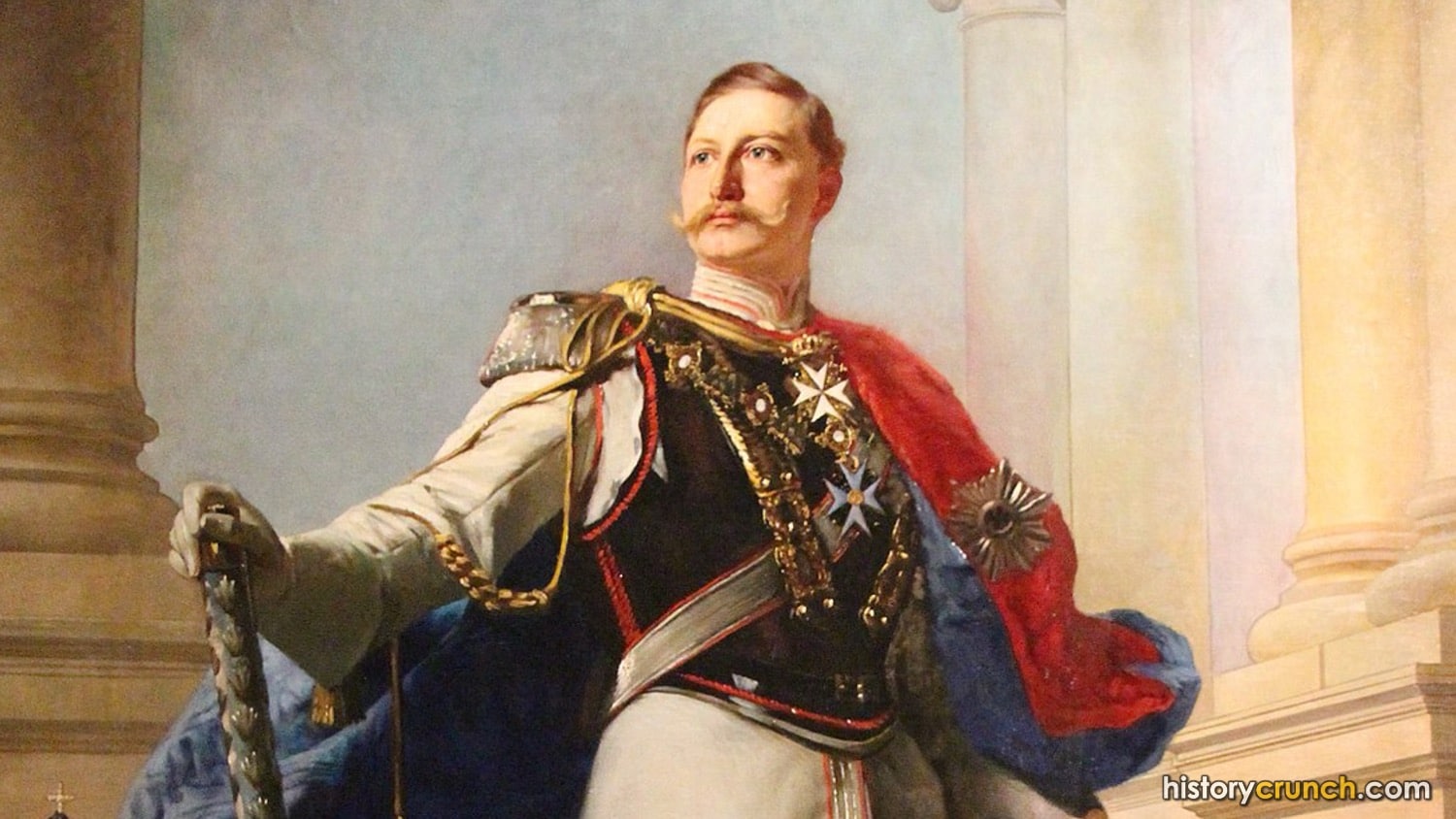
On June 15th, 1888 Wilhelm II, aged twenty-nine, became German Emperor and King of Prussia. A grandson of Queen Victoria, born with a withered left arm, restless, theatrical and certain of his own gifts, he believed the Kaiser should rule as well as reign. He announced that Germany's future lay on the water, built a navy to rival Britain's and told his soldiers that they might have to shoot their own parents if he ordered it.
LEARN MORESHOW LESSwhy it matters · 1 key figureACCESSIONBismarck had used German nationalism to build a state and then tried to keep it quiet. Wilhelm II fed it, and it fed on him.
On March 20th, 1890, after weeks of quarrels over the young Kaiser's wish to see ministers without him and his plans for social laws, Wilhelm II accepted Bismarck's resignation, which he had demanded. Bismarck was seventy-five and had governed Prussia for twenty-eight years and Germany for nineteen. The British magazine Punch printed a cartoon of him going down a ship's ladder while the Kaiser watched from the rail: Dropping the Pilot. Within months the Kaiser let Bismarck's secret treaty with Russia lapse.
LEARN MORESHOW LESSwhy it matters · 2 key figuresPOLITICSBismarck had built a Germany that only Bismarck could steer. When the pilot went, the ship steered for the rocks it had been kept away from.
On January 4th, 1894 France and Russia confirmed a military convention: if Germany attacked either, both would mobilize against it. Bismarck had spent twenty years keeping the republic and the tsar apart; within four years of his dismissal French loans and Russian need had brought them together. Germany now faced enemies on two fronts, which its generals had always feared, and drew up the Schlieffen Plan to beat France before Russia could move.
LEARN MORESHOW LESSwhy it mattersALLIANCEEurope had two alliances facing each other across Germany's borders. Every quarrel in the Balkans now had a chain of treaties attached to it.
In December of 1894 a Jewish army captain, Alfred Dreyfus, had been convicted on forged evidence of selling secrets to Germany and sent to Devil's Island. On January 13th, 1898 the novelist Emile Zola published an open letter to the President of the Republic headed 'J'accuse', naming the officers who had framed Dreyfus and covered it up. For the next year France divided between those who put the honor of the army and the nation first and those who put justice first. Dreyfus was pardoned in 1899 and cleared in 1906.
LEARN MORESHOW LESSwhy it matters · a sourceAFFAIRThe affair showed nationalism turning inward. The nationalist right defined the nation by blood, religion and the army, and treated a Jewish officer as a foreigner; the republic, in the end, did not.
IN THEIR OWN WORDS“J'accuse.”
Emile Zola, open letter in L'Aurore, January 13th, 1898WHAT TO NOTICEthe headline, which means 'I accuse'
Otto von Bismarck died at his estate of Friedrichsruh near Hamburg on July 30th, 1898, aged eighty-three, eight years after his dismissal, which he had spent attacking the Kaiser in newspapers and dictating his memoirs. He asked that his gravestone call him a faithful German servant of Kaiser Wilhelm I, a last jab at the grandson. He is said to have predicted that the great European war would come out of some foolish thing in the Balkans.
LEARN MORESHOW LESSwhy it matters · 1 key figureDEATHThe man who made Germany with three wars had spent his last twenty years in office trying to prevent a fourth. His successors did not.
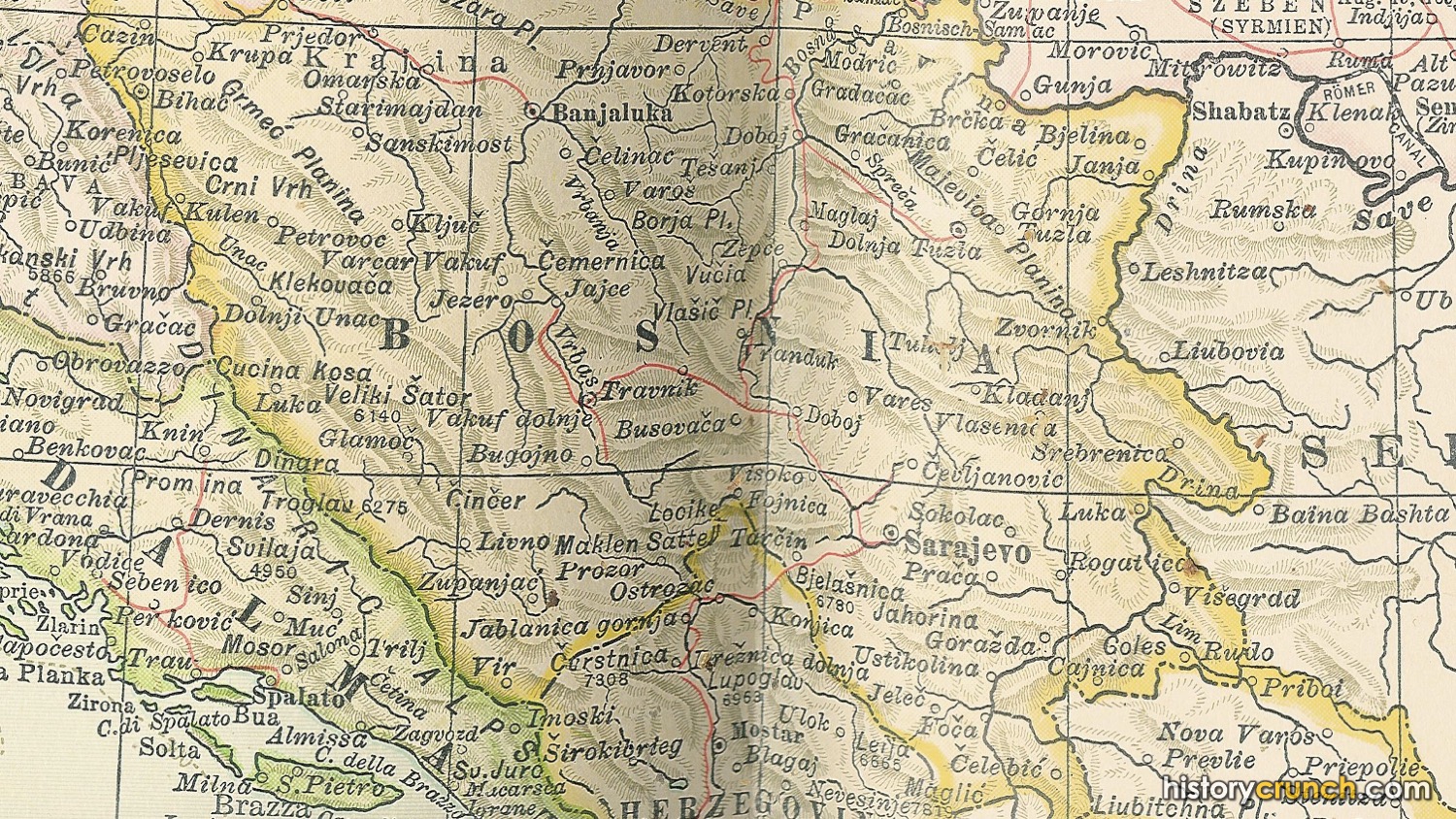
On October 6th, 1908 Austria-Hungary announced that it had annexed Bosnia and Herzegovina, which it had occupied since 1878 but which still belonged in law to the Ottoman Empire. Serbia, which counted the Serbs of Bosnia as its own, mobilized and demanded compensation; Russia backed Serbia until Germany told it, in March of 1909, to accept the annexation or face war. Russia, still weak from its defeat by Japan, backed down and swore not to do so again.
LEARN MORESHOW LESSwhy it mattersCRISISThe Bosnian crisis was a rehearsal for July of 1914 with the same cast: a Serbian grievance, a Russian promise, a German threat. Next time nobody backed down.
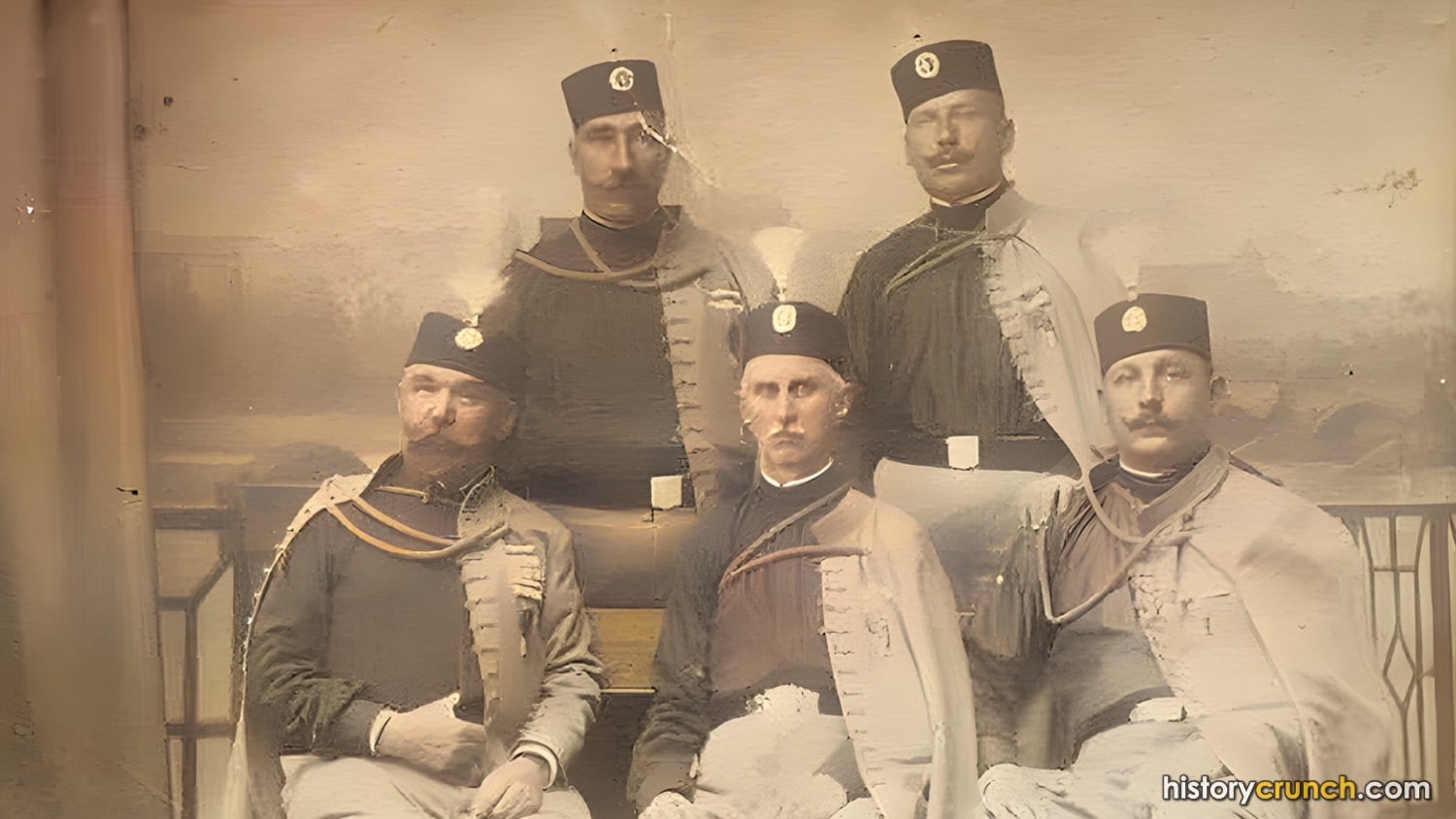
On May 9th, 1911 a group of Serbian army officers, several of whom had murdered their own king and queen in 1903, founded a secret society called Union or Death, known as the Black Hand. Its aim was to unite all Serbs, including those under Austrian rule in Bosnia, into a Greater Serbia by any means including assassination. Its leader, Colonel Dimitrijevic, called Apis, was head of Serbian military intelligence.
LEARN MORESHOW LESSwhy it mattersMOVEMENTThe Black Hand was nationalism as conspiracy, the same tradition as the Carbonari and Young Italy a century earlier, with better weapons and a state behind it.
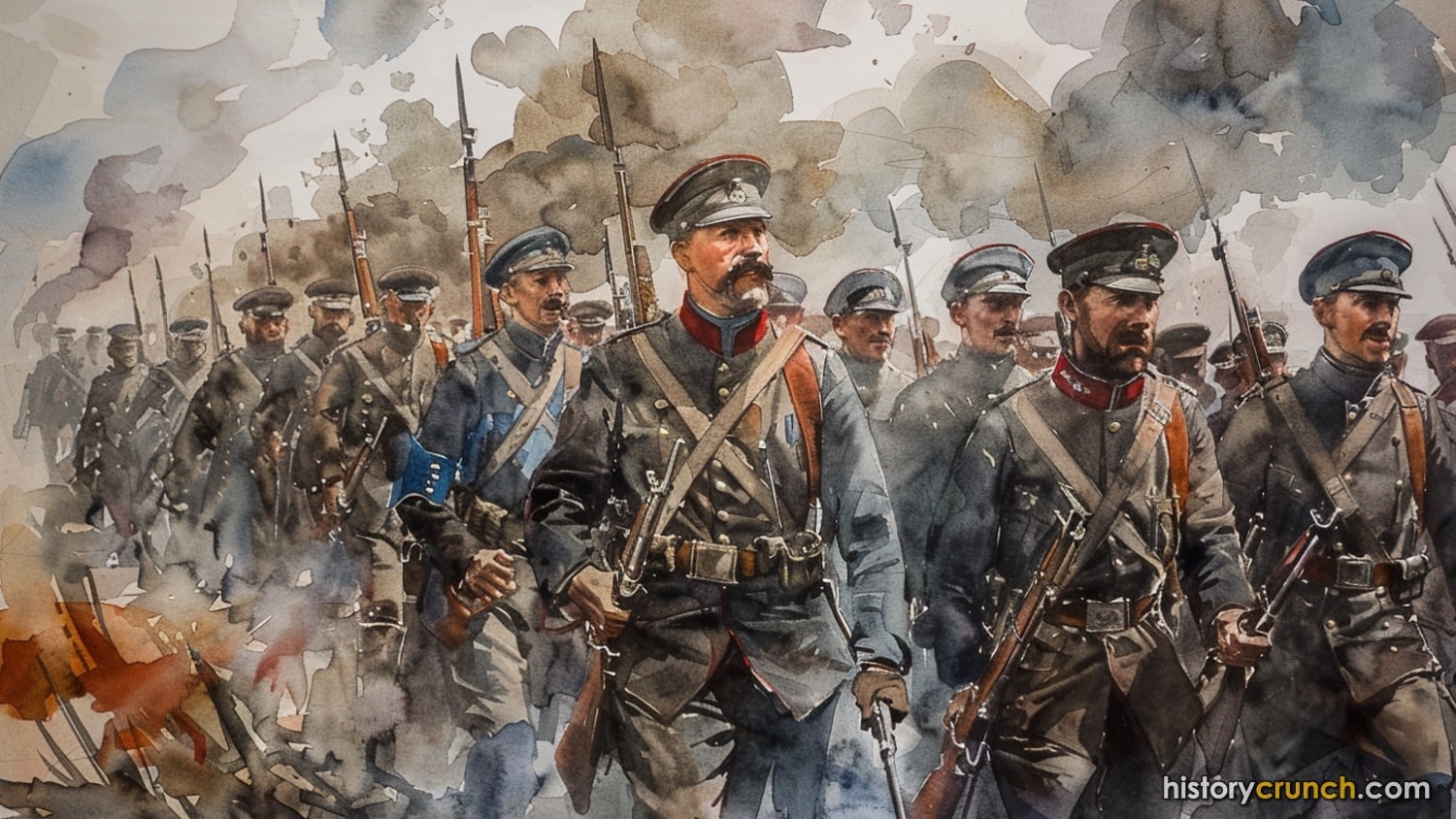
On October 8th, 1912 Montenegro declared war on the Ottoman Empire, and Serbia, Bulgaria and Greece followed within ten days. In seven weeks the Balkan League's armies took nearly everything the Ottomans still held in Europe, and the Bulgarians were within twenty miles of Constantinople. The great powers, meeting in London, created an independent Albania to keep Serbia off the Adriatic, which Austria demanded, and left the rest for the winners to divide.
LEARN MORESHOW LESSwhy it mattersWARFour nations that had not existed in 1800 had destroyed an empire's European provinces in two months. Austria-Hungary, with millions of South Slavs inside it, watched Serbia double in size.
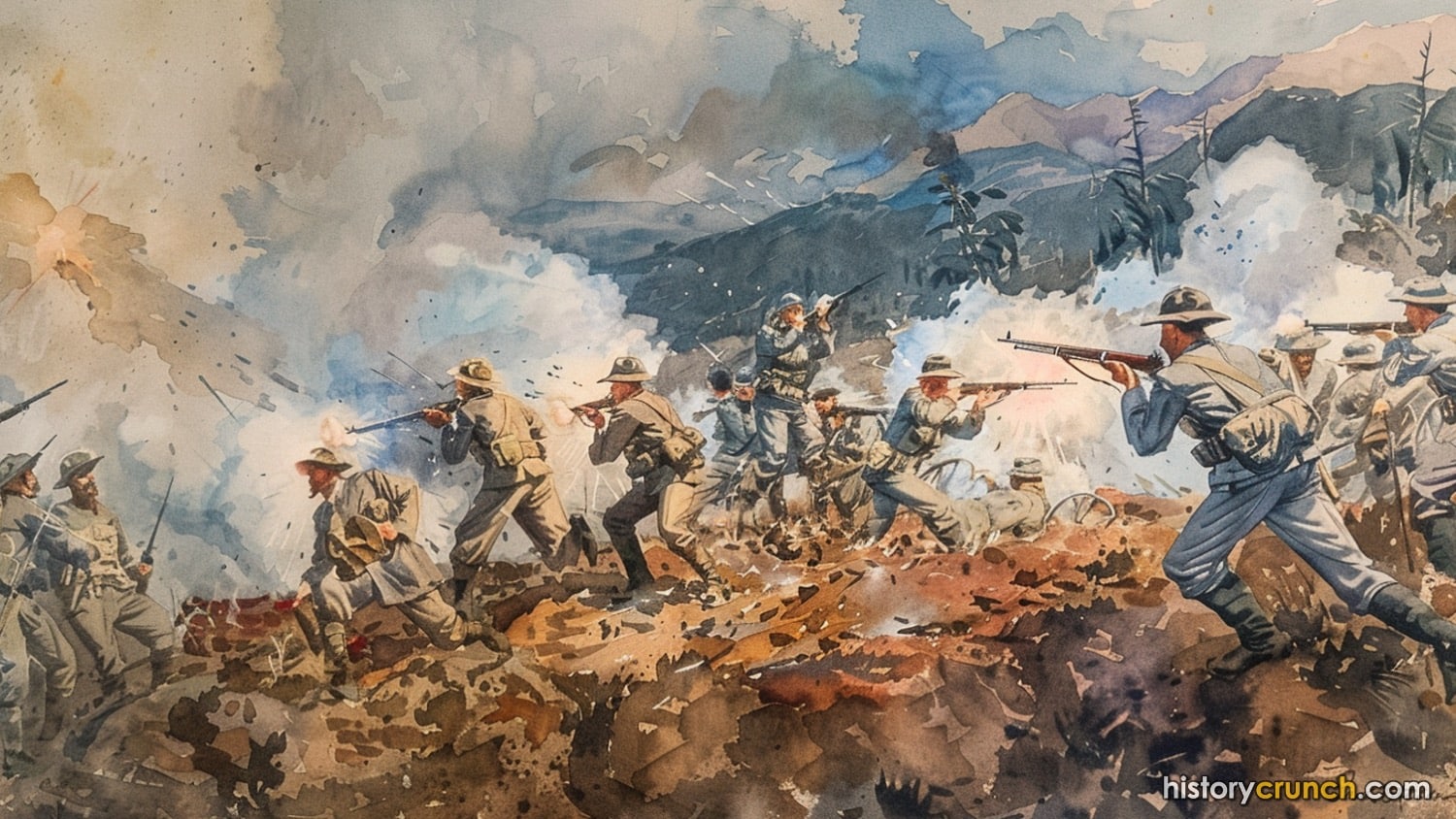
On June 29th, 1913 Bulgaria, angry at its share of Macedonia, attacked its former allies Serbia and Greece without warning. Romania and the Ottomans joined in against it, and within a month Bulgaria was beaten and had lost most of what it had won the year before. The Treaty of Bucharest in August gave Serbia and Greece the larger shares of Macedonia. Serbia had nearly doubled in size in a year and its officers talked openly of Bosnia next.
LEARN MORESHOW LESSwhy it mattersWARNationalism in the Balkans had gone from freeing peoples from the Turks to peoples fighting each other over villages. The powers that had encouraged it could no longer control it.
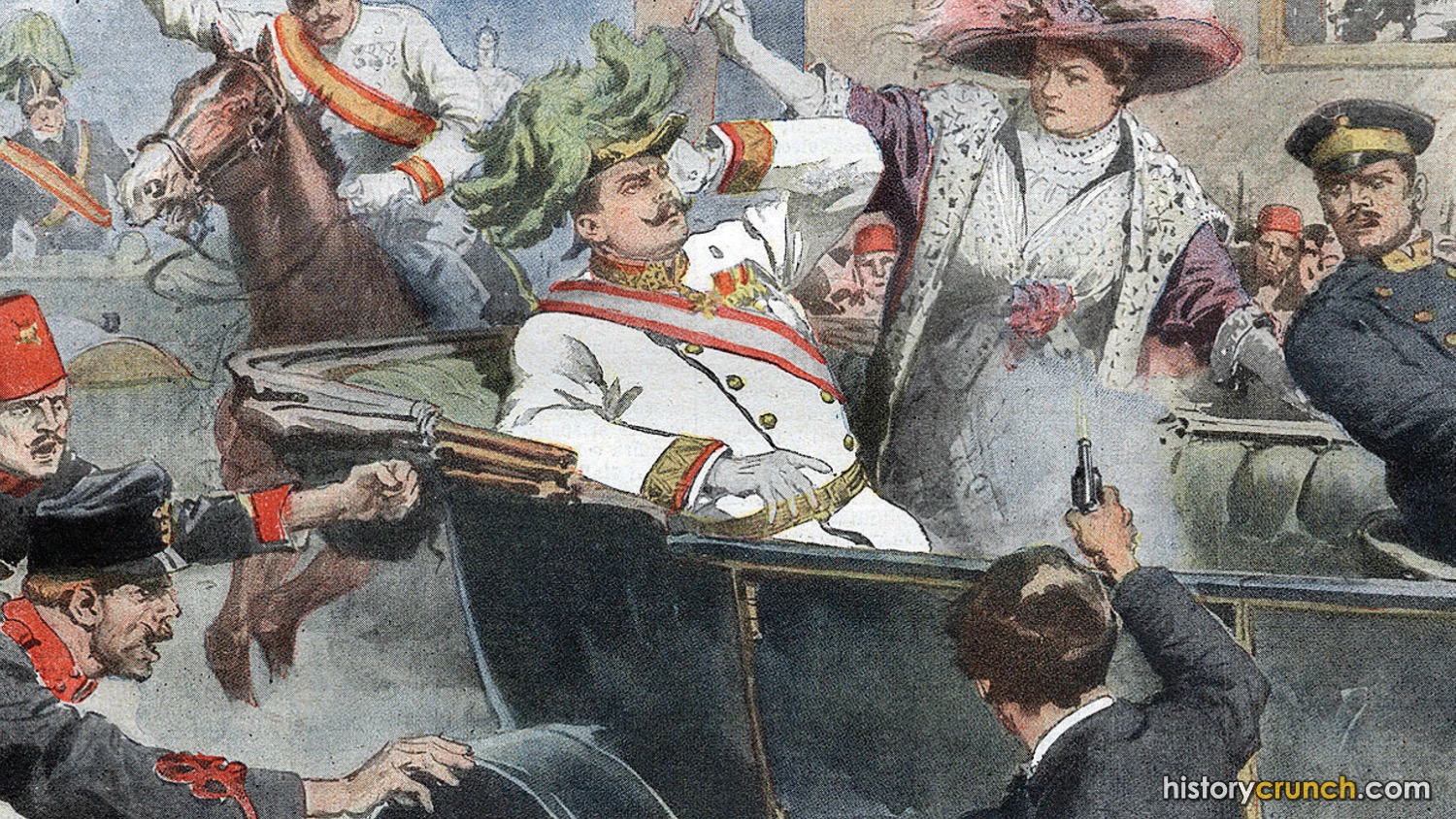
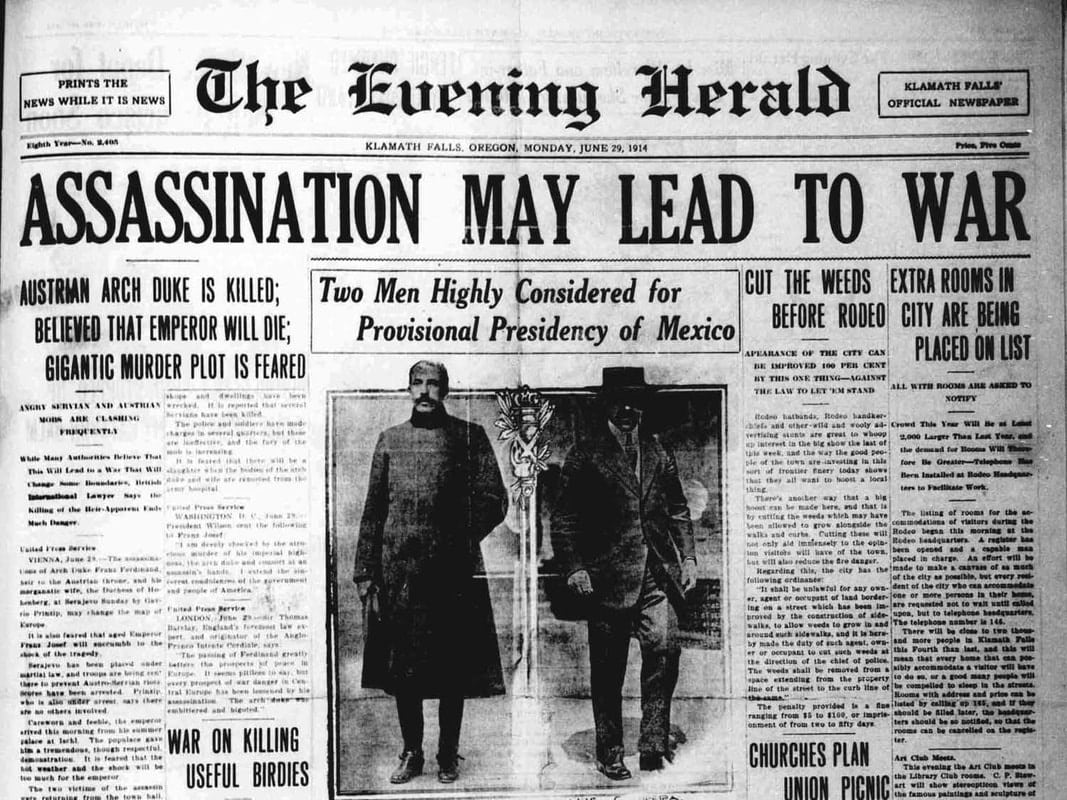
On June 28th, 1914, the anniversary of the medieval battle that Serbs mourn as the loss of their nation, Archduke Franz Ferdinand, heir to the Habsburg throne, drove through Sarajevo in an open car. A bomb missed him in the morning; in the afternoon his driver took a wrong turn, stopped to reverse, and a nineteen-year-old Bosnian Serb named Gavrilo Princip, armed by the Black Hand, stepped up and shot the Archduke and his wife Sophie. Both died within minutes.
LEARN MORESHOW LESSwhy it matters · key numbersASSASSINATIONOne student with a pistol, in the name of a nation, killed the heir of an empire made of nations. Every alliance signed since 1879 then did what it had promised.
On July 23rd, 1914 Austria-Hungary, with Germany's promise of support, sent Serbia an ultimatum written to be refused. Serbia accepted nearly all of it; Austria declared war anyway on July 28th. Russia mobilized for Serbia on the 30th, Germany declared war on Russia on August 1st and on France on the 3rd, marched through Belgium, and Britain declared war on Germany on August 4th. Crowds cheered in every capital.
LEARN MORESHOW LESSwhy it matters · key numbersWARThe century that had begun with a French crowd swearing loyalty to the nation ended with the nations of Europe marching against each other. Nationalism had made Italy and Germany, freed Greece and Serbia, and now it took ten million lives.

I'm the founder of History Crunch, which I first began in 2015 with a small team of like-minded professionals. I have an Education Degree with a focus in Social Studies education. I spent nearly 15 years teaching history, geography and economics in secondary classrooms to thousands of students. Now I use my time and passion researching, writing and thinking about history education for today's students and teachers.

I'm a passionate history and geography teacher with over 15 years of experience working with students in the middle and high school years. I have an Education Degree with a focus in World History. I have been writing articles for History Crunch since 2015 and love the challenge of creating historical content for young learners!
To cite this timeline as a source, use one of the formats below.
MLA: Millar, B., and Elias Beck. “Age of Nationalism Timeline.” HistoryCrunch, 21 September 2026, https://historycrunch.com/age-of-nationalism-timeline/.
APA: Millar, B., & Beck, E. (2026). Age of Nationalism Timeline. HistoryCrunch. https://historycrunch.com/age-of-nationalism-timeline/
Chicago: Millar, B., and Elias Beck. “Age of Nationalism Timeline.” HistoryCrunch. September 21, 2026. https://historycrunch.com/age-of-nationalism-timeline/
© History Crunch
From 1789: the people as the source of authority. Fichte added language and history, and the two definitions have argued ever since.
It made every citizen a soldier. The levee en masse of 1793 was copied by Prussia in 1813 and by everyone by 1914.
By showing that a people could remake itself, and by giving them a foreigner to hate.
Because its makers had watched nationalism destroy the old Europe and drew borders to prevent it. Every rising for fifty years was against that map.
They gave it songs, flags, legends and martyrs. Byron died for Greece and Delacroix painted Liberty on the barricade.
The French said a choice; Fichte said an inheritance. The Dreyfus affair and the Black Hand show where the second one leads.
By nine years of war, the sympathy of Europe and a naval battle the powers had not meant to fight.
France changed kings, Belgium became a country, Poland rose and lost. The Vienna map could be torn from below.
A united Italian republic won by the people. He got a united Italian kingdom won by diplomacy and died calling it a betrayal.
Because the Italian states could not beat Austria alone and a French republic destroyed the Roman one.
It made a Germany and had no one to give it to. The King of Prussia would not take a crown from a parliament.
By using one nation against another: Croats against Hungarians, Russians against both.
Railways, a modern army, the Crimean War, a deal in a spa and a war he provoked. Then Garibaldi did the rest.
Speed, luck, a rotten Bourbon state and a leader whom Sicilian peasants thought was a saint.
Both, and neither could have done it without the other. Teano is where the two roads met.
Because the Zollverein of 1834 put Prussia at the head of German trade thirty-seven years before Bismarck put it at the head of Germany.
Three wars in seven years, each arranged so that Prussia's enemy appeared to start it.
That Germany would be made by Prussian power, not by the speeches and votes that had failed in 1848.
It did not; Bismarck did. He needed France to attack so that the southern German states would fight beside Prussia.
Because Bismarck wanted France to understand what had happened. It did, and remembered until 1918.
When the French garrison went home to fight Prussia, the Italian army walked in through a hole in the wall.
Because three empires had divided it and none would let it go. It rose in 1830 and 1863 and was reborn in 1918 from their ruins.
By playing them against each other and buying off the Hungarians. It lasted until 1918.
New nations carved from the Ottoman Empire wanted more, and two great powers backed different ones.
He built them to keep the peace and keep France alone. His successors let Russia go, and Europe split in two.
Bismarck had used it and then tried to keep it quiet. Wilhelm fed it, with a navy, colonies and speeches.
It gave France a wound to nurse for forty-four years and a nationalism that turned, in the Dreyfus affair, on its own citizens.
It did not start it alone. It wanted the Serbs of Bosnia, Austria would not give them up, and every great power had a treaty that said what it must do next.
In August of 1914, with the nations it had made marching against each other.
Greeks, Belgians, Italians, Germans, Serbs and Romanians did. Poles, Czechs, Croats and Irish waited until 1918 or later.
No question matches that word.
Research question 1From 1789: the people as the source of authority. Fichte added language and history, and the two definitions have argued ever since.
Research question 2It made every citizen a soldier. The levee en masse of 1793 was copied by Prussia in 1813 and by everyone by 1914.
Research question 3By showing that a people could remake itself, and by giving them a foreigner to hate.
Research question 4Because its makers had watched nationalism destroy the old Europe and drew borders to prevent it. Every rising for fifty years was against that map.
Research question 5They gave it songs, flags, legends and martyrs. Byron died for Greece and Delacroix painted Liberty on the barricade.
Research question 6The French said a choice; Fichte said an inheritance. The Dreyfus affair and the Black Hand show where the second one leads.
Research question 7By nine years of war, the sympathy of Europe and a naval battle the powers had not meant to fight.
Research question 8France changed kings, Belgium became a country, Poland rose and lost. The Vienna map could be torn from below.
Research question 9A united Italian republic won by the people. He got a united Italian kingdom won by diplomacy and died calling it a betrayal.
Research question 10Because the Italian states could not beat Austria alone and a French republic destroyed the Roman one.
Research question 11It made a Germany and had no one to give it to. The King of Prussia would not take a crown from a parliament.
Research question 12By using one nation against another: Croats against Hungarians, Russians against both.
Research question 13Railways, a modern army, the Crimean War, a deal in a spa and a war he provoked. Then Garibaldi did the rest.
Research question 14Speed, luck, a rotten Bourbon state and a leader whom Sicilian peasants thought was a saint.
Research question 15Both, and neither could have done it without the other. Teano is where the two roads met.
Research question 16Because the Zollverein of 1834 put Prussia at the head of German trade thirty-seven years before Bismarck put it at the head of Germany.
Research question 17Three wars in seven years, each arranged so that Prussia's enemy appeared to start it.
Research question 18That Germany would be made by Prussian power, not by the speeches and votes that had failed in 1848.
Research question 19It did not; Bismarck did. He needed France to attack so that the southern German states would fight beside Prussia.
Research question 20Because Bismarck wanted France to understand what had happened. It did, and remembered until 1918.
Research question 21When the French garrison went home to fight Prussia, the Italian army walked in through a hole in the wall.
Research question 22Because three empires had divided it and none would let it go. It rose in 1830 and 1863 and was reborn in 1918 from their ruins.
Research question 23By playing them against each other and buying off the Hungarians. It lasted until 1918.
Research question 24New nations carved from the Ottoman Empire wanted more, and two great powers backed different ones.
Research question 25He built them to keep the peace and keep France alone. His successors let Russia go, and Europe split in two.
Research question 26Bismarck had used it and then tried to keep it quiet. Wilhelm fed it, with a navy, colonies and speeches.
Research question 27It gave France a wound to nurse for forty-four years and a nationalism that turned, in the Dreyfus affair, on its own citizens.
Research question 28It did not start it alone. It wanted the Serbs of Bosnia, Austria would not give them up, and every great power had a treaty that said what it must do next.
Research question 29In August of 1914, with the nations it had made marching against each other.
Research question 30Greeks, Belgians, Italians, Germans, Serbs and Romanians did. Poles, Czechs, Croats and Irish waited until 1918 or later.