Nationalism was one of the most important forces to shape the history of Europe during the 19th century, and understanding its causes is key to understanding the modern world. Nationalism helped create the countries of Germany and Italy, weakened old empires such as the Ottoman Empire and Austro-Hungarian Empire, and later became a major long-term cause of World War I. The growth of nationalism did not happen by accident. Instead, it developed out of a series of powerful events and ideas that spread across Europe in the decades after 1789, from the French Revolution and the conquests of Napoleon to the rise of Romanticism and the desire of different groups to govern themselves.
Nationalism is the idea that people who share a common language, culture, history, and identity should have the right to govern themselves as a single independent nation. Nationalists believe that the nation is the most natural and important unit of political organization, and that each group of people with a shared identity deserves its own state. Before the late 18th century, most people identified themselves by their religion, their village, or their loyalty to a king rather than by a sense of national belonging. The causes of nationalism explain how that older way of thinking changed.
What Was 19th Century Europe?
The 19th century was a period of constant change and competition in Europe. It was the height of European imperialism, when nations raced to build overseas empires, and it was also the era when nationalism swept across the continent. During these years the map of Europe was redrawn several times as new nations were formed and old empires began to break apart.
At the start of the century, much of Europe was still ruled by kings, emperors, and a small class of nobles. Large multiethnic empires, such as the Austro-Hungarian Empire and the Ottoman Empire, contained many different groups of people who spoke different languages and followed different traditions. As nationalism grew, more of these groups began to demand the right to rule themselves. This desire for self-rule created deep tensions that would eventually help push Europe toward war in 1914.
How Did the French Revolution Cause Nationalism?
The French Revolution of 1789 was one of the most important causes of modern nationalism. Before the Revolution, the people of France were subjects of a king and were expected to be loyal to the royal family and the church. During the Revolution, the French people overthrew the monarchy and declared that power came from the people, or the nation, rather than from a king. This was a completely new way of thinking about government and identity.
More specifically, the Revolution replaced loyalty to the king with loyalty to the French nation and its ideals of liberty, equality, and fraternity. The revolutionaries used national symbols to spread these ideas, including the tricolor flag and the anthem known as “La Marseillaise.” In fact, this new sense of belonging encouraged ordinary people to see themselves as citizens of a shared nation for the first time. These ideas did not stay inside France for long, and they soon began to spread to other parts of Europe.
How Did Napoleon Spread Nationalism?
The rise of Napoleon Bonaparte played a major role in spreading nationalism across Europe. In the early 19th century, Napoleon led French armies in a series of conquests that placed much of Europe under French control. Wherever his soldiers marched, they carried the revolutionary ideas of liberty, equality, and the nation with them. As a result, people in other countries were introduced to the belief that a nation should govern itself.
At the same time, Napoleon’s conquests produced an unexpected result. Many people resented being ruled and taxed by a foreign power, and their anger helped awaken a sense of national identity in places such as the German states, Spain, and Russia. In reality, the resistance against French occupation encouraged people who shared a language and culture to think of themselves as one nation with a common enemy. In this way, Napoleon both spread nationalist ideas and provoked nationalism against French rule.
How Did the Congress of Vienna Affect Nationalism?
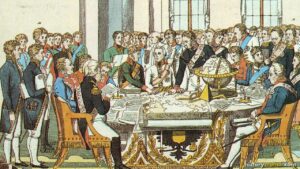
After Napoleon was finally defeated in 1815, the leading powers of Europe met at the Congress of Vienna to redraw the map of the continent. The meeting was led by the conservative Austrian statesman Prince Klemens von Metternich, and it brought together representatives from Austria, Prussia, Russia, Great Britain, and France. Their main goal was to restore the old order that had existed before the French Revolution and to prevent future revolutions.
To do this, the Congress worked to restore monarchs to their thrones and to create a balance of power so that no single nation could dominate Europe. However, the leaders at Vienna ignored the growing desire of many groups to govern themselves. For instance, dozens of German states were loosely joined together in a new German Confederation instead of being united into a single nation. Rather than stopping nationalism, these decisions frustrated many people and caused nationalist feelings to grow stronger beneath the surface.
How Did Romanticism and Culture Cause Nationalism?
Nationalism was not only a political movement, but also a cultural one. During the early 19th century, a movement known as Romanticism spread across Europe. Romanticism emphasized feelings, emotion, and imagination rather than reason, and it encouraged people to take pride in their own language, history, and folk traditions. As a result, writers, poets, artists, and musicians began to celebrate the unique culture of their people.
This cultural pride helped turn nationalism into something people could feel deeply rather than only think about. For example, scholars collected old folk stories and studied their native languages in order to strengthen a shared national identity. In many regions, a common language became one of the most powerful signs that a group of people belonged to the same nation. In this way, culture gave people a strong emotional reason to want their own nation-state.
How Did the Desire for Self-Rule Cause Nationalism?
Another important cause of nationalism was the growing belief in self-determination. Self-determination is the idea that people who share a common language, culture, or history should have the right to govern themselves rather than be ruled by a foreign power. This belief directly challenged the large multiethnic empires that controlled much of Europe.
As stated above, empires such as the Austro-Hungarian Empire and the Ottoman Empire were made up of many different groups of people. As nationalism grew, these groups increasingly wanted independence. For instance, the Greeks won their independence from Ottoman rule following a war of independence in the 1820s. Soon after, groups such as the Serbs, Bulgarians, and Romanians used similar nationalist arguments to demand their own states. This desire for self-rule slowly weakened the old empires and reshaped the map of Europe.
How Did the Revolutions of 1848 Cause Nationalism?
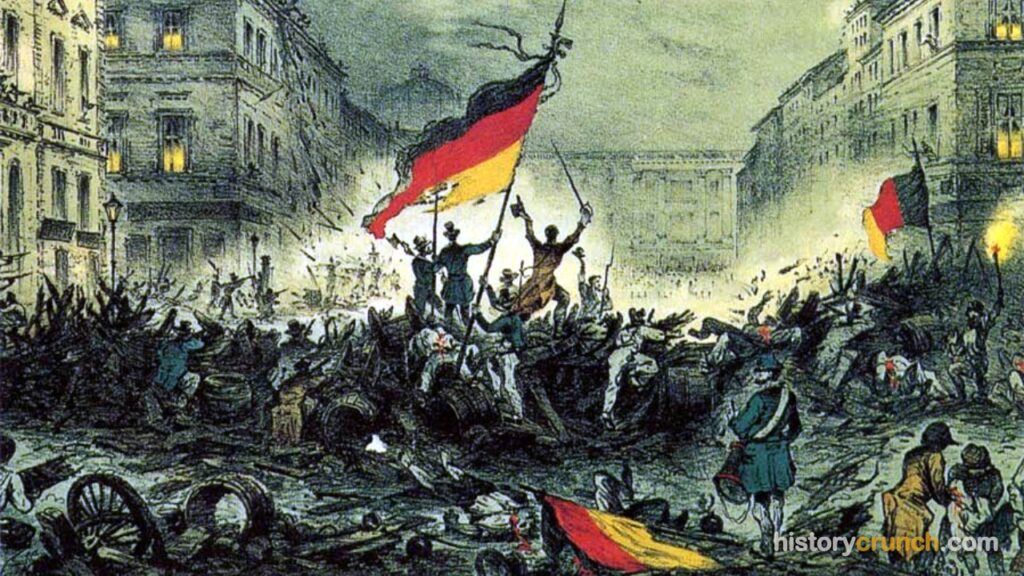
The Revolutions of 1848 were one of the clearest examples of nationalism in action. These revolutions, sometimes called the Spring of Nations, broke out across Europe as people demanded both liberal political reforms and the right of national self-determination. Revolts spread quickly from France to Hungary to the Italian states.
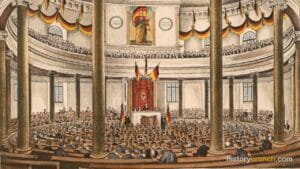
Although most of these revolutions were eventually crushed by the conservative powers, they had a lasting effect. They showed how strong nationalist feeling had become and revealed how many people were willing to fight for the idea of a nation. For instance, nationalists in the Italian and German states used the energy of 1848 to build support for later movements to unify their peoples into single countries. In this way, even a failed revolution helped push nationalism forward.
Significance of Causes of Nationalism in Europe
The causes of nationalism in Europe were enormously significant because they transformed the political map of the entire continent. Nationalism drove the unification of Germany and Italy, which both formally became countries in 1871 when smaller kingdoms joined together into single nations. At the same time, nationalism weakened and eventually broke apart the large multiethnic empires that had ruled Europe for centuries.
The effects of these causes reached far beyond the 19th century. The tensions created by nationalism helped set the stage for World War I in 1914, as rival nations distrusted one another and different groups fought for control and independence. Later, when taken to dangerous extremes, nationalism became one of the driving forces behind the rise of fascism and the causes of World War II. For all of these reasons, the causes of nationalism in Europe remain some of the most important topics in modern history.
Frequently Asked Questions
What Is the Simple Definition of Nationalism?
Nationalism is the belief that people who share a common language, culture, and history should govern themselves as one independent nation. It places loyalty to the nation above loyalty to a king, a region, or an empire. This idea became especially powerful in Europe during the 19th century and helped create many of the countries that exist today.
What Were the Main Causes of Nationalism in Europe?
The main causes of nationalism in Europe were the French Revolution, the conquests of Napoleon, the decisions of the Congress of Vienna, the rise of Romanticism, the desire for self-determination, and the Revolutions of 1848. Each of these events or ideas encouraged people to identify strongly with their nation. Together they spread nationalist thinking across the entire continent during the 1800s.
Why Did Nationalism Grow in the 19th Century?
Nationalism grew in the 19th century because new ideas about the nation spread quickly through revolutions, war, and culture. The growth of printing and education allowed more people to read newspapers and books in their own language, which strengthened a shared identity. As more people learned about the idea of the nation, more of them wanted a country of their own.
How Did Nationalism Lead to World War I?
Nationalism led to World War I by creating deep rivalries and distrust between the nations of Europe. It caused countries to build up their militaries and pushed different ethnic groups to demand independence, which was especially dangerous in the Balkans. These tensions turned a single assassination in 1914 into a worldwide war.
Which Countries Were Created by Nationalism?
Germany and Italy are the two most famous countries created by nationalism, as both were unified from smaller states in 1871. Nationalism also helped create independent nations in the Balkans, including Greece, Serbia, Bulgaria, and Romania, as they broke away from the Ottoman Empire. These new nations changed the balance of power in Europe for decades to come.
Cite This Article
To cite this article as a source, use one of the formats below.
MLA: Millar, B. “Causes of Nationalism in Europe: A Detailed Summary.” HistoryCrunch, 12 August 2026, https://historycrunch.com/causes-of-nationalism-in-europe/.
APA: Millar, B. (2026). Causes of Nationalism in Europe: A Detailed Summary. HistoryCrunch. https://historycrunch.com/causes-of-nationalism-in-europe/
Chicago: Millar, B. “Causes of Nationalism in Europe: A Detailed Summary.” HistoryCrunch. August 12, 2026. https://historycrunch.com/causes-of-nationalism-in-europe/
Sources
- Lucy Riall, Garibaldi / The Italian Risorgimento.
- Jonathan Steinberg, Bismarck: A Life.
- Fordham Modern History Sourcebook
- German History in Documents and Images (GHDI)