Nationalism was one of the most powerful forces to shape the modern history of Europe, and its impacts reshaped the map of the continent, toppled ancient empires, and set the stage for both unity and war. Nationalism is the belief that people who share a common language, culture, history, and identity should govern themselves as a single independent nation rather than being ruled by a foreign power or a dynastic empire. Across the 19th and early 20th centuries, this idea moved out of the writings of a small number of thinkers and into the hearts of millions of ordinary Europeans. In the process, it helped create new countries such as Germany and Italy, weakened multi-ethnic empires such as Austria-Hungary and the Ottoman Empire, and eventually helped push Europe into the First World War.
As a political idea, nationalism rests on a few core principles. The first is the nation itself, meaning a group of people bound together by a shared language, culture, history, and sense of belonging. The second is self-determination, which is the belief that each nation has the right to rule itself and decide its own future without control by an outside power. The third is national loyalty, which asks citizens to place their devotion to the nation above loyalty to a king, a region, or a religion. Together, these principles gave people a new way of thinking about who they were and who should govern them.
What Was the Age of Nationalism in Europe?
The 19th century is often called the great age of nationalism in Europe. Before the late 18th century, most people identified themselves first by their religion, their village, or their loyalty to a king rather than by a sense of national identity. This began to change during the French Revolution, which started in 1789 and introduced the idea that the people, not a monarch, were the true source of political power.
The French Revolution was especially important in spreading nationalism, and the wars that followed carried these ideas across the continent. When Napoleon Bonaparte‘s armies marched through Europe in the early 1800s, they brought revolutionary ideas with them wherever they went. Ironically, French conquest also sparked nationalist resistance, as peoples living under French rule began to assert their own national identities as a way to fight back. By the time Napoleon was defeated in 1815, nationalism had become a force that Europe’s rulers could no longer ignore.
The rulers who gathered at the Congress of Vienna in 1815 tried to restore the old order and suppress both nationalism and liberalism. Yet the ideas unleashed by the revolutionary era could not be stamped out. Over the following decades, nationalism continued to grow, and it produced some of the most important political changes in modern European history.
How Did Nationalism Lead to the Unification of Italy and Germany?
One of the most dramatic impacts of nationalism was the creation of two entirely new nations, Italy and Germany. In the early 19th century, neither existed as a unified country. Instead, each was a patchwork of separate states, kingdoms, and territories, many of them under foreign influence, especially from Austria.
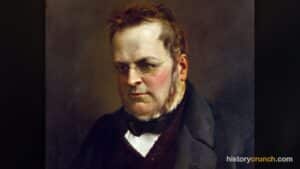
The movement to unite Italy was known as the Risorgimento, an Italian word meaning “resurgence.” It was driven by leaders with different visions who ultimately worked toward the same goal. Giuseppe Mazzini inspired a generation with the dream of a united Italian republic, Count Camillo di Cavour used skillful diplomacy and alliances, and Giuseppe Garibaldi led armed campaigns that won large parts of the peninsula. By 1871, these efforts had combined to form the Kingdom of Italy under King Victor Emmanuel II.
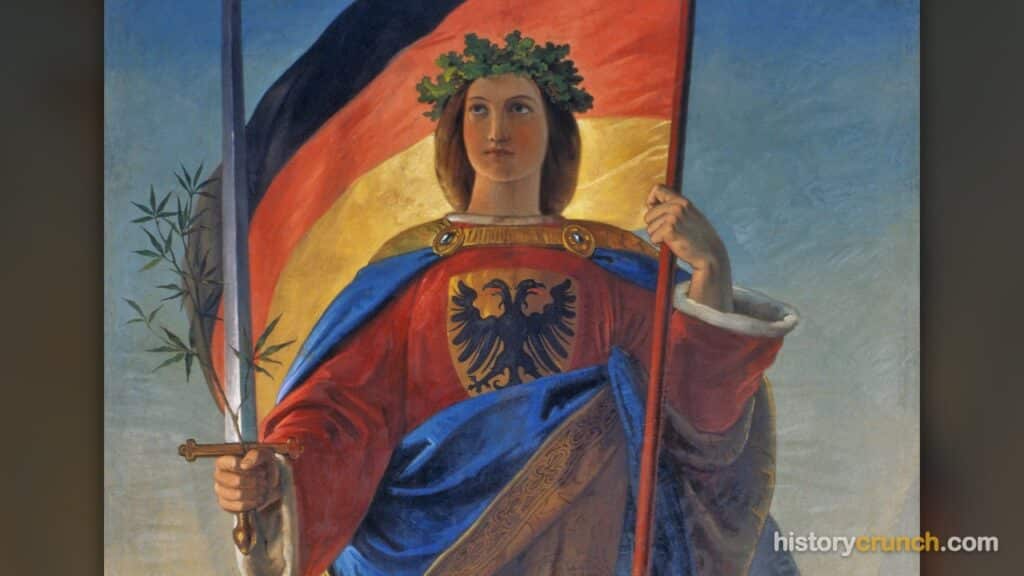
Germany followed a similar path. In the early 1800s, the German lands were divided into dozens of separate states, with Prussia and Austria the most powerful among them. The unification of Germany was largely orchestrated by Otto von Bismarck, the leading statesman of Prussia, who used a policy often described as “blood and iron.” More specifically, Bismarck led a series of wars against Denmark, Austria, and France that stirred German national feeling and drew the German states together. In 1871, following victory in the Franco-Prussian War, the German states united into a single empire under the Prussian king, who became Emperor Wilhelm I.
How Did Nationalism Cause the Revolutions of 1848?
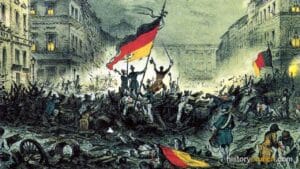
Before Italy and Germany achieved unification, nationalist feeling helped ignite a wave of uprisings across the continent. The Revolutions of 1848, sometimes called the Spring of Nations, were the most dramatic expression of nationalist feeling in the middle of the century. From Paris to Vienna to Berlin, crowds filled the streets demanding political freedom, better conditions, and the right of peoples to govern themselves.
Many of these revolutions combined nationalism with liberalism, which is the belief in constitutional government and individual rights. In the German states, nationalists gathered at Frankfurt to try to draft a constitution for a united Germany. In the Italian states, revolts broke out against Austrian control. In the Austrian Empire, revolution in Vienna forced out the conservative leader Klemens von Metternich, and Hungarian nationalists demanded greater freedom.
In reality, most of these revolutions failed in the short term. Conservative rulers regained control, and many of the hoped-for reforms were rolled back by 1849. Even so, the revolutions had a lasting impact. They proved that people were willing to challenge the old order and showed that nationalism and liberalism had deep support. As stated above, the failures of 1848 pushed later nationalists to rely less on mass protest and more on strategy, alliances, and war, an approach that eventually brought success in Italy and Germany.
How Did Nationalism Weaken Europe’s Empires?
While nationalism built new nations, it also tore apart old ones. In the multi-ethnic empires of Austria-Hungary and the Ottoman Empire, many different peoples lived under a single ruler. Nationalism took a powerful form in these lands, driving peoples who felt their identities were being suppressed to demand independence or self-rule.
The Balkans, a region in southeastern Europe, became one of the most unstable areas as a result. For instance, the Greeks won independence from Ottoman rule following a war of independence in the 1820s. Over the following decades, Serbs, Bulgarians, Romanians, and others used nationalist arguments to demand their own states as well. As these groups broke away, the once mighty Ottoman Empire steadily lost territory in Europe, and Austria-Hungary struggled to hold its many nationalities together.
How Did Nationalism Help Cause World War I?
By the early 20th century, nationalism had taken on a more aggressive and competitive form. Instead of only inspiring peoples to seek freedom, it pushed nations to compete for power, territory, and prestige. This growing rivalry became one of the main causes of the First World War.
Nationalism pushed countries to expand their influence in Europe, and this caused tensions between the major powers. For example, it fueled an intense arms race and naval race, as nations built up huge armies and fleets to protect themselves. At the outbreak of fighting in 1914, France had over 1 million soldiers while Germany had over 2 million. This buildup showed the deep distrust between the powers and made it easier for them to go to war once a crisis began.
The most direct spark came from Balkan nationalism. In fact, the event that set off World War I was the assassination of Archduke Franz Ferdinand of Austria-Hungary on June 28th, 1914. He was killed by Gavrilo Princip, a Bosnian nationalist and member of a secret organization called the Black Hand, which promoted Serbian and Slavic nationalism in protest of Austrian control in the Balkans. Austria-Hungary blamed Serbia, and within weeks the alliances of Europe pulled the continent into a devastating war.
Significance of Impacts of Nationalism in Europe
The impacts of nationalism in Europe were enormous and long lasting. Over the course of a single century, nationalism transformed the way people thought about identity, loyalty, and government. It replaced rule by monarchs and foreign powers with the idea that peoples had the right to govern themselves, a principle known as self-determination that later spread far beyond Europe to Asia, Africa, and the Americas.
Nationalism also had two very different sides. On one hand, it united divided peoples, created strong new nations like Germany and Italy, and inspired movements for freedom and cultural pride. On the other hand, it stirred bitter rivalries, broke apart empires, and helped push Europe into the First World War, one of the deadliest conflicts in human history. Because of these effects, nationalism remains one of the most important ideas for understanding both the achievements and the tragedies of modern European history.
Frequently Asked Questions
What are the main effects of nationalism in Europe?
The main effects of nationalism in Europe were the creation of new nation-states, the collapse of multi-ethnic empires, and rising tensions that helped cause major wars. Nationalism also encouraged people to take greater pride in their shared language and culture. At the same time, it reshaped the political map of the continent more than almost any other idea of the 1800s.
When did nationalism become powerful in Europe?
Nationalism became a powerful force in Europe during the 19th century, which is often called the great age of nationalism. Its roots lay in the French Revolution of 1789 and the wars that followed under Napoleon. By the middle of the century, it had spread to nearly every part of the continent.
Was nationalism a positive or negative force in Europe?
Nationalism was both a positive and a negative force, depending on how it was used. It could unite people, build new nations, and encourage pride in shared culture and history. However, it could also create hostility between countries, encourage discrimination against minorities, and drive nations toward war.
How did nationalism affect the Balkans?
Nationalism made the Balkans one of the most unstable regions in Europe, which is why the area was sometimes called the “powder keg” of the continent. Many different ethnic groups living under the Ottoman and Austro-Hungarian empires wanted their own independent states. Their competing demands created constant tension and eventually helped trigger the First World War.
What is the difference between nationalism and liberalism?
Nationalism is the belief that people who share a common identity should form their own nation, while liberalism is the belief in constitutional government, individual rights, and limits on the power of rulers. During the 1800s, the two ideas often appeared together, especially during the Revolutions of 1848. Even so, they were separate ideas that did not always share the same goals.
Cite This Article
To cite this article as a source, use one of the formats below.
MLA: Millar, B. “Impacts of Nationalism in Europe: A Detailed Summary.” HistoryCrunch, 12 August 2026, https://historycrunch.com/impacts-of-nationalism-in-europe/.
APA: Millar, B. (2026). Impacts of Nationalism in Europe: A Detailed Summary. HistoryCrunch. https://historycrunch.com/impacts-of-nationalism-in-europe/
Chicago: Millar, B. “Impacts of Nationalism in Europe: A Detailed Summary.” HistoryCrunch. August 12, 2026. https://historycrunch.com/impacts-of-nationalism-in-europe/
Sources
- German History in Documents and Images (GHDI)
- Fordham Modern History Sourcebook