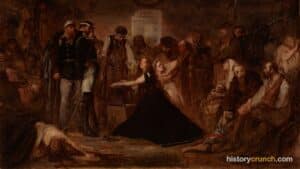
The Greek War of Independence was one of the most important revolutions in modern European history, and it gave birth to the nation of Greece that exists today. Fought between 1821 and 1832, the war was a long and violent struggle in which the Greek people rose up against the Ottoman Empire, which had ruled over them for nearly four centuries. The revolt began as a series of scattered uprisings, but it grew into a national movement that eventually drew in the most powerful countries in Europe. When it ended, Greece had become the first of the Ottoman Empire‘s subject peoples to win recognition as an independent country.
The Greek War of Independence, also called the Greek Revolution, refers to the armed conflict through which Greek revolutionaries broke away from Ottoman control and formed an independent state. It combined organized political planning by secret societies, guerrilla fighting on land, naval battles at sea, and finally the direct intervention of Britain, France, and Russia. The war is remembered as a turning point in the history of nationalism, or the belief that a people who share a language, religion, and culture should govern themselves in their own nation.
What Was the Age of Revolutions?
The Greek War of Independence belongs to a period historians often call the Age of Revolutions, which stretched roughly from the late 1700s into the mid-1800s. During this era, people across the Atlantic world and Europe rose up against kings, empires, and old systems of rule in the name of liberty and self-government. The American Revolution and the French Revolution were the two most famous examples, and both spread powerful new ideas about freedom and the rights of ordinary people.
These ideas came out of a movement of thinkers known as the Enlightenment, who argued that governments should serve the people rather than the other way around. Key causes of the Greek Revolution included the decline of the Ottoman Empire, Enlightenment ideas, oppressive Ottoman policies, economic exploitation, and the rise of Greek nationalism. For educated Greeks, the message was clear. If Americans and the French could throw off rulers they considered unjust, then the Greeks could do the same against the Ottomans.
Why Did the Greeks Rebel Against the Ottoman Empire?
To understand why the Greeks rebelled, it helps to know how long they had been under foreign rule. Greece had been ruled by the Ottoman Empire since the fall of Constantinople in 1453, which ended the Byzantine Empire. Over the following centuries, Greeks lived as subjects of a Muslim empire, and their lands were governed by officials sent from far away.
Life under Ottoman rule created deep resentment. Greeks, as Orthodox Christians, were allowed some rights but were considered inferior by the Ottomans and were called Rayah, yet despite this, Greeks kept their language, religion, and culture alive, mainly through the Greek Orthodox Church. The Church became the guardian of Greek identity, keeping alive a sense that the Greeks were a distinct people with a proud past.
Several problems pushed the Greeks toward revolt. Heavy taxes and economic exploitation by Ottoman authorities angered farmers and merchants alike. Many Greeks were also treated as second-class citizens with limited political rights. In fact, the desire to preserve the Greek language, religion, and way of life gave the movement much of its emotional power. Adding to this were the ideas of the Enlightenment and the example of earlier revolutions in America and France, which convinced many Greeks that freedom was possible.
What Was the Filiki Eteria?
The revolution did not happen by accident. It was planned in secret by an organization called the Filiki Eteria, which means the Society of Friends. The Filiki Eteria was a secret organization founded in 1814 in Odessa, Russia, now in Ukraine, with the purpose of overthrowing Ottoman rule in Greece and establishing an independent Greek state.
The group was started by three Greek merchants. The three founding members were Nikolaos Skoufas from Arta, Emmanuil Xanthos from Patmos, and Athanasios Tsakalov from Ioannina. These men were part of the large community of Greeks who lived and traded outside Greece, and they were inspired by revolutionary ideas spreading across Europe. More specifically, they organized their society in secret, recruiting members quietly across Greek lands and beyond.
The society grew quickly and attracted many of the figures who would later lead the fight. To give the movement respected leadership, the founders looked for a well-known Greek to head it. Alexandros Ypsilantis, a member of a prominent Phanariot Greek family, a prince of the Danubian Principalities, and a senior officer of the Imperial Russian cavalry, was offered the leadership of the Filiki Eteria in 1820 and accepted in April of that same year. As stated above, the plan was to spark uprisings in more than one place at once to divide Ottoman attention.
How Did the War Begin in 1821?
The war opened not in Greece itself but far to the north. Led by Alexandros Ypsilantis, the Filiki Eteria launched the first attempt at revolution in the Danubian Principalities in February 1821, and though this uprising was quickly crushed by the Ottomans, it set the stage for the widespread revolt that followed in Greece. Ypsilantis had hoped to raise all the Christian peoples of the Balkans, but his campaign failed within months.
The real spark came in the Peloponnese, the large peninsula in southern Greece then known as the Morea. The traditional date recognized as the official start of the Greek War of Independence is March 25th, 1821, a date that also coincides with the Greek Orthodox celebration of the Annunciation. Across the region, Greek fighters attacked Ottoman forces, and within a short time the revolt spread to central Greece and to the islands of the Aegean Sea.
The timing worked in the rebels’ favor. In 1821, the Ottoman Empire found itself occupied with war against Persia and, most particularly, with the revolt by Ali Pasha in Epirus, which had forced the governor of the Morea and other local officials to march away. With Ottoman soldiers stretched thin, the Greeks made rapid early gains. Initially, the Greeks gained control of the Peloponnese and declared independence in January of 1822.
Who Were the Leaders and Fighters?
The Greek cause depended on a mix of experienced local warriors and inspiring leaders. Many fighters had grown up as klephts, mountain bandits who lived outside Ottoman control, or as armatoloi, armed men once hired to keep order in the countryside. These fighters knew the rugged Greek landscape well and were skilled in the hit-and-run style of guerrilla warfare, which suited the terrain perfectly.
Several leaders became famous during the struggle. Future Greek War of Independence leaders such as Theodoros Kolokotronis, Odysseas Androutsos, Dimitris Plapoutas, and the Metropolitan Germanos of Old Patras joined the effort. Kolokotronis in particular earned a reputation as a brilliant commander in the Peloponnese. At sea, the revolt relied on brave ship captains and owners, including a wealthy widow named Laskarina Bouboulina who used her own vessels to blockade Ottoman-held ports.
The war also drew supporters from far beyond Greece. A pro-Greek movement known as Philhellenism gave moral and financial support to the Greek revolutionaries, and volunteers from Europe and the United States came to join the struggle, the most notable being the English poet Lord Byron, who died in Greece in 1824.
How Did the Ottomans and Egyptians Strike Back?
The early Greek successes did not last unchallenged. The war grew brutal on both sides, with terrible massacres of civilians. Sultan Mahmud II ordered the hanging in 1821 of Gregory V, the Greek Orthodox patriarch of Constantinople, and several high church officials, arousing indignation and sympathy for the Greek cause among liberals and intellectuals in Europe and the United States.
The Greeks also weakened themselves through internal fighting. Rival leaders competed for power, and the young revolutionary government at times fell into civil war. This disunity came at the worst possible moment, because the Ottomans found a powerful new ally. The Ottomans sought the support of Egypt, which was nominally part of the Ottoman Empire but in practice independent, under the rule of Muhammad Ali.
Egypt sent a well-trained modern army led by Ibrahim Pasha, and it turned the tide against the Greeks. Ibrahim seized Navarino as a base, devastated the Morea, and laid siege to the stronghold of Missolonghi, and Greek resistance came close to extinction as his soldiers pushed on toward Athens and its symbolic Acropolis. By 1826, the town of Missolonghi fell after a long and heartbreaking siege, and the following year the last Greek fortress on the mainland surrendered.
How Did the Great Powers Turn the Tide?
By 1827, the Greek revolution was nearly crushed. It was rescued by the direct intervention of three of Europe’s most powerful nations. At this critical juncture, the Greek cause was rescued by the decision of three Great Powers, Great Britain, France, and Russia, to intervene jointly in the conflict. Each had its own reasons, mixing genuine sympathy for the Greeks with cold calculations about power and territory.
The intervention came to a head in a single dramatic battle. The naval Battle of Navarino was fought on October 20th, 1827, in Navarino Bay on the west coast of the Peloponnese, where an Ottoman armada that included squadrons from Egypt, Tunis, and Algiers was destroyed by an Allied force of British, French, and Russian vessels. The Allies’ victory was achieved through superior firepower and gunnery.
Navarino shattered the Ottoman and Egyptian fleet and made Greek freedom far more likely. Even so, more force was needed to finish the job. It required two more military interventions, a Russian war against the Ottomans in 1828 and 1829 and a French expedition to the Peloponnese, to force the withdrawal of Ottoman forces and to secure Greek independence.
How Did the War End?
With Ottoman power broken in Greece, the path to independence was finally open. After eight years of war, Greece was recognized as an independent, sovereign state under the London Protocol of February 1830. The new nation was smaller than many Greeks had hoped, leaving large Greek-speaking regions still under Ottoman rule, but it was a real and lasting state.
The final arrangements soon followed. In 1832, the London Conference and the Treaty of Constantinople defined the final borders of the new state and established Prince Otto of Bavaria as the first king of Greece. Before the arrival of the young king, the Greeks had already chosen a respected statesman, Ioannis Kapodistrias, as their first head of government, though he was assassinated in 1831 during the difficult early years of the new nation.
Significance of Greek War of Independence
The Greek War of Independence carried meaning far beyond Greece itself. It created the modern Greek state and ended nearly four centuries of Ottoman rule over the Greek people. In reality, it marked the beginning of the slow breakup of the Ottoman Empire in Europe, as one subject people after another would later seek freedom of its own.
The war was also a milestone in the history of nationalism. The Greeks were the first of the Ottoman Empire’s subject peoples to secure recognition as an independent sovereign power. Their success gave hope and inspiration to other groups across Europe who dreamed of governing themselves, and it provided a model for later national struggles throughout the nineteenth century.
Finally, the revolution left a deep mark on the identity of Greece. The Greek Revolution is celebrated by the modern Greek state as a national day on March 25th. The struggle became a source of pride and a symbol of the revival of Greek culture, connecting the new nation to the long and celebrated history of ancient and Byzantine Greece.
Frequently Asked Questions
When did the Greek War of Independence start and end?
The Greek War of Independence began in 1821 and ended in 1832. Fighting broke out in the spring of 1821, and Greeks mark March 25th of that year as the official start. The struggle continued for more than a decade until the great powers of Europe helped secure Greek independence, which was fully recognized by treaty in 1832.
Why is March 25th important to Greece?
March 25th is celebrated as Greek Independence Day, marking the traditional start of the 1821 revolution. It is a national holiday in Greece and among Greek communities around the world. The date also falls on a major Greek Orthodox religious feast, the Annunciation, which links the fight for freedom to the Church that helped keep Greek identity alive during Ottoman rule.
Who helped the Greeks win their independence?
Britain, France, and Russia played the decisive role in helping the Greeks win. These three great powers intervened jointly in 1827, and their combined fleet destroyed the Ottoman and Egyptian navy at the Battle of Navarino. Foreign volunteers known as Philhellenes, including the poet Lord Byron, also supported the cause with money, weapons, and their own lives.
Why did Egypt fight against the Greeks?
Egypt fought against the Greeks because its ruler, Muhammad Ali, was called upon by the Ottoman sultan for help. Although Egypt was technically part of the Ottoman Empire, it acted almost like an independent state with its own modern, well-trained army. In return for crushing the revolt, Muhammad Ali expected to gain new territory and greater influence for himself and his family.
Who was the first king of Greece?
Otto of Bavaria became the first king of Greece in 1832. He was a young Bavarian prince chosen by the great powers rather than by the Greek people themselves. Before Otto arrived, Ioannis Kapodistrias had served as the first head of the Greek government, but he was assassinated in 1831 during the unstable early years of the new nation.
Cite This Article
To cite this article as a source, use one of the formats below.
MLA: Millar, B. “Greek War of Independence: A Detailed Summary.” HistoryCrunch, 12 August 2026, https://historycrunch.com/greek-war-of-independence/.
APA: Millar, B. (2026). Greek War of Independence: A Detailed Summary. HistoryCrunch. https://historycrunch.com/greek-war-of-independence/
Chicago: Millar, B. “Greek War of Independence: A Detailed Summary.” HistoryCrunch. August 12, 2026. https://historycrunch.com/greek-war-of-independence/
Sources
- Fordham Ancient History Sourcebook
- The Met (Heilbrunn Timeline) — Greek art
- Sarah Pomeroy et al., Ancient Greece: A Political, Social, and Cultural History.
- Paul Cartledge, Ancient Greece: A History in Eleven Cities.