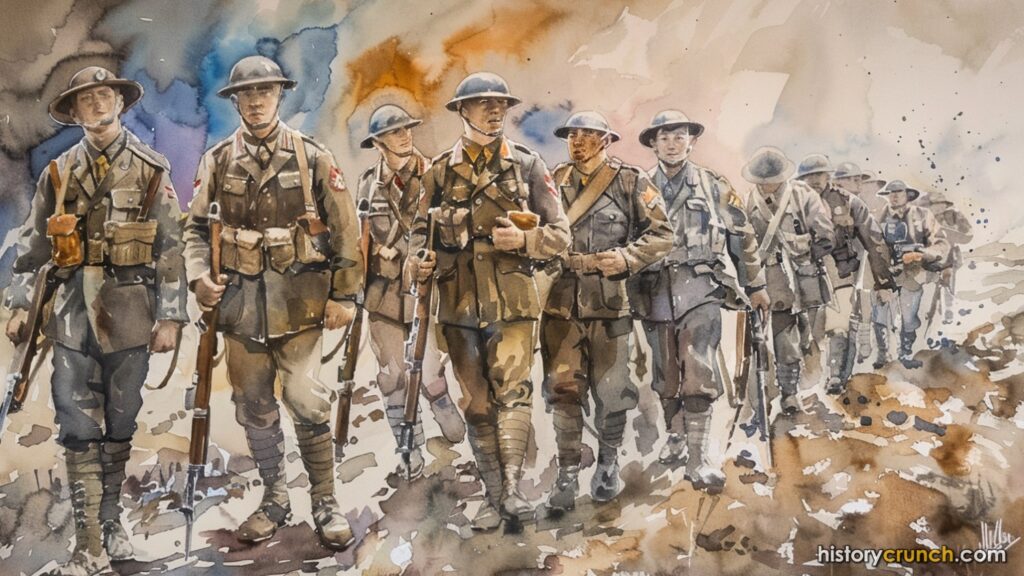
The Allied Powers of World War I included some of the most powerful nations at the time, including France, Russia, and the United Kingdom (Britain). Other nations joined the war alongside the Allied Powers such as: Belgium, Greece, Italy, Japan, Serbia, and the United States. World War I first began in 1914 from a series of important causes that included the assassination of Austrian Archduke Franz Ferdinand. The fighting continued until 1918 and saw the Allied Powers face off against the Central Powers in battlefields across Europe, Africa and the Middle East. The main nations of the Central Powers of World War I included: Austria-Hungary, Germany, the Ottoman Empire and Bulgaria. Many of the most notable battles between the Allied Powers and the Central Powers occurred on the two fronts in Europe, which included the Western Front and the Eastern Front.
In World War I, was each of these nations one of the Allied Powers or one of the Central Powers?

Triple Entente and the Start of World War I
In the years before World War I first began, Europe was divided by two different alliance systems, which included the Triple Entente and the Triple Alliance. The Triple Alliance was made up of Germany, Austria-Hungary and Italy, while the Triple EntenteAn informal agreement of mutual support between France, Russia, and the United Kingdom before World War I. was made up of France, Russia and the United Kingdom. In general, the Triple EntenteA French word meaning agreement or friendship, used to describe the informal alliance between France, Russia, and Britain. was an informal agreement between the different member nations. The French term ‘entente’ means agreement or friendship, thus showing that the Triple Entente was an agreement of mutual support for the member nations. With that said, the Triple Entente was not necessarily a true military alliance as was its counterpart, the Triple Alliance.
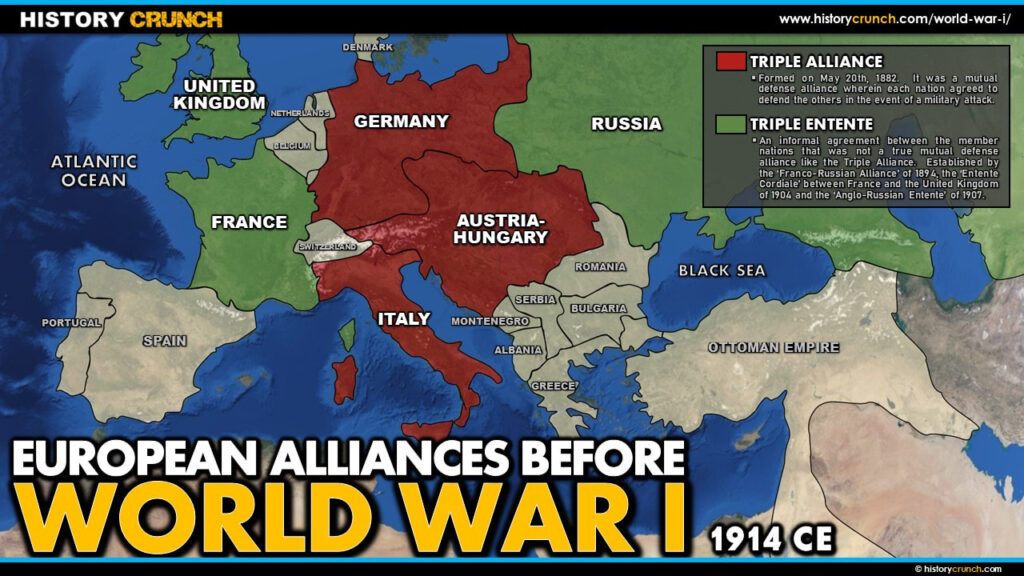
The member nations of the Triple Entente maintained their loyalty with one another and when war broke out in 1914, the three nations entered World War I as the Allied Powers. The Allied Powers of World War I faced off against the Central Powers, which included the member nations of the Triple Alliance. The only significant change was the allegiance of Italy. Italy, which had previously been a member of the Triple Alliance with Germany and Austria-Hungary flipped sides and instead joined the Allied Powers in World War I.
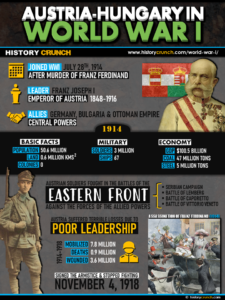
The event that sparked the creation of the Allied Powers was the assassination of Austrian Archduke Franz Ferdinand on June 28th, 1914. Pro-Serbian nationalists killed Ferdinand and his wife Sophie in the city of Sarajevo. The assassination of Ferdinand obviously angered Austria-Hungary and caused them to threaten the government of Serbia. In response, Russia came to the defense of Serbia. Russia did this as part of its larger movement for Pan-SlavismA movement that promoted unity and support among all Slavic peoples, including Russians and Serbians.. Pan-Slavism was the theory that supported the promotion of all Slavic people of which Russians and Serbians were both. As such, Russia wanted to support the Serbians against Austro-Hungarian aggression because Russia viewed Serbians as sharing a similar ethnic heritage. Earlier in July, Germany had pledged its support to Austria-Hungary in the form of a ‘blank checkGermany’s offer of unlimited support to Austria-Hungary after the assassination of Franz Ferdinand.’, meaning Germany was offering Austria-Hungary its unlimited support. When Germany went to war with Russia, the alliance between Russia and France took effect, and both France and Britain were pulled into the conflict. As such, the Allied Powers of World War I were established and faced off against the Central Powers in a brutal and devastating war.
 FactsthatCrunch
The Triple Entente and Triple Alliance divided Europe into two competing blocs before 1914. Their overlapping defense commitments meant a local conflict between Austria-Hungary and Serbia pulled in major powers within weeks.
Main Allied Powers of World War I
As stated above, the main Allied Powers of World War I were France, Russia, and the United Kingdom (Britain). Also significant, but to a lesser extent, were the contributions of Italy and Japan. These five nations combined to represent most of the Allied response in World War I. It’s also important to note that many of the colonies of the large European Allied Powers also participated in the fighting of World War I. For instance, both France and Britain had vast empires that included colonies in North America, Africa and Asia. As such, there were Canadian, Indian and Australian forces who fought as part of the Allied Powers in World War I Battles, due to them being colonies in the British Empire.
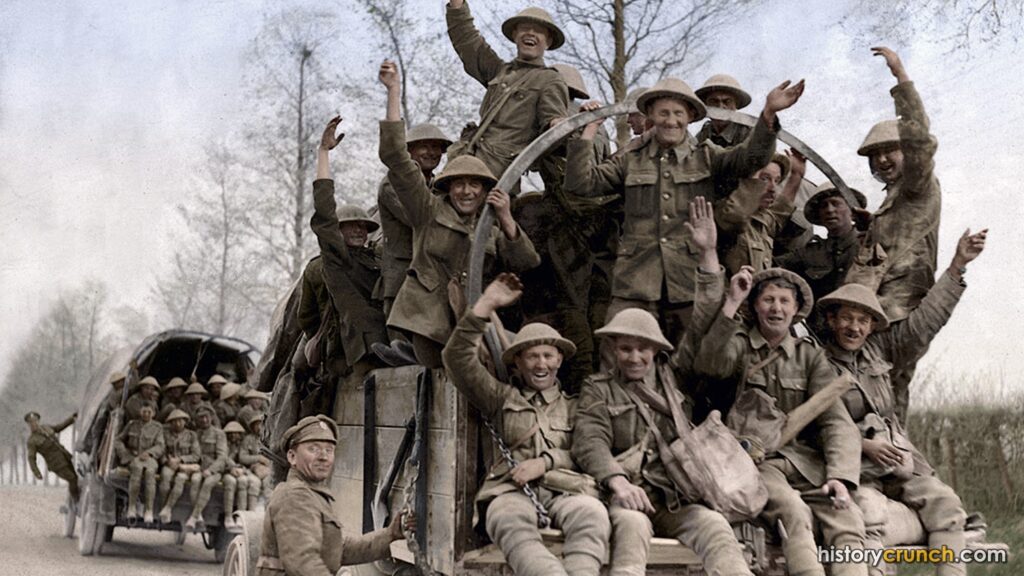
Each of the main Allied Powers of World War I differed greatly in terms of their resources and military capabilities. For example, Britain and France had vast colonies from which they could gather more soldiers and resources, while others such as Italy and Russia had far fewer colonies. As well, due to its vast empire, Britain also had the largest and most powerful navy on the planet. While France also had a capable naval force, its real power rested in its large mobilizedWhen a country organized and called up its soldiers and resources to prepare for war. army. For example, before World War I began in 1914, France had a force of over 3.5 million soldiers ready for battle. This was due in part to the arms race that France and Germany competed in during the decade before. On the other hand, Russia was a large but weak nation at the outbreak of war in 1914. The largest nation-state involved in World War I and the largest in the world, Russia had many natural resources but lacked the ability to use them properly. Not only was it the largest country but it also had the largest population at about 170 million people. With that said, Russia struggled to match the industrial output of other European nations and struggled to properly equip its millions of soldiers with weapons when they went off to the frontlines in 1914.
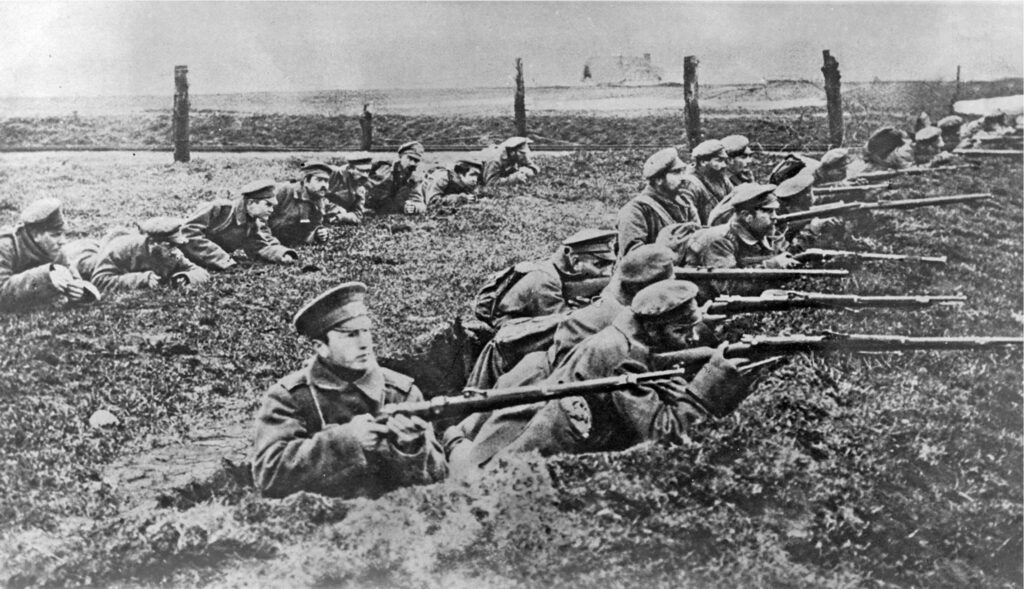
Before the start of World War I, Italy was actually a member nation of the Triple Alliance, alongside Germany and Austria-Hungary. However, at the start of the war in 1914, Italy remained neutral and eventually joined the Allied Powers in 1915. This was significant for the Allied nations because it weakened the fighting capabilities of the Central Powers and helped force Austria-Hungary to devote a certain portion of their forces to fight Italy along their shared border. By the end of the war Italy had mobilized over 5.6 million soldiers.
While not a European power, where much of the fighting of World War I occurred, Japan was still an important member of the Allied Powers. In fact, in 1914 Japan was a major industrial leader and had significant military capabilities. This is due in part to Japan’s earlier period of modernization, which saw it model itself after several of the major European powers. Japan’s role in World War I was established based upon the Anglo-Japanese AllianceA formal agreement between Britain and Japan, signed in 1902, that brought Japan into the war on the Allied side.. This alliance was agreed to by both Japan and Britain on January 30th, 1902. As such, Japan entered the fighting of World War I on the side of the Allied Powers. With that said, Japan’s role in World War I was limited to carrying out military operations in the Far East. For instance, much of Japan’s military actions were centered on China, which Japan sought to expand its influence over. As well, Japanese forces worked to limit German influence in the region, as aid to the European Allied Powers.
FactsthatCrunchRussia's Population at the Start of World War I: How Large Was It?
At the start of World War I in 1914, Russia had about 170 million people, the largest population of any warring power. The United States, with about 99 million people and not yet in the war, was next. Despite its size, Russia struggled to supply and equip its soldiers because its economy depended heavily on farming rather than industry.
Other Allied Powers of World War I
Besides the main Allied Powers of World War I (France, Russia, United Kingdom) there were also a number of other ‘affiliated’ Allied Powers. These included smaller nations that participated in the fighting of World War I but to a much lesser degree. The main affiliated Allied Powers of World War I included: Belgium, Greece, Montenegro, Romania and Serbia. These nations played a significant role in the events of World War I and together they mobilized over 1.5 million soldiers for the war effort.
Also of note was the role that the United States played in the later events of World War I. While not officially an Allied Power, the United States fought alongside the Allied Powers beginning in 1917 when the country entered the war. The contributions of the United States were important for the Allied victory. This is because, less than a year later, in March of 1918, Russia withdrew from World War I after undergoing the events of the Russian Revolution. This removed an important member of the Allied Powers. As well, the United States had not fought in World War I before 1917, which meant that American soldiers came into the fighting of the war without having suffered in the trenches throughout the earlier years of the war. This meant that the American soldiers of World War I were not ‘beaten down’ by their experiences as were the French and British soldiers. Also, the United States committed millions of soldiers to the war effort, with over 4.3 million soldiers mobilized.
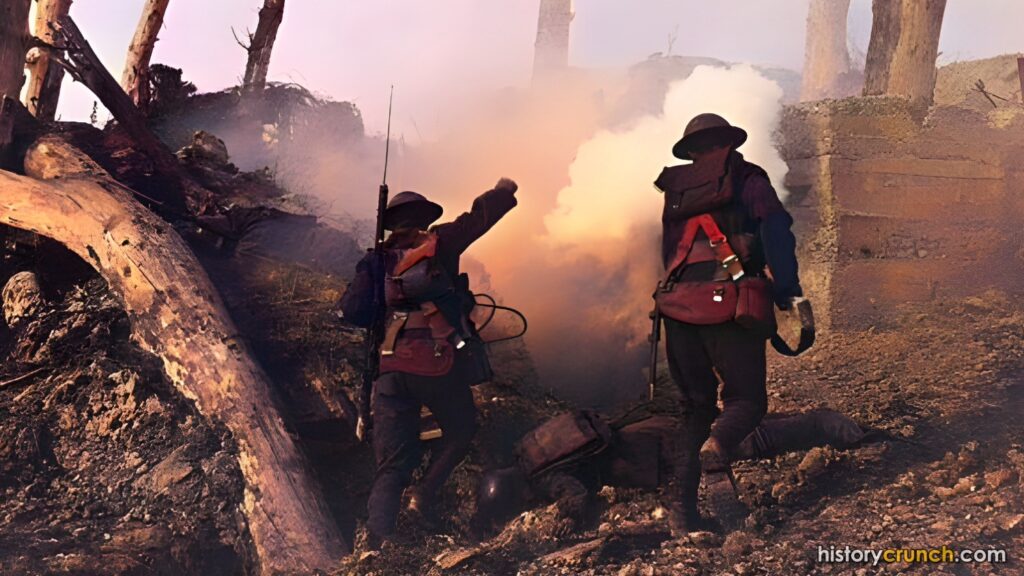
Why were American soldiers considered fresher than Allied troops when they entered World War I in 1917?
Major Battles of the Allied Powers of World War I
As stated previously, the Allied Powers of World War I participated in many significant battles. Most of the battles were focused along the Western FrontA long line of trenches across Belgium and northeastern France where major battles between the Allies and Central Powers were fought. and Eastern Front, but several others also occurred in the Balkans and the Far East. The Western Front refers to a line of trenches that stretched across Belgium and northeastern France. Along this line of trenches, several major battles were fought primarily by the Allied Powers of France and Britain. Some of the most important battles of the Western Front included:
- First Battle of the Marne
- First Battle of Ypres
- Second Battle of Ypres
- Battle of Verdun
- Battle of the Somme
- Battle of Vimy Ridge
- Third Battle of Ypres (Battle of Passchendaele)
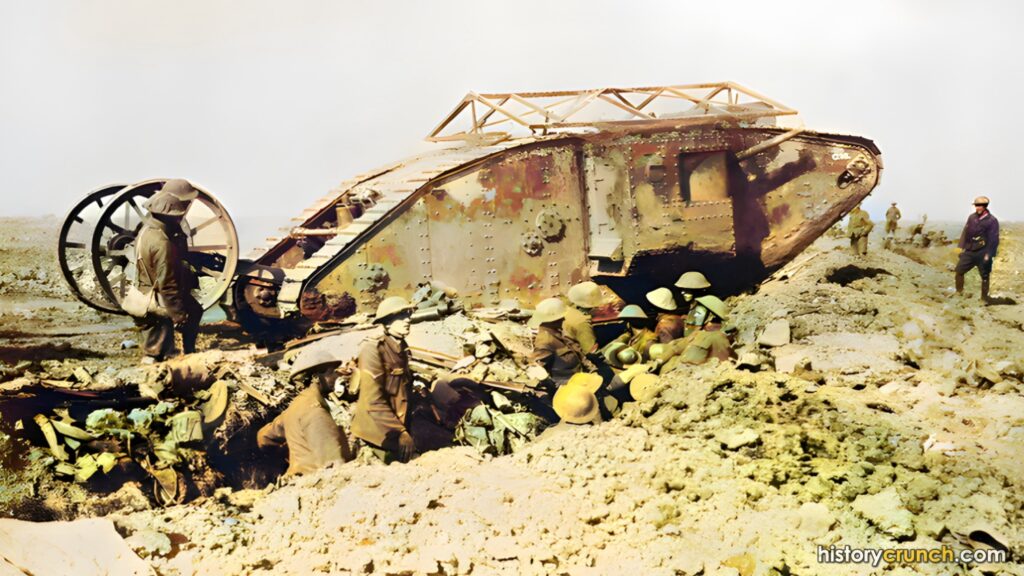
The Eastern Front was different than the Western Front in that it involved much more movement as the armies advanced against each other. The major nations involved with the Eastern Front included Russia, Germany and Austria-Hungary. The most significant battle along the Eastern Front included:
Besides the fighting that occurred along the Western Front and Eastern front, there were also other significant battles that occurred in other areas of Europe, the Middle East and the Far East. For instance, Italy and Austria-Hungary faced off against each other in the Alps (Italian Front), while Britain attacked the Ottoman Empire in the Gallipoli Campaign. The other significant battles of World War I included:
Key Vocabulary
Triple Entente
Entente
Pan-Slavism
Blank check
Mobilized
Anglo-Japanese Alliance
Western Front
Frequently Asked Questions
Which countries were the main Allied Powers in World War I?
The main Allied Powers were France, Russia, and the United Kingdom. Italy and Japan also made important but smaller contributions. Other nations that fought alongside the Allies included Belgium, Greece, Montenegro, Romania, and Serbia.
How did the Triple Entente become the Allied Powers?
The Triple Entente was an informal agreement of friendship between France, Russia, and the United Kingdom. When war broke out in 1914, these three nations entered the fighting as the Allied Powers. Unlike the Triple Alliance, the Entente was not a formal military alliance.
Why did Italy switch to the Allied Powers?
Italy had been part of the Triple Alliance with Germany and Austria-Hungary before the war. It stayed neutral in 1914 and then joined the Allied Powers in 1915. This forced Austria-Hungary to send troops to guard its shared border with Italy.
When did the United States join the Allied Powers?
The United States entered World War I in 1917 and fought alongside the Allies without joining them formally. Its fresh soldiers arrived after years of trench warfare had worn down French and British forces. The country mobilized over 4.3 million soldiers, which helped secure the Allied victory.
What were the major battles fought by the Allied Powers?
Most major battles took place along the Western Front and the Eastern Front. Western Front battles included the First Battle of the Marne, the Battle of Verdun, and the Battle of the Somme. The Battle of Tannenberg was fought on the Eastern Front, while Gallipoli and Caporetto occurred in other regions.
Why did Russia support Serbia at the start of the war?
Russia defended Serbia because of a movement called Pan-Slavism. Pan-Slavism promoted unity among Slavic peoples, which included both Russians and Serbians. When Austria-Hungary threatened Serbia after the assassination of Archduke Franz Ferdinand, Russia stepped in to protect a nation it saw as sharing its heritage.
Cite This Article
To cite this article as a source, use one of the formats below.
MLA: Beck, Elias. “Allied Powers of World War I: A Detailed Summary.” HistoryCrunch, 29 September 2026, https://historycrunch.com/allied-powers-of-world-war-i/.
APA: Beck, E. (2026). Allied Powers of World War I: A Detailed Summary. HistoryCrunch. https://historycrunch.com/allied-powers-of-world-war-i/
Chicago: Beck, Elias. “Allied Powers of World War I: A Detailed Summary.” HistoryCrunch. September 29, 2026. https://historycrunch.com/allied-powers-of-world-war-i/
Sources
- Imperial War Museum
- Fordham Modern History Sourcebook
- John Keegan, The First World War.