PropagandaInformation deliberately designed to shape how people think and feel, often by appealing to emotions rather than presenting neutral facts. in World War II played a central role in the history of the conflict. Both the Allied Powers and the Axis Powers used propaganda to encourage their citizens to support the war, to recruit soldiers, to maintain moraleThe confidence, enthusiasm, and willingness of a group to keep going during a difficult situation., and to portray the enemy in a negative way. Propaganda took many forms during World War II, including: posters, radio broadcasts, films, newspapers, and pamphlets. The governments of every major nation involved in World War II used propaganda extensively, though the methods and purposes of propaganda varied from country to country.
 FactsthatCrunch
What Is Propaganda?
Propaganda is information that is used to promote a particular cause or point of view, especially in politics. Propaganda is not simply information. It is information that is deliberately designed to shape how people think and feel, often by appealing to emotions such as fear, pride, or anger rather than presenting facts in a neutral way. This means that propaganda is often one-sided and may leave out important information or present events in a misleading way.
Propaganda was not new in World War II. In fact, governments had used propaganda during World War I to encourage enlistment, promote patriotism, and demonize the enemy. However, propaganda in World War II was more widespread and more technologically advanced than in any previous conflict. By the 1930s and 1940s, new technologies such as radio and film allowed governments to reach millions of people at once, making propaganda more powerful and more difficult to avoid than it had ever been before.
FactsthatCrunchWhat were the main methods of censorship that World War II governments used to control information?
Propaganda in World War II – Nazi Germany
Nazi Germany produced some of the most famous and extensive propaganda of World War II. Following the Nazi Party’s rise to power in 1933, Adolf Hitler established the Reich Ministry of Public Enlightenment and Propaganda, which was led by Joseph Goebbels. The ministry’s purpose was to ensure that every form of communication in Germany, including art, music, theater, film, books, radio, and the press, carried the Nazi message and that any opposing viewpoints were censoredBlocked or removed by authorities so the public cannot see or hear it. and suppressed.
Goebbels used propaganda to promote several key themes throughout the war. First, Nazi propaganda reminded German citizens of Germany’s defeat in World War I and portrayed that defeat as the result of betrayal from within, particularly by Jewish people. This means that propaganda was used to direct anger and resentment toward Jewish people and other groups the Nazi regime identified as enemies of Germany. Second, Nazi propaganda promoted the idea of German racial superiority and portrayed the German military as powerful and unstoppable. Third, as the war continued and Germany began to suffer military setbacks, propaganda shifted to emphasizing the dangers of losing and encouraging Germans to fight on at all costs.
Radio was one of the most important tools of Nazi propaganda. Goebbels ensured that inexpensive radios, known as ‘Volksempfänger’ or ‘people’s receivers’, were made available to German households so that Nazi broadcasts could reach as wide an audience as possible. Film was also used extensively. Nazi Germany produced propaganda films such as ‘Triumph of the Will’, directed by Leni Riefenstahl, which portrayed Hitler and the Nazi Party as powerful and heroic. Furthermore, newspapers such as ‘Der Stürmer’ regularly published antisemitic material that promoted hatred of Jewish people. Nazi propaganda played a significant role in creating an atmosphere in Germany that allowed the regime to carry out the Holocaust.
FactsthatCrunch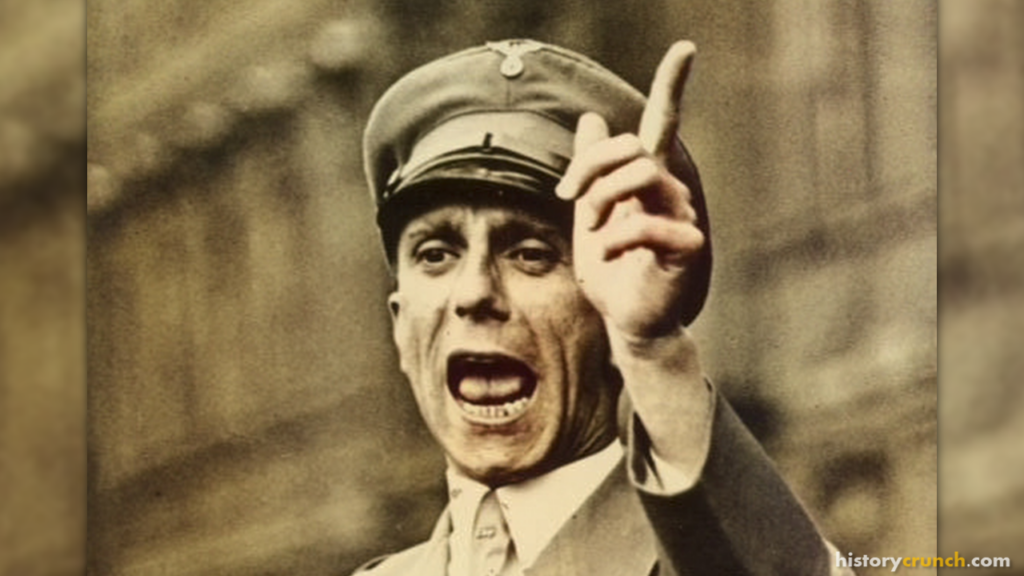
Propaganda in World War II – Britain
Britain also made extensive use of propaganda during World War II, though its approach differed in important ways from that of Nazi Germany. The British government used propaganda primarily to maintain public morale during difficult periods of the war, to encourage citizens to support the war effort on the home front, and to undermine enemy morale.
Posters were an important part of British propaganda. The British government issued a wide range of posters encouraging civilians to conserve resources, keep sensitive military information secret, and contribute to the war effort in whatever way they could. One of the most well-known British propaganda campaigns promoted the idea of resilience and determination under pressure, particularly during the period of German bombing of British cities known as the ‘Blitz‘.
Radio was also a central part of British propaganda. The British Broadcasting Corporation, known as the BBC, became an important source of wartime information for both British citizens and people living in German-occupied Europe. Furthermore, Britain established the Political Warfare Executive in 1941, which produced propaganda aimed directly at weakening German morale and encouraging resistance in occupied territories. This included so-called ‘black propagandaRadio broadcasts and printed materials designed to appear as if they came from inside enemy territory rather than from the country that made them.‘, which consisted of radio broadcasts and printed materials designed to appear as if they came from within Germany rather than from Britain.
FactsthatCrunchWhat Was Black Propaganda in World War II?
Black propaganda consisted of radio broadcasts and printed materials designed to appear as if they came from inside enemy territory, when they actually came from Britain. Britain's Political Warfare Executive, established in 1941, produced this material to weaken German morale and make it seem as though opposition to the Nazi regime was coming from within Germany itself. The goal was to make German audiences trust the messages, since content that appeared to come from fellow Germans was harder to dismiss than open British broadcasts.
Propaganda in World War II – United States
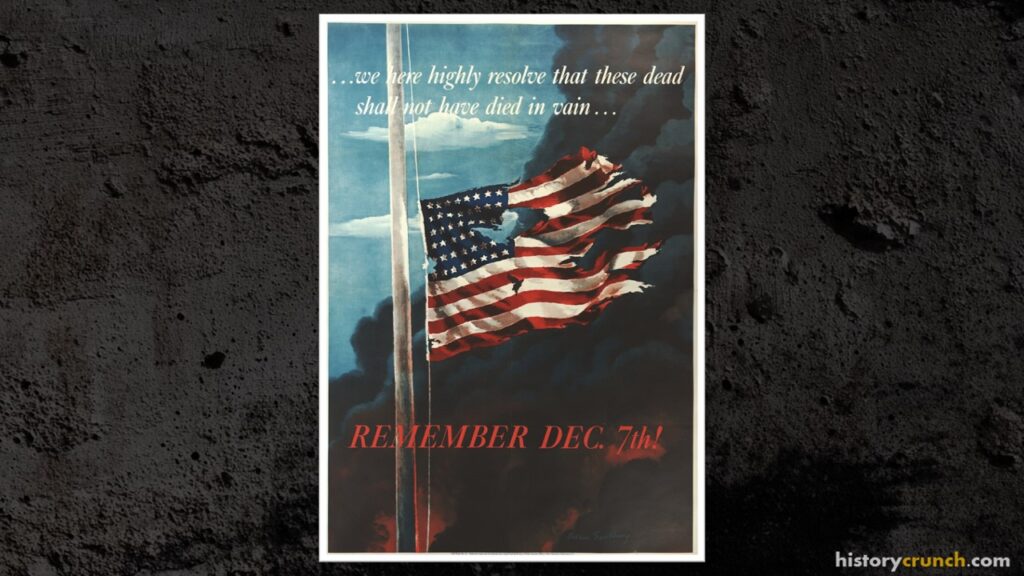
The United States entered World War II in December of 1941 following the Japanese attack on Pearl Harbor. Before that point, many Americans had favored a policy of neutrality and did not want to become involved in the war in Europe or Asia. As such, the United States government faced the challenge of rapidly shifting public opinion and mobilizing an entire nation for war.
In June of 1942, President Franklin Roosevelt established the Office of War Information, known as the OWI. The OWI coordinated the American government’s propaganda efforts across film, radio, newspapers, and posters. American propaganda focused on several main themes, including: encouraging enlistment in the armed forces, promoting wartime industrial production, urging civilians to conserve food and resources, and purchasing war bondsCertificates citizens bought to lend money to their government to help pay for the war. to fund the war effort.
Posters were a particularly visible form of American propaganda. They were displayed in factories, schools, shops, and public spaces across the country. One of the most famous images of American wartime propaganda was ‘Rosie the Riveter’, which depicted a woman in work clothes flexing her arm and was used to encourage women to take up factory jobs to support wartime production. Film was also used heavily. Director Frank Capra produced a series of documentary films called ‘Why We Fight’, which were shown to both American soldiers and the general public to explain the reasons for the war and to portray the Axis Powers as dangerous and cruel. As well, the American government worked closely with Hollywood studios to ensure that films produced during the war supported the war effort and promoted American values.
FactsthatCrunchKey takeaways
J. Howard Miller created the 'We Can Do It!' image in 1943 for Westinghouse Electric. It was originally displayed inside a single factory for approximately two weeks and was largely forgotten until the 1980s, when it became a famous symbol of women's war work.
The Office of War Information, set up in June 1942, coordinated American propaganda across factories, schools, and public spaces to encourage women to take up industrial jobs while male workers served in the military.
By 1944, approximately 19 million women held jobs in the United States, a major increase driven in part by wartime propaganda campaigns targeting female workers.
Propaganda in World War II – Soviet Union
The Soviet Union, under the leadership of Joseph Stalin, also made extensive use of propaganda during World War II. Following Germany’s invasion of the Soviet Union in June of 1941, the Soviet government used propaganda to mobilize its enormous population for what it called the ‘Great Patriotic War’. Soviet propaganda focused heavily on themes of national pride, sacrifice, and the defense of the Russian homeland against the German invaders.
Soviet propaganda portrayed Stalin as a strong and protective father figure who was leading the Soviet people to victory. Posters, films, and newspapers all reinforced the idea that every Soviet citizen had a role to play in defeating the enemy. For instance, Soviet propaganda encouraged women to take on industrial and agricultural roles while men fought at the front, and celebrated mothers who raised large families as contributors to the strength of the nation. Films such as ‘The Rainbow’ depicted the heroism of ordinary Soviet people resisting German occupation and were shown widely, including in subway stations, to ensure that all citizens could see them regardless of their ability to pay.
It should also be noted that Soviet propaganda changed significantly after the German defeat at the Battle of Stalingrad in February of 1943. Before Stalingrad, propaganda had focused largely on encouraging resistance in the face of German advances. After Stalingrad, Soviet propaganda increasingly celebrated military victories and portrayed the eventual defeat of Nazi Germany as inevitable.
After the German defeat at the Battle of Stalingrad, how did Soviet propaganda change its main focus?
Propaganda in World War II – Imperial Japan
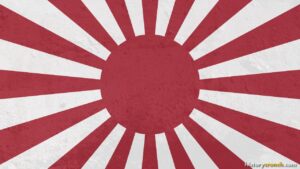
Imperial Japan also made extensive use of propaganda during World War II. Japanese propaganda promoted the idea that Japan was liberating Asian nations from Western colonial rule and building a new order in Asia under Japanese leadership. This campaign was known as the ‘Greater East Asia Co-Prosperity Sphere’. In reality, Japanese rule over conquered territories was often brutal, but propaganda presented Japanese expansion as a positive and necessary development for the peoples of Asia.
Japan also used propaganda aimed directly at Allied soldiers. Radio broadcasts from Japanese-controlled stations, delivered by English-speaking broadcasters, were designed to lower the morale of Allied troops by exaggerating Japanese military successes, suggesting that the Allied war effort was failing, and encouraging soldiers to give up the fight. Allied soldiers in the Pacific Theater gave a nickname to the various female voices they heard on these broadcasts, collectively calling them ‘Tokyo Rose’. While these broadcasts were designed to demoralize Allied soldiers, they were generally not considered to have been very effective.
FactsthatCrunchIva Toguri D'Aquino, the American woman most closely linked to the 'Tokyo Rose' broadcasts, was sentenced to ten years in federal prison after being convicted of treason on September 29th, 1949.
The court also fined her $10,000. She was the seventh person convicted of treason in United States history. President Gerald Ford pardoned her in January of 1977, after evidence emerged that key witnesses had lied during the trial.
Significance of Propaganda in World War II
Propaganda in World War II was significant for several reasons. First, propaganda was significant because it played a central role in mobilizing entire populations for war. World War II required an unprecedented level of participation from civilians as well as soldiers. Governments needed citizens to work in factories, conserve resources, purchase war bonds, and accept the sacrifices and hardships of wartime life. Propaganda was one of the primary tools used by governments to communicate these needs to their populations and to convince people to participate willingly. Without effective propaganda, maintaining the level of civilian support required for a prolonged total warA conflict requiring an unprecedented level of participation from civilians as well as soldiers across an entire nation. would have been far more difficult.
Second, propaganda was significant because it demonstrated the power of modern communication technologies to shape public opinion on a mass scale. The use of radio and film in particular allowed governments to reach audiences of millions in a way that had not been possible in any previous conflict. The lessons learned about mass communication and persuasion during World War II had a lasting influence on the fields of advertising, public relations, and political communication in the decades that followed the war.
Finally, propaganda was also significant because, in the case of Nazi Germany, it played a direct role in enabling the Holocaust. Nazi propaganda systematically promoted antisemitism and portrayed Jewish people as enemies of Germany. This created an environment in which many ordinary Germans either actively supported or passively accepted the persecution and murder of Jewish people. As such, the propaganda of World War II demonstrated that the deliberate manipulation of public opinion could have deeply destructive consequences, and contributed to later international efforts to define and prevent crimes against humanity.
FactsthatCrunchExplore World War II · 1939 – 1945
Keep exploring World War II with these History Crunch resources.
Key Vocabulary
Propaganda
Censored
Antisemitic
Morale
Black propaganda
War bonds
Total war
Frequently Asked Questions
What was propaganda used for in World War II?
Propaganda in World War II was used to win public support for the war on both sides. Governments used it to recruit soldiers, keep morale high, and encourage people to conserve resources. It also portrayed the enemy in a negative way to build anger and unity. Both the Allied Powers and the Axis Powers relied on it heavily.
Who was in charge of Nazi propaganda?
Joseph Goebbels led Nazi propaganda as head of the Reich Ministry of Public Enlightenment and Propaganda. This ministry was set up after the Nazi Party rose to power in 1933. It controlled art, music, film, radio, and the press so that all carried the Nazi message. Opposing viewpoints were censored and suppressed.
What forms did World War II propaganda take?
World War II propaganda took many forms, including posters, radio broadcasts, films, newspapers, and pamphlets. New technologies such as radio and film let governments reach millions of people at once. This made wartime propaganda more powerful and harder to avoid than in any earlier conflict. Posters and films were especially common and visible.
Who was Rosie the Riveter?
Rosie the Riveter was a famous American propaganda image of a woman in work clothes flexing her arm. It was used to encourage women to take factory jobs and support wartime production. The United States needed workers after many men joined the armed forces. The image became one of the best known symbols of the American home front.
Who was Tokyo Rose?
Tokyo Rose was the nickname Allied soldiers gave to female voices on Japanese radio broadcasts. These broadcasts tried to lower Allied morale by exaggerating Japanese successes and urging troops to give up. The name actually covered several different English-speaking broadcasters. The broadcasts were generally not considered very effective at breaking morale.
How did propaganda help enable the Holocaust?
Nazi propaganda enabled the Holocaust by spreading antisemitism and portraying Jewish people as enemies of Germany. Newspapers such as Der Stürmer regularly published hateful material against Jewish people. This created an atmosphere in which many ordinary Germans supported or accepted their persecution. It showed how the deliberate shaping of public opinion could lead to deeply destructive results.
Cite This Article
To cite this article as a source, use one of the formats below.
MLA: Millar, B. “Propaganda in World War II: A Detailed Summary.” HistoryCrunch, 1 October 2026, https://historycrunch.com/propaganda-in-world-war-ii/.
APA: Millar, B. (2026). Propaganda in World War II: A Detailed Summary. HistoryCrunch. https://historycrunch.com/propaganda-in-world-war-ii/
Chicago: Millar, B. “Propaganda in World War II: A Detailed Summary.” HistoryCrunch. October 1, 2026. https://historycrunch.com/propaganda-in-world-war-ii/
Sources
- Gerhard L. Weinberg, A World at Arms.
- Imperial War Museum
- Antony Beevor, The Second World War.
- The National WWII Museum