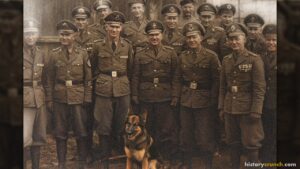
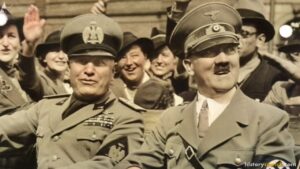
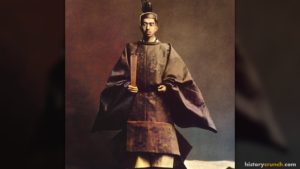
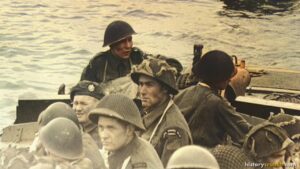
The Battle of Guadalcanal in World War II was a major conflict in the Pacific Theater and was fought between the forces of Japan and the United States on the island of Guadalcanal, which is an island in the Solomon Islands, northeast of Australia. The battle took place from August 7th, 1942 to February 9th, 1943 and was notable for the fierce fighting that occurred on the island and the importance of the airfield that the Japanese built on the island. The United States hoped to take control over the island and use the airfield to carry out air operations in the region.
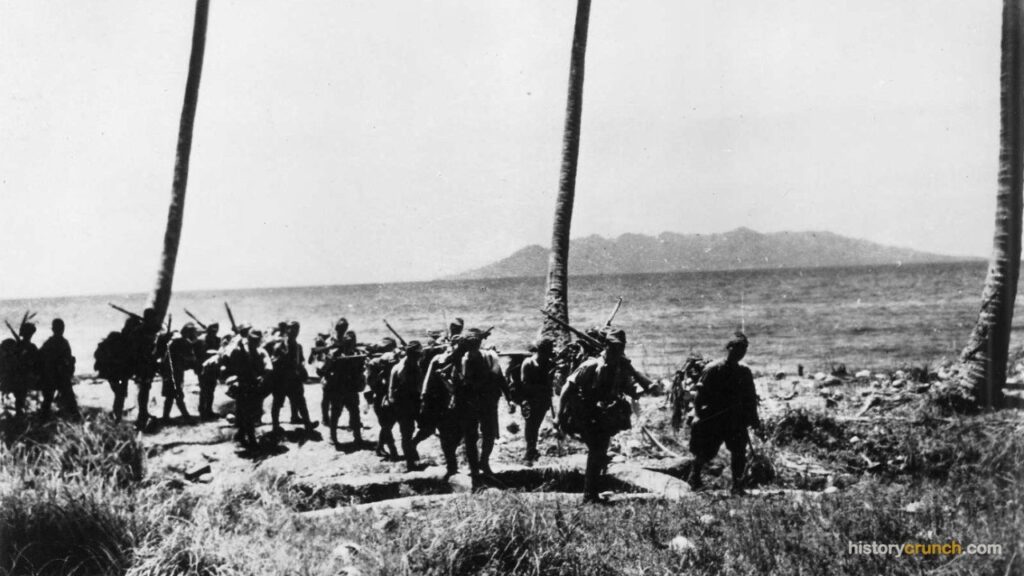
Battle of Guadalcanal in World War II – Background
The Battle of Guadalcanal was a major event in World War II. The Second World War began on September 1st, 1939 when Nazi Germany invaded the country of Poland. In the years that followed, Europe underwent a series of significant battles, including: Battle of France, Battle of Britain and Operation Barbarossa. During this time, though, the United States remained out of the direct fighting in the war. Instead, the United States, under the leadership of President Franklin D. Roosevelt, practiced a policy of isolationismA government policy of staying out of other countries’ affairs and avoiding involvement in foreign conflicts.. This saw the United States limit its involvement in international affairs. As such, when World War II began in Europe in 1939, the United States remained on the sidelines, except for its supply shipments under the Lend-Lease Act.
At the same time, the United States opposed Japan’s expansionismThe practice of a country growing its power and territory by taking over new lands or regions., and viewed Japan as a legitimate threat in the Pacific Ocean. In response to this perceived threat, the United States imposed economic sanctionsPenalties one country places on another by cutting off trade or financial dealings to force a change in behavior. against Japan and stopped all oil exports to Japan in 1941. This was devastating to the Japanese Empire, because Japan lacked the necessary oil reserves to continue its expansion in the Pacific. As such, Japan viewed these sanctions as a direct threat to its national survival and economic stability. This ultimately was one of several factors that pushed Japan to surprise attack the United States at Pearl Harbor in 1941.
The attack on Pearl Harbor on December 7th, 1941 was the event that ultimately brought the United States into the fighting of World War II. As well, it essentially launched the Pacific TheaterThe region of the Pacific Ocean and surrounding lands where World War II fighting between Allied and Japanese forces took place. of World War II, which resulted in many more conflicts, such as: the Battle of Midway and the Battle of Guadalcanal. Furthermore, after the attack on Pearl Harbor, Japan rapidly expanded across the Pacific, capturing key territories including the Philippines, Malaya, Singapore, and parts of New Guinea. In fact, by mid-1942, Japanese forces threatened to isolate Australia and dominate the entire Pacific.
The United States and its Allies recognized that unchecked Japanese expansion would make it difficult to reclaim the Pacific. As such, the island of Guadalcanal became strategically important due to the construction of a Japanese airfield on the island, which could threaten Allied supply and communication lines. As well, the location of the island was significant because it offered a base for future operations to retake the Philippines and move toward Japan. In fact, the American decision to advance on Guadalcanal was the beginning of the island-hopping strategy, which was an important American strategy during World War II in the Pacific.
 FactsthatCrunch
Battle of Guadalcanal in World War II – Summary
As stated previously, the Battle of Guadalcanal occurred from August 7th, 1942 to February 9th, 1943. The battle began when the American forces surprise attacked the Japanese defenders as they were building the airfield on the island. In fact, United States Marines landed on Guadalcanal and nearby islands (Tulagi and Florida) with relatively little resistance from Japanese forces. As a result, they quickly captured the partially completed airfield, later renamed Henderson Field, and began fortifying their position.
Several major land, air and naval conflicts took place after the Americans captured the airfield, and the Japanese forces attempted to recapture the airfield. For instance, Japan responded with naval and air assaults that aimed to retake the island and destroy the American presence. In fact, the naval campaign around Guadalcanal was one of the most intense in all of World War II, with both sides suffering heavy losses. The fighting was fierce and bloody, but ultimately the United States prevailed and carried out a victory on the island. For example, Japan lost nearly 20,000 soldiers on the island while the United States suffered just over 7,000 dead.
By late 1942, Japan began to realize that holding Guadalcanal was impossible and eventually abandoned its position in the region. This led to the end of the battle.
FactsthatCrunch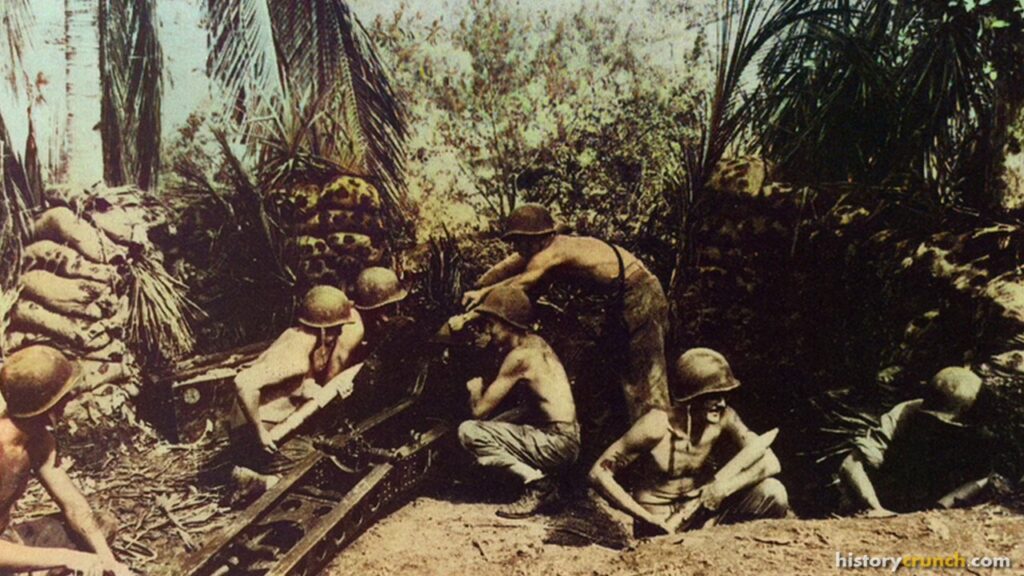 Black & whiteColour
Battle of Guadalcanal in World War II – Significance
In the end, the battle was important because it was a major victory for the United States and allowed the United States to begin the process of leapfrogging throughout the South Pacific as they pushed the Japanese forces back to their homeland islands. This was referred to as the ‘island-hoppingAn American military strategy of capturing select Pacific islands one by one to advance closer to Japan.’ strategy. As well, Guadalcanal was the first major Allied land victory against Japan and the first step in the long Pacific counteroffensiveA large military attack launched in response to an enemy’s advance, meant to push the enemy back..
FactsthatCrunchExplore World War II · 1939 – 1945
Keep exploring World War II with these History Crunch resources.
Key Vocabulary
Isolationism
Expansionism
Economic sanctions
Pacific Theater
Island-hopping
Counteroffensive
Frequently Asked Questions
When was the Battle of Guadalcanal fought?
The Battle of Guadalcanal was fought from August 7th, 1942 to February 9th, 1943. It took place on Guadalcanal, an island in the Solomon Islands northeast of Australia. The long fight included several land, air, and naval battles over about six months.
Why was Guadalcanal so important?
Guadalcanal mattered because the Japanese were building an airfield there that could threaten Allied supply and communication lines. Control of the airfield would let American planes operate across the region. The island also offered a base for future moves toward the Philippines and Japan.
Who won the Battle of Guadalcanal?
The United States won the Battle of Guadalcanal after months of fierce fighting. Japan lost nearly 20,000 soldiers on the island, while the United States suffered just over 7,000 dead. By late 1942, Japan realized it could not hold the island and later pulled out its forces.
What was Henderson Field?
Henderson Field was the name American forces gave the airfield they captured on Guadalcanal. The Japanese had started building it before U.S. Marines landed and seized it with little early resistance. Much of the battle became a struggle over this one airfield.
How did Guadalcanal connect to island-hopping?
The advance on Guadalcanal marked the start of the American island-hopping strategy in the Pacific. This plan pushed Japanese forces back toward their home islands one key spot at a time. Guadalcanal was also the first major Allied land victory against Japan.
Cite This Article
To cite this article as a source, use one of the formats below.
MLA: Beck, Elias. “Battle of Guadalcanal in World War II: A Detailed Summary.” HistoryCrunch, 4 October 2026, https://historycrunch.com/battle-of-guadalcanal-in-world-war-ii/.
APA: Beck, E. (2026). Battle of Guadalcanal in World War II: A Detailed Summary. HistoryCrunch. https://historycrunch.com/battle-of-guadalcanal-in-world-war-ii/
Chicago: Beck, Elias. “Battle of Guadalcanal in World War II: A Detailed Summary.” HistoryCrunch. October 4, 2026. https://historycrunch.com/battle-of-guadalcanal-in-world-war-ii/
Sources
- Antony Beevor, The Second World War.
- Imperial War Museum