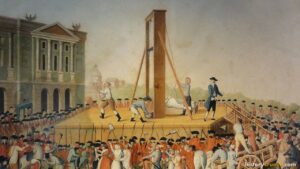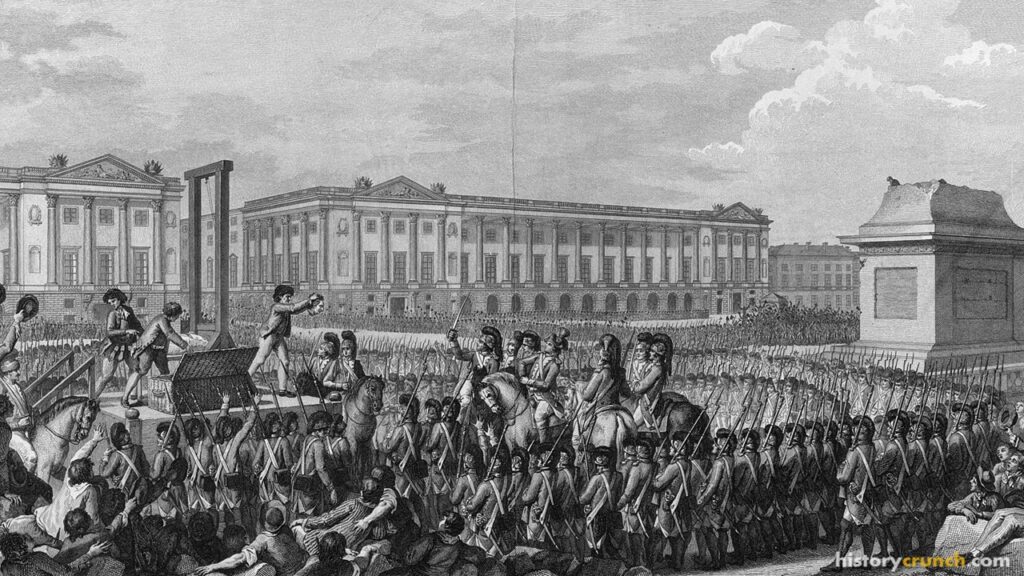
The execution of Louis XVI by guillotine on January 21st, 1793, was one of the most significant events of the French Revolution. His death marked a turning point in the French Revolution, symbolizing the end of France’s absolute monarchy and the rise of the republic. The execution shocked Europe and deepened the political turmoil within France, leading to further violence and the events of the Reign of Terror.
 FactsthatCrunch
Why did France turn against Louis XVI: what was visible on the surface, and what deeper causes were underneath?
What Was the French Revolution?
The French Revolution was a major event in the history of Western societies, and has had a profound effect on the world today. Beginning in 1789, the French Revolution saw the French people overthrow their absolute monarchyA system of government where a king or queen holds complete, unlimited power over the country. and bring about a republic that was based on the principles of equality, liberty and fraternity. A major result of the French Revolution was the execution of Louis XVI, the monarch of France during the revolution.
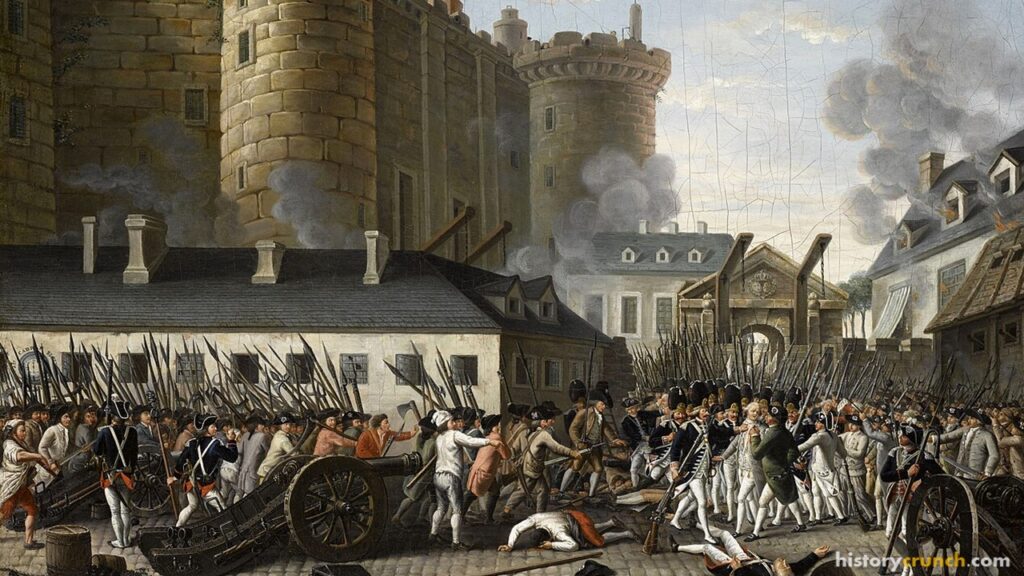
Execution of Louis XVI – Summary
Louis XVI became the king of France in 1774 when he succeeded his grandfather, Louis XV. However, Louis XVI struggled to lead France and lacked the qualities of previous monarchs. For example, Louis XVI was known to be shy and indecisiveUnable to make clear decisions quickly, often causing problems to get worse.. Throughout the 1780s France, and the peasants in particular, struggled due to economic hardships and poor harvests. Louis XVI famously mismanaged the country with his indecisiveness as it slipped into crisis and by 1789 he had lost the respect of his people. Ultimately, this led to his downfall, as the people began to seek different forms of government and rejected the traditions of feudalism and monarchy.
While the early stages of the revolution were carried out by the moderates in the National Assembly and the Legislative Assembly, by 1792 it was firmly in the hands of the more radical National Convention. It was around this time, that Louis XVI and his family were imprisoned in the Tuileries Palace in Paris following the march of Parisian women to Versailles. However, the royal family soon attempted to break free from their imprisonment. On the night of June 20th, 1791, Louis XVI, Marie Antoinette and their children snuck out of the palace in Paris disguised as servants and took a carriage through the French countryside towards France’s border with Austria. When the carriage arrived in the small French town of Varennes, it was stopped by a town official and the royal family was recognized. The revolutionaries forced Louis XVI and his family to return to Paris and removed the little remaining authority the king still had. Louis XVI was, from that point on, viewed as a traitor to the revolution and imprisoned again in Paris. Louis’ attempt to flee would prove to be important as it would be the deciding factor in the National Convention’s decision to convict and execute the king.

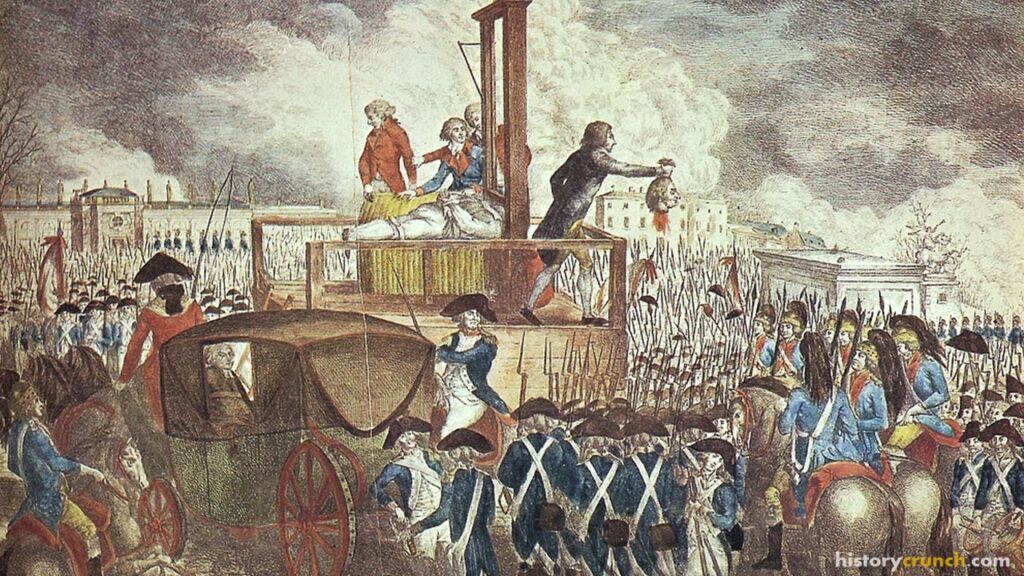
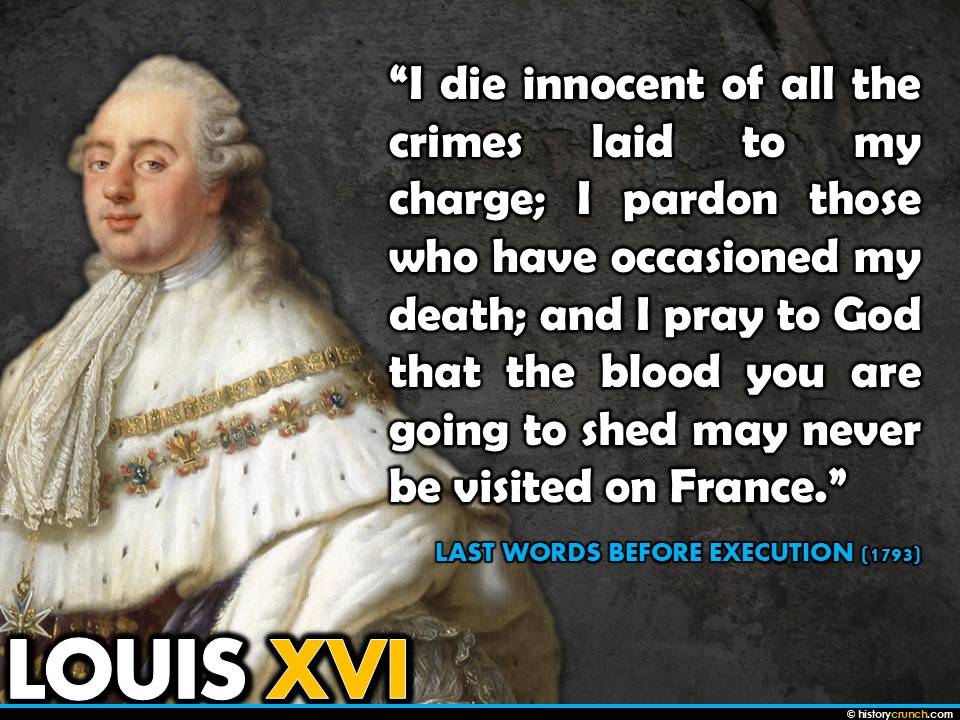
Soon, the representatives of the National Convention moved to put Louis XVI on trial. On December 11th, 1792, the king was brought before the convention to hear the charges against him. He was charged with treasonThe crime of betraying one’s own country or ruler. due to his attempt to flee the country, which was viewed as him abandoning his country. Next, on January 15th, 1793, the representatives voted and passed their verdict of guilty. The famous revolutionary, Maximilien Robespierre, commented that “Louis must die so the nation may live.” Louis’ punishment was death and on, January 21st, 1793, he was beheaded by guillotine. His final words were said to be: “I pardon those who are the cause of my death and declare myself innocent of all of the charges brought against me.” The French monarchy, which had lasted for over 1000 years, was over.
 FactsthatCrunch
Louis was the King, and the Republic is established. The vital question that occupies you here is resolved by these few words: Louis has been deposed by his crimes. He denounced the French people as rebels, and to punish them he called upon the arms of his fellow tyrants. Victory and the people have decided that he alone was the rebel. Consequently, Louis cannot be judged. Either he is already condemned, or else the Republic is not absolved. To suggest that Louis XVI be tried in any way whatsoever is to regress toward royal and constitutional despotism. A proposal such as this, since it would question the legitimacy of the Revolution itself, is counterrevolutionary.
According to the passage, what does Robespierre's argument reveal about why radical deputies believed a formal trial was a threat to the Revolution?
Execution of Louis XVI – Significance
As stated above, the execution of Louis XVI was a significant moment in the overall French Revolution. Louis XVI’s execution, for treason, symbolized the complete rejection of France’s absolute monarchy by the people of France. This was especially true of the members of the Third Estate, who were angered by their lack of wealth and privilege when compared with the First and Second Estates. Furthermore, the execution demonstrated that the revolutionaries were willing to go to extreme lengths to defend the new republic.
The execution of Louis XVI sent shockwaves throughout Europe. More specifically, it caused worry among other European monarchies and leaders, who feared similar revolutions in their own countries. As a result, the execution led to increased foreign opposition against revolutionary France.
Internally, it deepened political divisions and helped radicalizeTo push people or movements toward more extreme beliefs or actions. the revolution, paving the way for the Reign of Terror. The king’s death also empowered the JacobinsA powerful and extreme political group during the French Revolution that pushed for drastic change. and other radical groups who sought to eliminate all threats to the revolution. Ultimately, the execution was a powerful statement of the changing political order in France and the belief that no ruler was above the law. The ideals of the Age of Enlightenment (individualism, liberty, equality) were central to the new political order in France.
 FactsthatCrunch
French Revolution timeline · 1789 – 1799
Key Vocabulary
Absolute monarchy
Guillotine
Indecisive
Treason
Radicalize
Jacobins
Age of Enlightenment
Frequently Asked Questions
When was Louis XVI executed?
Louis XVI was executed by guillotine on January 21st, 1793, in Paris. His death came after the National Convention found him guilty of treason. The event ended a French monarchy that had lasted more than 1,000 years.
Why was Louis XVI executed?
Louis XVI was executed for treason after he tried to flee France in 1791. The revolutionaries saw his escape attempt as abandoning his country and betraying the revolution. This failed flight became the key reason the National Convention voted to convict him.
What were Louis XVI’s last words?
Louis XVI’s final words were reported as a pardon for those causing his death and a claim that he was innocent. He faced the guillotine before a large crowd in Paris. His calm words did little to slow the growing violence of the revolution.
How did the execution of Louis XVI affect the French Revolution?
The execution deepened political divisions and helped push the revolution toward more extreme violence. It empowered radical groups like the Jacobins and paved the way for the Reign of Terror. The king’s death also showed that the revolutionaries believed no ruler stood above the law.
How did the rest of Europe react to Louis XVI’s death?
The execution shocked European monarchies, who feared similar revolts in their own lands. Their worry led to increased foreign opposition against revolutionary France. Many rulers saw the killing of a king as a direct threat to their own power.
Who was Louis XVI?
Louis XVI became king of France in 1774 after succeeding his grandfather, Louis XV. He was known as shy and indecisive, and he struggled to lead the country through economic hardship. By 1789 he had lost the respect of his people, which helped bring on the revolution.
Cite This Article
To cite this article as a source, use one of the formats below.
MLA: Beck, Elias. “Execution of Louis XVI: A Detailed Summary.” HistoryCrunch, 22 September 2026, https://historycrunch.com/execution-of-louis-xvi/.
APA: Beck, E. (2026). Execution of Louis XVI: A Detailed Summary. HistoryCrunch. https://historycrunch.com/execution-of-louis-xvi/
Chicago: Beck, Elias. “Execution of Louis XVI: A Detailed Summary.” HistoryCrunch. September 22, 2026. https://historycrunch.com/execution-of-louis-xvi/
Sources
- Fordham Modern History Sourcebook
- Jeremy D. Popkin, A New World Begins: The History of the French Revolution.