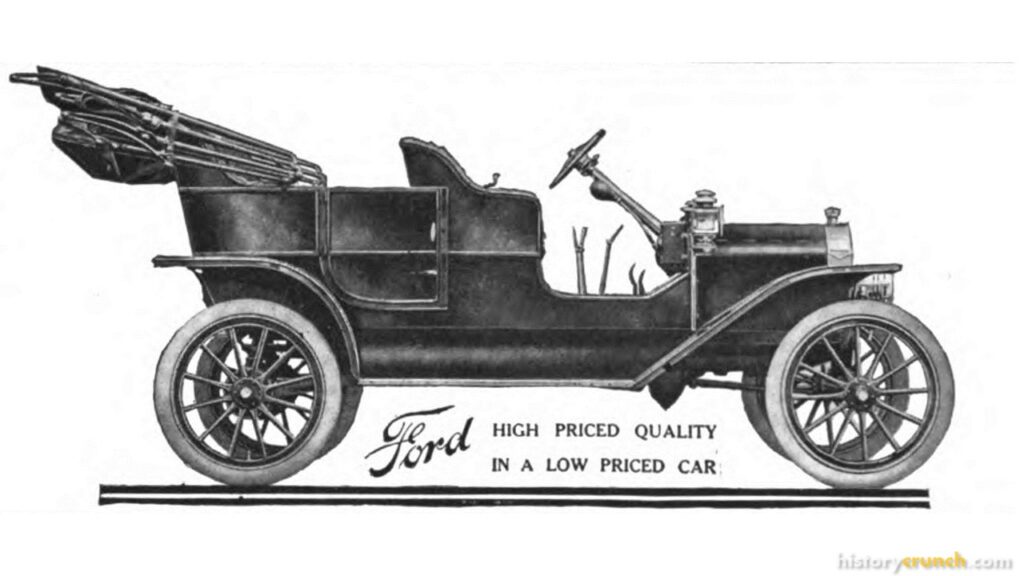
The invention of the automobile (Model T) during the Industrial Revolution marked a significant leap in transportation technology. Karl Benz is widely credited with creating the first true automobile in 1885, combining an internal combustion engine with a chassis. This innovation revolutionized personal and commercial transport, paving the way for the modern automotive industry. The mass production techniques developed by Henry Ford in the early 20th century made automobiles more accessible, dramatically transforming society and the economy.
 FactsthatCrunch
Henry Ford built the Ford Motor Company into one of the largest manufacturers in American history, pioneering the moving assembly line and making cars affordable for ordinary workers. His Willow Run factory near Detroit built 8,685 B-24 bombers during World War II, nearly half of all B-24s made in the United States.
Innovations in the Industrial Revolution
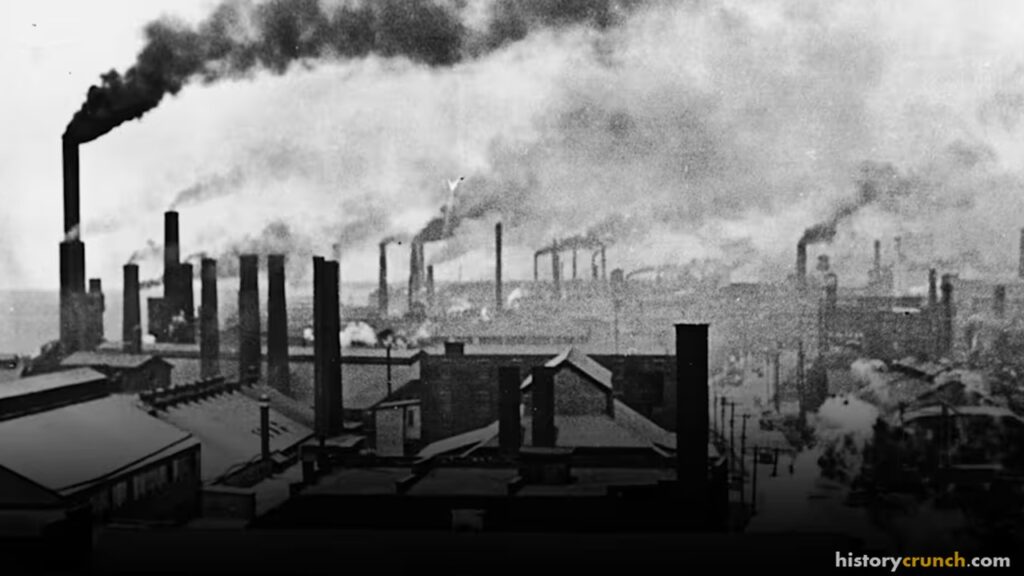
The Industrial Revolution is one of the most significant events in all of world history and had a profound impact on the modern world. It began first in Britain in the 1700s but soon expanded to the rest of Europe and North America. Before the innovations of the Industrial Revolution, most production depended on water, wind or human energy. The businesses that existed at this time were called cottage industriesEarly home-based businesses where workers made small amounts of goods before factories existed.. Cottage industries were an early stage of economic development in society in which workers produce a limited amount of goods in home-based businesses. However, by the mid-1700s, new methods of production were being developed across Europe, especially in Great Britain. This transition led to the factory system, which was the creation of factories in centralized locations such as industrial towns and cities. This period of innovation continued throughout the 19th century and led to many new inventions by now famous inventors. In fact, one of the key features of the Industrial Revolution is the development of new inventions that led to more automation by machines. Significant inventions or innovations of the Industrial Revolution included: flying shuttle, spinning jenny, power loom, water frame, cotton gin, steam engine, telephone, light bulb, automobile, assembly line production and interchangeable parts.
 FactsthatCrunch
The First Industrial Revolution replaced hand labor with machines powered by water and steam, while the Second Industrial Revolution built on that foundation by adding electric power, new materials like steel, and organized scientific research to drive further growth.
Invention of the Automobile
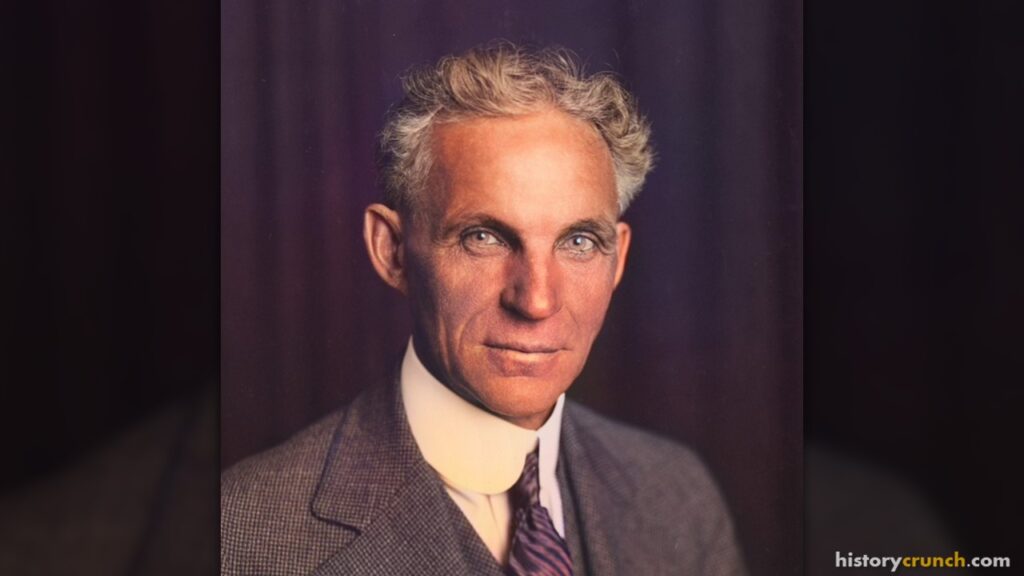
A significant invention of the late period of the Industrial Revolution was the automobile, which was invented first for a mass audience by Henry Ford in 1908. Henry Ford was an American inventor and businessman, and is famous today for many different inventions, of which the automobile was his most successful.
The Industrial Revolution was one of the most important events in human history and dramatically transformed life for people throughout the world. While it first began in Britain, its effects later spread to other parts of Europe, the Americas and now parts of Asia. In general, the Industrial Revolution unfolded in a series of stages, which historians refer to as the First Industrial Revolution and the Second Industrial Revolution. The First Industrial Revolution began in the 18th century and focused primarily on textile manufacturing and steam power. The Second Industrial Revolution began in the mid-19th century and continued until World War I in 1914. The Second Industrial Revolution focused instead on steel production, the automobile and advances in electricity. Henry Ford’s invention of the automobile is one of the most significant inventions from the Second Industrial Revolution.
Automobile Designs Before the Model T
To be clear, Henry Ford did not invent the first automobile in history. In fact, the four-stroke engineA type of internal combustion engine that powers gas-run vehicles, first built by Nicolaus Otto in 1876. was first built by German engineer Nicolaus Otto in 1876. This is the same technology that Ford used in his automobiles and is the basis for modern gas-powered engines. As well, earlier models of automobiles existed well before Henry Ford’s. For example, Karl Benz, a German engineer, famously developed his gas-powered Benz Motorcar in 1885. Benz’s design is considered to be the first practical automobile. However, Henry Ford’s significance is that he developed the first affordable automobile that was produced on a mass scaleProducing very large numbers of a product at once so many people can buy it. to a wide audience.
FactsthatCrunchIn 1888 Bertha Benz, Karl Benz's wife, made the first long road trip by car, driving about 65 miles.
Without telling her husband, she took the Benz Motorwagen with her two teenage sons from Mannheim to her mother's home in Pforzheim, Germany. Along the way she bought fuel at a pharmacy and fixed problems herself. The trip showed the public that a motorcar could really work, and it helped Benz improve his design.
Ford Motor Company and the Model T
In 1903, Henry Ford completed an important event in his own life and the history of technological innovation in the United States: he developed the Ford Motor Company with other investors. The company developed a number of automobiles, and he became a very successful man. For example, his Model T was one of the first significant automobiles in American history and was produced on a mass scale. The Model T was first introduced in 1908 and had several features that are still common in today’s vehicles. It proved to be a wildly popular automobile and is credited with transforming the way that people travel. Its popularity was due in part to a few main factors. First, the Model T was relatively inexpensive and could be afforded by many people at the time. For instance, when it first released it cost approximately $825, which relates to about $23,000 in today’s currency. Furthermore, with improvements to production Ford was able to lower the cost of the vehicle, which led to increased sales. The second reason for the popularity of Henry Ford’s Model T is that it was easy to drive. It had sensible steering, drive and brake systems, which allowed it to be easily learned and operated by most people. Third, the Model T was developed with parts that were easily and cheaply replaceable. As such, it was affordable for most people to fix and repair the vehicle themselves. In fact, the Model T was so popular that by 1914, more than 250,000 of them had been sold in the United States. The sales increased to over 472,000 by 1916 after Ford cut the price of the Model T to just $360. In fact, by 1918, half of all the cars in the United States were Model T’s. The Model T maintained its popularity with the American public well into the mid-1920s when it was eventually replaced by the new Model A.
FactsthatCrunchFord's assembly line drove the Model T's price lower and lower, putting a car within reach of ordinary American workers by 1916.
Significance of the Automobile
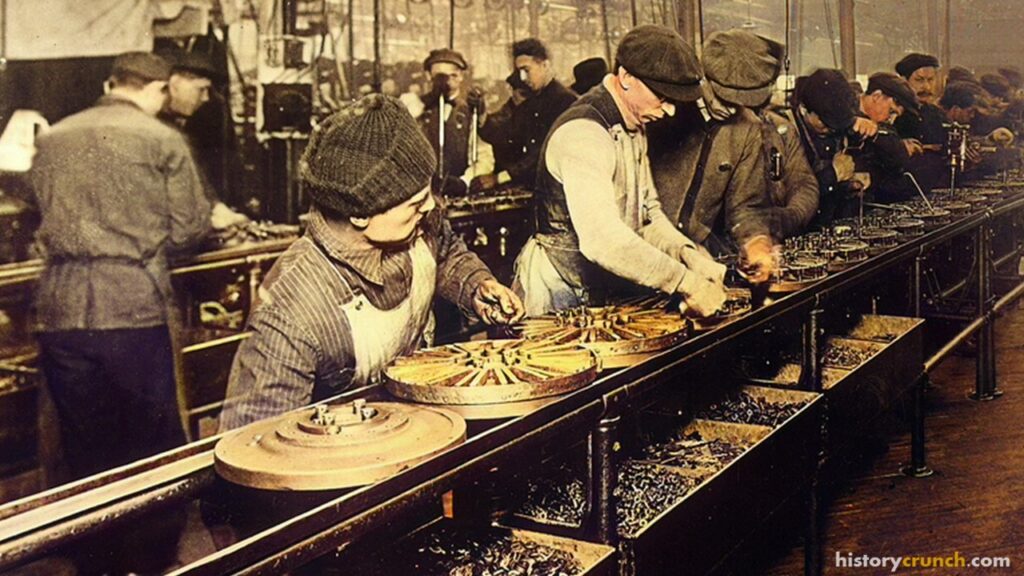
The development of the automobile (Model T) transformed society for people worldwide as it is now commonplace across much of the world. It helped to usher in modern society and led to other advancements in technology and transportation. In fact, Ford’s Model T was so successful that his company designed the first moving assembly lineA manufacturing method where parts move along a belt and each worker repeats one installation task. for automobile production.
 FactsthatCrunch
By the time production ended in 1927, Ford had built more than 15 million Model Ts.
No car model had ever sold in such numbers. The Model T stayed in production for 19 years, from 1908 to 1927, before Ford replaced it with the Model A. For decades it held the record as the best-selling car in the world.
Assembly Line Manufacturing
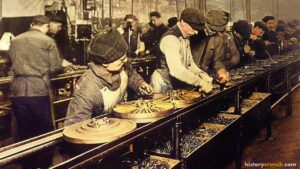
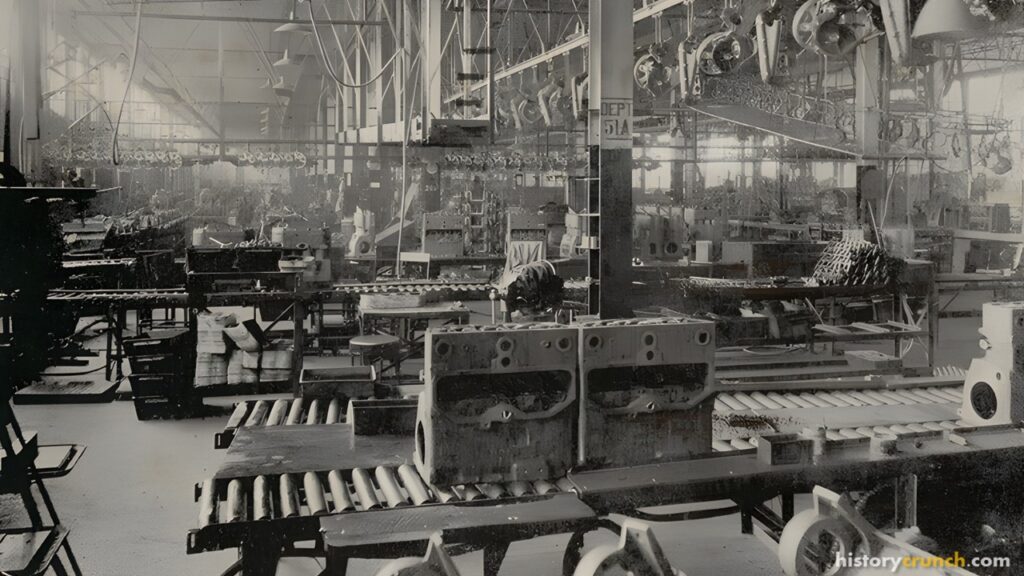
Another innovation pioneered by Henry Ford and the Ford Motor Company was the development of the assembly line in industrial production. Under this model of production, a part would travel along a belt and workers would install individual pieces. This meant that each worker generally performed the same installation over and over again. Previous to this method, workers would often perform several tasks, but the development of the assembly line simplified production and led to dramatic increases in the output of the factories. This is important because it allowed Henry Ford to develop his automobiles faster, which allowed him to increase sales while also lowering the overall price of the automobile. The development of the assembly line as a method of production is a significant step forward in the mass production of goods. As such, it became an important production technique throughout the later years of the Industrial Revolution and remains an important innovation still today.
 FactsthatCrunch
Tap each impact to read what it led to.
Industrial Revolution timeline · 1760 – 1840
Key Vocabulary
Cottage industries
Factory system
Four-stroke engine
Mass scale
Assembly line
Interchangeable parts
Frequently Asked Questions
Who invented the first automobile?
German engineer Karl Benz built the first practical automobile in 1885, called the Benz Motorcar. His design combined a gas-powered engine with a chassis. Henry Ford did not invent the car, but he later made it affordable for millions of people.
What was the Ford Model T?
The Model T was an affordable automobile introduced by Henry Ford in 1908. It was one of the first cars produced on a mass scale for a wide audience. It became wildly popular and changed the way people traveled across the United States.
Why was the Model T so popular?
The Model T was popular because it was cheap, easy to drive, and simple to repair. It first cost about $825, which is roughly $23,000 today. Its parts were cheap and easy to replace, so many owners could fix the car themselves.
How did the assembly line change car production?
The assembly line let workers build cars faster by each doing one repeated task. Parts moved along a belt while workers installed single pieces. This method sharply increased factory output and lowered the price of automobiles, which boosted sales.
When was the Model T replaced?
The Model T stayed popular until the mid-1920s, when the Ford Model A replaced it. By 1918, half of all cars in the United States were Model T’s. Ford kept cutting the price, and sales passed 472,000 by 1916.
Cite This Article
To cite this article as a source, use one of the formats below.
MLA: Beck, Elias. “Invention of the Automobile (Model T): A Detailed Summary.” HistoryCrunch, 26 September 2026, https://historycrunch.com/invention-of-the-automobile-model-t/.
APA: Beck, E. (2026). Invention of the Automobile (Model T): A Detailed Summary. HistoryCrunch. https://historycrunch.com/invention-of-the-automobile-model-t/
Chicago: Beck, Elias. “Invention of the Automobile (Model T): A Detailed Summary.” HistoryCrunch. September 26, 2026. https://historycrunch.com/invention-of-the-automobile-model-t/
Sources
- The Science Museum Group
- Robert C. Allen, The Industrial Revolution: A Very Short Introduction.
- Emma Griffin, A Short History of the British Industrial Revolution.