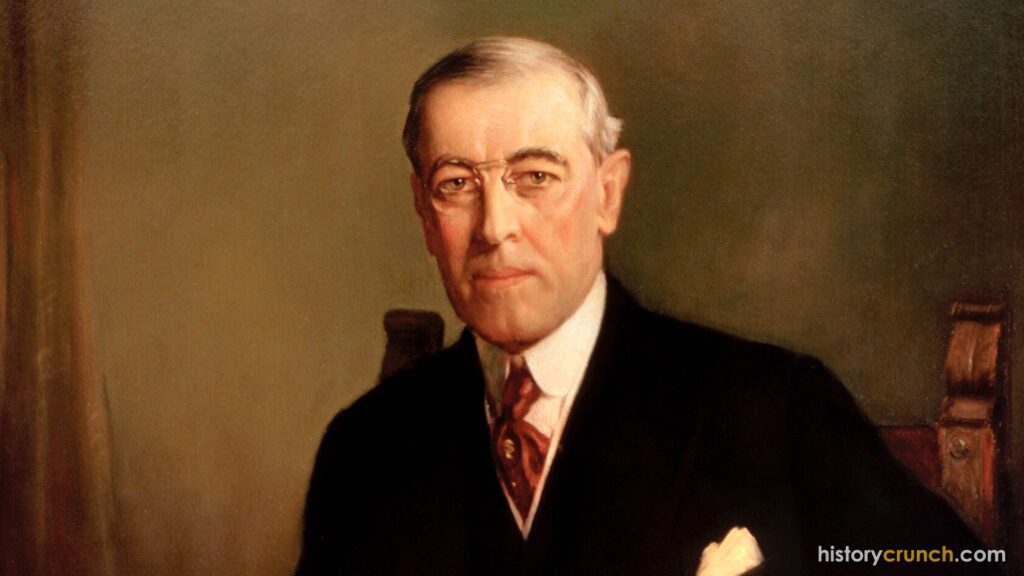
Woodrow Wilson was the 28th President of the United States and served in office from 1913 until 1921. Due to this timeframe, he is most often associated with the events of World War I and the role of the United States in the conflict and its aftermath. In fact, Wilson played an important role in the European peace settlements (Treaty of Versailles) following the end of World War I. Beyond this, Wilson made several important contributions to the United States and his presidency had a profound impact on the country.
 FactsthatCrunch
Wilson presented his Fourteen Points to Congress on January 8th, 1918, as a framework for lasting peace after World War I, calling for open diplomacy, free trade, reduced weapons, and a League of Nations to settle future disputes without war. Many European leaders viewed him as an idealist, and the United States Senate refused to join the League of Nations Wilson himself had proposed, leaving his most ambitious idea without American support.
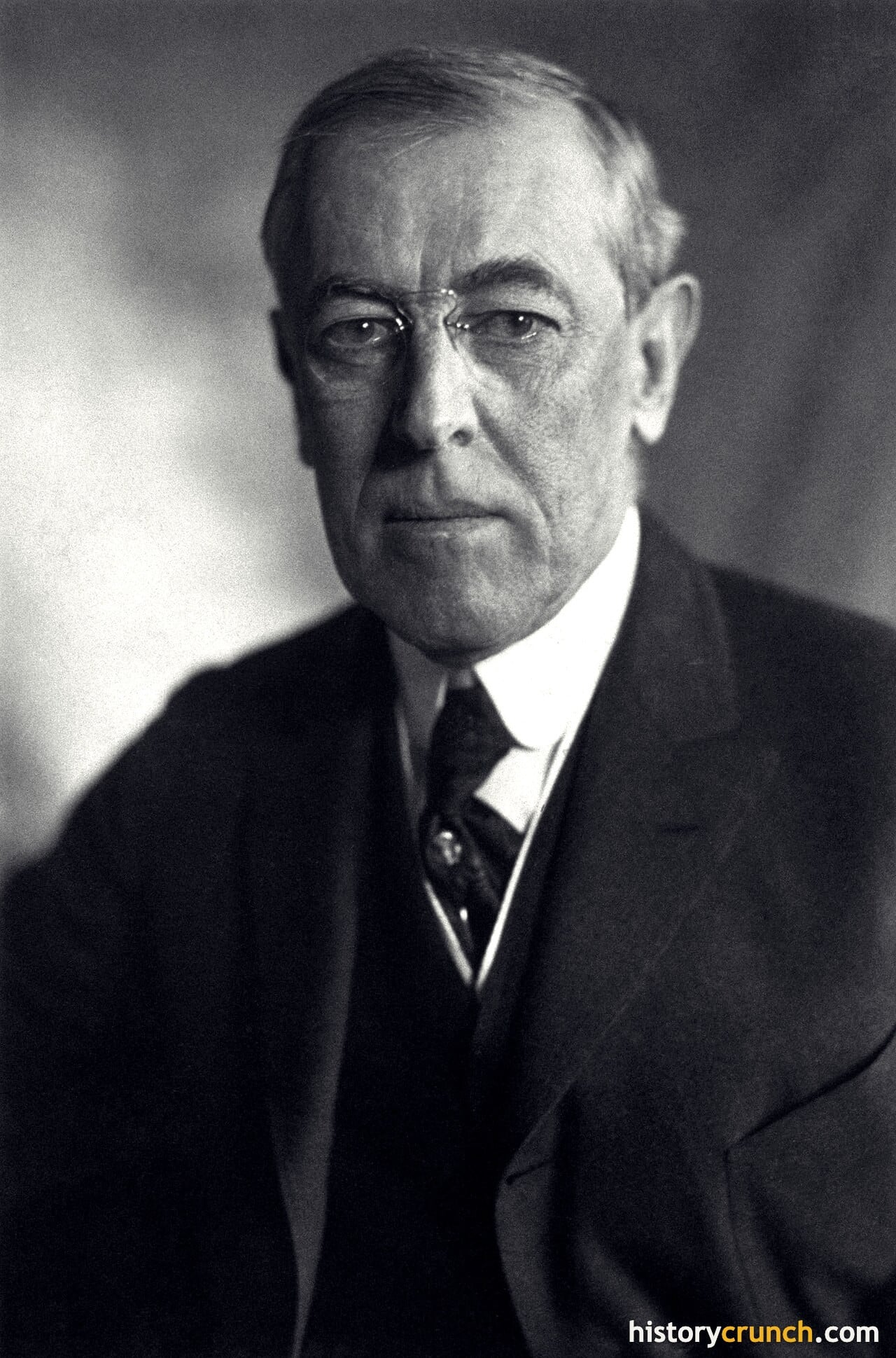
Woodrow Wilson – Early Life
Woodrow Wilson was born on December 28th, 1856 in Staunton, Virginia. His full name at birth was Thomas Woodrow Wilson. His father, Joseph Ruggles Wilson, was an ordained Presbyterian pastor and served in Staunton. However, when Woodrow Wilson was just two years old the family moved to Georgia.
As a young man in Georgia, Wilson was afforded an excellent education. This was due to his parents’ focus on his learning and religious faith. In 1870, he moved to South Carolina where his father had gained a position as a professor at the Columbia Theological Seminary. Just three years later, in 1873, Wilson began his college education at Davidson College in North Carolina. In 1875, he transferred to the College of New Jersey, which today is known as Princeton University. While there, he studied political philosophy and history. He especially took an interest in different systems of government, such as the parliamentary system used by the British. Wilson graduated from Princeton in 1879 and began studying law. After working briefly in 1882 as a lawyer in Georgia, he returned to school to continue his education.
 FactsthatCrunch
Woodrow Wilson was born Thomas Woodrow Wilson, but as a young man he stopped using his first name and went by his middle name, Woodrow.
He was born in Staunton, Virginia, on December 28th, 1856, the son of a Presbyterian pastor. The family moved to Georgia when he was two, and he grew up in the South during and after the Civil War.
Woodrow Wilson – Academic Career
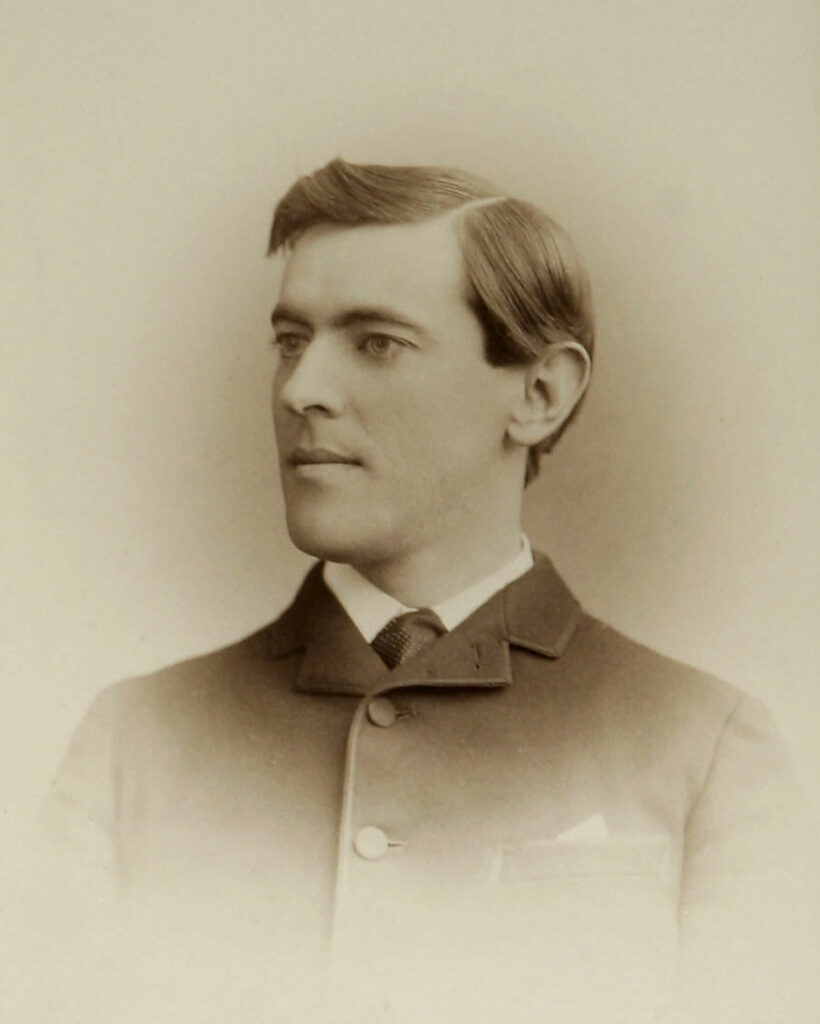
In 1883, Woodrow Wilson experienced several important events. First, he proposed to Ellen Louise Axson. They married later in 1885 and eventually had three daughters together. The second important event of 1883 for Woodrow Wilson was when he attended Johns Hopkins University in Baltimore, Maryland. He spent three years at the University during which he studied political science and focused on writing. He obtained his PhD in 1886 and began working as a professor in the years that followed while also continuing his writing. For example, he published several books on political theory and history.
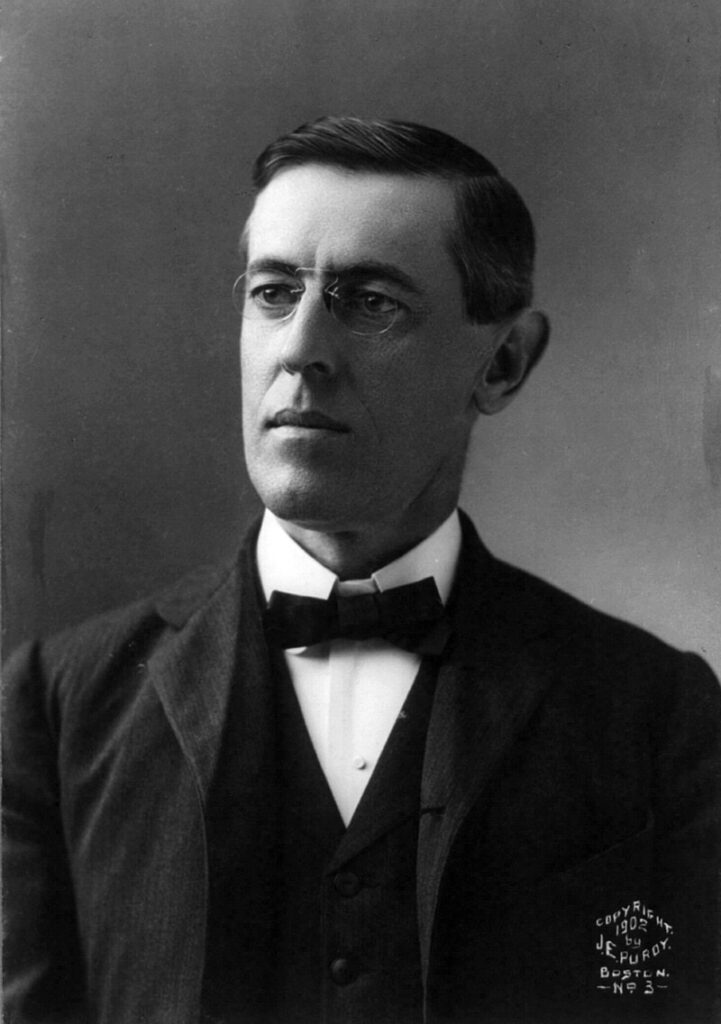
His academic career took a step forward in 1890 when he was elected as Chair of Jurisprudence and Political Economy for Princeton University. The position allowed him to gain more recognition in academic fields and he became known for his writing and public speeches on political theory. This resulted in him being promoted to President of Princeton University in 1902. In this position he passed several significant reforms that improved both the standing of Princeton and Wilson himself on a national level. However, in 1906, he suffered what historians believe to be a stroke. This was significant as it impacted his overall health in the rest of his life. As stated previously, Wilson’s role at Princeton University gained him widespread recognition. As such, he began considering a life in politics and openly supported the Democratic Party.
Woodrow Wilson – Entry into Politics
In 1910, Woodrow Wilson resigned from his position at Princeton University and accepted the Democratic nomination for the election of the New Jersey Governor. In the election, he faced off against Republican Vivian M. Lewis. Wilson easily defeated the Republican and served as the Governor of New Jersey from 1911 until 1913. His time as Governor of New Jersey helped set the stage for his candidacy in the United States Presidential Election in 1912.
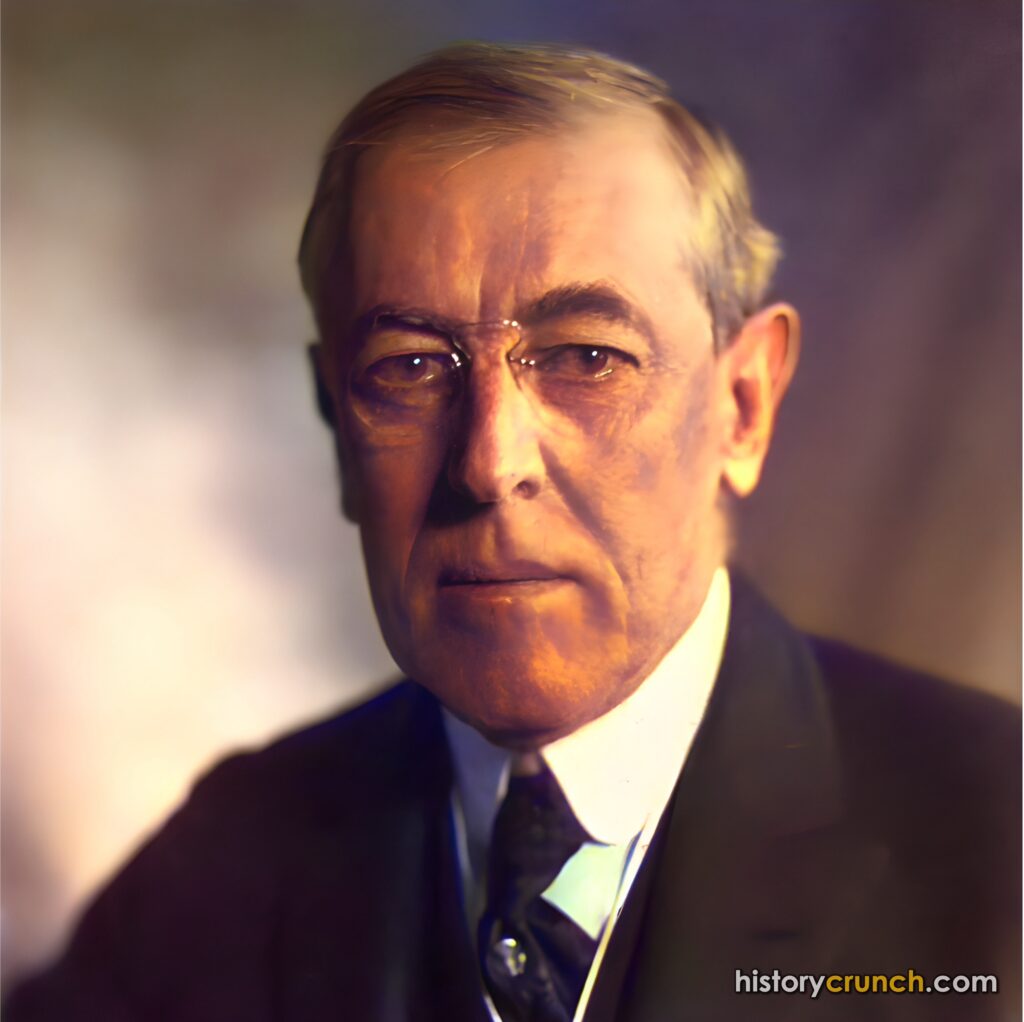
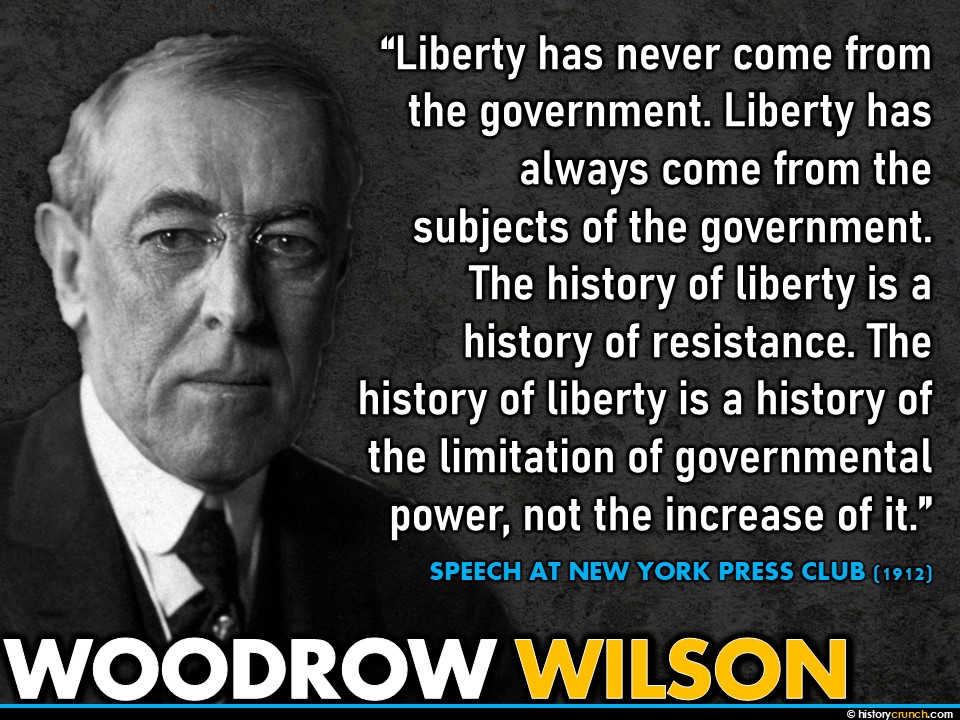
In the 1912 election, Woodrow Wilson ran for the Democratic Party and faced several others including William Taft, who was the Republican incumbent. As well, Theodore Roosevelt, the former Republican President ran for the Progressive Party (also called the ‘Bull Moose Party’). In his campaign, Wilson ran on a platform that proposed limiting the power of large corporations, which was a popular viewpoint at the time. In fact, Wilson won the 1912 Presidential election with 42 percent of the popular vote. He was the first Southerner to be elected as President of the United States since the Civil War.
 FactsthatCrunch
Woodrow Wilson – Presidency and World War I
Wilson’s first inauguration was on March 4th, 1913. He would ultimately serve two terms and remain in office until 1921. During that time, his presidency was dominated by the events and aftermath of World War I, which took place from 1914 until 1918. However, with that said, he also proposed several major domestic reforms that impacted life for people in the United States.
Quite quickly after he took office, Wilson began introducing reforms as part of his ‘New Freedom’ agenda. This included domestic reforms aimed at four main issues, which he highlighted in his campaign for president. The four main issues were the reduction of tariffs, conservation of natural resources, reforms to the banking system, and equal access to raw materials. His goal was to break apart some of the larger corporations to create competition and more equality for American workers and consumers.
While his early domestic reforms were significant, Wilson’s presidency quickly became dominated by the outbreak of World War I in Europe. The war began in the summer of 1914 following the assassination of Austrian Archduke Franz Ferdinand and the events of the July Crisis of 1914. When the war began, Europe was divided between two camps – Allied Powers (Britain, France and Russia) and the Central Powers (Germany, Austria-Hungary and the Ottoman Empire). From the outset of the crisis in Europe, Woodrow Wilson sought to maintain the United States’ neutralityA policy of not taking sides or joining the fighting in a war between other countries.. This neutrality included not only military actions but also trade. In fact, under Wilson the United States tried to trade with both the Allied Powers and the Central Powers. This was eventually prevented when Britain imposed a naval blockadeWhen a country uses warships to stop ships from delivering goods to an enemy nation. of Germany. As such, the United States did little trading with the Central Powers throughout the early years of World War I.
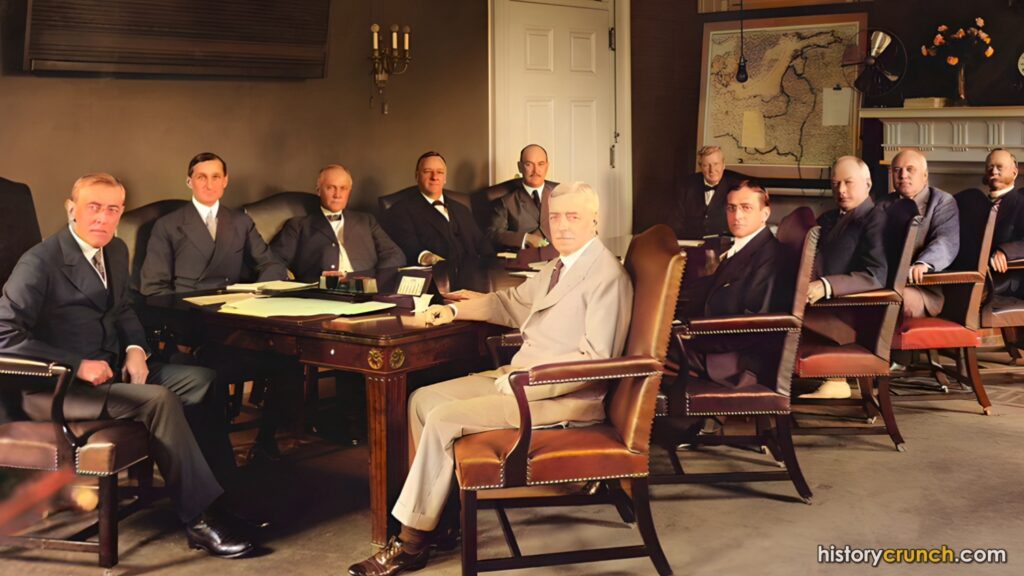
The neutrality of the United States in World War I was a major factor of Wilson’s first term as President of the United States. In fact, when he ran for re-election in 1916, he campaigned on the idea that he kept the country out of the fighting of World War I. In the election, Wilson narrowly defeated the Republican candidate Charles Evans Hughes with 49 percent of the popular vote.
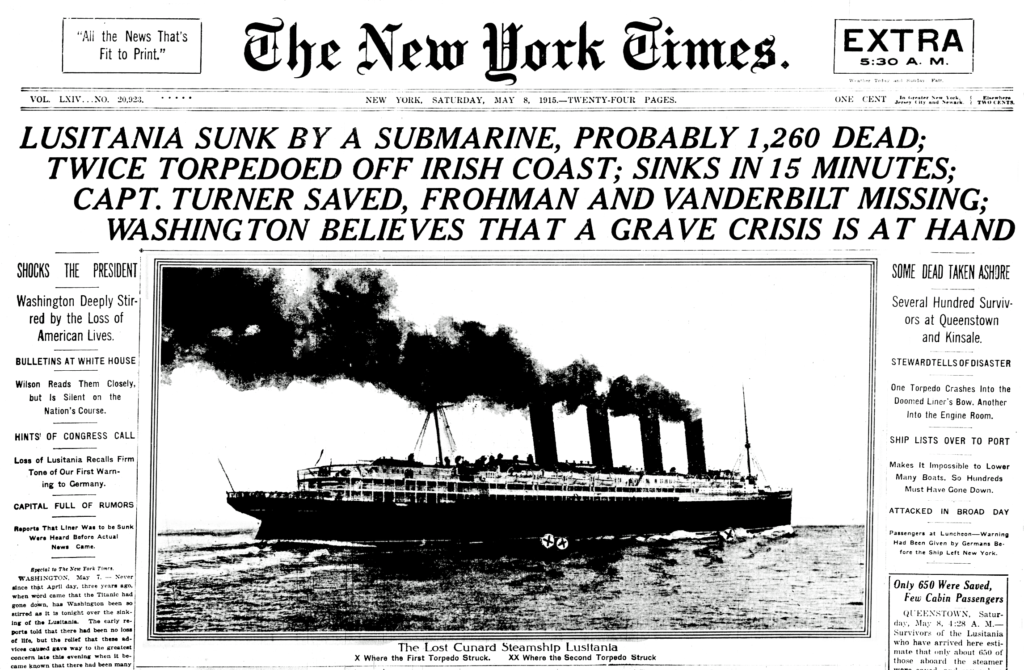
American neutrality in World War I was eventually tested at the start of Wilson’s second term as president. For instance, in response to the British blockade of Germany, the German Empire began carrying out submarine warfare against ships in the north Atlantic Ocean. For the Germans this was important as they hoped to stop supplies from reaching Britain. Unfortunately, German submarines were responsible for the sinking of several ships which had American citizens on them. The most famous example of this was the sinking of the British ocean liner RMS Lusitania in May of 1915. In total, the German attack on the Lusitania killed 1,198 people including 128 American citizens. Obviously, this created anger in the United States and forced Wilson to deal with the growing crisis. In 1917, the German Empire again began carrying out unrestricted submarine warfareA military strategy where submarines attack and sink any ships, including civilian vessels, without warning. and was one of the main reasons that the United States eventually joined the war effort on the side of the Allied Powers. In fact, in February of 1917, it was discovered that Germany had been in contact with Mexico in hopes of igniting a conflict between Mexico and the United States. This was known as the Zimmermann Telegram, and when combined with Germany’s submarine warfare, it pushed Wilson to eventually declare war against Germany.
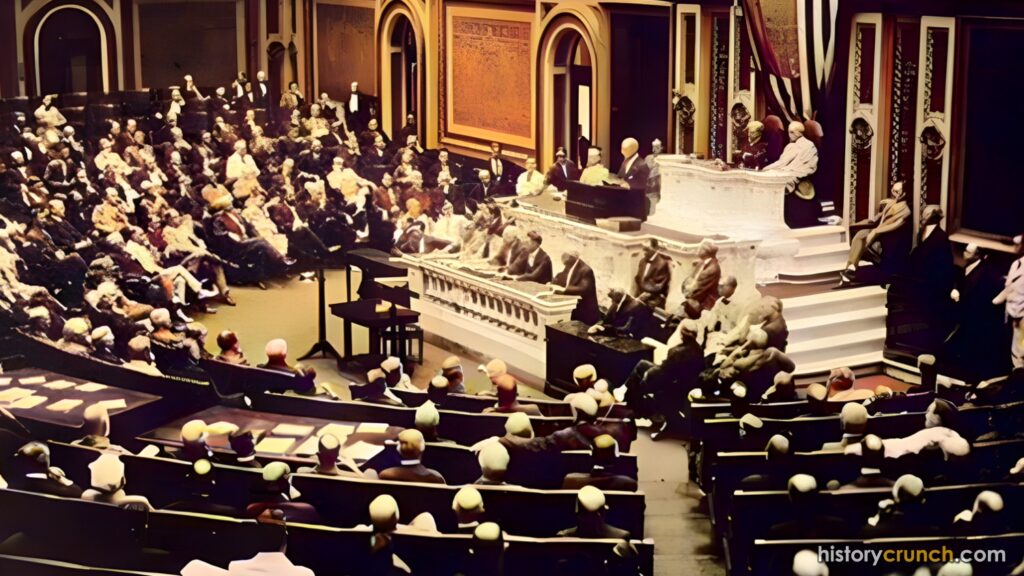
On April 2nd of 1917, Woodrow Wilson asked the United States Congress to declare war against Germany. Congress formally agreed with the request and the United States declared war on April 6th. This declaration of war caused Wilson to push for a military draft in order to build up the armed forces as quickly as possible. In fact, throughout the course of World War I the United States had conscripted approximately 3 million men for service. The war also had a profound impact on the home front for the United States and Wilson was tasked with raising funds for the war effort while also helping his European allies. American involvement in the war proved incredibly important and helped the Allied Powers eventually force the Central Powers into defeat. For example, an armistice was reached on November 11th in 1918.
 FactsthatCrunch
Neutrality is a country's choice to stay out of a war and not support either side. A neutral country does not send troops, sign military alliances, or join the fighting. It may still trade with other nations, but it tries to avoid actions that would pull it into the conflict.
When World War I began in the summer of 1914, President Woodrow Wilson declared that the United States would stay neutral and not take sides.
Woodrow Wilson – Fourteen Points and the Treaty of Versailles
Woodrow Wilson played a very significant role in the peace settlements that occurred following World War I. For instance, he famously proposed Fourteen Points for ensuring European peace. Wilson’s Fourteen PointsWilson’s specific set of recommendations for keeping peace in Europe and preventing future wars after World War I. were a set of recommendations for preventing another European conflict and are often viewed as an alternative to the Treaty of Versailles. In general, some of Wilson’s recommendations were used in the crafting of the Treaty of Versailles, but many in Europe considered Wilson to be an idealist and not all of his recommendations were used.
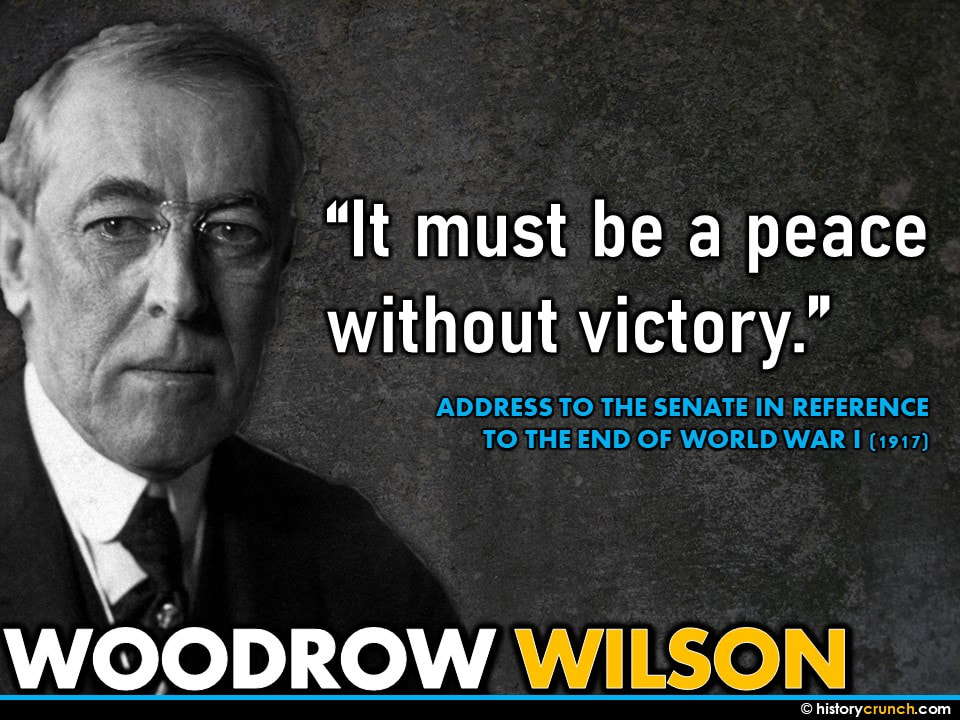
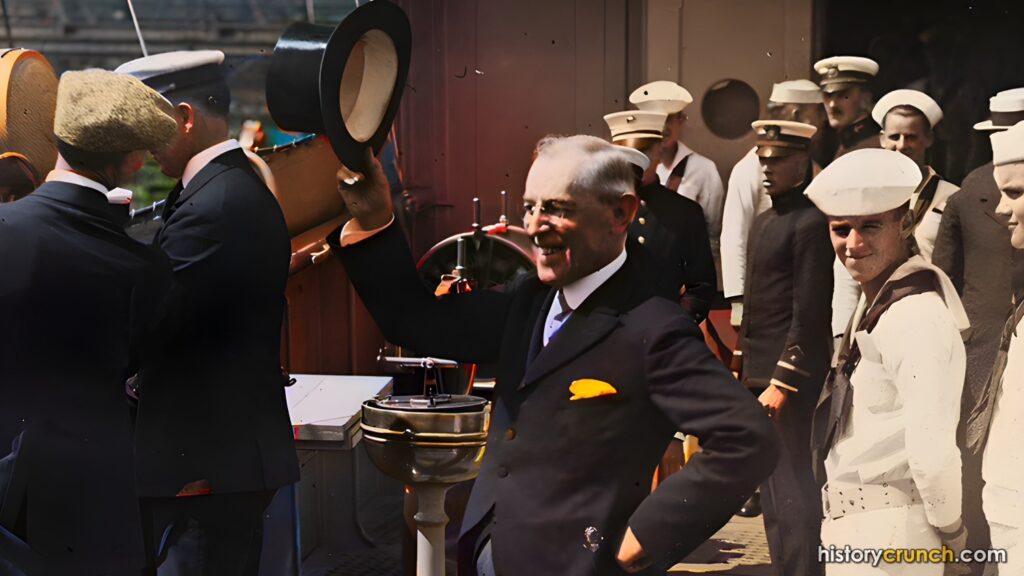
Beyond his Fourteen Points, Wilson also played a significant role in the Treaty of Versailles. The Treaty of Versailles formally ended World War I and laid out punishments for Germany. The treaty was a document that ended the war between the Allied Powers (Britain, France and the United States) and Germany.
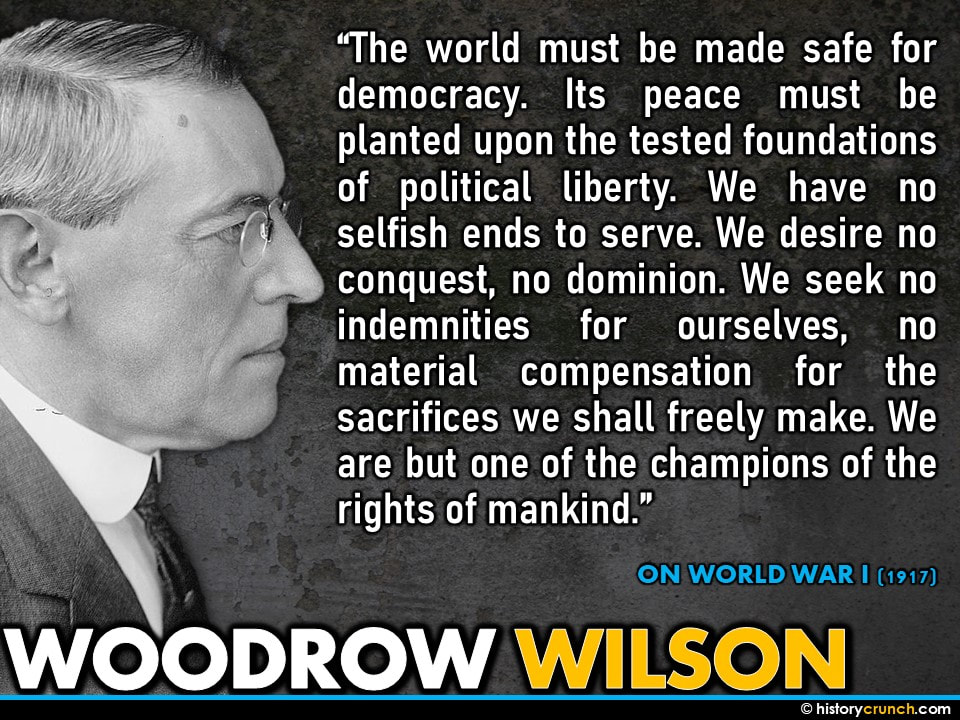
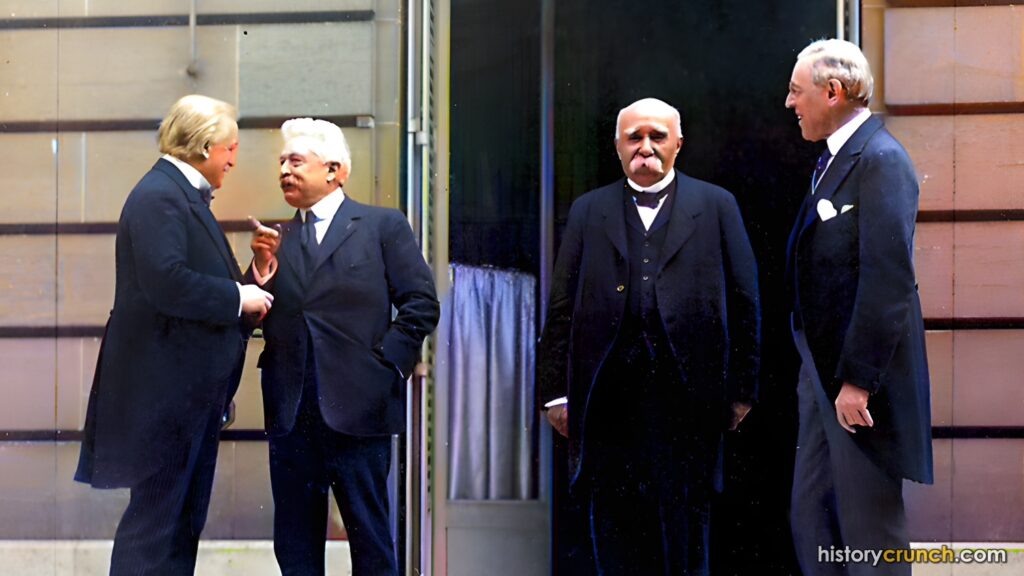
The Treaty of Versailles was signed on June 28th, 1919 in the Hall of Mirrors at the Palace of Versailles in France. The three main politicians that participated in the signing of the Treaty of Versailles were: Woodrow Wilson of the United States, David Lloyd George of Britain and Georges Clemenceau of France. Each leader had their own view on how to handle the end of World War I and to what degree Germany should be punished. In general, Britain and France both wanted Germany to be punished such that it could not wage war again. Wilson of the United States differed from Britain and France in that he did not support the idea of punishing Germany for its role in World War I. At the end of the war Woodrow Wilson issued his Fourteen Points in which he laid out a framework for ensuring peace in Europe. As part of his Fourteen Points, Wilson fundamentally opposed the idea of revenge or punishment for Germany and instead supported the idea that any German punishment should aim to rebuild Europe and lead to reconciliationThe process of restoring friendly relations between countries or groups that were previously in conflict..
Likely the most significant recommendation from Wilson’s Fourteen Points was the call to create the League of Nations, which was to be an international organization tasked with preventing another global conflict. However, despite playing a central role in its creation, the United States did not formally join the League of Nations due to disagreements over the role of the United States by Members of Congress.
 FactsthatCrunch
Clemenceau wanted terms harsh enough to prevent Germany from ever threatening France again. Wilson believed that severe punishment would damage long-term peace rather than protect it.
Woodrow Wilson – Final Years and Death
Following the end of World War I, Woodrow Wilson began to suffer from failing health. For instance, he suffered a stroke on October 2nd, 1919. The stroke was so severe that he was paralyzed on his left side and was essentially bed-ridden for weeks afterwards. At the time, the country was facing a range of significant issues. For example, the events of the Russian Revolution in 1917 led to the First Red Scare in the United States and the fear of the spread of communism. Second, the United States was undergoing a great deal of change due to the rise of feminism and calls for women’s suffrageThe legal right to vote in political elections. (the right to vote). Third, the Flu Pandemic of 1918 devastated countries around the world, including the United States, which suffered over 600,000 related deaths throughout 1918 and 1919. Finally, the issue of the prohibition of alcohol was at its height with the ratification of the 18th Amendment in 1919.
Despite all of these lingering issues and his own failing health, Wilson sought to compete for a third term as President of the United States. Although he was willing to continue his political career, the Democratic Party leadership opted not to nominate him for the 1920 Presidential election. Instead, they ran a ticket consisting of Governor James M. Cox and Assistant Secretary of the Navy Franklin D. Roosevelt. The Republican Party nominated Senator Warren G. Harding. Harding won the election quite easily and replaced Wilson as President of the United States.
Wilson spent much of his remaining years writing and following the politics of the day. However, his health continued to decline, and he died in Washington D.C. on February 3rd, 1924. His body was placed in a sarcophagus in Washington National Cathedral.
Historically, Woodrow Wilson is remembered as a war-time President in relation to his role in World War I. He is also remembered for his domestic policies which were aimed at assisting American workers and consumers by preventing corporations from having too much power. With that said, he has also been criticized for some of his decisions, especially in relation to the treatment of African Americans. In short, he allowed the continuation of some segregationist policies, which negatively impacted African American communities.
 FactsthatCrunch
Why did Woodrow Wilson not serve a third term as president?
Wilson wanted to run again in 1920, but a severe stroke on October 2nd, 1919 had left him paralyzed on his left side, and Democratic Party leaders chose not to nominate him. They ran James M. Cox and Franklin D. Roosevelt instead, and Republican Warren G. Harding won the election easily.
Explore World War I · 1914 – 1918
Keep exploring World War I with these History Crunch resources.
Key Vocabulary
Neutrality
Naval blockade
Unrestricted submarine warfare
Zimmermann Telegram
Fourteen Points
Reconciliation
Suffrage
Frequently Asked Questions
Why did the United States enter World War I under Woodrow Wilson?
The United States entered World War I mainly because of German submarine warfare and the Zimmermann Telegram. German submarines sank ships carrying American citizens, including the RMS Lusitania in May 1915. In early 1917, Germany resumed unrestricted submarine attacks and secretly asked Mexico to fight the United States. These actions pushed Wilson to ask Congress to declare war on April 2nd, 1917.
What were Woodrow Wilson’s Fourteen Points?
The Fourteen Points were Wilson’s set of recommendations for keeping peace in Europe after World War I. He opposed harshly punishing Germany and hoped instead to rebuild Europe and promote reconciliation. His most important idea was the creation of the League of Nations, an international group meant to prevent future wars. Many European leaders saw Wilson as an idealist and rejected some of his proposals.
Did the United States join the League of Nations?
No, the United States never formally joined the League of Nations, even though Wilson helped create it. Members of Congress disagreed over how large a role the country should play in the organization. This was a major defeat for Wilson, since the League was the central part of his peace plan. The League still formed, but it lacked the support of a powerful founding member.
What was Woodrow Wilson’s “New Freedom” agenda?
The “New Freedom” was Wilson’s set of domestic reforms introduced soon after he took office. It focused on four issues, lower tariffs, conservation of natural resources, banking reform, and fair access to raw materials. His goal was to break up large corporations and create more fair competition. He wanted these changes to help American workers and consumers.
How is Woodrow Wilson remembered today?
Woodrow Wilson is remembered as a wartime president because of his leadership during World War I. He is also praised for domestic policies that limited the power of corporations. However, he has been strongly criticized for his record on race. He allowed segregationist policies to continue, which harmed African American communities.
What role did Wilson play in the Treaty of Versailles?
Wilson was one of the three main leaders who shaped the Treaty of Versailles, signed on June 28th, 1919. He worked alongside David Lloyd George of Britain and Georges Clemenceau of France. Unlike Britain and France, Wilson did not want Germany to be heavily punished. Some of his ideas were used in the treaty, but many were set aside.
Cite This Article
To cite this article as a source, use one of the formats below.
MLA: Beck, Elias. “Woodrow Wilson: A Detailed Biography.” HistoryCrunch, 30 September 2026, https://historycrunch.com/woodrow-wilson/.
APA: Beck, E. (2026). Woodrow Wilson: A Detailed Biography. HistoryCrunch. https://historycrunch.com/woodrow-wilson/
Chicago: Beck, Elias. “Woodrow Wilson: A Detailed Biography.” HistoryCrunch. September 30, 2026. https://historycrunch.com/woodrow-wilson/
Sources
- Imperial War Museum
- Margaret MacMillan, The War That Ended Peace.