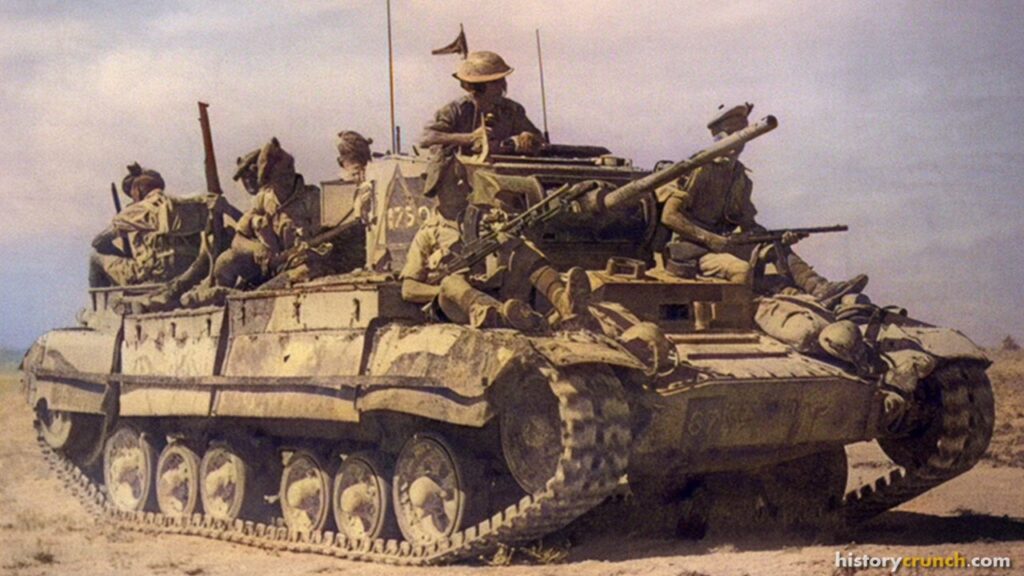
The Battles of El Alamein refers to two World War II battles fought near the town of El Alamein in Egypt in 1942. The First Battle of El Alamein lasted from July 1st to July 27th, 1942, and the Second Battle of El Alamein lasted from October 23rd to November 11th, 1942. Both battles were fought between the British Eighth Army and the Axis forces of Nazi Germany and fascist Italy in the North African Theater of World War II. In general, historians consider the Battles of El Alamein, and in particular the second battle, to be one of the most important turning points of World War II, as it ended the Axis advance in North Africa and set in motion the events that would eventually lead to the Allied invasion of Italy.
Did each of these happen in the First Battle of El Alamein (July 1942) or the Second Battle of El Alamein (October to November 1942)?

What was the North African Theater of World War II?
The North African TheaterThe region where Allied and Axis forces fought military campaigns across the deserts of North Africa from 1940 to 1943. of World War II refers to the campaigns and conflicts fought across the deserts of North Africa between the Allied Powers and the Axis Powers from 1940 to 1943. The theater began when fascist Italy, under the leadership of Benito Mussolini, launched an invasion of British-controlled Egypt from the country of Libya in September of 1940. In general, North Africa was strategically important to both sides because control of the region offered access to the Suez CanalA vital shipping route connecting the Mediterranean Sea to the Red Sea, making it strategically critical to both sides in the war., which was a vital shipping route connecting the Mediterranean Sea to the Red Sea and the overall supply lines of the British Empire.
FactsthatCrunchWhen Britain secured control of the Suez Canal in the 19th century, it gained a direct shipping route connecting the Mediterranean Sea to the Red Sea, cutting weeks off voyages between Britain and its territories in Asia, East Africa, and the Pacific. By 1942, that same route carried the fuel, food, and military supplies that kept British forces supplied across the empire, making Egypt a front-line priority in World War II.
Both Italy's invasion of Egypt in September of 1940 and the later Axis push toward El Alamein targeted this corridor, because cutting it would have severed Britain's imperial supply lines in one move.
Battles of El Alamein – Background
To fully understand the Battles of El Alamein, it is first important to understand the events that led to it. Following Italy’s invasion of Egypt in 1940, British forces initially pushed the Italians back deep into Libya. However, in February of 1941, Adolf Hitler sent a Nazi German force to North Africa to support the struggling Italian army. This force became known as the ‘Afrika KorpsThe Nazi German military force sent to North Africa in 1941 to support the struggling Italian army, commanded by General Rommel.‘ and was placed under the command of General Erwin Rommel. Rommel launched a series of rapid and aggressive offensives that pushed British forces back across Libya and into Egypt, earning him the nickname ‘Desert Fox’.
By the summer of 1942, Rommel’s forces had advanced deep into Egypt. Following this success, Hitler promoted Rommel to the rank of Field Marshal. The Axis advance continued eastward into Egypt, and by late June of 1942 Rommel’s forces had reached the area around El Alamein, a small town located approximately 66 miles (106 kilometers) west of Alexandria, Egypt. At this point, Allied forces were under serious pressure and the defense of Egypt itself was at stake.
As mentioned above, the loss of Egypt would have given the Axis Powers control of the Suez Canal, which would have been a devastating blow to the overall Allied war effort.
FactsthatCrunchRommel earned the nickname 'Desert Fox' because of his rapid offensive tactics, but historians debate whether his reputation outgrew his actual strategic results in North Africa.
First Battle of El Alamein
The First Battle of El Alamein began on July 1st, 1942, when Rommel’s forces attempted to break through the Allied defensive line near El Alamein and continue their advance toward Alexandria and the Suez Canal. At the time, the Allied forces in Egypt were under the command of General Claude Auchinleck, commander of British forces in the Middle East. Auchinleck made the decision to establish a defensive line at El Alamein, which offered a naturally strong defensive position. In short, it made it impossible for Rommel to outflankTo move around the side of an enemy’s defensive line to attack from the rear or side, bypassing their main defenses. the Allied line as he had done successfully in the earlier campaigns.
The First Battle of El Alamein lasted throughout July of 1942 and involved a series of attacks and counterattacks across the desert front. Rommel’s forces were exhausted and stretched to the limits of their supply lines after the long advance across North Africa, and they were unable to break through the Allied defensive positions. By the end of July, the Axis offensive had stalled and both sides settled into temporary defensive positions. As such, the First Battle of El Alamein was important because it halted the Axis advance into Egypt and bought the Allied forces time to reinforce and reorganize.
FactsthatCrunchWhy couldn't Rommel's Afrika Korps break the Allied defensive line at El Alamein in July 1942?
Second Battle of El Alamein
Following the First Battle of El Alamein, both sides used the pause in fighting to reinforce their positions and prepare for another clash. A major change came in August of 1942, when British Prime Minister Winston Churchill appointed General Bernard Montgomery as the new commander of the British Eighth Army. Montgomery immediately set about rebuilding the morale and fighting effectiveness of his forces. For instance, he insisted that all plans for further retreat be cancelled and made clear that the Eighth Army would stand and fight at El Alamein regardless of the circumstances. He also ensured that the army was properly trained, supplied and prepared before launching any major offensive.
At the same time, the Axis forces were facing growing supply problems. Allied naval and air forces operating from Malta and other bases in the Mediterranean were attacking Axis supply convoysGroups of ships carrying fuel, ammunition, and reinforcements to military forces in the field, which could be targeted and destroyed by the enemy., reducing the flow of fuel, ammunition, and reinforcements reaching Rommel’s forces in North Africa. Furthermore, Rommel himself was in poor health by October of 1942 and was temporarily absent from the front when the second battle began. As a result, by the time Montgomery launched his offensive in late October of 1942, the balance of strength had shifted in favor of the Allied forces.
The Second Battle of El Alamein began on the night of October 23rd, 1942, when the British Eighth Army launched a major offensive against the Axis lines. The opening phase of the battle, known as ‘Operation Lightfoot’, began with one of the largest artillery bombardmentsA large-scale, sustained attack using heavy guns firing shells at enemy positions to weaken their defenses before infantry advances. of the North African campaign, involving over 800 guns firing simultaneously along the front. The artillery bombardment was intended to suppress the Axis defenses and support the advance of Allied infantry and engineers.
The fighting that followed was intense and costly for both sides. The Axis forces had constructed strong defensive positions protected by dense minefieldsAreas of ground loaded with hidden explosive devices designed to slow or destroy advancing enemy troops and vehicles., anti-tank guns and infantry defenses. The Allied advance through these positions was slow and required considerable fighting over a period of nearly two weeks. For instance, Montgomery launched a series of attacks at different points along the front to stretch the Axis defenses and find weak points. When initial attacks were slowed, he shifted the main thrust of the offensive to a new area.
His plan eventually succeeded in breaking through the Axis defensive line. With the Axis position collapsing, Rommel, who had returned to command, made the decision to begin withdrawing his forces westward along the North African coast. By November 11th, 1942, the Second Battle of El Alamein was over. The Axis forces were in full retreat westward and would not recover their earlier position in Egypt.
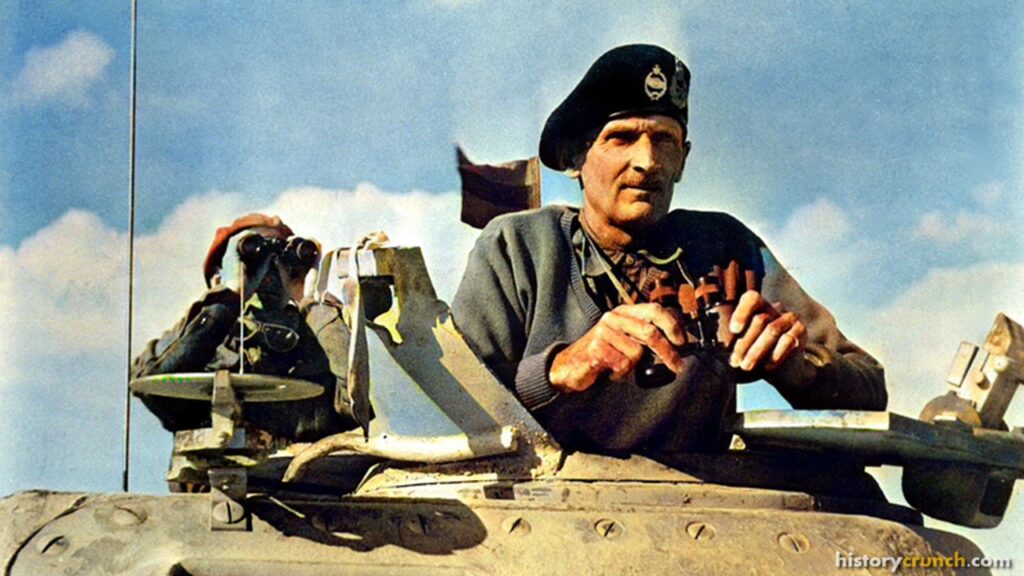
Battles of El Alamein – Significance
The Battles of El Alamein were significant for several reasons. First, they ended the Axis threat to Egypt and the Suez Canal. The defeat of Rommel’s forces at El Alamein and the subsequent Allied pursuit westward along the North African coast eventually resulted in the complete removal of Axis forces from North Africa by May of 1943. This was an important strategic victory for the Allied Powers, as it secured the Mediterranean supply routes and opened the way for the Allied invasion of Sicily and then the Italian Campaign.
Second, the Second Battle of El Alamein was one of the first major Allied land victories against Nazi German forces in the war. As such, it had an important impact on Allied morale at a time when the war in Europe was still far from decided. For instance, British Prime Minister Winston Churchill famously stated that the battle was not the end, nor even the beginning of the end, but that it was perhaps the end of the beginning. This reflected the overall understanding that El Alamein represented a genuine turning point in the overall direction of the war.
Third, the battle confirmed the importance of supply lines and preparation in modern warfare. Rommel’s forces were ultimately unable to sustain their offensive at El Alamein because they were operating at the end of a long and vulnerable supply line. Montgomery’s careful preparation and his insistence on ensuring the Eighth Army was fully supplied before attacking stood in contrast to the supply difficulties that had weakened the Axis position.
FactsthatCrunchNow this is not the end. It is not even the beginning of the end. But it is, perhaps, the end of the beginning.
Winston Churchill · Speech at the Mansion House, London · November 10th, 1942
Churchill gave this speech days after the Second Battle of El Alamein, as Axis forces retreated west across North Africa. He was careful not to promise a quick end to the war, but his words told the British public that, after years of defeats, the tide had finally begun to turn.

Explore World War II · 1939 – 1945
Keep exploring World War II with these History Crunch resources.
Key Vocabulary
North African Theater
Suez Canal
Afrika Korps
Outflank
Minefields
Artillery bombardment
Supply convoys
Frequently Asked Questions
Where is El Alamein located?
El Alamein is a small town in Egypt about 66 miles (106 km) west of Alexandria. It sat along the Mediterranean coast in the North African Theater of World War II. Its narrow terrain made it a strong defensive point because the enemy could not easily go around the line.
Who won the Battles of El Alamein?
The Allied forces, led by the British Eighth Army, won both battles at El Alamein. The first battle stopped the Axis advance into Egypt in July of 1942. The second battle in late 1942 broke the Axis line and forced Rommel’s forces into retreat.
Why were the Battles of El Alamein important?
The battles ended the Axis threat to Egypt and the Suez Canal, a vital Allied shipping route. The second battle was one of the first major Allied land victories against Nazi Germany. It helped boost Allied morale and opened the way for later invasions of Sicily and Italy.
Who were the main commanders at El Alamein?
General Erwin Rommel led the Axis forces, earning the nickname the “Desert Fox.” General Claude Auchinleck commanded the Allies during the first battle. General Bernard Montgomery took over the British Eighth Army in August of 1942 and led it to victory in the second battle.
Why did the Axis forces lose at El Alamein?
The Axis forces ran out of fuel, ammunition, and reinforcements because their supply lines were long and vulnerable. Allied air and naval attacks from Malta cut deeply into Axis supply convoys. Montgomery, by contrast, waited until his army was fully supplied and trained before attacking.
What was Operation Lightfoot?
Operation Lightfoot was the opening phase of the Second Battle of El Alamein on October 23rd, 1942. It began with one of the largest artillery bombardments of the North African campaign, using over 800 guns. The barrage was meant to weaken Axis defenses and support advancing infantry and engineers.
Cite This Article
To cite this article as a source, use one of the formats below.
MLA: Millar, B. “Battles of El Alamein: A Detailed Summary.” HistoryCrunch, 2 October 2026, https://historycrunch.com/battle-of-el-alamein/.
APA: Millar, B. (2026). Battles of El Alamein: A Detailed Summary. HistoryCrunch. https://historycrunch.com/battle-of-el-alamein/
Chicago: Millar, B. “Battles of El Alamein: A Detailed Summary.” HistoryCrunch. October 2, 2026. https://historycrunch.com/battle-of-el-alamein/
Sources
- Gerhard L. Weinberg, A World at Arms.
- The National WWII Museum
- Antony Beevor, The Second World War.
- Imperial War Museum