The Soviet Invasion of Afghanistan was a major Cold War event in which the Soviet Union sent troops into the country of Afghanistan in late December of 1979 to support a failing communist government. The Soviet Invasion of Afghanistan began a long and brutal war that lasted through the 1980s, weakened the Soviet Union, and left Afghanistan deeply shattered.
Soviet Invasion of Afghanistan – Background
The Soviet Invasion of Afghanistan grew out of political crisis inside Afghanistan in the late 1970s. In July of 1973, Mohammed Daoud Khan overthrew King Zahir Shah and took power. Then, on April 28th, 1978, left-wing officers connected to the People’s Democratic Party of Afghanistan, or PDPA, overthrew Daoud and killed him and members of his family. The new communist government was divided between two rival factionsRival groups within the same political movement competing for power and control., Khalq, which means “Masses,” and Parcham, which means “Banner.”
The new government tried to push through major land and social reforms, but it had very little popular support. Many Afghans, especially in rural and religious communities, strongly opposed these changes. Armed uprisings began in different parts of Afghanistan, and the communist government responded with repression and purgesForceful removals of people from a government or organization, often through imprisonment or execution.. As the violence spread, Afghanistan moved closer to civil war.
 FactsthatCrunch
Soviet Invasion of Afghanistan – Why the Soviets Invaded
The Soviet Union had long had influence in Afghanistan, but by 1979 the situation was becoming much more unstable. Internal fighting inside the Afghan communist government became worse, and Soviet leaders feared that the regime in Kabul, Afghanistan, might collapse. They also worried that a hostile Islamic government could rise on the Soviet Union’s southern border.
Another important factor was the struggle for power inside Afghanistan itself. Nur Mohammad Taraki was replaced by Hafizullah Amin, and Amin later had Taraki killed in October of 1979. Soviet leaders distrusted Amin and believed he was too unstable to keep control. Therefore, the Soviet Union decided not just to support the Afghan government from a distance, but to intervene directly and replace Amin with Babrak Karmal, a leader from the Parcham faction.
FactsthatCrunchIt is December 1979, and you are a senior Soviet leader wrestling with a crisis on your southern border during the Cold War. Afghanistan's communist government is fracturing, popular uprisings are spreading across the countryside, and Hafizullah Amin, who had his own predecessor Nur Mohammad Taraki killed in October of 1979, now leads the country. Soviet leaders distrust Amin and fear that if he fails, a hostile Islamic government will take power on the Soviet Union's border. The choice you make in the coming days will either pull the Soviet Union into a long war or leave a communist government to fall on its own.
Soviet Invasion of Afghanistan – The Invasion Begins
The Soviet Invasion of Afghanistan began on the night of December 24th, 1979. Soviet troops crossed into Afghanistan, and special forces soon moved against key targets in Kabul, Afghanistan. During the opening stage of the invasion, Soviet forces killed Amin and installed Babrak Karmal as the new leader. This was significant because it showed that the Soviet Union was no longer simply advising the Afghan government. It was now controlling the direction of the war directly.
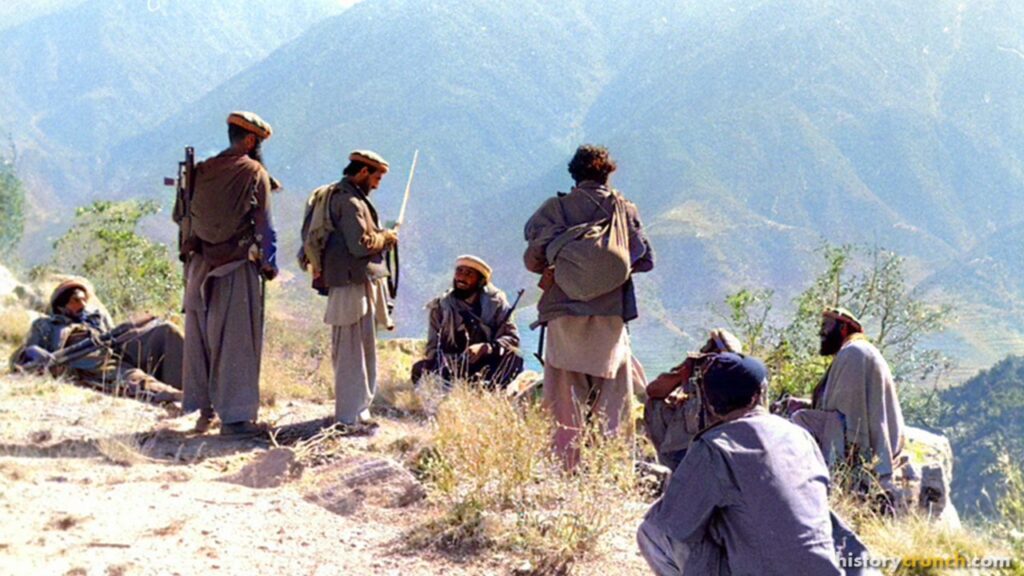
At first, Soviet leaders seemed to have hoped for a quick operation that would stabilize the country. Instead, the Soviet Invasion of Afghanistan led to a much larger war. The Afghan resistance, known collectively as the mujahideenAfghan resistance fighters who opposed Soviet occupation, a word meaning ‘those who engage in jihad.’, which means “those who engage in jihad,” expanded rather than collapsed. Rather than ending the rebellion, the Soviet action made the conflict wider, more violent, and more international.
FactsthatCrunchSoviet forces killed Hafizullah Amin during the opening stage of the invasion of Afghanistan in December 1979.
Soviet Invasion of Afghanistan – The War in Afghanistan
After the invasion, the war settled into a long stalemateA situation in which neither side in a conflict can gain a decisive advantage over the other.. Soviet troops controlled major cities, larger towns, and military bases, while the mujahideen remained active across much of the countryside. Soviet forces used air power, armored units, and sweeps through rural areas, but the guerrilla fighters often avoided direct destruction and kept attacking over time.
The war was devastating for Afghanistan. Soviet and Afghan government forces bombed rural areas and tried to destroy support for the resistance. This caused enormous suffering and displacement. By 1982, about 2.8 million Afghans had fled to Pakistan and another 1.5 million had fled to Iran. Over time, the wider war before 1992 killed about 1.5 million Afghans, though exact totals remain difficult to measure.
The war also became a major Cold War proxy conflictA war where two major powers support opposing sides rather than fighting each other directly.. The United States sharply criticized the invasion, increased support for the Afghan resistance, imposed sanctions on the Soviet Union, and joined the boycott of the 1980 Moscow Olympics. Pakistan became a key route for aid to the mujahideen, and other countries also helped the anti-Soviet fighters. Regardless, the Soviet Union could not crush the resistance or create a stable government that most Afghans accepted.
Soviet Invasion of Afghanistan – Withdrawal and Aftermath
By the late 1980s, the Soviet Invasion of Afghanistan had become a costly quagmireA difficult situation that is hard to escape from, often getting worse the longer it continues. for the Soviet Union. The war drained money, hurt morale, and added to larger problems already weakening the Soviet system. The Soviets suffered about 15,000 dead, and many more were wounded. In 1988, agreements were signed that set the terms for Soviet withdrawal, and the last Soviet troops left Afghanistan in mid-February of 1989.
However, the end of Soviet occupation did not bring peace to Afghanistan. Fighting continued, and the communist government in Kabul, Afghanistan, eventually fell in 1992. In the years that followed, Afghanistan remained trapped in conflict, and later groups such as the Taliban rose out of the chaos. Therefore, the Soviet Invasion of Afghanistan is important not only for what it meant in the Cold War, but also for how deeply it shaped Afghanistan’s later history.
Soviet Invasion of Afghanistan – Significance
The Soviet Invasion of Afghanistan was significant because it became one of the clearest late Cold War failures of the Soviet Union. It brought nearly worldwide condemnation, renewed East-West tensions, and helped end the period of détenteA period of reduced tension and improved relations between the United States and Soviet Union during the Cold War.. It also showed that a superpower could invade a weaker country and still fail to win a lasting political victory.
The Soviet Invasion of Afghanistan was also significant because it had long-term consequences far beyond 1979. It weakened the Soviet Union, intensified international involvement in Afghanistan, and contributed to decades of war and instability in the country. For all of these reasons, the Soviet Invasion of Afghanistan stands as one of the most important conflicts of the late Cold War, and a clear example of a proxy war in the Cold War.
FactsthatCrunchThe Soviet war in Afghanistan, fought through most of the 1980s, had serious costs for the Soviet Union at home and damaged its standing around the world.
Explore Cold War · 1947 – 1991
Keep exploring Cold War with these History Crunch resources.
Key Vocabulary
Factions
Purges
Mujahideen
Stalemate
Proxy conflict
Quagmire
Détente
Frequently Asked Questions
When did the Soviet Union invade Afghanistan?
The invasion began on the night of December 24th, 1979, when Soviet troops crossed into Afghanistan. Special forces soon moved against key targets in Kabul. Soviet leaders hoped for a quick operation, but the fighting grew into a long war that lasted through the 1980s.
Why did the Soviet Union invade Afghanistan?
The Soviets invaded to support a failing communist government that was close to collapse. They feared a hostile Islamic government might rise on their southern border. They also distrusted the Afghan leader Hafizullah Amin and decided to remove him and install Babrak Karmal.
Who were the mujahideen?
The mujahideen were the Afghan resistance fighters who opposed the Soviet occupation. The name means “those who engage in jihad.” They used guerrilla tactics, avoided direct battles, and attacked Soviet forces over time. The United States, Pakistan, and other countries sent them aid.
How did the United States respond to the invasion?
The United States sharply criticized the invasion and increased support for the Afghan resistance. It imposed sanctions on the Soviet Union and joined the boycott of the 1980 Moscow Olympics. This made the war a major Cold War proxy conflict between the two superpowers.
When did the Soviets leave Afghanistan?
The last Soviet troops left Afghanistan in mid-February of 1989, following agreements signed in 1988. About 15,000 Soviet soldiers died during the war. The withdrawal did not bring peace, as the communist government in Kabul fell in 1992 and fighting continued.
Why was the Soviet Invasion of Afghanistan significant?
The invasion became one of the clearest late Cold War failures of the Soviet Union. It drew nearly worldwide condemnation and helped end the period of détente. It weakened the Soviet system and shaped decades of later war and instability in Afghanistan.
Cite This Article
To cite this article as a source, use one of the formats below.
MLA: Millar, B. “Soviet Invasion of Afghanistan: A Detailed Summary.” HistoryCrunch, 9 October 2026, https://historycrunch.com/soviet-invasion-of-afghanistan/.
APA: Millar, B. (2026). Soviet Invasion of Afghanistan: A Detailed Summary. HistoryCrunch. https://historycrunch.com/soviet-invasion-of-afghanistan/
Chicago: Millar, B. “Soviet Invasion of Afghanistan: A Detailed Summary.” HistoryCrunch. October 9, 2026. https://historycrunch.com/soviet-invasion-of-afghanistan/
Sources
- John Lewis Gaddis, The Cold War: A New History.
- State Department — Office of the Historian
- Wilson Center Digital Archive
- Vladislav Zubok, A Failed Empire.