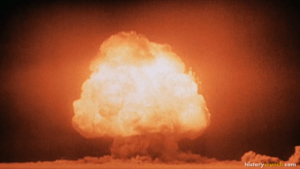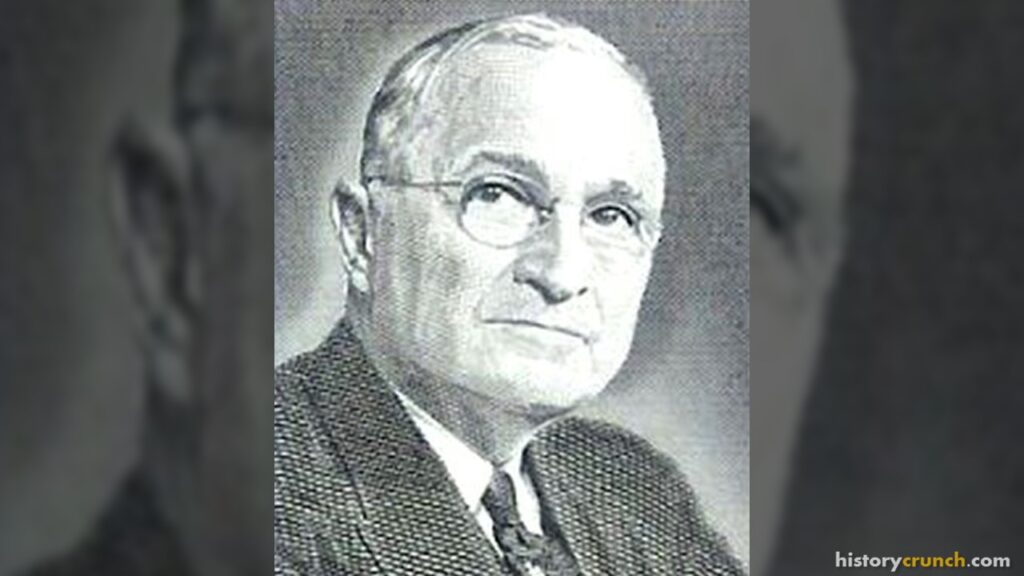
The Truman Doctrine is one of the most significant events of the history of the Cold War. The Cold War was a major world event that took place from approximately 1945 until 1991. In general, the Cold War was a period of increased tensions and hostility between the superpowersAn extremely powerful nation with the military and political strength to influence world events. of the United States and the Soviet Union (USSR). The Truman Doctrine was a policy of containment by the United States against the Soviet Union that was practiced throughout nearly the entire history of the Cold War.
Cold War
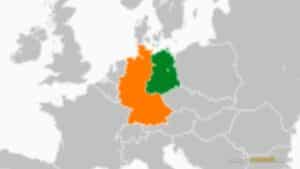
When World War II came to an end in 1945, the Allied powers (USA, Britain and the Soviet Union) held conferences to discuss how Germany should be divided up upon its defeat. The first conference was held at Yalta in February of 1945 and the second was held at Potsdam in July of the same year. The agreements ultimately led to the splitting of the defeated Germany into four “allied zones” with portions controlled by the Soviet Union, United States, Britain and France. The conferences are considered by many historians to be the early stages of the Cold War since this was when tensions started to show between the former allies of the Soviet Union and the United States.
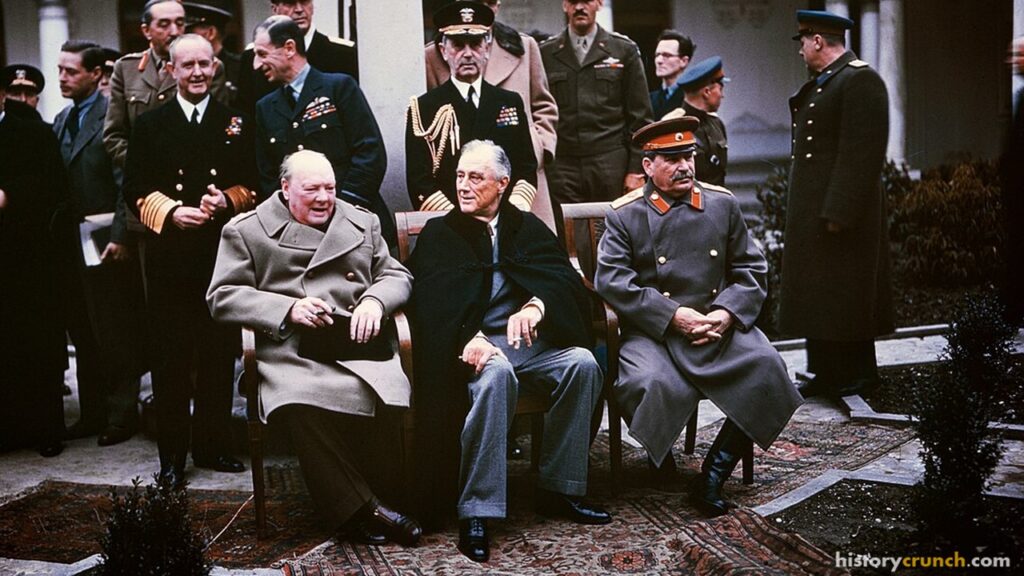
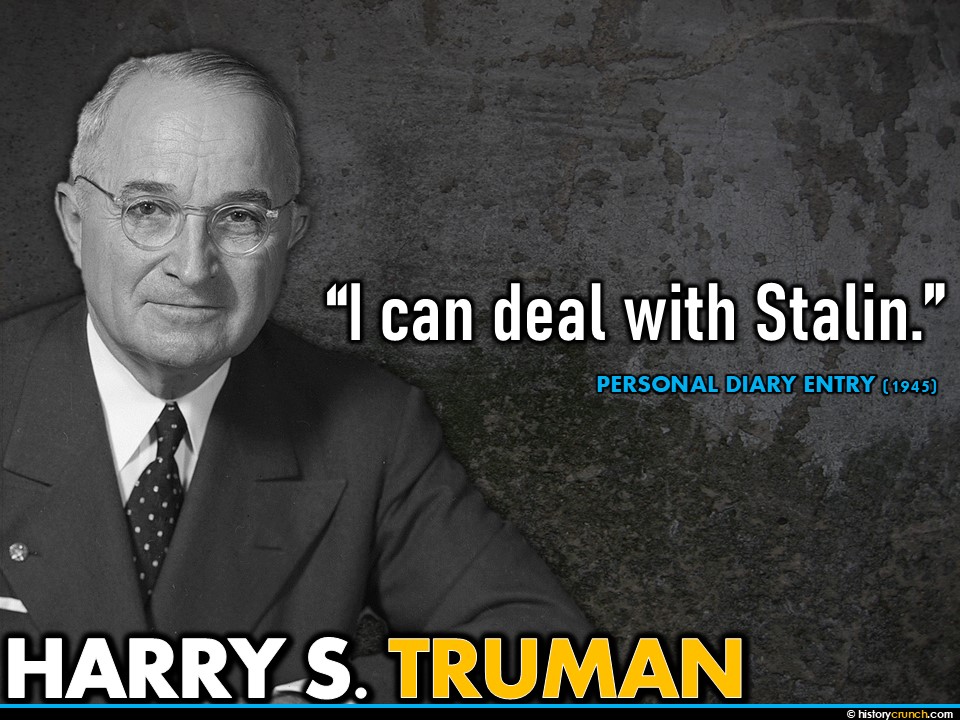
As the Allied countries liberated Europe from Nazi control and pushed the German army back into its own country, another development began to emerge. More specifically, Joseph Stalin’s forces captured and retained control over the European territory that they ‘liberated’. United States President Harry S. Truman, along with others, viewed this as a threat to the democratic world, because it saw the ideologyA set of beliefs about how society and government should be organized. of communism spreading throughout Europe. Truman was concerned that many other nations would ‘fall’ to communism and threaten democracy around the world.
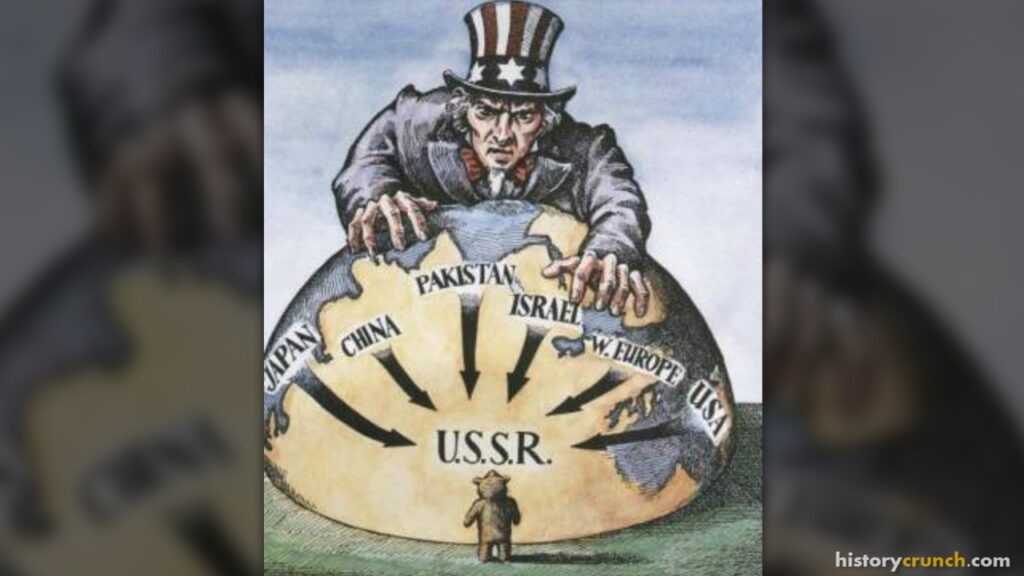
In response Truman argued that the United States and its allies should actively combat the spread of communism wherever it emerged. Historians refer to this idea as the Truman Doctrine. The Truman Doctrine was followed by the United States throughout the course of the Cold War and was an important reason for America’s involvement in events, such as: the Berlin Blockade, Korean War and the Vietnam War. In general, historians refer to this as ‘containment‘ because the Truman Doctrine involved the United States trying to contain Soviet expansionism wherever it emerged.
 FactsthatCrunch
How did the Yalta and Potsdam Conferences of 1945 shape the early Cold War?
Containment
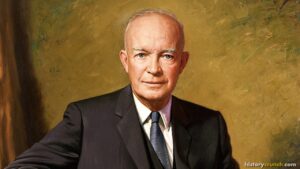
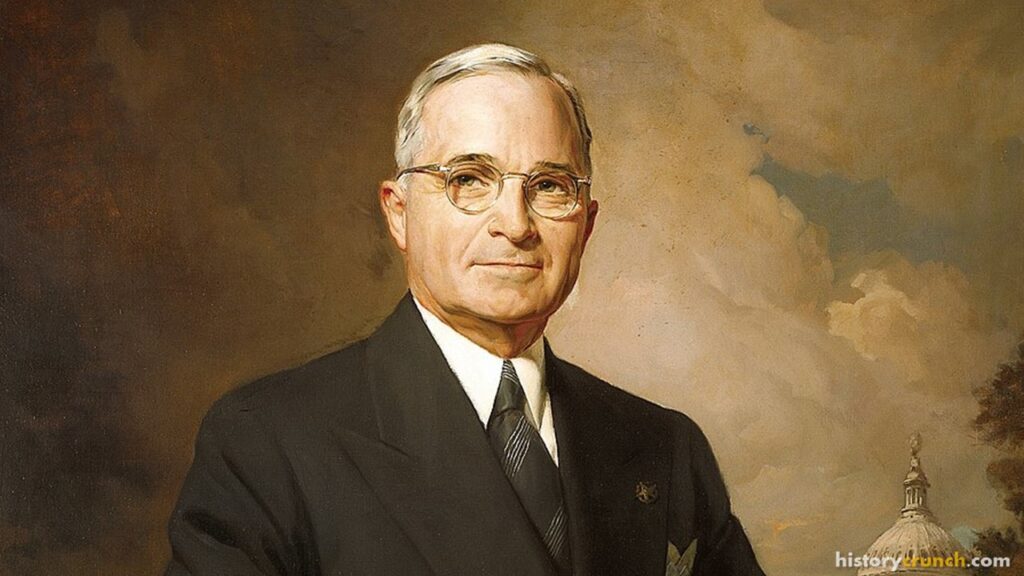
The Cold War is often viewed as an ideological conflict because it displayed the difference in worldview between the two nations in terms of democracy and capitalism versus communism and dictatorship. As such, the United States and the Soviet Union differed greatly in their views of how the world should be organized following the major events of World War II. For their part, the United States feared Soviet expansionismA nation’s effort to grow its power or territory beyond its existing borders. into regions in Europe and around the world. As a result, the United States President at the start of the Cold War, Harry S. Truman, developed the Truman Doctrine policy in which the country would work to contain the spread of communism.
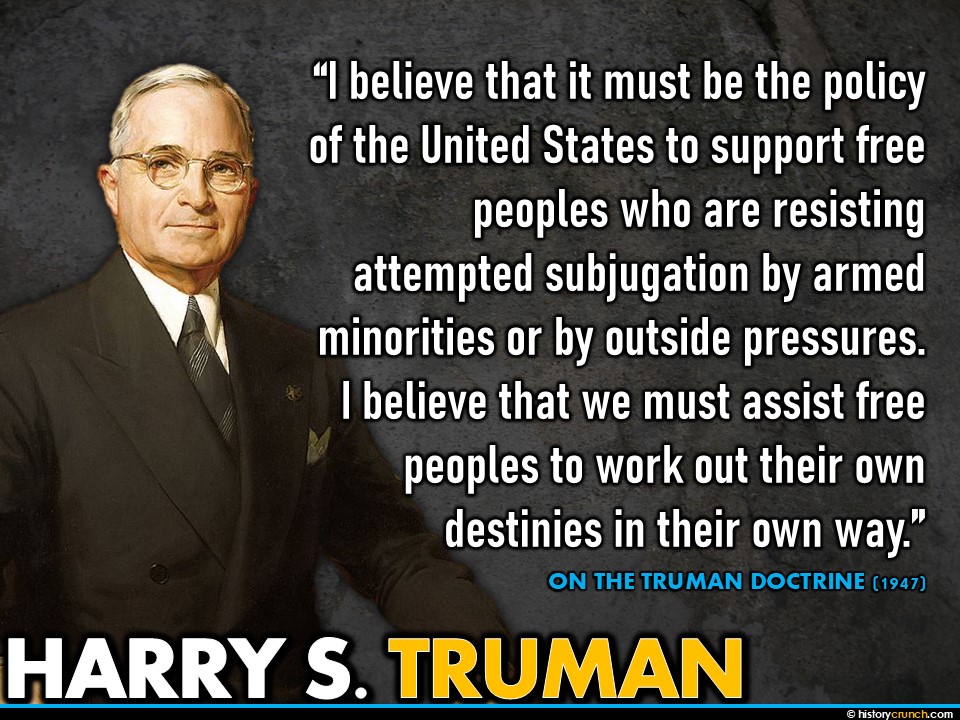
The United States, led by Harry S. Truman, feared that communism as an ideology would spread throughout Europe and the rest of the world. For example, after World War II both Greece and Turkey were facing financial crisis. Due to their proximity to Soviet territory and the rise of communism in recent decades it was feared that the two countries might fall into the Soviet sphere of influenceA region where one powerful nation controls or heavily shapes what other countries do. and become communist. In a speech in 1947 on the crisis facing both countries Harry S. Truman stated:
“I believe that it must be the policy of the United States to support free peoples who are resisting attempted subjugationForcing a group of people under the control or power of another. by armed minorities or by outside pressures. I believe that we must assist free peoples to work out their own destinies in their own way. I believe that our help should be primarily through economic and financial aid, which is essential to economic stability and orderly political processes.”
In this passage, Truman is promoting the idea that the United States should financially support the two nations to avoid them turning to communism. This approach by Truman formed the basis of American foreign policy throughout the remainder of the Cold War in the form of containmentKeeping something from spreading by actively blocking it wherever it appears., which historians refer to as the Truman Doctrine. In conclusion, the Truman Doctrine was the idea that the United States should attempt to contain the Soviet sphere of influence and the spread of communism. This foreign policy caused the United States to enter into conflict with the Soviet Union as it attempted to thwart Soviet expansionism in events such as: Berlin Blockade, Korean War, Vietnam War, etc. As such, many historians view this as a cause of the Cold War because it increased tensions between the two superpowers and led to several conflicts between the two superpowers.
 FactsthatCrunch
It is early 1947, and you are President Harry S. Truman, navigating the early years of the Cold War. Britain has just informed your government that it can no longer afford to support Greece and Turkey financially, and both countries are in serious economic trouble. Greece is fighting a communist-backed insurgency, and Turkey sits close to Soviet territory. If either country falls into the Soviet sphere of influence, communism could spread further into Europe, and your entire strategy for the postwar world could be at risk.
Explore Cold War · 1947 – 1991
Keep exploring Cold War with these History Crunch resources.
Key Vocabulary
Containment
Expansionism
Ideology
Sphere of influence
Subjugation
Superpower
Frequently Asked Questions
What was the Truman Doctrine?
The Truman Doctrine was an American policy to stop the spread of communism around the world. President Harry S. Truman announced it in 1947 during the early years of the Cold War. It promised support to free nations that were resisting communist pressure from inside or outside their borders.
When did President Truman announce the Truman Doctrine?
Truman announced the doctrine in a speech to Congress in 1947. He was responding to money troubles in Greece and Turkey, which sat close to Soviet territory. He feared both countries might fall to communism without American help.
What is containment?
Containment was the strategy of stopping communism from spreading beyond where it already existed. The Truman Doctrine put this idea into practice for the United States. Containment shaped American foreign policy for decades and guided the country’s choices in many Cold War conflicts.
How did the Truman Doctrine affect the Cold War?
The Truman Doctrine raised tensions between the United States and the Soviet Union. It drove American involvement in events such as the Berlin Blockade, the Korean War, and the Vietnam War. Many historians view the policy as one reason the Cold War grew so intense.
Why did Truman focus on Greece and Turkey?
Greece and Turkey both faced serious financial crises after World War II. They sat near Soviet territory, so leaders worried they could slip into the Soviet sphere of influence. Truman argued that economic and financial aid would help them stay free and stable.
Cite This Article
To cite this article as a source, use one of the formats below.
MLA: Beck, Elias. “Truman Doctrine: A Detailed Summary.” HistoryCrunch, 18 September 2026, https://historycrunch.com/truman-doctrine/.
APA: Beck, E. (2026). Truman Doctrine: A Detailed Summary. HistoryCrunch. https://historycrunch.com/truman-doctrine/
Chicago: Beck, Elias. “Truman Doctrine: A Detailed Summary.” HistoryCrunch. September 18, 2026. https://historycrunch.com/truman-doctrine/
Sources
- Jerry Bentley & Herbert Ziegler, Traditions & Encounters: A Global Perspective on the Past.
- J.M. Roberts & Odd Arne Westad, The Penguin History of the World.