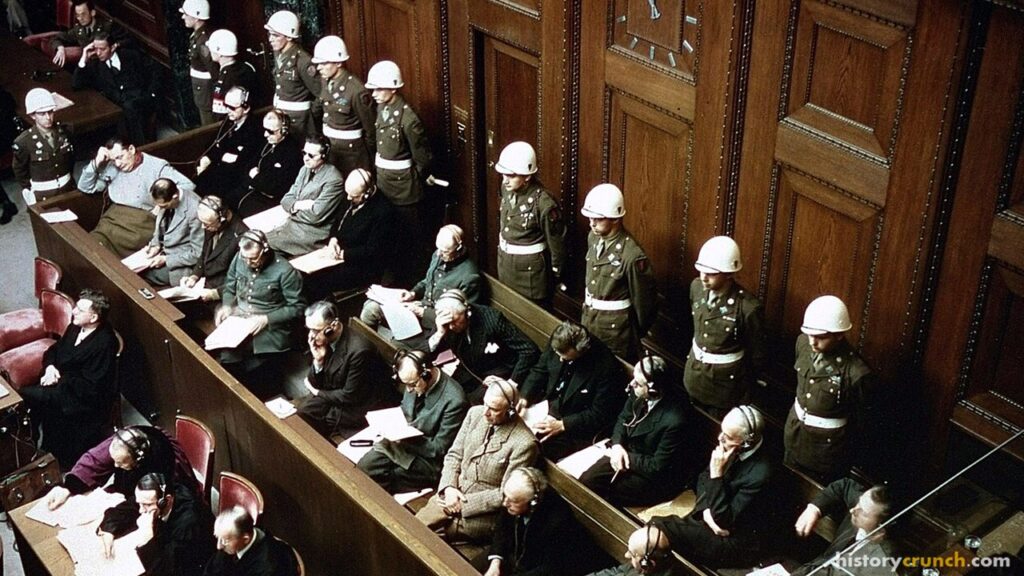
The Nuremberg Trials were a series of important military tribunalsOfficial courts set up to judge people accused of serious crimes, especially during or after a war. that were held from 1945 to 1946 to bring several Nazi officials to justice for atrocitiesExtremely cruel and violent acts that shock most people because of how terrible they are. committed during World War II and the Holocaust. The trials took place in Nuremberg, Germany, and were conducted by the Allied Powers: the United States, Britain, the Soviet Union, and France. The Nazi officials faced charges such as crimes against peace, war crimes, and crimes against humanityDeliberate acts that cause widespread human suffering or death, targeting groups of people.. The Nuremberg Trials were a significant step forward in dealing with international crimes. For instance, they set the foundation for modern international law and institutions such as the International Criminal Court (ICC).

Nuremberg Trials – Background
The Holocaust is one of the most important events of the 20th century and occurred alongside the major events of World War II in Europe. The event that is most often associated with the end of both the Holocaust and World War II is the Nuremberg Trials, which saw the Allied nations impose justice on many high ranking Nazi officials for their roles in carrying out both events.
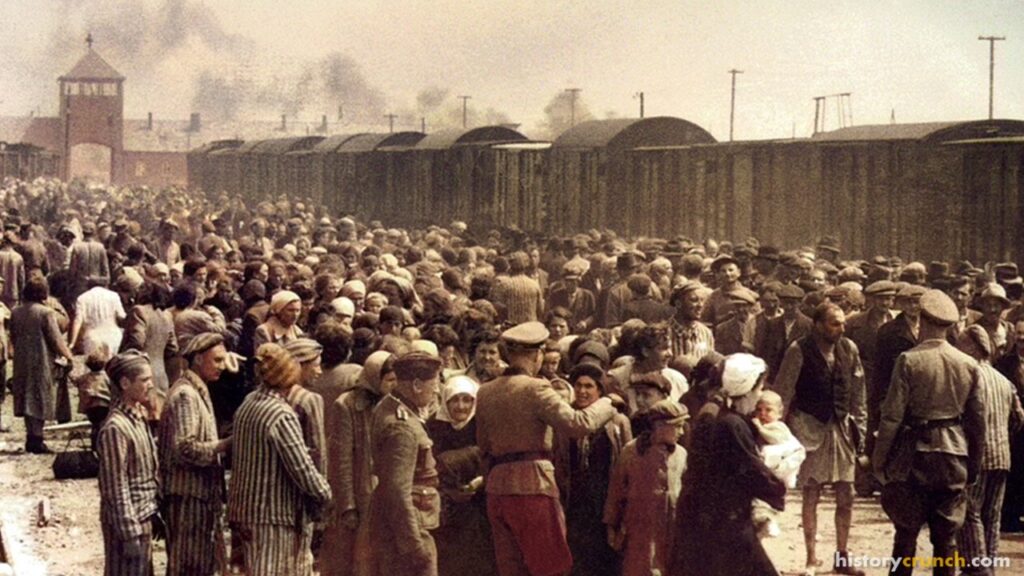
The Holocaust is perhaps the most significant genocide in human history and involved the deaths of over 11 million people, including 6 million Jewish people. The brutality of the concentration camps and death camps shocked the Allied leaders and led to calls for justice against the Nazis based on the concepts of ‘war crimes’ and ‘crimes against humanity’. A ‘war crime’ is defined as an act carried out during a war that is beyond what is considered acceptable. For example, while fighting and killing enemy soldiers during battle would be considered normal aspects of war, the extermination of groups of people based upon their ethnicity would not. As such, the events of the Holocaust and the Nazis’ role in carrying them out are referred to as a war crime. A ‘crime against humanity’ is defined as a deliberate act that causes human suffering or death. In short, the horrible conditions and treatment that the Jewish, and others, faced during the Holocaust certainly displayed human suffering and death. Not only did over 11 million die as a result of the actions of the Nazis, but the people also suffered horrible conditions in the ghettos and concentration camps.
During World War II, the Allied powers met several times to discuss post-war Europe and how to bring the Nazis to justice. For example, three significant conferences were held, including the Tehran Conference in 1943 and the Yalta Conference and Potsdam Conference in 1945. In general, the leaders initially disagreed on how to carry out justice. Winston Churchill of Britain and Joseph Stalin of the Soviet Union favored summary executionsKilling someone immediately without holding a trial or collecting evidence of their guilt., meaning the officials would be killed without a trial. U.S. President Franklin D. Roosevelt, and later Harry S. Truman, were in favor of a formal trial to ensure the collection and presentation of evidence in order to prove guilt. Eventually, the other leaders agreed with the American approach and the nations set out to establish the system of trials.
What did Winston Churchill and Joseph Stalin first want to do with captured Nazi leaders?
Nuremberg Trials – Summary
The trials were established in the German city of Nuremberg for several reasons. First, it had the Nuremberg Palace of Justice which was large and could accommodate all of the necessary judges and prisoners. Second, Nuremberg was the city of the great Nazi Party rallies and the place where the Nuremberg Laws were announced. The Allies considered it fitting that the Nazi Party would see its official end in the city where it had held its great rallies.
At the establishment of the trials, it was decided that France would also play a central role. As such, each of the four Allied countries (United States, Britain, Soviet Union and France) appointed a set of judges and a prosecutor. The Nazis were defended mainly by German lawyers.
The Nuremberg Trials began on November 20th, 1945, with indictmentsFormal charges officially accusing someone of committing a crime, starting the legal process. against twenty four captured Nazis and different Nazi organizations, including Nazi leadership, the SS, the Gestapo, and the SA. The first charge was that the Nazis participated in a conspiracy to wage war and end the peace following World War I. The second charge was that the German leadership planned and carried out wars of aggression. The third charge was for war crimes and the fourth charge was for carrying out crimes against humanity. Twenty two of the twenty four were actually tried at the Nuremberg Trials, and only three were found not guilty. The other nineteen were convicted and either sentenced to prison terms, including life in prison, or given a death sentence.
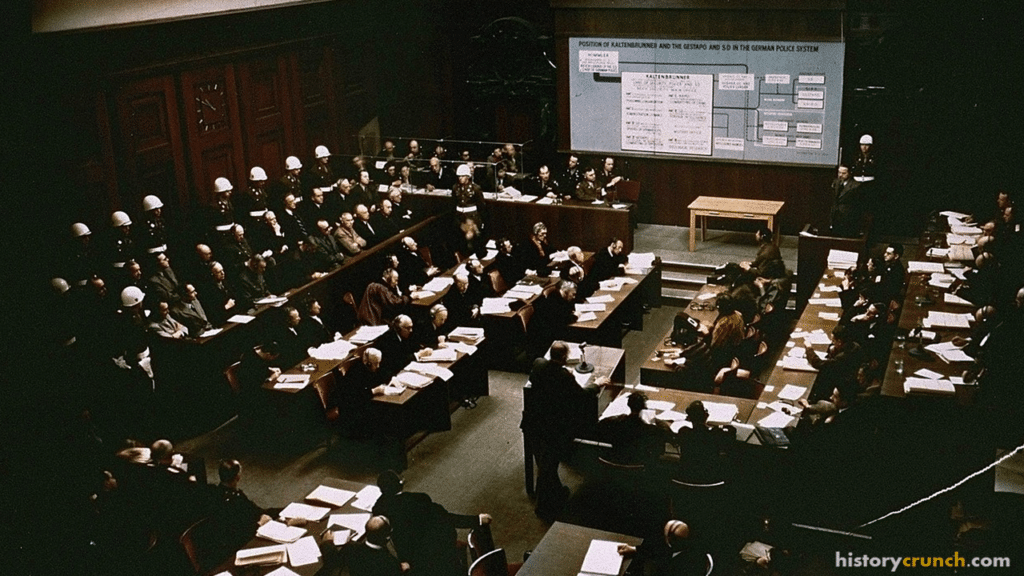
In general, the lawyers of the Nazi defendants argued a similar defense. First, they argued that the Nuremberg Trials were not legitimate since the ‘charges’ they were upholding did not exist before the ‘crimes’ were committed. Further, they argued that the court had no authority over the defendants and insisted that the Allies were only seeking to punish the Nazis because they viewed themselves as the victors of the war. Next, the Nazis argued that they were simply following the orders of their commanding officers and should not be held accountable for what was official policy of the country.
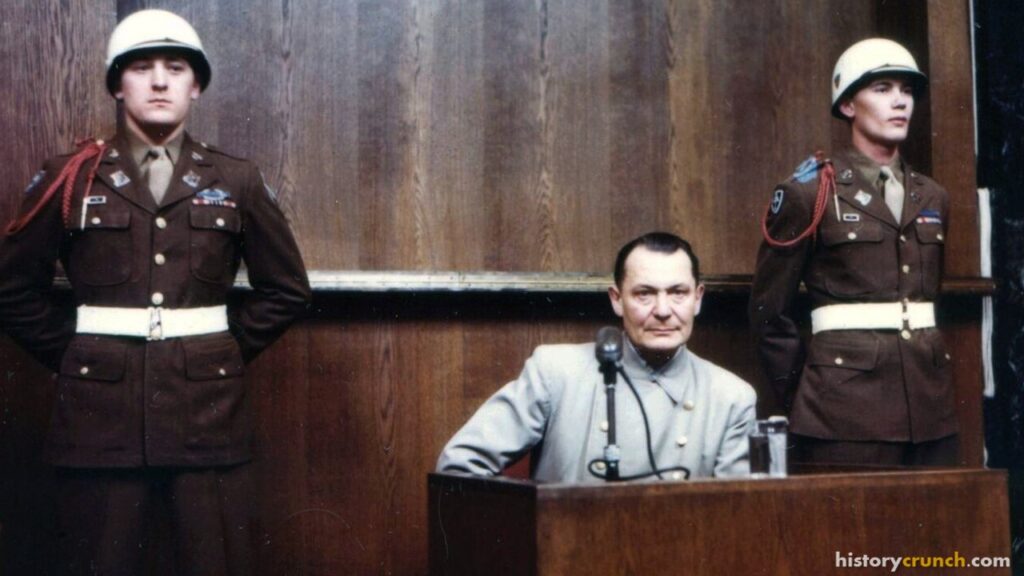
The most famous and highest ranking of the Nazis at the Nuremberg Trials was Hermann Goering. Goering was a prominent Nazi leader who was the head of the LuftwaffeThe German Air Force during World War II, commanded by Hermann Goering., the German Air Force, and was set to replace Hitler as the next in command of Nazi Germany. He was found guilty of all four charges and sentenced to death; however, he committed suicide with a cyanide pill on the night before his execution. Eleven other defendants were sentenced to death, one of them in his absence, and ten were hanged on October 16th, 1946. The verdicts had been announced on October 1st, 1946.
At the end of World War II several Nazis committed suicide in order to avoid being captured and facing justice for their war crimes and crimes against humanity. For example, Adolf Hitler committed suicide with his wife, Eva Braun, on April 30th, 1945 as the Soviet Army surrounded Berlin during the final stages of the Battle of Berlin. Other high ranking Nazis also committed suicide, including Heinrich Himmler and Joseph Goebbels.
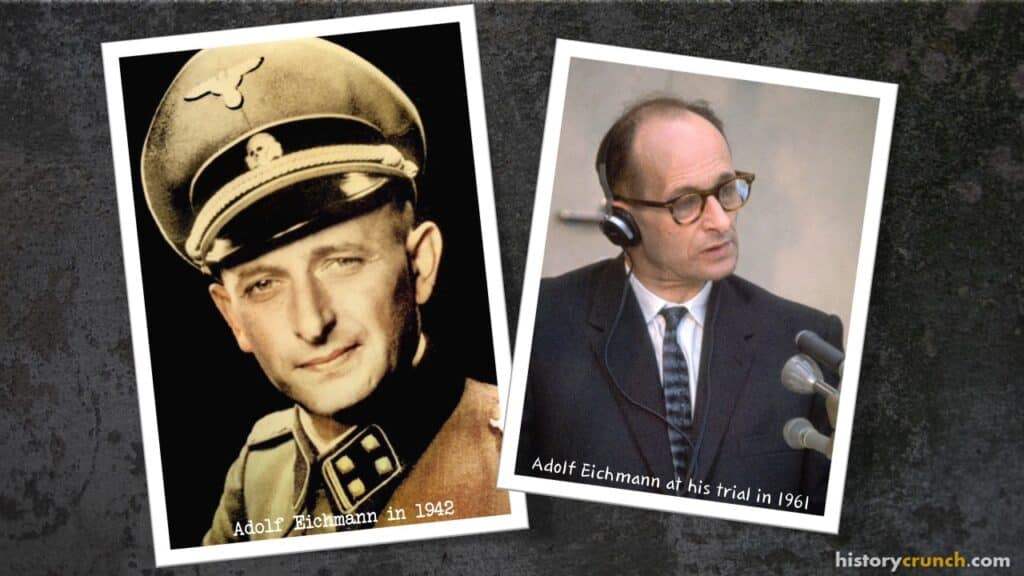
While others avoided the Nuremberg Trials by fleeing at the end of World War II, many of them were hunted down and captured. For example, Adolf Eichmann, head of the Gestapo department dealing with Jewish affairs, fled to Argentina. During the war he was responsible for organizing the transportation of the Jewish to the death camps from the ghettos. He was captured in Argentina by Israeli Nazi-hunters and was eventually put on trial in Israel in 1961 and executed in 1962. His trial was modeled after the earlier Nuremberg Trials.
Following the main Nuremberg Trial, which ended in 1946, there was a series of twelve more trials that took place between 1946 and 1949. These trials were focused on particular issues, including Nazi Doctors, Judges, Einsatzgruppen, and more.
Nuremberg Trials – Significance
The Nuremberg Trials were a significant event in the history of World War II and the Holocaust. They were the first such ‘international’ trials and established a model for future trials. For example, in the 1990s, following the genocide in Rwanda, a similar international court was established to try war criminals from that country. As well, the Nuremberg Trials helped establish a renewed interest in human rights issues. For instance, the United Nations was established in 1945 with the goal of preventing similar future conflicts. Furthermore, the United Nations created the Universal Declaration of Human Rights in 1948 with the goal of restoring faith in basic human rights and to avoid future related war crimes, crimes against humanity and genocides.
Explore World War II · 1939 – 1945
Keep exploring World War II with these History Crunch resources.
Key Vocabulary
Tribunals
Atrocities
Crimes against humanity
Summary executions
Indictments
Luftwaffe
Einsatzgruppen
Frequently Asked Questions
When and where were the Nuremberg Trials held?
The main Nuremberg Trial ran from November 1945 to October 1946 in Nuremberg, Germany. The city was chosen partly because its Palace of Justice was large enough to hold the judges and prisoners. Nuremberg was also the city of the great Nazi Party rallies, so the Allies felt it was a fitting place for its end.
Which countries ran the Nuremberg Trials?
The four Allied Powers ran the trials together, the United States, Britain, the Soviet Union, and France. Each country picked its own set of judges and a prosecutor. German lawyers mostly defended the Nazi officials who were on trial.
What charges did the Nazi officials face?
The defendants faced four charges built around waging war and mass murder. These included plotting to break the peace, planning wars of aggression, war crimes, and crimes against humanity. A war crime is an act during war beyond what is acceptable, while a crime against humanity is a deliberate act causing suffering or death.
What happened to Hermann Goering?
Hermann Goering was the most famous and highest ranking Nazi tried at Nuremberg, and he was found guilty of all four charges. He had led the Luftwaffe, the German Air Force, and was once set to replace Hitler. Sentenced to death, he took a cyanide pill the night before his planned execution.
Why were the Nuremberg Trials important?
The Nuremberg Trials were the first major international trials and set a model for later courts. In the 1990s, a similar court was created to try war criminals after the genocide in Rwanda. The trials also renewed interest in human rights, which helped shape the Universal Declaration of Human Rights in 1948.
Did some Nazis escape the Nuremberg Trials?
Yes, several high ranking Nazis avoided the trials by suicide or by fleeing Germany. Adolf Hitler, Heinrich Himmler, and Joseph Goebbels all killed themselves near the end of the war. Adolf Eichmann fled to Argentina, but was later captured, tried in Israel in 1961, and executed in 1962.
Cite This Article
To cite this article as a source, use one of the formats below.
MLA: Beck, Elias. “Nuremberg Trials: A Detailed Summary.” HistoryCrunch, 16 September 2026, https://historycrunch.com/nuremberg-trials/.
APA: Beck, E. (2026). Nuremberg Trials: A Detailed Summary. HistoryCrunch. https://historycrunch.com/nuremberg-trials/
Chicago: Beck, Elias. “Nuremberg Trials: A Detailed Summary.” HistoryCrunch. September 16, 2026. https://historycrunch.com/nuremberg-trials/
Sources
- J.M. Roberts & Odd Arne Westad, The Penguin History of the World.
- Jerry Bentley & Herbert Ziegler, Traditions & Encounters: A Global Perspective on the Past.