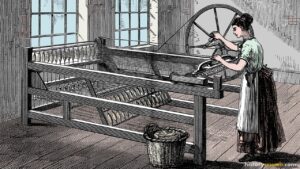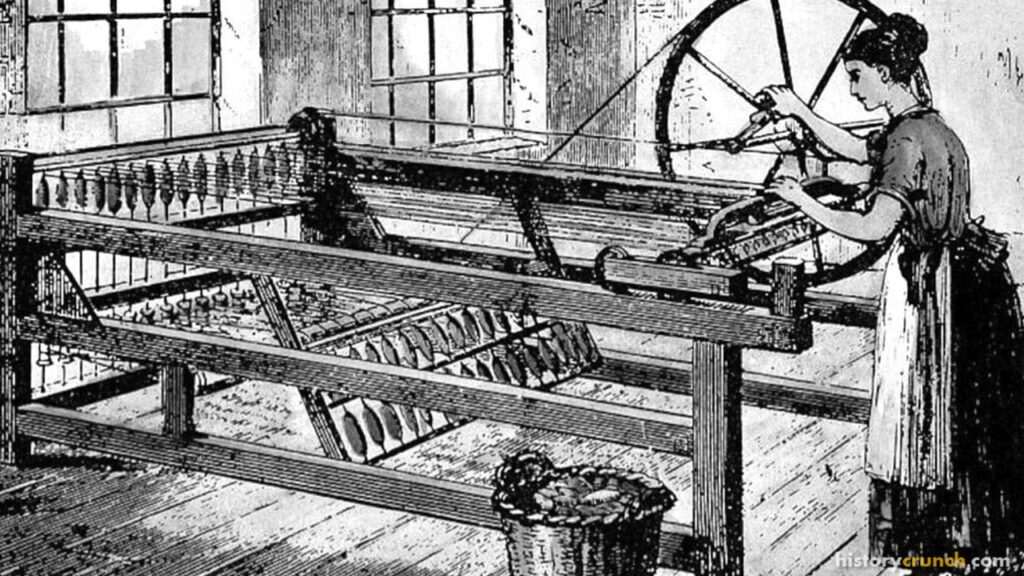
The invention of the spinning jennyA machine using a large wheel to spin many spindles of thread at once, invented by James Hargreaves in 1764. by James Hargreaves in 1764 was a pivotal advancement in the textile industry, enabling a single worker to spin multiple spools of yarn simultaneously. This dramatically increased yarn production efficiency and reduced labor costs, addressing the high demand for textile products. The spinning jenny’s impact led to the growth of large-scale textile factories and contributed to the wider Industrial Revolution. However, it also displaced many hand spinners, leading to social unrestWidespread public anger or protest caused by disruptive changes, such as workers losing their jobs to machines. and significant changes in the labor market.
 FactsthatCrunch
The spinning jenny allowed one worker to spin many spindles of thread at the same time.
Innovations in the Industrial Revolution
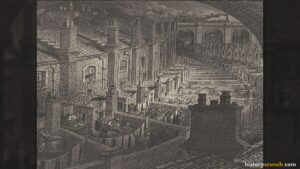
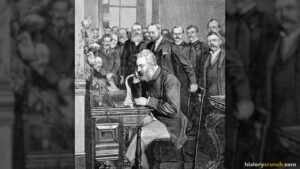
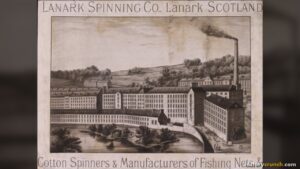
The Industrial Revolution is one of the most significant events in all of world history and had a profound impact on the modern world. It began first in Britain in the 1700s but soon expanded to the rest of Europe and North America. Before the innovations of the Industrial Revolution, most production depended on water, wind or human energy. The businesses that existed at this time were called cottage industriesHome-based businesses that produced a limited amount of goods before large factories existed.. Cottage industries were an early stage of economic development in society in which workers produce a limited amount of goods in home-based businesses. However, by the mid-1700s, new methods of production were being developed across Europe, especially in Great Britain. This transition led to the factory system, which was the creation of factories in centralized locations such as industrial towns and cities. This period of innovation continued throughout the 19th century and led to many new inventions by now famous inventors. In fact, one of the key features of the Industrial Revolution is the development of new inventions that led to more automation by machines. Significant inventions or innovations of the Industrial Revolution included: flying shuttle, spinning jenny, power loom, water frame, cotton gin, steam engine, telephone, light bulb, automobile, assembly line production and interchangeable parts.
 FactsthatCrunch
Invention of the Spinning Jenny by James Hargreaves
A significant invention of the Industrial Revolution was the spinning jenny, which was invented by James Hargreaves in 1764. James Hargreaves was an English inventor and is remembered today for inventing the spinning jenny, which was important to the textile industry in England. One of the main industries that benefited from the Industrial Revolution was the textile industry. The textile industry was based on the development of cloth and clothing.
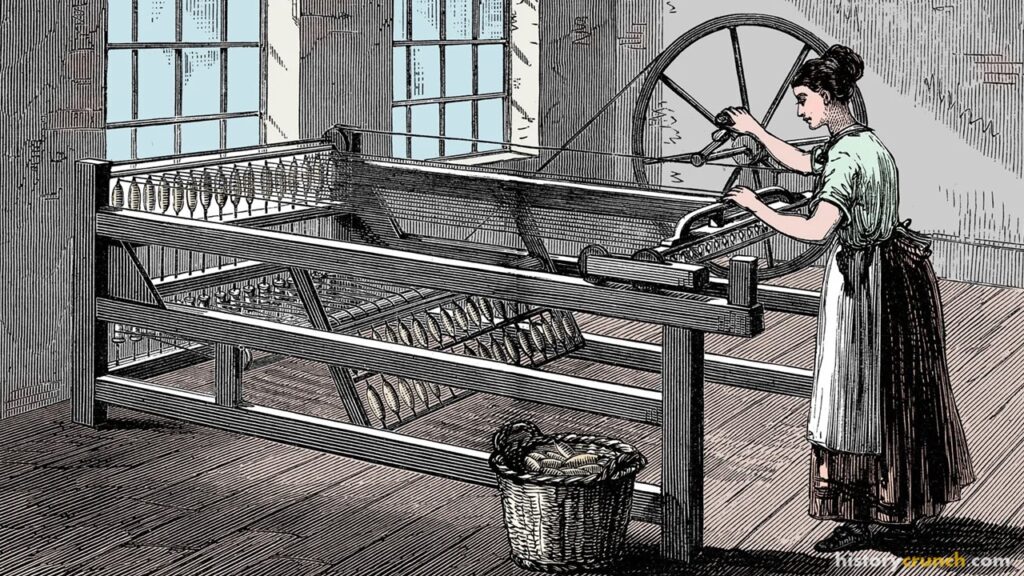
Little is known of the early life of James Hargreaves, but he worked as a weaver, using a handloom. In fact, he seems to have worked as a weaver for most of his life. As stated above, James Hargreaves is famous for the invention of the spinning jenny in 1764. Simply put, the spinning jenny was a machine that used a large wheel to spin many spindlesRods on a spinning machine onto which thread is wound as it is spun. of thread at once. The invention increased the production ability of textile manufactures and was particularly important for cotton. While Hargreaves sold his invention to several mills in the area, he made very little money from his work. Regardless, his invention had a profound impact on the Industrial Revolution as it inspired other inventors who built off his ideas.
For example, Richard Arkwright invented the water frameA machine invented by Richard Arkwright in 1769 that used the force of moving water to produce strong yarn. in 1769. Arkwright’s invention was capable of producing strong yarn. The machine replaced the need for manual labor and enabled the production of inexpensive spun cotton by using the moving force of a creek or river that spun a shaft. This was important because the increased amount of energy meant that Arkwright’s water frame could produce at a higher level than Hargreaves’ spinning jenny. Next, historians identify the invention of the spinning muleA machine invented by Samuel Crompton in 1779 that allowed fast production of yarn by combining earlier spinning ideas. in 1779 by Samuel Crompton, as an extension of the ideas of Hargreaves. The spinning mule essentially allowed the fast production of yarn using a spinning machine.
 FactsthatCrunch
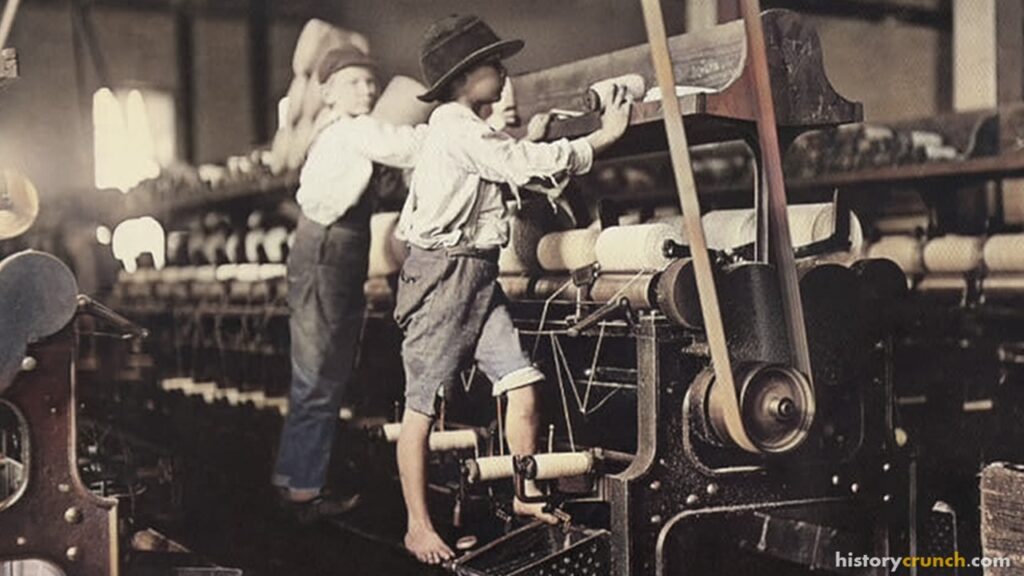
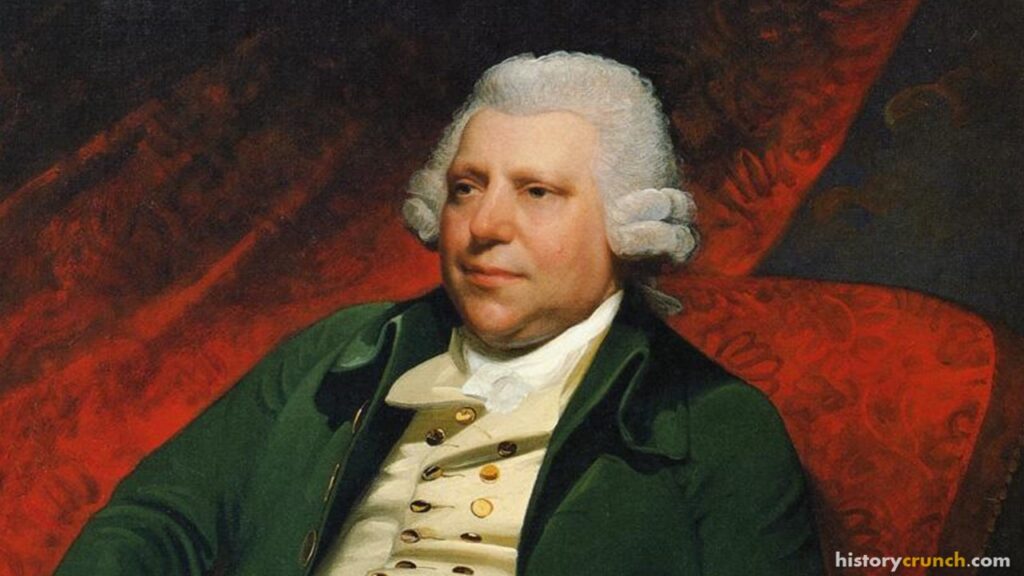
The spinning jenny, invented by James Hargreaves in 1764, changed textile work for better and worse depending on where a worker stood in the industry.
Industrial Revolution timeline · 1760 – 1840
Key Vocabulary
Cottage industries
Factory system
Spinning jenny
Spindles
Water frame
Spinning mule
Social unrest
Frequently Asked Questions
Who invented the spinning jenny?
The spinning jenny was invented by James Hargreaves, an English weaver, in 1764. He worked with a handloom for most of his life. Although he sold his machine to several mills, he made very little money from the invention.
What did the spinning jenny do?
The spinning jenny used a large wheel to spin many spindles of thread at the same time. This let one worker produce far more yarn than by hand. It was especially useful for making cotton thread.
Why was the spinning jenny important to the Industrial Revolution?
The spinning jenny greatly increased yarn output while lowering labor costs. This helped move textile work out of homes and into large factories. It also inspired other inventors who built better machines from its ideas.
What machines came after the spinning jenny?
Richard Arkwright invented the water frame in 1769, which used moving water to produce strong yarn. Samuel Crompton then invented the spinning mule in 1779. The spinning mule combined ideas from the jenny and the water frame to spin yarn quickly.
What problems did the spinning jenny cause?
The spinning jenny replaced many hand spinners who had earned a living spinning yarn at home. This job loss led to social unrest among workers. It also marked a major shift in the labor market as work moved into factories.
Cite This Article
To cite this article as a source, use one of the formats below.
MLA: Beck, Elias. “Spinning Jenny Invention in the Industrial Revolution: A Detailed Summary.” HistoryCrunch, 25 September 2026, https://historycrunch.com/spinning-jenny-invention-in-the-industrial-revolution/.
APA: Beck, E. (2026). Spinning Jenny Invention in the Industrial Revolution: A Detailed Summary. HistoryCrunch. https://historycrunch.com/spinning-jenny-invention-in-the-industrial-revolution/
Chicago: Beck, Elias. “Spinning Jenny Invention in the Industrial Revolution: A Detailed Summary.” HistoryCrunch. September 25, 2026. https://historycrunch.com/spinning-jenny-invention-in-the-industrial-revolution/
Sources
- The Science Museum Group
- Emma Griffin, A Short History of the British Industrial Revolution.
- Fordham Modern History Sourcebook
- Joel Mokyr, The Enlightened Economy.