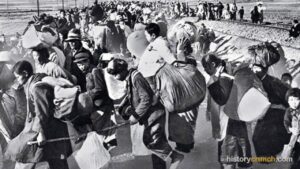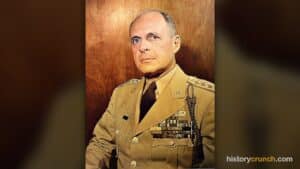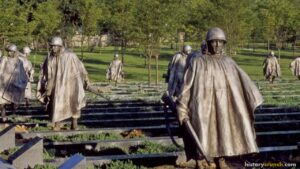
The Korean War ArmisticeA formal agreement between warring sides to stop fighting without officially ending the war or settling deeper political disputes. stands as one of the most important agreements of the early Cold War, because it halted three years of fighting on the Korean Peninsula without ever producing a true peace treaty. The armistice was signed on July 27th, 1953. It ended the shooting between North Korea and its communist allies on one side and South Korea and United Nations forces led by the United States on the other. Yet because the deal was a cease-fire rather than a formal peace, the two Koreas technically remain at war to this day, making the armistice one of the longest-lasting truces in modern history.
An armistice is a formal agreement between warring sides to stop fighting. Unlike a peace treaty, an armistice does not officially end a war or settle the deeper political disputes behind it. Instead, it freezes the conflict in place, ending active combat while leaving the larger questions unresolved. In the case of Korea, the armistice stopped the battles but left the peninsula divided and the two governments still hostile to each other.
 FactsthatCrunch
What Was the Cold War?
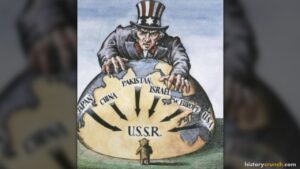
The Korean War Armistice belongs to the era of the Cold War, a long period of tension and rivalry that followed the end of World War II. The Korean War was the first major conflict following the end of World War II and the first war of the Cold War between the United States and Soviet Union. During this time, the world was largely split between two superpowers: the capitalist and democratic United States and the communist Soviet Union.
Rather than fighting each other directly, these two powers often supported opposing sides in smaller conflicts around the globe. Due to the time period and nature of the Korean War, historians today consider it to be a Cold War era proxy warA conflict in which two major powers support opposing sides rather than fighting each other directly. between the United States and Soviet Union. In fact, the United States followed a policy known as containmentA U.S. policy aimed at stopping the spread of communism to new regions of the world., which aimed to stop the spread of communism to new regions. Korea became one of the earliest and bloodiest testing grounds for this struggle.
How Did the Korean War Begin?
The roots of the war lay in the division of Korea after World War II. The Soviet Union invaded the northern half of Korea in August of 1945 and liberated it from Japanese control, with American forces liberating the southern half soon after. By 1948, Korea had been officially split into two halves with separate governments, along the 38th parallelA line of latitude used to divide Korea into a communist northern half and a non-communist southern half.. The 38th parallel is simply a line of latitude that was used to divide the country in two.
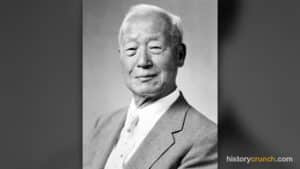
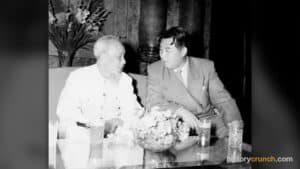
The two new states quickly became rivals. North Korea would be led during the war by Kim Il-Sung, who ruled over the country as a dictator. South Korea would be led by President Syngman Rhee, an anti-communist statesman. Each side claimed the right to rule the entire peninsula, and tensions rose steadily between them.
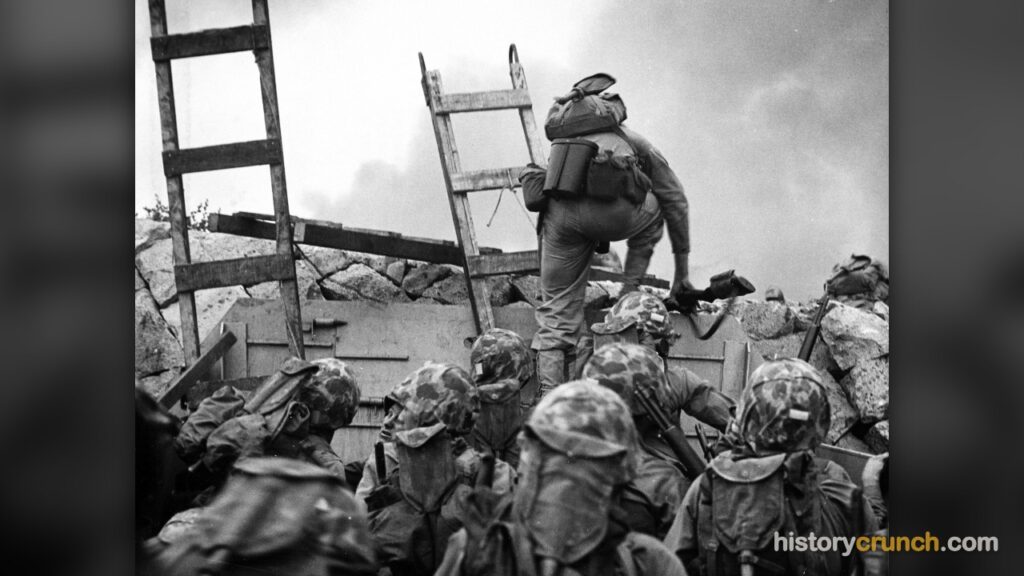
The fighting finally erupted in the summer of 1950. The Korean War began on June 25, 1950, when communist North Korea invaded South Korea. The United States responded almost immediately, gathering international support. Almost immediately, the United States secured a resolution from the United Nations calling for the military defense of South Korea against North Korean aggression. Soon after, U.S. land, air, and sea forces had joined the battle, and the U.S. intervention turned the tide of the war, pushing North Korean forces back and driving U.S. and South Korean forces into North Korea and toward that nation’s border with China.
FactsthatCrunchUN Security Council Condemns the North Korean Invasion of South Korea
On June 25th, 1950, the UN Security Council voted 9 to 0 to pass Resolution 82, calling the North Korean attack a breach of the peace and demanding that North Korean forces pull back to the 38th parallel. The Soviet Union, which could have vetoed the resolution, was absent. It had been boycotting Security Council meetings since January 1950, protesting the Council's refusal to seat the People's Republic of China in place of the Nationalist Chinese government of Taiwan. With the Soviet seat empty, the remaining members passed the resolution without interference, marking the first time the Security Council used its authority on this scale to condemn an armed invasion.
Why Did the War Become a Stalemate?
The war shifted dramatically late in 1950 when China entered the conflict. In November and December of 1950, hundreds of thousands of troops from the People’s Republic of China began heavy assaults against the American and South Korean forces. This massive intervention pushed United Nations forces back southward and turned the war into a grinding contest for territory.
After the dramatic advances and retreats of the first year, the fighting settled into a deadlock. The remaining years of the battle saw the two sides develop a stalemateA deadlock in which neither side can win, and the front line barely moves despite continued fighting. along the 38th parallel with neither side capturing much territory from the other. Both armies dug into fortified positions, and the front line barely moved even as the casualties climbed higher and higher.
Because neither side could win a clear victory, commanders began looking for a way out. While fighting still occurred from 1951 to 1953, commanders on both sides sought to reach a ceasefire. American leaders in particular feared that continuing the war could pull the United States into an even larger conflict. The alternative, they feared, would be a wider war with the Soviet Union and China, or even, as some warned, World War III.
Where Did the Armistice Talks Take Place?
The idea of a cease-fire first gained momentum in the middle of 1951. The Soviet delegate to the United Nations proposed a discussion of a cease-fire and an armistice in June 1951, and in July negotiations began between the United Nations and the communist commanders at Kaesong, later resumed at Panmunjom, both about 30 miles (48 km) northwest of Seoul. The small village of Panmunjom would become the main site for the long and difficult talks.
The negotiations dragged on for two full years, an unusually long time for such talks. On July 27th, 1953, the longest negotiated armistice in history came to an end. Throughout this period, the fighting continued along the front, and soldiers kept dying even as diplomats argued at the table. In reality, more men were killed during the years of negotiation than many people expect.
FactsthatCrunchWhy Did the Talks Take So Long?
The single biggest reason for the delay was a bitter dispute over prisoners of war. Both sides agreed early on that the boundary should stay near the 38th parallel, but they could not agree on how to handle the men each side held captive. A year into the war, both sides had agreed to cease-fire talks and worked out the basic terms of an armistice, but disagreement over the repatriationThe act of sending prisoners of war back to their home country after a conflict ends. of prisoners of war prolonged the negotiations over the next two years.
Repatriation means sending prisoners back to their home country after a war. The communist side wanted every prisoner returned, even those who did not want to go. Both sides were willing to accept a ceasefire that maintained the 38th parallel boundary, but they could not agree on whether prisoners of war should be forcibly repatriated, with the Chinese and North Koreans saying yes and the United States saying no.
American leaders refused to force prisoners to return against their will. By the time negotiations began on the POW issue, U.S. President Harry S. Truman had become convinced that prisoners should not be repatriated against their will, and he was heavily influenced by memories of the tragic fate of millions of Soviet prisoners who had been forcibly repatriated after World War II. More specifically, many captured North Korean and Chinese soldiers did not wish to return to communist rule, and the United States insisted they should have a choice.
FactsthatCrunchTap each impact to read what it led to.
What Were the Terms of the Armistice?
The final breakthrough came in the summer of 1953, though not without one last crisis. South Korea’s president opposed any deal that left the country divided. In June, Rhee suddenly released 27,000 North Korean anticommunist prisoners in defiance of the United Nations, whereupon the communists broke off negotiations, though Rhee later acquiesced and agreed to support the armistice even though he would not sign it.
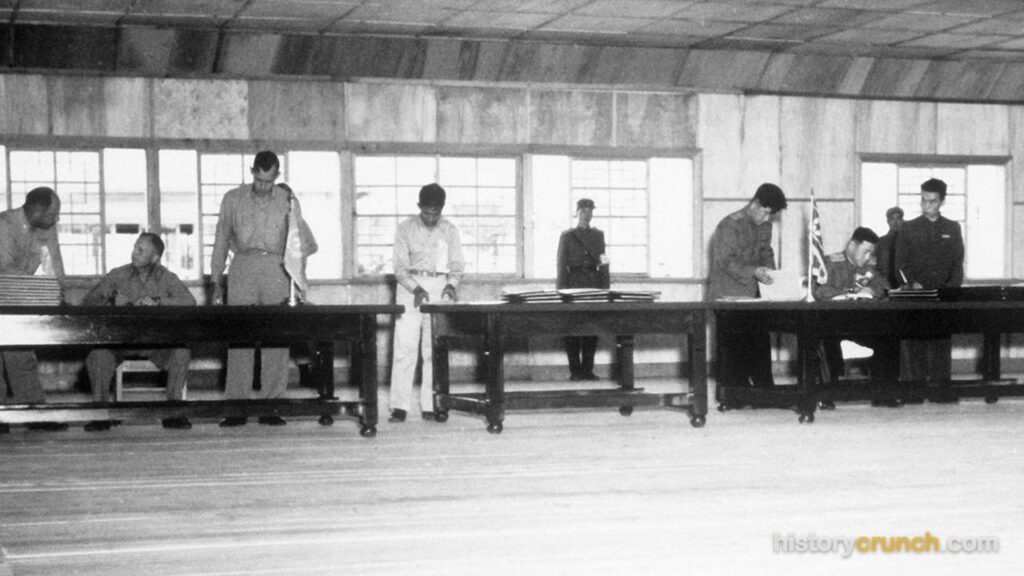
Once these final obstacles were cleared, the agreement was signed at Panmunjom. The armistice was signed on July 27th, 1953 by the United Nations Command, North Korea, and China, but not South Korea. The absence of a South Korean signature is one of the most striking features of the deal and helps explain why a true peace was never reached.
The armistice settled several key issues. With the armistice, the two sides agreed to several things, including the creation of a demilitarized zoneA strip of land, called the DMZ, where military forces from both sides are not allowed. between North and South Korea near the 38th parallel, and how to handle the exchange of prisoners of war. A demilitarized zone, often called the DMZ, is a strip of land where military forces are not allowed. The battle line became the boundary between North and South Korea, and a demilitarized zone was created by pulling back the respective forces 1.2 miles (2 km) along each side of the boundary. On the question of captives, both sides finally accepted that prisoners could decide for themselves. POWs were exchanged, with both sides accepting the option of voluntary repatriation.
FactsthatCrunchThe 1953 Korean War Armistice set out separate terms for the prisoner exchange and for the dividing line between the two sides.
Significance of The Korean War Armistice
The armistice ended one of the deadliest conflicts of the twentieth century. The war had lasted for three years and one month and resulted in roughly 4,000,000 casualties, including civilians. By stopping the fighting, the agreement spared countless additional lives and prevented the Cold War from exploding into a far larger war involving China and the Soviet Union.
At the same time, the armistice left Korea almost exactly as it had been before the war began. On July 27th, 1953, an armistice was signed, ending organized combat operations and leaving the Korean Peninsula divided much as it had been since the close of World War II at the 38th parallel. From the American point of view, the war did achieve its main goal. The Korean police action prevented North Korea from imposing its communist rule on South Korea.
The effects of the armistice are still visible today. Because it was never replaced by a peace treaty, the DMZ remains one of the most heavily guarded borders on Earth, and American troops still help defend the boundary between the two Koreas. As stated above, the armistice froze the conflict rather than ending it, which is why the Korean Peninsula continues to be shaped by the same divisions that produced the war more than seventy years ago.
FactsthatCrunchWhen the armistice took effect on July 27th, 1953, the ceasefire line was drawn very close to the 38th parallel, the same latitude that had divided Korea since 1945. The line was not perfectly straight; years of fighting had pushed it slightly north of the parallel in some places and slightly south in others. A 2.5-mile (4-kilometer) wide Demilitarized Zone was established by pulling back each side's forces 1.2 miles (2 kilometers) from that line.
Today the 38th parallel boundary and the Demilitarized Zone remain in place, largely unchanged from where they sat in 1953. North and South Korea still have no formal peace treaty, so the 1953 ceasefire line functions as one of the most heavily armed borders on Earth. South Korean and American forces maintain a defense posture along the southern edge, while North Korean forces face them from the north.
A temporary ceasefire line drawn in 1953 has lasted over 70 years, making the Korean border one of the most enduring unresolved frontiers of the Cold War era.
Korean War timeline · 1950 – 1953
Key Vocabulary
Armistice
Containment
38th parallel
Stalemate
Repatriation
Demilitarized zone
Proxy war
Frequently Asked Questions
When was the Korean War Armistice signed?
The Korean War Armistice was signed on July 27th, 1953. The agreement went into effect that same day, and combat along the front line stopped within hours. In the United States, the date is now remembered each year as National Korean War Veterans Armistice Day.
Who signed the Korean War Armistice?
The armistice was signed by representatives of the United Nations Command, North Korea, and China. On July 27th, Mark W. Clark for the United Nations Command, Peng Dehuai for the Chinese, and Kim Il-sung for the North Koreans signed the agreement. Notably, South Korea refused to sign, since its president wanted to keep fighting to unify the country.
Did the Korean War Armistice end the war?
No, the armistice only stopped the fighting and did not officially end the war. An armistice is a cease-fire, not a peace treaty, so the deeper political dispute between North and South Korea was left unsettled. As a result, the two Koreas are technically still at war more than seventy years later.
What is the DMZ created by the armistice?
The DMZ, or demilitarized zone, is a buffer strip of land created along the border between North and South Korea. It runs roughly along the 38th parallel and stretches about 1.2 miles (2 km) on each side of the boundary. Despite its name, the DMZ is today one of the most heavily fortified and guarded areas in the world.
Why did the armistice negotiations take so long?
The talks lasted two years mainly because of a disagreement over prisoners of war. The communist side demanded that all prisoners be returned, while the United States insisted that captives should be allowed to choose whether to go home. When prisoners were asked, out of over 170,000 North Korean and Chinese captives, only about 70,000 desired repatriation, a figure the communist negotiators refused to accept.
Cite This Article
To cite this article as a source, use one of the formats below.
MLA: Millar, B. “The Korean War Armistice: A Detailed Summary.” HistoryCrunch, 15 August 2026, https://historycrunch.com/korean-war-armistice/.
APA: Millar, B. (2026). The Korean War Armistice: A Detailed Summary. HistoryCrunch. https://historycrunch.com/korean-war-armistice/
Chicago: Millar, B. “The Korean War Armistice: A Detailed Summary.” HistoryCrunch. August 15, 2026. https://historycrunch.com/korean-war-armistice/
Sources
- Max Hastings, The Korean War.
- William Stueck, The Korean War: An International History.
- Wilson Center Digital Archive