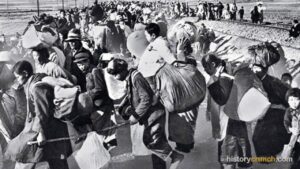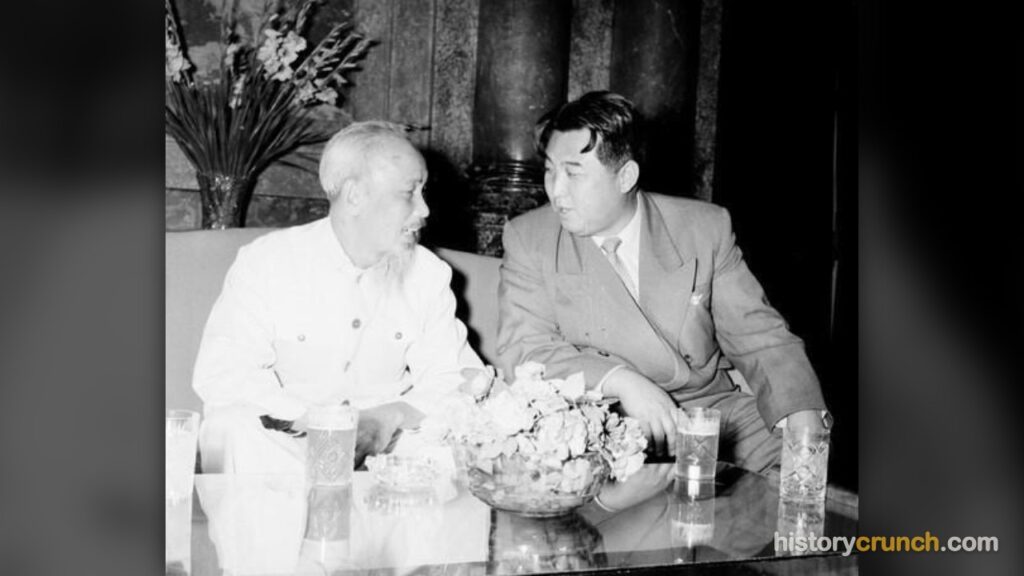
North Korea after the Korean War is one of the most important stories of the early Cold War in Asia, because it shows how a small, war-torn country rebuilt itself into a tightly controlled state that still shapes world events today. When the fighting stopped in the summer of 1953, the northern half of the Korean Peninsula lay in ruins, yet within a few short years it had begun a dramatic recovery under a single powerful leader. The period after the war saw North Korea rebuild its cities, tighten its dictatorship, and turn away from the outside world.
North Korea is officially called the Democratic People’s Republic of Korea, or DPRK. It is a communist state, which means that the government controls the economy and nearly every part of daily life, and it is also a dictatorship, which means that power rests in the hands of one ruler rather than in free elections. After the Korean War, that ruler was Kim Il-Sung, and the system he built placed him at the center of the entire nation.
 FactsthatCrunch
The 1953 armistice was later turned into a formal peace treaty between the two Koreas.
What Was the Cold War in Asia?
The Cold War was a long rivalry between the United States and the Soviet Union that lasted from the end of World War II in 1945 until the early 1990s. It was called “cold” because the two superpowers never fought each other directly in a full war. Instead, they competed for influence around the world, each trying to spread its own political and economic system, with the United States promoting capitalism and democracy and the Soviet Union promoting communism.
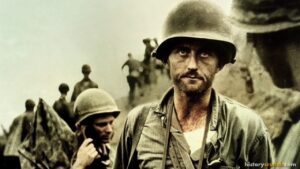
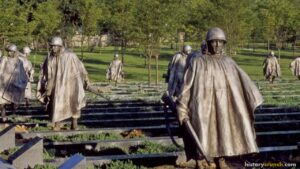
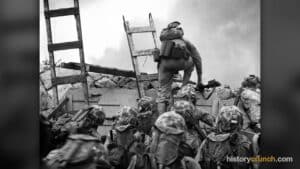
Asia became one of the most tense regions of this struggle. In fact, the Korean War, fought from 1950 to 1953, is often seen as the first major “hot” conflict of the Cold War. It began after Korea was divided at the 38th parallel following World War II, with a communist government in the north backed by the Soviet Union and China, and an anti-communist government in the south backed by the United States. When North Korea invaded the south in June of 1950, the fighting quickly drew in the United Nations, the United States, and China, turning Korea into a battleground for competing world powers.
FactsthatCrunchHow did the Korean War function as a proxy war during the Cold War?
How Did the Korean War End?
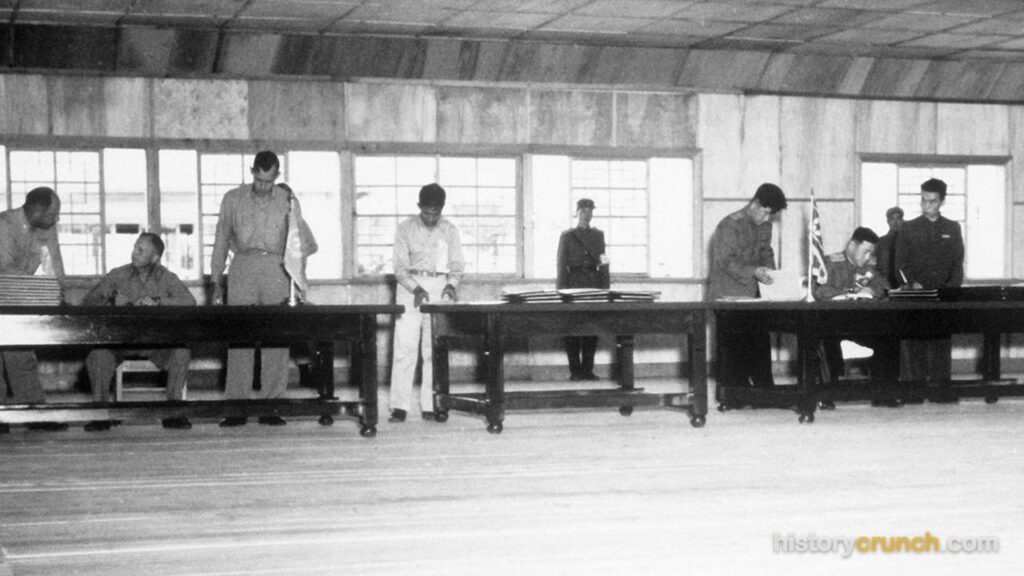
The Korean War did not end with a clear victory for either side. After three years of heavy fighting, the two sides signed an armisticeAn agreement between enemies to stop fighting, which is not the same as a permanent peace treaty. on July 27th, 1953. An armistice is an agreement to stop fighting, but it is not the same as a formal peace treaty. As a result, the Korean War technically never officially ended, and no peace treaty has ever been signed.
The armistice left Korea divided almost exactly where it had been before the war began. A new boundary, called the Demilitarized Zone, or DMZ, was created roughly along the 38th parallel. Despite its name, the DMZ became one of the most heavily guarded borders in the world, with soldiers, fences, and weapons on both sides. In this way, the war ended in a stalemate, leaving two rival Koreas facing each other across a tense dividing line.
How Much Damage Did the War Cause North Korea?
The Korean War caused enormous destruction across the entire peninsula, but northern Korea suffered especially heavy damage. During the war, United States and United Nations aircraft carried out large bombing campaigns against the north, targeting cities, factories, railroads, and dams. Major cities such as Pyongyang were reduced to rubble, and thousands of factories were destroyed.
The human cost was staggering as well. Millions of Koreans died in the war, and a very large share of those deaths were in the north. Beyond the deaths, the war left a shattered economy, ruined farmland, and millions of people without homes. When the armistice was signed in 1953, North Korea faced the huge challenge of rebuilding almost everything from the ground up.
FactsthatCrunchU.S. Bombing Tonnage in the Korean War Compared to World War II
U.S. planes dropped 635,000 tons of bombs on Korea between 1950 and 1953, most of it on the North. That total was more than the 503,000 tons dropped across the entire Pacific Theater in World War II, even though the Pacific Theater covered a far larger area. The U.S. Air Force estimated that North Korea's destruction, measured proportionally, was greater than Japan's in World War II.
How Did North Korea Rebuild Its Economy?
To rebuild, North Korea created a command economy, which is an economy fully planned and controlled by the government rather than by private businesses. The state set goals through a series of official plans, starting with a Three-Year Plan for reconstruction from 1954 to 1956, followed by a Five-Year Plan launched in 1957. These plans placed the highest priority on heavy industry, such as steel, cement, and electric power, while the government also worked to collectivizeTo combine privately owned farms into large farms controlled and run by the state. farming, meaning that private farms were combined into large farms controlled by the state.
North Korea did not rebuild alone. In the years right after the war, it depended heavily on aid from its communist allies, especially the Soviet Union and China, which supplied money, equipment, and skilled experts. This assistance helped repair factories and restore power plants. For instance, by the late 1950s the output of most industrial goods had returned to prewar levels, a remarkably fast recovery given how much had been destroyed.
To push production even faster, Kim Il-Sung launched the Chollima MovementA government mass campaign urging North Korean workers to produce more and labor harder for the nation, named after a legendary winged horse., sometimes called the “Flying Horse” movement, named after a legendary winged horse. This was a mass campaign that urged workers to labor harder and produce more for the good of the nation. The government claimed that its plans were completed far ahead of schedule, and for a time North Korea’s economy grew quickly. In reality, this early success rested on foreign aid, tightly organized labor, and a low starting point after the war’s destruction, and it would prove difficult to keep up in later decades.
FactsthatCrunchHow Did Kim Il-Sung Tighten His Control?
After the war, Kim Il-Sung used the power of the state to remove his political rivals and build a highly centralized dictatorship. He blamed others for the failures of the war and gradually pushed out or eliminated anyone who might challenge him. More specifically, rival groups within the ruling Korean Workers’ Party were purgedForcibly removed from power and often arrested, used to describe rivals eliminated from a political party., meaning they were removed from power and often arrested, so that Kim’s control became almost total.
Kim also built what is known as a cult of personality, which is a system in which a leader is presented to the public as a nearly perfect, godlike figure. Across North Korea, statues, portraits, and constant propaganda praised Kim Il-Sung as the “Great Leader” who had freed and protected the nation. Schools, newspapers, and radio all repeated this message, teaching the people to be completely loyal to him.
FactsthatCrunchWhat Was the Idea of Juche?
One of the most important ideas to come out of North Korea in this period was JucheA Korean word meaning self-reliance, used as North Korea’s official guiding philosophy of independence in politics, economy, and defense., a Korean word usually translated as “self-reliance.” Kim Il-Sung promoted Juche as the guiding philosophy of the country, and it was introduced during the 1950s as North Korea began to define its own path. The basic idea was that North Korea should be independent in politics, in its economy, and in defense, standing on its own rather than depending on outside powers.
In practice, Juche served two purposes at once. On one hand, it presented North Korea to the world as a strong and independent nation. On the other hand, it helped justify the tightly controlled political system centered on Kim himself and his family. Over time, Juche grew into far more than an economic policy, becoming almost like an official national belief system that shaped education, culture, and everyday life.
FactsthatCrunchHow Did North Korea Change in Later Decades?
As the years passed, North Korea became one of the most isolated and secretive countries in the world. It sealed off its borders, tightly restricted information, and limited nearly all contact between its people and the outside world. Tensions with South Korea and the United States remained high, and there were repeated incidents along the DMZ and elsewhere during the 1960s and later.
Kim Il-Sung also planned for his family to keep power after him. Beginning in the early 1970s, he prepared his son, Kim Jong-Il, to become the next leader, and the succession was made official over the following years. When Kim Il-Sung died in 1994, Kim Jong-Il took over, creating a rare hereditary succession in a communist state. Leadership later passed to Kim Il-Sung’s grandson, Kim Jong-Un, showing how the family system built after the Korean War has continued into the present day.
In what order did the Kim family leaders rule North Korea?
Significance of North Korea After the Korean War
The years after the Korean War were significant because they shaped the North Korea that exists today. In this short but crucial period, the country rebuilt from near-total destruction, established a rigid command economyAn economy where the government, not private businesses, makes all decisions about production and distribution., and locked in a one-family dictatorship supported by a powerful cult of personalityA system where a leader is portrayed through propaganda, statues, and media as a perfect or godlike figure.. The ideas and systems created in the 1950s, especially Juche and the leadership of Kim Il-Sung, still guide the nation more than half a century later.
The period is also significant for what it reveals about the Cold War itself. North Korea’s recovery depended on Soviet and Chinese aid, showing how the communist world supported its members, while its hostility toward South Korea and the United States kept the peninsula divided and dangerous. In reality, the unresolved armistice of 1953 means that Korea remains split to this day, making the story of North Korea after the Korean War essential for understanding one of the world’s longest-lasting conflicts.
FactsthatCrunchThe centrally planned economy and political system Kim Il-Sung built after the armistice locked North Korea into a pattern of state control that the country has never abandoned.
The Three-Year Plan of 1954 to 1956 and the Five-Year Plan that followed it gave the Korean Workers' Party direct control over every factory, farm, and mine. That habit of setting targets from the top down became permanent, and North Korea still runs its economy the same way today.
The philosophy of Juche, introduced in the 1950s, taught that North Korea must be self-reliant in politics, economics, and defense. It grew into an official belief system taught in schools and used to justify sealing the country's borders against outside influence.
Kim Il-Sung's purge of rival factions within the Korean Workers' Party after the war left a single family line in charge with no real check on its power. That concentration of authority made it possible for Kim Jong-Il and later Kim Jong-Un to inherit leadership as a dynasty rather than face open elections.
The cult of personality built during the 1950s, including required portraits in homes and workplaces and state propaganda praising Kim as the "Great Leader," created a culture of enforced loyalty. That same system of public praise and punishment for dissent shapes daily life in North Korea today.
Korean War timeline · 1950 – 1953
Key Vocabulary
Armistice
Command economy
Collectivize
Purged
Cult of personality
Juche
Chollima Movement
Frequently Asked Questions
Did the Korean War officially end?
No, the Korean War never officially ended with a peace treaty. The fighting stopped in 1953 with an armistice, which is only an agreement to cease fire, so North Korea and South Korea technically remain at war. This is one reason the border between them is still so heavily guarded today.
Who ruled North Korea after the Korean War?
Kim Il-Sung ruled North Korea after the Korean War and remained in power until his death in 1994. He had led the country since its founding in 1948 and used the years after the war to remove his rivals and become the nation’s unquestioned leader. His long rule set the stage for his family to hold power for generations.
What does Juche mean?
Juche is a Korean word usually translated as “self-reliance,” and it became North Korea’s official guiding philosophy. It stressed that the country should be independent in its politics, economy, and defense. Even though North Korea preached self-reliance, it still accepted large amounts of aid from the Soviet Union and China during its early rebuilding years.
What is the DMZ between North and South Korea?
The DMZ, or Demilitarized Zone, is a strip of land that separates North Korea and South Korea roughly along the 38th parallel. It was created by the 1953 armistice as a buffer to keep the two sides apart. Despite its name, it is one of the most fortified and dangerous borders in the world.
How did North Korea rebuild so quickly after the war?
North Korea rebuilt quickly by combining government economic plans with large amounts of foreign aid from communist allies. The Soviet Union and China supplied money, machinery, and experts, while the state pushed its people to work harder through mass campaigns such as the Chollima Movement. This allowed factories and power plants to recover within just a few years, though the growth was hard to sustain over the long term.
Cite This Article
To cite this article as a source, use one of the formats below.
MLA: Millar, B. “North Korea After the Korean War: A Detailed Summary.” HistoryCrunch, 15 August 2026, https://historycrunch.com/north-korea-after-the-korean-war/.
APA: Millar, B. (2026). North Korea After the Korean War: A Detailed Summary. HistoryCrunch. https://historycrunch.com/north-korea-after-the-korean-war/
Chicago: Millar, B. “North Korea After the Korean War: A Detailed Summary.” HistoryCrunch. August 15, 2026. https://historycrunch.com/north-korea-after-the-korean-war/
Sources
- Sheila Miyoshi Jager, Brothers at War: The Unending Conflict in Korea.
- Truman Presidential Library