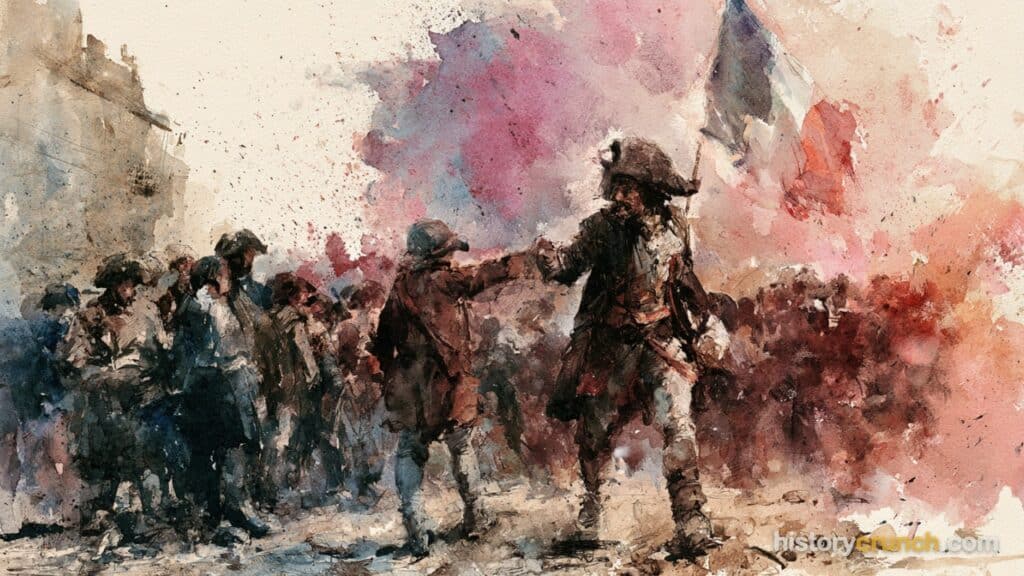
The French Revolution stands as one of the most important events in the history of democracy, because it took the ideas of self-government that had lived mostly in books and speeches and put them into practice on a national scale. Beginning in 1789, the French people overthrew their absolute monarchy and worked to build a republic based on the principles of liberty, equality, and fraternity. In doing so, they challenged the belief that a king could rule with total power and replaced it with the idea that authority comes from the people themselves. That shift, known as popular sovereigntyThe principle that political power belongs to the people, not to a king or ruling class., sits at the heart of how modern democracies operate today.
Democracy is a system of government in which political power belongs to the people, either directly or through elected representatives who make laws on their behalf. It usually includes protected individual rights, equality before the law, and limits on the power of any single ruler. The French Revolution did not create a perfect democracy, but it advanced these ideas in France and inspired people across Europe and the wider world to demand a voice in how they were governed.
 FactsthatCrunch
Where did royal power come from in the French Revolution era, and how did that answer change?
What Was the Age of Enlightenment?
The French Revolution belongs to a larger period of change known as the Age of Enlightenment, which shaped Western thought during the 1700s. The Enlightenment was an intellectual movement in which famous thinkers and philosophers questioned some of the basic foundations of society, including the role of government, the sources of authority, and the nature of human freedom. In fact, these new ideas caused people in France to begin questioning the role and authority of King Louis XVI.
Several Enlightenment thinkers laid the groundwork for democratic ideas. For instance, John Locke argued that a leader may only govern a society if he has the consent of those he is governing, an idea called the consent of the governedThe idea that a leader may only rule if the people he governs agree to be led by him.. Jean-Jacques Rousseau developed the idea of the social contractAn agreement in which people choose to live together under laws they create for themselves., in which people agree to live together under laws they themselves create. Baron de Montesquieu argued for the separation of powersDividing government authority into parts so no single person or group becomes too powerful., meaning that the powers of government should be divided so that no one person or group could become too strong.
These ideas were commonly discussed and debated in the salons of France, where intellectuals gathered to talk over the questions of the day. As stated above, they encouraged ordinary people to doubt whether a single king should hold complete power. This questioning of traditional authority became one of the main causes of the French Revolution and a direct link between the revolution and the growth of democracy.
FactsthatCrunchThree Enlightenment thinkers shaped the ideas behind the French Revolution with distinct but connected arguments about government and freedom.
How Did France Look Before the Revolution?
Before the revolution, France was ruled by an absolute monarchy, a system in which the king held nearly unlimited power and did not answer to any elected body. Louis XVI claimed to rule by divine rightThe belief that a king’s authority to rule came directly from God, not from the people., the belief that his authority came directly from God. Under this system, ordinary people had little say in the laws that governed their lives.
French society was also divided by the Estates SystemA rigid French social order dividing society into three groups: the clergy, the nobility, and everyone else., a rigid social order made up of three groups. The First Estate was the clergy, and the Second Estate was the nobility. The Third Estate included everyone else, from wealthy merchants and lawyers down to peasants and the urban poor, and it made up the vast majority of the population. Despite their small numbers, the First and Second Estates enjoyed special privileges, such as being excused from many taxes.
This unequal arrangement created deep resentment. More specifically, members of the Third Estate paid most of the taxes while having the least political power, and they had no fair way to change the laws that treated them unequally. In reality, the gap between the promise of Enlightenment ideas and the unfairness of daily life helped push France toward revolution.
FactsthatCrunchIn a famous 1789 caricature of the Third Estate, what does the stooped figure of the peasant argue about France's tax system?
How Did the Revolution Begin to Spread Democratic Ideas?
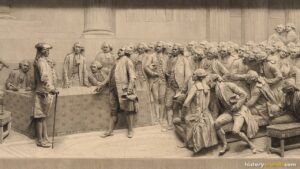
The first steps toward democracy came in 1789 when Louis XVI called a meeting of the Estates-General to help solve a serious economic crisis. When the Third Estate found itself outvoted by the two privileged estates, its representatives broke away and declared themselves the National Assembly, claiming to be the true voice of the French people. This bold act moved political power away from the king and toward elected representatives.
The National Assembly vowed to write a new constitution for France, a document that would limit the power of the monarchy and define the rights of citizens. It also worked to end the feudal privileges that had protected the nobility and clergy for centuries. For the first time, France had a governing body that claimed to speak for the nation rather than for a single ruler.
Popular support for these changes exploded into action during the Storming of the Bastille in July of 1789, when a Paris crowd attacked a royal fortress and prison. The event became a powerful symbol that ordinary people could challenge and even overturn the authority of the king. In this way, the early revolution showed that political power might truly rest with the people.
FactsthatCrunchIn what order did these early steps of the French Revolution in 1789 unfold?
What Was the Declaration of the Rights of Man and of the Citizen?
One of the most important democratic achievements of the revolution was the Declaration of the Rights of Man and of the Citizen, adopted in August of 1789. The declaration set out a series of individual rights that were to be protected by law, and it applied these rights to citizens rather than granting favors to a privileged few. It directly challenged the authority of Louis XVI by stating that sovereignty, or supreme power, belonged to the nation and not to the king.
The document drew heavily on Enlightenment thinking. For example, it reflected Rousseau’s idea of a social contract, Montesquieu’s belief in the separation of powers, and Locke’s argument for natural rights that belong to all people. It also echoed the American Declaration of Independence, since the American Revolution had recently shown that a people could break away from a distant king and govern themselves.
Today the declaration is viewed as an important document in both the history of the French Revolution and the history of democracy and individual rights around the world. It announced the idea that all men are born free and equal in rights, a principle that would guide later movements for freedom. Even so, the rights it described remained a goal rather than a full reality, since large parts of the population still could not vote or hold office.
Did the Revolution Fully Achieve Democracy?
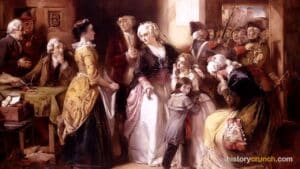
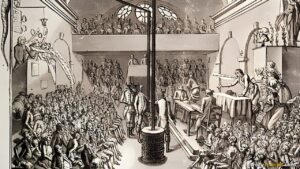
Throughout the years of the revolution, there were four different revolutionary governments, including the National Assembly, the Legislative Assembly, the National Convention, and the Directory. Each represented an attempt to replace the old monarchy with a system based on elected representatives and written laws. In 1792 the National Convention abolished the monarchy and declared France a republic, and the following year Louis XVI was executed.
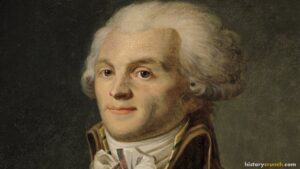
The path to democracy, however, was far from smooth. During the Reign of TerrorA violent period of the revolution when radical leaders used mass executions and fear to defend their power., radical leaders used fear, censorship, and mass executions to defend the revolution, and thousands of people were put to death. In this violent period, the promise of liberty and equality was often set aside, which showed how difficult it was to build a stable democracy out of a revolution.
Voting rights also remained limited. In reality, full political rights were given only to so-called active citizensThe limited group of adult men who met age and tax requirements and could take part in elections during the revolution., meaning adult men who met certain requirements, while women and the poorest men were left out. The revolution therefore expanded democracy far beyond what France had known, yet it fell short of the equal rights that later generations would demand.
FactsthatCrunchSignificance of French Revolution and Democracy
The French Revolution was a major event in the history of Western societies, and it has had a profound effect on the world today. By overthrowing an absolute monarchy and building a republic, it demonstrated that ordinary people could reshape their own government. This idea of popular sovereignty became one of the foundations of modern democratic values.
The revolution also spread the belief that governments should protect individual rights and treat citizens as equals before the law. The Declaration of the Rights of Man and of the Citizen inspired reformers and revolutionaries far beyond France, helping to shape constitutions and rights movements across Europe and the Americas. In fact, later struggles for freedom often looked back to the French Revolution as an example of a people claiming power for themselves.
At the same time, the revolution offered a warning as well as an inspiration. The violence of the Reign of Terror and the limits placed on voting showed that the ideals of liberty and equality are hard to achieve and must be carefully protected. For this reason, the French Revolution remains a key example when studying both the promise and the challenges of democracy.
FactsthatCrunchTap each impact to read what it led to.
Key Vocabulary
Popular sovereignty
Consent of the governed
Social contract
Separation of powers
Divine right
Estates System
Active citizens
Reign of Terror
Frequently Asked Questions
How did the French Revolution help spread democracy?
The French Revolution helped spread democracy by replacing an absolute monarchy with a government based on elected representatives and written law. It proved that ordinary people could remove a king and claim power for themselves. News of these events encouraged reformers in other countries to demand a greater voice in their own governments.
What does popular sovereignty mean?
Popular sovereignty means that political power belongs to the people rather than to a king or ruling class. During the revolution, the French declared that authority came from the nation, not from the crown. This principle is a core idea in nearly every democracy that exists today.
Was France a democracy after the revolution?
France did not become a full democracy right after the revolution, though it moved much closer than before. Voting was limited to certain adult men, and periods of violence and instability interrupted democratic progress. France would go through several more governments, including empires and republics, before firmly establishing a lasting democratic system in the following century.
How did the Enlightenment influence democracy in the revolution?
The Enlightenment provided the ideas that the revolutionaries used to build a more democratic government. Thinkers such as Locke, Rousseau, and Montesquieu argued for natural rights, the consent of the governed, and the separation of powers. Revolutionaries turned these ideas into real institutions and laws, connecting Enlightenment philosophy to practical government.
Who was left out of democracy during the French Revolution?
Women, enslaved people in French colonies, and the poorest men were largely left out of political rights during the revolution. Only men who met age and tax requirements, known as active citizens, could take part in elections. These limits show that the revolution expanded democracy but did not yet make it equal for everyone.
Cite This Article
To cite this article as a source, use one of the formats below.
MLA: Millar, B. “French Revolution and Democracy: A Detailed Summary.” HistoryCrunch, 11 August 2026, https://historycrunch.com/french-revolution-and-democracy/.
APA: Millar, B. (2026). French Revolution and Democracy: A Detailed Summary. HistoryCrunch. https://historycrunch.com/french-revolution-and-democracy/
Chicago: Millar, B. “French Revolution and Democracy: A Detailed Summary.” HistoryCrunch. August 11, 2026. https://historycrunch.com/french-revolution-and-democracy/
Sources
- Liberty, Equality, Fraternity (revolution.chnm.org), George Mason
- Fordham Modern History Sourcebook