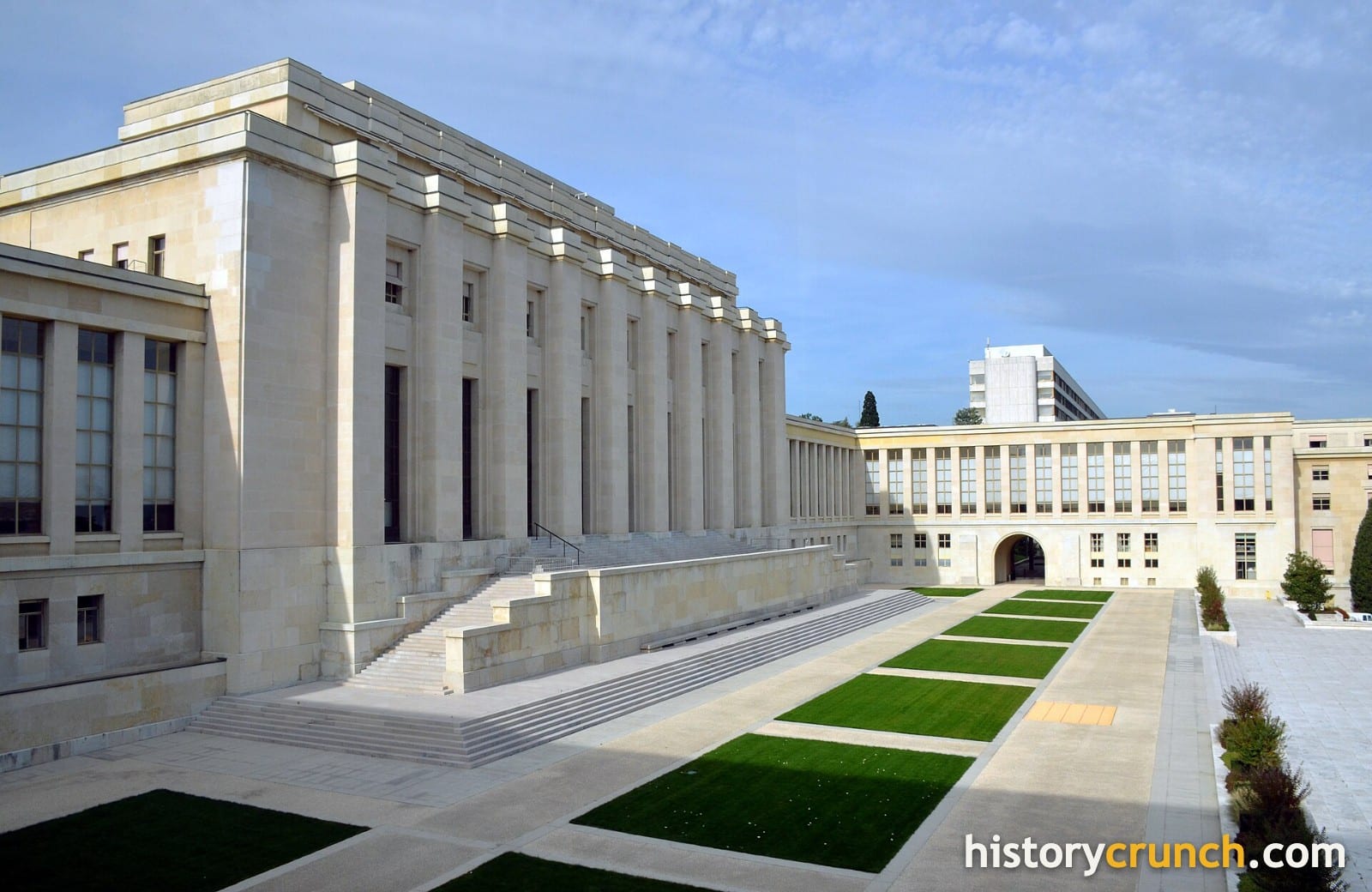
The League of Nations was an international organization founded on January 10th, 1920, as a direct result of the devastation of World War I. It was the brainchild of United States President Woodrow Wilson, who included its creation as one of his famous Fourteen Points for peace, and was formally established as part of the Treaty of Versailles that ended the war. Its headquarters were located in Geneva, Switzerland. The League’s primary goals were to prevent future wars through collective securityAn arrangement where countries agree to defend one another against aggression, so an attack on one is treated as an attack on all., to settle international disputes through negotiation and arbitrationA process where a neutral outside party hears both sides of a dispute and makes a binding decision to resolve it. rather than armed conflict, and to promote disarmament and international cooperation. For more than two decades it served as the central institution of international diplomacy, achieving genuine successes in its early years before failing catastrophically in the 1930s as aggressive powers defied it with impunity. Its inability to stop the events that led to World War II led to its replacement by the United Nations, which was founded in 1945. The League was formally dissolved on April 19th, 1946.
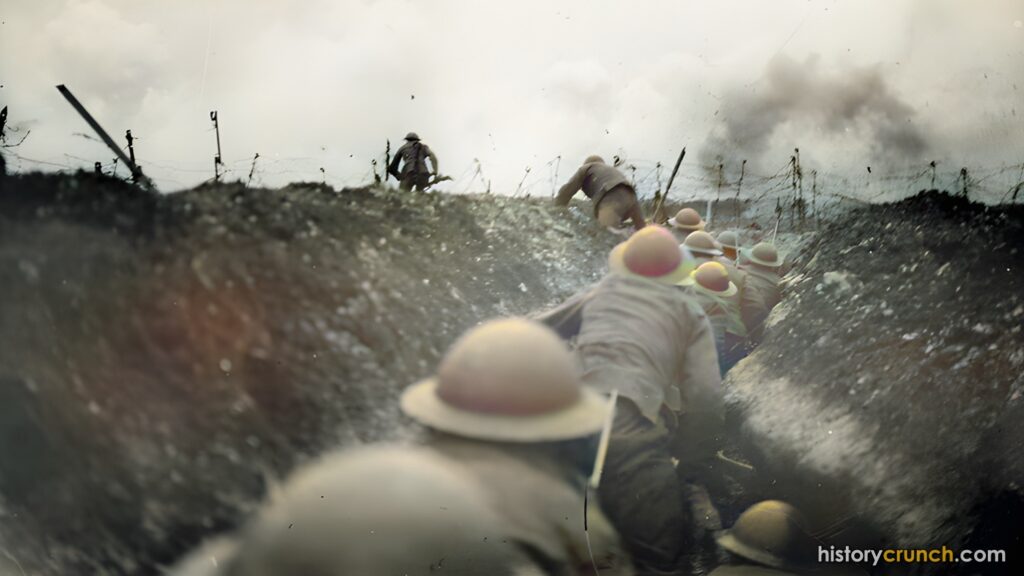
What Was World War I?
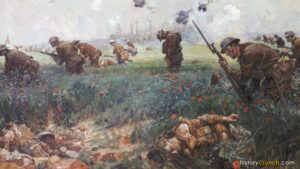
World War I was a global conflict fought primarily in Europe from 1914 to 1918. It was triggered by the assassination of Archduke Franz Ferdinand of Austria-Hungary in June of 1914 and rapidly escalated into the largest war the world had ever seen, drawing in the major European powers through their alliance systems and eventually involving countries from across the globe. The war produced casualties on a scale that had no precedent in human history, killing approximately 17 million people and wounding many millions more. The enormous destruction of World War I created a widespread determination among the nations that had fought it to establish a new system of international relations that would prevent such a catastrophe from ever happening again. It was this determination that produced the League of Nations.
League of Nations – Origins and the Paris Peace Conference
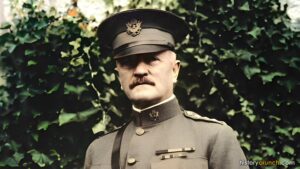
The idea of an international organization for maintaining peace had been discussed by political thinkers for many years before 1914, but it was the experience of World War I that turned the idea into a political priority. The most powerful advocate for such an organization was President Woodrow Wilson of the United States, who outlined his vision in his Fourteen Points speech to the United States Congress in January of 1918. The fourteenth of Wilson’s points called specifically for the creation of a general association of nations that would guarantee the political independence and territorial integrity of all states, large and small alike.
The Paris Peace Conference, which opened in January of 1919 to negotiate the terms of peace following Germany’s defeat, was dominated by the leaders of the victorious Allied powers. Wilson attended personally and used his considerable influence to ensure that the creation of the League was incorporated into the peace settlement. The CovenantThe founding document of the League of Nations that spelled out its structure, membership rules, and powers. of the League of Nations, the document that defined its structure, membership, and powers, was drafted at the conference and incorporated directly into the Treaty of Versailles, which was signed on June 28th, 1919. This meant that accepting the peace treaty and joining the League were linked, a decision that would have significant consequences for American membership.
 FactsthatCrunch
A general association of nations must be formed under specific covenants for the purpose of affording mutual guarantees of political independence and territorial integrity to great and small states alike.
Wilson spoke these words to Congress while the war still raged, laying out fourteen peace aims meant to rally Americans and the Allies behind a just settlement. This final point became the blueprint for the League of Nations.
League of Nations – Structure and Membership
The League of Nations was organized around three main bodies. The Assembly consisted of representatives from all member states, each of which had one vote, and met annually to discuss matters of general concern. The Council was a smaller executive body that included permanent members representing the great powers alongside rotating elected members from smaller states. It was responsible for handling specific disputes and crises and could meet more frequently than the Assembly. The Secretariat was the permanent administrative body based in Geneva that carried out the day-to-day work of the organization.
The League also established a number of specialized agencies and commissions to handle specific areas of international concern. These included the Permanent Court of International Justice, which provided a mechanism for settling legal disputes between states, and commissions dealing with issues such as labor standards, health, the treatment of minorities, and the administration of mandated territories, the former colonies of Germany and the Ottoman Empire that were placed under the supervision of League members.
The League began with 42 founding members drawn from Europe, the Americas, Asia, and Africa. Notably absent from the founding membership was the United States, whose failure to join represented the most serious single blow to the organization’s authority and effectiveness. Although Wilson had been the League’s most passionate advocate, he was unable to secure the necessary two-thirds majority in the United States Senate to ratify the Treaty of Versailles, partly because of Republican opposition to what they saw as an unacceptable entanglement in European affairs and partly because of Wilson’s own inflexibility in negotiating the terms of ratification. Germany was not admitted to the League at its founding, as it was treated as a defeated aggressor state, though it eventually joined in 1926. The Soviet Union was also initially excluded.
FactsthatCrunchThe League of Nations was built on three main bodies, each with a different job in keeping international peace.
League of Nations – Early Successes and Achievements
The League of Nations was not entirely without achievements, particularly in its earlier years during the 1920s. It successfully mediated a number of territorial disputes between smaller states, including conflicts between Sweden and Finland over the Aland Islands and between Greece and Bulgaria following a border incident in 1925. It helped organize the return of nearly half a million prisoners of war to their home countries following World War I. Its humanitarian work through various commissions addressed issues ranging from the suppression of the slave trade to the control of dangerous drugs to the improvement of working conditions through the International Labour Organization.
The League also administered the Saar region, a disputed territory between France and Germany, under an international mandateA territory, usually a former colony, placed under the supervision and administration of a League member state., and organized a plebisciteA direct popular vote in which citizens of a territory decide a specific political question, such as which country to join. in 1935 that resulted in the region voting to reunite with Germany. The Mandates Commission oversaw the administration of former German and Ottoman territories assigned to League members, including territories in Africa, the Middle East, and the Pacific, with varying degrees of effectiveness. The Kellogg-Briand Pact of 1928, which sought to outlaw war as an instrument of national policy, was negotiated outside the League but shared its goals, and eventually signed by more than 60 countries.
These achievements demonstrated that international cooperation on a multilateral basis was genuinely possible and could produce results. However, the League’s successes were concentrated in disputes involving smaller and weaker states that were willing to accept its authority. The organization proved far less effective when major powers chose to defy it.
FactsthatCrunchWhich early League of Nations dispute or achievement matches each description?
League of Nations – Structural Weaknesses
The League of Nations suffered from several fundamental structural weaknesses that limited its effectiveness from the beginning. The most serious was the absence of the United States, which meant that the world’s largest economy and one of the most powerful military forces on the planet stood outside the organization. This absence both weakened the League’s practical capacity to enforce its decisions and undermined its claim to represent a genuine world community of nations.
A second weakness was the requirement for unanimous agreement in the Council on major decisions, which gave any single great power member a veto over collective action. This made it extremely difficult for the League to take firm decisions against the wishes of any of its most powerful members. Furthermore, the League had no army of its own and depended entirely on member states to provide military force if enforcement was needed. The great powers were generally very reluctant to commit their own forces to enforce League decisions in conflicts that did not directly affect their interests.
A third weakness was the close association of the League with the Treaty of Versailles, which came to be seen by many people, including many in Britain and France, as excessively harsh toward Germany. This made it difficult for the League to be seen as a genuinely impartial arbiter rather than an instrument for maintaining the victors’ settlement, and it bred resentment in Germany and other states that felt they had been treated unjustly by the post-war order.
FactsthatCrunchWhy was the League of Nations weak from the very start?
League of Nations – Failures and the Road to World War II
The decisive failures of the League of Nations came in the 1930s, when a series of aggressive actions by major powers exposed its inability to enforce its principles against determined violators. The first major test came in 1931 when Japan invaded Manchuria in northeastern China and established a puppet state. The League condemned the action and established the Lytton Commission to investigate, but Japan simply withdrew from the League in 1933 rather than accept its findings, and Manchuria remained under Japanese control. The League had proved powerless to reverse the aggression of a major power.
The second major failure came in 1935 and 1936 when Italy under Benito Mussolini invaded the African nation of Abyssinia, now Ethiopia. The League imposed economic sanctionsEconomic penalties imposed on a country to punish it and pressure it to change its behavior without using military force. on Italy, but these were limited in scope, deliberately excluding oil, which was Italy’s most critical import, out of fear of pushing Mussolini too far. The sanctions failed to stop the Italian conquest, and the League’s credibility was further damaged when it emerged that Britain and France had secretly negotiated a deal with Italy that would have rewarded the aggression. Mussolini withdrew Italy from the League in 1937. The episode demonstrated that the major democratic powers were unwilling to enforce the League’s principles when doing so would risk war.
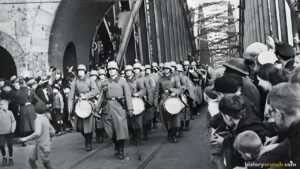
Meanwhile, Adolf Hitler’s Nazi Germany had withdrawn from the League in 1933 and was systematically violating the Treaty of Versailles through rearmament and territorial expansion. The League stood silent in the face of Hitler’s remilitarization of the Rhineland in 1936, his annexation of Austria in 1938, and his seizure of the Sudetenland from Czechoslovakia following the Munich Agreement of 1938, all of which were direct violations of the Versailles settlement. The major democratic powers pursued a policy of appeasement, seeking to avoid war at almost any cost, and the League was effectively bypassed in the critical diplomatic events of the late 1930s. When World War II broke out in September of 1939, the League of Nations had already ceased to function as a meaningful institution.
FactsthatCrunchIn what order did the League of Nations fail to stop these acts of aggression in the 1930s?
League of Nations – Dissolution and Legacy
The League of Nations formally ceased operations in April of 1946, having been effectively dormant since the outbreak of World War II. Its functions and many of its agencies were transferred to the newly established United Nations, which had been founded in October of 1945 with the explicit intention of creating a more effective successor to the League. The framers of the United Nations drew directly on the experience of the League in designing the new organization, incorporating lessons learned from both its achievements and its failures. The United Nations gave the major powers permanent seats with veto power on the Security Council, a structural choice that acknowledged the political reality that collective security could only work if the great powers were genuinely committed to it.
The League of Nations’ legacy is therefore considerable despite its ultimate failure. It was the first serious attempt in human history to create a permanent international organization dedicated to maintaining peace through collective security and diplomacy, and its creation was itself a significant departure from the preceding centuries of international relations in which war was accepted as a normal and legitimate instrument of national policy. Many of the League’s specialized agencies and the principles of multilateral cooperation they embodied survived its dissolution and were incorporated into the United Nations system.
League of Nations – Significance
The significance of the League of Nations in the history of World War I and World War II is considerable. It represented the most important attempt to translate the lessons of World War I into a new international order, and its failure to prevent World War II was one of the most consequential institutional failures of the 20th century.
The League’s failure teaches several enduring lessons. International organizations can only be as effective as the commitment of their most powerful members allows them to be. Collective security requires genuine collective will, not just formal agreement. And an international institution that lacks the means to enforce its decisions against determined violators will ultimately fail to deter aggression. These lessons shaped the design of the United Nations and continue to inform debates about international institutions to the present day.
The connection between the League’s failure and the outbreak of World War II is direct and significant. The League’s inability to check Japanese, Italian, and German aggression in the 1930s encouraged further aggression, demonstrated to Hitler that his violations of the Versailles settlement would not be effectively resisted, and contributed to the atmosphere of international breakdown that made World War II possible. As such, the League of Nations stands as one of the most important and instructive experiments in international relations in the history of the modern world, an institution whose ambitions were noble but whose structural weaknesses and the unwillingness of its most powerful members to enforce its principles ultimately allowed the very catastrophe it was designed to prevent.
The failure of the League of Nations taught that an international peacekeeping body needs enforcement power to be effective. Which structural gap most directly proved that lesson?
Explore World War I · 1914 – 1918
Keep exploring World War I with these History Crunch resources.
Key Vocabulary
Collective security
Arbitration
Covenant
Mandate
Sanctions
Appeasement
Plebiscite
Frequently Asked Questions
When was the League of Nations founded and dissolved?
The League of Nations was founded on January 10th, 1920, and formally dissolved on April 19th, 1946. It grew out of the Treaty of Versailles, which ended World War I. Its work and many of its agencies passed to the United Nations, founded in 1945.
Why did the United States never join the League of Nations?
The United States never joined because the Senate refused to ratify the Treaty of Versailles. President Woodrow Wilson could not win the needed two-thirds majority, partly due to Republican fears of being tangled in European affairs. His own refusal to compromise also hurt the effort. This absence badly weakened the League.
What were the main parts of the League of Nations?
The League had three main bodies. The Assembly held all member states, each with one vote, and met once a year. The Council was a smaller group with the great powers plus rotating members that handled disputes. The Secretariat in Geneva, Switzerland, ran the daily work.
Why did the League of Nations fail?
The League failed mainly because it could not stop aggression by major powers in the 1930s. It had no army and depended on members to supply force, which they rarely did. Japan invaded Manchuria, Italy invaded Abyssinia, and Germany broke the Versailles treaty with little resistance. The absence of the United States made matters worse.
What did the League of Nations achieve?
The League settled several disputes between smaller states, such as the quarrel over the Aland Islands. It helped return nearly half a million prisoners of war to their homes after World War I. Its agencies also fought the slave trade, controlled dangerous drugs, and improved working conditions. These wins came mostly among weaker states willing to accept its authority.
How is the United Nations different from the League of Nations?
The United Nations gave the major powers permanent seats with veto power on its Security Council. This choice tried to fix a key League problem by tying the great powers to the system. Its founders studied both the successes and the failures of the League when building it. Many League agencies were folded into the new organization.
Cite This Article
To cite this article as a source, use one of the formats below.
MLA: Millar, B. “League of Nations: A Detailed Summary.” HistoryCrunch, 30 September 2026, https://historycrunch.com/league-of-nations/.
APA: Millar, B. (2026). League of Nations: A Detailed Summary. HistoryCrunch. https://historycrunch.com/league-of-nations/
Chicago: Millar, B. “League of Nations: A Detailed Summary.” HistoryCrunch. September 30, 2026. https://historycrunch.com/league-of-nations/
Sources
- Hew Strachan, The First World War.
- Fordham Modern History Sourcebook
- John Keegan, The First World War.