The Revolutions of 1989 were one of the most important turning points of the twentieth century, marking the collapse of communist rule across Eastern Europe and the effective end of the Cold War. In a single dramatic year, one communist government after another gave way to popular demonstrations, and the divide that had split Europe since the end of World War II began to disappear. The collapse of the Soviet Union would follow just two years later, but it was the events of 1989 that first showed the world that the Soviet-backed order in Europe could not survive.
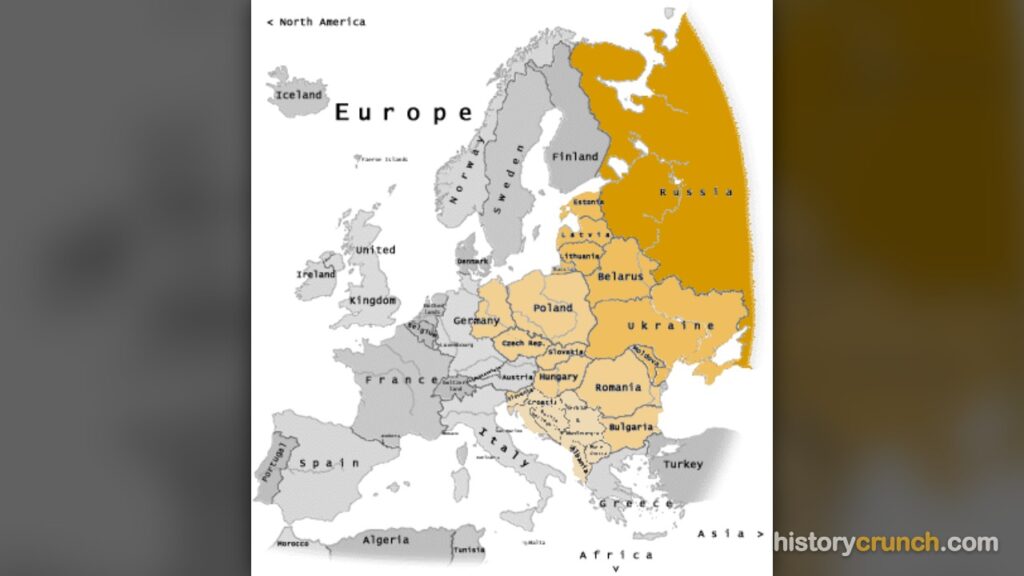
In simple terms, the Revolutions of 1989 were a wave of mostly peaceful uprisings that removed the Soviet-style communist governments of Poland, Hungary, East Germany, Czechoslovakia, Bulgaria, and Romania. These governments had ruled as one-party states, meaning that a single communist party controlled the government and no real opposition was allowed. Over the course of the year, ordinary people demanded free elections, basic freedoms, and an end to communist control, and the aging governments proved unable to stop them.
What Was the Cold War?
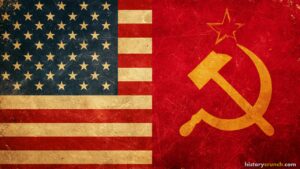
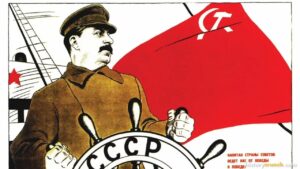
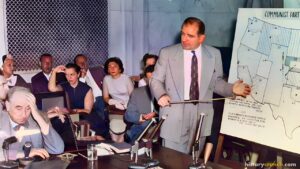
The Revolutions of 1989 belong to the final chapter of the Cold War, and understanding that conflict helps explain why the year 1989 mattered so much. The Cold War was a major world event that lasted from roughly 1945 until 1990. In general, it was a period of increased tension and hostility between the two superpowers of the United States and the Soviet Union (USSR).
The Cold War was a global struggle between two opposing systems. On one side stood the democratic and capitalist nations of the West, led by the United States. On the other stood the communist nations of the East, led by the Soviet Union, where the government owned the economy and controlled almost every part of life.
Although the Cold War never became a direct war between the two superpowers, it shaped nearly half a century of world history through proxy wars, nuclear arms races, and constant competition for influence. In Europe, the division was symbolized by the Iron Curtain, a term first used by British Prime Minister Winston Churchill in a 1946 speech to describe the boundary that separated the Soviet-controlled East from the free West. The Berlin Wall, built in 1961 to stop East Germans from fleeing into West Berlin, became the most famous physical part of that curtain.
What Caused the Revolutions of 1989?
The most important cause of the Revolutions of 1989 was the change in leadership and policy inside the Soviet Union itself. In 1985, Mikhail Gorbachev became the leader of the Soviet Communist Party. He believed in communism, but he also understood that the Soviet system was in deep trouble and could only survive by reforming itself and easing the Cold War.
To address these problems, Gorbachev introduced two famous policies. The first was glasnost, a Russian word meaning “openness,” which allowed people to speak more freely and to criticize the government in ways that had been forbidden. The second was perestroika, meaning “restructuring,” which tried to fix the failing Soviet economy by loosening the state’s tight control.
The single most important change for Eastern Europe, however, was Gorbachev’s decision to abandon the Brezhnev Doctrine. This was an older Soviet policy that promised military force to keep communist governments in power in Eastern Europe, as had happened in Hungary in 1956 and in Czechoslovakia during the Prague Spring of 1968. When Gorbachev made clear that Soviet tanks would no longer be sent to crush protests, the communist governments of Eastern Europe suddenly stood alone against their own people.
Deep economic weakness added to the pressure. For years, the communist economies of Eastern Europe had fallen further and further behind the West, and shortages of food and goods were common. As stated above, once people realized the Soviet Union would no longer protect their rulers, decades of frustration turned into open demands for change.
How Did the Revolutions Begin in Poland and Hungary?
The first cracks appeared in Poland. There, an independent trade union called Solidarity had spent years challenging the communist government despite arrests and bans. In 1989, the government agreed to talks and then to partly free elections, and Solidarity won an overwhelming victory that led to the first non-communist government in the Eastern Bloc in decades.
Hungary moved next. Its reform-minded communist leaders began dismantling restrictions and, most importantly, opened the country’s border with neighboring Austria. In fact, this decision cut a hole in the Iron Curtain itself, because it allowed thousands of East Germans on vacation in Hungary to escape into the West. The steady flow of refugees put enormous pressure on the government of East Germany.
Why Did the Fall of the Berlin Wall Matter So Much?
The most famous moment of 1989 came in East Germany. As thousands of citizens fled through Hungary and crowded into West German embassies, huge protests broke out in East German cities demanding freedom and reform. The pressure forced the country’s hardline leader, Erich Honecker, to resign in October.
On November 9th, 1989, the East German government announced that its citizens were free to cross into West Germany and West Berlin. As the news spread, crowds of East and West Germans rushed to the Berlin Wall and climbed on top of it in celebration, some of them chipping away at the concrete with hammers and picks. After 28 years, the barrier that had divided the city was suddenly open.
The fall of the Berlin Wall became one of the most powerful images in modern history. More specifically, it represented the collapse of the Iron Curtain and the coming end of the Cold War. The opening of the wall also began the process of German reunification, which was made official on October 3rd, 1990, when East and West Germany became a single country once again.
What Happened in Czechoslovakia, Bulgaria, and Romania?
With the Berlin Wall open, the revolutions spread quickly through the rest of Eastern Europe. In Czechoslovakia, the change was so smooth that it became known as the Velvet Revolution. On November 17th, 1989, riot police broke up a peaceful student demonstration in Prague, and the event sparked a series of enormous protests across the following weeks.
The crowds swelled to hundreds of thousands, and a two-hour general strike showed that the whole country stood united. In reality, the government had little support left. On November 28th, the Communist Party of Czechoslovakia announced that it would give up power and dismantle the single-party state, and the playwright and dissident Václav Havel was elected president before the year ended.
Bulgaria’s communist government also gave way peacefully as its longtime leader was pushed out and reforms began. Romania was the tragic exception. There, the brutal dictator Nicolae Ceausescu tried to hold on by force, and his security forces fired on protesters. The uprising turned violent, and on Christmas Day of 1989, after a hasty trial, Ceausescu and his wife Elena were executed by firing squad, making Romania the only country in the wave to overthrow its ruler with bloodshed.
Significance of Revolutions of 1989
The significance of the Revolutions of 1989 was enormous, and its effects are still felt around the world today. Most immediately, the revolutions swept away the communist governments of Eastern Europe and freed millions of people to build democratic governments and market economies for the first time in more than four decades. The old division between a communist East and a democratic West, which had seemed permanent, disappeared in a matter of months.
The revolutions also marked the effective end of the Cold War. Without its ring of allied states in Eastern Europe, the Soviet Union lost the empire that had defined its power since World War II. This weakening helped lead directly to the collapse of the Soviet Union itself in 1991, when the USSR broke apart into fifteen separate independent nations.
Finally, the Revolutions of 1989 reshaped the political map of Europe and changed the balance of power in the world. The United States emerged as the world’s only remaining superpower, and the long contest between capitalism and communism was largely settled in favor of the democratic model. For these reasons, the events of 1989 are remembered as one of the great turning points of modern history.
Frequently Asked Questions
What were the Revolutions of 1989 in simple terms?
The Revolutions of 1989 were a wave of mostly peaceful uprisings that overthrew the communist governments of Eastern Europe in a single year. People demanded free elections and basic freedoms, and one government after another gave up power. The events are sometimes called the “Autumn of Nations” because so many nations changed governments in a short time.
Which countries had revolutions in 1989?
The main countries were Poland, Hungary, East Germany, Czechoslovakia, Bulgaria, and Romania. The changes began in Poland and Hungary early in the year and then spread rapidly after the fall of the Berlin Wall in November. Each country followed its own path, but all of them ended communist one-party rule.
Why were the Revolutions of 1989 mostly peaceful?
They were mostly peaceful because the Soviet Union chose not to send troops to defend the communist governments, and those governments put up little resistance to the clear will of their people. Leaders realized they could not hold power without Soviet backing. Romania was the only country where the change turned violent.
What role did Mikhail Gorbachev play in 1989?
Gorbachev made the revolutions possible by refusing to use force to keep communist governments in power in Eastern Europe. His reforms of glasnost and perestroika also encouraged people to speak out and demand change. By stepping back, he allowed the peoples of Eastern Europe to decide their own futures.
How did the Revolutions of 1989 lead to the end of the Cold War?
The revolutions removed the communist governments that had made up the Soviet bloc, ending the division of Europe that had defined the Cold War. Once its Eastern European allies were gone, the Soviet Union itself was greatly weakened and collapsed in 1991. This left the United States as the world’s only superpower and brought the Cold War to a close.
Cite This Article
To cite this article as a source, use one of the formats below.
MLA: Millar, B. “Revolutions of 1989: A Detailed Summary.” HistoryCrunch, 16 August 2026, https://historycrunch.com/revolutions-of-1989/.
APA: Millar, B. (2026). Revolutions of 1989: A Detailed Summary. HistoryCrunch. https://historycrunch.com/revolutions-of-1989/
Chicago: Millar, B. “Revolutions of 1989: A Detailed Summary.” HistoryCrunch. August 16, 2026. https://historycrunch.com/revolutions-of-1989/
Sources
- Jerry Bentley & Herbert Ziegler, Traditions & Encounters: A Global Perspective on the Past.
- J.M. Roberts & Odd Arne Westad, The Penguin History of the World.