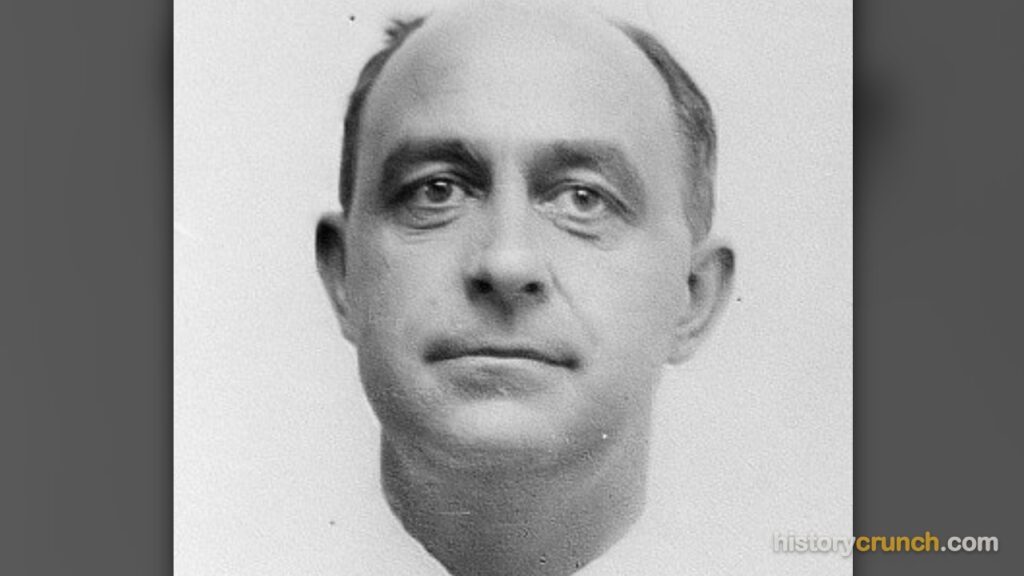
Enrico Fermi was one of the most important scientists of the twentieth century, and his work helped launch the age of nuclear energy and nuclear weapons. He was an Italian-born physicist who created the world’s first controlled nuclear chain reaction, a breakthrough that made both nuclear power and the atomic bomb possible. His experiments with tiny particles called neutrons changed the way scientists understood the atom, and his discoveries earned him the Nobel Prize in Physics in 1938.
In simple terms, Fermi was a physicist, meaning a scientist who studies matter, energy, and the forces that govern the universe. He worked in a field called nuclear physics, which focuses on the nucleus, the dense center of an atom. Fermi was unusual because he was skilled at both theory, the mathematical side of science, and experiment, the hands-on testing of ideas. This rare combination allowed him to make discoveries that most other scientists could only imagine.
Early Life and Background
Enrico Fermi was born on September 29th, 1901, in Rome, Italy. He was the youngest of three children born to Alberto Fermi, an official in the Italian railroad system, and Ida de Gattis, an elementary school teacher who held high expectations for her children. From a young age, Enrico showed an unusual talent for mathematics and science, and he learned to read and write earlier than most children.
A turning point in Fermi’s early life came in 1915, when his older brother Giulio died suddenly during a minor surgery. The loss deeply affected the family. In his grief, the young Fermi threw himself into study, and reading physics and mathematics books became his way of coping. In fact, he taught himself advanced science by working through university-level texts while he was still a teenager.
A colleague of his father, an engineer named Amidei, recognized the boy’s remarkable ability and encouraged his studies. With this guidance, Fermi applied to the Scuola Normale Superiore in Pisa, a special college for gifted students that admitted candidates through difficult examinations. He won a fellowship there in 1918 and went on to earn his doctorate in physics from the University of Pisa in 1922 at the young age of twenty.
Rise as a Physicist
After finishing his doctorate, Fermi traveled to study with some of Europe’s leading scientists. In 1923, he won a scholarship from the Italian government and spent several months in Göttingen, Germany, working with the famous physicist Max Born. The following year, with the help of a Rockefeller Fellowship, he moved to Leiden in the Netherlands to work with Paul Ehrenfest, another respected scientist of the time.
When he returned to Italy, Fermi took a position as a lecturer in mathematical physics and mechanics at the University of Florence, where he taught for two years. During this period, in 1926, he made a major discovery in the mathematics of tiny particles. He worked out a set of statistical rules that describe how certain particles behave, rules now known as Fermi statistics. In his honor, particles that follow these rules are today called fermions.
This achievement quickly made Fermi famous in the world of physics. In 1927, at just twenty-six years old, he was elected Professor of Theoretical Physics at the University of Rome. There he gathered a talented group of young researchers around him, and his skill and confidence earned him a nickname among his students that translated to “the Pope,” a joking sign of how rarely he seemed to be wrong.
Major Achievements
The most important turning point in Fermi’s career came when he shifted his attention from the outer parts of the atom toward the atomic nucleus itself. In 1934, he developed an important theory to explain a type of radioactivity called beta decay, which helped explain how atoms release energy and change form. This work placed him among the leading nuclear physicists in the world.
Fermi then began firing neutrons, which are neutral particles found inside the nucleus, at different elements to see what would happen. More specifically, he discovered that slowing the neutrons down first, often by passing them through a material such as water or paraffin wax, made them far more likely to be captured by an atom’s nucleus. This discovery of slow neutrons was a key step toward unlocking nuclear energy.
For this work, Fermi was awarded the Nobel Prize in Physics in 1938. The prize recognized his creation of new radioactive elements through neutron bombardment and his discovery of nuclear reactions caused by slow neutrons. The award came at a dangerous time for his family, however, because Italy was ruled by the fascist dictator Benito Mussolini, and new laws targeting Jewish people threatened Fermi’s wife, Laura Capon, who was Jewish.
Fermi used the trip to Stockholm, Sweden, to accept the Nobel Prize as a chance to escape. Instead of returning to Italy, he and his family sailed directly to the United States, a country he had visited several times before. This decision allowed him to build a new life in America and to escape the growing threat of fascism in Europe.
In the United States, Fermi joined the effort to understand nuclear fission, the splitting of an atom’s nucleus into smaller pieces, which German scientists had discovered in 1938. As stated above, this discovery raised the frightening possibility that an enemy nation might build a powerful new weapon. These fears led directly to the secretive American program known as the Manhattan Project, which Fermi would soon join.
Fermi’s greatest single achievement came on December 2nd, 1942, at the University of Chicago. Working with a team of scientists, he built an experimental nuclear reactor known as Chicago Pile-1 underneath the stands of a football field called Stagg Field. The reactor was a large stack of graphite blocks and uranium, and when it “went critical,” it produced the world’s first controlled, self-sustaining nuclear chain reaction.
This moment proved that humans could release and control the enormous energy stored inside the atom. In reality, it opened the door to both nuclear power plants and nuclear weapons. Fermi’s success became one of the most important scientific events of World War II and made him a central figure in the Manhattan Project’s larger goal of building an atomic bomb before Nazi Germany could.
In August of 1944, Fermi moved to the secret laboratory at Los Alamos, New Mexico, where he served as an associate director and a key adviser. He also worked at the Hanford site in Washington State, where he helped start up a large reactor used to produce plutonium, a material used in atomic bombs. On July 16th, 1945, Fermi was present at the Trinity Test, the first explosion of an atomic bomb in the desert of New Mexico.
Later Life
After World War II ended, Fermi returned to the University of Chicago in 1946 as a professor at the Institute for Nuclear Studies. He had become an American citizen in 1944 and remained deeply loyal to his adopted country. At Chicago, he returned to his true passions, teaching and pure research, and he explored the behavior of the smallest known particles in nature.
Fermi was also a trusted government adviser during the early Cold War years. Beginning in 1950, he served as one of the first members of the General Advisory Committee of the Atomic Energy Commission, which guided American nuclear policy. When the United States debated building the far more powerful hydrogen bomb, Fermi expressed serious moral concerns and opposed its development, though the weapon was eventually built.
Fermi was known as an inspiring teacher who trained many students who later became famous scientists in their own right. He had a gift for making quick, rough estimates from very little information, a skill so associated with him that such calculations are still called “Fermi problems.” He is also remembered for the Fermi paradox, a famous question asking why, if the universe is so large and likely full of stars and planets, humans have found no clear sign of life beyond Earth.
Sadly, Fermi’s life was cut short. He was diagnosed with stomach cancer and died in Chicago on November 28th, 1954, at the age of fifty-three. Shortly before his death, he received a special award from President Dwight D. Eisenhower and the Atomic Energy Commission for his lifetime of contributions to physics.
Significance of Enrico Fermi
Enrico Fermi is significant because his discoveries opened the door to the atomic age, one of the most important and dangerous developments in modern history. His creation of the first controlled nuclear chain reaction in 1942 proved that the energy inside the atom could be harnessed by human beings. This single achievement laid the foundation for both nuclear weapons and the nuclear power plants that supply electricity to millions of people around the world today.
Fermi’s role in the Manhattan Project also placed him at the center of a debate that continues to this day. The atomic bombs that grew out of the project ended World War II but also caused enormous death and destruction, and they launched the nuclear arms race of the Cold War. In this way, Fermi’s work shows how a single scientific breakthrough can change the entire course of world history.
Beyond weapons, Fermi’s contributions to pure science remain enormous. His discoveries in nuclear physics, his statistical rules for particles, and his teaching influenced generations of scientists. In his honor, a chemical element, fermium, and a national laboratory, Fermilab, both carry his name, a lasting reminder of one of history’s most gifted and influential physicists.
Frequently Asked Questions
What is Enrico Fermi most famous for?
Enrico Fermi is most famous for building the world’s first nuclear reactor and creating the first controlled nuclear chain reaction in 1942. This experiment, carried out at the University of Chicago, proved that atomic energy could be released and controlled. It became a crucial step in the development of both nuclear power and the atomic bomb.
Why did Enrico Fermi win the Nobel Prize?
Fermi won the 1938 Nobel Prize in Physics for his work with neutrons and radioactivity. He was recognized for creating new radioactive elements by bombarding atoms with neutrons and for discovering that slow neutrons cause powerful nuclear reactions. His neutron research was some of the most advanced of its time and directly shaped later nuclear science.
Why did Enrico Fermi leave Italy?
Fermi left Italy in 1938 to escape the fascist government of Benito Mussolini and its new anti-Jewish laws. His wife, Laura, was Jewish, and the family feared for their safety. Fermi used his trip to Sweden to accept the Nobel Prize as an opportunity to flee, sailing directly to the United States afterward.
What is a Fermi problem?
A Fermi problem is a type of question that asks a person to make a smart estimate using very little information. The idea is named after Fermi because he was famous for quickly calculating rough but reasonable answers to difficult questions. Teachers still use Fermi problems today to help students practice logical thinking and estimation.
How did Enrico Fermi die?
Enrico Fermi died of stomach cancer on November 28th, 1954, in Chicago, at the age of fifty-three. His death came only a few years after the end of World War II, while he was still teaching and doing research at the University of Chicago. Shortly before he died, he received a major award for his lifetime of scientific achievements.
Cite This Article
To cite this article as a source, use one of the formats below.
MLA: Millar, B. “Enrico Fermi: A Detailed Biography.” HistoryCrunch, 14 August 2026, https://historycrunch.com/enrico-fermi/.
APA: Millar, B. (2026). Enrico Fermi: A Detailed Biography. HistoryCrunch. https://historycrunch.com/enrico-fermi/
Chicago: Millar, B. “Enrico Fermi: A Detailed Biography.” HistoryCrunch. August 14, 2026. https://historycrunch.com/enrico-fermi/
Sources
- J.M. Roberts & Odd Arne Westad, The Penguin History of the World.
- Jerry Bentley & Herbert Ziegler, Traditions & Encounters: A Global Perspective on the Past.