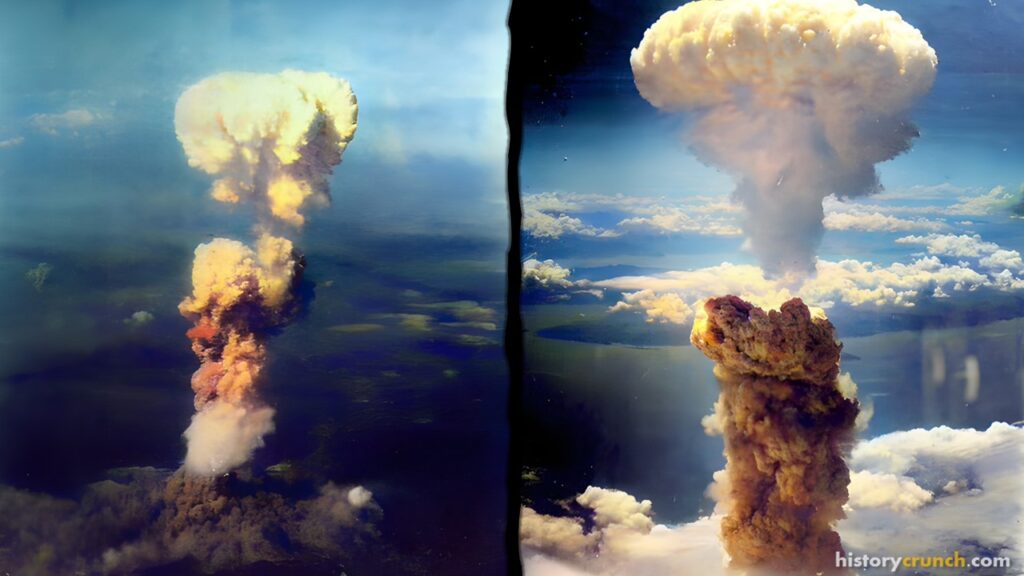
The atomic bombing of Japan by the United States in 1945 is one of the most controversial events in all of world history and many have argued both in favor of using the weapon and against using it in order to end World War II. Regardless, the atomic bombing is a significant event for its role in ending World War II and for the impact it would have on all future warfare. In fact, World War II ended in Europe by May of 1945 with the defeat of Nazi Germany by the Allied Powers, but the war did not officially end in the Pacific Theater until the atomic bombing of Japan in August of 1945. The United States had developed its atomic weaponry through its secretive program called the Manhattan Project.
 FactsthatCrunch
Who were the key scientists of the Manhattan Project, and what role did each play?
Atomic Bombing of Japan – Hiroshima
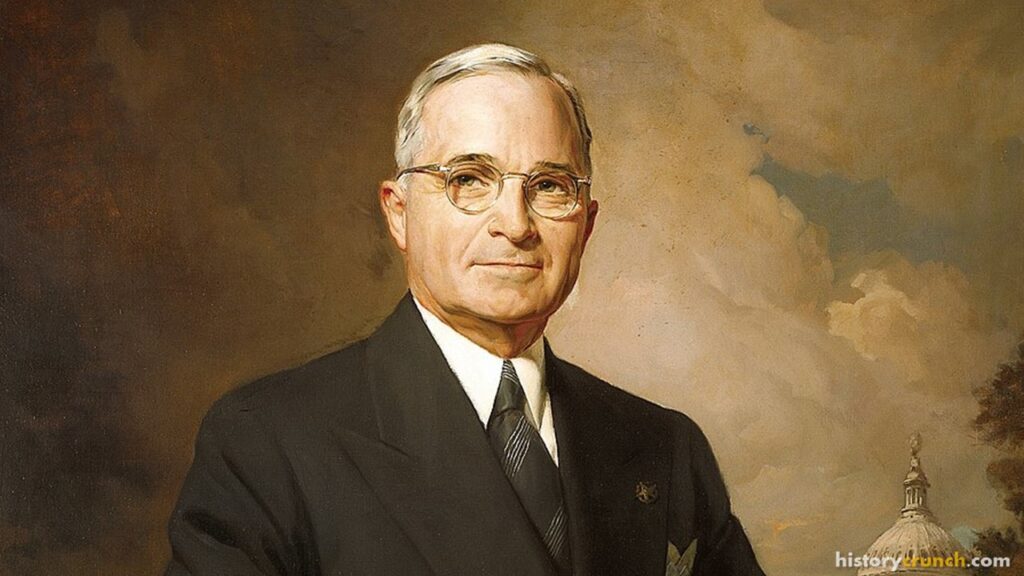
The first atomic bomb dropped on Japan was codenamedGiven a secret name to hide the true identity or purpose of a military operation or weapon. Little Boy and was detonatedExploded, especially in a controlled or deliberate way as part of a military strike. over the city of Hiroshima on August 6th, 1945. Hiroshima is a city on the largest island of Japan and had a population of about 350,000 at the time of the atomic bombing. The atomic bomb was carried to its target by an American B-29 bomber called the Enola Gay after United States President, Harry S. Truman, approved its use against Japan. The bomber was named after the mother of the pilot who flew the B-29 in the mission, Colonel Paul Tibbets. The Enola Gay had taken off from the Mariana Islands in the Pacific Ocean and flew for approximately 6 hours before it was over the city of Hiroshima at approximately 8:15am on the morning of August 6th, 1945. The bomber moved across the skyline of Hiroshima and centered on its target in the center of the city. It then dropped the Little Boy bomb which fell until it was just over 1900 feet [580 m] above the city. The Little Boy bomb was detonated over the city to maximize its effect and to prevent the shockwaveA powerful wave of compressed air that spreads outward from an explosion and destroys structures in its path. of the bomb from losing its impact as it collided with the earth. The Enola Gay had 43 seconds from the time of dropping the bomb to its detonation in order to escape the area and be outside of the area of the explosion.
When it detonated, the bomb instantly gave off an intense and bright flash of light. The light given off by an atomic bomb is such that it causes materials to light on fire instantaneously if it is within the range of the bomb. In the case of the Little Boy bomb, it caused the total destruction of Hiroshima within a 1 mile [1.6 km] radiusThe distance from the center of a blast outward, used to describe the area of destruction.. After the flash of intense light, the city was destroyed by a powerful shock wave that destroyed almost all structures inside of the 1 mile [1.6 km] radius of the blast. In fact, most of the structures in Hiroshima were made out of wood and paper and therefore did not withstand the intense fires and shockwave caused by the blast. Historians estimate that between 70,000 to 80,000 people were killed instantly by the bomb while another 70,000 died in the days and weeks that followed due to their burns and high levels of radiationInvisible energy released by an atomic explosion that causes severe illness or death in people exposed to it.. Those that were outside of the blast radius suffered terrible burns to any skin that had been exposed to the bright flash of the bomb. As well, they suffered any other injuries from the shockwave throwing debris within the city. The bombing of Hiroshima was the greatest loss of life ever caused by a single weapon.
Immediately after the bombing, the United States called for the full and unconditional surrenderGiving up completely in a war without negotiating any terms or conditions with the enemy. of Japan. However, the Japanese leadership delayed and did not respond to the American demands for surrender and on August 9th, the United States carried out another atomic bombing against Japan in the city of Nagasaki.
 FactsthatCrunch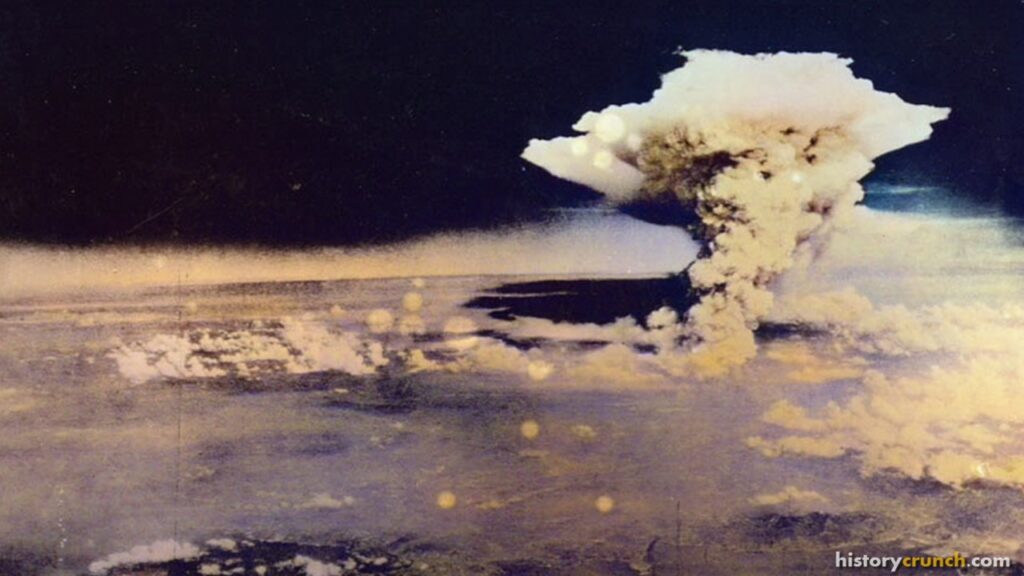
Atomic Bombing of Japan – Nagasaki
The city of Nagasaki was located in the south west of Japan and had approximately 240,000 people. The atomic bomb used against Nagasaki was called the Fat Man and was delivered to the city on August 9th by the American B-29 bomber Bockscar. Originally, the Japanese city of Kokura was the primary target for the bombing of August 9th, but Bockscar was unable to complete the bombing and instead went to its secondary target of Nagasaki. When Bockscar arrived at the city of Kokura, it found thick clouds and smoke that made it difficult for the bomber crew to find the target for the actual bombing. After three separate flights across the skyline of Kokura on the morning of August 9th, and unable to find their target, the bombing of Kokura was abandoned in favor of the secondary target of Nagasaki. Bockscar arrived over Nagasaki by the late morning and the Fat Man bomb was dropped at 11:02am. Although the Fat Man bomb was more powerful than the Little Boy bomb used against Hiroshima, it caused fewer deaths because the hills around Nagasaki absorbed much of the blast. In total, approximately 40,000 died instantly in Nagasaki, and the toll rose to around 70,000 by the end of the year. The city was devastated by the shockwave of the original blast and the resulting fires.
Japan’s surrender was announced on August 15th, and World War II in the Pacific was over. The formal surrender of Japan would occur on September 2nd, 1945 aboard the United States battleship USS Missouri. There, Japanese officials signed the official Instrument of SurrenderThe official document that Japanese officials signed on September 2nd, 1945, formally ending World War II..
FactsthatCrunchThe two atomic bombs dropped on Japan in August 1945 differed in design, target, and impact.
Explore World War II · 1939 – 1945
Keep exploring World War II with these History Crunch resources.
Key Vocabulary
Manhattan Project
Codenamed
Detonated
Shockwave
Radius
Radiation
Unconditional surrender
Instrument of Surrender
Frequently Asked Questions
When did the United States drop atomic bombs on Japan?
The United States dropped the first atomic bomb on Hiroshima on August 6th, 1945. A second bomb fell on Nagasaki three days later, on August 9th, 1945. These attacks came after the war in Europe had already ended in May of 1945.
What were the two atomic bombs called?
The bomb dropped on Hiroshima was codenamed Little Boy, and the one dropped on Nagasaki was called Fat Man. Little Boy was carried by a B-29 bomber named the Enola Gay. Fat Man was delivered by a different B-29 bomber called Bockscar.
How many people died in the atomic bombings?
In Hiroshima, between 70,000 and 80,000 people were killed instantly, and about 70,000 more died soon after. In Nagasaki, roughly 40,000 died at once, and the toll rose to around 70,000 by the end of the year. Many later deaths came from severe burns and radiation.
Why was Nagasaki bombed instead of Kokura?
Kokura was the first target for the bombing of August 9th, but thick clouds and smoke hid the target. After three passes, the crew of Bockscar could not find their aiming point. They then turned to the secondary target, which was the city of Nagasaki.
When did Japan surrender to end World War II?
Japan announced its surrender on August 15th, 1945, which ended the war in the Pacific. The formal surrender took place on September 2nd, 1945, aboard the United States battleship USS Missouri. Japanese officials signed the Instrument of Surrender there.
What was the Manhattan Project?
The Manhattan Project was the secret American program that developed the atomic bomb. It produced the weapons later used against Hiroshima and Nagasaki. President Harry S. Truman gave the approval to use these bombs against Japan.
Cite This Article
To cite this article as a source, use one of the formats below.
MLA: Beck, Elias. “Atomic Bombing of Japan: A Detailed Summary.” HistoryCrunch, 4 October 2026, https://historycrunch.com/atomic-bombing-of-japan/.
APA: Beck, E. (2026). Atomic Bombing of Japan: A Detailed Summary. HistoryCrunch. https://historycrunch.com/atomic-bombing-of-japan/
Chicago: Beck, Elias. “Atomic Bombing of Japan: A Detailed Summary.” HistoryCrunch. October 4, 2026. https://historycrunch.com/atomic-bombing-of-japan/
Sources
- Antony Beevor, The Second World War.
- Max Hastings, Inferno / All Hell Let Loose.
- Imperial War Museum
- Gerhard L. Weinberg, A World at Arms.