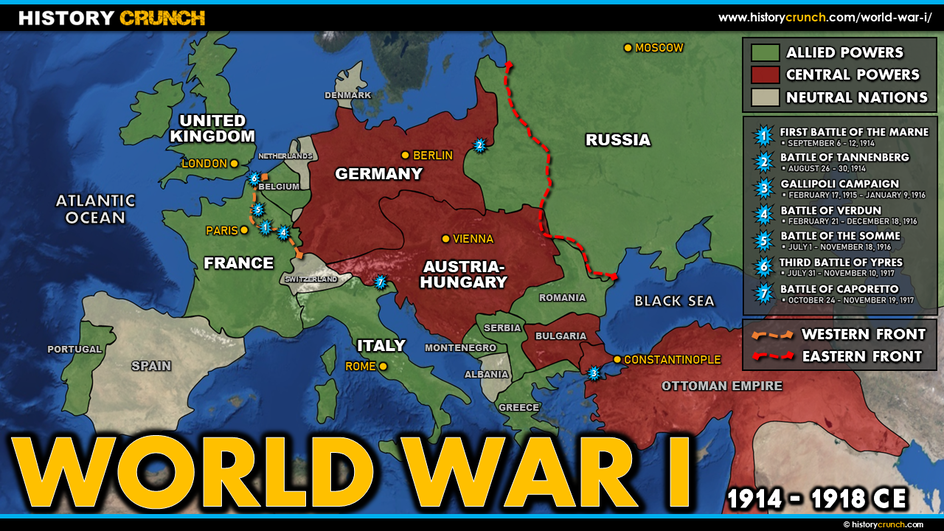
The Meuse–Argonne OffensiveA large-scale military attack launched to push back or defeat an enemy. in World War I was a major conflict on the Western Front in the final stages of World War I. The Western FrontThe line of fighting that stretched through Belgium and northern France during World War I, where most major battles took place. was the line of fighting that occurred along the trenches that stretched through Belgium and northern France.
 FactsthatCrunch
The American Expeditionary Force was the unified body of United States military troops sent to fight in Europe during World War I. It was organized and deployed after the United States entered the war in 1917. The AEF served on the Western Front alongside French and British forces against Germany.
The American Expeditionary Force carried out its main action during the Meuse-Argonne Offensive of 1918, fighting alongside French troops in northeastern France.
When and Where Did the Meuse-Argonne Offensive Occur?
The Meuse-Argonne Offensive took place from September 26th to November 11th in 1918 and was carried out in northeastern France near Verdun, which was the site of the earlier Battle of Verdun. The Meuse–Argonne Offensive was a major assault carried out by the Allied Nations (United States and France) against Germany, and is considered to be part of the larger ‘Hundred Days Offensive’. This was the major Allied advance against the Germans, which led to the end of the war.
More specifically, historians consider the Meuse–Argonne Offensive to be the most significant American battle from World War I. This is due to the Meuse–Argonne Offensive being the largest and deadliest American battle in World War I. As well, it was the main action carried out by the American Expeditionary Force (AEF) during the war.
 FactsthatCrunch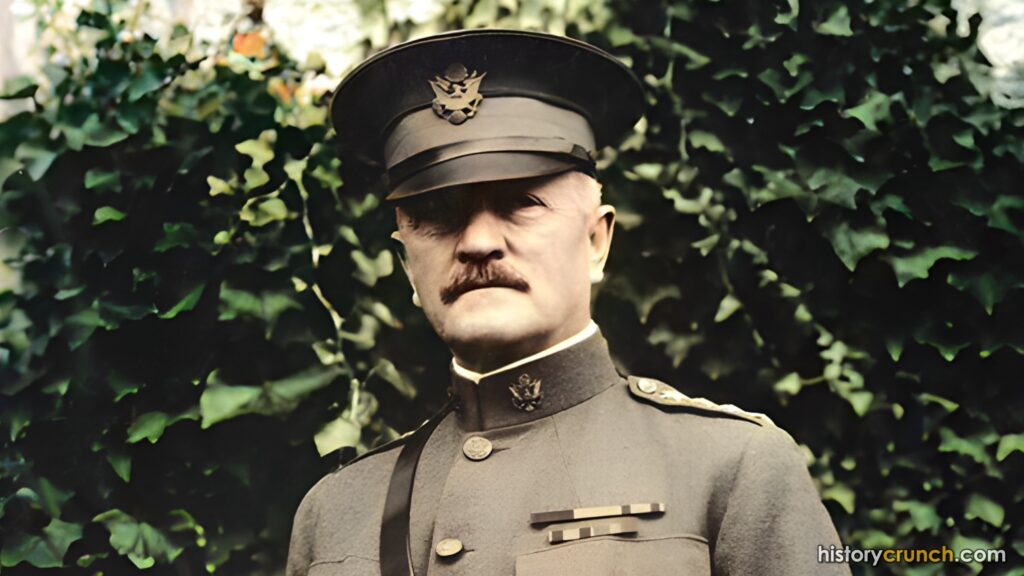
What Happened During the Meuse-Argonne Offensive in World War I?
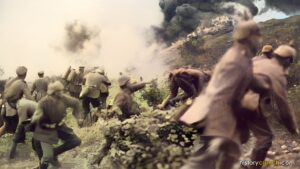
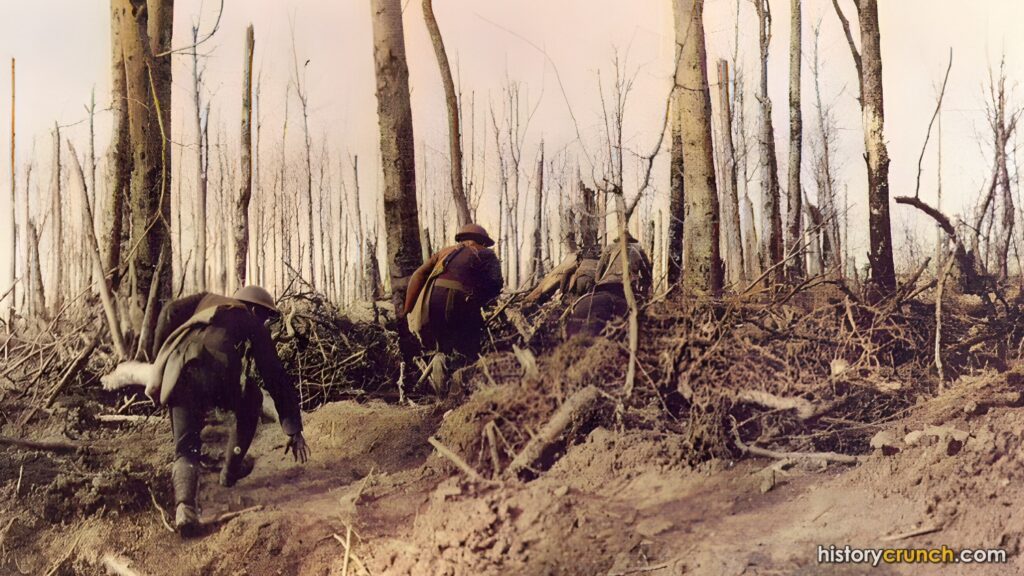
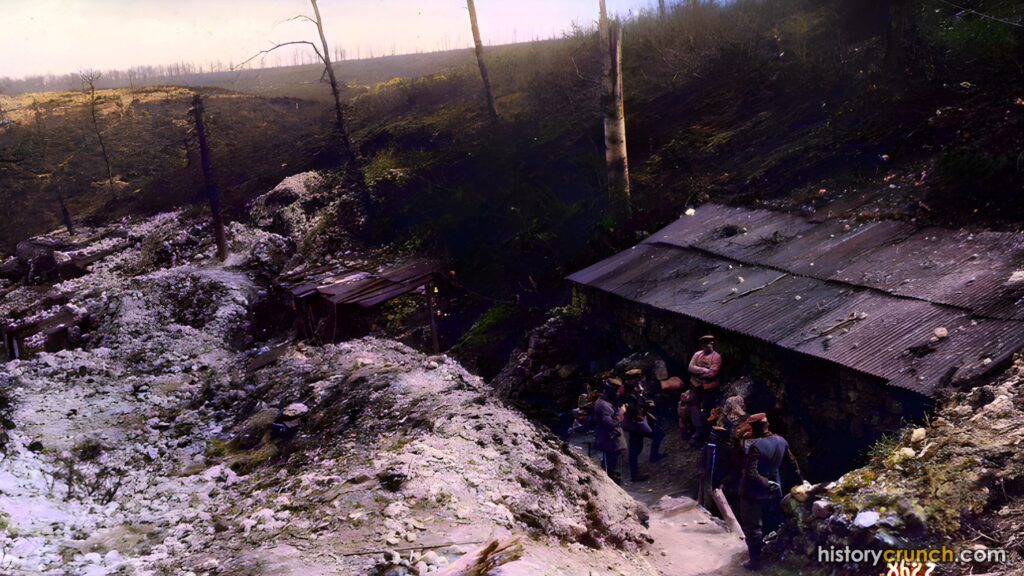
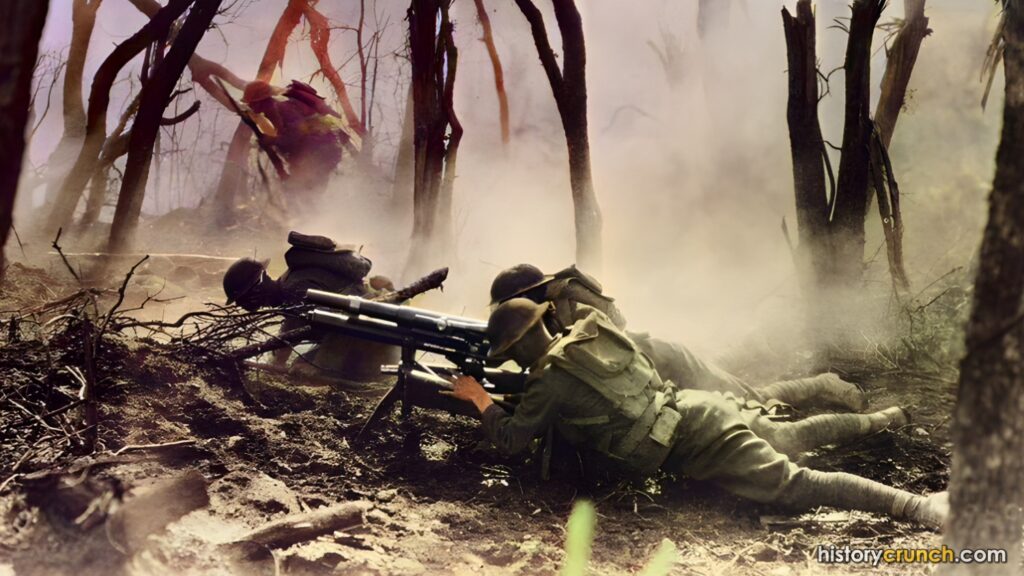
The Meuse–Argonne Offensive unfolded in a series of three phases. The first phase of the battle occurred from September 26th until October 4th, 1918. This first phase was a failure for the American forces, as they failed to capture their objectives and suffered heavy losses. While the Americans experienced some successes, the overall result was a disorganized failure. In reality, the fighting in the Argonne Forest was difficult and arduousExtremely difficult and demanding, requiring great effort to get through. for all sides. Historians consider the terrible losses suffered by the United States to be the result of poorly trained American soldiers that were new to the fighting of World War I.
Regardless, the second phase of the Meuse–Argonne Offensive took place from October 4th to the 24th in 1918. The second phase of the offensive resulted in a better outcome for the United States. For example, during this phase, the American forces attacked the German defenders in the Argonne Forest in a series of waves. Eventually, the American divisions were able to push the Germans back and finally on October 24th, the United States had gained full control over the region. The third, and final phase, took place from October 28th until the end of the war on November 11th in 1918. During this phase, the American forces, along with French forces advanced deep into German-held territory. The advance only ended with news of the armisticeAn agreement between enemies to stop fighting, ending World War I on November 11, 1918. of November 11th and the end of World War I.
Can you put these key phases and turning points of the Meuse-Argonne Offensive in World War I in the order they happened?
What Was the Outcome of the Meuse-Argonne Offensive?
In all, the United States suffered over 122,000 casualtiesSoldiers killed, wounded, or missing as a result of battle. during the Meuse–Argonne Offensive, including over 26,000 deaths. It is often called the deadliest battle in United States military history, with far more American soldiers killed than on D-Day during the Normandy Invasion of World War II. On the other hand, historians estimate that Germany endured over 122,000 casualties in the Meuse–Argonne Offensive, including 28,000 deaths.
 FactsthatCrunch
The Meuse-Argonne Offensive of 1918 left behind casualty numbers that still define it as the largest and deadliest American battle of World War I.
World War I timeline · 1914 – 1918
Key Vocabulary
Western Front
Offensive
Hundred Days Offensive
Arduous
Armistice
Casualties
Frequently Asked Questions
When did the Meuse-Argonne Offensive take place?
The Meuse-Argonne Offensive lasted from September 26th to November 11th, 1918. It was fought in northeastern France near Verdun, the site of an earlier battle. The fighting ended on the same day as the armistice that closed World War I.
Who fought in the Meuse-Argonne Offensive?
The Meuse-Argonne Offensive was fought by the Allied nations, mainly the United States and France, against Germany. It was the main action of the American Expeditionary Force during the war. The offensive was part of the larger Hundred Days Offensive that ended the fighting.
What were the three phases of the Meuse-Argonne Offensive?
The offensive unfolded in three phases between September and November of 1918. The first phase, from September 26th to October 4th, was a costly failure for American forces. The second phase pushed the Germans back, and the third phase advanced deep into German-held territory until the armistice.
Why did American forces suffer so heavily in the first phase?
American forces suffered heavy losses because many soldiers were poorly trained and new to combat. The rough terrain of the Argonne Forest also made the fighting slow and difficult. As a result, the first phase became a disorganized failure for the United States.
How many casualties resulted from the Meuse-Argonne Offensive?
The United States suffered over 122,000 casualties, including more than 26,000 deaths. This made it the deadliest American battle of World War I. Germany also endured over 122,000 casualties, with about 28,000 deaths.
Why is the Meuse-Argonne Offensive important?
The Meuse-Argonne Offensive is seen as the most important American battle of World War I. It was the largest and deadliest campaign fought by American troops during the war. The victory helped force Germany toward the armistice that ended the fighting.
Cite This Article
To cite this article as a source, use one of the formats below.
MLA: Beck, Elias. “Meuse–Argonne Offensive in World War I: A Detailed Summary.” HistoryCrunch, 29 September 2026, https://historycrunch.com/meuse-argonne-offensive-in-world-war-i/.
APA: Beck, E. (2026). Meuse–Argonne Offensive in World War I: A Detailed Summary. HistoryCrunch. https://historycrunch.com/meuse-argonne-offensive-in-world-war-i/
Chicago: Beck, Elias. “Meuse–Argonne Offensive in World War I: A Detailed Summary.” HistoryCrunch. September 29, 2026. https://historycrunch.com/meuse-argonne-offensive-in-world-war-i/
Sources
- Hew Strachan, The First World War.
- Margaret MacMillan, The War That Ended Peace.
- Imperial War Museum
- Fordham Modern History Sourcebook