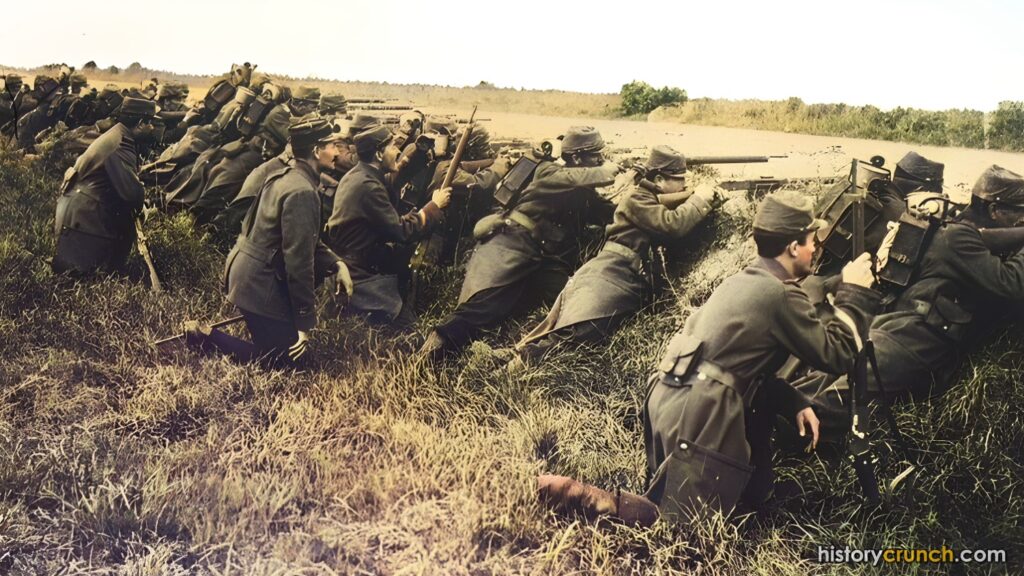
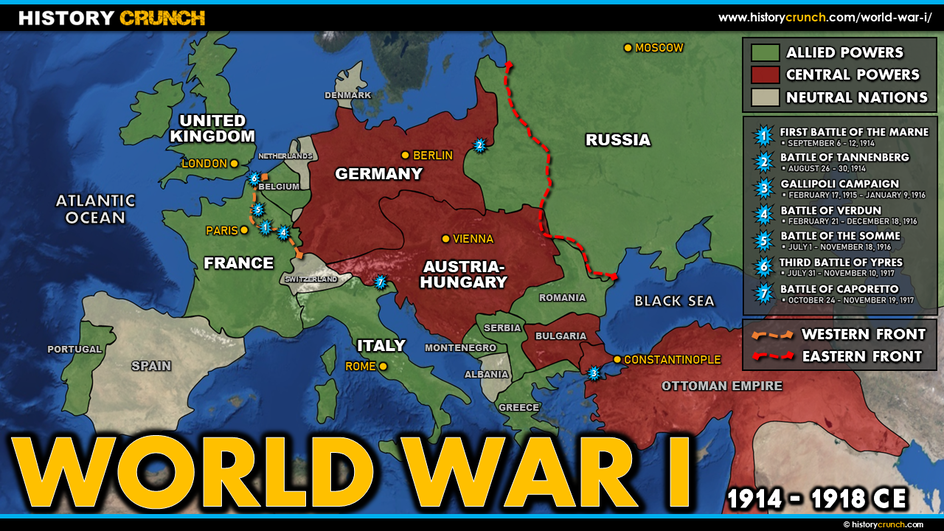
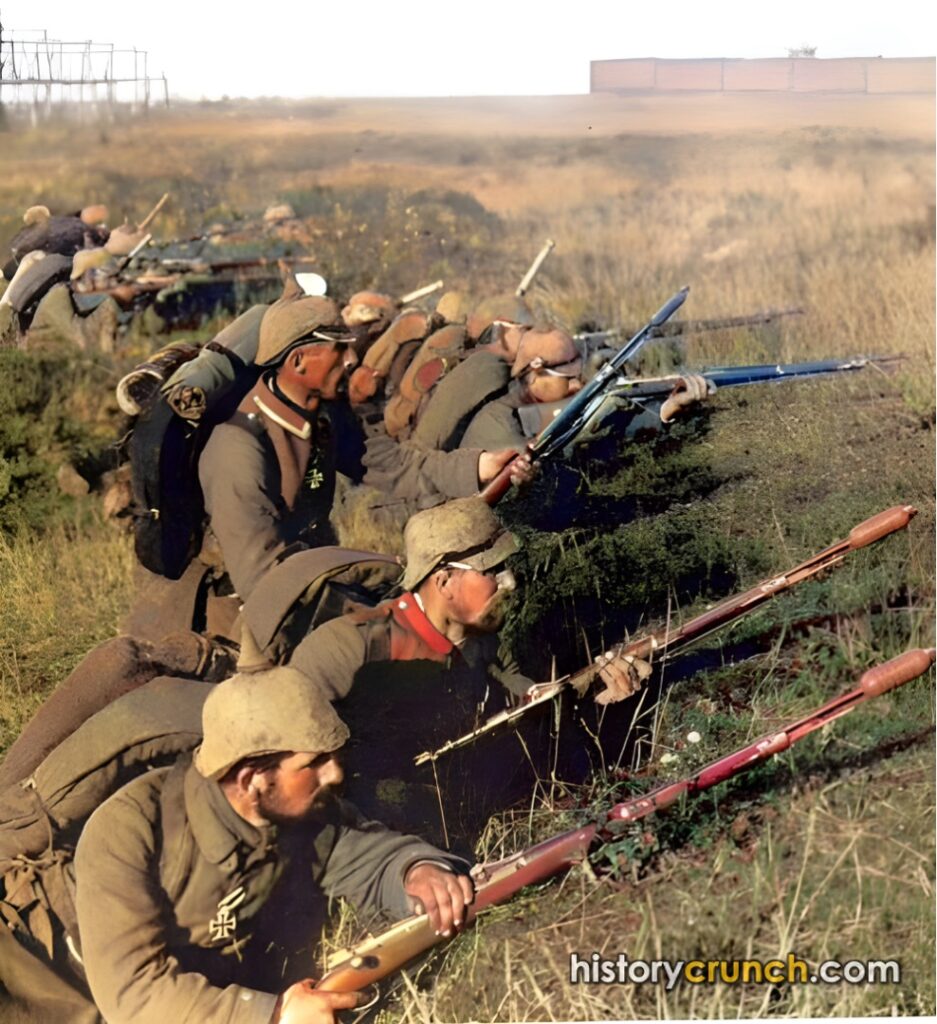
The First Battle of the Marne occurred from September 6th to 12th, 1914 and was one of the first major conflicts of World War I. In particular, the First Battle of the Marne was important to the early fighting on the Western Front, which was the line of fighting that ran across northeastern France and parts of Belgium. The First Battle of the Marne took place near the Marne River, just east of the French capital of Paris. It was the result of a German advance into French territory following the Battle of the Frontiers.
 FactsthatCrunch
What were the key turning points on the Western Front in World War I?
What Led to the First Battle of the Marne in World War I?
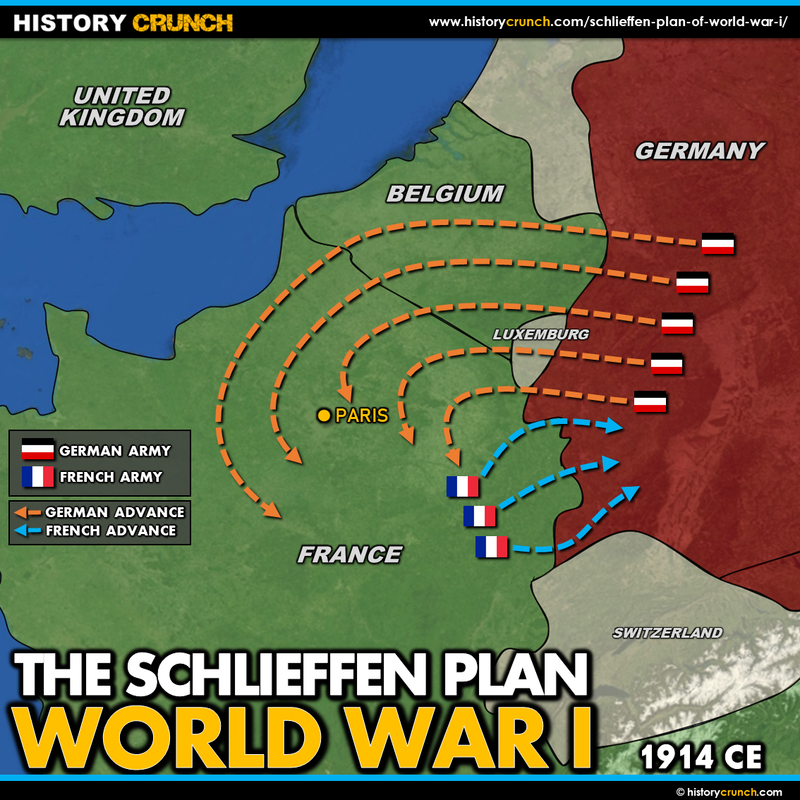
At the outbreak of World War I in the summer of 1914, France and Germany launched competing plans of attack. For instance, Germany launched the Schlieffen Plan, while France launched Plan XVIIFrance’s pre-war battle plan focused on mobilizing forces quickly to defend strongholds while invading German territory.. The French battle plan (Plan XVII) was created in the two years before the start of World War I, in the event that a war between France and Germany might occur. In general, the plan focused on mobilizing French forces as quickly as possible to defend specific strongholds, while simultaneously invading German territory. The plan was enacted on August 7th in 1914 by French General Joseph Joffre and directly led to the events of the Battle of the Frontiers. Unfortunately, for France the plan of attack and the Battle of the Frontiers was a failure and allowed Germany to advance further towards Paris. As part of the Schlieffen PlanGermany’s strategy to capture Paris as quickly as possible in order to force France to surrender., Germany’s strategy was to capture Paris as quickly as possible in order to force France to surrender. As such, capturing Paris was a key goal for Germany, while protecting it was important for France.
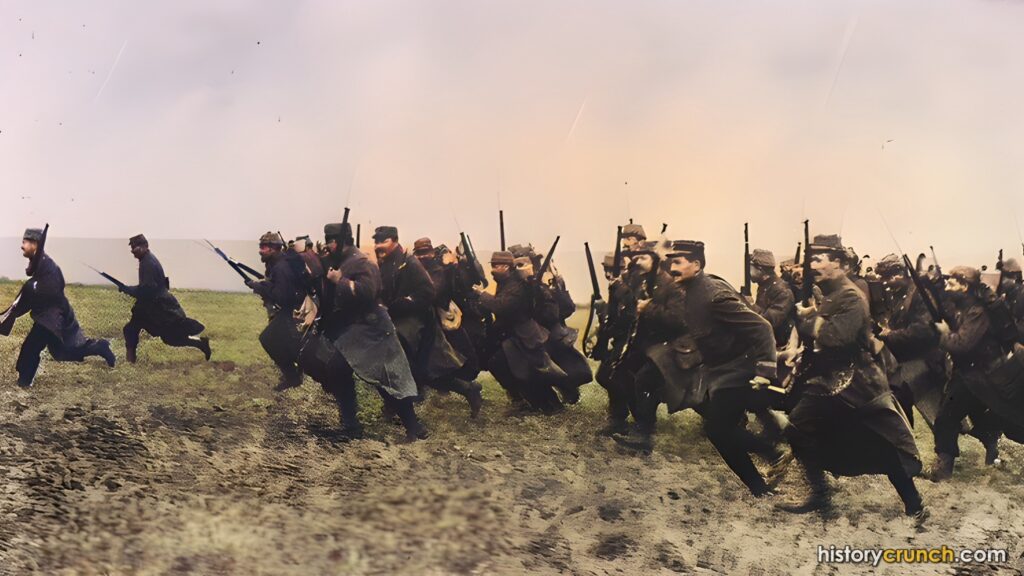
Following the failure during the Battle of the Frontiers, France regrouped its forces and organized them in order to stop the German advance. More specifically, the French carried out the ‘Great RetreatThe pullback of French forces after the Battle of the Mons to protect Paris from the German advance.’ following the Battle of Mons, which was the final conflict of the Battle of the Frontiers. The French forces fell back in order to protect Paris. They were joined by reservist troops as a means of reinforcing the French defenses. In fact, the First Battle of the Marne saw six French Armies joined by the British Expeditionary Force (BEF) launch a counterattackAn offensive move launched against an enemy who has already been attacking you. against the German armies at the Marne River, just 30 miles (48 km) from Paris.
 FactsthatCrunch
What Happened During the First Battle of the Marne in World War I?
Famously, about 6,000 French troops were transported to the front-line of the Marne by approximately 600 Paris taxicabs. While the impact of the taxicabs has been debated in history, it no doubt lifted the morale of the country in a time of war. During the battle, French commander-in-chief, Joseph Joffre, cunningly shifted the Allied forces from differing flanksThe sides of a military formation, which commanders shift troops toward to gain a tactical advantage. in order to overwhelm the German divisions. For example, during the battle, the French had 64 divisions and the British had 6 divisions, while the Germans had only 51 divisions.
This gave the French and British a clear advantage in the battle and proved to be too much for the German forces to overcome. In fact, the First Battle of the Marne was a victory for the French and British forces and led to the end of the German plan of attack – Schlieffen Plan. For instance, the German Army was forced into a full retreat from September 9th until the 13th and supposedly caused the German General Helmuth von Moltke to report to Kaiser Wilhelm II: “Your Majesty, we have lost the war.” This failure of the Schlieffen Plan makes the First Battle of the Marne one of the most significant battles of World War I.
What Was the Outcome of the First Battle of the Marne in World War I?
In the end, the First Battle of the Marne stopped the German advance into Paris and led to the events of the ‘Race to the Sea’ and years of trench warfare. For instance, after the First Battle of the Marne the Allied nations and the German Army both pushed north in an attempt to outflankTo move troops around the side of an enemy force to gain a positional advantage over them. each other. This became known as the ‘Race to the Sea’, and ultimately established the line of trenches that became characteristic of the Western FrontThe main line of fighting that ran along the eastern half of France and parts of Belgium during World War I..
Not only is the First Battle of the Marne a significant battle of World War I due to its outcome, but it is also remembered for the terrible losses that each side suffered. For instance, it is estimated that the French and the Germans each experienced 250,000 casualties at the First Battle of the Marne. France also suffered over 80,000 deaths in the battle, while Germany suffered over 67,000. As stated above, the British Expeditionary Force (BEF) also participated in the battle, and historians estimate that they experienced 13,000 casualties and 1,700 deaths.
 FactsthatCrunch
Why is the First Battle of the Marne in September 1914 considered a turning point in World War I?
World War I timeline · 1914 – 1918
Key Vocabulary
Western Front
Schlieffen Plan
Plan XVII
Great Retreat
Counterattack
Flanks
Outflank
Frequently Asked Questions
When did the First Battle of the Marne take place?
The First Battle of the Marne was fought from September 6th to September 12th, 1914. It was one of the earliest major clashes of World War I on the Western Front. The fighting happened near the Marne River, about 30 miles (48 km) east of Paris.
Who won the First Battle of the Marne?
French and British forces won the First Battle of the Marne. Their counterattack forced the German army into a full retreat. The victory stopped the German push toward Paris and ended the Schlieffen Plan.
Why were Paris taxicabs used in the battle?
About 600 Paris taxicabs carried roughly 6,000 French troops to the front line at the Marne. This helped move soldiers quickly to reinforce the defense of Paris. Historians still debate the real military impact, but it clearly lifted the country’s morale.
How did the First Battle of the Marne affect the rest of World War I?
The battle led to the “Race to the Sea” and years of trench warfare on the Western Front. After the German retreat, both sides pushed north to outflank each other. This created the long line of trenches that defined the Western Front.
How many casualties occurred at the First Battle of the Marne?
The French and the Germans each suffered around 250,000 casualties in the battle. France lost more than 80,000 soldiers, while Germany lost over 67,000. The British Expeditionary Force had about 13,000 casualties and 1,700 deaths.
Cite This Article
To cite this article as a source, use one of the formats below.
MLA: Beck, Elias. “First Battle of the Marne in World War I: A Detailed Summary.” HistoryCrunch, 29 September 2026, https://historycrunch.com/first-battle-of-the-marne-in-world-war-i/.
APA: Beck, E. (2026). First Battle of the Marne in World War I: A Detailed Summary. HistoryCrunch. https://historycrunch.com/first-battle-of-the-marne-in-world-war-i/
Chicago: Beck, Elias. “First Battle of the Marne in World War I: A Detailed Summary.” HistoryCrunch. September 29, 2026. https://historycrunch.com/first-battle-of-the-marne-in-world-war-i/
Sources
- John Keegan, The First World War.
- Imperial War Museum
- Margaret MacMillan, The War That Ended Peace.