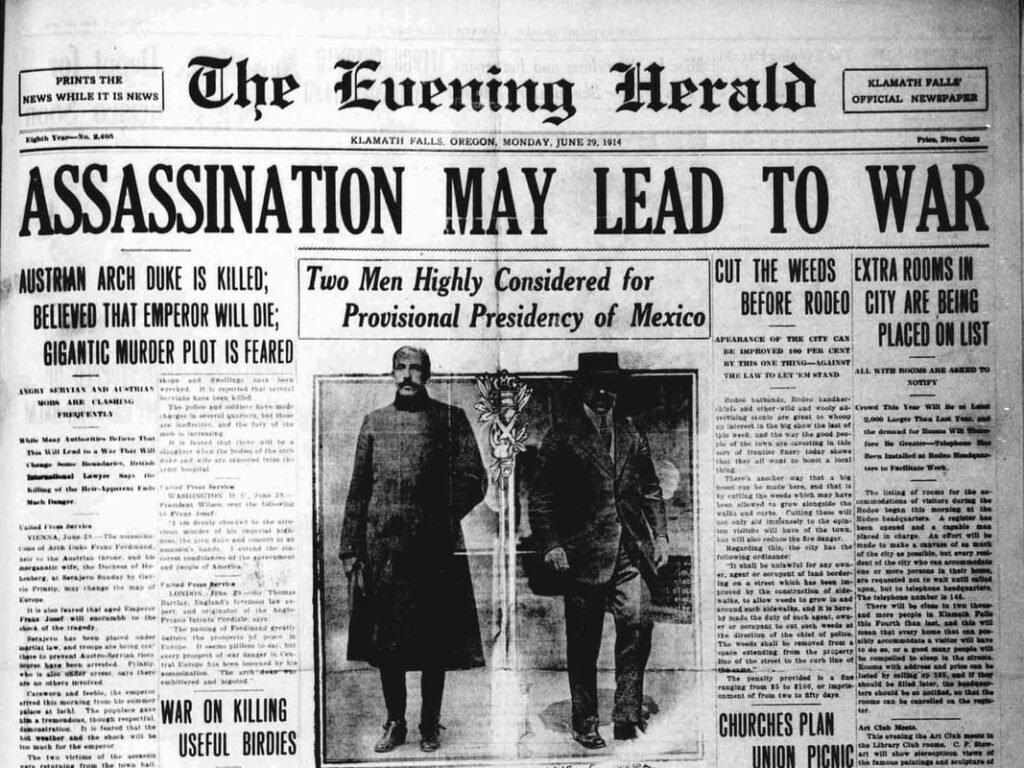
The July Crisis of 1914 was an important event in the buildup to World War I. In fact, the July Crisis occurred immediately following the assassination of Austrian Archduke Franz Ferdinand, which took place on June 28th, 1914. In short, the July Crisis involved a dramatic increase in the tensions between the major powers of Europe following the assassinationThe planned murder of a politically important person. of Franz Ferdinand. More specifically, the July Crisis of 1914 saw the major alliance systems of Europe divide up the continent and set the stage for World War I. As such, the July Crisis dealt with how the assassination of one man led to a bloody and devastating conflict.
 FactsthatCrunch
Emperor Francis Joseph may, however, rest assured that His Majesty will faithfully stand by Austria-Hungary, as is required by the obligations of his alliance and of his ancient friendship.
These words answered Emperor Francis Joseph's letter asking Germany to back Austria-Hungary against Serbia after the assassination of Archduke Franz Ferdinand. The open promise of support, later called the Blank Check, encouraged Vienna to send Serbia a harsh ultimatum that pushed Europe toward war.
What Caused the July Crisis of 1914?
As stated above, the event that ultimately caused the July Crisis of 1914 was the assassination of Franz Ferdinand. Franz Ferdinand was the Archduke of Austria-Hungary and next in line to rule over the empire. Ferdinand and his wife Sophie were assassinated on June 28th, 1914 in Sarajevo, the capital of the Austro-Hungarian province of Bosnia and Herzegovina while there on a visit to inspect the military forces. The assassin was Gavrilo Princip. Just nineteen years old at the time, Princip had been armed and trained by the Black Hand, which was a Serbian nationalist organization that existed in the early part of the 20th century. The Black Hand was founded in May of 1911 by officers of the Royal Serbian Army, and was also known as Unification or Death. It was a secret society that worked to promote Serbian nationalism. They were opposed to Austro-Hungarian influence in the Balkans, which was the name for the southeastern region of Europe.
Following the assassination, Austrian authorities determined that the murder was carried out by Serbian nationalists and placed the blame for the killing on Serbia. In fact, rumors swirled at the time about the role of the Serbian government in the assassination. Since many of the prominent members of the Black Hand came from the Royal Serbian Army, the Austrian government wanted to investigate within Serbia to determine the role of the Serbian leadership. This situation between Austria-Hungary and Serbia is what essentially resulted in the July Crisis of 1914.
 FactsthatCrunch
Major Events of the July Crisis of 1914
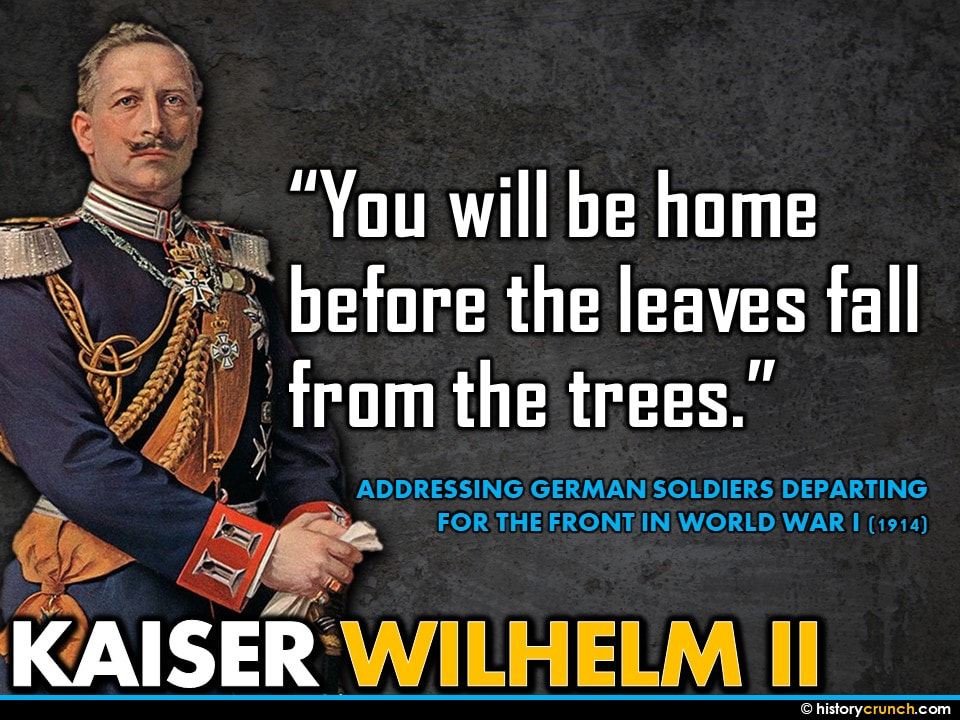
The July Crisis of 1914 unfolded as a series of events following the assassination of Franz Ferdinand. For instance, in the days immediately after the June 28th assassination, several prominent ministers in the Austrian government called for war to be declared against Serbia. However, Austria-Hungary did not want to attack unless it had the support of its ally Germany. As such, the Austrian Emperor, Franz Joseph, sent a letter to the German Emperor, Wilhelm II, seeking his assistance against Serbia. Wilhelm II responded immediately and pledged Germany’s full support. He even noted that Germany would support Austria-Hungary in the event that the conflict with Serbia escalated to a war with other European powers. This has been referred to as a ‘blank check’ by Germany, in that Germany was offering Austria-Hungary unlimited support. All these communications between Austria-Hungary and Germany took place in the first week of July.
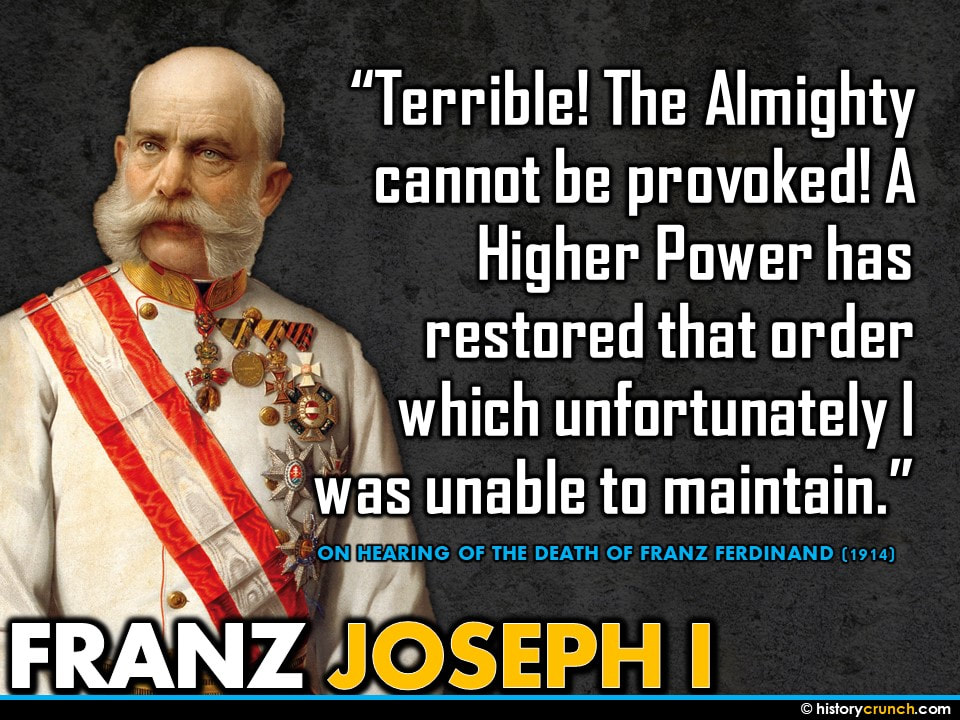
From Germany’s perspective, supporting Austria-Hungary in its war against Serbia was a necessity. At the time, Austria-Hungary was Germany’s only major ally and Wilhelm II was concerned about both nations losing influence and power in Europe as a result of not responding to the assassination. Furthermore, Germany believed that Russia (Serbia’s biggest ally) would not want to wage war to help defend Serbia. This was due to Germany thinking that Russia was not well prepared for war and could not mount a reasonable defense in time. As such, Germany believed that a war with Serbia could be easily won and would provide Germany with increased influence in the Balkans.
The tensions of the July Crisis heightened over the next two weeks as Austria-Hungary began preparing an ultimatum for Serbia. An ultimatumA final set of demands where failure to comply leads directly to conflict or punishment. is a demand, that if not met would cause a conflict. As a result, Austria-Hungary was preparing to give Serbia a list of demands, and if not met, then Austria-Hungary would carry out a war against Serbia. Austria-Hungary’s hope was that in providing Serbia with an ultimatum, it would give more reason for Austria-Hungary to go to war. Although Austria-Hungary had the support of Germany, it was still worried about other European powers, and wanted to give the image that it was providing Serbia with an alternative to war. On the other hand, Austrian officials knew that Serbia would never meet the demands, and war would be the likely result.
Austria-Hungary finally delivered its ultimatum to Serbia on July 23rd, 1914 and demanded an immediate response from the Serbian leadership. The main terms of the ultimatum included:
- Prevent information from being spread that speaks of Austria-Hungary or its Emperor in a negative way.
- Remove all Serbian nationalist organizations.
- Allow Austro-Hungarian representatives to enter Serbia and investigate the assassination of Franz Ferdinand.
- Remove and arrest individuals in the Serbian government that Austria-Hungary considers responsible for anti-Austria actions.
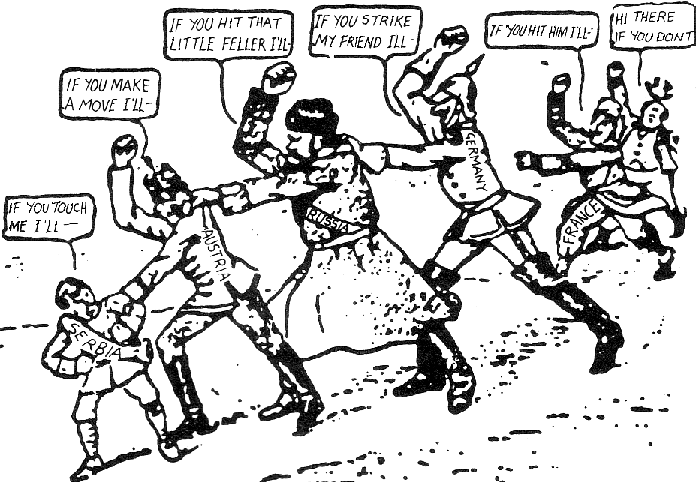
Around the same time that Austria-Hungary was presenting its ultimatum to Serbia another important act was also taking place. Seeing that the tensions in the Balkans were rising, France visited with Russia and reaffirmed the alliance between the two nations. They were linked by the Franco-Russian Alliance, which was an economic and military alliance between France and Russia. Furthermore, this was one of the foundational agreements that made up the larger Triple Entente. This alliance between France and Russia was important because it was one of the key things that caused the assassination of Franz Ferdinand to escalate into a conflict that involved most of Europe.
Serbia was angered by the ultimatum and immediately sought assistance from Russia and its leader Tsar Nicholas II. Unfortunately, Russia replied to Serbia that it should accept the ultimatum and avoid a war. Russia argued for this knowing that a war with Austria-Hungary and Germany would be devastating. Russia was Serbia’s biggest ally at the time due to both nations sharing Slavic heritage. This comes from the idea of ‘Pan-SlavismThe idea that all Slavic peoples of Eastern Europe should unite together based on shared heritage.’ in which the Slavic people of Eastern Europe all united nationalistically. With that said, member nations of the Triple Entente (Britain, France and Russia) all openly recognized that the terms of the ultimatum were harsh. In particular, Serbia was most insulted by the demand that Austro-Hungarian representatives be allowed to enter Serbia to investigate the assassination of Franz Ferdinand. This is because Serbia viewed itself as a sovereign nation and did not want Austria-Hungary undermining its sovereigntyA nation’s right to govern itself without interference from outside powers..
Following a few last efforts to avoid a conflict, the July Crisis reached its height on July 24th. Serbia replied on July 25th and accepted almost every demand, but refused to let Austro-Hungarian officials run an investigation inside Serbia. Austria-Hungary rejected the reply, and both countries began to prepare for war. For example, Serbian forces began to mobilizeTo organize and move military forces into readiness for war. along its border with Austria-Hungary. In fact, the mobilization of military forces occurred across Europe in the days following July 24th. Both the Austrians and the Russians began the process of military mobilization on July 25th, while France began making preparations on July 26th. At the same time, Britain was trying to negotiate an end to the crisis as it was struggling to decide if it would remain neutral or enter the potential war. Regardless, efforts towards a negotiated end to the crisis did not take effect. Some historians have reported that this is because both Germany and Austria-Hungary wanted to go to war with Serbia at all costs. For instance, it is believed that both countries wanted to use the chance to grow their influence in Europe, and that war was their best chance to achieve this goal. As such, the July Crisis resulted in the start of World War I.
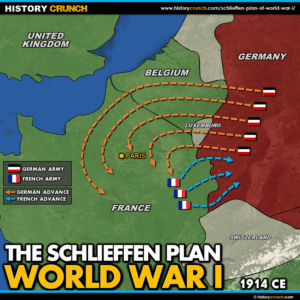
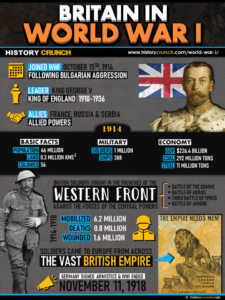
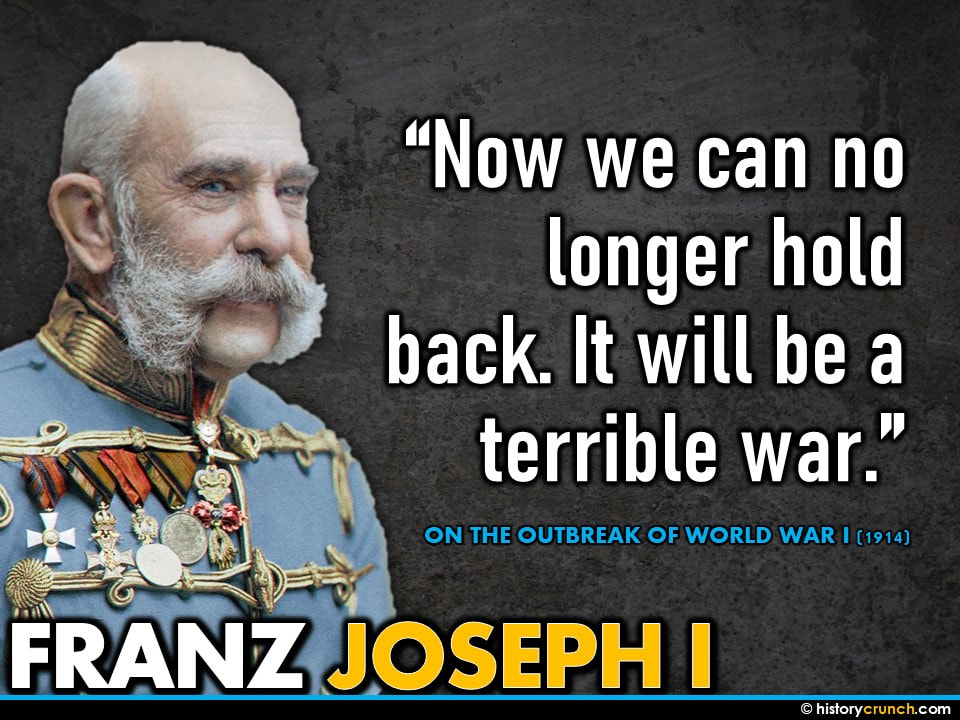
Officially World War I started on July 28th when Austria-Hungary declared war on Serbia. In response, Russia mobilized its forces further on July 30th and began to prepare for war with Austria-Hungary. Having heard of the Russian mobilization against Austria-Hungary, Wilhelm II of Germany ordered German mobilization on August 1st. German troops were readied to invade France, through Belgium. This plan of attack against France is known as the Schlieffen PlanGermany’s military strategy to invade France by marching troops through Belgium., and one that Germany hoped to use to success in World War I. Germany declared war on Russia on August 1st and on France on August 3rd, and invaded Belgium on August 4th. Britain finally entered the fray on August 4th when it declared war against Germany. This was due in part to Germany’s invasion of Belgium, which Britain had promised to protect. However, Britain also wanted to keep its commitments to France as outlined in the Entente CordialeAn agreement linking France and Britain together as part of the larger Triple Entente alliance., which was an agreement between France and Britain. The Entente Cordiale was part of the Triple Entente and linked the two countries together.
Finally, Austria-Hungary declared war on Russia on August 6th in retaliation for its support of Serbia. With that, World War I had begun and Europe was divided.
 FactsthatCrunch
To take judicial proceedings against accessories to the plot of the 28th of June who are on Serbian territory; delegates of the Austro-Hungarian Government will take part in the investigation relating thereto.
Austro-Hungarian ultimatum to Serbia · Belgrade · July 23rd, 1914
This was the demand Serbia could not accept. Its reply of July 25th, 1914 agreed to most of the ultimatum, but refused to let Austro-Hungarian officials take part in an investigation inside Serbia, saying it would violate the Serbian constitution.
Significance of the July Crisis of 1914
The July Crisis of 1914 was an incredibly significant event. As shown in the article above, it saw the escalation of tensions between the major powers of Europe following the assassination of Franz Ferdinand on June 28th. These tensions caused the major alliance systems present in Europe to engage and led to Europe being divided between two major sides. One half was the Triple Entente, which was made up of Britain, France and Russia. On the other half was the Triple Alliance, which was made up of Germany and Austria-Hungary. While Italy had been a member of the Triple Alliance, it did not get involved with the war until 1915 and ended up joining the member nations of the Triple Entente. The division of Europe ultimately caused World War I to begin since no form of peace could be reached between the two sides.
 FactsthatCrunch
The Triple Entente and Triple Alliance divided Europe into two competing blocs before 1914. Their overlapping defense commitments meant a local conflict between Austria-Hungary and Serbia pulled in major powers within weeks.
World War I timeline · 1914 – 1918
Key Vocabulary
Assassination
Ultimatum
Mobilize
Sovereignty
Pan-Slavism
Schlieffen Plan
Entente Cordiale
Frequently Asked Questions
What was the July Crisis of 1914?
The July Crisis of 1914 was a period of rising tension among Europe’s major powers before World War I. It began after the assassination of Archduke Franz Ferdinand on June 28th, 1914. Over the following weeks, alliances pulled nations toward war until the fighting finally started.
What caused the July Crisis of 1914?
The assassination of Archduke Franz Ferdinand caused the July Crisis of 1914. He and his wife Sophie were killed in Sarajevo by Gavrilo Princip, a Bosnian Serb armed by the Black Hand. Austria-Hungary blamed Serbia for the murder, which set off weeks of dangerous conflict between the two nations.
What was Germany’s “blank check” to Austria-Hungary?
The “blank check” was Germany’s promise of full and unlimited support to Austria-Hungary. Emperor Wilhelm II gave this pledge after Franz Joseph asked for help against Serbia in early July. Germany even promised to help if the conflict grew into a wider European war.
What was in the Austro-Hungarian ultimatum to Serbia?
The ultimatum, delivered on July 23rd, 1914, contained harsh demands meant to punish Serbia. It called on Serbia to shut down nationalist groups and arrest officials accused of anti-Austrian actions. Most importantly, it demanded that Austro-Hungarian agents be allowed to investigate the assassination inside Serbia.
How did the July Crisis lead to World War I?
The July Crisis led to World War I because Europe’s alliance systems pulled many nations into the conflict. Austria-Hungary declared war on Serbia on July 28th, 1914, which triggered a chain of mobilizations. Within days, Germany, Russia, France, and Britain had all entered the war.
Which alliances divided Europe during the crisis?
Two major alliance systems divided Europe during the July Crisis. The Triple Entente included Britain, France, and Russia, while the Triple Alliance included Germany and Austria-Hungary. Italy was part of the Triple Alliance but stayed out until 1915, when it joined the Entente side instead.
Cite This Article
To cite this article as a source, use one of the formats below.
MLA: Beck, Elias. “The July Crisis of 1914: A Detailed Summary.” HistoryCrunch, 29 September 2026, https://historycrunch.com/july-crisis-of-1914/.
APA: Beck, E. (2026). The July Crisis of 1914: A Detailed Summary. HistoryCrunch. https://historycrunch.com/july-crisis-of-1914/
Chicago: Beck, Elias. “The July Crisis of 1914: A Detailed Summary.” HistoryCrunch. September 29, 2026. https://historycrunch.com/july-crisis-of-1914/
Sources
- Imperial War Museum
- Hew Strachan, The First World War.
- Fordham Modern History Sourcebook