The Prague Spring was one of the most important challenges to Soviet control in Eastern Europe during the Cold War. Beginning in January of 1968, the new communist leader of Czechoslovakia, Alexander Dubček, introduced a series of reforms that loosened government control over daily life and expanded the rights and freedoms of ordinary citizens. These reforms generated enormous enthusiasm among the Czechoslovak public and became known collectively as the Prague Spring. However, the Soviet Union viewed the reforms as a serious threat to its control over Eastern Europe and responded by leading a large-scale military invasion of Czechoslovakia on August 20th, 1968. The invasion ended the reforms and returned Czechoslovakia to strict communist rule.
 FactsthatCrunch
Follow the chain from top to bottom. Tap any step to read what happened.
What Was the Cold War?
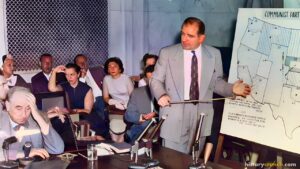
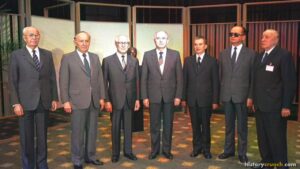
The Cold War was a period of intense political, ideological, and military tension between the United States and the Soviet Union that lasted from the end of World War II in 1945 until the early 1990s. At its heart, the Cold War was a ‘face off’ or competition between the two superpowers, rooted in a fundamental ideological conflict between the capitalism and democracy of the United States and the communism and dictatorship of the Soviet Union. Throughout the Cold War, the Soviet Union maintained tight control over the communist governments of Eastern Europe, using political pressure and military force when necessary to prevent these countries from breaking free of Soviet influence. The Prague Spring was a direct challenge to this Soviet control and became one of the most important events of the Cold War era.
Prague Spring – Background
To fully understand the Prague Spring, it is first important to understand the conditions in Czechoslovakia that led to it. Following the end of World War II, Czechoslovakia fell within the Soviet sphere of influenceA region where one powerful country dominates the politics and decisions of surrounding, weaker countries. and a communist government was installed with Soviet backing in 1948. For the next two decades, Czechoslovakia was governed as a communist state under close Soviet supervision. The communist government controlled most aspects of life, including the press, political activity, and the economy.
By the early 1960s, the Czechoslovak economy was struggling and public frustration with the rigid communist system was growing. Workers faced poor conditions, and intellectuals and artists increasingly resented the strict government control over cultural and creative life. The pressure for change grew steadily throughout the 1960s.
FactsthatCrunchThe installation of Czechoslovakia's communist government in 1948 is best understood as the result of Soviet strategic pressure rather than genuine popular demand, even though the Communist Party had real domestic support going into the late 1940s.
Prague Spring – Dubček’s Reforms
Shortly after coming to power, Dubček introduced a wide range of reforms that represented a significant departure from the strict Soviet model of communist rule. He described his political program as ‘socialism with a human face’, a phrase that became closely associated with the Prague Spring. State censorshipGovernment suppression of what the press, artists, or citizens are allowed to say or publish. of the press was abolished, freedom of speech and travel were expanded, political prisoners were released, and open public debate about political and economic reform became possible for the first time in decades.
The reaction among the Czechoslovak public was positive. New political movements formed, independent organizations appeared, and the population took a genuine interest in public affairs. Dubček himself became a genuinely popular national figure. As such, the Prague Spring represented a rare moment in Cold War Eastern Europe in which a communist government appeared to be responding to the genuine wishes of its own people.
It should also be noted that Dubček was careful to make clear that he had no intention of withdrawing Czechoslovakia from the Warsaw Pact or breaking the country’s fundamental alliance with the Soviet Union. He believed that remaining loyal on foreign policy would give him the freedom to pursue reform at home.
FactsthatCrunchWhat did Alexander Dubček mean by "socialism with a human face" in the Prague Spring?
"Socialism with a human face" was Dubček's phrase for keeping communism in place while allowing ordinary people far more personal freedom than the strict Soviet model permitted. Under this program, state censorship of the press was abolished, freedom of speech and travel were expanded, and political prisoners were released. Dubček believed Czechoslovakia could have an open, responsive communist government without breaking its alliance with the Soviet Union.
Prague Spring – Soviet Response and Invasion
The Soviet Union and several of its Warsaw PactA Cold War military alliance of the Soviet Union and its Eastern European communist satellite states. allies viewed the reforms of the Prague Spring with growing alarm. Soviet leaders feared that the loosening of censorship and the growth of political freedom in Czechoslovakia would inspire similar movements in other Eastern European countries, potentially threatening Soviet control across the entire eastern blocThe group of communist countries in Eastern Europe controlled by the Soviet Union during the Cold War.. As well, Soviet leaders worried that if Czechoslovakia went too far, it might eventually seek to break free of the Warsaw Pact altogether, as Hungary had attempted to do during the Hungarian Revolution of 1956.
Regardless, a series of meetings followed in which Soviet leader Leonid Brezhnev and other communist leaders pressured Dubček to restrict his reforms. Dubček attempted to find a compromise while continuing to believe that a Soviet military intervention could be avoided.
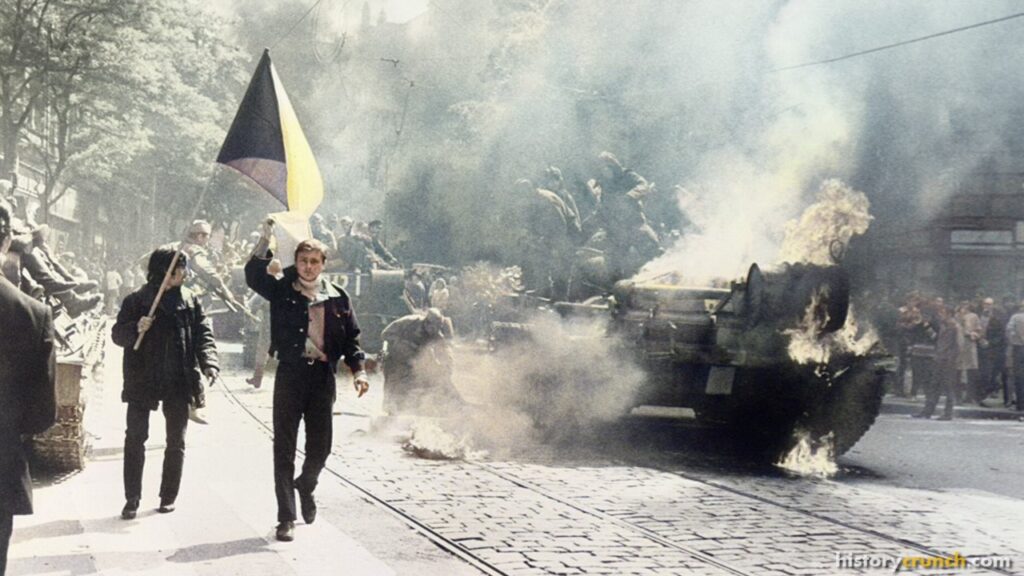
However, on the night of August 20th to 21st, 1968, the Soviet Union led a large-scale Warsaw Pact military invasion of Czechoslovakia. The invading force included approximately 200,000 troops and 2,000 tanks from the Soviet Union, Poland, Bulgaria, and Hungary. Romania and Albania refused to participate and publicly condemned the invasion. The operation moved swiftly, with Soviet and Warsaw Pact forces seizing control of Prague and other major cities within hours. Dubček urged the Czechoslovak people not to resist physically in order to minimize casualties, and the population largely responded with non-violent resistanceOpposing an occupying force through peaceful actions, such as protests and obstruction, rather than armed fighting. rather than armed opposition. For instance, citizens flooded the streets to confront the invading soldiers, removed road signs to confuse advancing troops, and painted slogans condemning the invasion across the country. Regardless, a total of 72 Czechoslovak citizens were killed during the invasion and hundreds more were wounded.
Dubček and several other Czechoslovak leaders were arrested and taken to Moscow, where they were placed under intense pressure to sign an agreement accepting the Soviet occupation and agreeing to reverse the reforms. Dubček returned to Prague on August 27th, 1968, and addressed the nation. He was removed as First Secretary of the Communist Party in April of 1969 and replaced by Gustáv Husák, a more conservative and reliable communist who proceeded to reverse all of the reforms of the Prague Spring. In the years that followed, tens of thousands of Czechoslovaks who had been associated with the reform movement lost their jobs. Dubček himself ended up working as a clerk in a lumber yard for nearly twenty years.
Prague Spring – The Brezhnev Doctrine
One of the most important political consequences of the Prague Spring was the development of what became known as the ‘Brezhnev DoctrineA Soviet policy claiming the right to use military force in any communist country where socialism appeared threatened.‘. Following the invasion of Czechoslovakia, Soviet leader Leonid Brezhnev formally stated that the Soviet Union had the right to intervene militarily in any communist country where socialism was seen to be under threat. This doctrine was significant because it placed an explicit limit on the independence of any communist country within the Soviet sphere of influence. In general, the Brezhnev Doctrine made clear that while communist nations could make minor adjustments to their internal policies, any fundamental challenge to communist rule or to Soviet influence would be met with military force.
The Brezhnev Doctrine was widely condemned in the Western world and also drew criticism from a number of communist parties and governments. For instance, both China and Romania publicly condemned the invasion of Czechoslovakia, and communist parties in Western Europe began to distance themselves from Soviet leadership in the years that followed.
FactsthatCrunchSoviet leaders under Leonid Brezhnev saw the invasion as a necessary defense of socialism. They argued that Alexander Dubček's reforms threatened communist rule not only in Czechoslovakia but across all of Eastern Europe. This reasoning became the basis of the Brezhnev Doctrine, which formally claimed the Soviet right to intervene militarily in any communist country where socialism appeared to be under threat.
Both China and Romania publicly condemned the invasion as an illegal violation of another country's independence. Romania, a Warsaw Pact member, refused to send troops and rejected the idea that Moscow had any right to dictate the internal affairs of a fellow communist state. China, already in a bitter political dispute with the Soviet Union, used the invasion as evidence that Soviet leadership had adopted a form of imperialism rather than genuine communist solidarity.
Prague Spring – Significance
The Prague Spring was significant for several important reasons. First, the Soviet invasion demonstrated clearly that the Soviet Union was not willing to tolerate political independence in Eastern Europe, regardless of the degree of reform that a communist government attempted. As such, the events of 1968 in Czechoslovakia reinforced the same message that had been sent by the Soviet suppression of the Hungarian Revolution in 1956, which was that Soviet military force would be used to maintain communist control whenever it was seriously challenged.
Second, the Prague Spring and its suppression had an important impact on the people of Czechoslovakia. The crushing of the reform movement left a lasting sense of anger and resentment toward Soviet rule that never fully disappeared.
Third, the Prague Spring had an important long-term influence on the eventual collapse of communism in Czechoslovakia. Many of those who had supported Dubček’s reforms continued to believe in the possibility of genuine change, and the memory of the Prague Spring became an important part of the political identity of the reform movement that eventually produced the Velvet RevolutionA peaceful protest movement in November 1989 that ended communist rule in Czechoslovakia without armed conflict. of November of 1989, which peacefully ended communist rule in Czechoslovakia. As such, the Prague Spring of 1968 can be understood as an important early step on the road that eventually led to the fall of communism in Eastern Europe.
The memory of the Prague Spring became part of the political identity of the reform movement that produced the Velvet Revolution of November 1989.
Explore Cold War · 1947 – 1991
Keep exploring Cold War with these History Crunch resources.
Key Vocabulary
Sphere of influence
Censorship
Warsaw Pact
Eastern bloc
Non-violent resistance
Brezhnev Doctrine
Velvet Revolution
Frequently Asked Questions
What was the Prague Spring?
The Prague Spring was a period of reform in Czechoslovakia that began in January of 1968. The new communist leader, Alexander Dubček, loosened government control and expanded the rights of ordinary citizens. These changes sparked great enthusiasm among the public before the Soviet Union ended them by force.
What did “socialism with a human face” mean?
“Socialism with a human face” was the phrase Dubček used to describe his reform program. It meant keeping communism while allowing more personal freedom and open debate. Under it, press censorship ended, freedom of speech and travel grew, and political prisoners were released.
Why did the Soviet Union invade Czechoslovakia?
The Soviet Union invaded because it feared the reforms would weaken its control over Eastern Europe. Soviet leaders worried that freedom in Czechoslovakia would inspire similar movements in other communist countries. They also feared the country might one day leave the Warsaw Pact, as Hungary had tried to do in 1956.
What happened during the invasion of 1968?
On the night of August 20th to 21st, 1968, Warsaw Pact forces invaded Czechoslovakia. The force included about 200,000 troops and 2,000 tanks from the Soviet Union, Poland, Bulgaria, and Hungary. Dubček urged people not to fight, yet 72 Czechoslovak citizens were killed and hundreds were wounded.
What was the Brezhnev Doctrine?
The Brezhnev Doctrine was a policy stating that the Soviet Union could use force in any communist country where socialism seemed threatened. Soviet leader Leonid Brezhnev announced it after the invasion of Czechoslovakia. It limited the independence of every nation in the Soviet sphere and was widely condemned abroad.
Why was the Prague Spring important?
The Prague Spring mattered because it showed the Soviet Union would crush any serious challenge to communist control. The failed reforms left lasting anger toward Soviet rule in Czechoslovakia. Its memory later helped inspire the Velvet Revolution of November of 1989, which peacefully ended communism there.
Cite This Article
To cite this article as a source, use one of the formats below.
MLA: Millar, B. “Prague Spring: A Detailed Summary.” HistoryCrunch, 9 October 2026, https://historycrunch.com/prague-spring/.
APA: Millar, B. (2026). Prague Spring: A Detailed Summary. HistoryCrunch. https://historycrunch.com/prague-spring/
Chicago: Millar, B. “Prague Spring: A Detailed Summary.” HistoryCrunch. October 9, 2026. https://historycrunch.com/prague-spring/
Sources
- Odd Arne Westad, The Global Cold War.
- Wilson Center Digital Archive
- Vladislav Zubok, A Failed Empire.