Operation Mincemeat was one of the most successful deceptionA plan meant to trick an enemy into believing something false. operations of World War II. Carried out by British intelligence in the spring of 1943, the operation involved planting false military documents on a carefully prepared corpse and allowing the body to wash ashore in Spain, where it was expected that the information would be passed to Nazi German intelligence. The false documents successfully convinced Adolf Hitler and the Nazi German high commandThe top military leaders who make the most important strategic decisions in a war. that the upcoming Allied invasion would target Greece and Sardinia rather than Sicily, the actual target. As a result, the Allied invasion of Sicily in July of 1943 achieved a significant element of surprise, and the island was captured far more quickly and with fewer casualties than Allied planners had anticipated.
 FactsthatCrunch
About 160,000 Allied troops landed on Sicily on July 9th, 1943, and captured the island in just 38 days.
Operation Mincemeat had convinced Hitler that the Allies would attack Greece and Sardinia, so German and Italian defenders on Sicily were caught unprepared.
What Was World War II?
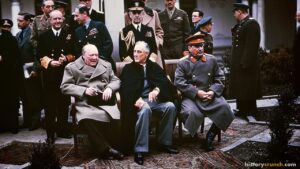
World War II lasted from 1939 to 1945 and became the largest and deadliest war in all of human history. The war began on September 1st, 1939, when Nazi Germany, under the leadership of Adolf Hitler, invaded the country of Poland. The war involved two main groups of opposing nations. The Allied Powers, whose main members included: the United States, Britain, the Soviet Union, and China, fought against the Axis Powers of Nazi Germany, fascist Italy, and Imperial Japan. By the spring of 1943, the Allied Powers had succeeded in driving the Axis out of North Africa, and the next stage of the campaign in the European Theater was the planned invasion of Sicily and then mainland Italy. It was in this context that Operation Mincemeat was created and carried out.
Operation Mincemeat – Background
To fully understand Operation Mincemeat, it is first important to understand the strategic situation that made such a deception necessary. With the North African campaign concluded by May of 1943, the Allied leadership agreed that Sicily was the logical next target. The island offered several important strategic advantages, including: numerous airfields and a location that would give the Allies control of Mediterranean shipping lanes. As such, an invasion of Sicily would also open the way for an eventual invasion of mainland Italy and remove fascist Italy from the war as an Axis Power.
The problem facing Allied planners was that Sicily was the most obvious target in the region, and they assumed correctly that Nazi German intelligence would anticipate an attack there. If Nazi German forces were able to reinforce Sicily in advance of the invasion, the cost of the assault in Allied lives and material could be enormous. As a result, British intelligence devised a plan to mislead the Germans about the true invasion target. This plan became part of a larger deception campaign known as ‘Operation Barclay’, which aimed to convince the Axis that the Allies planned to attack Greece.
Why did Allied planners choose Sicily as their next target after the North Africa campaign in 1943?
Operation Mincemeat – Planning and Preparation
The planning of Operation Mincemeat required solving a series of difficult practical problems. First, the intelligence team needed to find a suitable corpse that could plausiblyIn a way that seems believable or reasonable to the people being fooled. pass as a British military officer who had died in a plane crash at sea. A plane crash scenario was chosen specifically because it would explain why the body had been in the water for several days and why the officer would have been carrying sensitive documents. Eventually, the team obtained the body of a Welsh homeless man named Glyndwr Michael who had died in London in January of 1943.
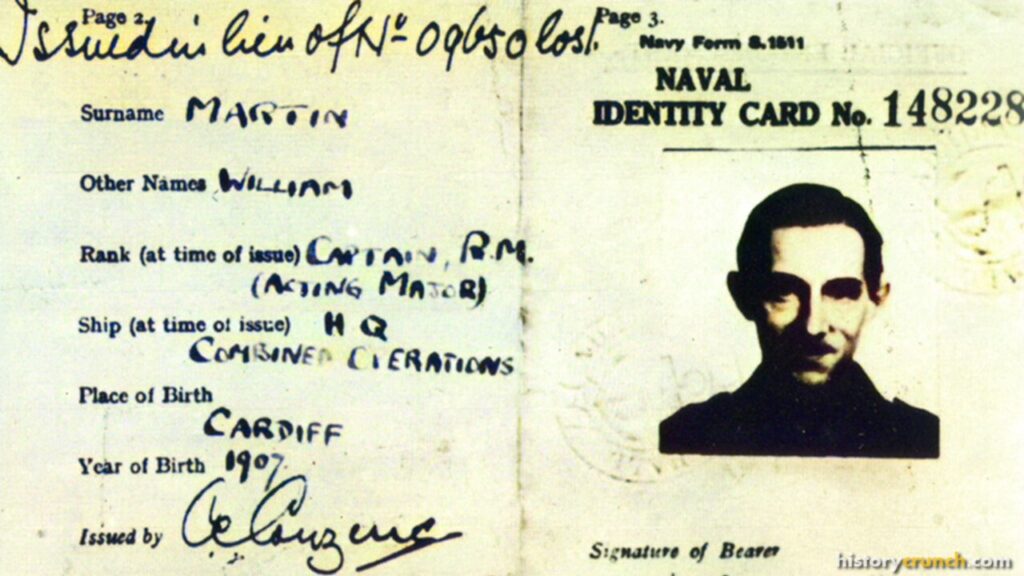
The second challenge was creating a convincing false identity for the corpse. The intelligence team built a detailed personal history for the fictional officer, who was given the identity of Captain, acting Major, William Martin of the Royal Marines. A wide range of personal items was assembled to give depth and credibilityThe quality of being trusted or believed as real and genuine. to this identity. For instance, the items placed on the body included: a photograph of a fictional fiancée, a receipt for an engagement ring, letters from his father and his fiancée, ticket stubs from a London theatre, a bill from his tailor, and an identity card.
The third and most critical element was the false military documents. The main piece of evidence was a fake letter written in the name of Lieutenant General Sir Archibald Nye, the Vice Chief of the Imperial General Staff, addressed to General Harold Alexander in North Africa. The letter made casual but unmistakable reference to planned Allied operations in Greece and Sardinia, and mentioned Sicily only as a cover target. A second letter from Lord Louis Mountbatten to Admiral of the Fleet Sir Andrew Cunningham also referenced the deception targets. The letters were written in a deliberately informal and personal style to make them appear genuine rather than official documents, which made them more convincing as accidentally discovered intelligence.
FactsthatCrunchWho was "Major William Martin" in Operation Mincemeat?
Major William Martin of the Royal Marines never existed. British intelligence created him as a false identity for the body of Glyndwr Michael, a Welsh homeless man who had died in London in January 1943. To make the story believable, they gave him an identity card, letters from his father and a fiancée, a ring receipt, theater ticket stubs and a tailor’s bill.
Operation Mincemeat – the Operation
On April 19th, 1943, the British submarine HMS Seraph departed from Holy Loch in Scotland with the body, now dressed in the uniform of Major William Martin. On April 30th, 1943, HMS Seraph surfaced approximately one mile off the coast of southern Spain and the body was released into the sea at 4:30am.
The location was chosen deliberately. This is because Spain was officially neutralA country that officially takes no side in a war between other nations. during World War II, but much of its military and intelligence apparatusThe complete system of organizations and people that carry out a government’s work. maintained close ties with Nazi Germany. Furthermore, a known Nazi German intelligence agent was operating in the region, which meant that any documents found on a body recovered in that area were highly likely to eventually reach Nazi German intelligence in Berlin. As such, the choice of location was a critical part of the plan.
The body was recovered by a Spanish fisherman later that morning and handed over to the Spanish authorities. As the British had anticipated, the Spanish authorities allowed a Nazi German intelligence officer to examine the documents carried by the body.
Can you put these steps that delivered the Operation Mincemeat documents to German intelligence in the correct order?
Operation Mincemeat – German Response
Adolf Hitler and the Nazi German high command accepted the documents as genuine and concluded that the Allied invasion would target Greece and Sardinia. In response, Hitler ordered a significant redeploymentMoving military forces from one location to another in response to new information or orders. of Axis forces away from Sicily. For instance, the 1st Panzer Division was transferred from France to Greece, torpedo boats were moved from Sicily to Greece, and additional divisions were sent to the Balkans and Sardinia. Two Panzer divisions were also transferred from the Eastern Front to the Balkans, further weakening the German position in the east against the Soviet Union. As a result, Sicily was left significantly less defended than it would otherwise have been.
On July 9th, 1943, approximately 160,000 Allied troops landed on the shores of Sicily as part of Operation Husky, the Allied invasion that had been covered by Operation Mincemeat. The German and Italian defenders were caught unprepared, and the island was captured by the Allies in just 38 days. The success of the invasion was credited, among other factors, to Operation Mincemeat.
FactsthatCrunchOperation Mincemeat – Significance
Operation Mincemeat was significant for several important reasons. First, it was one of the most successful intelligence operations of the entire war. The combination of careful planning, convincing personal detail, and a well-chosen location allowed British intelligence to deceive the Nazi German high command at the highest level, causing Hitler himself to redeploy significant military resources away from the actual invasion target.
Second, Operation Mincemeat had direct effects on the overall course of the war in Europe. The successful Allied invasion of Sicily led directly to the fall of Benito Mussolini, who was arrested and removed from power on July 25th, 1943, and to Italy’s subsequent surrender to the Allied Powers on September 8th, 1943. As such, the success of Operation Mincemeat contributed directly to the removal of one of the three main Axis Powers from the war.
FactsthatCrunchAfter the Allied invasion of Sicily, Benito Mussolini was arrested and removed from power on July 25th, 1943.
Explore World War II · 1939 – 1945
Keep exploring World War II with these History Crunch resources.
Key Vocabulary
Deception
Plausibly
Credibility
Redeployment
Neutral
High command
Apparatus
Frequently Asked Questions
What was Operation Mincemeat?
Operation Mincemeat was a British deception plan carried out in the spring of 1943. British intelligence planted fake military documents on a dead body and let it wash ashore in Spain. The goal was to trick Nazi Germany into believing the Allies would invade Greece and Sardinia instead of Sicily.
Who was the body used in Operation Mincemeat?
The body belonged to Glyndwr Michael, a homeless Welsh man who died in London in January of 1943. British intelligence gave the corpse a fake identity as Major William Martin of the Royal Marines. They added personal items like letters and photographs to make the identity believable.
Why was Spain chosen as the location?
Spain was officially neutral, but its military and intelligence services kept close ties with Nazi Germany. A known German agent operated in the region, so any documents found there would likely reach Berlin. The body was released about one mile (1.6 km) off the southern Spanish coast on April 30th, 1943.
Did Operation Mincemeat actually work?
Yes, the operation fooled Adolf Hitler and the German high command. They accepted the fake documents as real and moved forces toward Greece, Sardinia, and the Balkans. This left Sicily far less defended than it would otherwise have been.
How did Operation Mincemeat affect the invasion of Sicily?
The deception helped the Allies capture Sicily quickly and with fewer casualties than expected. About 160,000 Allied troops landed on July 9th, 1943, as part of Operation Husky. The defenders were caught unprepared, and the island fell in just 38 days.
Why was Operation Mincemeat so important?
It was one of the most successful intelligence operations of World War II. The quick fall of Sicily led to the removal of Benito Mussolini from power on July 25th, 1943. Italy then surrendered to the Allies on September 8th, 1943, taking a major Axis power out of the war.
Cite This Article
To cite this article as a source, use one of the formats below.
MLA: Millar, B. “Operation Mincemeat: A Detailed Summary.” HistoryCrunch, 2 October 2026, https://historycrunch.com/operation-mincemeat/.
APA: Millar, B. (2026). Operation Mincemeat: A Detailed Summary. HistoryCrunch. https://historycrunch.com/operation-mincemeat/
Chicago: Millar, B. “Operation Mincemeat: A Detailed Summary.” HistoryCrunch. October 2, 2026. https://historycrunch.com/operation-mincemeat/
Sources
- Gerhard L. Weinberg, A World at Arms.
- Antony Beevor, The Second World War.
- Max Hastings, Inferno / All Hell Let Loose.
- The National WWII Museum