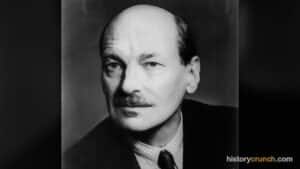
Bernard Montgomery was a British Army officer who commanded the Eighth Army in North Africa, later led the 21st Army Group in northwest Europe, and then held top military posts after the war. In fact, he was a leading British commander in World War II and became especially famous for his victory at El Alamein. He is also remembered for helping lead Allied forces in Normandy and in the final campaigns against Nazi Germany.
 FactsthatCrunch
Bernard Montgomery commanded the British Eighth Army in North Africa and defeated German forces at the Second Battle of El Alamein in late 1942, a turning point in the desert war. He later commanded Allied ground forces during the Normandy landings in 1944 and accepted Germany's surrender on the Western Front at Luneburg Heath on May 4th, 1945.
Bernard Montgomery – Early Life
Bernard Law Montgomery was born on November 17th, 1887, in Kennington, Surrey, England. He grew up in a large family, and his father was a Anglican clergyman. As a young man, Montgomery attended St Paul’s School and then the Royal Military College at Sandhurst. He graduated in 1908 and was commissionedOfficially appointed as an officer in the military after completing training. into the Royal Warwickshire Regiment, which began his career in the British Army.
Even in his early years, Montgomery developed a reputation for strong discipline, energy, and self-confidence. Those qualities helped him rise in the army, although they also made him a difficult figure at times. Therefore, from the start of his career, he stood out as an officer with both talent and a forceful personality.
Bernard Montgomery – Early Military Career
Before World War II, Montgomery had already built an important military record. He first saw overseas service in India, and during World War I he fought on the Western Front. On October 13th, 1914, near Méteren during the First Battle of Ypres, he was shot through the right lung by a sniperA hidden shooter who fires at targets from a concealed or distant position. and nearly died. However, he recovered and continued his military career, later serving as a staff officer and gaining valuable experience in planning and organization.
In the years between the two world wars, Montgomery continued rising through the British Army. He became known for his intense focus on training, order, and preparation. This was important because it shaped the command style he later used in World War II, where he pushed for careful planning and strong moraleThe overall confidence, enthusiasm, and willingness of soldiers to keep fighting. before major offensivesLarge-scale military attacks launched against an enemy..
FactsthatCrunchMontgomery was shot through the right lung near Méteren on October 13th, 1914, and later served as a staff officer on the Western Front, where he saw huge losses from poorly prepared attacks. That experience is widely seen as the root of the careful planning he demanded before every major offensive in World War II.
Montgomery's insistence on proper supply, strong morale, and detailed planning before attacking, seen clearly at El Alamein in 1942 and in the Normandy landings in 1944, became the defining feature of his command.
Bernard Montgomery – World War II
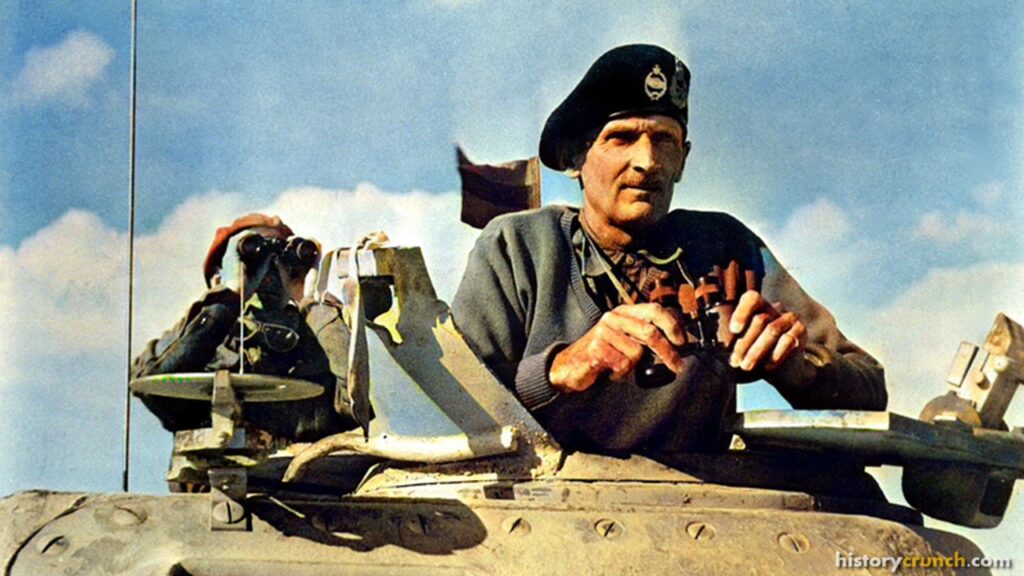
Montgomery became one of the most important Allied commanders of World War II. In 1940, he led the 3rd Division during the retreat to Dunkirk and then spent much of the next two years helping prepare British forces for future fighting. A major turning point came in August of 1942, when Winston Churchill appointed him commander of the Eighth Army in North Africa. Montgomery quickly restored morale, improved training, and made sure his army was properly supplied before launching a major attack.
His greatest early wartime success came at the Second Battle of El Alamein in October and November of 1942. There, Montgomery helped defeat Erwin Rommel’s forces and push the Axis back across North Africa. This was significant because El Alamein became one of the first major Allied land victories against German-led forces in the war and greatly raised Montgomery’s reputation in Britain and beyond.
Montgomery also played an important role in the invasion of Sicily in 1943. Then, in 1944, he became the senior British ground commander in Operation Overlord, the Allied invasion of Normandy. Historians also note that he strongly argued for a larger invasion force, which helped strengthen the D-Day plan. As such, Montgomery was central not only to North Africa, but also to the liberation of western Europe.
At the same time, Montgomery’s wartime record was not without controversy. He was often admired for discipline, confidence, and careful preparation, but critics argued that he could be arrogantBehaving as if one is more important or skilled than others, in an offputting way. and too cautious. One of the biggest debates about his command centers on Operation Market GardenMontgomery’s 1944 plan to push into Germany through the Netherlands using airborne troops to seize bridges. in September of 1944, which was his bold attempt to force a way into Germany through the Netherlands. The operation failed to achieve its full goal, and it damaged his reputation, especially among some American leaders and historians.
Even so, Montgomery remained one of the main Allied commanders in the final stage of the war. By the spring of 1945, troops under his command had helped trap German forces in the Ruhr, liberate the Netherlands, and capture much of northwest Germany. On May 4th, 1945, at Lüneburg Heath, Montgomery accepted the surrenderFormally giving up and admitting defeat to an opposing military force. of German forces in the Netherlands, northwest Germany, and Denmark. Therefore, he was closely connected to both major Allied offensives and the final collapse of German power in northwestern Europe.
Bernard Montgomery – Later Years and Death
After World War II, Montgomery remained one of Britain’s most senior military figures. He became commander of the British Army of the Rhine, then served as Chief of the Imperial General Staff from 1946 to 1948. Later, he served as deputy to Dwight D. Eisenhower in NATO and remained an important public military figure until his retirement in 1958.
Bernard Montgomery died on March 24th, 1976, near Alton, Hampshire, England, at the age of 88. By the time of his death, he had become one of the most recognizable British commanders of the 20th century.
FactsthatCrunchWhat command jobs did Montgomery hold after World War II ended?
Bernard Montgomery – Significance
Bernard Montgomery was significant because he helped lead some of the most important Allied campaigns of World War II. His victories in North Africa, his role in Sicily and Normandy, and his leadership in the final campaign into Germany made him one of the key British commanders of the war.
At the same time, Montgomery remains a debated historical figure. Some people remember him as a disciplined and highly skilled commander who rebuilt morale and prepared carefully for battle. Others focus on his ego, his difficult relationships with other Allied leaders, and the failure of Market Garden. Regardless, Bernard Montgomery remains one of the most important British military leaders of World War II.
FactsthatCrunchWhere does Montgomery's reputation fall between careful planner and overcautious commander?
Tap a point to read its detail.
Key Vocabulary
Commissioned
Sniper
Morale
Offensives
Arrogant
Operation Market Garden
Surrender
Frequently Asked Questions
Why is Bernard Montgomery famous?
Bernard Montgomery is famous for his victory at the Second Battle of El Alamein in 1942. That win was one of the first major Allied land victories against German-led forces in World War II. He later helped lead Allied armies in the invasion of Normandy and the final push into Germany.
What was the Second Battle of El Alamein?
The Second Battle of El Alamein was a key clash in North Africa in October and November of 1942. Montgomery led the Eighth Army to defeat Erwin Rommel’s forces and push the Axis back. The win raised British morale and made Montgomery a national hero.
What was Operation Market Garden?
Operation Market Garden was Montgomery’s bold plan to push into Germany through the Netherlands in September of 1944. It used airborne troops to seize key bridges, but it failed to reach its full goal. The failure damaged his reputation, especially among some American leaders and historians.
What role did Montgomery play on D-Day?
Montgomery served as the senior British ground commander for Operation Overlord, the Allied invasion of Normandy in 1944. He argued for a larger invasion force, which helped strengthen the D-Day plan. His leadership made him central to the liberation of western Europe.
Why was Montgomery a controversial commander?
Montgomery was controversial because critics saw him as arrogant and at times too cautious. His confidence and careful planning won many battles, but his personality strained ties with other Allied leaders. The failure of Operation Market Garden also fueled debate about his judgment.
Cite This Article
To cite this article as a source, use one of the formats below.
MLA: Millar, B. “Bernard Montgomery: A Detailed Biography.” HistoryCrunch, 3 October 2026, https://historycrunch.com/bernard-montgomery/.
APA: Millar, B. (2026). Bernard Montgomery: A Detailed Biography. HistoryCrunch. https://historycrunch.com/bernard-montgomery/
Chicago: Millar, B. “Bernard Montgomery: A Detailed Biography.” HistoryCrunch. October 3, 2026. https://historycrunch.com/bernard-montgomery/
Sources
- Antony Beevor, The Second World War.
- Max Hastings, Inferno / All Hell Let Loose.
- Gerhard L. Weinberg, A World at Arms.
- Imperial War Museum