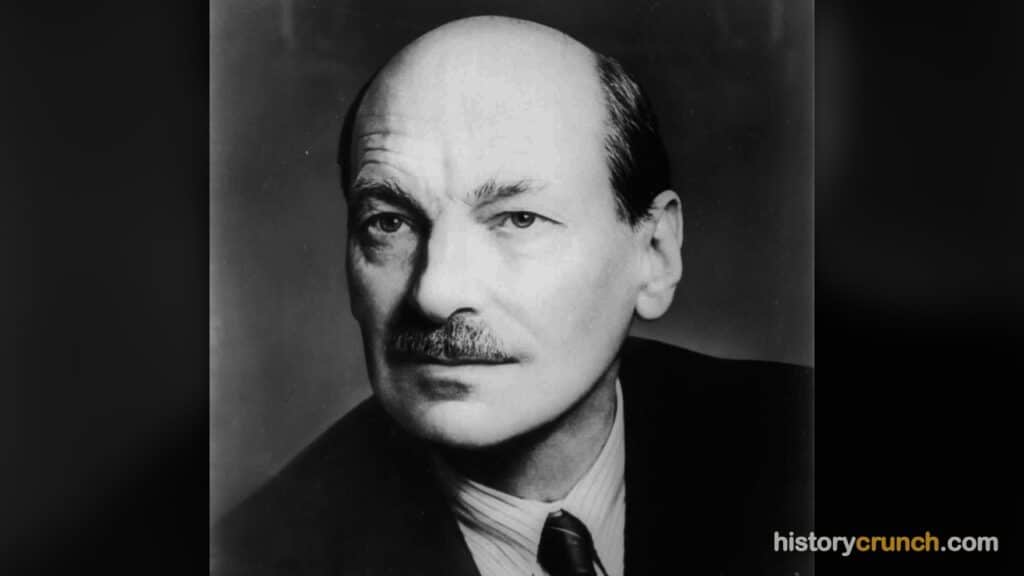
Clement Attlee served as one of the most important British prime ministers of the twentieth century, leading the country through the difficult years just after World War II. As head of the Labour Party government from 1945 to 1951, he oversaw a wave of reforms that reshaped how the British government cared for its people and how it managed the economy. Clement Attlee was a British Labour Party leader and prime minister who served from 1945 to 1951, and his government is remembered as one of the most important peacetime administrations of the twentieth century because of the impact it had on British politics.
The Labour Party that Attlee led is a political party in the United Kingdom that grew out of the trade union movement and socialist groups in the late 1800s and early 1900s. Its central goal was to represent working people and to use the power of government to reduce poverty and inequality. Attlee gave this movement steady and practical leadership at the exact moment when it finally won the power to put its ideas into action.
Early Life and Background
Clement Richard Attlee was born on January 3rd, 1883, in Putney, a suburb of London. He came into an upper-middle-class family, and his father, Henry Attlee, was a prosperous solicitor, which is a type of lawyer, while his mother came from a family of successful traders. The household was religious and comfortable, and Attlee grew up with strong Victorian values that stressed personal responsibility and service to others.
Attlee was educated at Haileybury College, a boarding school, and then at Oxford University, before studying law and setting up his own law practice. His early adult life seemed set to follow a quiet path in the legal profession. That path changed sharply because of the work he began doing in one of the poorest parts of the capital.
In 1905 he began volunteer work for a boys club at a settlement house in London’s impoverished East End, and settlement houses were private organizations set up in poor neighborhoods to provide social services to nearby residents, with Attlee moving into the house in 1907 to serve as a manager. Seeing this poverty up close changed his thinking completely. Greatly influenced by the hardship of the East End, he developed socialist political beliefs, joined the Fabian Society in 1907, and in 1908 became active in the Independent Labour Party.
When World War I broke out, Attlee served in the army. He saw service during the war in Gallipoli, Mesopotamia and France, and by the end of the war he had been promoted to the rank of Major. For the rest of his life, many people who knew him referred to him as “Major Attlee,” a sign of the respect he earned during those years.
Rise to Power
After the war, Attlee returned to politics with a clear sense of purpose. He became mayor of the London borough of Stepney in the East End, gaining hands-on experience of local government in a poor community. In 1920 he published his first book, which set out many of the ideas that would later shape his government, and in 1922 he was elected to represent Limehouse in East London.
His rise inside the Labour Party was steady rather than sudden. His first major political role came in 1924 when Ramsay MacDonald formed Britain’s first Labour government, and Attlee served as Under-Secretary of State for War, a junior position that, although the government lasted less than a year, gave him valuable experience. He held office again when Labour returned to power at the end of the 1920s.
The early 1930s were hard years for the Labour Party. The party struggled with internal divisions and electoral setbacks, particularly after its crushing defeat in the 1931 general election, but Attlee remained a loyal and steady figure. His reliability set him apart. His resilience paid off when he was elected Deputy Leader in 1931 and then Leader of the Labour Party in 1935, following the resignation of George Lansbury.
When World War II began, Attlee’s importance grew even more. He served as Deputy Prime Minister during the wartime coalition government under Winston Churchill, having earlier served as Leader of the Opposition. While Churchill focused on the war effort, Attlee helped run the government at home, and he earned a reputation as a calm and capable administrator. This wartime experience prepared him for the top job when the fighting in Europe ended.
In the summer of 1945, with victory in Europe just won, Britain held a general election. The result stunned many observers. The successful Conservative wartime leader, Sir Winston Churchill, was defeated by Clement Attlee’s Labour Party, and the landslide victory ushered in the welfare state and the National Health Service. Labour won 393 seats to the Conservatives’ 210, a huge majority in the House of Commons. On July 26th, 1945, Attlee became prime minister.
Major Achievements
The huge majority gave Attlee the power to carry out one of the most ambitious reform programs in British history. The landslide gave him an enormous parliamentary majority, which allowed him to implement a radical program of social and economic reform. The most famous of these reforms was the creation of a modern welfare state, meaning a system in which the government provides basic support to citizens from birth to old age.
At the heart of this system was the National Health Service, often shortened to the NHS. Aneurin Bevan, as Minister of Health, created the National Health Service, launched on July 5th, 1948, and for the first time healthcare was free at the point of use, funded by general taxation, and available to every citizen regardless of income. This meant that a family no longer had to fear a doctor’s bill when a child fell sick. The idea was simple but revolutionary, and the NHS remains one of the most treasured institutions in Britain today.
The welfare state went further than health care. Labour passed the National Insurance Act of 1946 and the National Assistance Act of 1948, creating a comprehensive system of social security covering unemployment, sickness, maternity, old age, and funeral expenses. In fact, these laws meant that nearly everyone in the country was protected against the worst effects of losing a job or growing too old to work.
Attlee’s government also changed who owned Britain’s largest industries. This process was called nationalization, which means bringing private industries under government ownership. Labour nationalized the Bank of England in 1946, coal in 1947, transport, electricity, and gas between 1947 and 1948, and iron and steel in 1949, so that the commanding heights of the economy were now in public hands. Supporters argued that key industries should be run for the good of the whole nation rather than for private profit.
Overseas, Attlee’s government began to take apart the vast British Empire. Labour accelerated decolonization, granting independence to India and Pakistan in 1947, and to Burma and Ceylon in 1948. Indian independence was the largest of these changes, and it was a defining moment in world history. In 1945, upon the end of the war, Attlee set in train Indian independence, which took place in 1947, but only with bloody partition, as the region was divided into separate nations.
In foreign affairs, Attlee helped shape the early years of the Cold War, the long period of tension between Western nations and the Soviet Union. He helped to establish NATO, with Britain joining at the outset, and it was also Attlee and his Foreign Secretary who decided that there must be a British nuclear program. These decisions tied Britain firmly to the United States and other Western democracies for decades to come.
Later Life
Governing postwar Britain was not easy, and the country faced serious money problems throughout Attlee’s time in office. From 1947, Chancellor Stafford Cripps introduced economic policies that became known as austerity, which largely continued for the rest of Attlee’s premiership, trade unions were persuaded to accept painful wage restraint, and in 1949 a balance of payments crisis forced a devaluation of the pound. Rationing of food and goods continued for years after the war ended, and daily life remained hard for many families.
These pressures slowly wore down Labour’s popularity. Attlee won a narrow majority of only five seats at the 1950 general election, and just twenty months later he called a new election for October 25th, 1951, in an attempt to gain a larger majority, but was narrowly defeated by the Conservative Party. With that loss, Attlee returned to leading the opposition, and Churchill returned as prime minister.
Attlee remains the longest serving Labour leader in the party’s history. He stepped down as leader in 1955 and moved to the House of Lords, the upper chamber of Parliament, where he took the title Earl Attlee. Clement Richard Attlee, 1st Earl Attlee, died on October 8th, 1967. By then, the reforms he led had become a settled part of British life that few politicians dared to reverse.
Significance of Clement Attlee
Clement Attlee is remembered as one of the most important prime ministers in modern British history because his government changed the relationship between the state and its people. The most enduring legacy of the Attlee years is the welfare state, which promised every citizen a basic level of security and health care no matter how much money they had. In reality, this was a lasting shift in what people expected their government to do for them.
His achievements also set the direction of British politics for a generation. The Attlee government’s reforms created the postwar consensus that lasted until 1979, built on a mixed economy, full employment, a welfare state, and a close alliance with the United States. Even later Conservative governments largely accepted the main parts of this system, a sign of how deeply Attlee’s changes took root.
Finally, Attlee’s decision to grant independence to India and other colonies helped mark the end of the British Empire and the birth of many new nations. More specifically, he steered Britain from being the center of a global empire toward becoming a modern European democracy. For all these reasons, his quiet and practical leadership left a mark on the world far larger than his modest public image might suggest.
Frequently Asked Questions
Who was Clement Attlee?
Clement Attlee was the leader of the British Labour Party and the prime minister of the United Kingdom from 1945 to 1951. He led the government that built the modern welfare state and the National Health Service. Before that, he had been a lawyer, a social worker in the East End of London, and an army major in World War I.
Why did Winston Churchill lose the 1945 election to Attlee?
Churchill lost because many voters wanted major social change after the hardships of World War II, and they trusted Labour to deliver it. While Churchill was admired as a wartime leader, the Conservatives were closely linked in voters’ minds to the poverty and unemployment of the 1930s. Labour’s promises of jobs, housing, and health care matched the mood of the country.
What is Clement Attlee most famous for?
Clement Attlee is most famous for creating the National Health Service in 1948, which gave free health care to everyone in Britain. He is also remembered for building the welfare state and for granting independence to India. Together these changes reshaped both Britain and the wider world.
What kind of leader was Clement Attlee?
Attlee was a quiet, modest, and highly organized leader who preferred results over grand speeches. He was skilled at managing a team of strong and sometimes rival ministers and keeping them working together. This calm style helped his government pass a remarkable number of major laws in only a few years.
How long was Clement Attlee prime minister?
Attlee was prime minister for just over six years, from July of 1945 to October of 1951. He won a huge majority in 1945 and a much smaller one in 1950 before losing power in 1951. Even so, he remained leader of the Labour Party until 1955, making him its longest serving leader.
Cite This Article
To cite this article as a source, use one of the formats below.
MLA: Millar, B. “Clement Attlee: A Detailed Biography.” HistoryCrunch, 14 August 2026, https://historycrunch.com/clement-attlee/.
APA: Millar, B. (2026). Clement Attlee: A Detailed Biography. HistoryCrunch. https://historycrunch.com/clement-attlee/
Chicago: Millar, B. “Clement Attlee: A Detailed Biography.” HistoryCrunch. August 14, 2026. https://historycrunch.com/clement-attlee/
Sources
- Jerry Bentley & Herbert Ziegler, Traditions & Encounters: A Global Perspective on the Past.
- J.M. Roberts & Odd Arne Westad, The Penguin History of the World.