Communism is one of the most influential political and economic ideologies of the modern world. At its heart, it seeks to create a society where wealth and resources are shared equally, and no one class has power or influence over another. To understand communism, it is first important to understand its history and the main principles.
 FactsthatCrunch
The Russian Revolution of 1917 made Russia the world's first communist state, setting the model that Cold War rivals and new nations would either follow or fight against for most of the 20th century.
Vladimir Lenin and the Bolsheviks seized power in 1917, after Tsar Nicholas II had been forced from the throne, replacing a monarchy with a government built on public ownership and a centrally planned economy.
Russia's transformation into the Soviet Union showed other countries that a communist state could actually exist, not just as a theory from Karl Marx's writings, but as a functioning government.
The Soviet command economy put the state in control of what was produced and who received goods, creating a sharp contrast with the capitalist model of the United States and making ideological conflict almost inevitable.
Because the Soviet Union remained communist until the early 1990s, the 1917 revolution shaped nearly the entire Cold War period, giving communism a large and powerful base that the United States worked to contain.
What Is Communism?
Communism is an economic and political system that is based on the principles of socialism, especially the earlier development of Marxism and the ideas of Karl Marx as expressed in the Communist Manifesto. Similar to Marxism, communism is centered on the idea of establishing a society based upon public ownershipControl of production by the community or state so that wealth benefits everyone rather than a few individuals. of the means of productionThe resources, factories, and tools used to make goods and services in an economy. and the removal of any form of social classes. For example, communism generally focuses on the conditions of the working-class, and the wide income gap that existed in laissez-faire capitalist societies. Laissez-faire capitalismAn economic system with little or no government involvement in the economy, dominant in 19th-century Europe. was the dominant economic system in Europe during the 19th century and, in general, was based upon little or no government intervention in the economy.
At the time, some argued that laissez-faire capitalism was favorable to the wealthy while devastating for the working-class people. Socialism developed as a response to how some felt about laissez-faire capitalism and its apparent failings. As a theory, communism is concerned with correcting this imbalance and creating a society based upon an equitable distribution of the income with no class divisions. As stated previously, communism emerged out of the ideas of Marxism, but distinguished itself from other socialist ideologies when it first emerged in the 20th century.
FactsthatCrunchWhere do laissez-faire capitalism and communism fall on a scale of government control over the economy?
Tap a point to read its detail.
Main Principles of Communism
Historians have identified several principles of communism, including: a classless societyA community where no divisions exist between rich and poor or between workers and owners., public ownership, and a centrally planned economyA system where the government decides what to produce and how resources are distributed, not supply and demand.. In short, communism seeks to abolish social classes within society. According to communist thought, everyone in society should be equal, without divisions between the rich and poor or the workers and owners. As such, the concept of public ownership was central to the idea of communism. For example, in a communist state the community or the state controls production so that the wealth benefits everyone, not just a few wealthy individuals. This was to be achieved through a centrally planned economy or a command economyAn economy controlled by a central authority that issues decisions about what goods are made and who receives them.. Instead of letting supply and demand determine production (such as in capitalism), communism uses a centrally planned economy (command economy), where the government decides what to produce and how resources are distributed.
FactsthatCrunchA centrally planned economy was a core feature of communist states, and its strengths and weaknesses have been debated by historians and economists for decades.
Communism in Russia (Soviet Union)
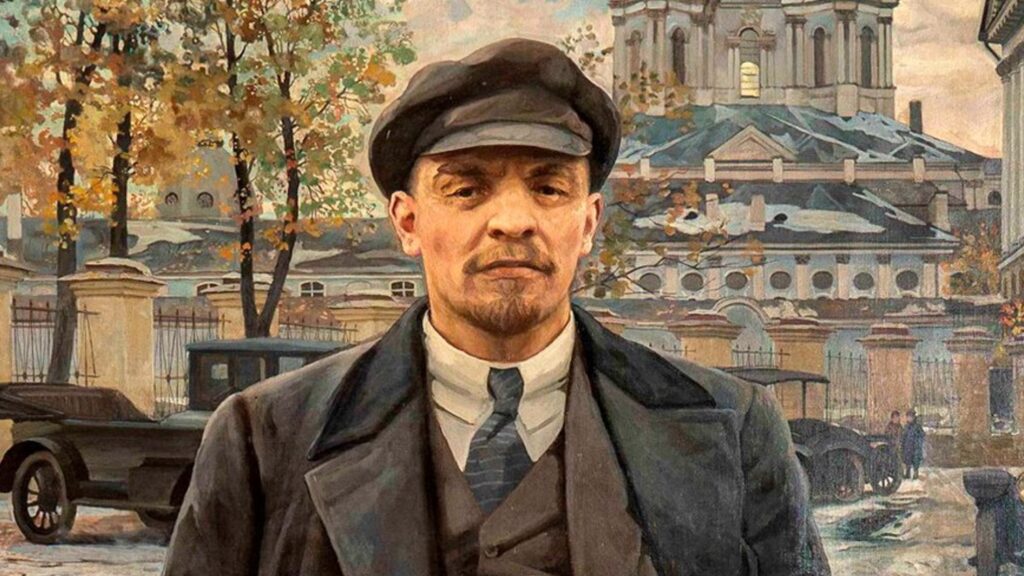
The first country in the world to adopt communism was Russia during the events of the Russian Revolution in 1917. At the time, Russia was ruled by Tsar Nicholas II, who, in the opinion of Russian peasants, was failing to meet the needs of the country. Russia was a society that was sharply divided and the poorest Russians struggled to survive day-to-day. Poverty was widespread, especially among Russian peasants, who worked for the landowning nobility. This all combined to set the stage for a revolution against the Tsar and his rule over Russia. In 1917, Tsar Nicholas II was forced to give up his throne, and later that year Vladimir Lenin led the Bolsheviks in overthrowing the new Provisional Government. Lenin was the leader of the Bolsheviks, who were a communist organization that sought to gain power over Russia. Lenin referred to himself as a Marxist and promoted the idea of establishing Russia as the world’s first communist state. Soon, Tsar Nicholas II and his family were imprisoned and Lenin and the Bolsheviks assumed power over Russia. Russia transformed into the Soviet Union and remained a communist state until the early 1990s. The history of communism in the Soviet Union is important to understand because it displays the connection between communism and the political system of a dictatorshipA political system where one leader holds all power and often uses terror and violence to keep it..
FactsthatCrunchLenin was a Marxist revolutionary who led the Bolsheviks to power in 1917, months after Tsar Nicholas II had been forced from the throne. His government took control of land, factories, and banks and made Russia the world’s first communist state. The Soviet Union he founded stayed communist until 1991.
Communism and Dictatorship
A dictatorship is a political ideology in which the leader holds all the power in a given society and often maintains power through terror and violence against his own citizens. Throughout the 20th century, the Soviet Union was dominated by a series of dictators who used their power to form a communist state while also protecting and centralizing authority in themselves. This is an important distinction because while communism is similar to other forms of socialism in many ways, the inclusion of a dictator separates it politically. For example, in the Communist Manifesto, Karl Marx argued in favor of a classless society based upon public ownership. While communist societies such as the Soviet Union are based on public ownership, the nature of a dictatorship means that they are inherently not classless, since the dictator and the federal government control the central authority of the government. As such, communist countries are often referred to as having a command economy.
FactsthatCrunchKarl Marx argued in the Communist Manifesto that communism should produce a classless society with no divisions between rich and poor or workers and owners. Public ownership of production would spread wealth to everyone equally. No single person or group was meant to hold central authority over the rest of society.
In practice, the Soviet Union was governed by a series of dictators who held all power and protected their own central authority. Because the dictator and the federal government controlled economic and political decision-making, a ruling class existed above ordinary citizens. The system called itself communist but built the kind of class division that Marx said communism would remove.
Communism and Command Economy
A command economy is one in which the economic decision-making of a country is done by a central authority. For example, the central authority issues commands about the basic functions of the economy, including: what goods and services should be produced; how should goods and services be produced; who should receive the goods and services that are produced? Communists argue that a command economy is beneficial to society because it: provides a strong central means of production for easy coordination, allows the government to carry out comprehensive economic planning and avoids the issues associated with capitalism, such as: wide income gap and poor conditions for the poor and working-class. Alternatively, those against the principles of communism argue that a command economy is harmful to society because: large-scale economic planning is difficult, and the government may not necessarily meet the needs of all of its people, the economy is reliant on a single source for decision-making, and freedom of choice for producers and consumers is limited.
FactsthatCrunchWho decides what gets produced in a command economy versus a market economy?
Communism in the Cold War
Communism in the Soviet Union also played an important role in the Cold War, which occurred between the United States and the Soviet Union from the end of World War II in 1945 until 1991. At its heart, the Cold War was an ideological divide between the two countries since the Soviet Union was based on communism and the United States was based upon capitalism and democracy.
FactsthatCrunch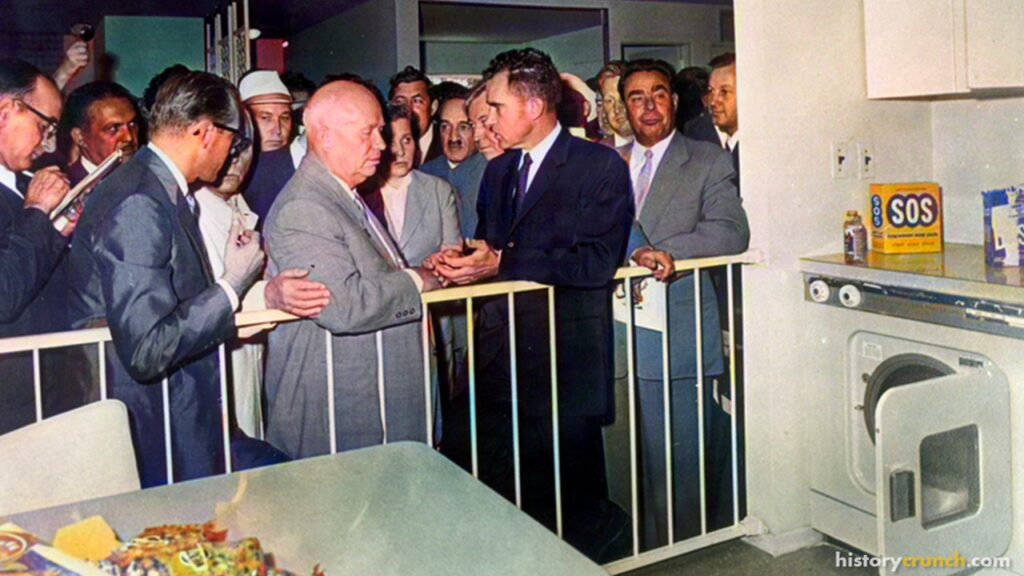 Black & whiteColor
Communism Today
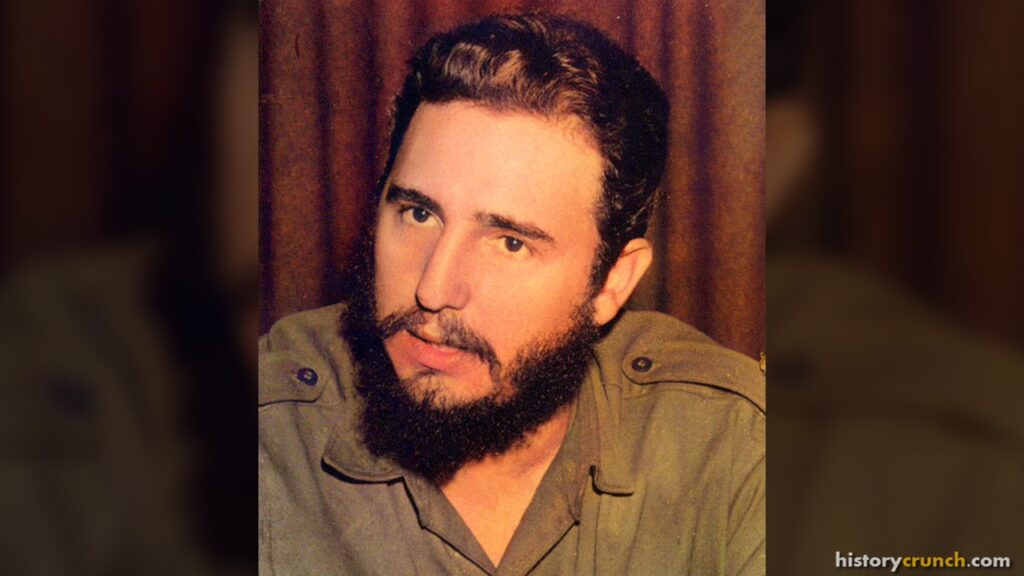
While communism emerged in the early 20th century with the Russian Revolution, it still remains in a few areas of the world today, including: Cuba and North Korea. Similar to the Soviet Union, the history of Cuba is that of a dictator who imposed communist principles on the country. Dictator Fidel Castro brought communism to Cuba in 1959 as part of the Cuban Revolution. It remains communist today even though Castro died in 2016. Castro ruled over the country as a dictator but instituted several reforms based on the idea of public ownership, including universal healthcare. For example, Cuba is known for its publicly funded healthcare system that provided Cuba with a low infant mortality rate and an excellent ratio of doctors to patients. With that said, Cuba is also known for a lack of human rights and the imprisonment of political opponents who openly protest against the dictatorship in the country. In general, communism is a political and economic ideology that, while supposed to be about removing class distinctions in society, is operated very differently in practice. Regardless it is a significant ideology that has had a profound effect on the world in the past and still today.
FactsthatCrunchFidel Castro led the Cuban Revolution that overthrew dictator Fulgencio Batista in 1959 and then ruled Cuba as a communist state for nearly half a century. He played a direct role in major Cold War events, including the Bay of Pigs invasion and the Cuban Missile Crisis, and remains a deeply debated political leader of the 20th century.
Key Vocabulary
Laissez-faire capitalism
Means of production
Classless society
Centrally planned economy
Command economy
Dictatorship
Public ownership
Frequently Asked Questions
What is communism in simple terms?
Communism is a political and economic system that seeks shared ownership of wealth and resources. It aims to remove social classes so that no group holds power over another. The idea grew out of socialism and the writings of Karl Marx in the Communist Manifesto.
What are the main principles of communism?
The main principles are a classless society, public ownership, and a centrally planned economy. Everyone is meant to be equal, with no gap between rich and poor or workers and owners. The state controls production so that wealth is meant to benefit the whole community.
Which country was the first to become communist?
Russia was the first country to adopt communism, during the Russian Revolution in 1917. After Tsar Nicholas II, whose rule many felt had failed the poor, gave up his throne, Vladimir Lenin led the Bolsheviks to power. Russia then became the Soviet Union and stayed communist until the early 1990s.
What is the difference between a command economy and capitalism?
In a command economy, a central authority decides what is produced and how resources are shared. This is the system used in communism. In capitalism, supply and demand guide production instead, and producers and consumers have more freedom of choice.
Which countries are still communist today?
A few countries remain communist today, including Cuba and North Korea. Fidel Castro brought communism to Cuba in 1959 during the Cuban Revolution. Cuba is known for its publicly funded healthcare, but also for jailing people who protest against the government.
How was communism connected to the Cold War?
The Cold War was a long standoff between the communist Soviet Union and the capitalist United States. It lasted from the end of World War II in 1945 until 1991. At its heart lay a clash between two very different political and economic systems.
Cite This Article
To cite this article as a source, use one of the formats below.
MLA: Beck, Elias. “Communism: A Detailed Summary.” HistoryCrunch, 13 October 2026, https://historycrunch.com/communism/.
APA: Beck, E. (2026). Communism: A Detailed Summary. HistoryCrunch. https://historycrunch.com/communism/
Chicago: Beck, Elias. “Communism: A Detailed Summary.” HistoryCrunch. October 13, 2026. https://historycrunch.com/communism/
Sources
- John Lewis Gaddis, The Cold War: A New History.
- State Department — Office of the Historian