National Assembly (French Revolution): A Detailed Summary

National Assembly
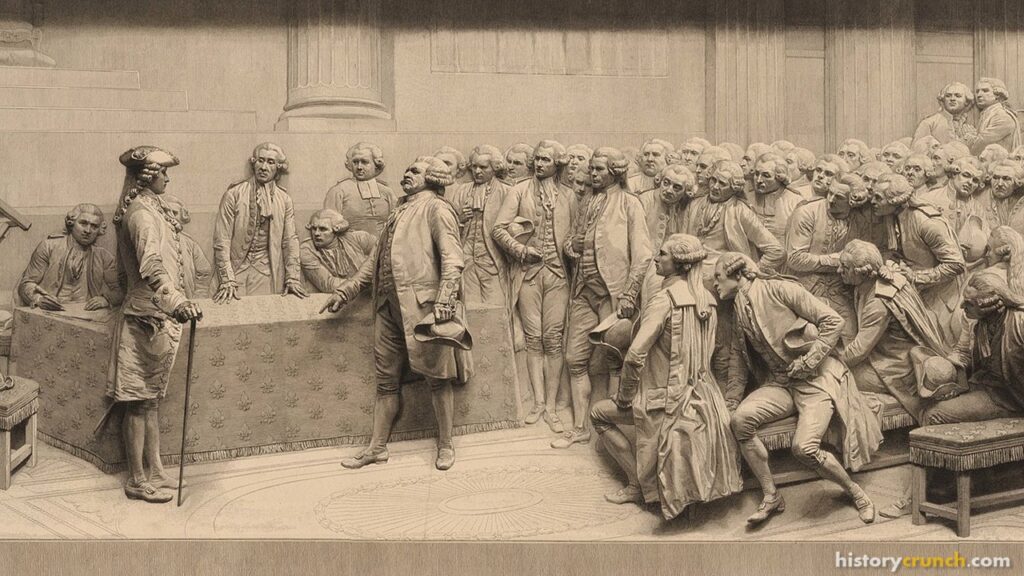
Etching engraved in 1889 by Alphonse Lamotte. The National Assembly was the first revolutionary government of the French Revolution and existed from June 14th to July 9th in 1789.

Table of Contents

The National Assembly was the first revolutionary government of the French Revolution and existed from June 14th to July 9th in 1789. This article details the history and significance of the National Assembly in relation to the French Revolution.

The National Assembly was formed in June of 1789 at the outbreak of the French Revolution. It was established by representatives of the Third Estate, who broke away from the Estates-General of 1789 in protest of unequal representation. Declaring themselves the ‘true voice’ of the French people, they vowed to draft a new constitution for France. The Assembly played a key role in ending feudal privileges of the Ancien Regime in France and passing the Declaration of the Rights of Man and of the Citizen.

GOVERNMENTS OF THE FRENCH REVOLUTION

The French Revolution was a major event in the history of Western societies, and has had a profound effect on the world today.  Beginning in 1789, the French Revolution saw the French people overthrow their absolute monarchy and bring about a republic that was based on the principles of equality, liberty and fraternity.  Throughout the years of the revolution, there were four different revolutionary governments, including: National Assembly, Legislative AssemblyNational Convention and the Directory.

Louis XVI Young
‘Portrait of Louis XVI, King of France and Navarre’ by Joseph-Siffred Duplessis. (1774)

NATIONAL ASSEMBLY (FRENCH REVOLUTION) – SUMMARY

The National Assembly was the first revolutionary government of the French Revolution and existed from June 14th to July 9th in 1789.  The National Assembly was created amidst the turmoil of the Estates-General that Louis XVI called in 1789 to deal with the looming economic crisis in France.  Unfortunately, the three estates could not decide how to vote during the Estates-General and the meeting failed.

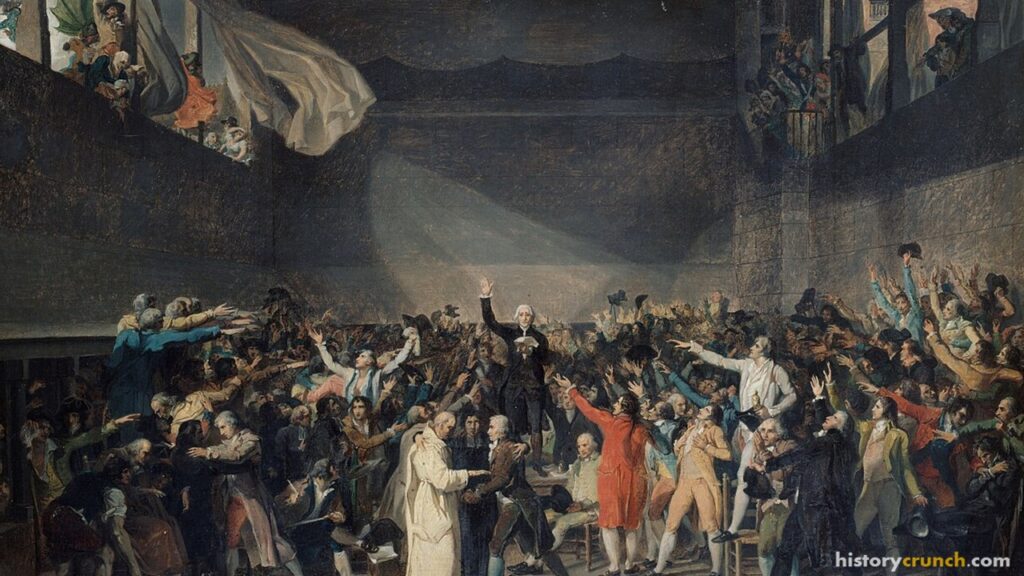
Angered with the inaction of the Estates-General and upset with their position in French society, many of the third estate representatives left the meeting and gather in a nearby tennis court to take the Tennis Court Oath.  It was here that the third estate established the National Assembly, the new revolutionary government, and pledged “not to separate, and to reassemble wherever circumstances require, until the constitution of the kingdom is established.”
Tennis Court Oath
‘Le Serment du Jeu de paume’ by Jacques-Louis David (1790). It shows the events of the Tennis Court Oath in the French Revolution.

Although the National Assembly was originally made up of mostly members of the third estate, many clergy and nobility representatives soon joined as anger for the monarchy of Louis XVI spread.  After July 9th, the National Assembly formed into the National Constituent Assembly, which would last until September 30th, 1791.

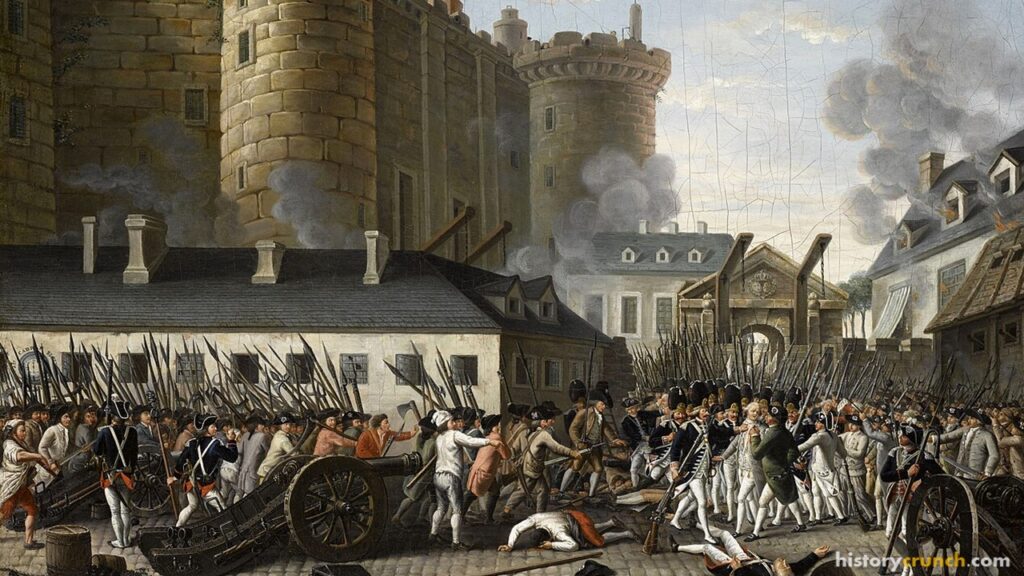
The National Constituent Assembly is best remembered for passing the Declaration of the Rights of Man and of the Citizen in August of 1789.  The declaration was written by Marquis de Lafeyette, a French military officer who fought in the American Revolution and was inspired by the ideals of liberty expressed by Thomas Jefferson in the Declaration of Independence.  The Declaration of the Rights of Man and of the Citizen was vitally important to the French Revolution because it directly challenged the authority of Louis XVI. For example, the declaration set out a series of individual rights protected by law.  Today, many historians view it as an important document in both the history of the French Revolution and the history of democracy and individual rights in the world.  As well, the issuing of the Declaration of the Rights of Man and of the Citizen by the National Constituent Assembly helped spark the first major violent act of the French Revolution, which was the storming of the Bastille.

The National Constituent Assembly dissolved itself in 1791, passing government to the newly created Legislative Assembly.

Storming of the Bastille
‘Storming of the Bastille’ by an unknown artist. Shows the events of the Storming of the Bastille during the early days of the French Revolution.
Facebook
X
Reddit
Pinterest
LinkedIn

We strive to produce educational content that is accurate, engaging and appropriate for all learners. If you notice any issues with our content, please contact us and let us know!

AUTHOR INFORMATION
Picture of Elias Beck

Elias Beck

I'm a passionate history and geography teacher with over 15 years of experience working with students in the middle and high school years. I have an Education Degree with a focus in World History. I have been writing articles for History Crunch since 2015 and love the challenge of creating historical content for young learners!
Storming of the Bastille
French Revolution

Storming of the Bastille: A Detailed Summary

The Storming of the Bastille was one of the most important events in the history of the French Revolution. This article details the history and significance of the Storming of the Bastille.

Louis XVI
French Revolution

Louis XVI: A Detailed Biography

Louis XVI was the monarch of France during the outbreak of the French Revolution. He was eventually tried for treason and executed by guillotine in 1793, marking the end of absolute monarchy in France. This article details the life and significance of Louis XVI, especially in relation to the events of the French Revolution.

Palace of Versailles
French Revolution

Palace of Versailles: A Detailed Summary

The Palace of Versailles was originally constructed in 1623 CE, but underwent numerous renovations in the decades that followed. This article details the history and significance of the Palace of Versailles, especially in relation to the events of the French Revolution.

Estates-General of 1789
French Revolution

Estates-General of 1789 (French Revolution): A Detailed Summary

The Estates-General of 1789 was a meeting of the three estates within French society which included the clergy, nobility and the peasant classes. This article details the history and significance of the Estates-General of 1789 in relation to the French Revolution.

Absolutism in France
Age of Absolutism

Absolutism in France: A Detailed Summary

Absolutism in France was the system of government in which French monarchs held total political power, reaching its height under Louis XIV. This article details the history and significance of absolutism in France.

French Revolution
French Revolution

French Revolution: A Detailed Overview

The French Revolution was one of the most significant events in history, and contributed to the foundation of modern democratic values. This article details the history and significance of the French Revolution.