Franklin D. Roosevelt: A Detailed Biography

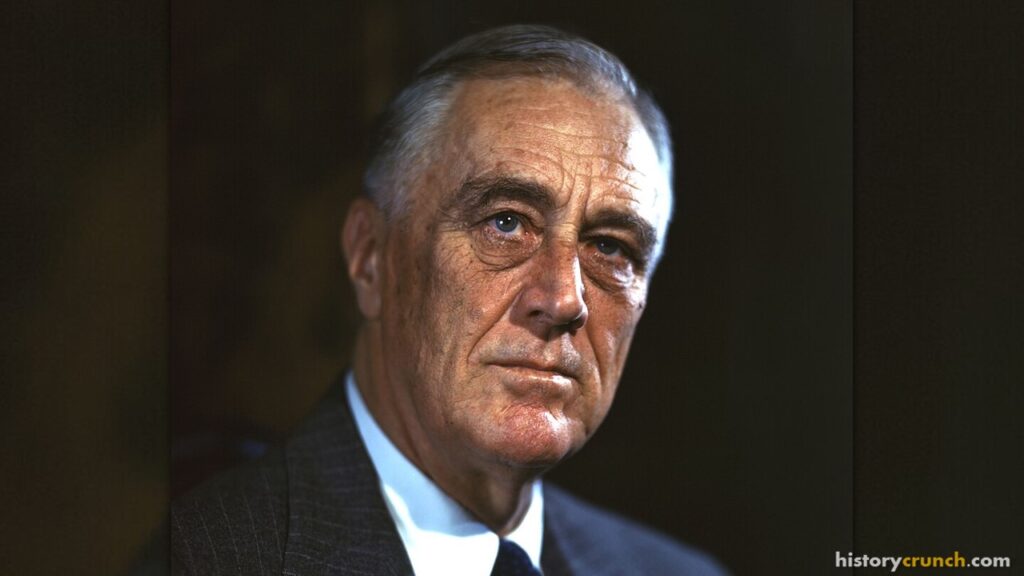
Franklin D. Roosevelt in 1944. (Public Domain)

Table of Contents

Franklin D. Roosevelt, the 32nd President of the United States, is celebrated for his leadership during the Great Depression and World War II, and for implementing the transformative New Deal policies. This article details the life and significance of Franklin D. Roosevelt.

Franklin D. Roosevelt was the 32nd President of the United States, serving from 1933 to 1945. He is one of the most influential figures in American history, known for his leadership during two of the most challenging periods of the 20th century: the Great Depression and World War II.  He died while still the President of the United States just months before the end of the war. As such, he is an important figure in American history.

Franklin D. RooseveltBiography
Facts that CrunchFactsthatCrunch
Franklin D. Roosevelt
32nd President of the United States
Born: January 30th, 1882, Hyde Park, New York
Elected President: November 8th, 1932
Declared War on Japan: December 8th, 1941
Died: April 12th, 1945, Warm Springs, Georgia

Roosevelt led the United States through most of World War II, building up the military, organizing Allied strategy with Britain and the Soviet Union, and directing the overall war effort from Washington. He was the only U.S. president elected to four terms, and he died in office just weeks before Germany surrendered in May 1945.
Commander in ChiefFour-Term PresidentAllied Summit LeaderLend-Lease Architect
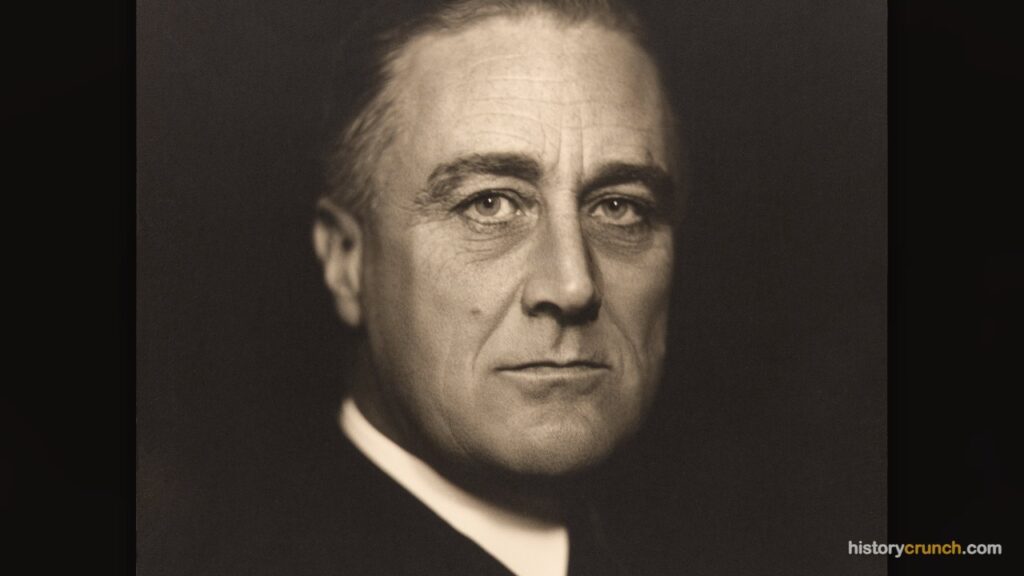
Franklin D. Roosevelt served as the 32nd President of the United States during World War II.
Source: US National Archives© factsthatcrunch.comMore World War II Facts →

Franklin D. Roosevelt – Early Life

Franklin D. Roosevelt was born on January 30th, 1882, in Hyde Park, New York, into a wealthy and influential family. He was the only child of James Roosevelt and Sara Delano Roosevelt. Roosevelt was privately educated and attended Harvard and Columbia Universities. Roosevelt was always interested in law, and admired his cousin Theodore Roosevelt who became president of the United States in 1901. Roosevelt married Theodore’s niece Eleanor, who was very supportive of Roosevelt and his law passions.

Roosevelt was appointed as assistant secretary of the United States Navy in 1913. In this role, Roosevelt traveled across the United States, and to Europe. Roosevelt continued to work in politics but ran for President of the United States as a Democratic candidate in 1932 during the early years of the Great Depression.
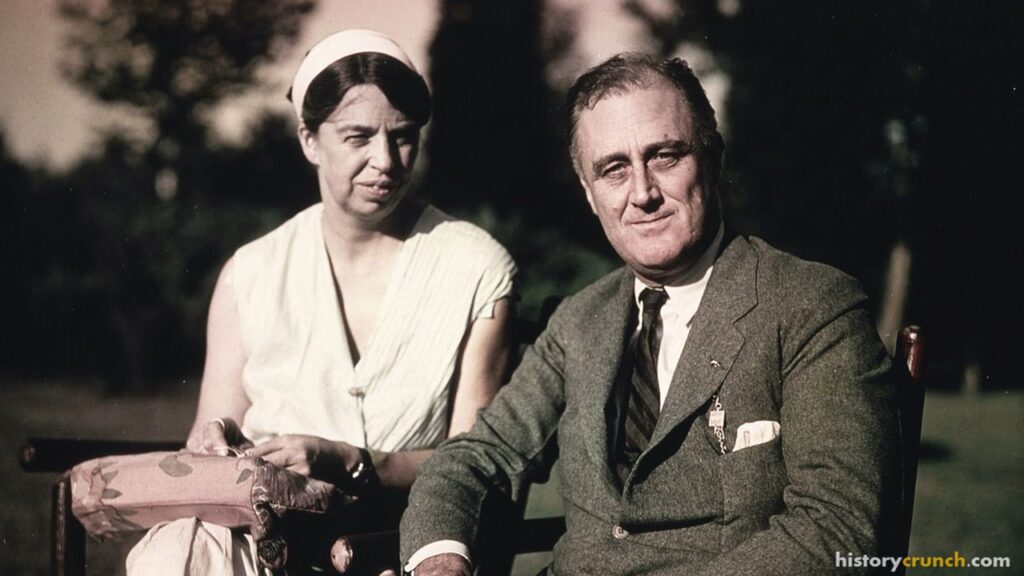
Franklin and Eleanor Roosevelt
Franklin and Eleanor Roosevelt in August of 1932.
World War IIMatchingInteractive
Facts that CrunchFactsthatCrunch

Can you match each person or place to its role in Franklin D. Roosevelt's early life?

Tap a term, then tap its match.
Source: National Archives© factsthatcrunch.comMore World War II Facts →

Franklin D. Roosevelt – Great Depression

The Great Depression began on October 24th, 1929 when the New York Stock Exchange began to experience volatilitySudden, unpredictable swings in value that make a market unstable and risky. and heavy trading which resulted in a large drop of the overall value of the market.  The crash of the market eventually led to major economic issues in the United States (and around the world) which resulted in high unemployment and an economic recession.  The United States President at the time was republican Herbert Hoover.

As the Great Depression unfolded Hoover held a general view of the economy based on self-relianceThe belief that individuals should take care of themselves without depending on government help..  This means that he believed it was the responsibility of individuals to take care of themselves and not rely on assistance from the government.  As such, he did not agree that the government should intervene in the economy and referred to the economic hardship of the Great Depression as “a passing incident”.  As a result of his presidency, many working-class people began to name aspects of their poverty after Hoover.  For example, shanty-towns that were constructed on the edge of cities in the 1930s were often referred to as ‘Hoovervilles’.  In the 1932 presidential election, Hoover faced off against Roosevelt.
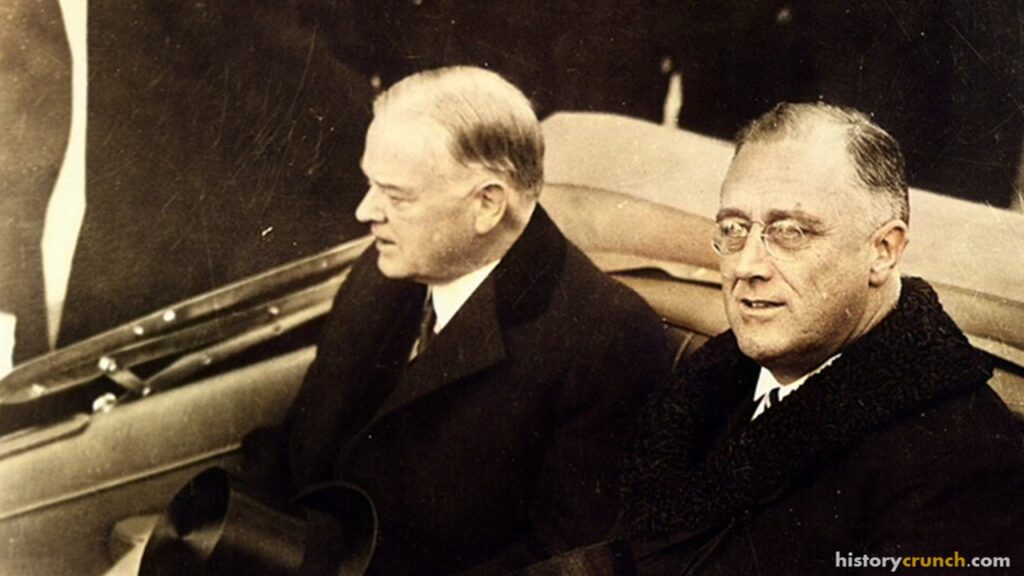
Hoover and Roosevelt
Herbert Hoover with Franklin D. Roosevelt on March 4th, 1933.
Franklin D. RooseveltEvidence Board
Facts that CrunchFactsthatCrunch
The crash
The New York Stock Exchange crashed in October of 1929, setting off the Great Depression and mass unemployment.
Self-reliance
Hoover believed people should take care of themselves and that the government should not step into the economy.
'A passing incident'
Hoover called the hardship of the Great Depression 'a passing incident'.
Hoovervilles
Shanty-towns built on the edges of cities were mockingly named after him.
Over 20% jobless
By 1932, unemployment had risen above 20 percent.
The Case
Why did American voters turn against Herbert Hoover in the 1932 election?
Drag any card to arrange it.
Source: National Archives© factsthatcrunch.comMore World War II Facts →

Franklin D. Roosevelt – President of the United States

Roosevelt offered a completely different view of the recession and ran on the platform of a ‘New Deal’ for the American people.  With unemployment over 20% in 1932, Roosevelt blamed the worsening economic conditions on Hoover’s mishandling of the crisis.  As a result, Roosevelt won the election in a landslide victoryWinning an election by an overwhelming margin of votes over the opponent. winning 472 electoral votes to Hoover’s 59.  Roosevelt also dominated the popular vote with 23 million votes to Hoover’s 16 million.  He became the 32nd president of the United States.

By the time he entered  the White House, the Great Depression in the United States had reached desperate levels, with over 13 million people unemployed. As a result, Roosevelt had to make drastic changes. So, as part of his role, Roosevelt put a number of New Deal programs and reforms in place. Thanks to the policies, Roosevelt led the United States through the Great Depression, and by 1935 the country showed signs of economic recovery.  Regardless, the Great Depression ended only after 1941, with the United States’ entry into World War II.
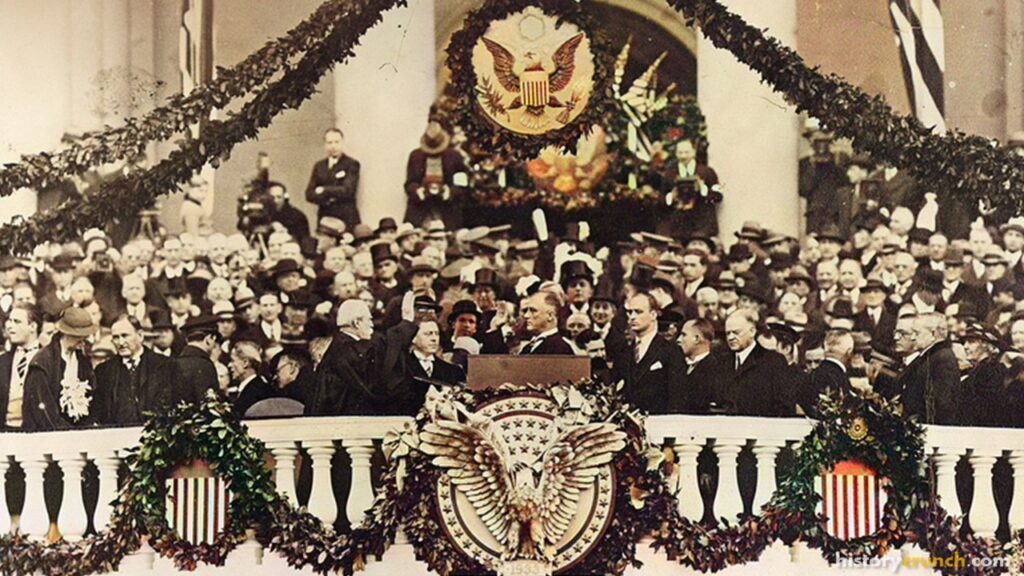
Franklin D. Roosevelt’s First Inaugural Address
Franklin D. Roosevelt’s First Inaugural Address (Colorized by historycrunch.com)
Franklin D. RooseveltFunnelInteractive
Facts that CrunchFactsthatCrunch

What factors came together to shape Roosevelt's landslide victory in the 1932 presidential election?

Roosevelt won 472 electoral votes to Hoover's 59, and 23 million popular votes to Hoover's 16 million, one of the largest margins in American presidential election history.
Great Depression Begins The New York Stock Exchange crashed on October 24th, 1929, triggering widespread unemployment and economic collapse across the United States.
Unemployment Crisis By 1932, unemployment in the United States had risen above 20 percent, leaving millions of families without income or stable work.
Hoover's Response President Herbert Hoover believed in self-reliance and called the economic hardship a passing incident, resisting direct government aid to struggling Americans.
Hoovervilles Working-class Americans named the makeshift shanty-towns built on city edges Hoovervilles, turning Hoover's name into a symbol of government failure during the Depression.
Roosevelt Enters the Race Roosevelt ran as the Democratic candidate in 1932, blaming Hoover directly for mishandling the crisis and promising real change for ordinary Americans.
The New Deal Platform Roosevelt campaigned on a New Deal for the American people, offering active government programs and reforms as a clear contrast to Hoover's hands-off approach.
Tap a stage to read its detail.
Great Depression BeginsThe New York Stock Exchange crashed on October 24th, 1929, triggering widespread unemployment and economic collapse across the United States.
Unemployment CrisisBy 1932, unemployment in the United States had risen above 20 percent, leaving millions of families without income or stable work.
Hoover's ResponsePresident Herbert Hoover believed in self-reliance and called the economic hardship a passing incident, resisting direct government aid to struggling Americans.
HoovervillesWorking-class Americans named the makeshift shanty-towns built on city edges Hoovervilles, turning Hoover's name into a symbol of government failure during the Depression.
Roosevelt Enters the RaceRoosevelt ran as the Democratic candidate in 1932, blaming Hoover directly for mishandling the crisis and promising real change for ordinary Americans.
The New Deal PlatformRoosevelt campaigned on a New Deal for the American people, offering active government programs and reforms as a clear contrast to Hoover's hands-off approach.
Source: Library of Congress© factsthatcrunch.comMore World War II Facts →

Franklin D. Roosevelt – World War II

While Europe was plunged back into war in September of 1939, with the German invasion of Poland, the United States remained out of the fighting.  While Roosevelt wanted to aid the United States’ allies such as Britain and France, the war was unpopular in the United States.  The world was only 20 years removed from World War I which shocked Americans to the realities of war and the brutality of trench warfare. In general, the American public were not ready for another major conflict after World War I stayed for so long as a stalemateA deadlocked situation in which neither side can make progress or win. and the cost of life that the First World War caused. The United States in 1939 was not the military powerhouse it is today and it was a considerable risk to the United States to participate in another worldwide conflict.

Some in America believed that the United States should join to support its allies and stop the spread of fascismA system of government marked by extreme nationalism, dictatorship, and suppression of opposition.. This opinion grew in popularity among American politicians after major German advances in Europe, including: the German advances in Denmark, and the surrender of France to German forces. This viewpoint argued that American forces were needed to help Britain fight off the aggressive and powerful German forces. On the other hand, some believed that the advances of the German army in Europe proved that the United States should remain out of the conflict, as the German forces were seen as too strong. For example, Joseph P. Kennedy, who was the American ambassador to Great Britain, held this view and argued that America risked losing if it went up against Nazi Germany. Although the United States did not join direct warfare until 1941 when it was attacked, it did support the Allied effort in the war during the previous years through the Lend-Lease Act. Passed in March of 1941, the Lend-Lease ActA 1941 law allowing Roosevelt to supply Britain, the Soviet Union, and China with weapons and ammunition. allowed President Roosevelt to support the forces of Britain, the Soviet Union and China with ammunition and weapons shipments.

In the end, the United States was forced into the war on December 7th, 1941 when Japan surprise attacked the United States at Pearl Harbor. With the help of American troops, the Allies were able to push back Germany in Europe by 1944 and the United States ended World War II in August of 1945 with the atomic bombing of Japan.  While it was not Roosevelt who used the atomic bombs against Japan, his leadership was vitally important to their construction because he oversaw the American program to create the first atomic bomb.

Roosevelt led America through most of the war, but died just weeks before the victory over Nazi Germany. During the war, Roosevelt worked with Britain and the Soviet Union to build the foundations of a post-war international peace organization.  For example, he famously attended the Yalta Conference with British Prime Minister Winston Churchill and Soviet leader Joseph Stalin. This organization later became the United Nations, and it is still in place today.
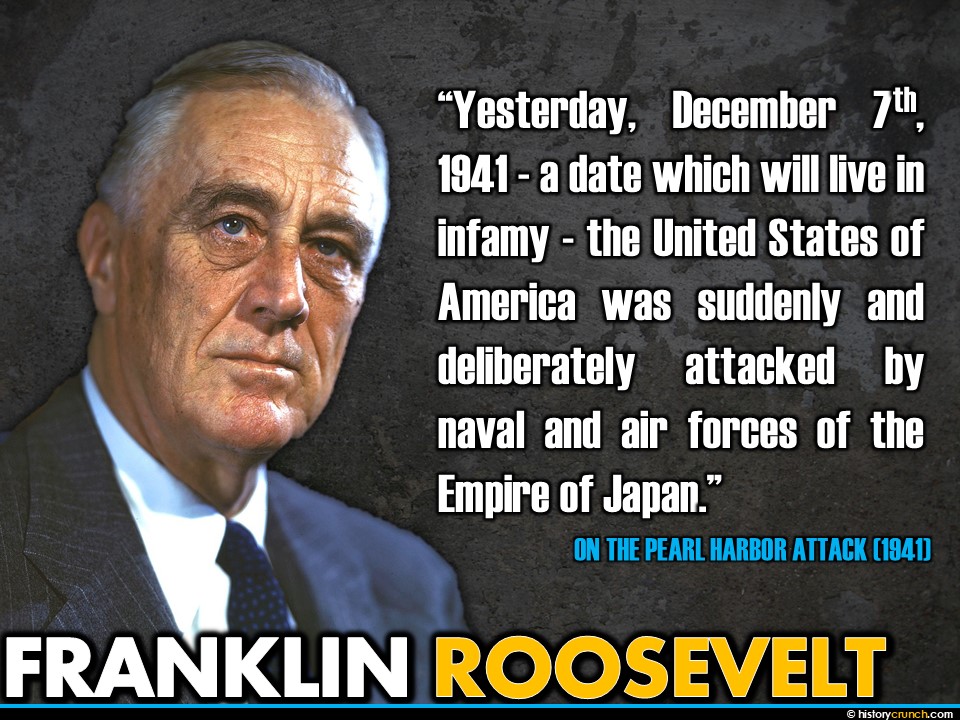
Franklin D. Roosevelt Quote 1
Franklin D. RooseveltSpectrumInteractive
Facts that CrunchFactsthatCrunch

Where did Americans stand on joining World War II between 1939 and 1941?

Full IsolationFull Intervention
Strict Neutrality Laws Congress passed the Neutrality Acts through the late 1930s to legally block the U.S. from selling arms to any nation at war, keeping America out of European conflicts entirely.
America First Committee Founded in September 1940, the America First Committee organized large public rallies against U.S. entry into the war, arguing that the Atlantic Ocean made America safe from German attack.
Joseph P. Kennedy's Warning Kennedy, the U.S. ambassador to Britain, argued that America risked defeat if it fought Nazi Germany, saying German military strength made Allied victory unlikely.
Public War Weariness Many Americans still remembered the heavy cost in lives from World War I and were not ready for another major conflict, keeping public support for direct entry very low through 1939 and 1940.
Roosevelt's Public Position Roosevelt publicly promised in the 1940 presidential campaign to keep the country out of foreign wars, reflecting how closely divided opinion was, while privately working to support the Allies.
Lend-Lease Act Passed in March of 1941, the Lend-Lease Act allowed Roosevelt to ship weapons and ammunition to Britain, the Soviet Union, and China, moving U.S. policy firmly toward supporting the Allied side.
Intervention Advocates Some American politicians and public figures argued that stopping fascism required direct U.S. support for Britain, especially after France surrendered to Germany in June 1940.
Pearl Harbor Attack On December 7th, 1941, Japan attacked the U.S. naval base at Pearl Harbor, Hawaii, ending the debate and bringing the United States into full military involvement in World War II.
Strict Neutrality LawsCongress passed the Neutrality Acts through the late 1930s to legally block the U.S. from selling arms to any nation at war, keeping America out of European conflicts entirely.
America First CommitteeFounded in September 1940, the America First Committee organized large public rallies against U.S. entry into the war, arguing that the Atlantic Ocean made America safe from German attack.
Joseph P. Kennedy's WarningKennedy, the U.S. ambassador to Britain, argued that America risked defeat if it fought Nazi Germany, saying German military strength made Allied victory unlikely.
Public War WearinessMany Americans still remembered the heavy cost in lives from World War I and were not ready for another major conflict, keeping public support for direct entry very low through 1939 and 1940.
Roosevelt's Public PositionRoosevelt publicly promised in the 1940 presidential campaign to keep the country out of foreign wars, reflecting how closely divided opinion was, while privately working to support the Allies.
Lend-Lease ActPassed in March of 1941, the Lend-Lease Act allowed Roosevelt to ship weapons and ammunition to Britain, the Soviet Union, and China, moving U.S. policy firmly toward supporting the Allied side.
Intervention AdvocatesSome American politicians and public figures argued that stopping fascism required direct U.S. support for Britain, especially after France surrendered to Germany in June 1940.
Pearl Harbor AttackOn December 7th, 1941, Japan attacked the U.S. naval base at Pearl Harbor, Hawaii, ending the debate and bringing the United States into full military involvement in World War II.

Tap a point to read its detail.

Source: US National Archives© factsthatcrunch.comMore World War II Facts →

Franklin D. Roosevelt – Death and Legacy

The deals and programs that Roosevelt put in place redefined the role of the federal government in the lives of Americans, and still affect the lives of Americans today. Thanks to his hard work, and successful programs, Roosevelt was elected president four times. He is the only American president in history to have been elected four times.

Roosevelt died on April 12th, 1945 at Warm Springs, Georgia, while he was still in office, less than a month before the end of the war in Europe. His successor was Harry S. Truman, his Vice President, who oversaw the end of World War II for the United States.

Franklin D. Roosevelt’s presidency was a defining period in American history. His innovative New Deal programs and steadfast leadership during World War II not only helped the nation overcome significant challenges but also left a lasting legacy that continues to shape the United States.
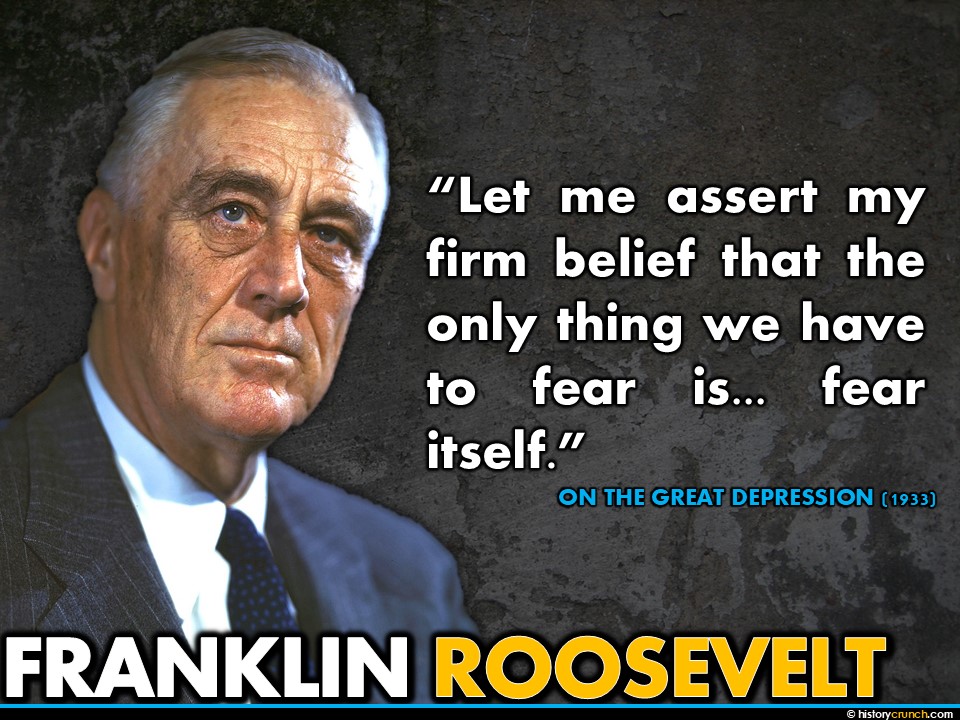
Franklin D. Roosevelt Quote 2
Franklin D. RooseveltTabsInteractive
Facts that CrunchFactsthatCrunch

What lasting impact did Franklin D. Roosevelt's presidency have on the United States?

Roosevelt was elected president four times, a record no other American president has matched. After his death, the 22nd Amendment, ratified in 1951, limited presidents to two terms.
The New Deal programs Roosevelt launched redefined the role of the federal government in everyday American life, and many of those changes still shape the country today. Programs created in the 1930s set the pattern for federal involvement in jobs, banking, and relief.
Roosevelt oversaw the American program to build the first atomic bomb and helped lay the groundwork for a post-war international peace organization. That organization became the United Nations, which still operates today.
Roosevelt died on April 12th, 1945, at Warm Springs, Georgia, less than a month before the war in Europe ended. Vice President Harry S. Truman succeeded him and oversaw the final months of World War II.
Source: Imperial War Museum© factsthatcrunch.comMore World War II Facts →

Explore World War II · 1939 – 1945

Keep exploring World War II with these History Crunch resources.

Key Vocabulary

Volatility
Sudden, unpredictable swings in value that make a market unstable and risky.
Self-reliance
The belief that individuals should take care of themselves without depending on government help.
Hoovervilles
Makeshift shanty-towns built on the edges of cities during the Great Depression, named mockingly after President Hoover.
Landslide victory
Winning an election by an overwhelming margin of votes over the opponent.
Stalemate
A deadlocked situation in which neither side can make progress or win.
Lend-Lease Act
A 1941 law allowing Roosevelt to supply Britain, the Soviet Union, and China with weapons and ammunition.
Fascism
A system of government marked by extreme nationalism, dictatorship, and suppression of opposition.

Frequently Asked Questions

Why is Franklin D. Roosevelt famous?

Franklin D. Roosevelt is famous for leading the United States through the Great Depression and most of World War II. He served as the 32nd president from 1933 to 1945. His New Deal programs changed the role of the federal government in daily American life.

How many times was Roosevelt elected president?

Roosevelt was elected president four times, which no other American president has done. His long time in office covered both the Great Depression and World War II. After his death, a constitutional amendment later limited presidents to two terms.

What was the New Deal?

The New Deal was a set of programs and reforms Roosevelt created to fight the Great Depression. He promised these changes during the 1932 election, when unemployment was over 20 percent. By 1935 the country showed signs of economic recovery.

When did Franklin D. Roosevelt die?

Roosevelt died on April 12th, 1945, at Warm Springs, Georgia, while still in office. His death came less than a month before the war in Europe ended. His vice president, Harry S. Truman, took over and oversaw the end of the war.

How did the United States enter World War II under Roosevelt?

The United States entered World War II on December 7th, 1941, after Japan attacked Pearl Harbor. Before that, many Americans wanted to stay out of the war. Roosevelt still helped the Allies through the Lend-Lease Act, passed in March of 1941.

Cite This Article

To cite this article as a source, use one of the formats below.

MLA: Beck, Elias. “Franklin D. Roosevelt: A Detailed Biography.” HistoryCrunch, 2 October 2026, https://historycrunch.com/franklin-d-roosevelt/.

APA: Beck, E. (2026). Franklin D. Roosevelt: A Detailed Biography. HistoryCrunch. https://historycrunch.com/franklin-d-roosevelt/

Chicago: Beck, Elias. “Franklin D. Roosevelt: A Detailed Biography.” HistoryCrunch. October 2, 2026. https://historycrunch.com/franklin-d-roosevelt/

Sources

  • Max Hastings, Inferno / All Hell Let Loose.
  • Gerhard L. Weinberg, A World at Arms.
Facebook
X
Reddit
Pinterest
LinkedIn

We strive to produce educational content that is accurate, engaging and appropriate for all learners. If you notice any issues with our content, please contact us and let us know!

AUTHOR INFORMATION
Picture of Elias Beck

Elias Beck

I'm a passionate history and geography teacher with over 15 years of experience working with students in the middle and high school years. I have an Education Degree with a focus in World History. I have been writing articles for History Crunch since 2015 and love the challenge of creating historical content for young learners!
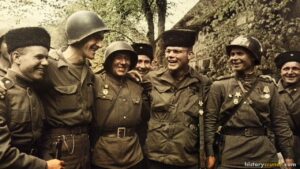
American and Soviet troops meet in April of 1945 during the final stages of World War II.
World War II

Impacts of World War II: A Detailed Summary

The impacts of World War II extended far beyond the battles and casualties of the conflict itself. The war gave rise to the Cold War, created the United Nations, ushered in the nuclear age, accelerated the end of European colonialism, and permanently changed the role of women in society.

The hammer and sickle is a common symbol for communism.
Political Systems

Communism: A Detailed Summary

The first country in the world to adopt communism was Russia during the events of the Russian Revolution in 1917. This article details the history, significance and main principles of communism.

Five-Year Plans of the Soviet Union
World War II

Five-Year Plans of the Soviet Union: A Detailed Summary

The Five-Year Plans of the Soviet Union were a series of centralized economic programs launched by Joseph Stalin from 1928 onwards that transformed the USSR into a major industrial power. This article details the history and significance of the Five-Year Plans of the Soviet Union.

Pompey the Great.
Ancient Rome

Pompey the Great: A Detailed Biography

Pompey the Great was one of the greatest generals of the late Roman Republic. He cleared the seas of pirates, conquered kingdoms in the east, and joined the First Triumvirate before losing a civil war to Julius Caesar.

John Maynard Keynes
Economics

John Maynard Keynes: A Detailed Biography

John Maynard Keynes was one of the most influential economic thinkers of the 20th century. His ideas played a crucial role in how governments around the world responded to the economic crisis of the Great Depression and the post-World War II era. This biography details the life and significance of John Maynard Keynes.

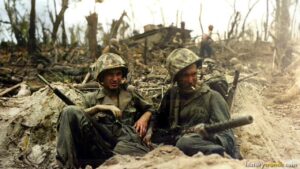
American marines on Peleliu in September of 1944 during the Pacific Theater of World War II. (Colorized by historycrunch.com)
World War II

Pacific Theater of World War II: A Detailed Summary

The Pacific Theater of World War II was a major area of fighting that took place across the Pacific Ocean, East Asia, and Southeast Asia during the Second World War. This article details the history and significance of the Pacific Theater of World War II.